An Architecture of Symbols: A Dovecote, A Well & A Lighthouse
“Space speaks before it is understood,” writes Umberto Eco verifying that certain architectures stand like words; concrete manifestations of meaning. They emerge from the land in pure presence —inevitable, self-evident, as though they had always belonged. Set across diverse climates, economies, and temporalities, a dovecote, a well, and a lighthouse return architecture to its origins as an essential gesture of survival, orientation, and meaning.
Together, they compose a semiotic landscape, where architecture is not merely an assembly of buildings but a cultural narrative.
From the wind-carved slopes of Tinos in the Cyclades, to the shifting dunes of the Grand Erg Oriental in the Tunisian Sahara, and the liminal waters of Lake Geneva in Switzerland, architecture reveals itself as a system of symbols—an ancient, enduring language through which humans locate themselves in the world.
Architecture as Metalanguage
The linguist Ferdinand de Saussure defined semiology as the general science of all systems of signs through which humans communicate (Saussure, 1916). Within this expanded field, architecture may be understood as a form of metalanguage—an order of communication in which material objects become signs, and space itself becomes discourse.
Architecture, in this sense, translates human thought, emotion, and necessity into built form.
Every structure operates through a dual condition: the signifier, its physical manifestation—form, material, geometry—and the signified, the meaning it conveys, shaped by culture, time, and perception. A building never signifies on its own; its meaning emerges through context, history, and the presence of the observer. As Umberto Eco notes, architecture is simultaneously a functional object and a communicative medium, guiding behaviour even before it is consciously perceived (Eco, 1976).
To read architecture, then, is not to decode a fixed message, but to engage in a continuous act of interpretation.
The Vernacular Dovecotes of Tinos: Agricultural Infrastructure Crafting the Sense of Place
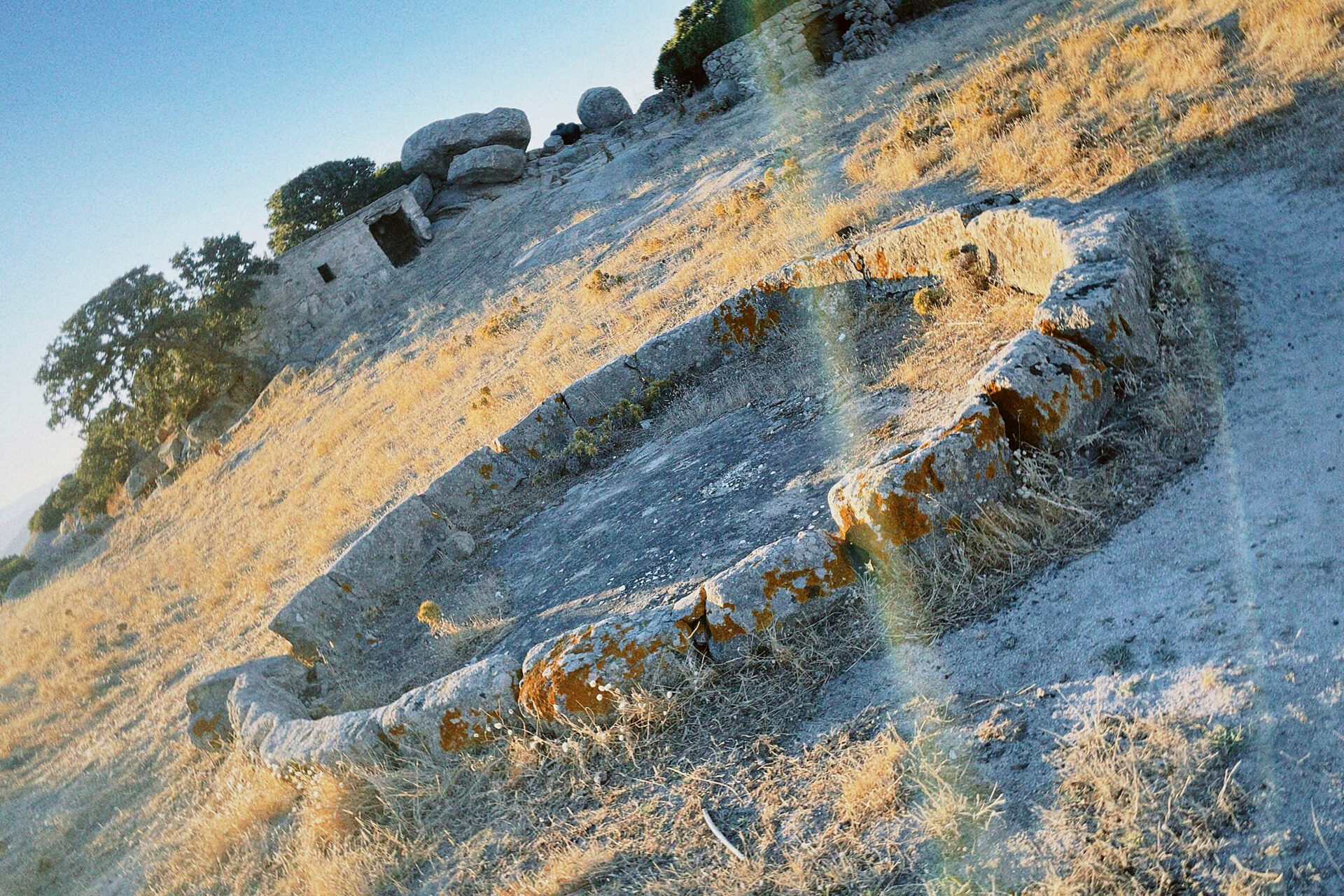
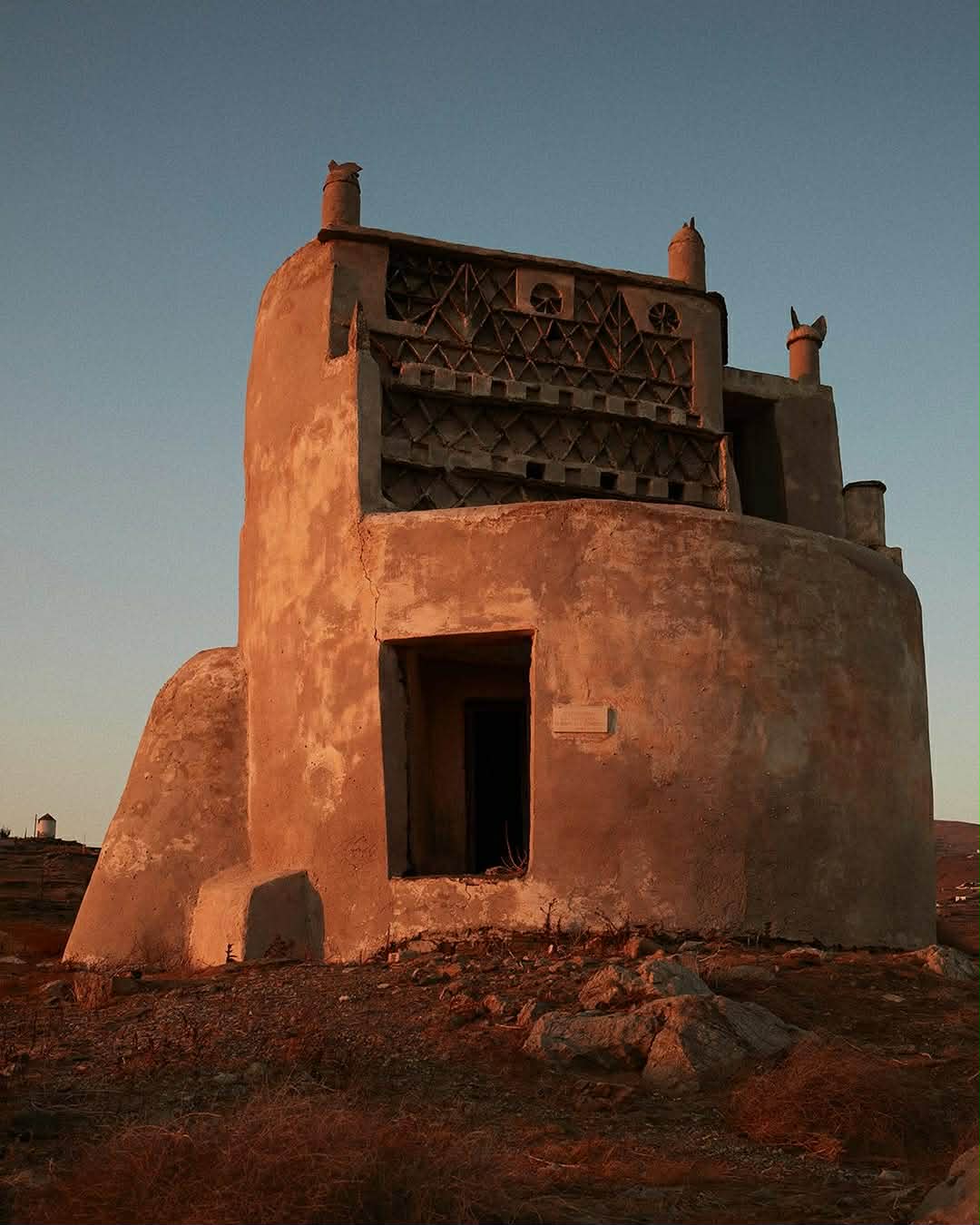
On Tinos, this language unfolds with tectonic precision. Scattered across the terraced hills of the Cycladic island, inseparable from its material essence and cultural identity, the dovecotes—peristeriones—rise as silent witnesses to a vernacular intelligence in which utility and symbolism converge. Built of stone and lime, punctuated by intricate geometric patterns, they stand at once as agricultural devices and sculptural forms.
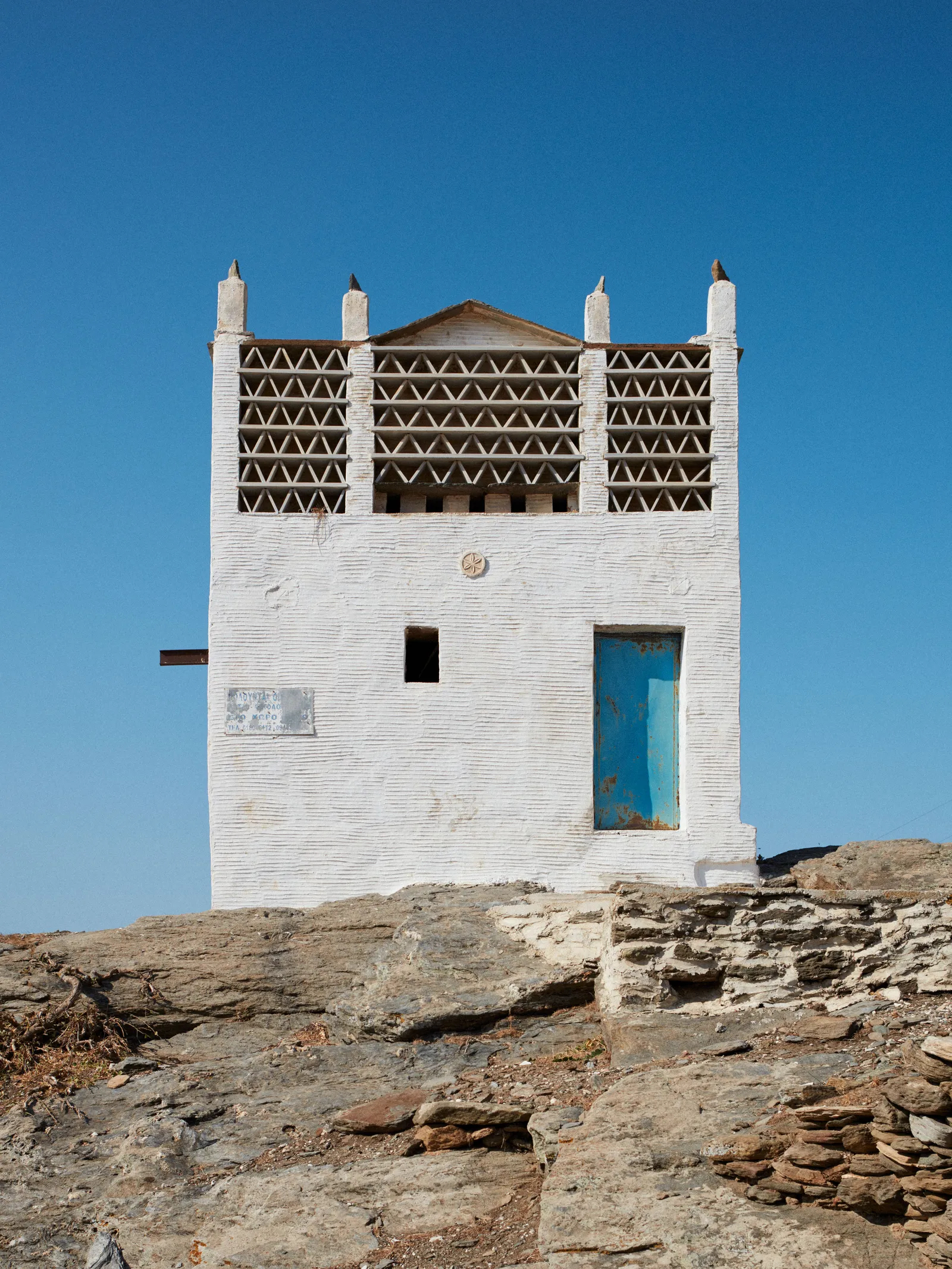
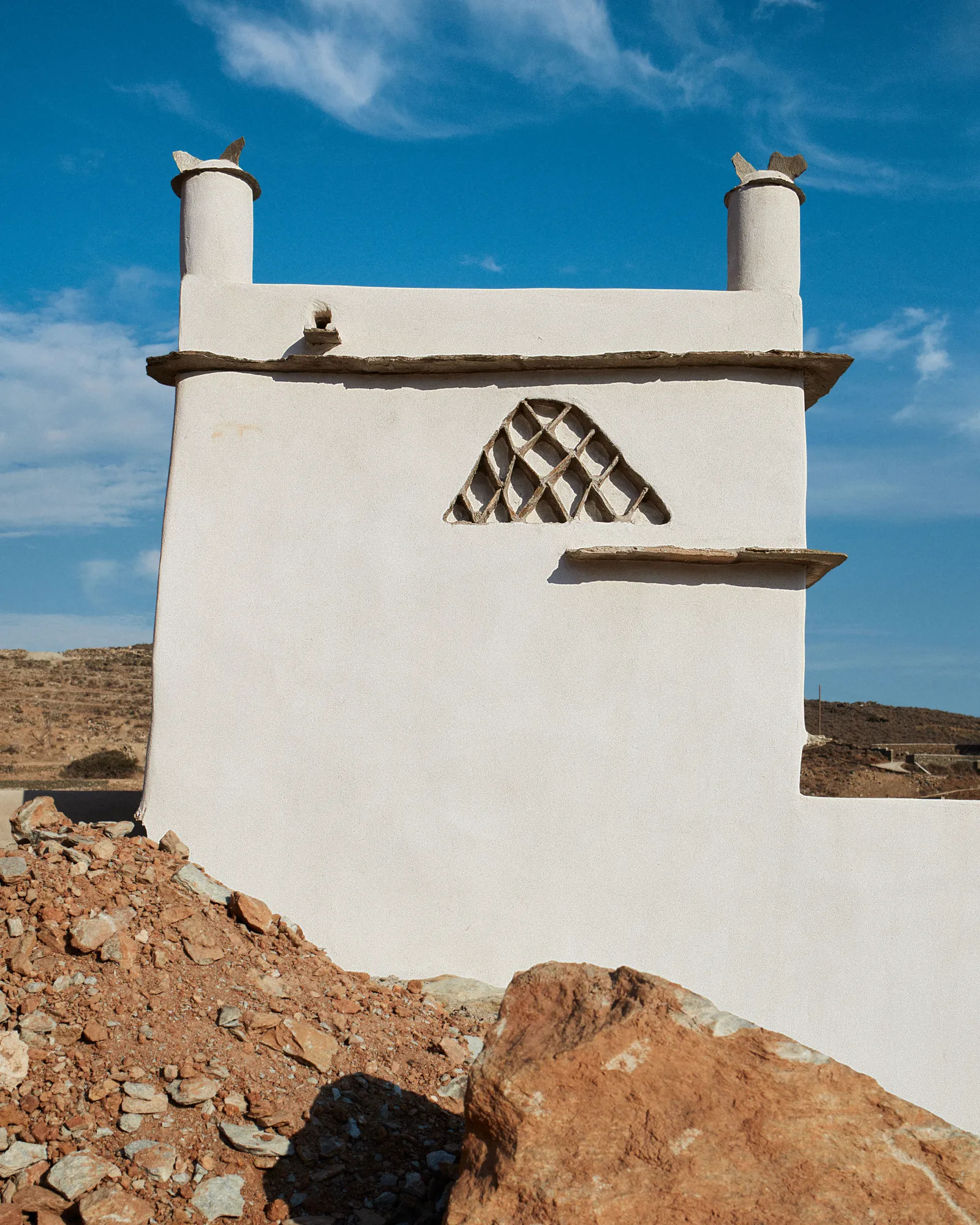
Inscribed with lozenges, solar motifs, and triangles, those buildings’ facades operate as a semiotic field projecting a language of ownership, identity, and craft transmitted across generations. Primarily housing pigeons, once vital to the island’s economy, their true function exceeds the pragmatic, transforming agricultural infrastructure into a constellation of signs. The signifier is skilful, tactile, handcrafted; the signified unfolds through collective memory and shared knowledge.
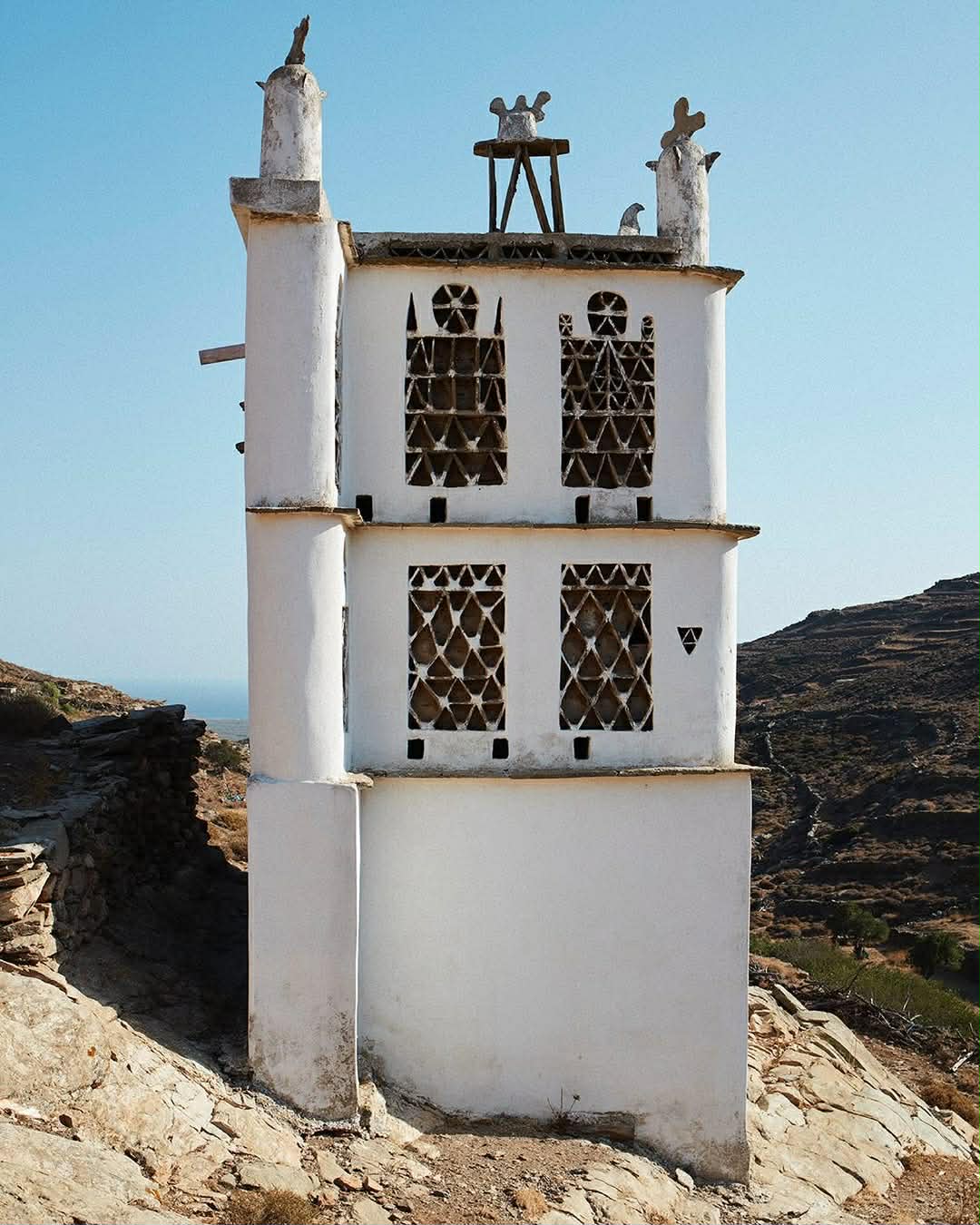
Moving through this landscape is an act of subconscious reading. The dovecotes establish rhythms, distances, and alignments, transforming territory into text.
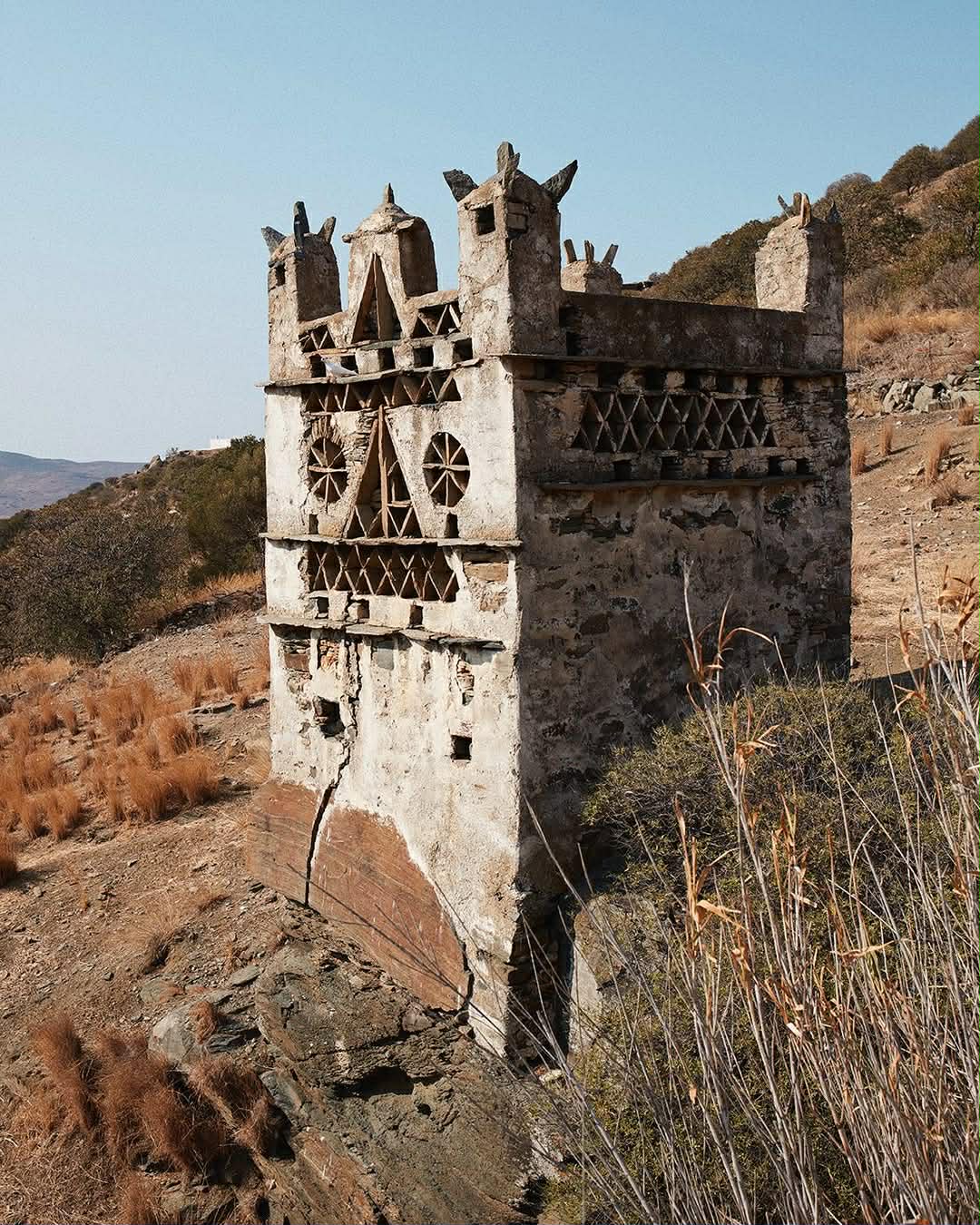
In their repetition, they generate a dispersed monumentality, echoing Aldo Rossi’s notion of collective memory (Rossi, 1982). Not singular objects, but components of a larger network unfolding as an architecture of accumulation and variation, the dovecotes construct a collective image of place, revealing how architecture can encode shared cultural memory.
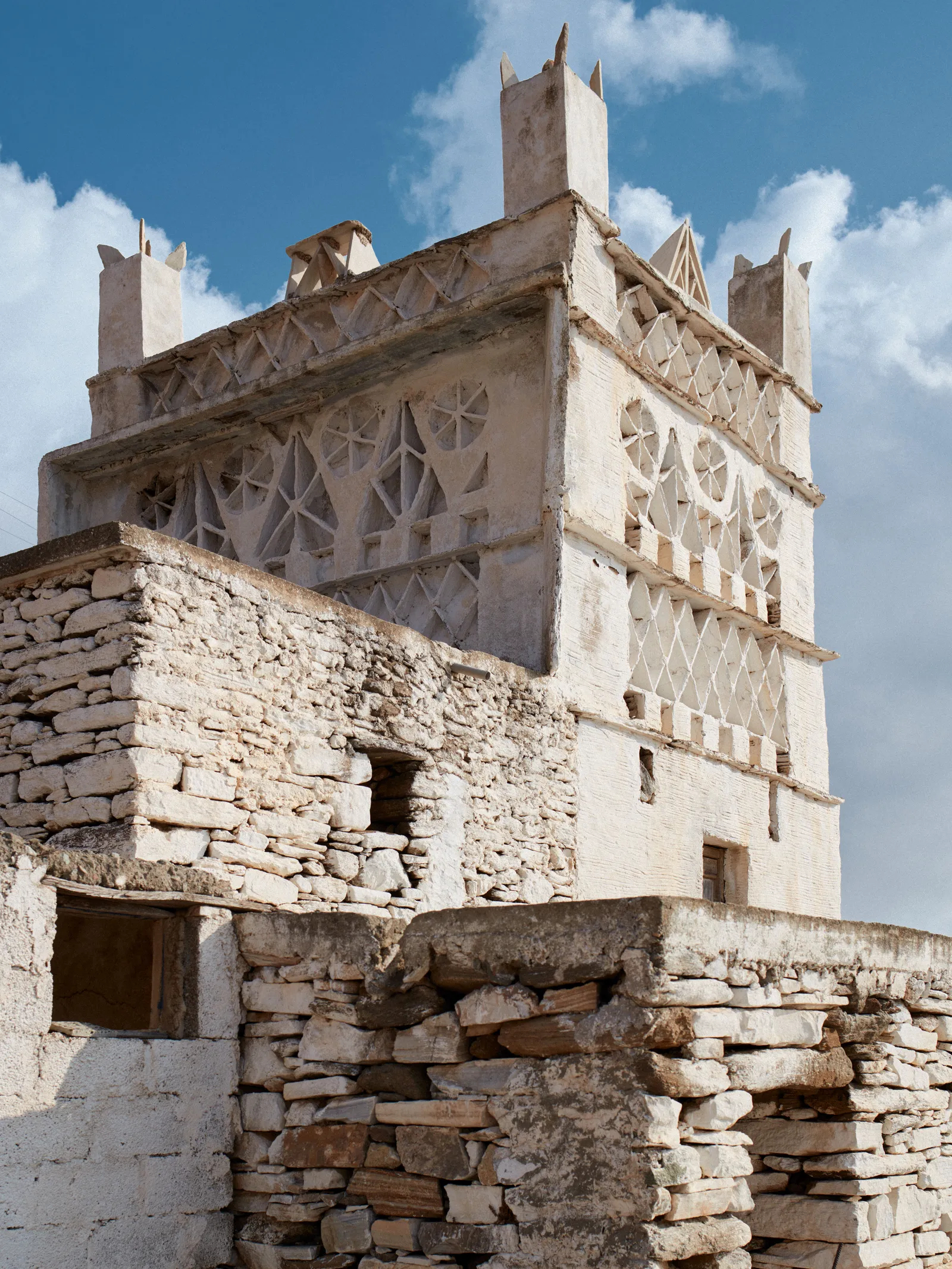
In this sense, they are symbols not because they represent something else, but because they intensify what is already there—time, labor, and land.
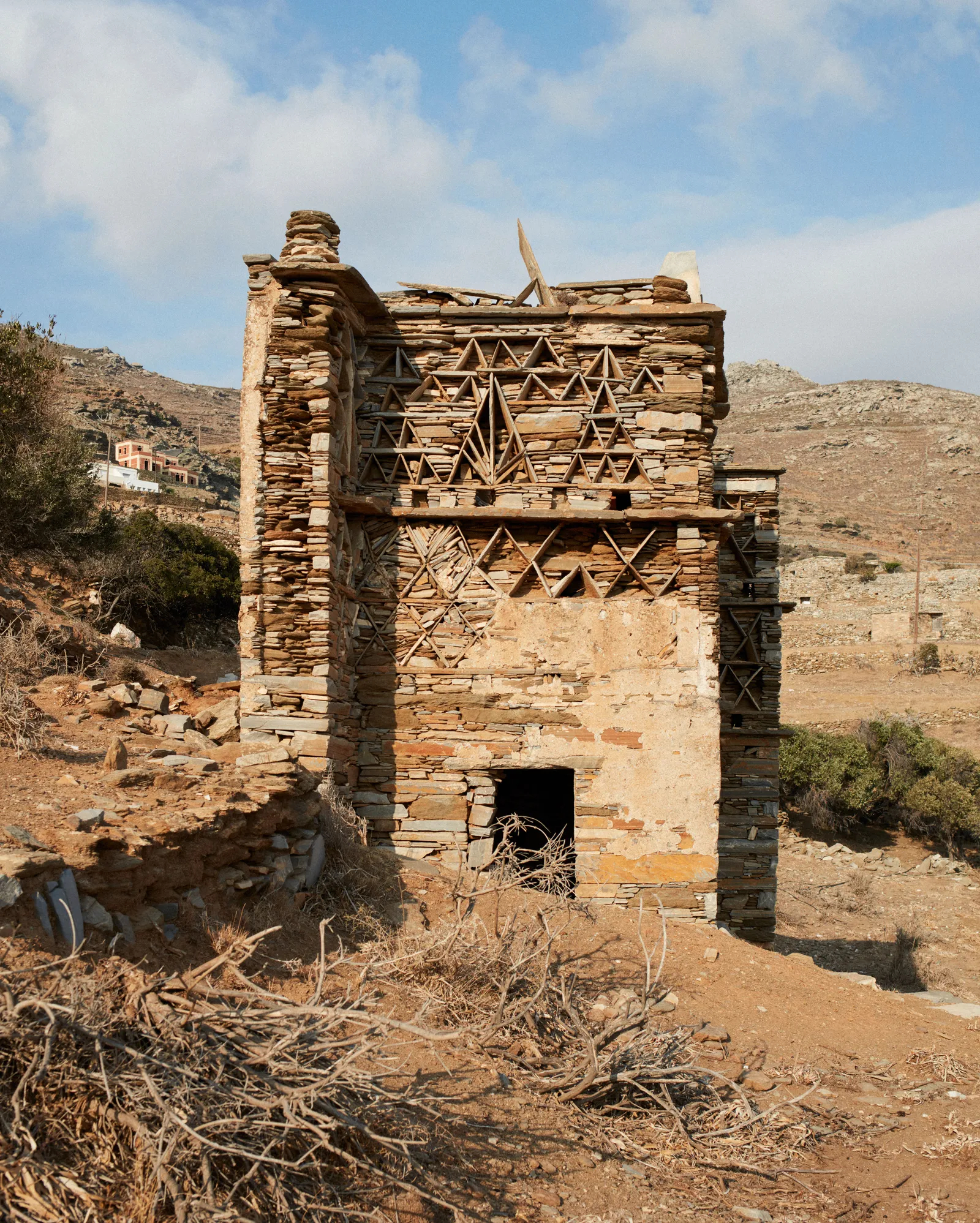
Phenomenologically, the dovecotes are not simply objects but presences; their existence is not solely visual. It is atmospheric, haptic, embedded in the sensory field described by Juhani Pallasmaa, where architecture is experienced as much through the body as through the eye (Pallasmaa, 2005). Light, texture, wind, and time converge upon their surfaces. They are inseparable from the terraces they overlook, from the stone walls that fold the terrain into inhabitable fragments. The body perceives them not as isolated buildings but as rhythmic interruptions—markers of distance and continuity.
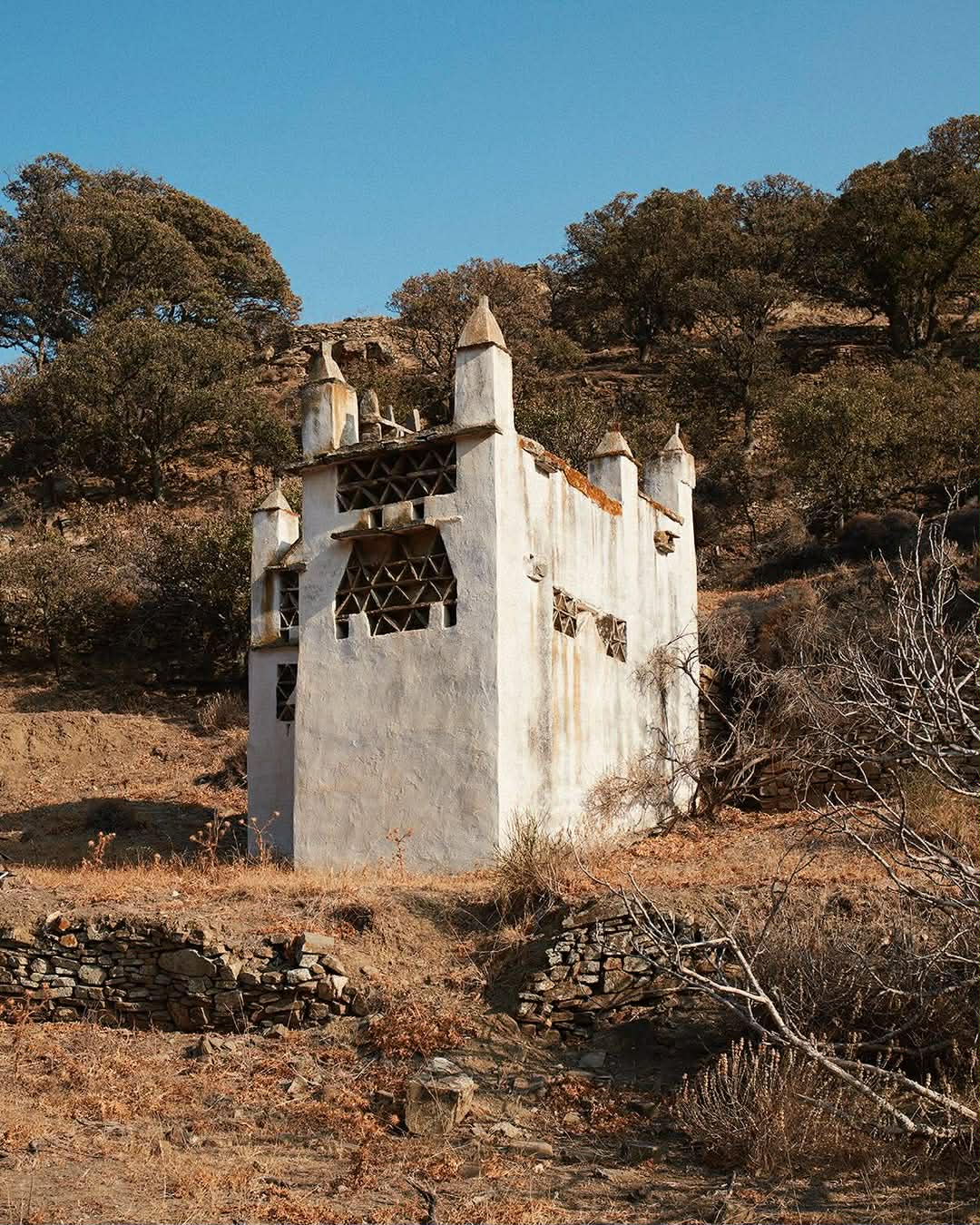
Far from merely belonging to the landscape, these ornamented buildings signify it, rendering its latent qualities perceptible.
Phare by BUREAU: Maritime Infrastructure Crafting the Sense of Belonging
“Few programmes offer such strong and evocative poetic substance as a lighthouse. The lighthouse is both place and object, inspiring reverie, the imagination of distant lands, but also of return—a landmark, a symbol of safety after stormy voyages. It is the very embodiment of its purpose: to carry and bring light,” writes architect Daniel Zamarbide of BUREAU, capturing the pharos’s semiotic power.
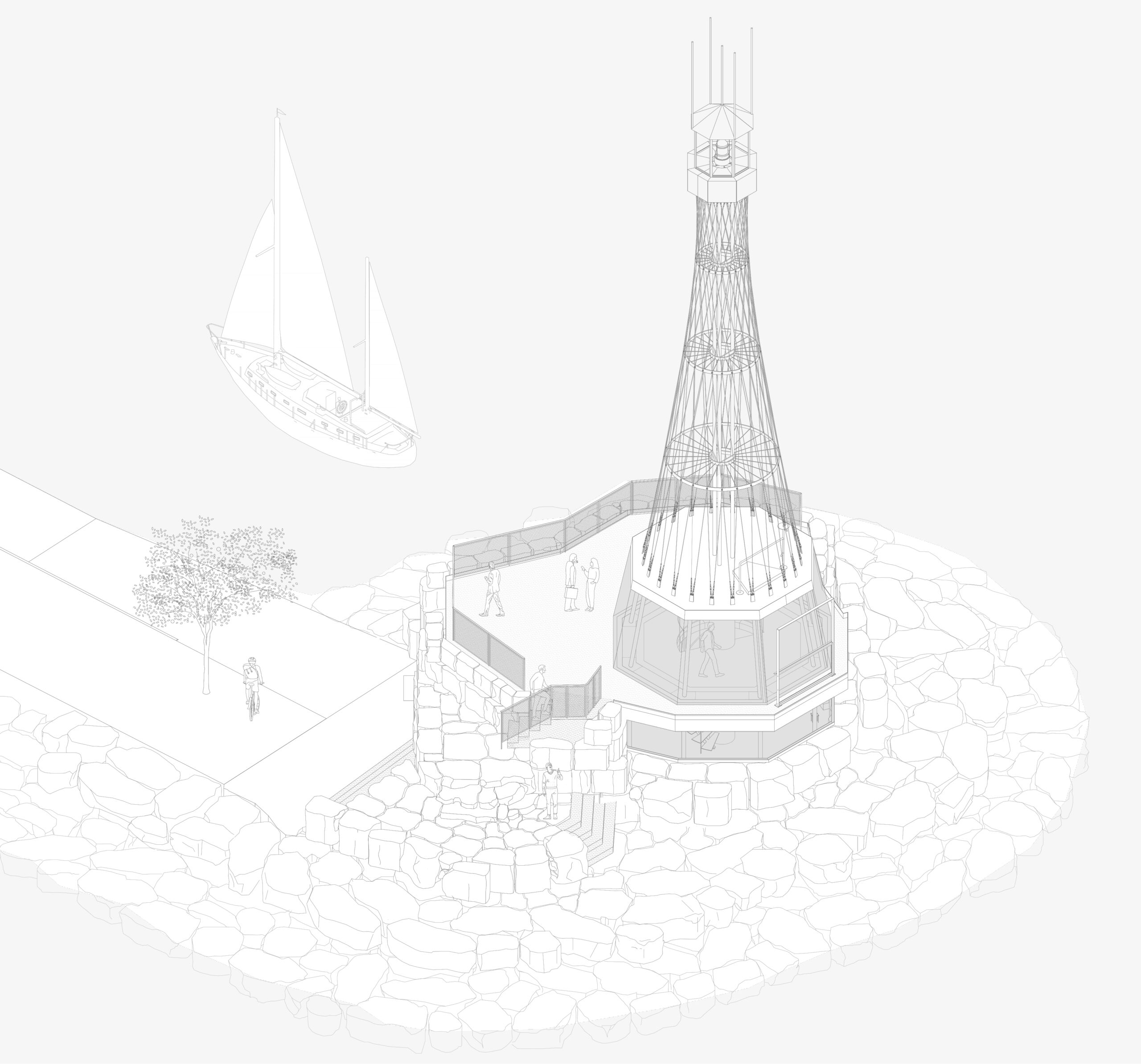
Rooted in the legacy of the Pharos of Alexandria, one of the Seven Wonders of the Ancient World, a lighthouse is maritime infrastructure: a tall, luminous tower at the edge of land, the first—or last—vertical sign a seaman encounters.
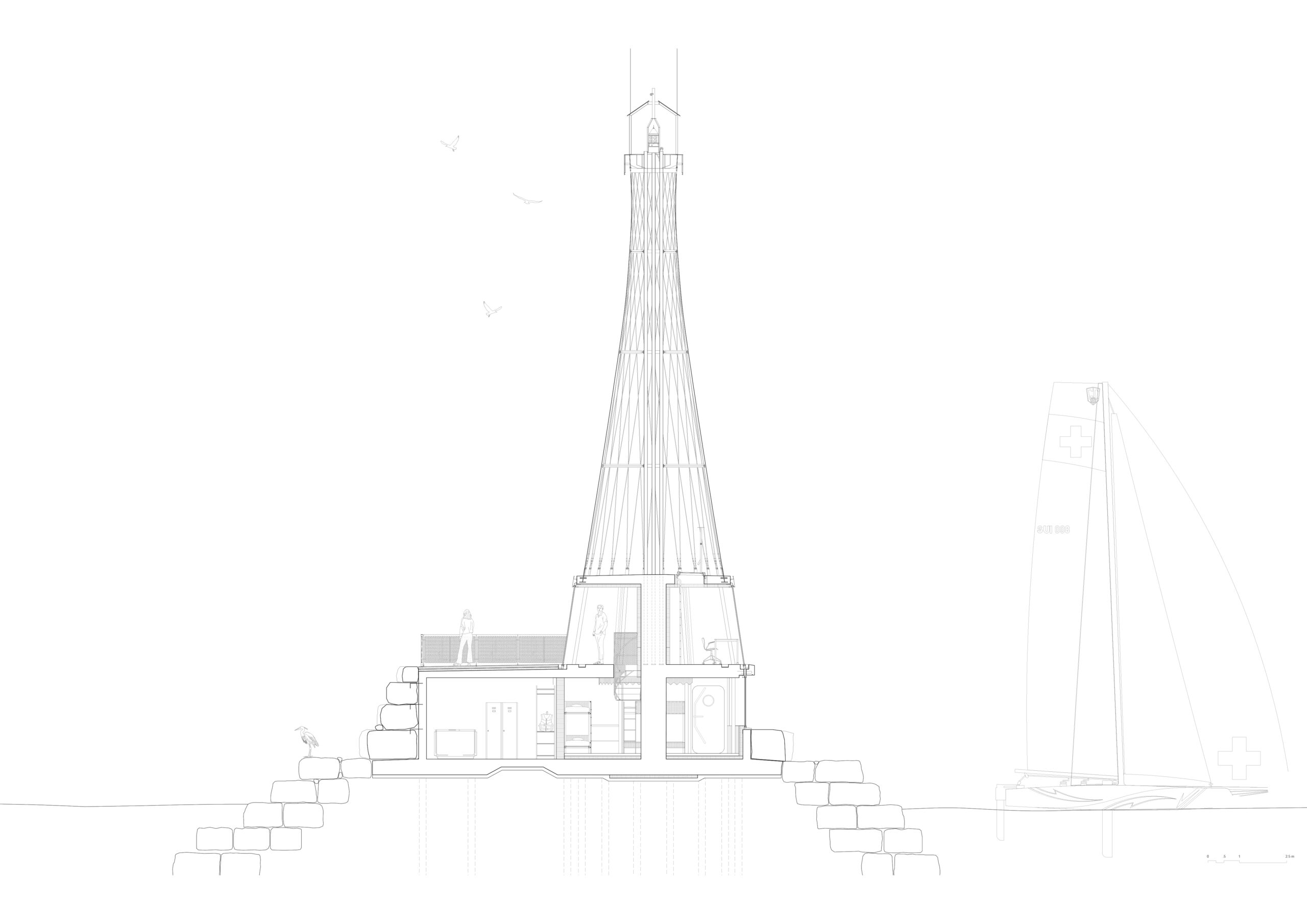
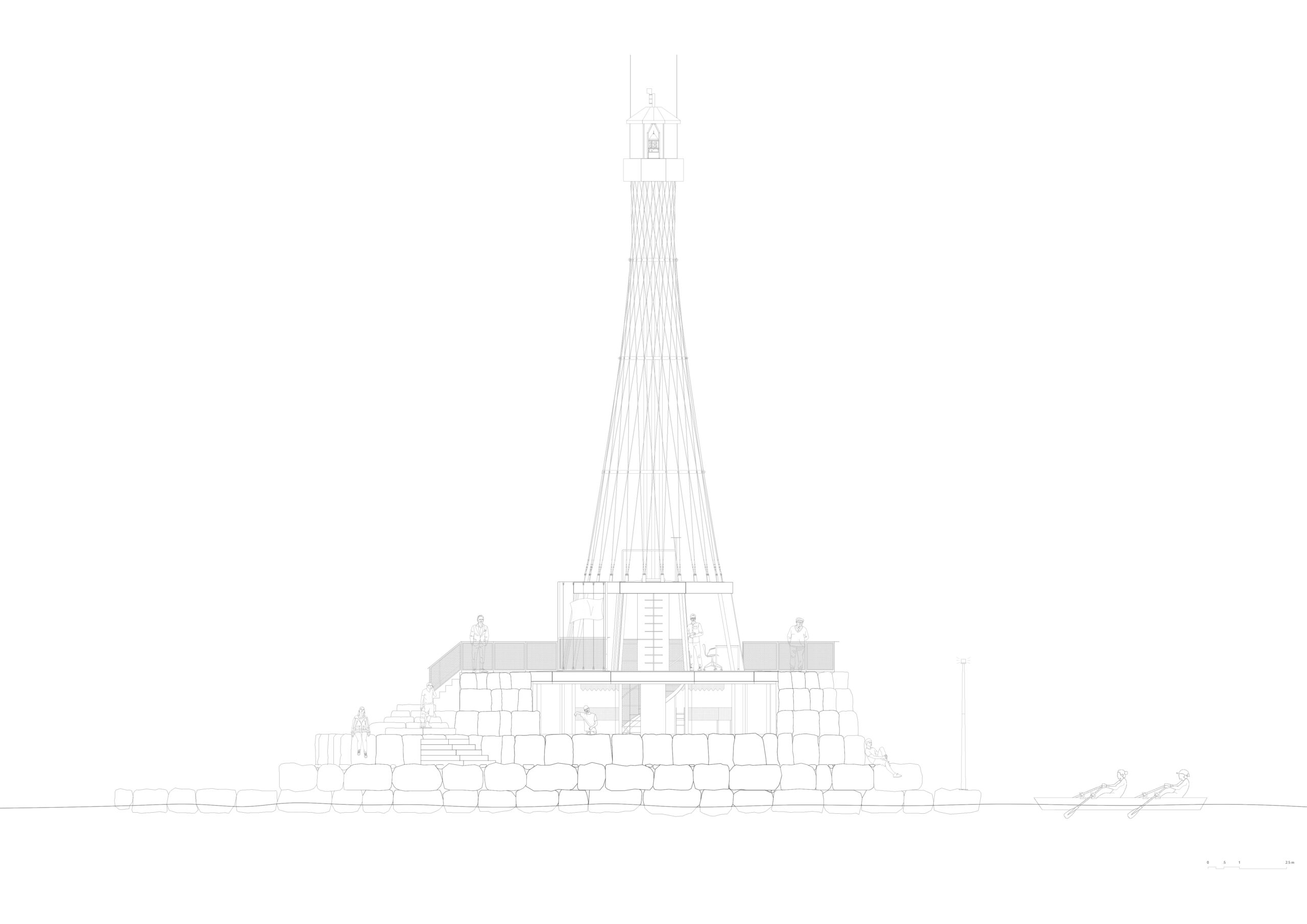
On Lake Geneva, The Adziogol Lighthouse asserts itself amid riprap, a tribute to Russian engineer Vladimir Shukhov’s hyperboloid structures.
BUREAU allows the lighthouse to dissolve into “a mirage, an architecture of landscape and transparency, an object and a structure, an artefact that plays with appearance and disappearance, its evanescence in the sky.”
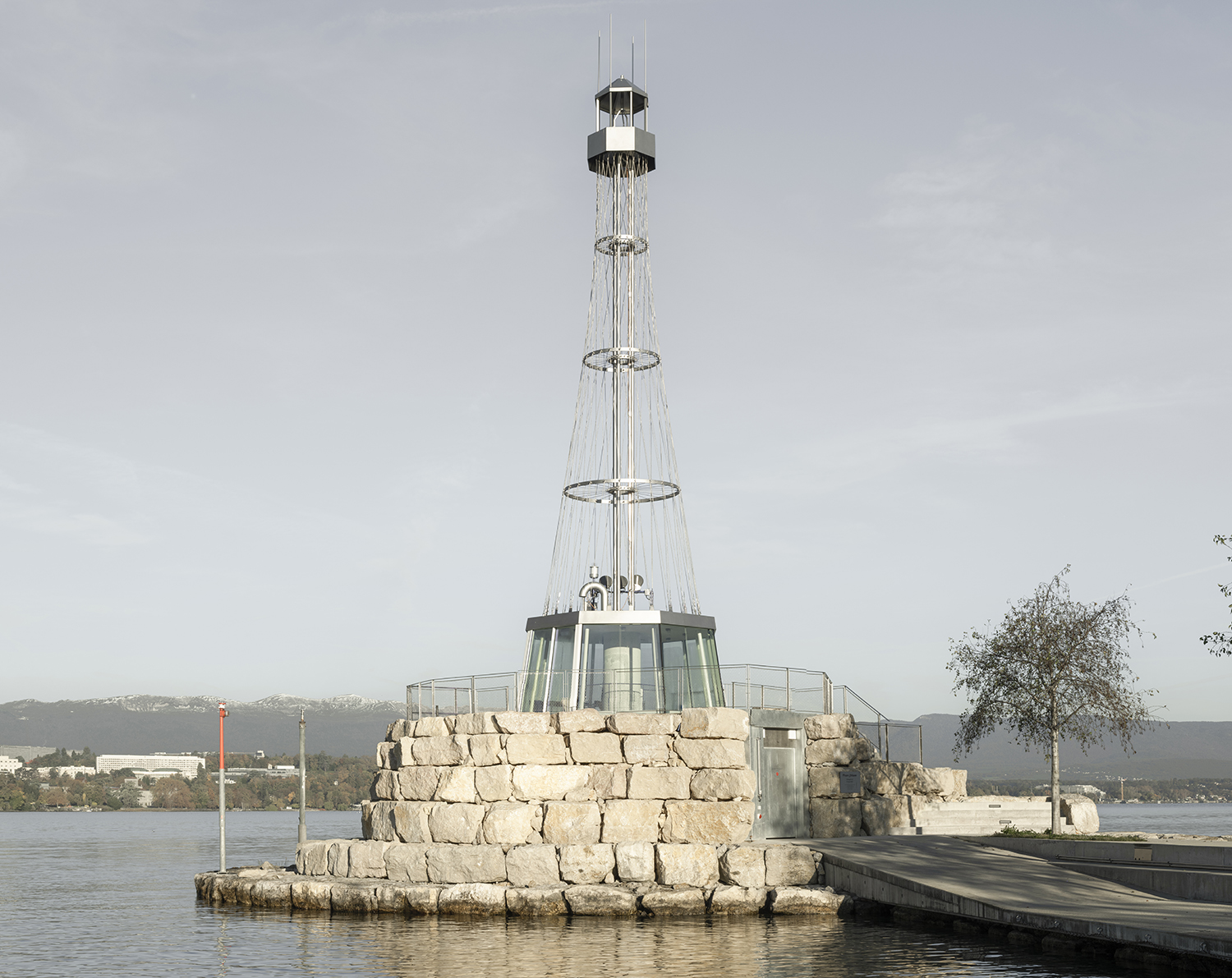
While unfolding as an event of light and atmosphere, yet it remains anchored, rising from a mineral base that binds it to earth, gravity, and matter.
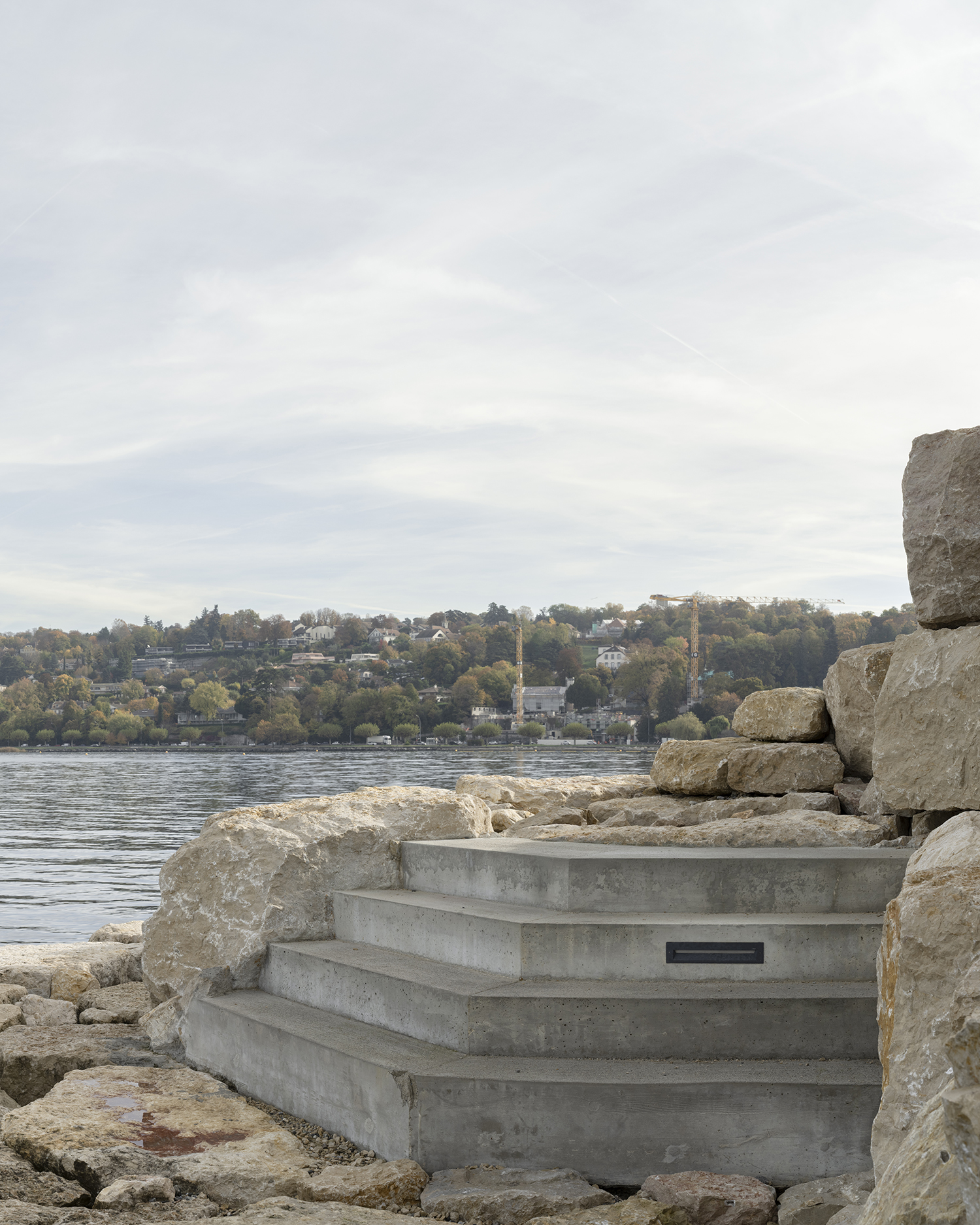
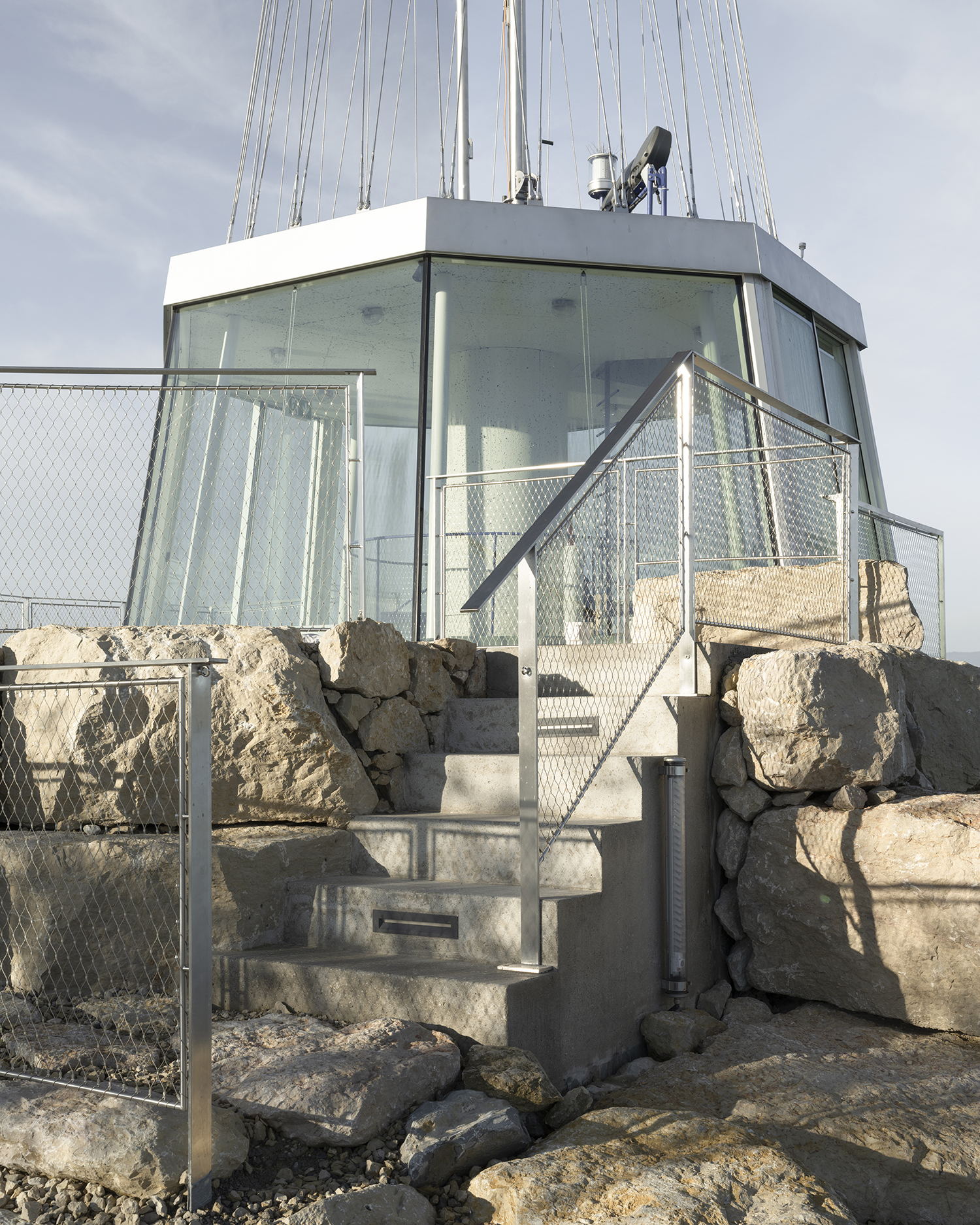
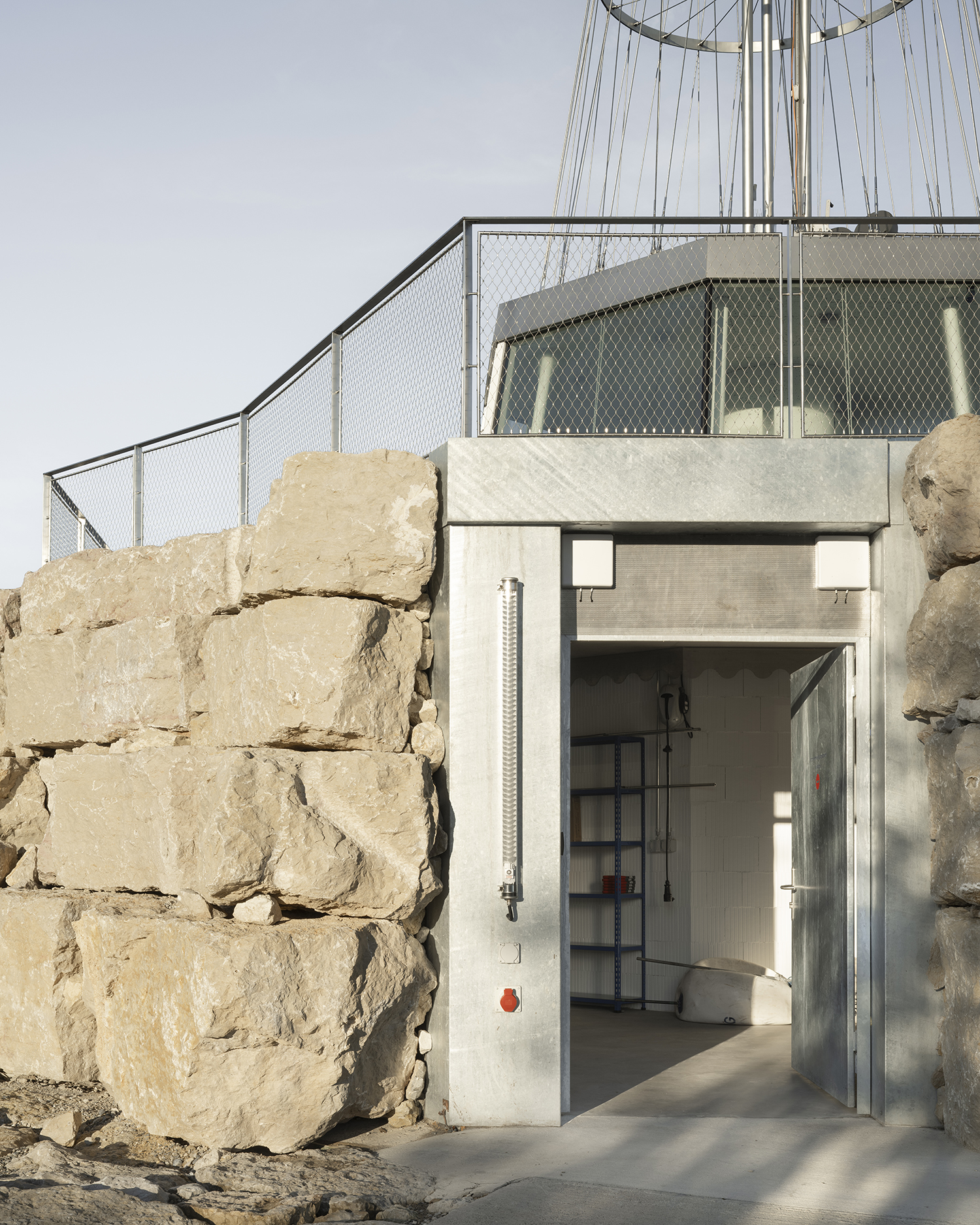
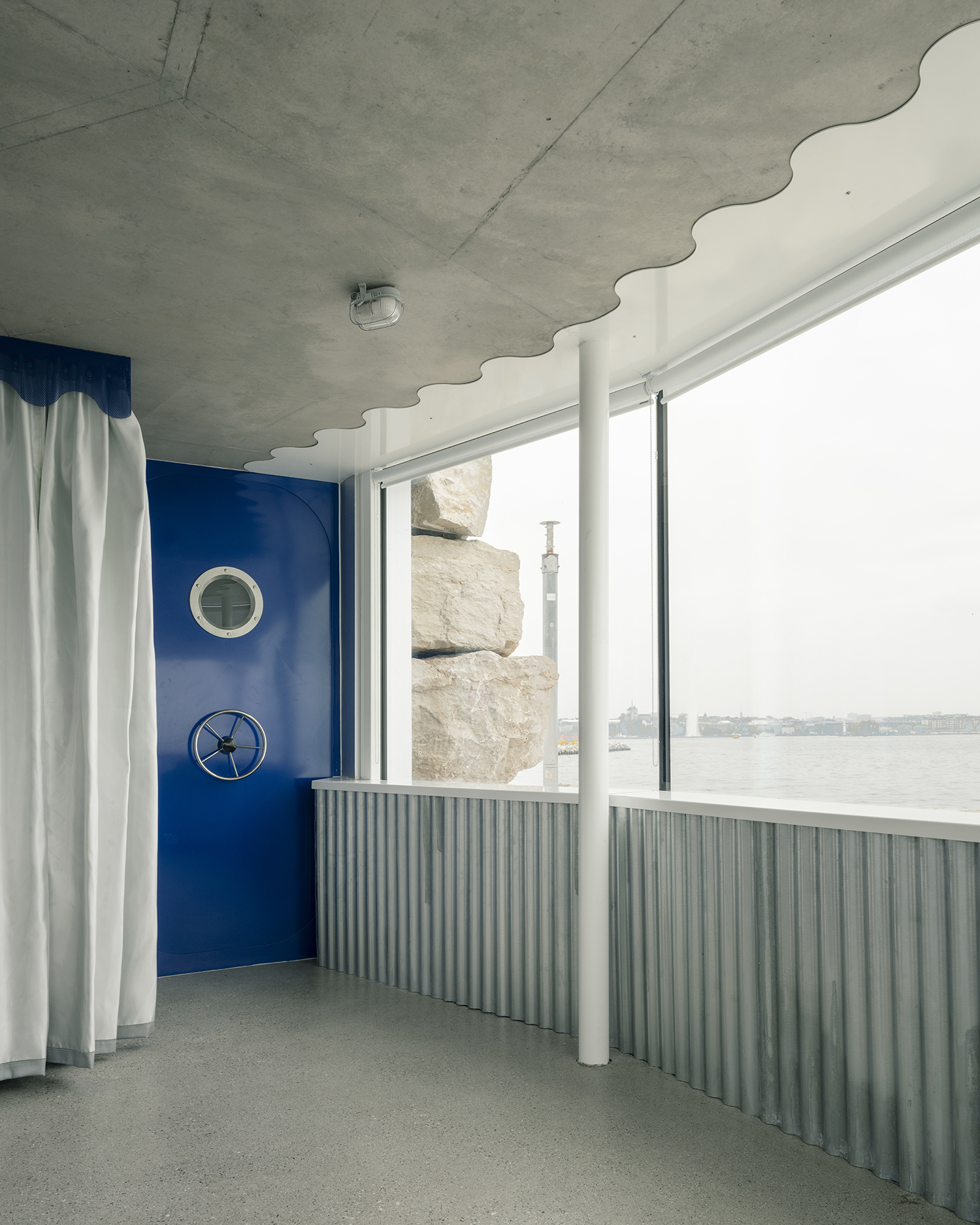
The three-story project offers a rich, multifaceted experience: a base living space with panoramic views and a César Manrique-inspired interior, an upper cabin evoking a compact boat experience over the lake, and a dynamic lantern, adjustable via an integrated guidance system, creating interactive, intimate, and expansive connections with the surrounding landscape and harbor.
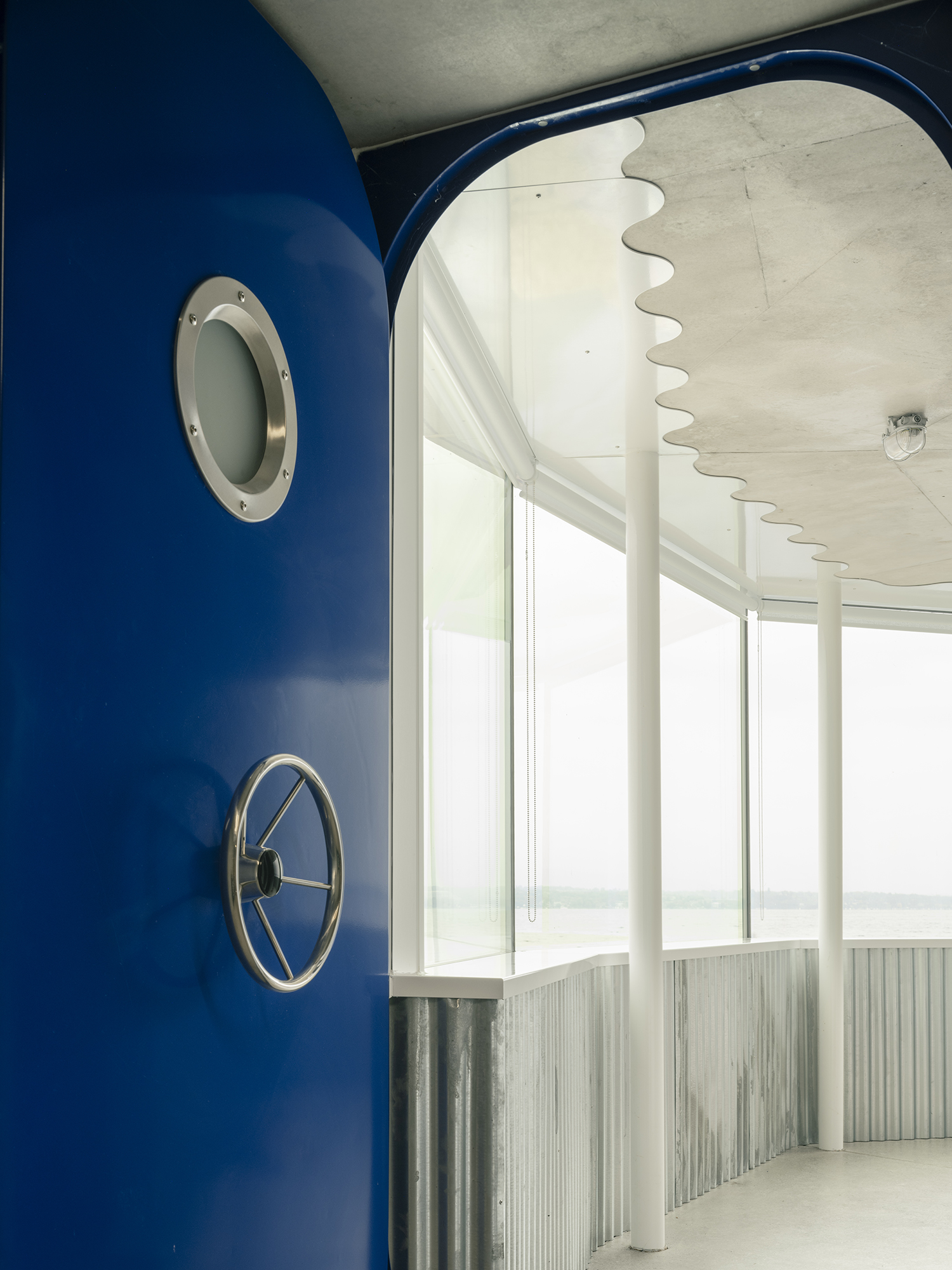
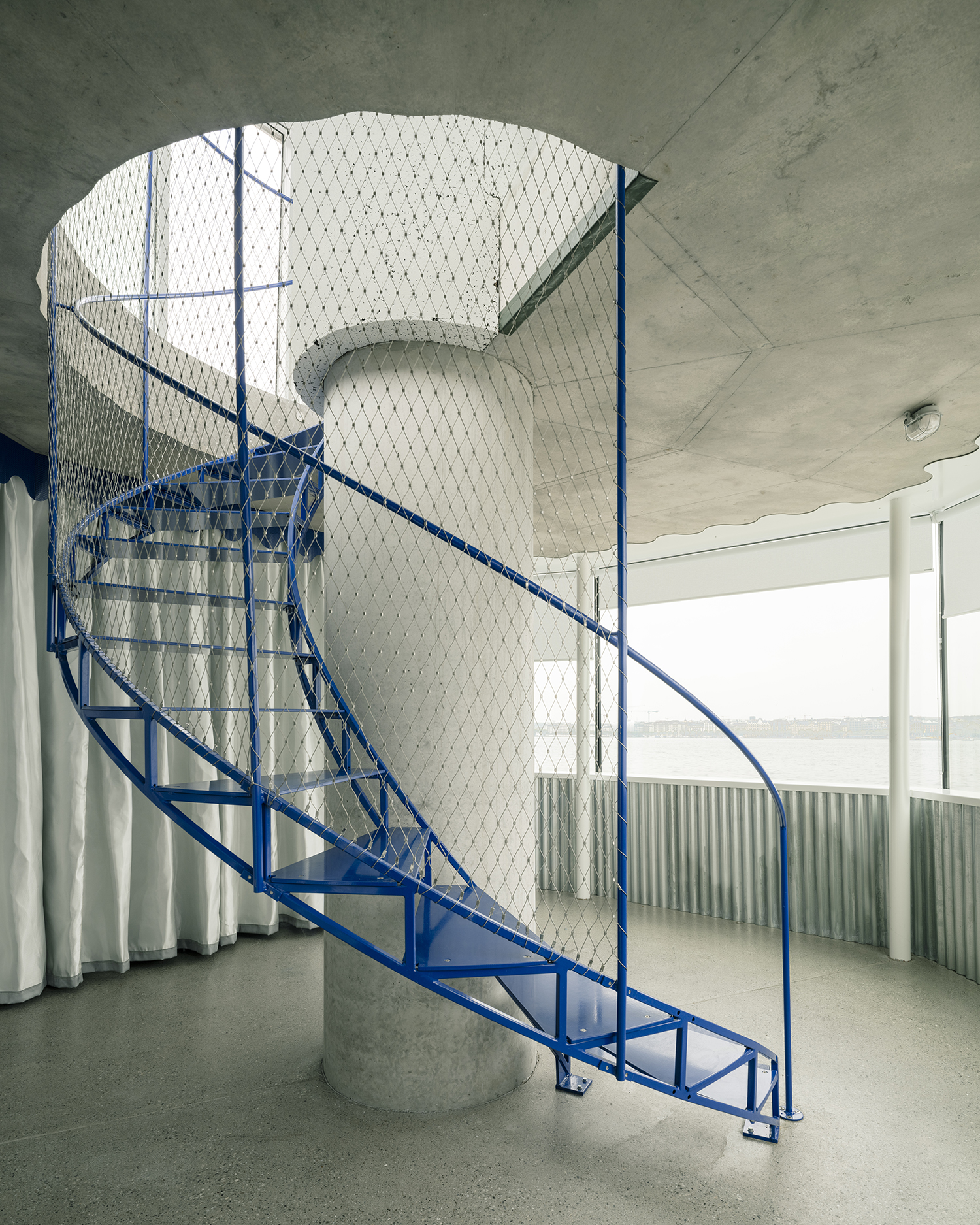
As a sign, the lighthouse approaches the absolute. Its verticality signifies orientation; its light signifies return. Yet the distinction between signifier and signified collapses.
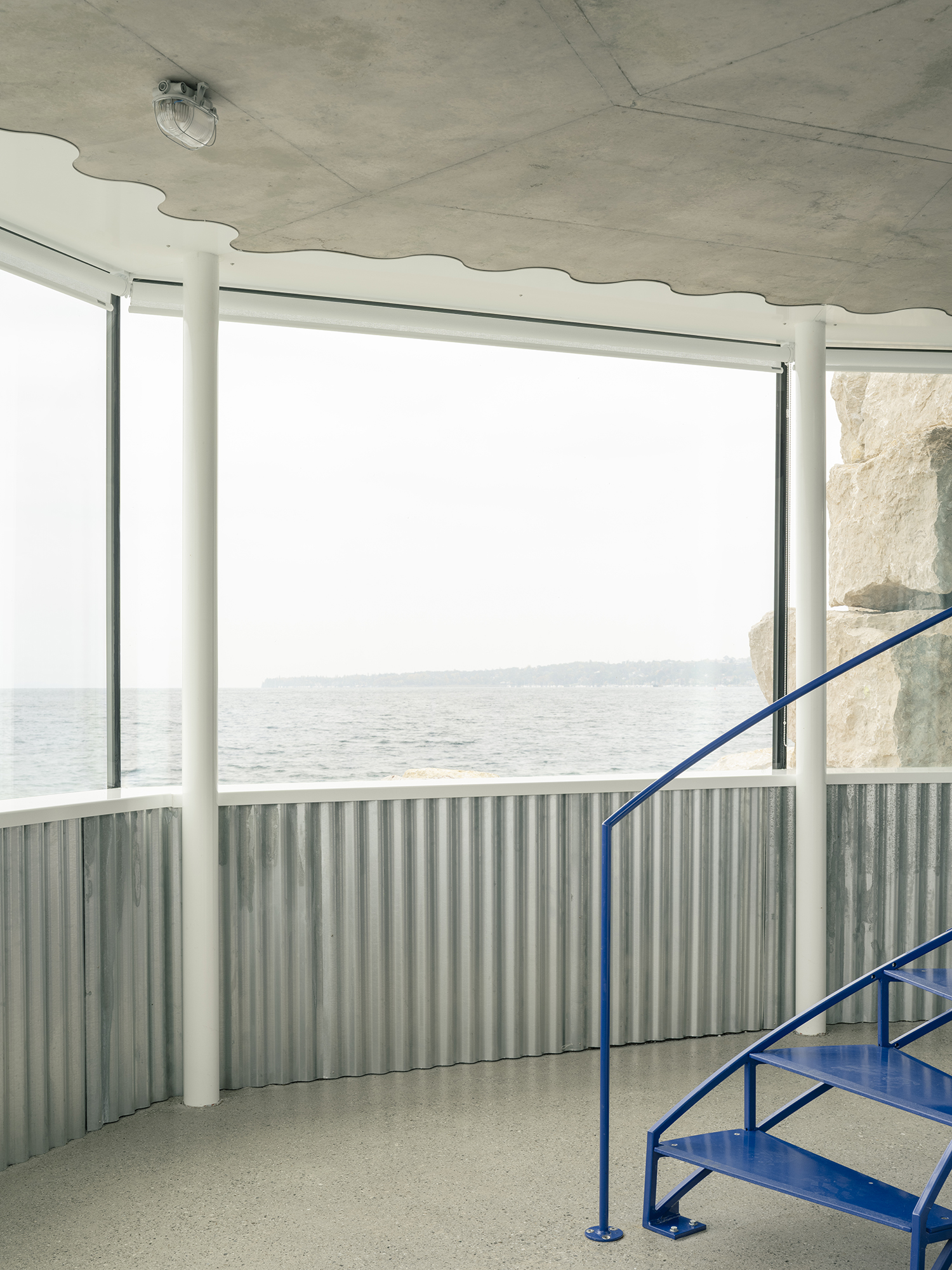
This pharos does not merely represent guidance, it performs it; its dematerialisation recalls the reduction described by Roland Barthes, where meaning intensifies as form withdraws (Barthes, 1977).
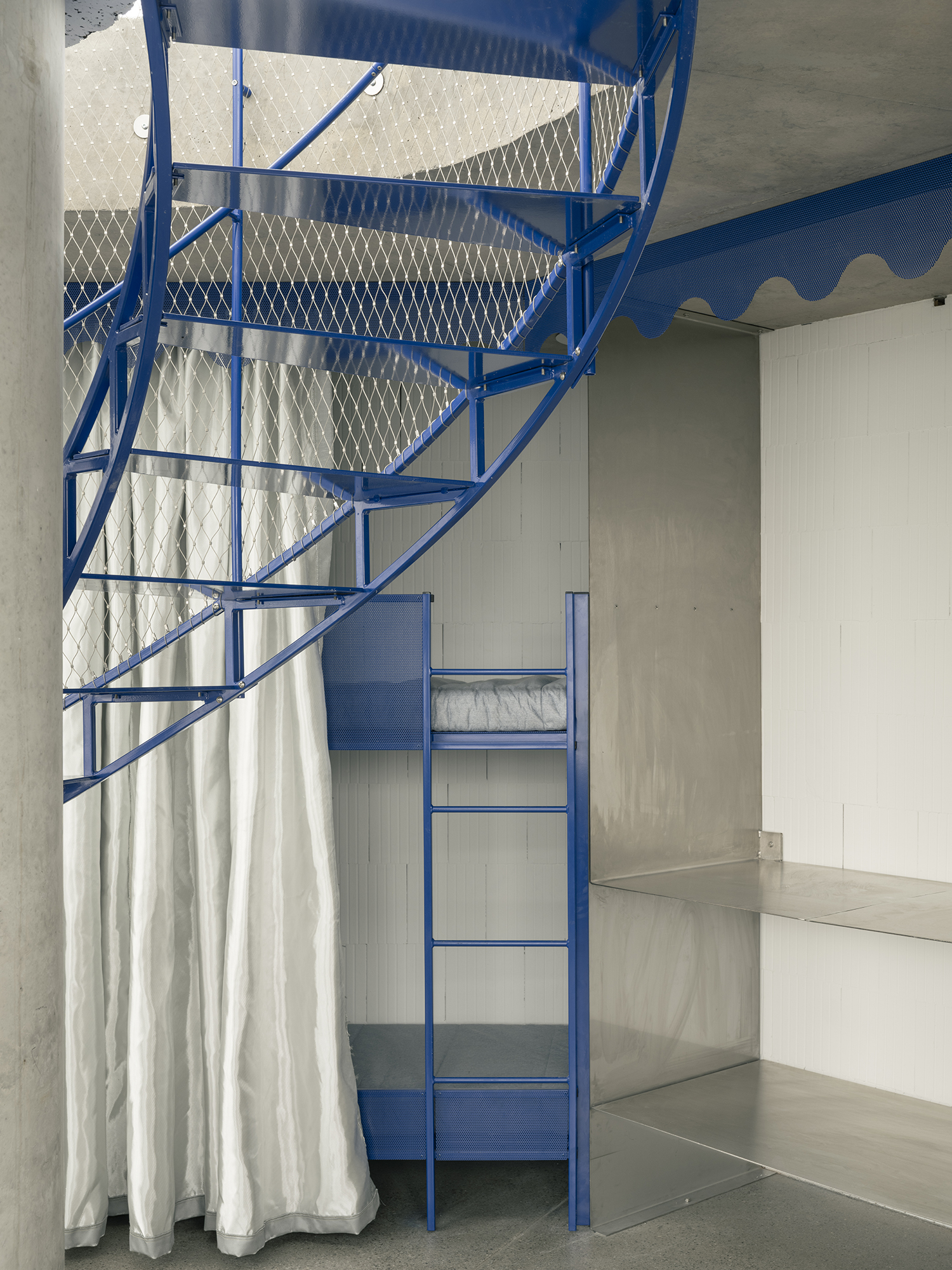
The lighthouse becomes temporal, contingent, atmospheric—architecture existing in the interval between presence and absence, departure and return, light and darkness. It is not simply seen. It is anticipated, remembered, encountered.
The Land of Wells by Collective Bled el Abar: Community Infrastructure Crafting the Everyday
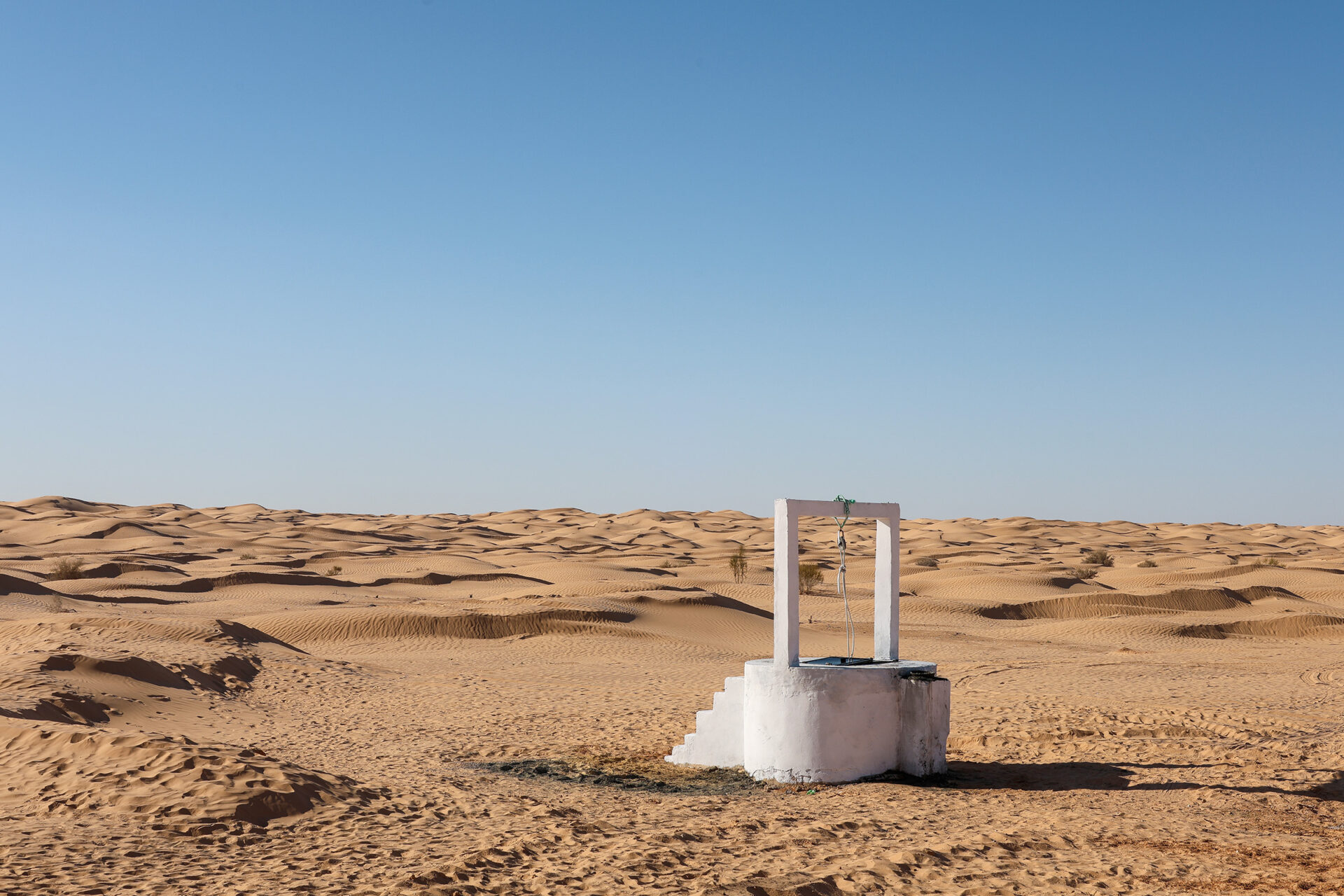
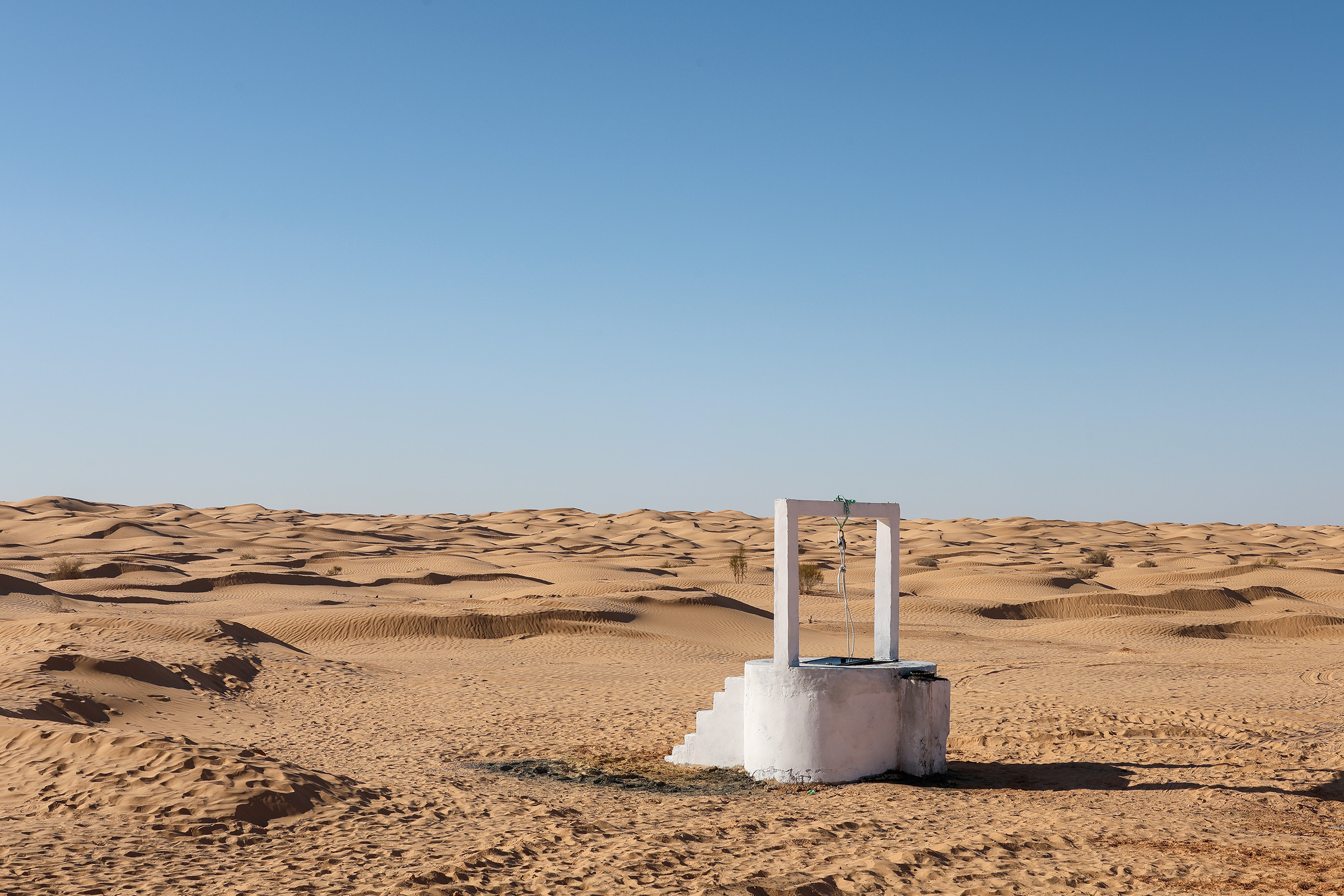
If the dovecote and the lighthouse reaches outward, the well turns inward, carving its meaning into the earth. In the dunes of the Grand Erg Oriental in the Tunisian Sahara desert, the restored well of Bir Ettin, realised by Collective Bled el Abar, reveals an architecture stripped to its essential condition.
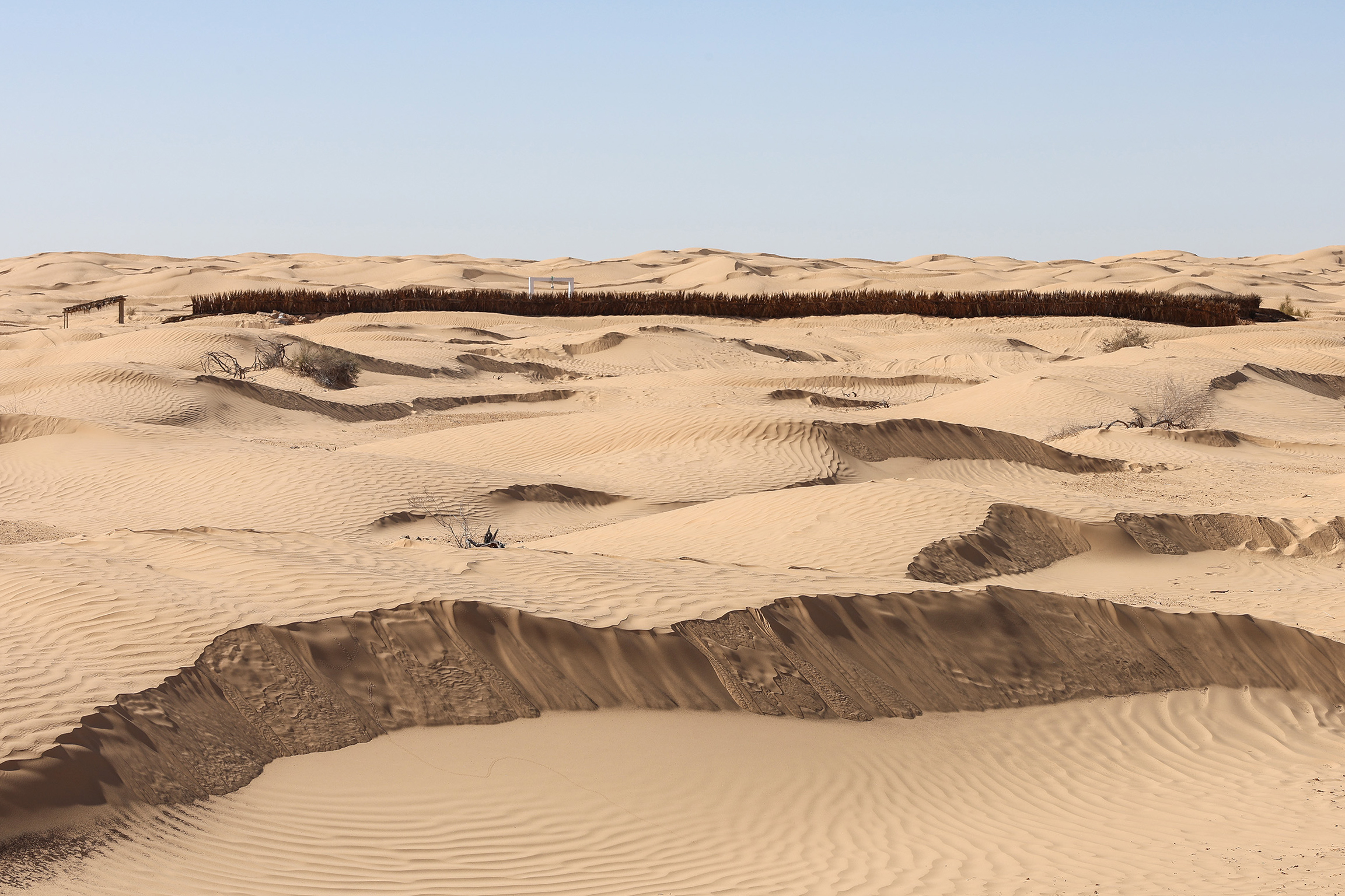
The modest well, built in traditional masonry, stands over 30 kilometers from the nearest inhabited village, along routes traversed for millennia by North African pastoral nomads. Before it silted and collapsed, it served as a watering point for camels, goats, and sheep, and as a refuge for the shepherds guiding them through the desert. Once buried and abandoned, its zero-waste revival was carried out collectively, deliberately, almost ritualistically: removing the sand, cleaning and restoring the well and its trough, shielding it from sand-laden winds with hedges of date palm fronds, and erecting a shelter of palm wood. The project listens to the site rather than imposing upon it.
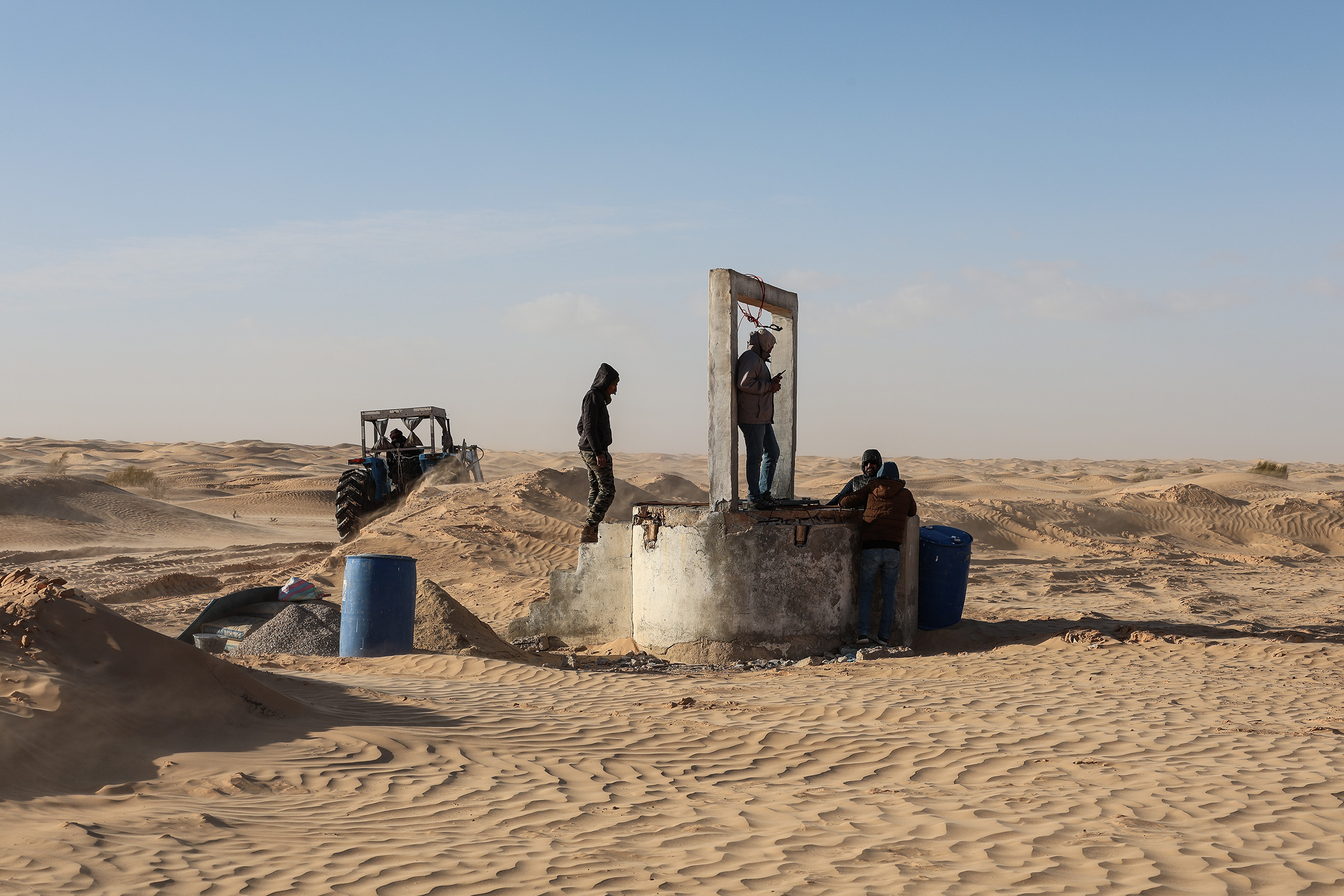
“The restoration took four days and twelve people: two transporters, two coordinators, two masons, two carpenters, one digger operator, one water well specialist, and two architects. As soon as water filled the trough, herds, migratory birds, and insects came to drink,” explain Collective Bled el Abar.
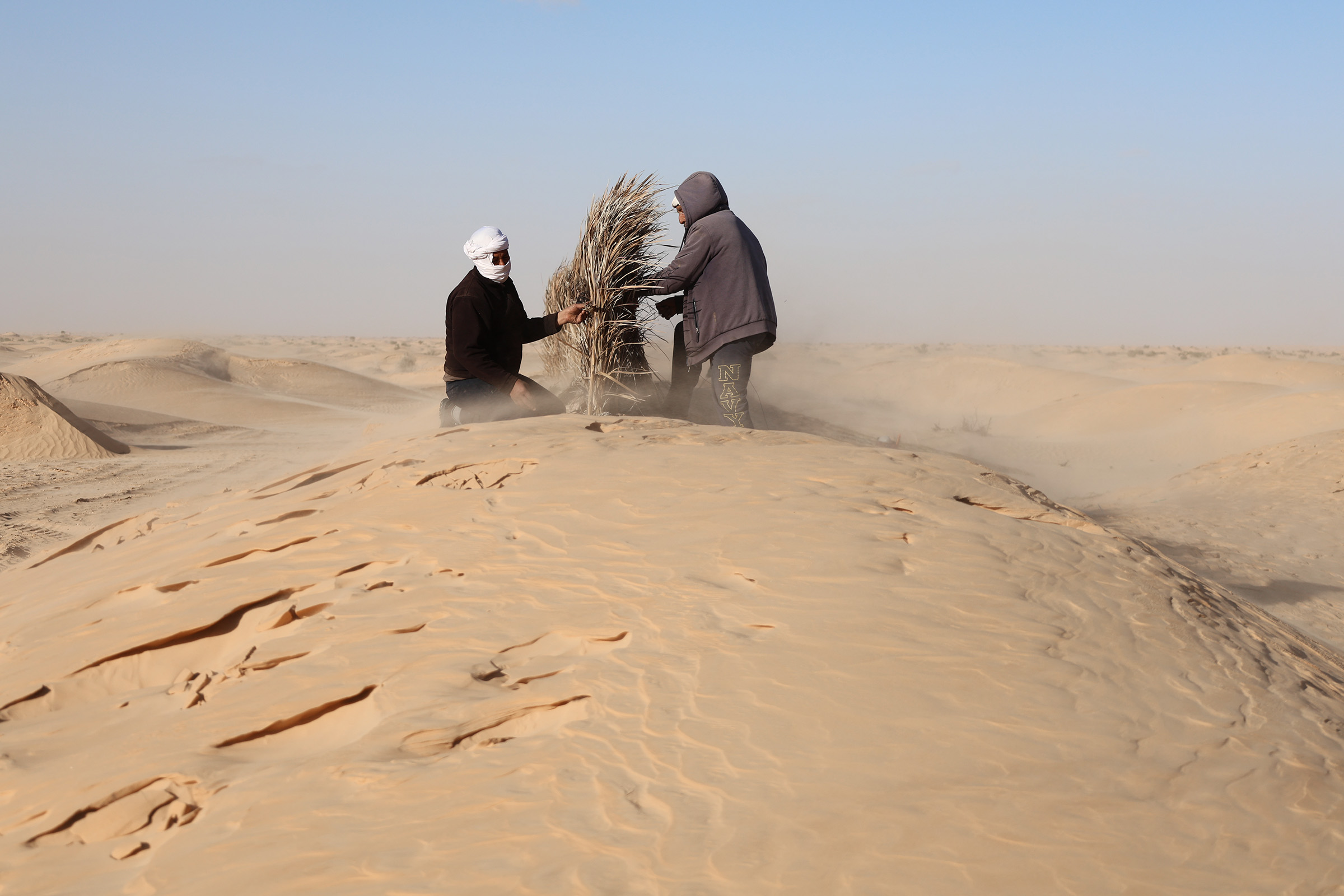
In this act of restoration, architecture returns to its most essential condition: enabling life. The well is no longer an object, but a node within a living network of movement —human, animal, atmospheric. Its semiology is immediate: water equals survival.
Yet beyond this, it operates as a landmark, a point of gathering, a temporal anchor in a landscape defined by flux.
Its form is archetypal: a cylinder, a void, a depth of eighteen meters. Its signifier is elemental: a circular opening in the sand. Its signified is layered: life, survival, connection. Rather than declaring itself, it reveals through necessity; its meaning not visual but experiential.
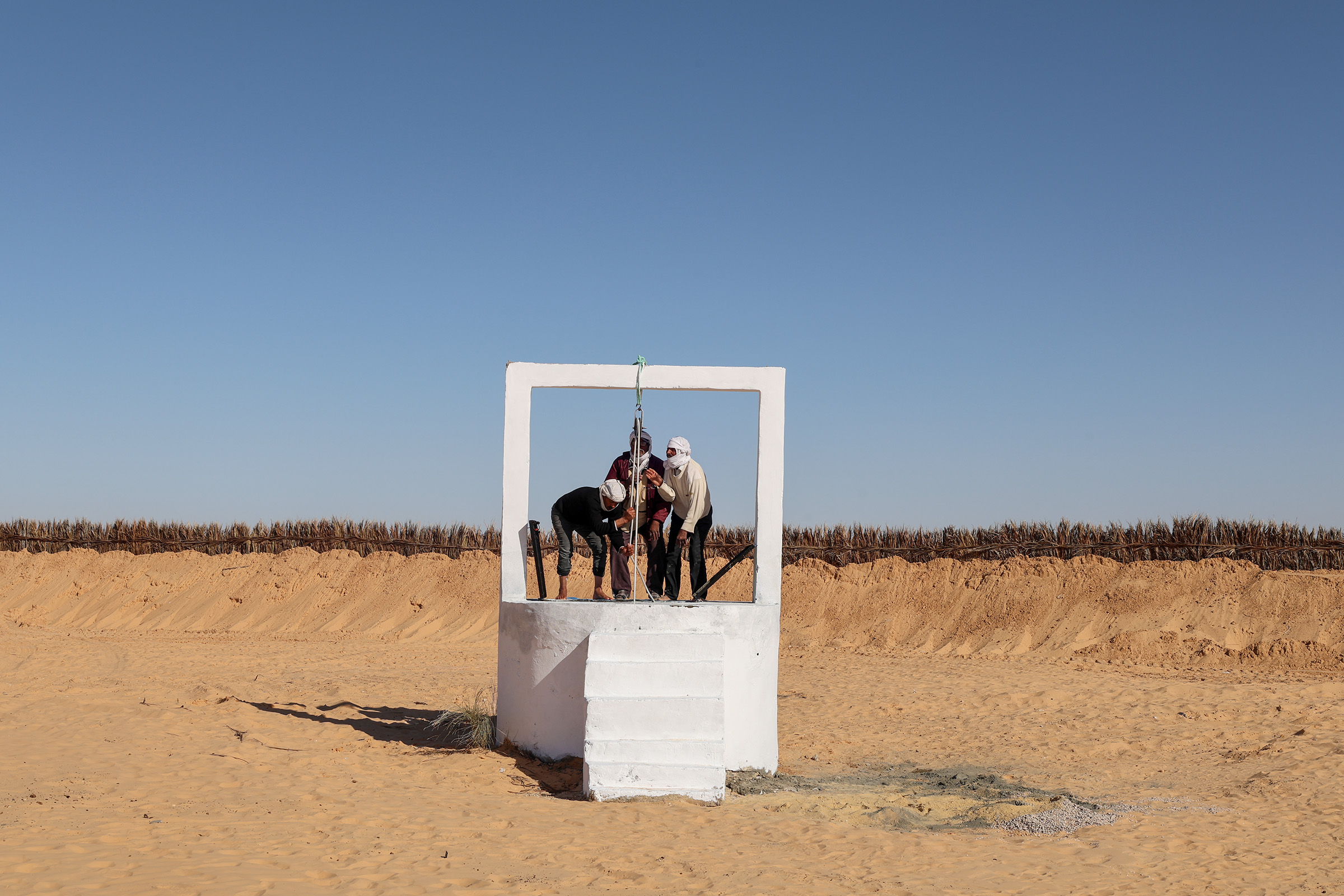
Encountered through thirst, walking, and effort, the well resonates with the elemental imagination described by Gaston Bachelard, where water becomes both material and metaphor, both necessity and dream (Bachelard, 1994).
It is also an artefact of collective memory, in the sense articulated by Rossi, persisting not through form alone, but through use and necessity (Rossi, 1982). Here, architecture is not a discipline but a subtle form of existence.
Universal Means Local Sometime
Between these three architectures—dovecote, lighthouse, well—a silent grammar emerges. One extends across the surface, inscribing identity into the landscape. One rises toward the horizon, articulating orientation. One descends into the earth, sustaining life.
What unites them is not form, nor scale, nor material. It is their capacity to operate as signs embedded in landscape—signs that are simultaneously functional, symbolic, and experiential.
The dovecote encodew identity through ornament and repetition.
The lighthouse articulates orientation through light and verticality.
The well sustains existence through depth and scarcity.
Together, they form a semiotic field in which architecture is not a collection of objects, but a network of meanings, a cultural narrative embedded in space. Each emerges from a precise set of conditions—economic, climatic, cultural—yet each resonates beyond its context. They speak of shelter, of guidance, of survival: archetypes that transcend geography.
What they reveal is both simple and radical: that architecture becomes universal through an uncompromising fidelity to place and necessity.
This is the paradox identified by Kenneth Frampton—that the most local architectures, precisely because they resist homogenisation, acquire a universal resonance (Frampton, 1983).
In these structures, signifier and signified converge. The dovecote is not a symbol of territory—it is territory. The lighthouse is not a symbol of guidance—it is guidance. The well is not a symbol of life—it is life. In phenomenological terms, these structures are not merely seen but lived. They construct what Christian Norberg-Schulz would call genius loci—the spirit of place—while simultaneously participating in a broader, shared human experience.
Architecture, here, becomes a metalanguage written in stone, light, and depth. A language that does not require translation, because it is already understood through embodied experience, memory, and the simple act of inhabiting the world.
And in that semiotic field, architecture is valuable because it is essential.