Architecture as a Performative Practice: The Beach
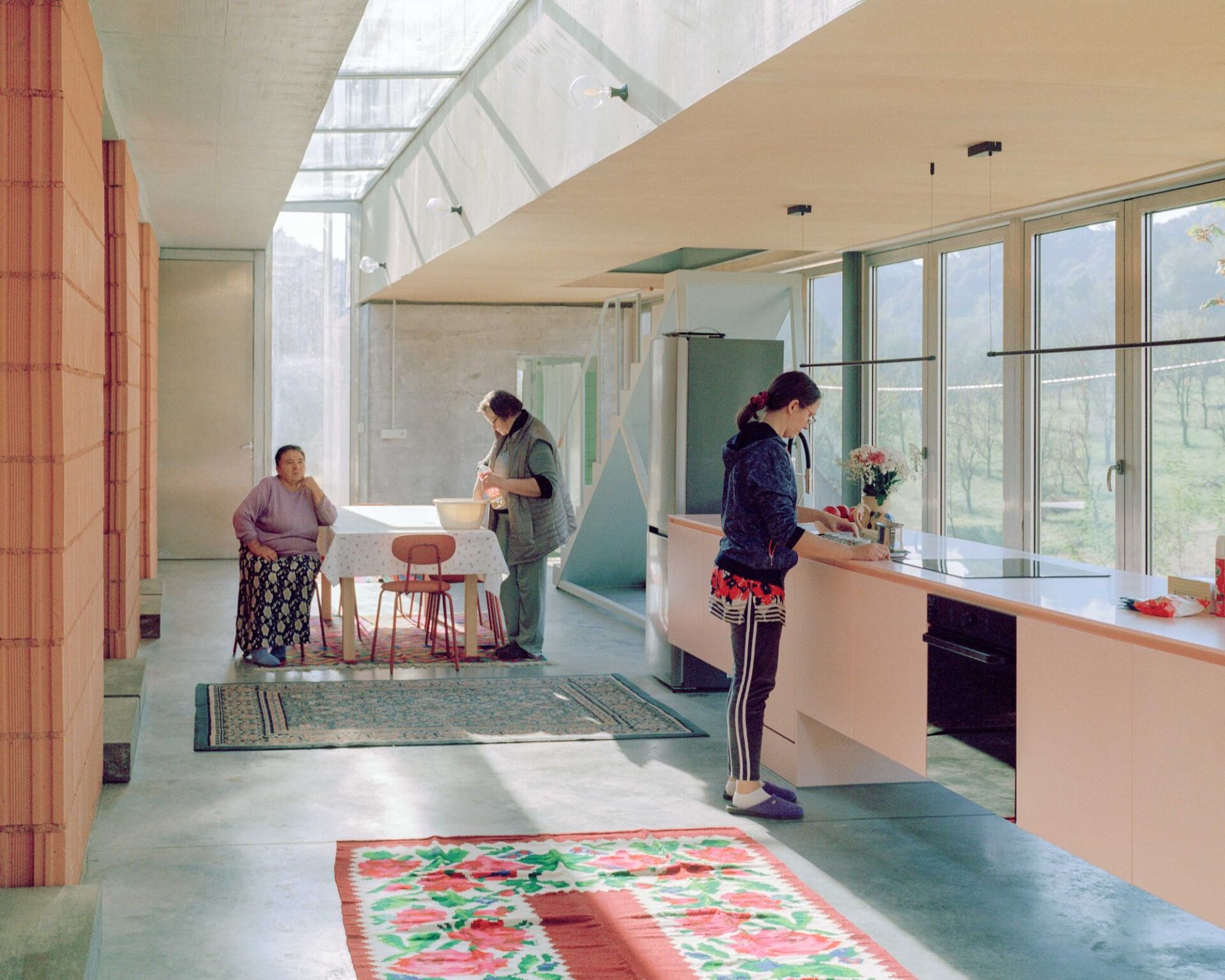
Architecture Depends (2009)—on what? British architect and critic Jeremy Till‘s answer is: on people, time, politics, ethics, and mess—the real world. Mixing anecdote, design, social theory, and personal experience, Till argues that architecture cannot be understood as an autonomous discipline defined solely by the production of buildings, but rather as a contingent practice defined by the production of space as experience and embedded within temporal processes.

Within this shift, space is understood not merely as a physical enclosure but as a field of dynamic assemblages composed of bodies, voices, movements, and narratives.

Architecture beyond the building thus becomes a performative practice—an act that produces spatiality through gestures, uses, arrangements, discourses, and social relations, working through storytelling and participation. In this sense, architecture emerges as the orchestration of relationships, situations, and lived experiences, embracing the uncertainty and dependency that, according to Till, fundamentally define architectural practice.
The beach is often understood as a natural landscape, a place where land and sea meet in a dynamic relationship shaped by tides, wind, and geological processes.


Yet on a summer day the beach also becomes a social landscape, one that is continuously designed and redesigned by its users.

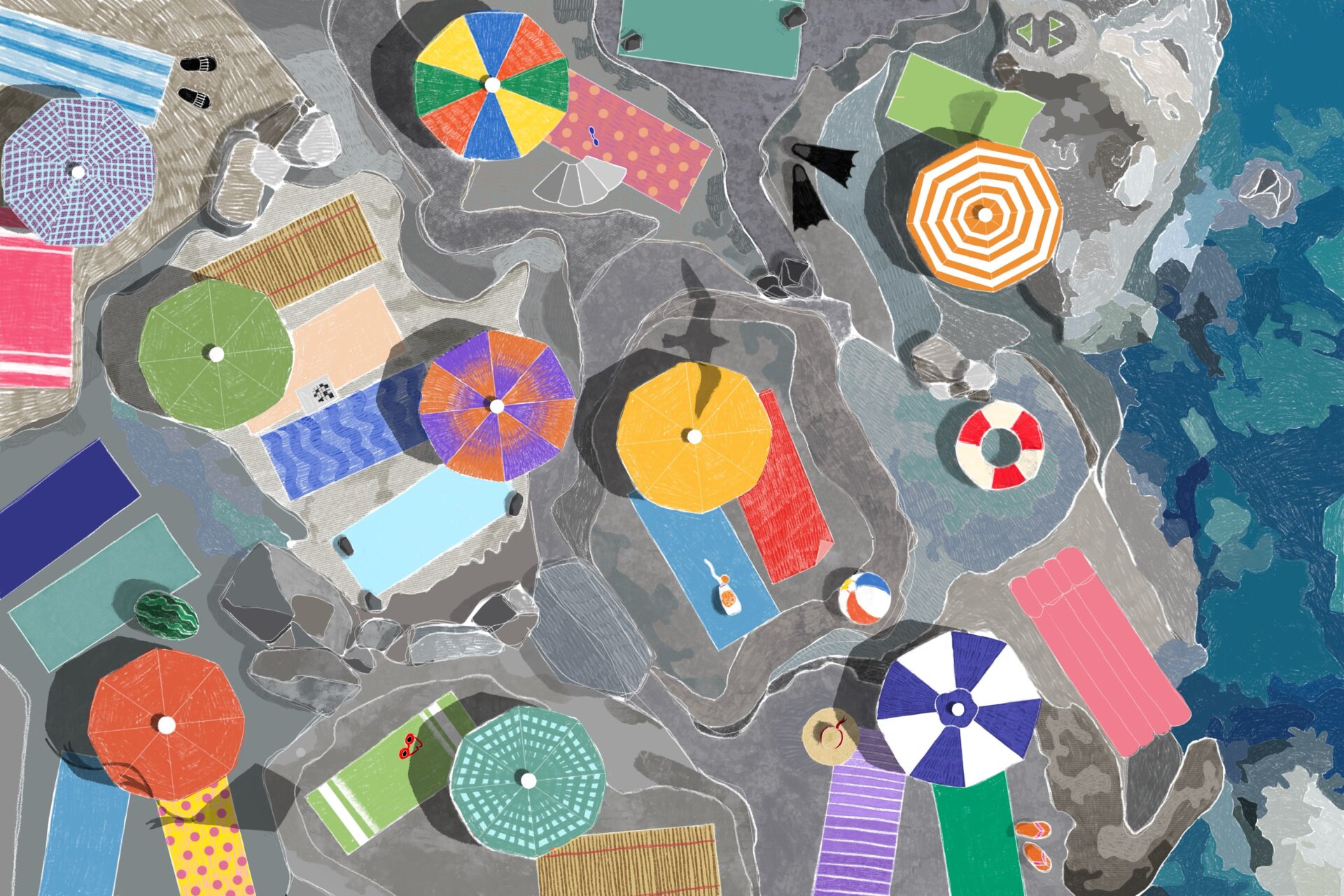
Without walls, streets, or permanent buildings, people nevertheless create an intricate spatial order through the placement of towels, umbrellas, chairs, coolers, and recreational equipment. This temporary but highly organized occupation can be understood as a form of architecture where human behaviour, social conventions, and environmental conditions define the structure of space, echoing Jan Gehl’s (2011) understanding that public space is produced through patterns of everyday life rather than through its physical form alone.
Unlike conventional architecture, the architecture of the beach is ephemeral.

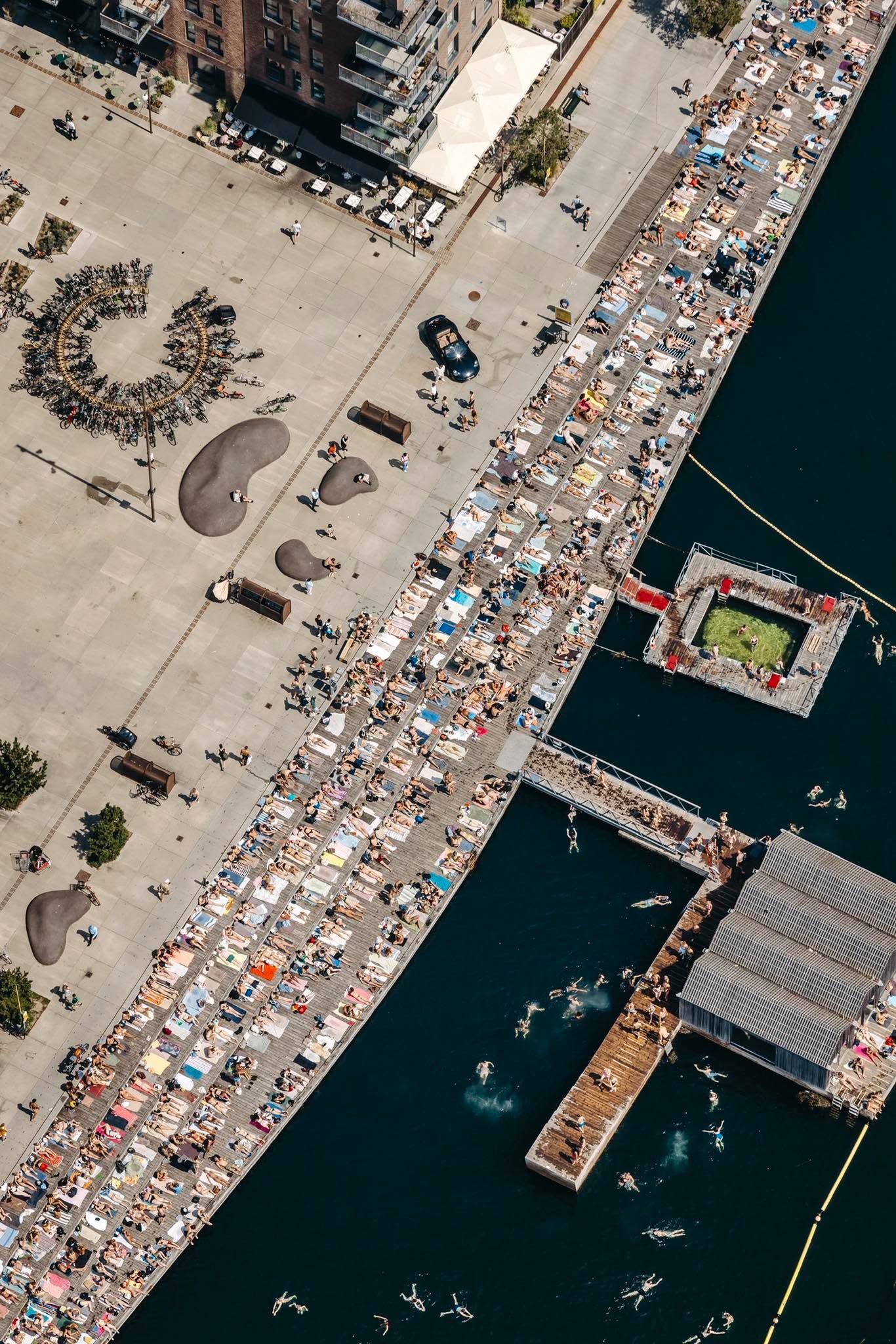
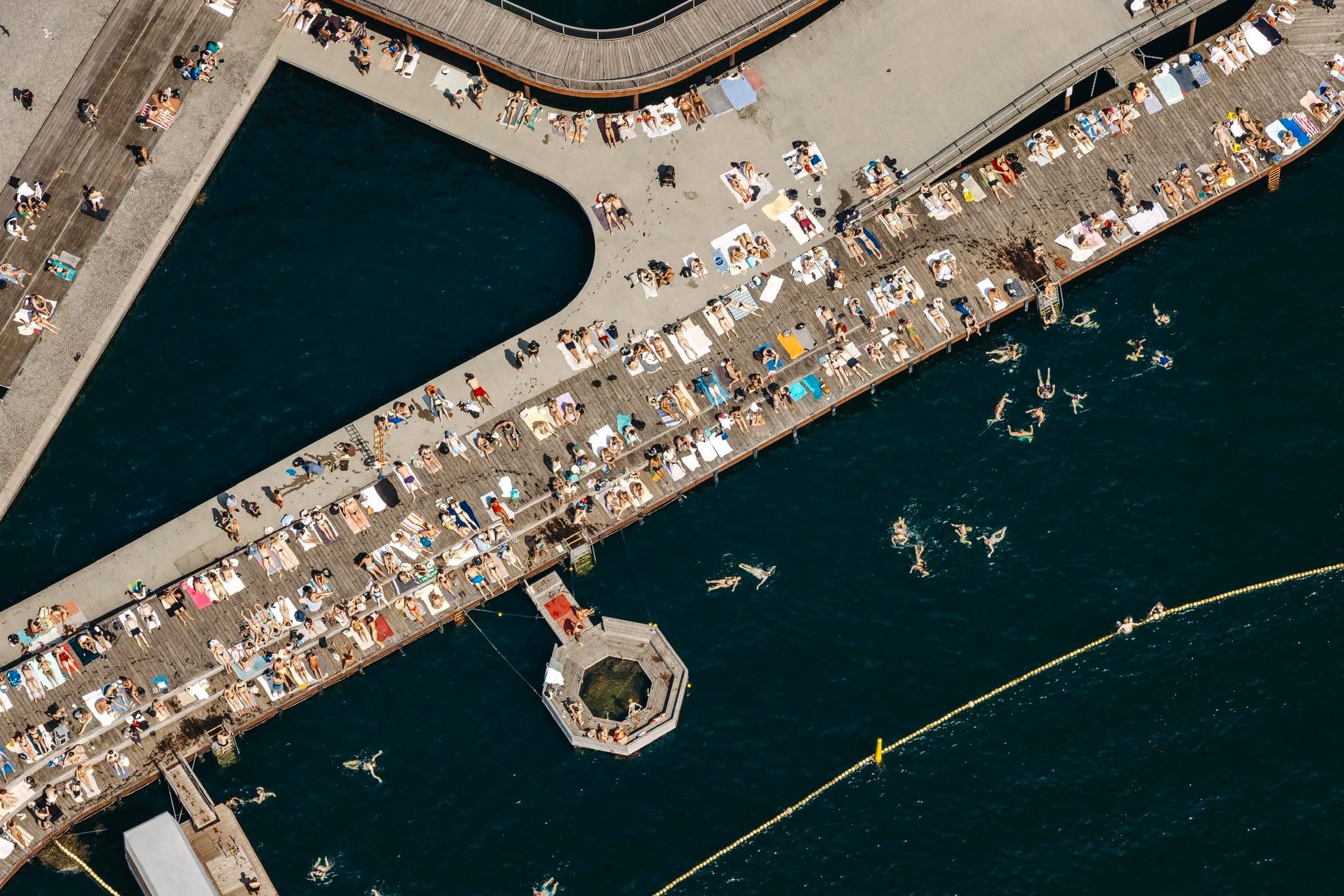
It appears in the morning as visitors arrive, reaches maximum density during midday, and gradually dissolves by sunset. Each family, couple, or individual claims a territory by placing a towel or opening an umbrella. This simple act establishes invisible boundaries that are generally respected by others. Although there are no fences or property lines, beach users instinctively maintain appropriate distances, creating a mosaic of personal domains, reflecting Edward T. Hall’s (1966) observations on proxemics and the cultural negotiation of interpersonal space.

The resulting spatial arrangement resembles an urban plan in which circulation paths, neighbourhoods, and public squares emerge spontaneously.


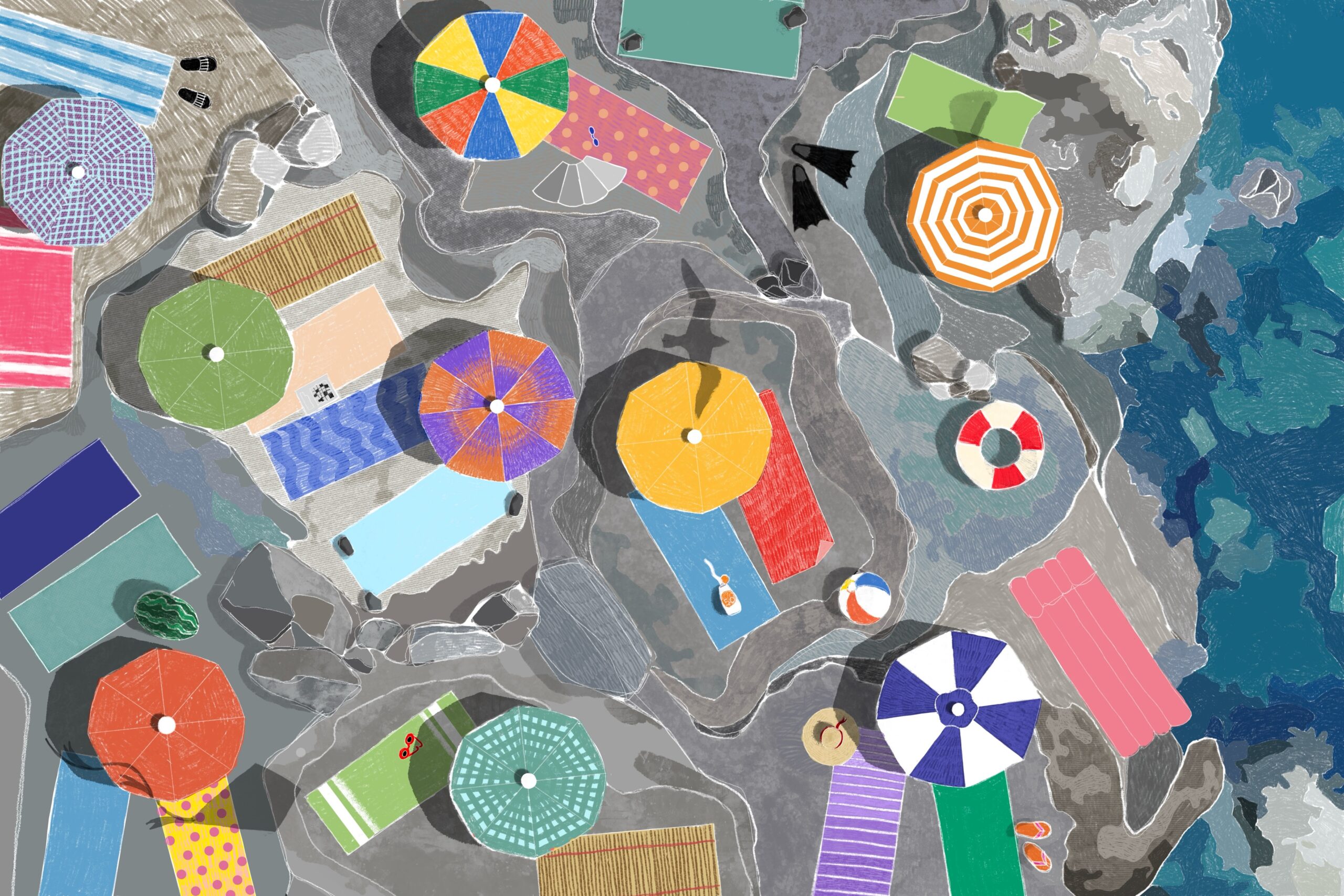
The umbrella is perhaps the most significant architectural element of the beach. It functions as a roof, providing shade and establishing the centre of domestic activity. Around it are arranged towels, bags, toys, drinks, and clothing, much like furniture surrounding the living room of a house. The umbrella defines a temporary dwelling that offers protection from the sun while serving as a visual marker that allows family members to relocate their place after swimming. Its circular shadow becomes a room without walls, illustrating how architecture responds to necessity without permanent construction.

Movement across the beach also contributes to its architectural character.

People navigate between occupied territories through informal pathways that constantly adapt as new visitors arrive. These circulation routes resemble streets, although they exist only through repeated use without ground markings. Children run unpredictably across these invisible networks, vendors establish mobile commercial routes, and lifeguards’ observation lines connect the shoreline with the sea. As William H. Whyte (1980) demonstrated in his observations of public plazas, such movement patterns reveal that spatial organisation emerges from use as much as from design.

The beach demonstrates the interaction between public and private space in particularly revealing ways.
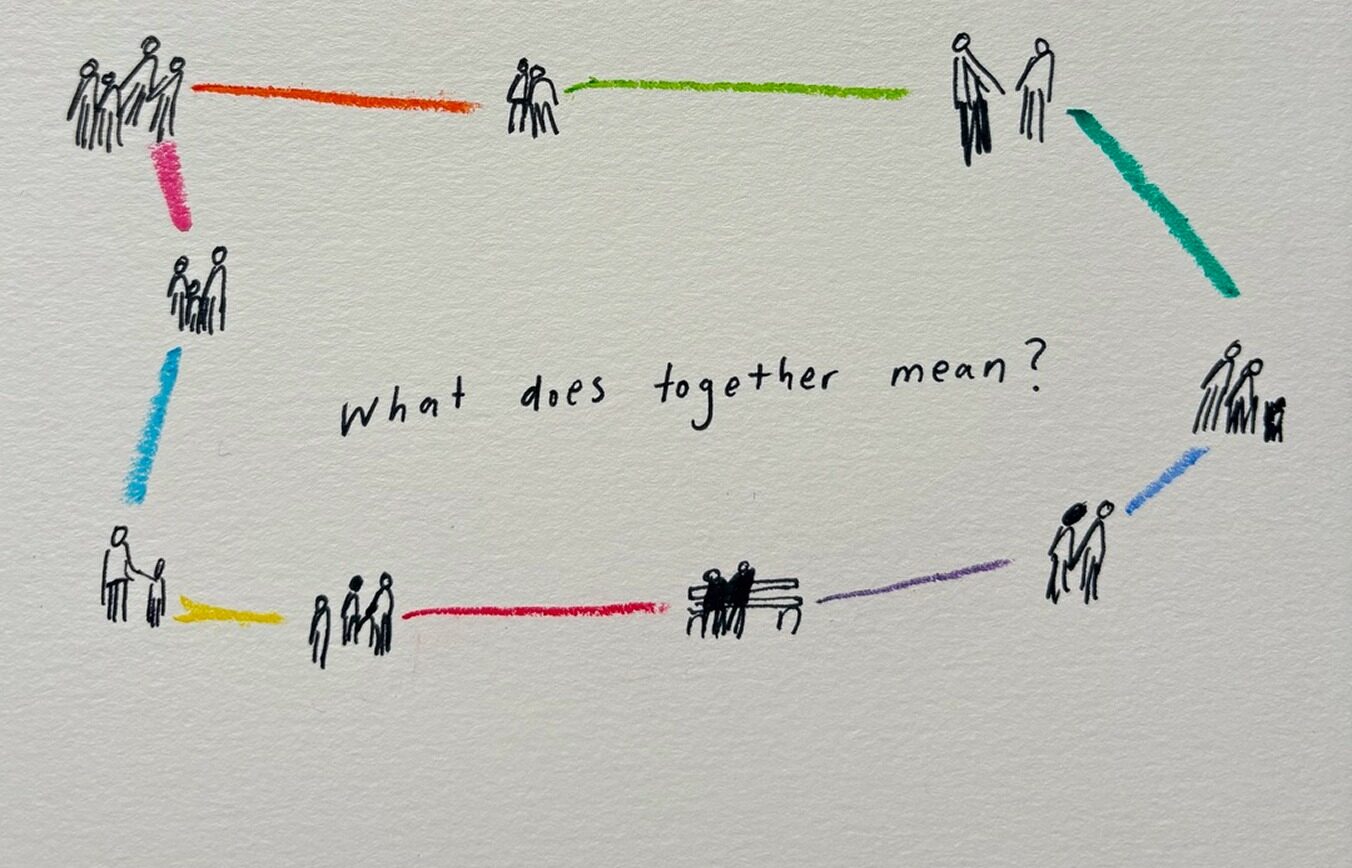


Although most beaches are public environments, open to everyone regardless of social status, each group constructs a temporary private realm through occupation and use. Conversations occur within these micro-territories, meals are shared, and moments of rest unfold despite the surrounding presence of strangers. The transition from public openness to temporary privacy depends less on physical barriers than on shared cultural understandings regarding personal space and respectful distance (Hall, 1966).

Environmental conditions strongly influence this architecture. Wind direction determines where umbrellas can safely stand, while the slope of the sand affects comfort and visibility. Proximity to the water is often negotiated according to age, family needs, and personal preferences. Young people frequently seek locations close to the shoreline, allowing repeated access to the sea, while families with small children often establish larger compounds that accommodate toys, food, and shaded resting areas. Elderly visitors may prioritise accessibility and stability over proximity to the waves. These decisions create distinct yet interconnected zones that reflect demographic differences while combining them with the physical geography.
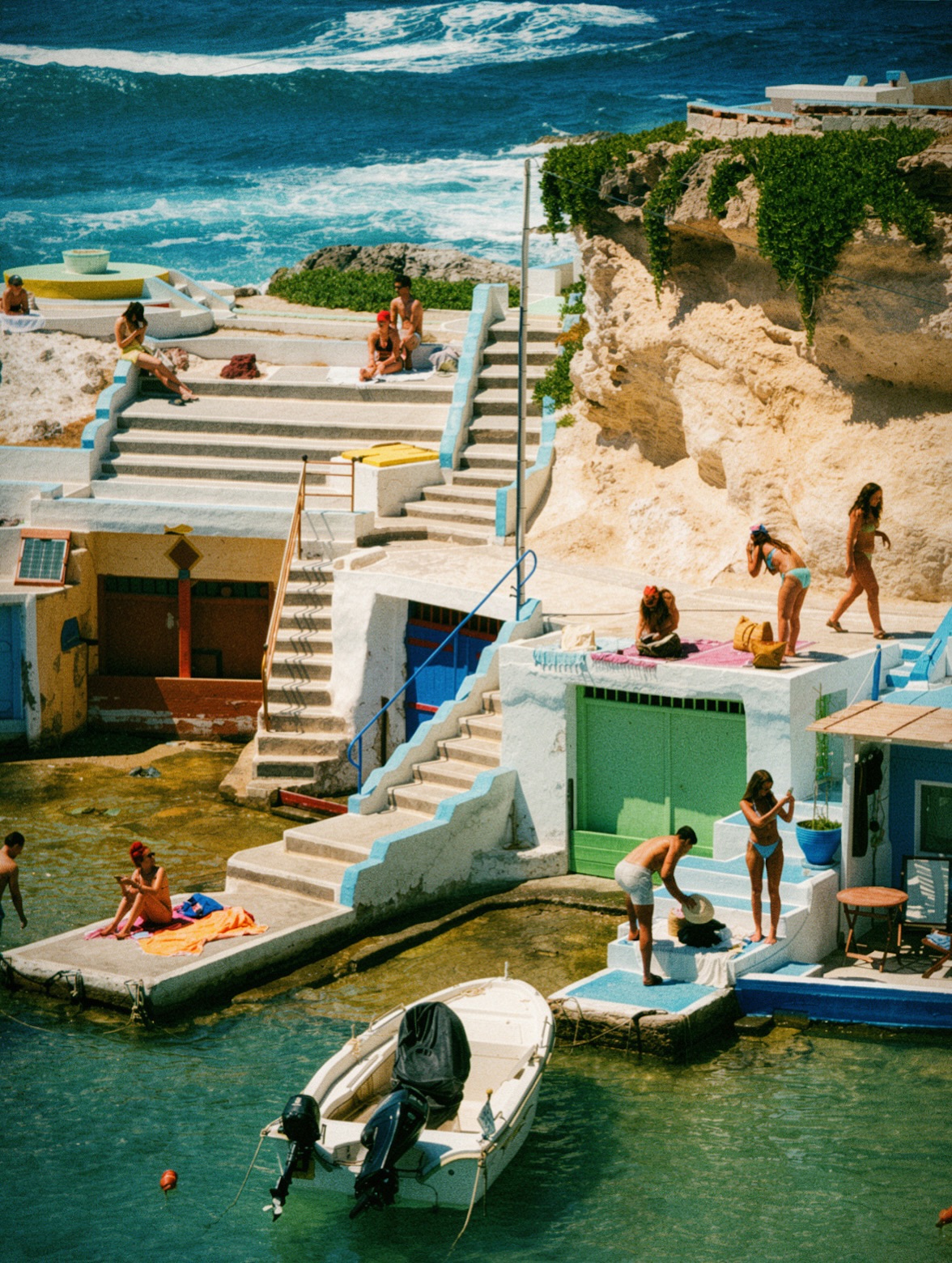
The architecture of the beach also expresses social identity. Groups often personalise their temporary territories through colourful umbrellas, tents, inflatable objects, sports equipment, or carefully arranged seating. These objects communicate lifestyle, economic means, and recreational preferences without verbal interaction. Premium beach clubs, with their aligned sunbeds and reserved spaces, introduce a contrasting architectural order based on commercial planning rather than spontaneous occupation. Here, the geometry of rows and regulated circulation reflects institutional control, whereas on public beaches the organisation emerges collectively through countless individual decisions.

Time plays a crucial role in shaping this landscape. Early arrivals secure preferred locations, often close to the sea or natural shade. As the day progresses, the available space diminishes, forcing newcomers to negotiate increasingly complex spatial relationships. This gradual densification resembles the growth of cities, where expansion is constrained by existing occupation. By late afternoon, departures create empty pockets that dissolve the previous order until the beach returns to its natural condition, leaving almost no physical evidence of the intricate settlement that existed only hours before.
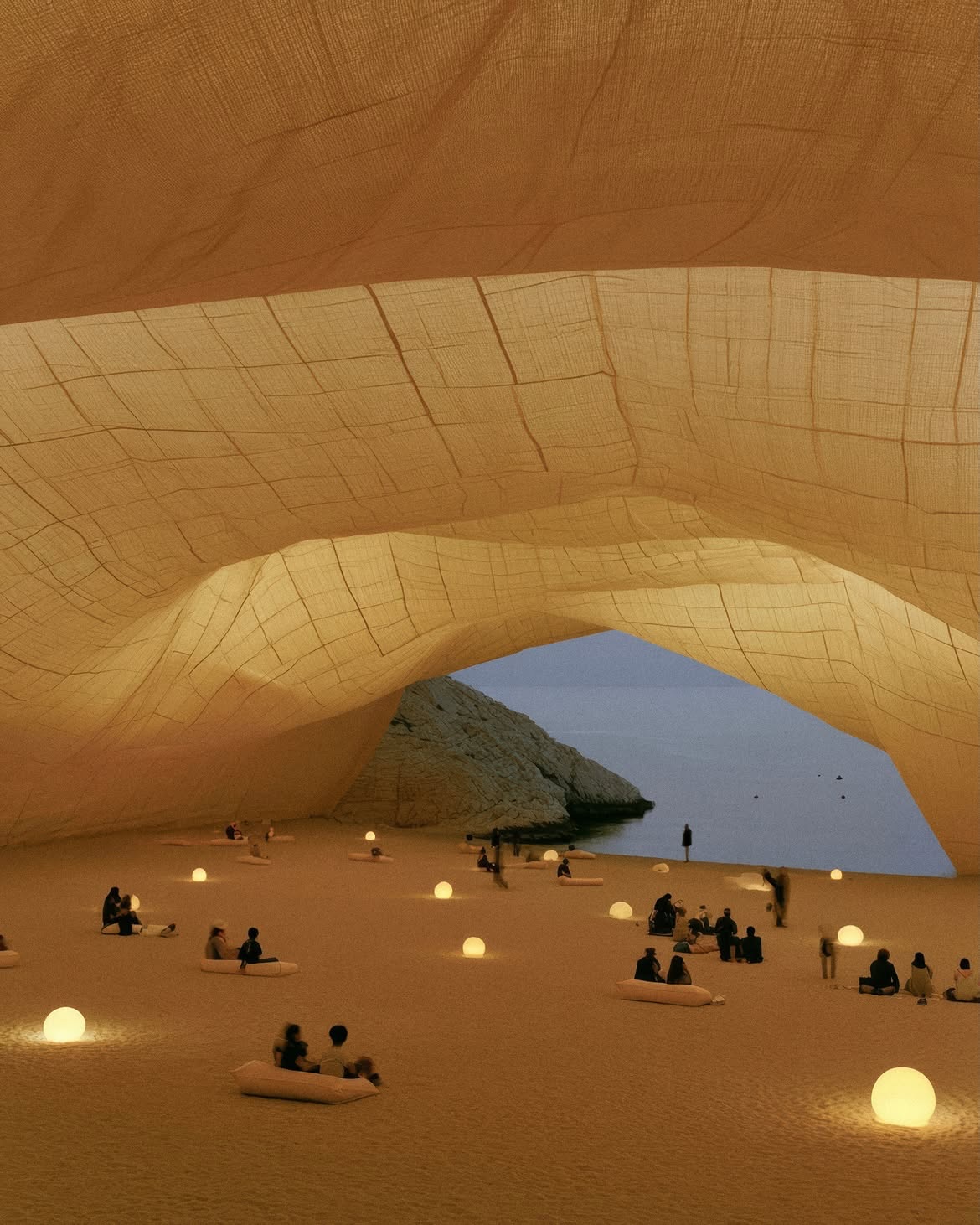
Marius Troy.
From an architectural perspective, the beach challenges traditional definitions of built space, demonstrating that architecture is not exclusively the design of permanent structures but also the organisation of human occupation within an environment.
The temporary settlement of the beach reveals principles familiar to architects and urban designers: territoriality, circulation, hierarchy, density, orientation, and adaptation to climate.
These principles emerge organically, without central planning, illustrating humanity’s instinct to create order and seek protection in open and unstructured landscapes. In this sense, the beach exemplifies Amos Rapoport’s (1969) proposition that environments are fundamentally shaped by cultural patterns of living as much as by construction.
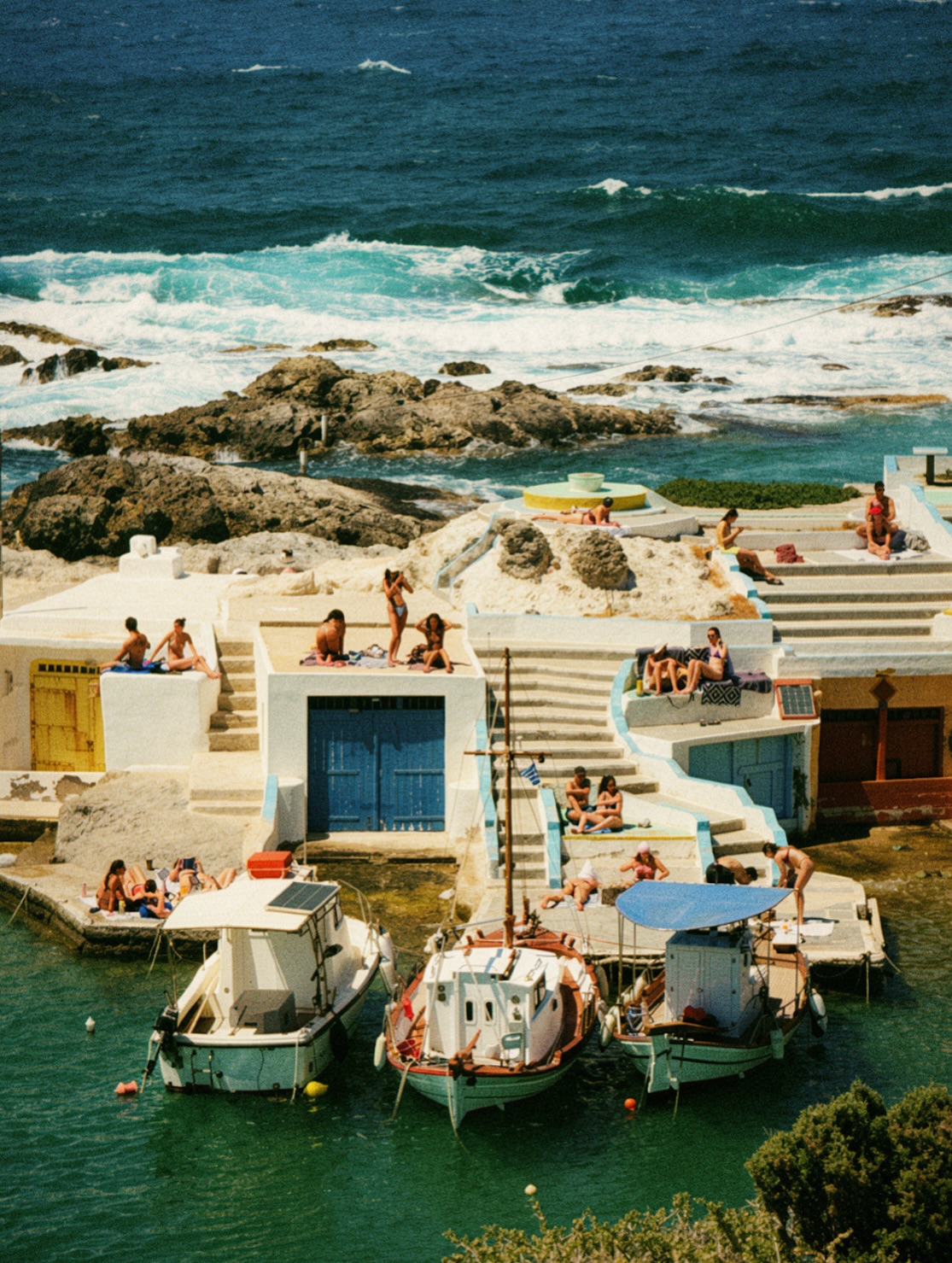
Predominantly, the architecture of the beach is an architecture of coexistence.

It depends upon tacit social agreements that balance individual freedom with collective comfort. Every towel marks a personal claim, forming a personal ground; yet every visitor simultaneously participates in a larger spatial composition shaped by mutual awareness and by social and environmental constraints. The beach therefore becomes a living laboratory for observing how people transform nature into temporary habitation and shelter, how they negotiate shared space, and how they produce an invisible yet remarkably sophisticated architecture that exists only for the duration of a summer day.

References
Gehl, J. (2011) Life Between Buildings: Using Public Space. 6th edn. Washington, DC: Island Press.
Hall, E.T. (1966) The Hidden Dimension. New York: Doubleday.
Rapoport, A. (1969) House Form and Culture. Englewood Cliffs, NJ: Prentice-Hall.
Till, J. (2009) Architecture Depends. Cambridge, MA: MIT Press.
Whyte, W.H. (1980) The Social Life of Small Urban Spaces. Washington, DC: Conservation Foundation.