On Yellow Architecture, or What Can We Learn from the New Generation of Spanish Architects?
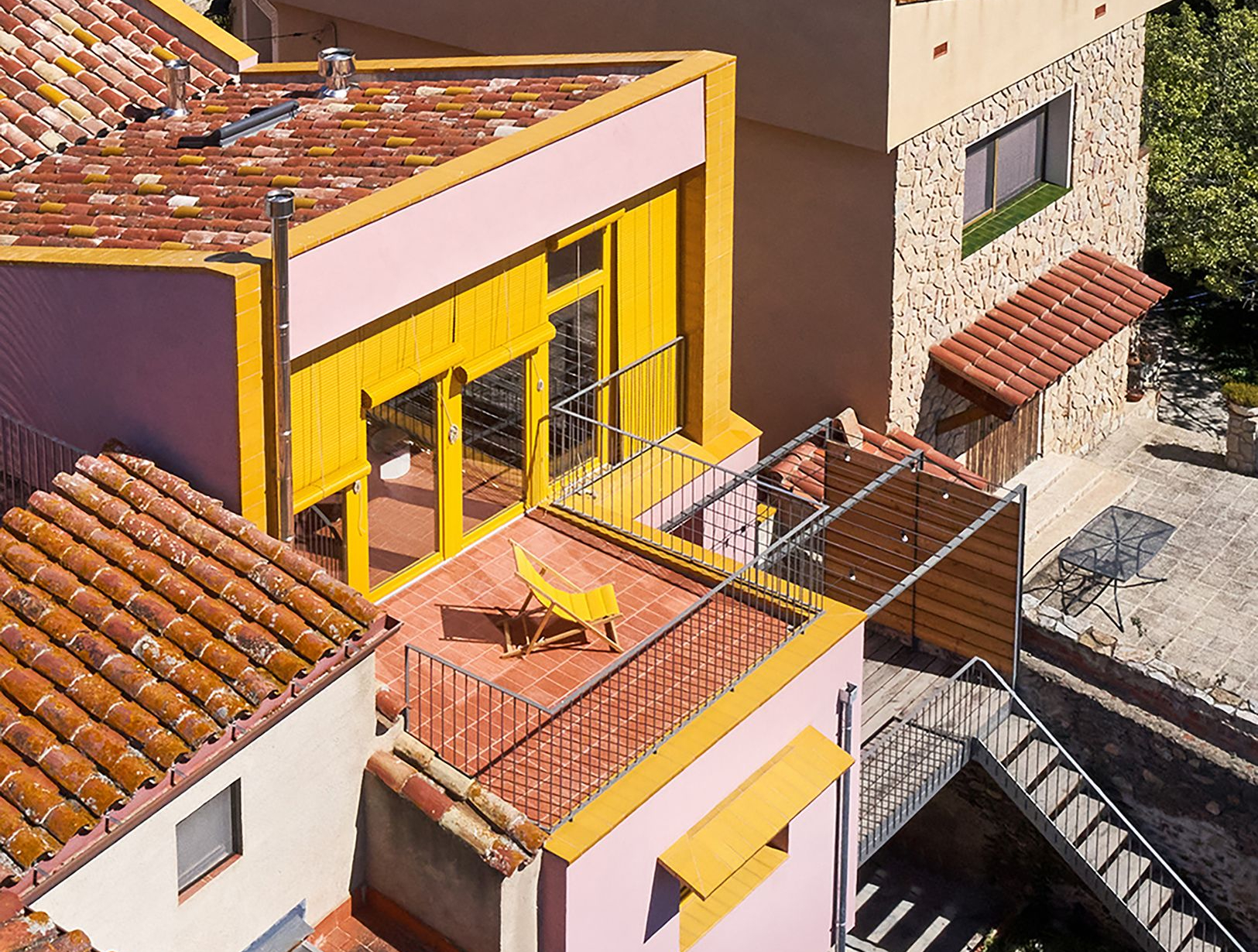
Something curious is happening in contemporary Spanish architecture. Yellow appears again and again: on steel structures and staircases, window frames and shutters, balustrades and built-in furniture, shopfronts and floors. Sometimes it occupies an entire building; elsewhere, it is reduced to a line, a frame, a piece of joinery or a single infrastructural element. Against concrete, timber, exposed brick and existing masonry, it is difficult not to notice.
Heightened by the intensity of Mediterranean light and rooted in the long presence of ochres and earth pigments in vernacular construction and ceramics, yellow’s most compelling connection, however, is perhaps not with tradition, but with the profound transformation of Spanish architectural culture following the financial crisis of 2008.
Spain entered the twenty-first century through an extraordinary construction boom. Architecture became deeply entangled with real-estate development, public investment and an expanding culture of architectural spectacle. When the property bubble collapsed, construction collapsed with it. By 2012, Spanish architect, critic, academic, and editor Luis Fernández-Galiano recorded that annual housing starts had fallen by approximately 95 per cent compared with the height of the boom in 2006–07.
The architectural profession was forced into an abrupt confrontation with the limits of the economic model within which it had operated.
A generation of architects consequently entered practice under radically different conditions. Large commissions became scarce; budgets contracted; younger architects emigrated, collaborated, formed collectives or turned their attention towards renovations, interiors, small houses and the existing city.
Fernández-Galiano would later describe the architectural consequence as a movement from “bling to bareness”: away from the spectacular architecture associated with the years of abundance and towards continuity with existing structures, environmental attention, economical construction and the determination to build only what is necessary.
His description is revealing because it identifies economy not merely as a financial limitation but as the beginning of another architectural culture.
The scale of practice changed too. Writing in 2014, Fernández-Galiano observed that younger Spanish architects were finding experimental freedom in projects small in physical dimension but disproportionate in ambition.
The question therefore shifted subtly from What can we build? to What do we actually need to build?
Additionally, British architect, theorist, and academic Jeremy Till’s distinction between austerity and scarcity provides a useful theoretical framework here. For Till, austerity produces a reductive architecture when it simply demands that architects continue doing the same thing with fewer resources. Scarcity becomes more interesting when it forces architectural practice to question the production of the object itself.
Instead of endlessly adding material to the world, architecture can begin by redistributing, adapting and transforming what is already there. Within this shift, colour acquires unexpected architectural power.
Yellow as an economy of means
Colour is remarkably inexpensive in relation to the spatial consequences it can produce. A wall does not necessarily need another layer of precious material to become distinct. A staircase does not need an extravagant geometry to become a landmark. Circulation can be made legible without increasing the amount of construction. Old and new can be differentiated without demolishing either. A piece of ordinary joinery can become the organising element of an interior through the application of a single saturated colour. In this sense, yellow is not simply a finish. It is architecture with almost no mass.
Spanish architect, researcher and colour theorist Juan Serra Lluch, whose work examines colour as an active spatial and perceptual instrument in architecture, argues against treating pigment as a cosmetic or “epithelial” matter.
Colour can instead operate strategically: distinguishing or integrating architectural components, communicating function, transforming perceptions of form and establishing relationships with context.
This offers another way of reading the conspicuous yellows appearing in a younger Spanish architecture. Their significance lies not necessarily in yellow itself, but in the extraordinary amount of architectural work that a chromatic decision is asked to perform.
MARTÍ JULIA: Colour as Spatial Infrastructure | Barcelona, 2026
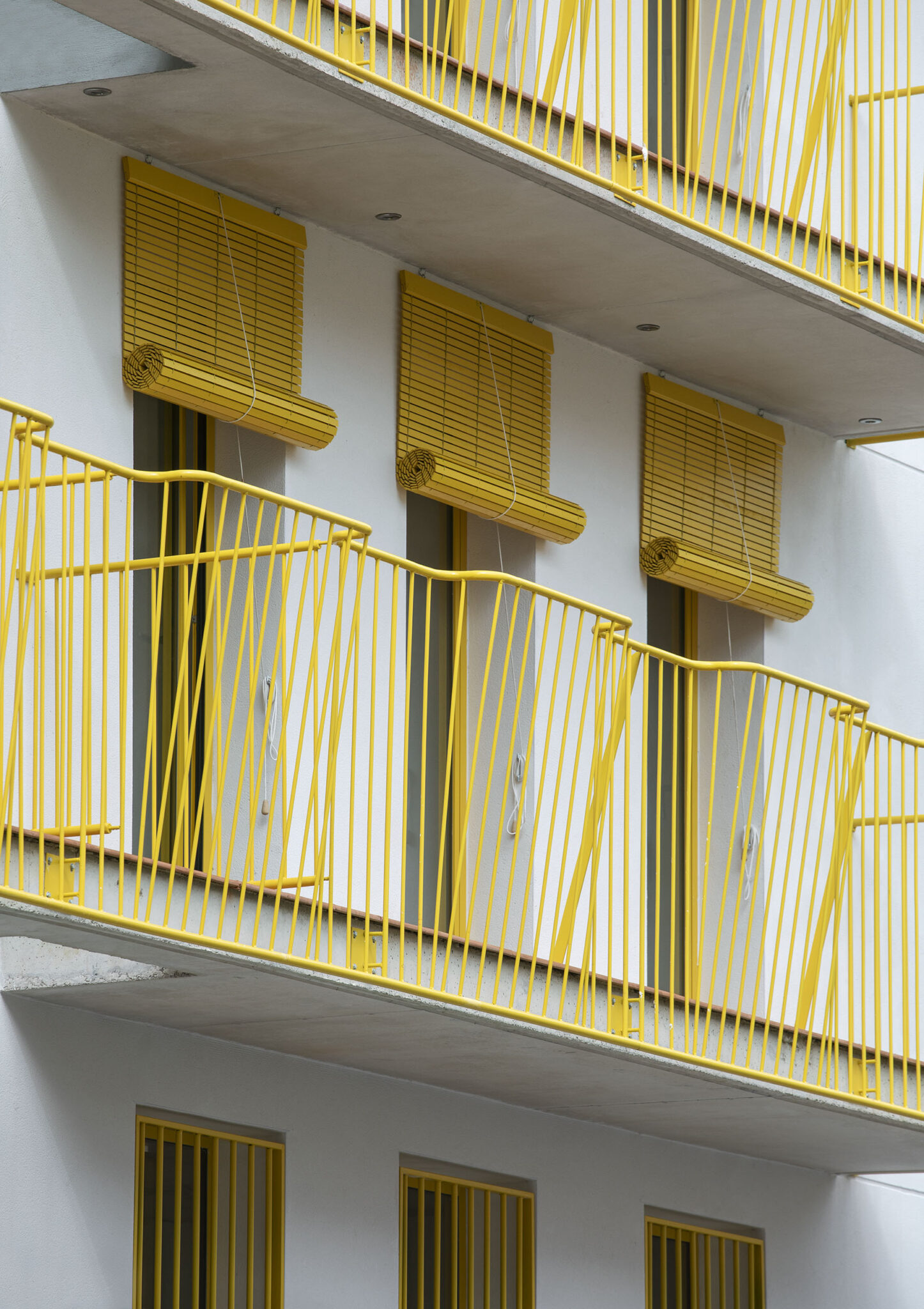
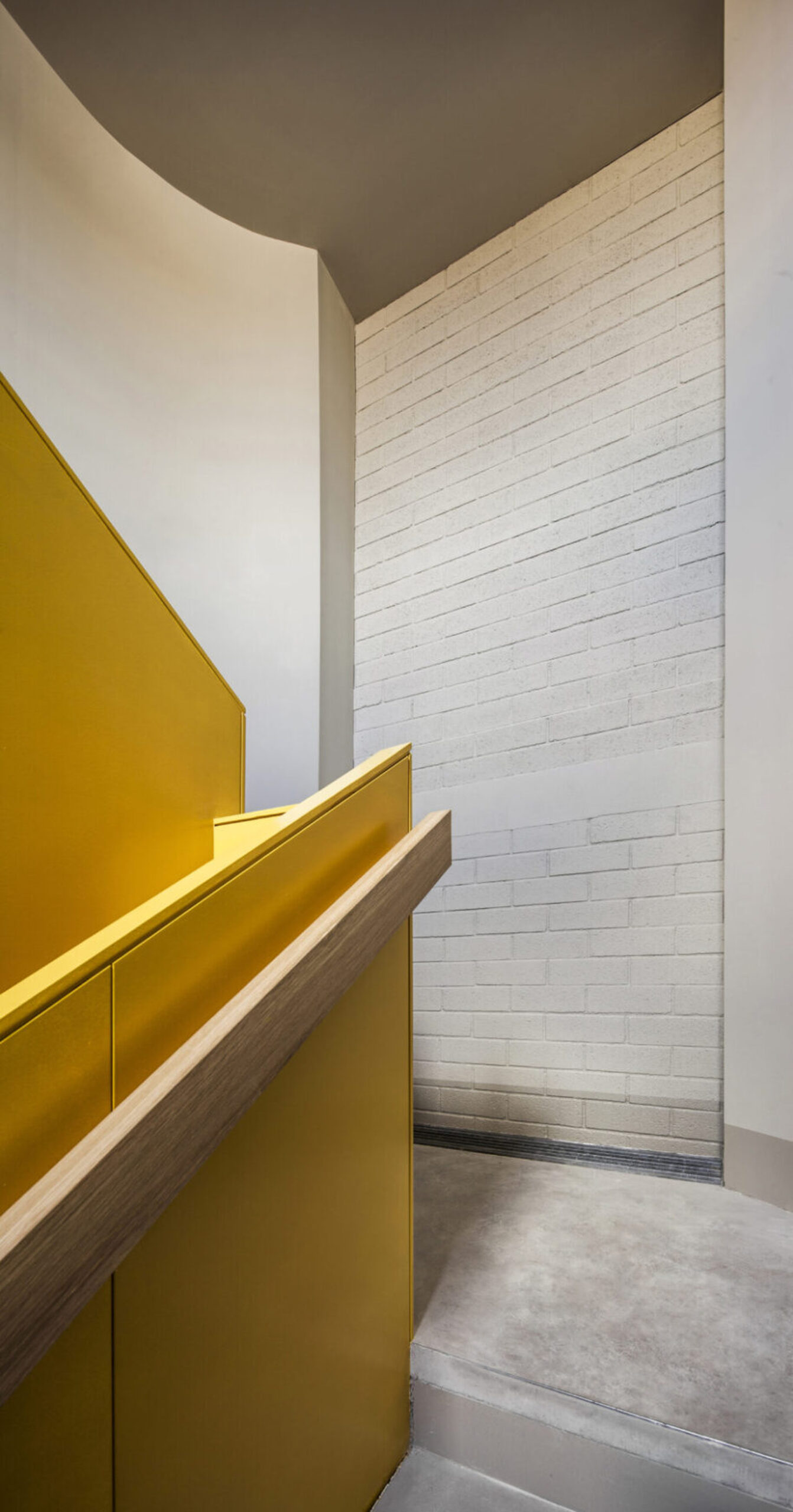
In MARTÍ JULIA by m-i-r-a, in L’Hospitalet de Llobregat, the argument becomes particularly explicit. The project begins not with a new building but with the rehabilitation of an existing corner block. Concrete slabs, structural walls and irregular surfaces left by previous construction are retained rather than cosmetically erased and new elements are inserted alongside them with deliberate precision.
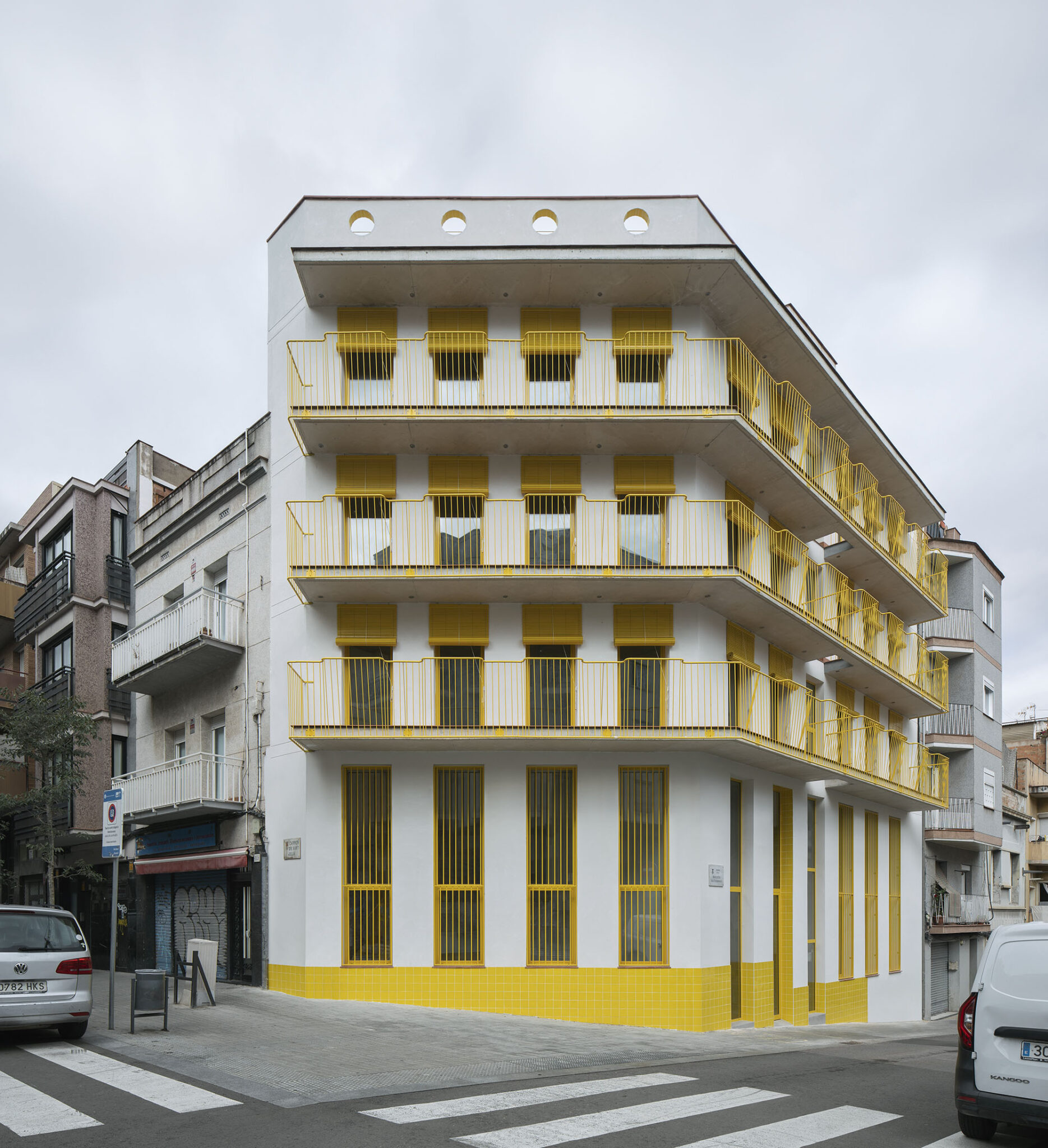
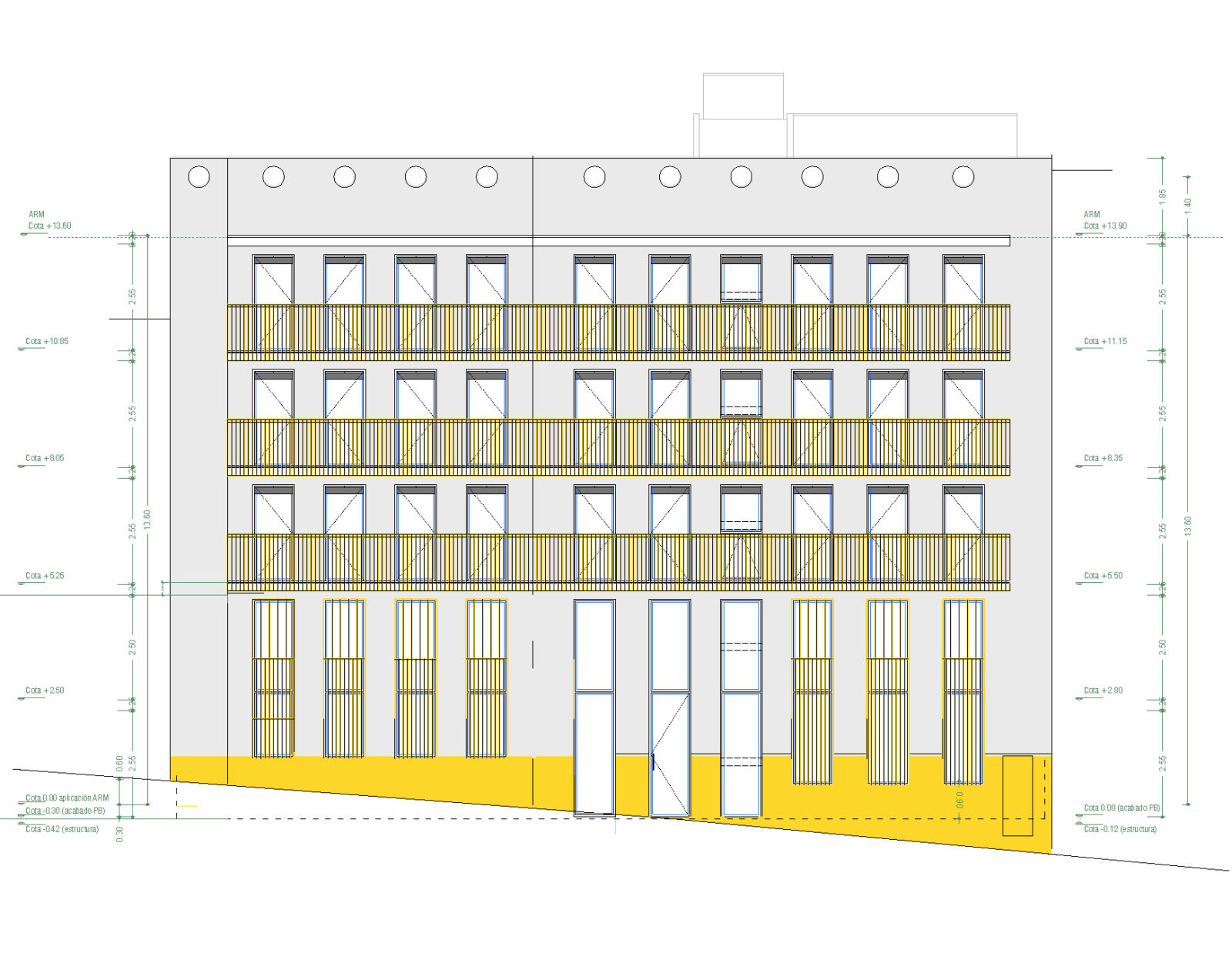
Against this materially restrained background, intense yellow moves through the project: façades, balconies, shutters, railings, joinery, staircases and selected domestic details. Here yellow becomes what might be called a chromatic infrastructure. It establishes continuity between interior and exterior, makes circulation immediately perceptible and distinguishes contemporary intervention from inherited fabric without requiring the latter to disappear. The yellow steel balustrade against an exposed concrete stair is almost diagrammatic: old and new remain simultaneously visible. Colour does not conceal the economy of the intervention. It makes its logic legible.
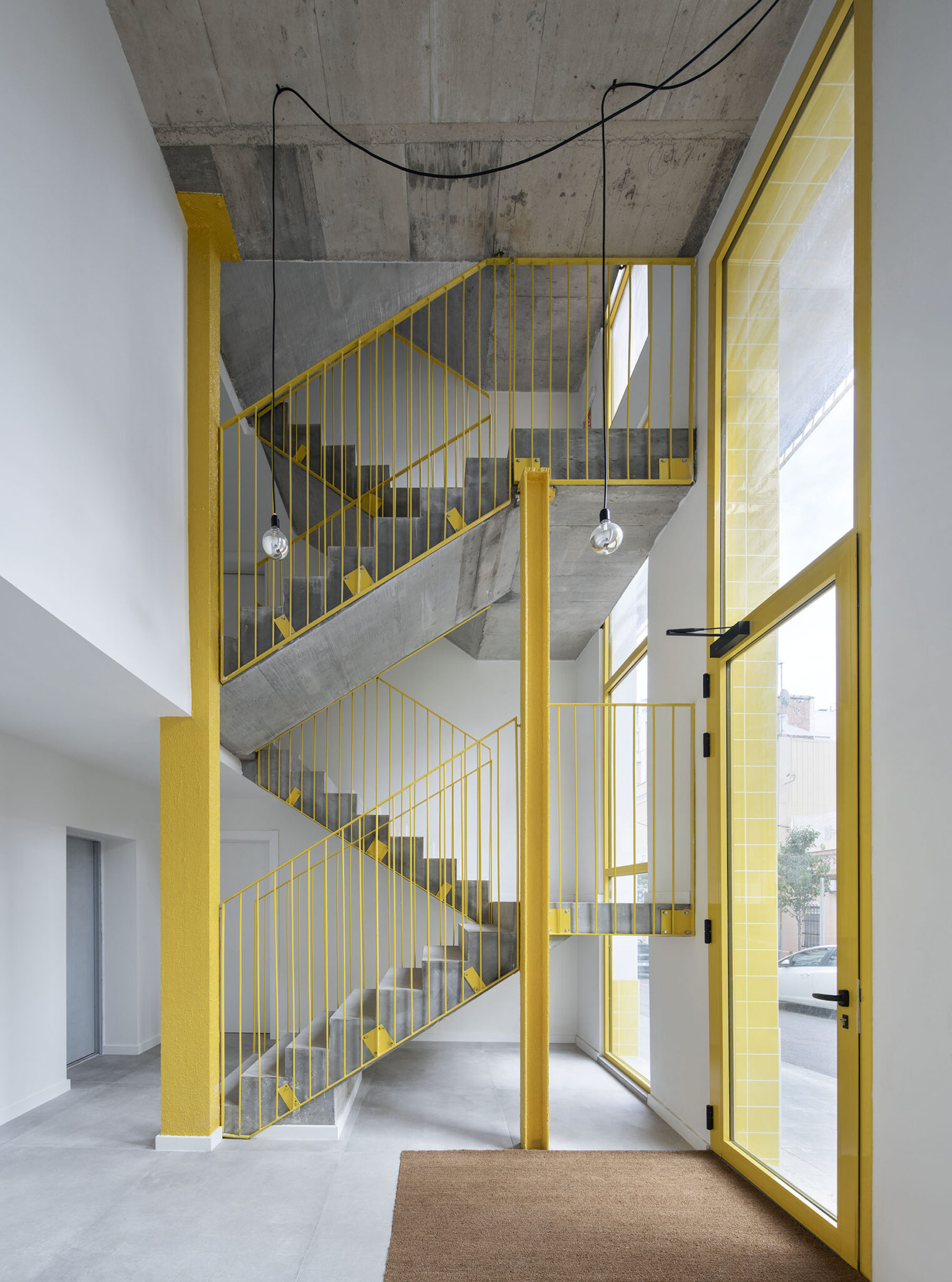
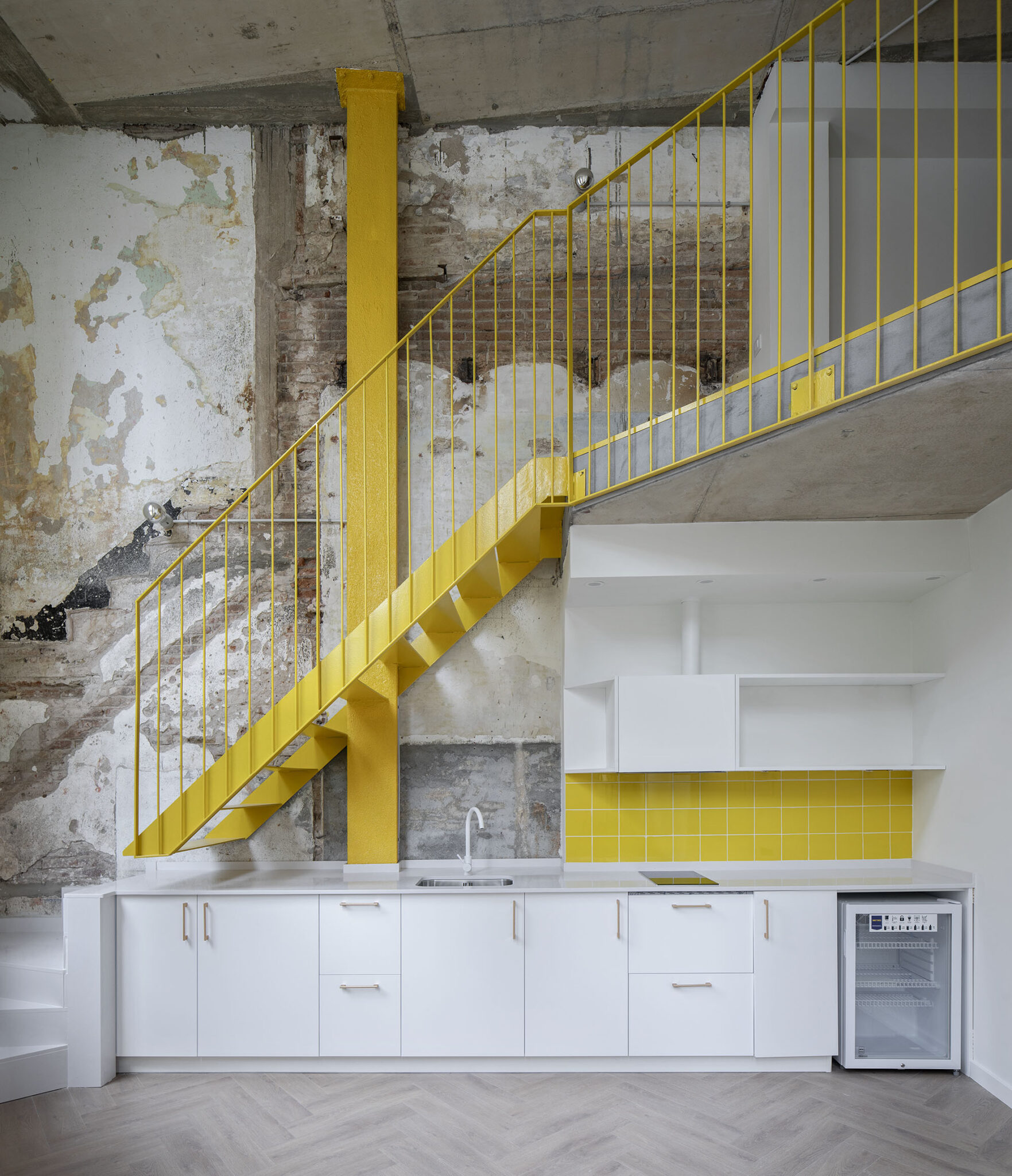
The result suggests an important reversal. Architectural identity no longer needs to emerge from the total replacement of the existing building. A relatively limited family of new elements can reorganise the perception of what was already there.
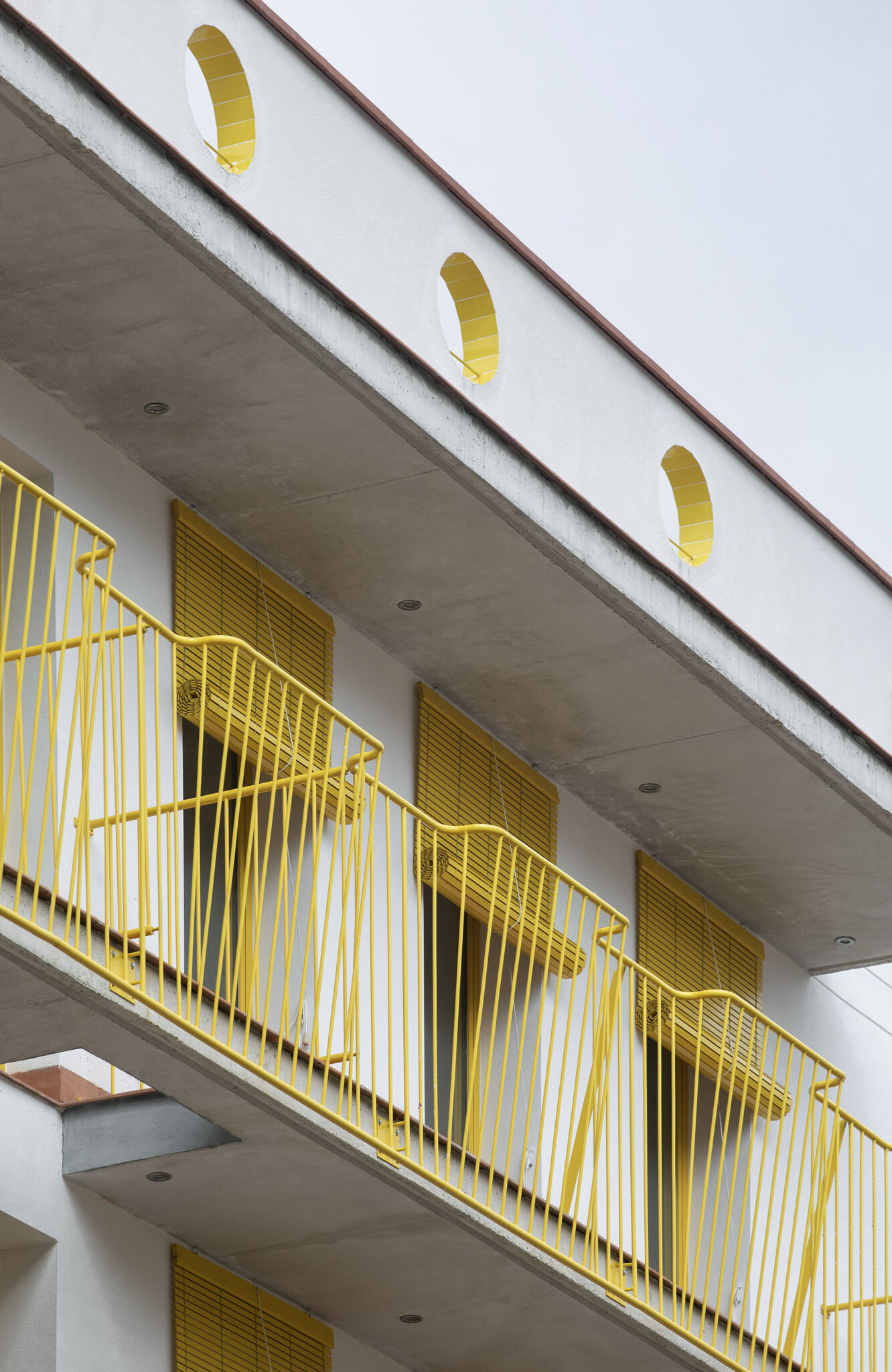
La Carolina House: From building less to keeping more | Rabós, 2022
In the small rural municipality of Rabós in northern Catalonia, Lacol and Altura Arquitectes treat an eighteenth-century stone house as an accumulation of previous interventions. Existing stone and ceramic construction is maintained; concrete beams, stone and roof tiles are reused; limewash unifies disparate surfaces; south-facing openings improve solar gain; cross-ventilation, thermal inertia and climatic buffers reduce the need for mechanical intervention. La Carolina helps clarify what the yellow projects are really part of.
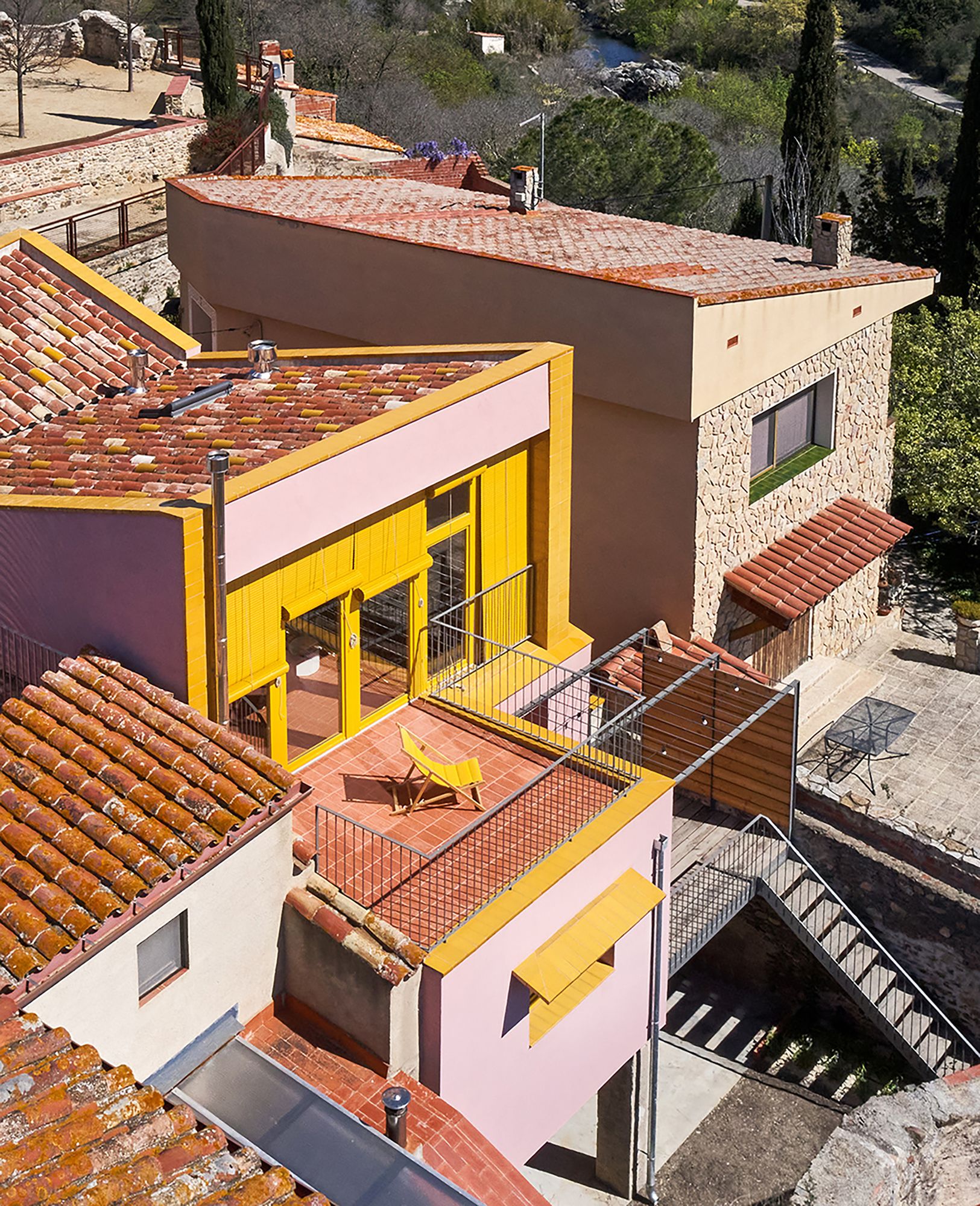
Yellow architecture becomes powerful through its ability to make what is already there newly visible.
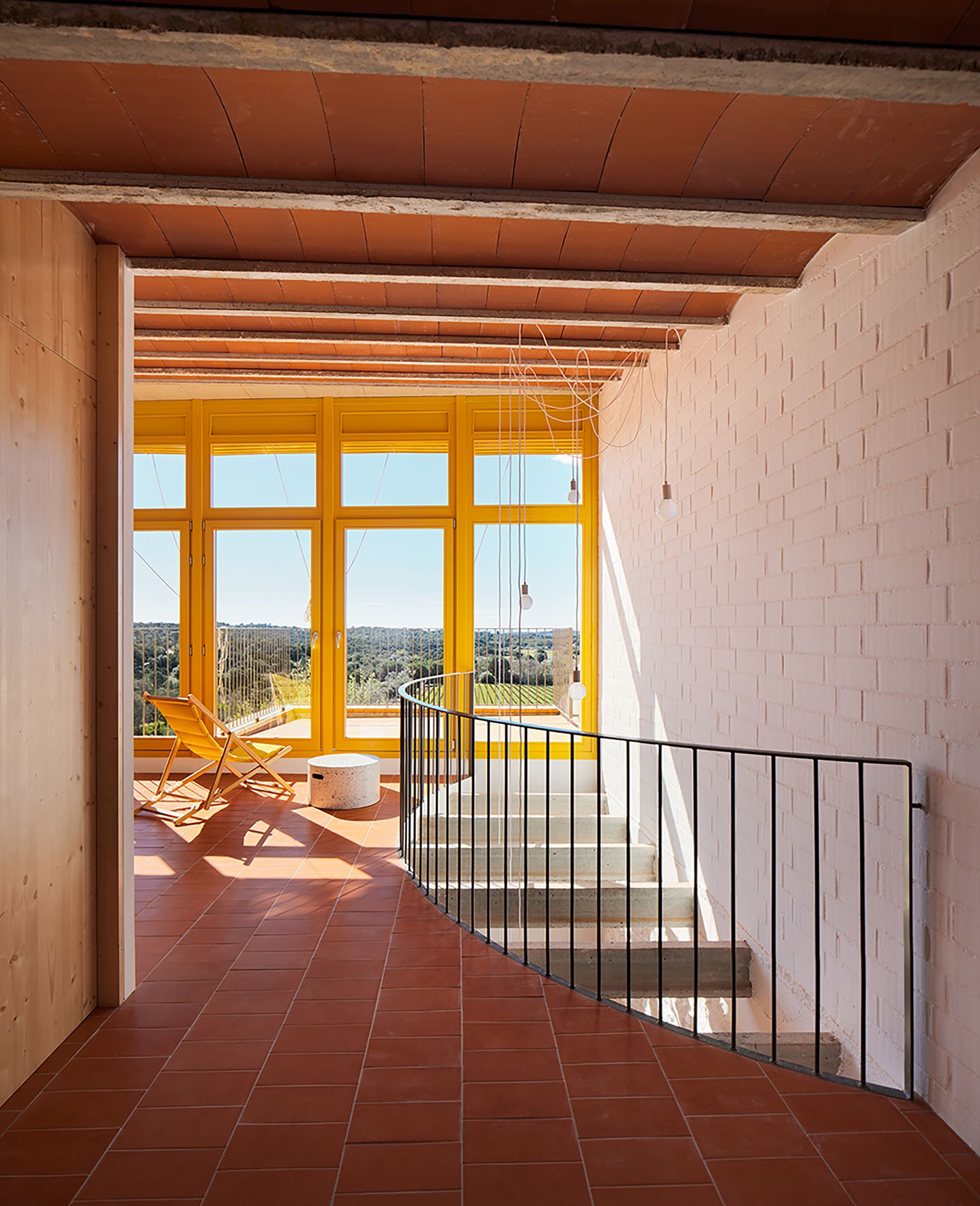
Lacol itself emerged directly from the post-2008 condition. Cristina Gamboa and Carles Baiges have recalled that the cooperative’s members graduated around 2010–11, when the consequences of the crisis were particularly severe, and that working collectively offered a means of establishing a practice with stability and dignity. Their model developed through shared resources, participation and an explicit critique of conventional architectural practice. What begins as economic necessity can therefore evolve into disciplinary position.
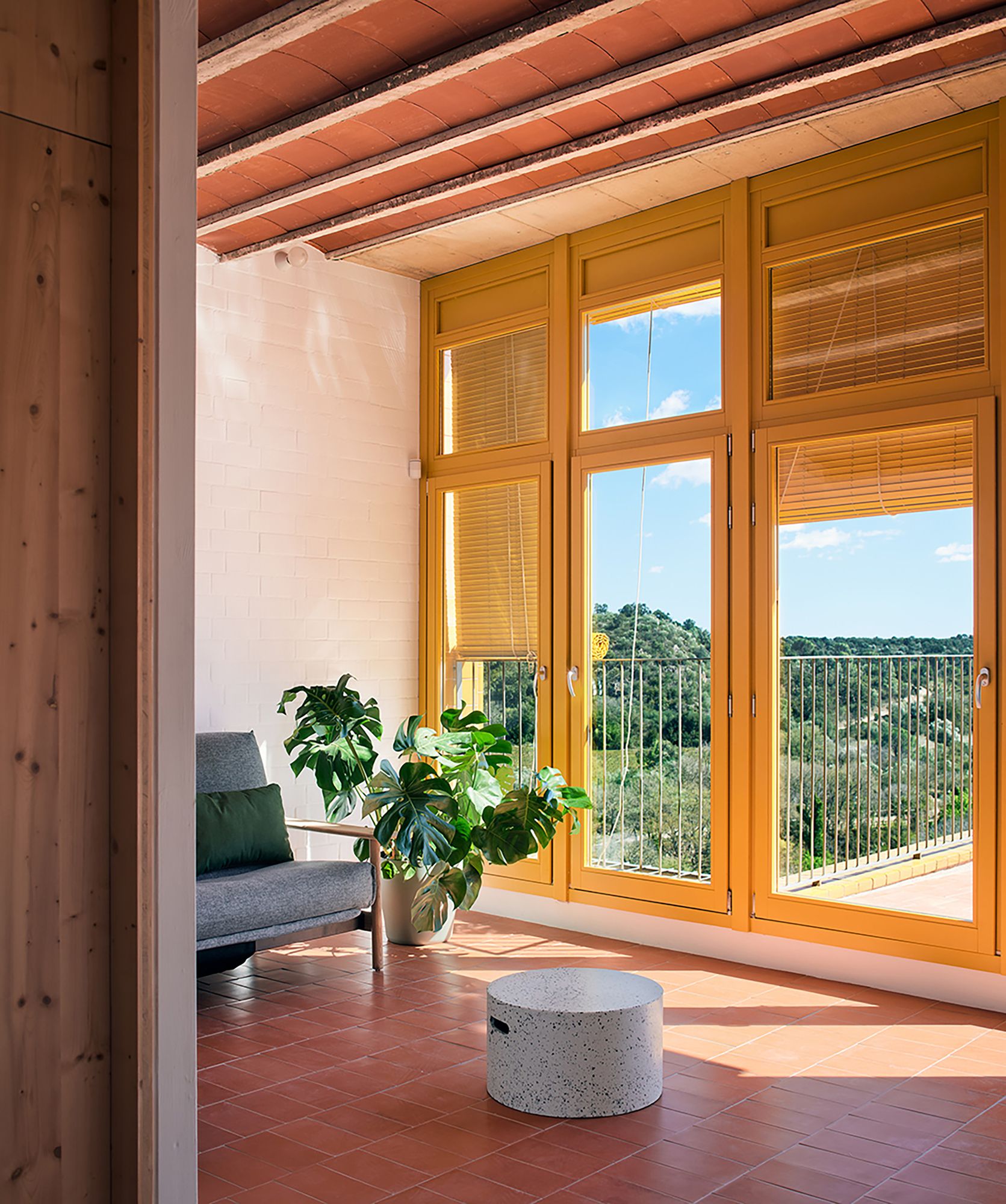
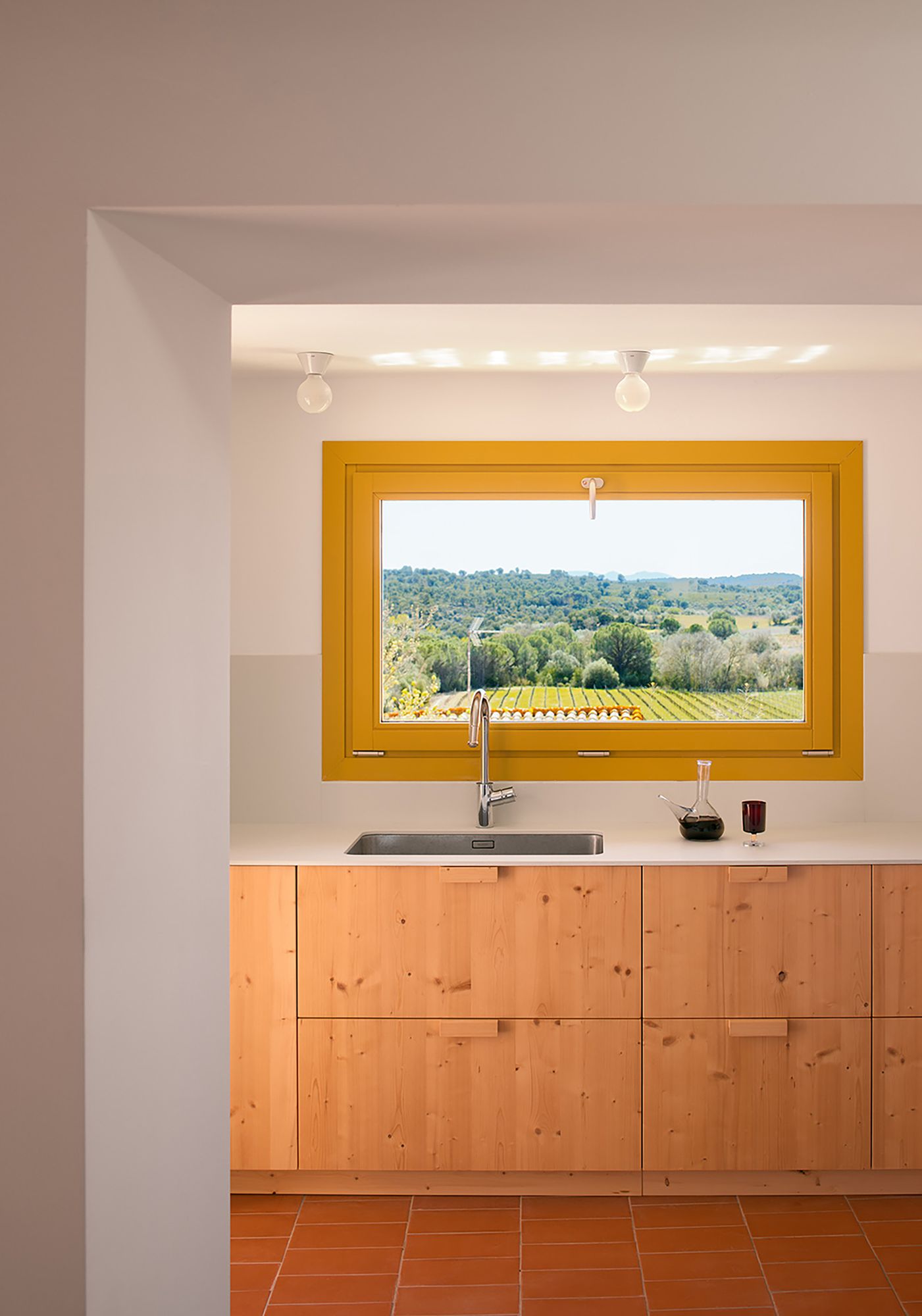
Collumpio House: making structure less serious | Barcelona, 2021
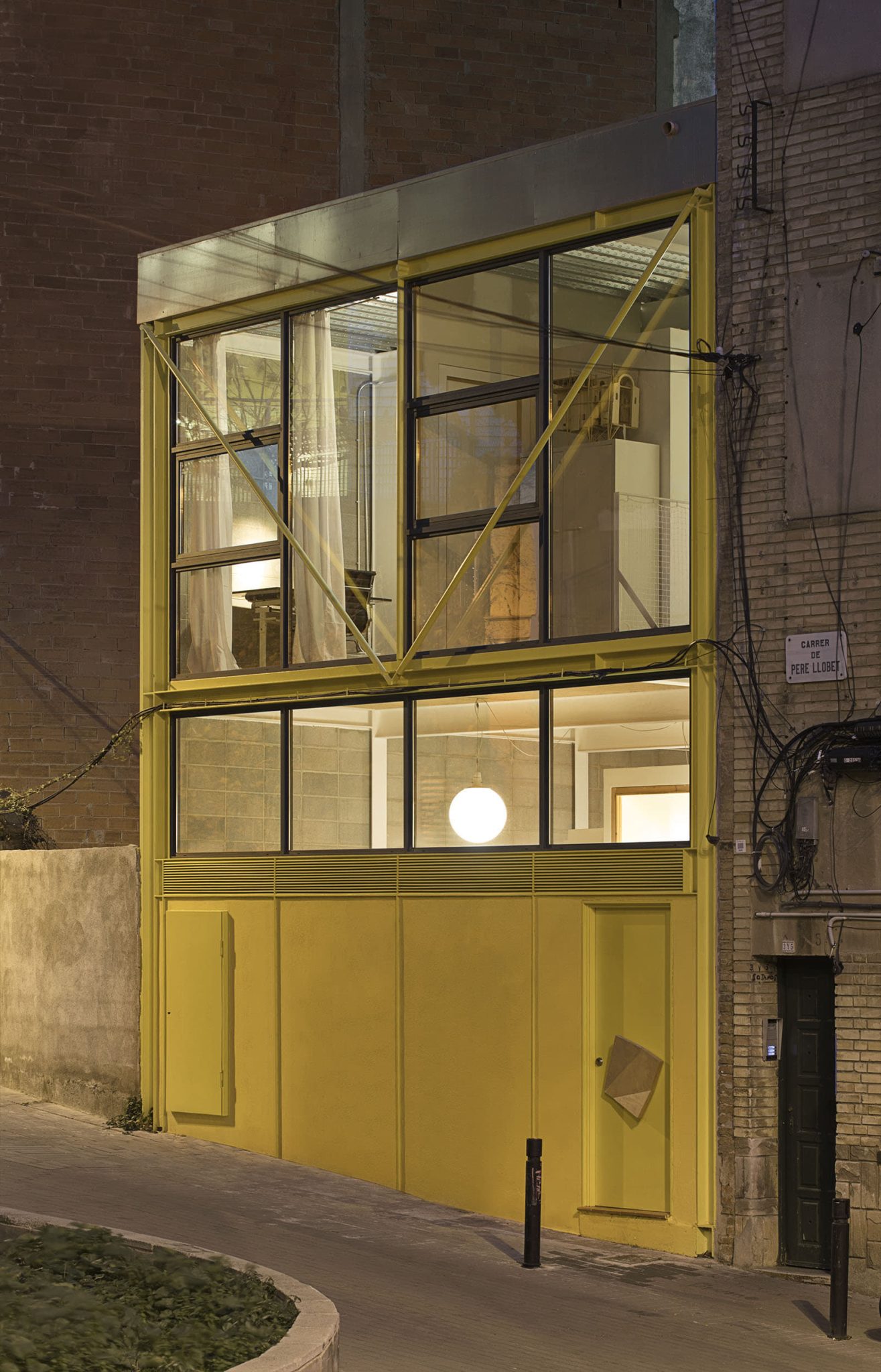
At Collumpio House by MACH, yellow performs another operation altogether. The house is materially straightforward: a heavy concrete plinth is anchored to the terrain while a lightweight steel framework rises above it, open towards landscape and sunlight. The architects make little attempt to disguise how the building is assembled. Structure remains structure; construction remains visible. And then the entire frame becomes yellow.
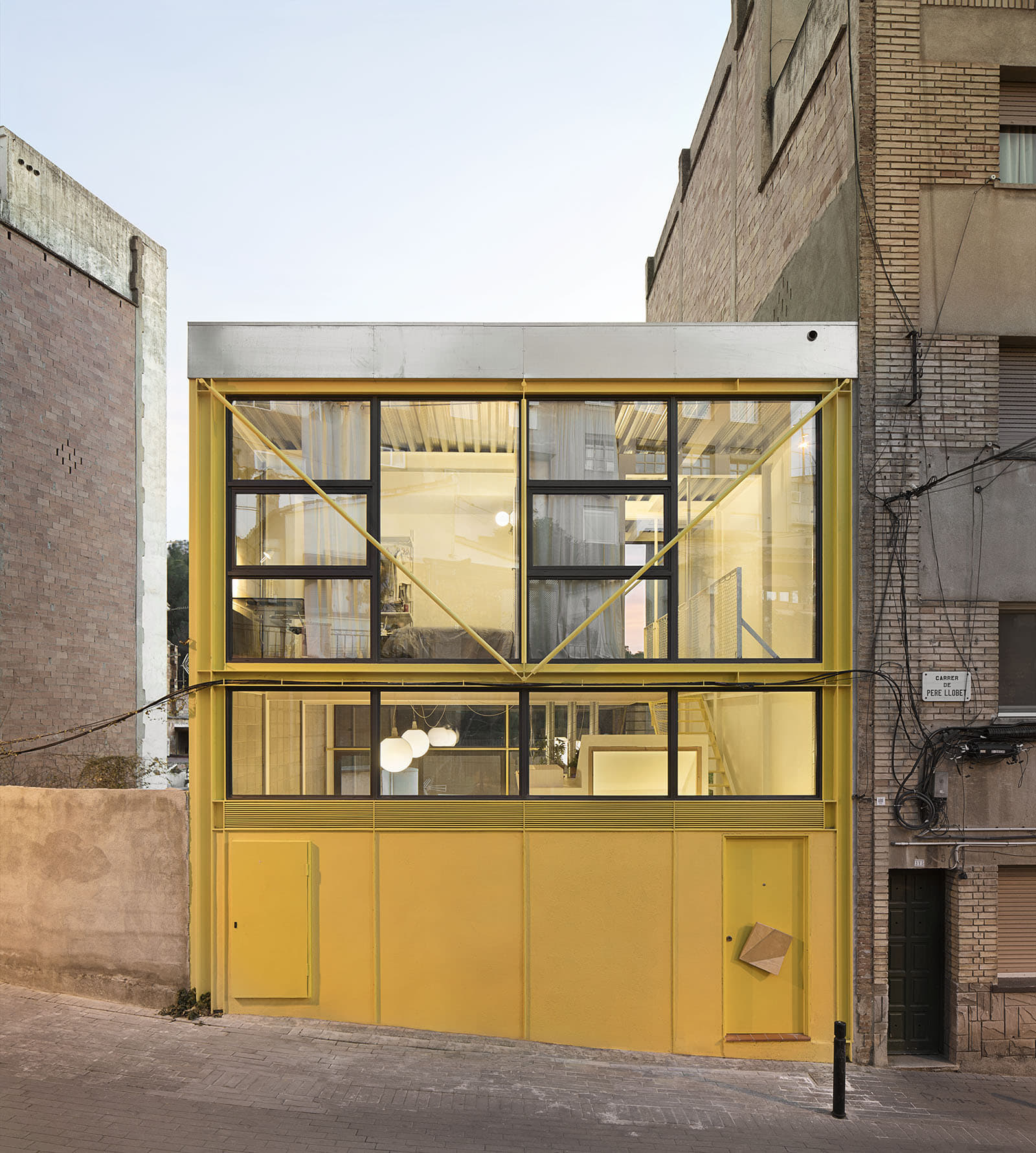
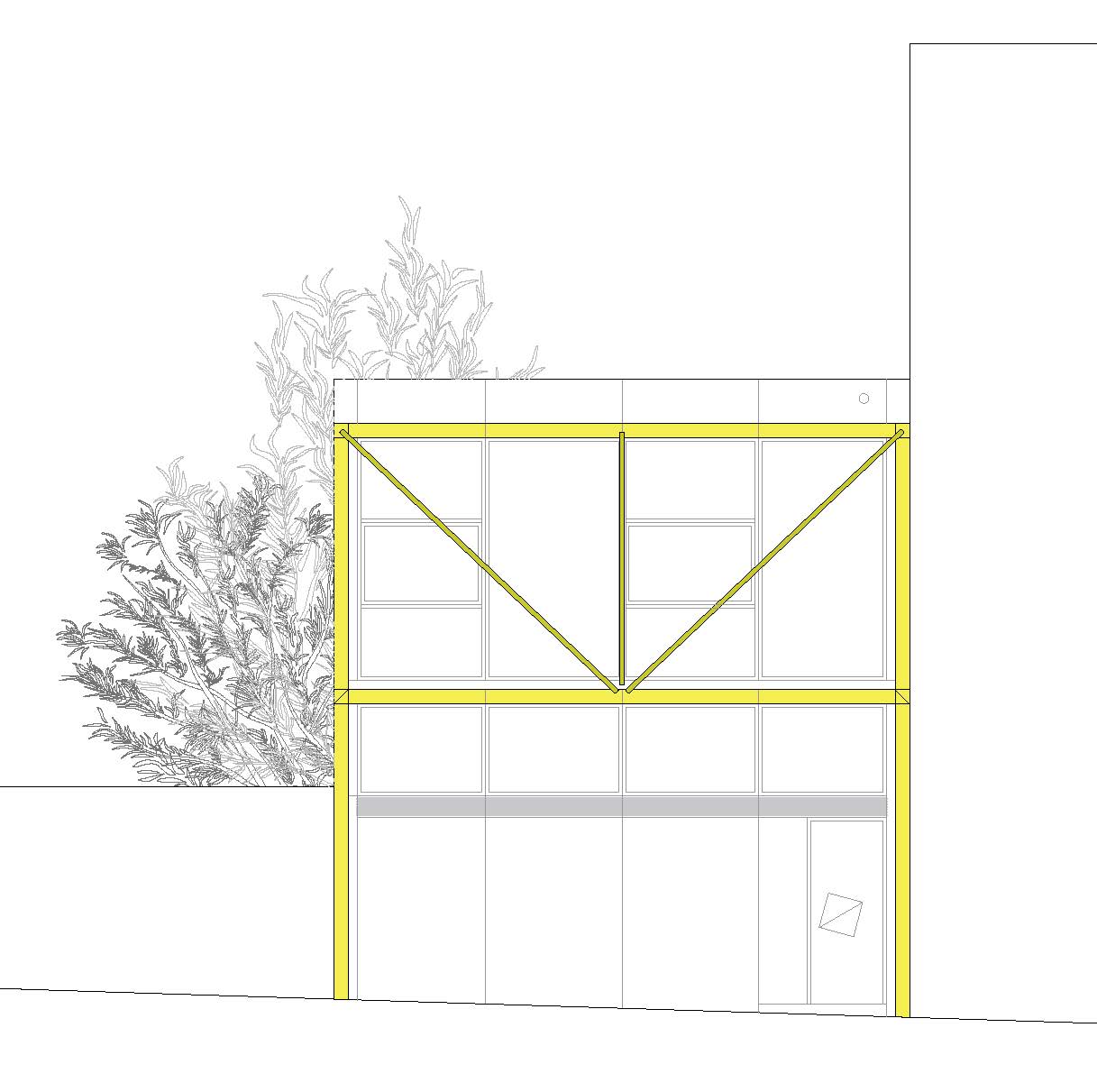
MACH describe the decision almost disarmingly: yellow was introduced to “play down” the house, bringing joy in relation to the green landscape and blue sky. Colour here undermines architectural solemnity.
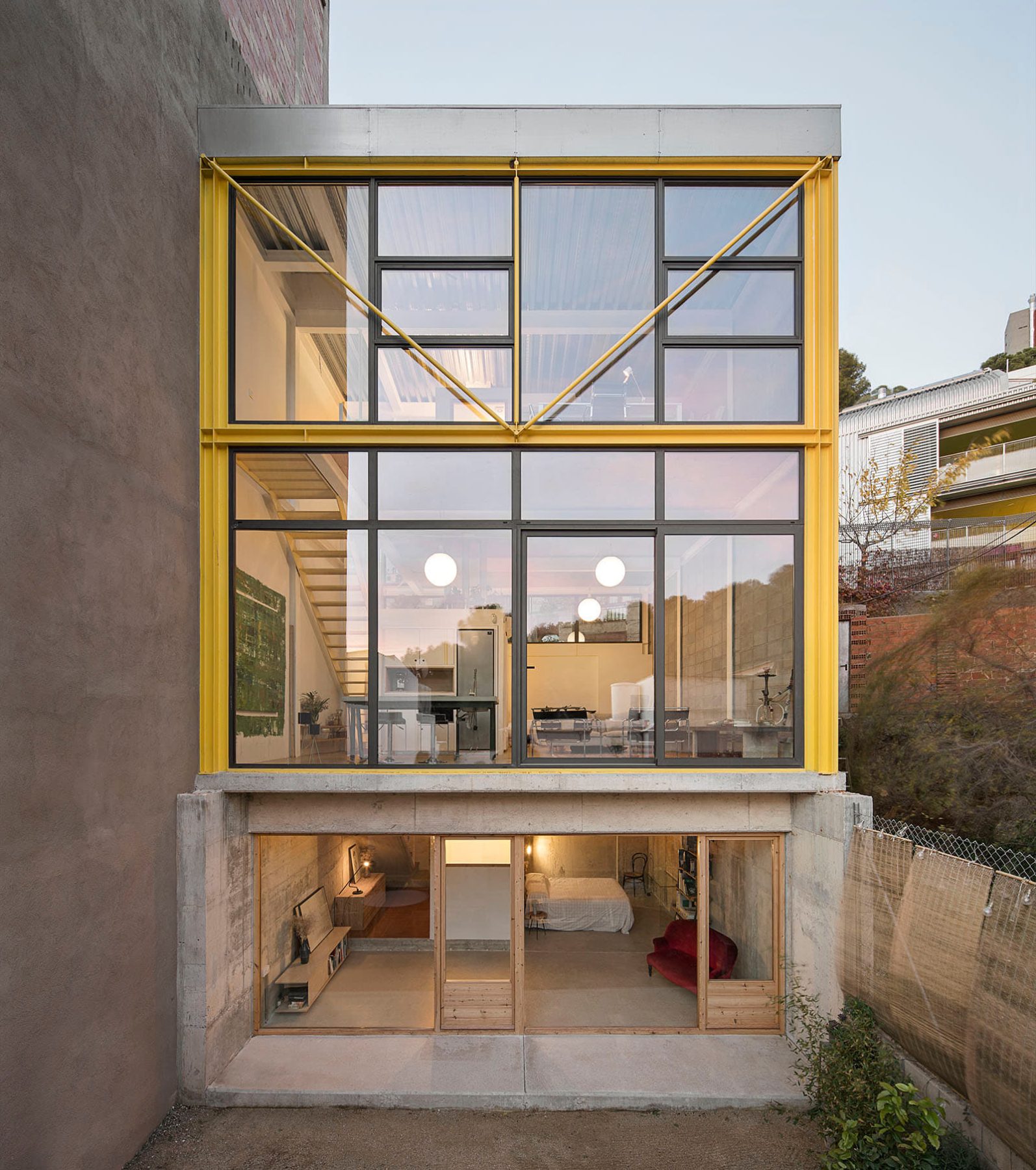
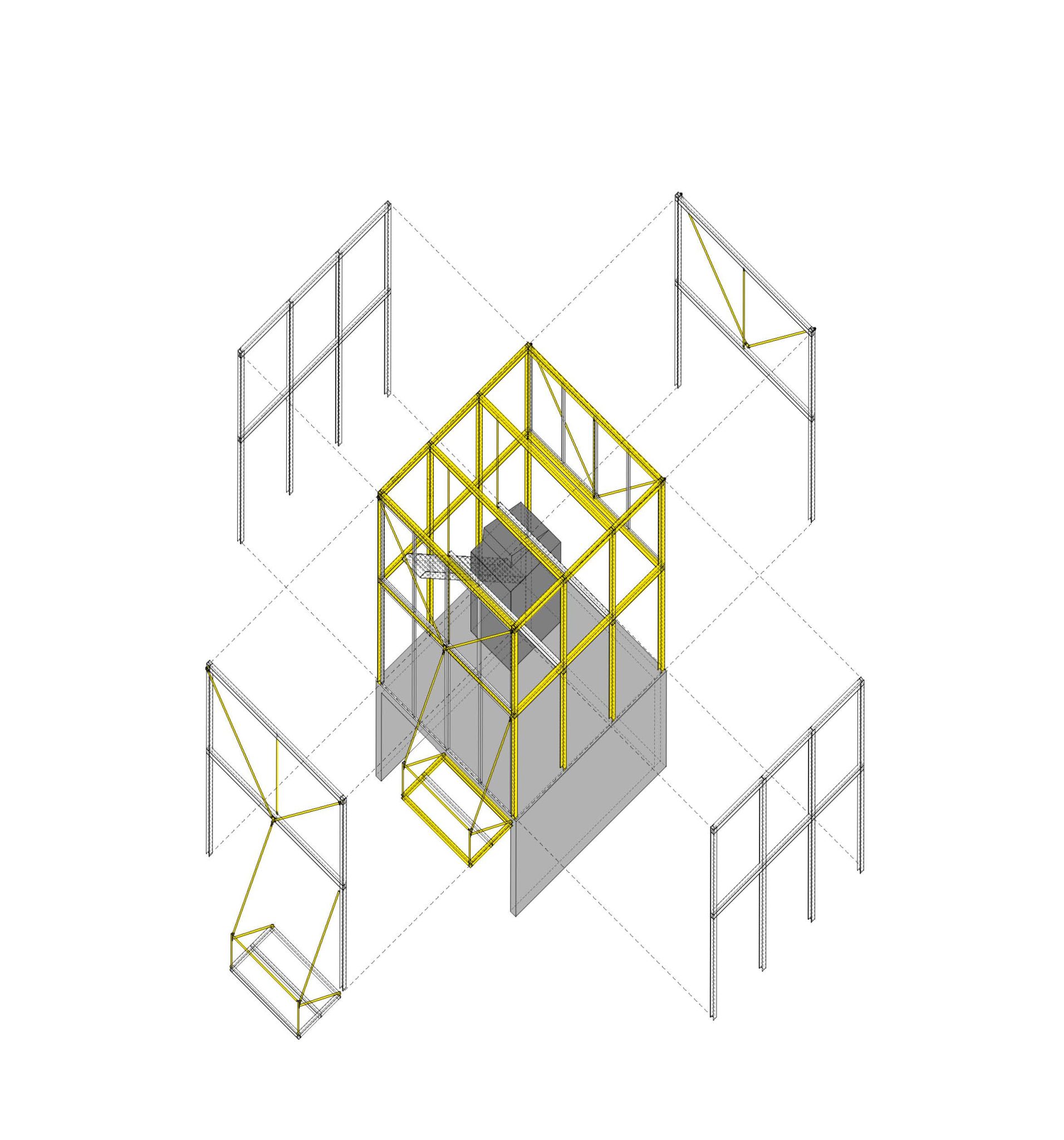
The industrial steel skeleton could easily have become an expression of tectonic seriousness. Yellow does the opposite. It makes the structure explicit while simultaneously making it playful. The load-bearing frame becomes identity without ceasing to be construction. There is something distinctly contemporary in this refusal to separate technical necessity from emotional experience. Economy does not have to produce visual austerity.
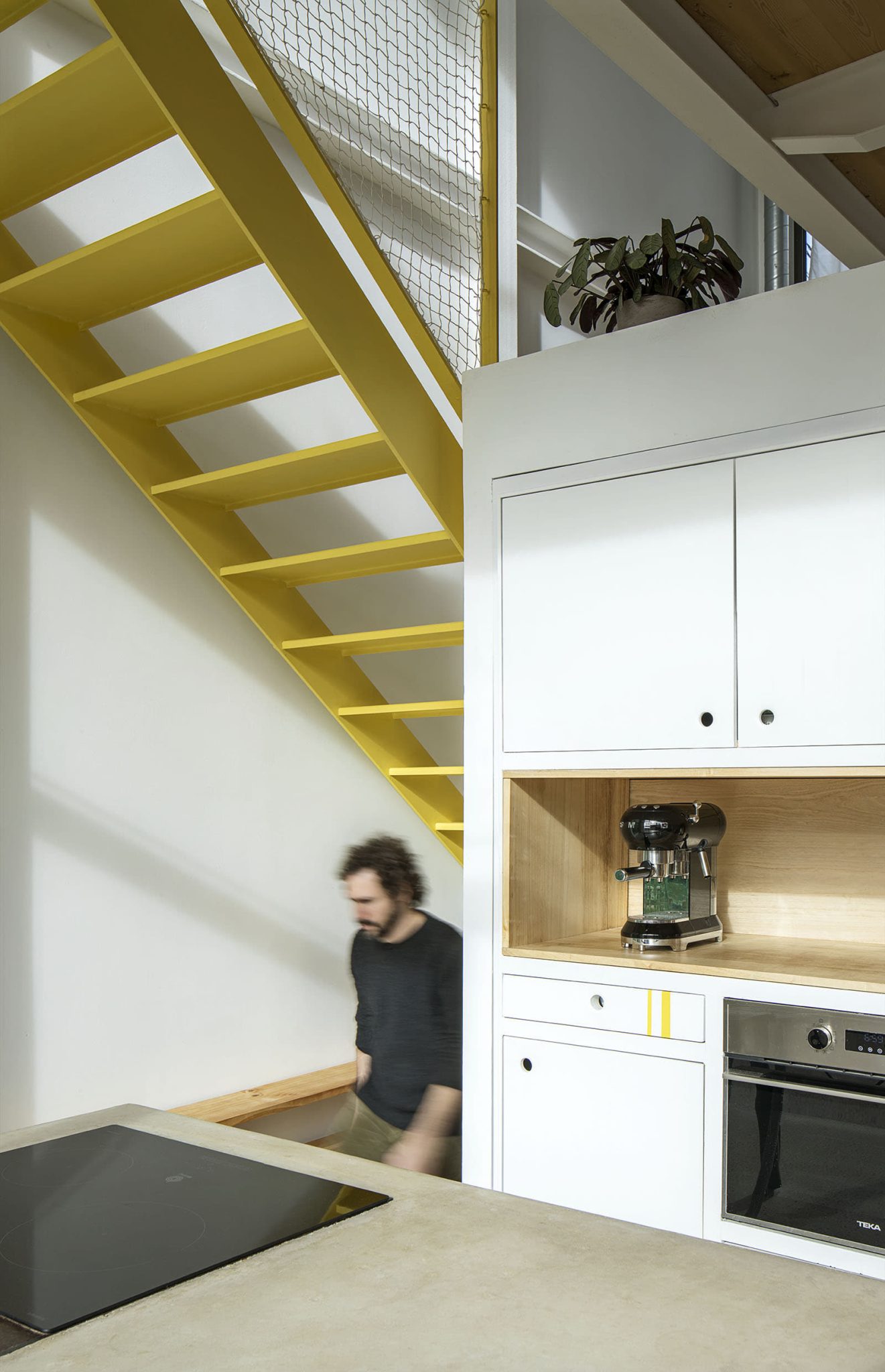
Perhaps this is where colour becomes particularly revealing; it produces intensity without material excess.
Seven Lives: difference from within the rules | Barcelona, 2020
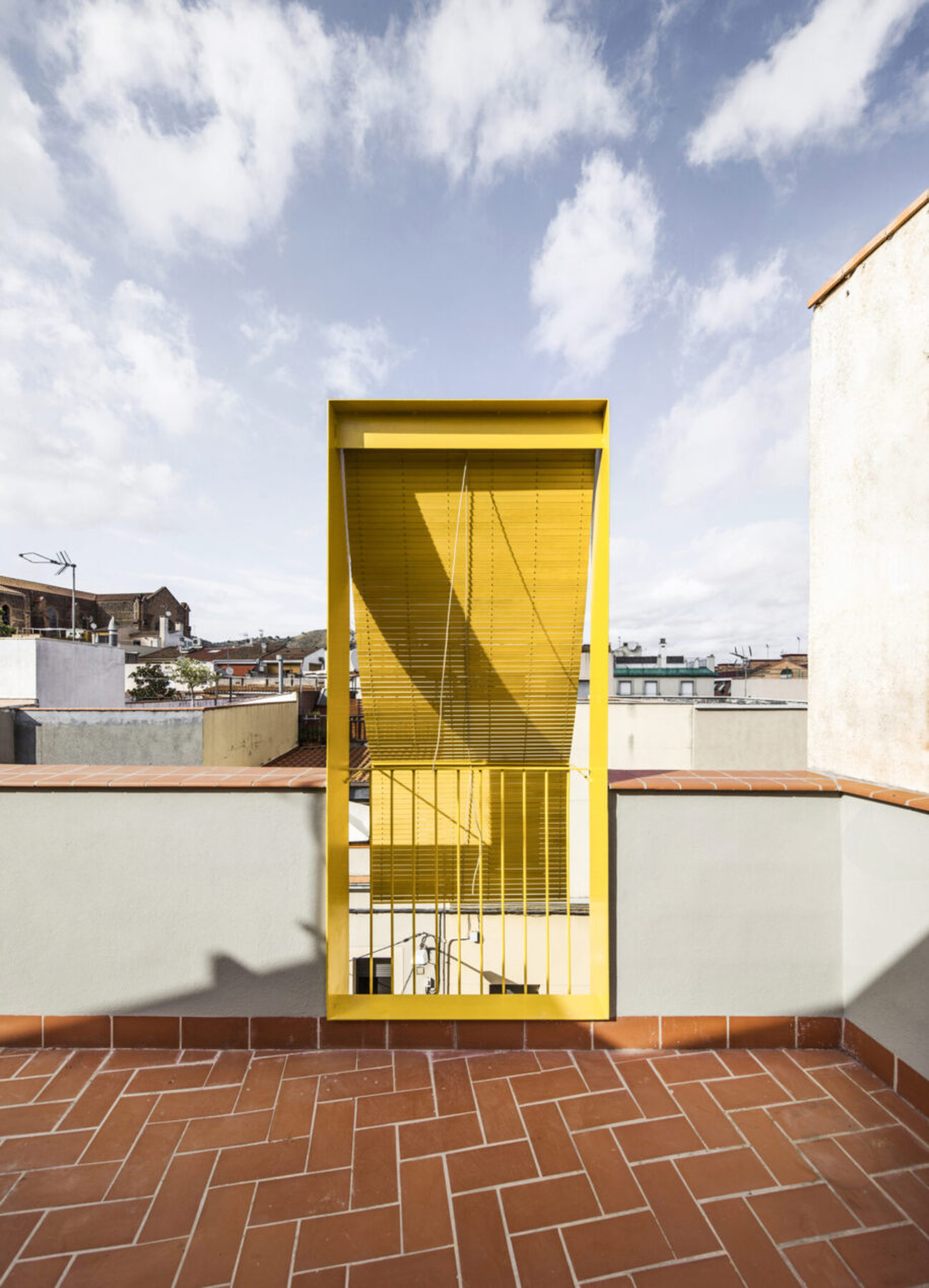
In Seven Lives by Anna & Eugeni Bach, in Barcelona’s Horta neighbourhood, the building deliberately works within the ordinary architectural vocabulary of its street: stucco, balconies, shutters and familiar proportions. Even its yellow is not an arbitrary gesture of rupture; selected from the palette permitted by local regulations, the colour was already present within the neighbourhood. What changes is its intensity and application. Applied to frames, shutters, balconies and the communal staircase, yellow transforms familiar elements into a distinctly contemporary architectural language without severing their relationship to context. The project is radical precisely because it does not need to appear radical: rather than opposing the existing urban fabric, it produces difference from within its own rules.
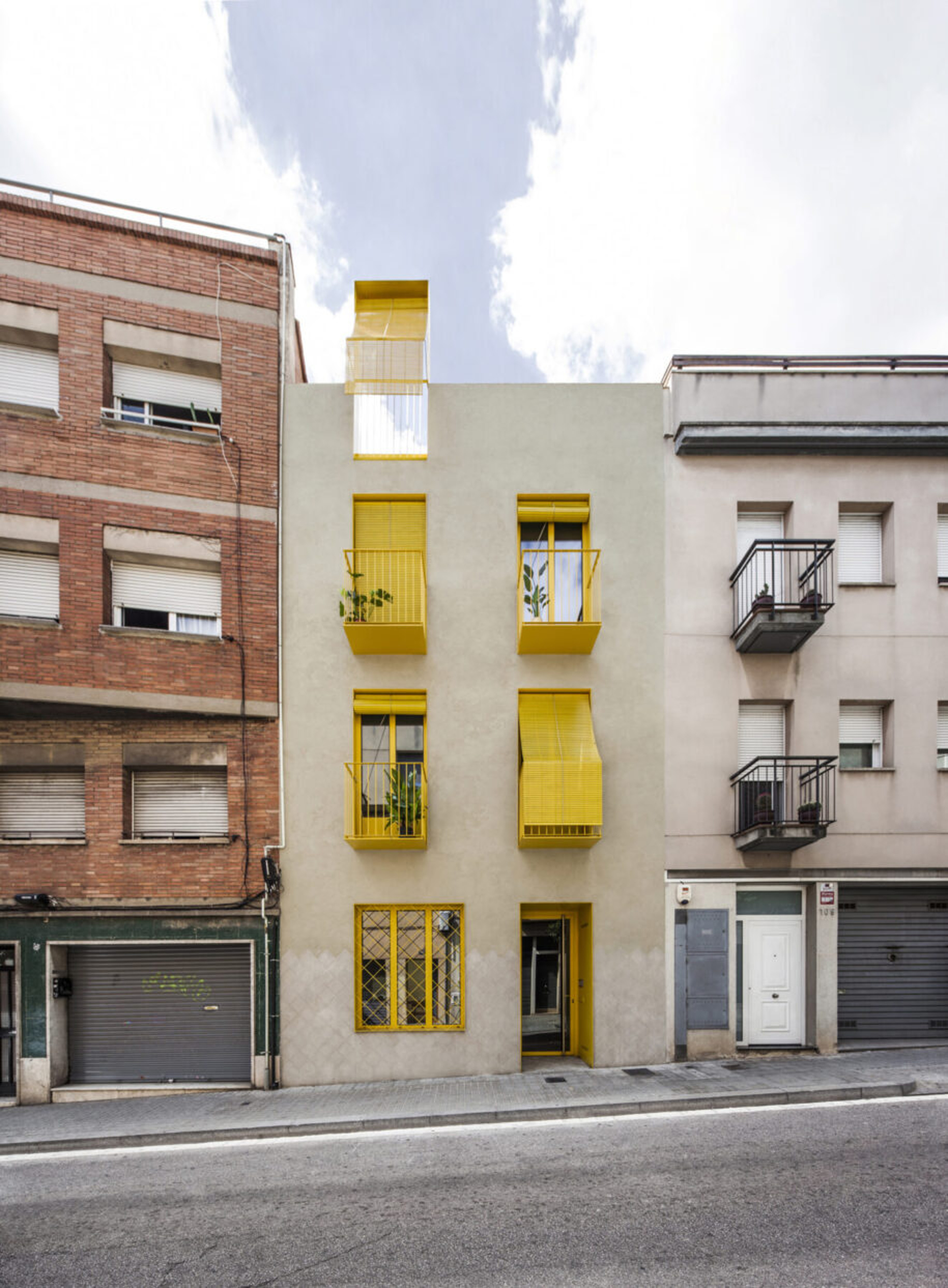
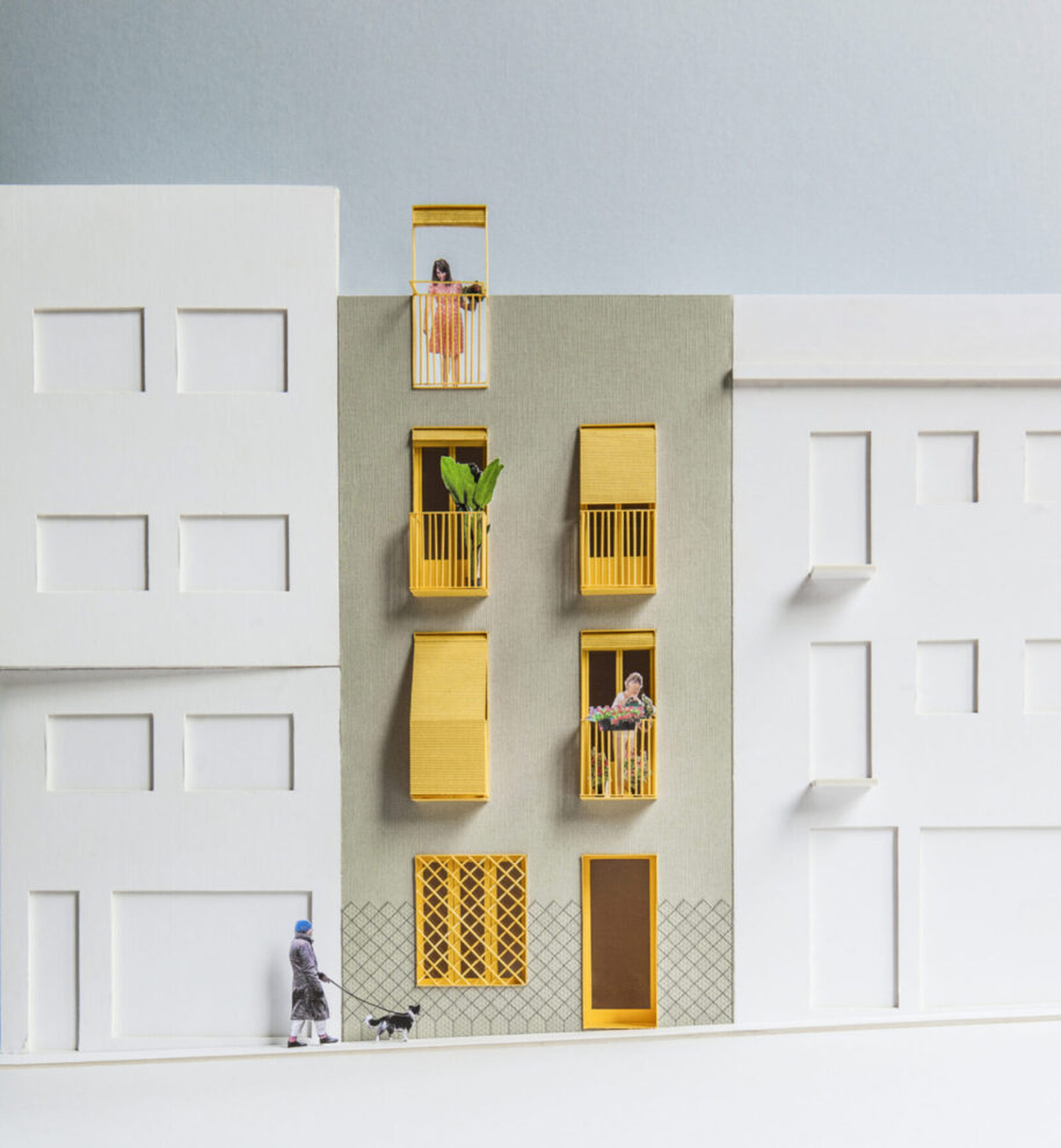
On a plot allowing apartments of only around 40 square metres, kitchen, bathroom and staircase are concentrated centrally, leaving two equivalent rooms whose functions remain deliberately indeterminate. Bedroom, living room, studio or shared dwelling can emerge according to occupation rather than being permanently prescribed by architecture.
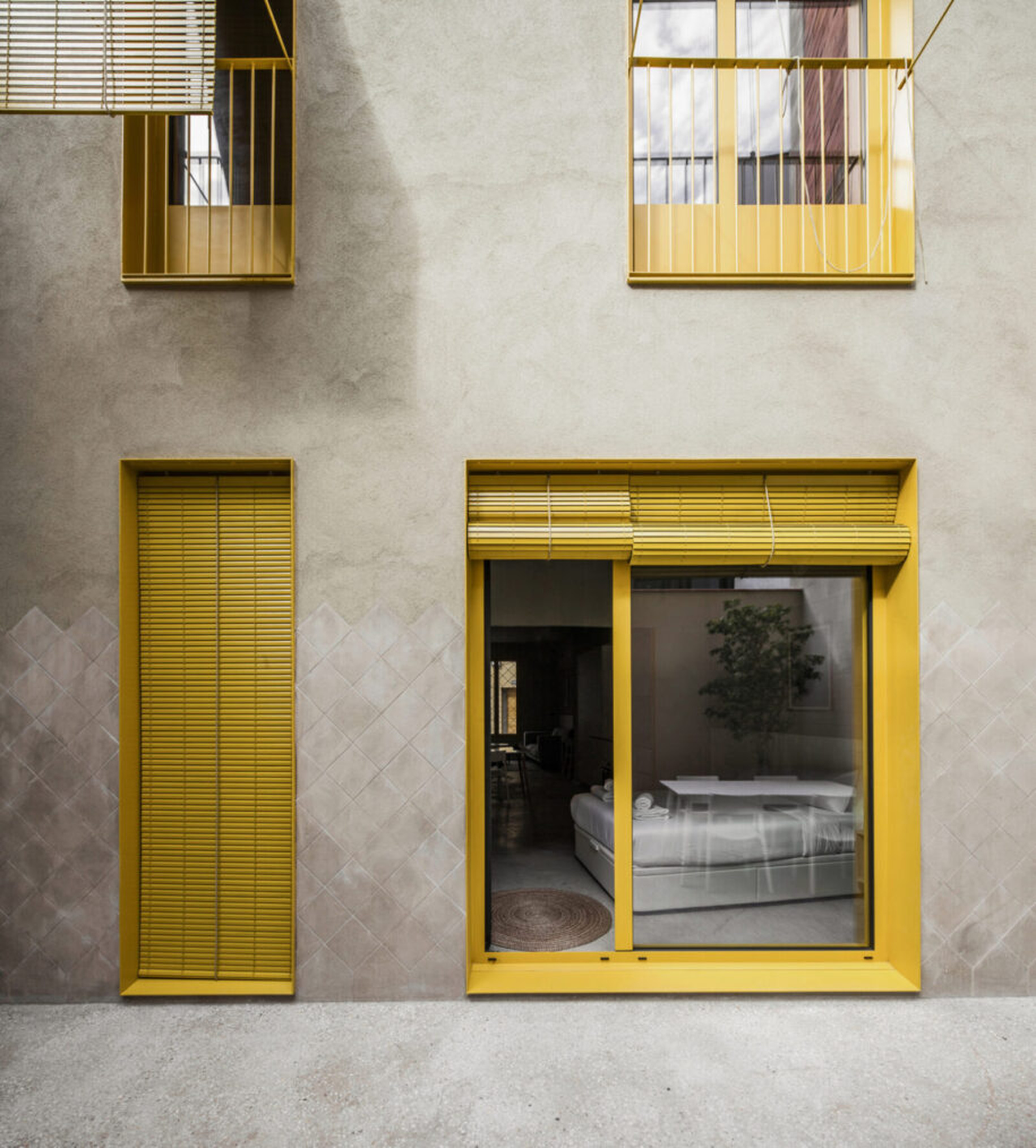
Yellow therefore participates in a broader architectural attitude: maximum possibility from minimum means.
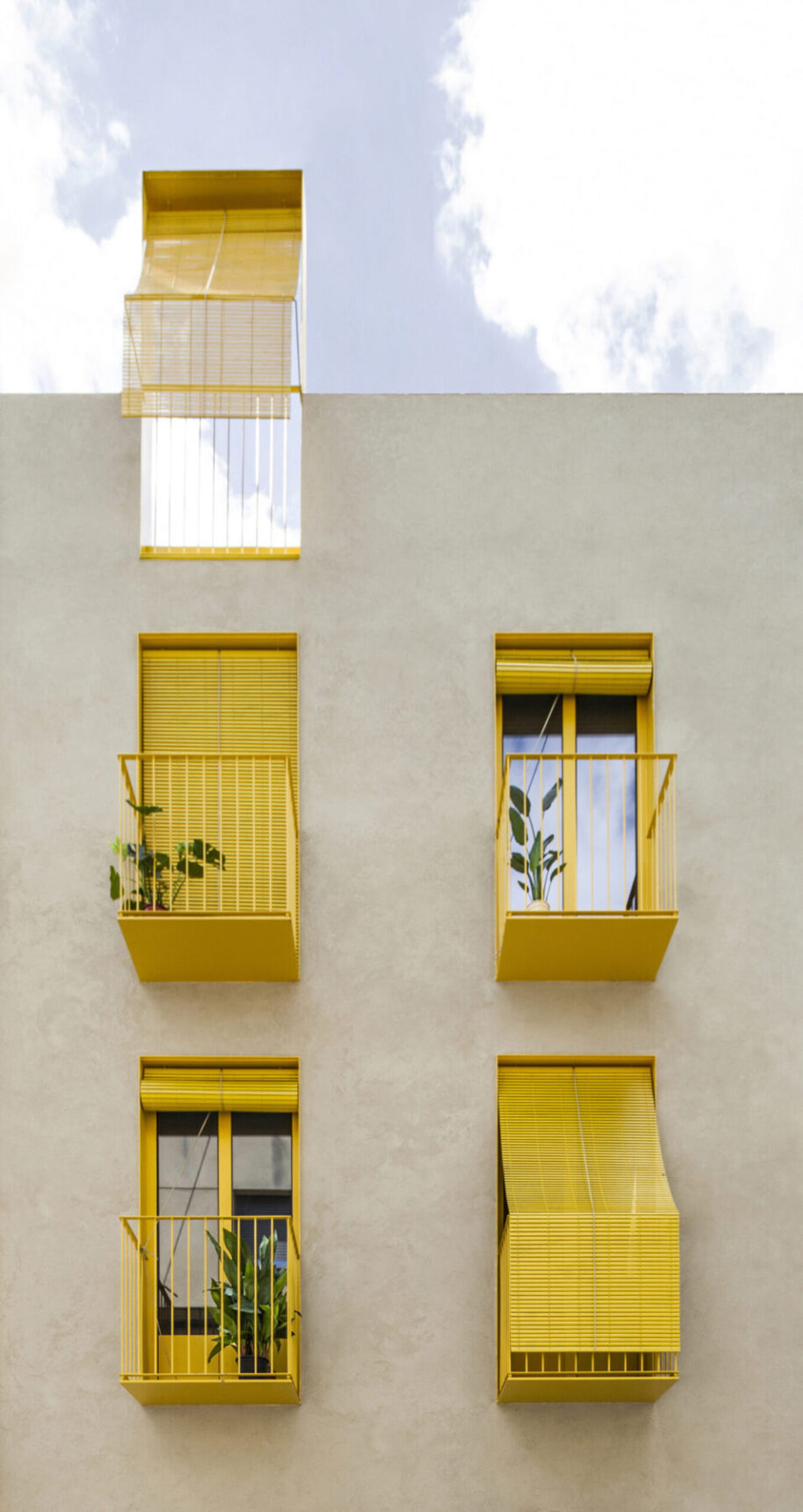
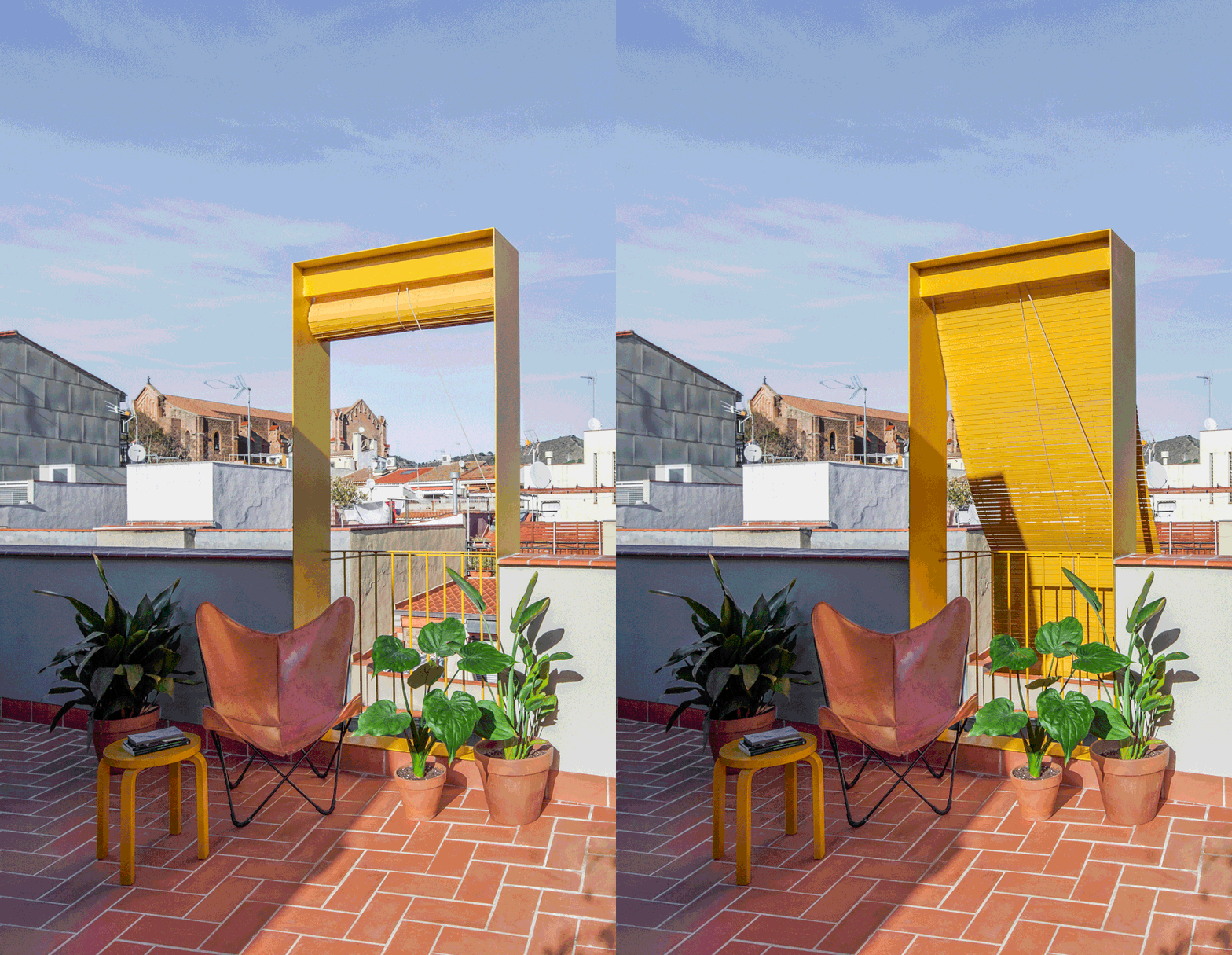
Rather than producing difference through formal extravagance, Seven Lives slightly alters the rules already present in the city. Colour allows the architecture to belong and resist simultaneously.
From the Scale of the Building to the Scale of the Hand
The same architectural economy becomes even more explicit when moving from the scale of the building to that of the interior, where colour can assume spatial responsibilities otherwise delegated to walls, partitions or material changes.
Corrigan Estudio | Madrid, 2025
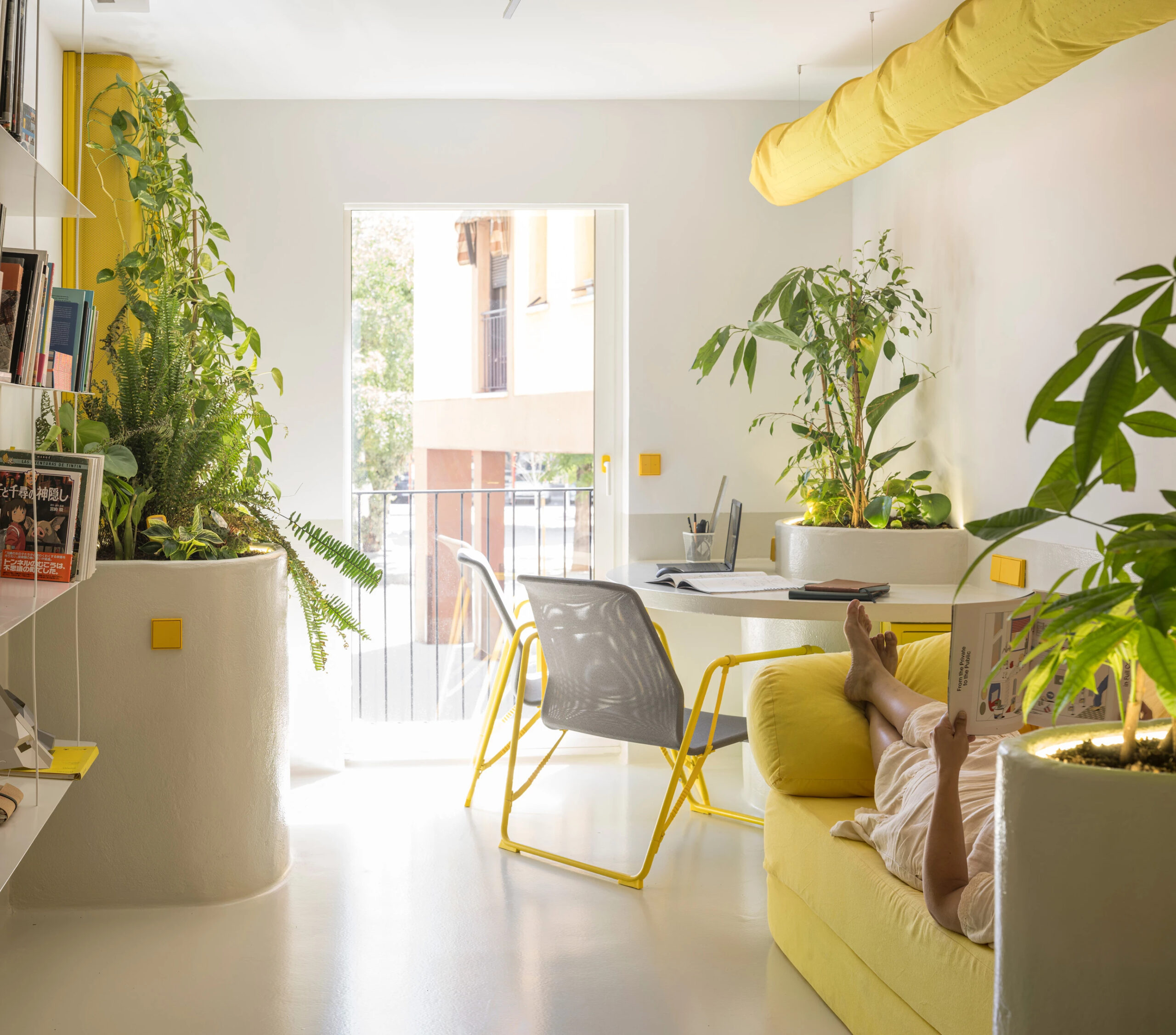
In Pinto, Madrid, Corrigan Arquitectos renovate a 70-square-metre apartment where conventional domestic divisions give way to an open and adaptable interior organised around environmental conditions rather than predetermined functions. Macarena Carrascosa and Adrián López approach the project as an atmospheric experiment: instead of defining rooms according to fixed programmes, architecture responds to different requirements for temperature, light, humidity, sound and privacy.
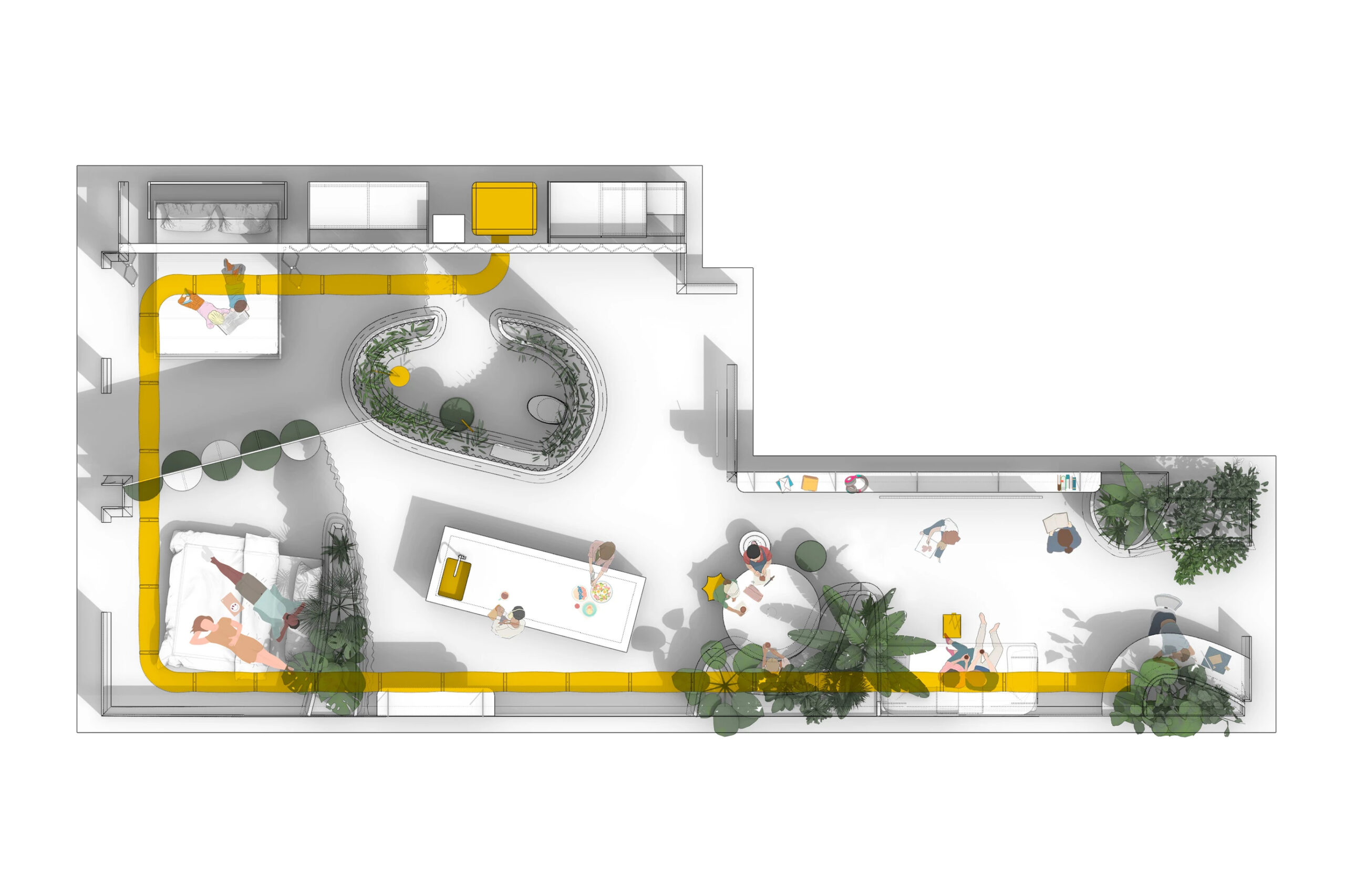
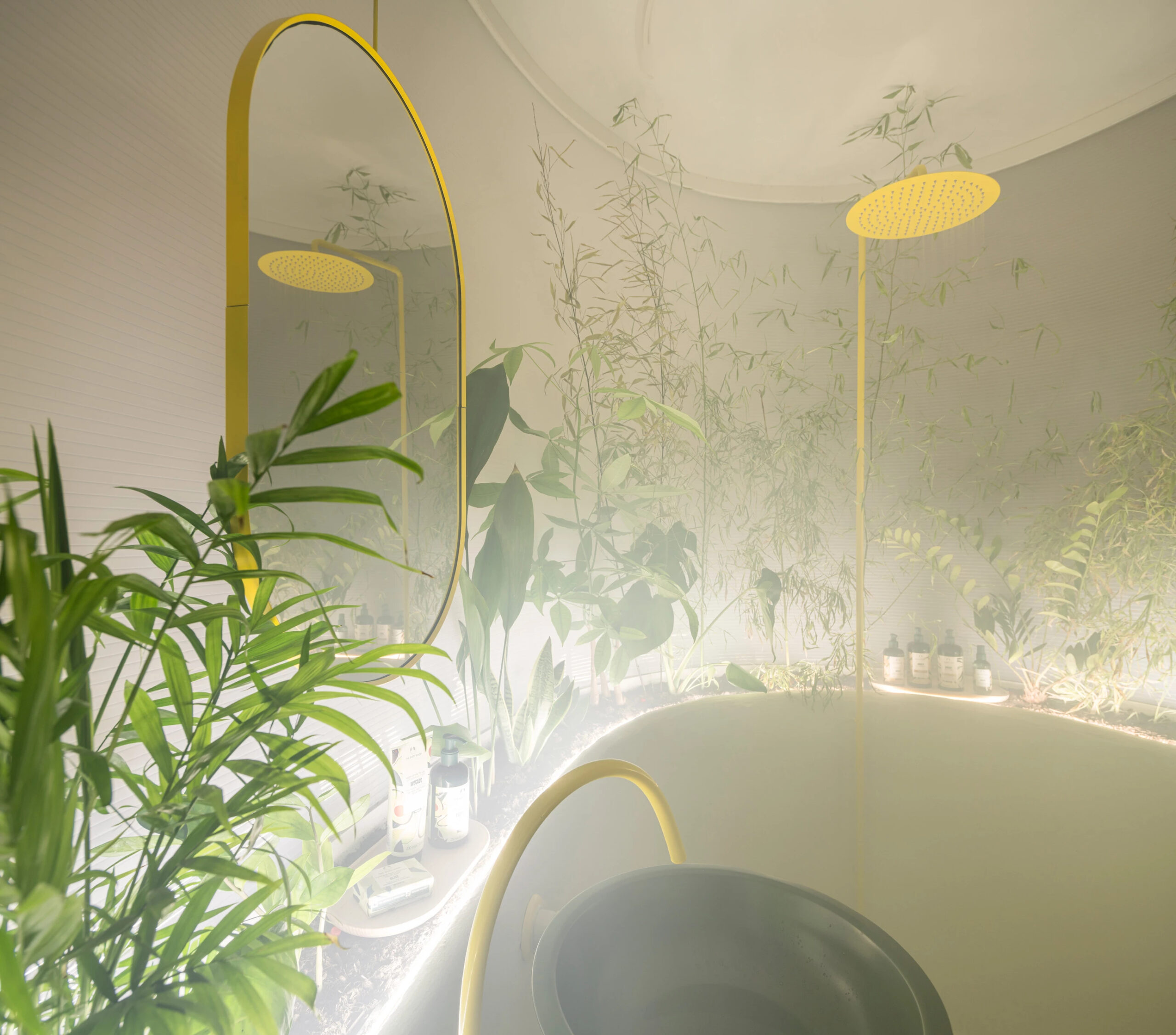
Metal mesh delimits without enclosing; translucent polycarbonate filters natural light; vegetation becomes both environmental regulator and spatial screen; textile curtains and movable panels allow degrees of intimacy to appear and disappear according to need. Within this deliberately porous system, yellow appears as part of the architecture’s structural vocabulary.
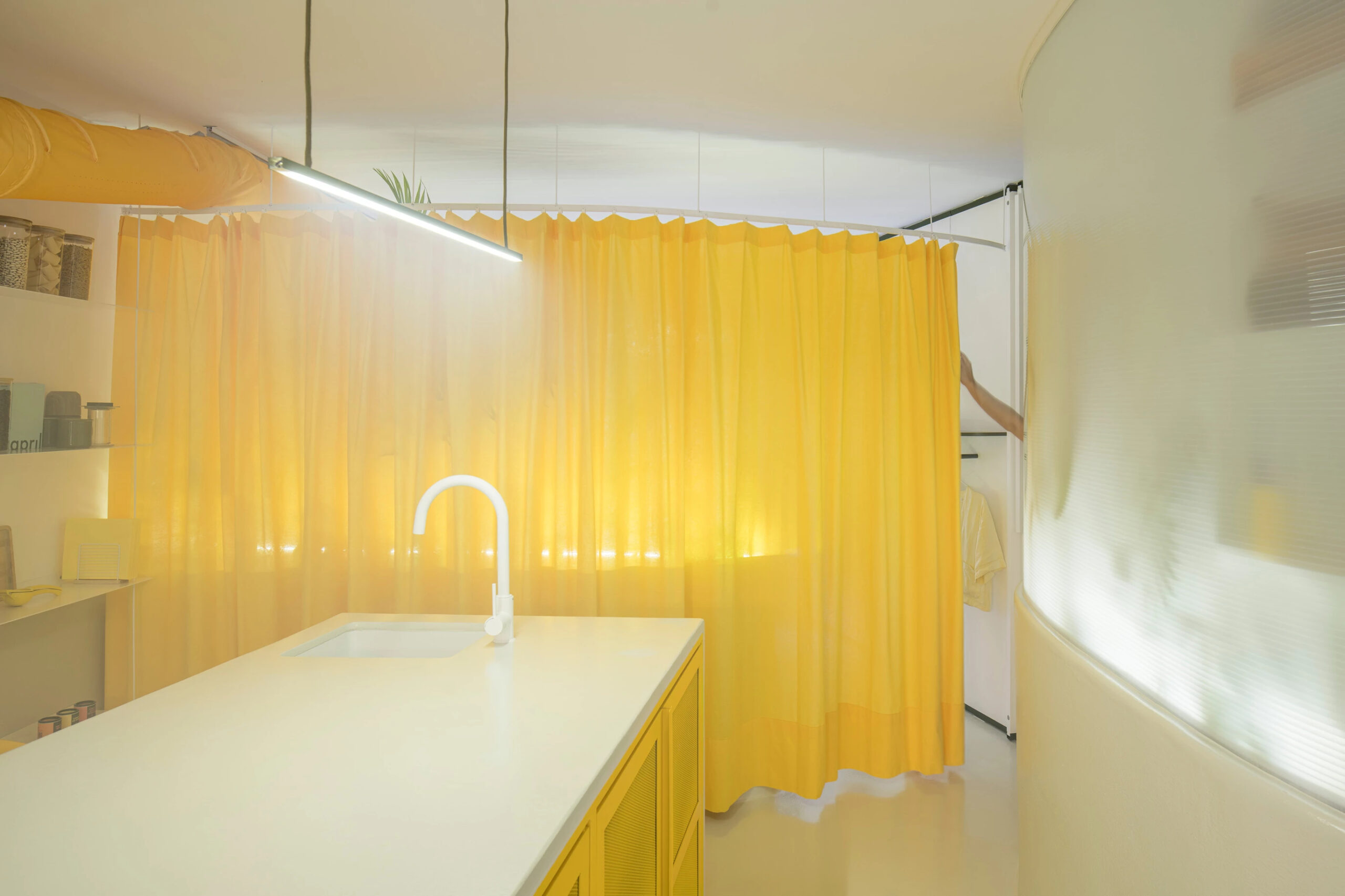
A yellow curtain regulates privacy and light; elsewhere, furniture introduces chromatic intensity without requiring additional construction. Colour belongs to the same family of lightweight operations as fabric, vegetation, transparency and movement: elements capable of defining space while resisting permanent enclosure.
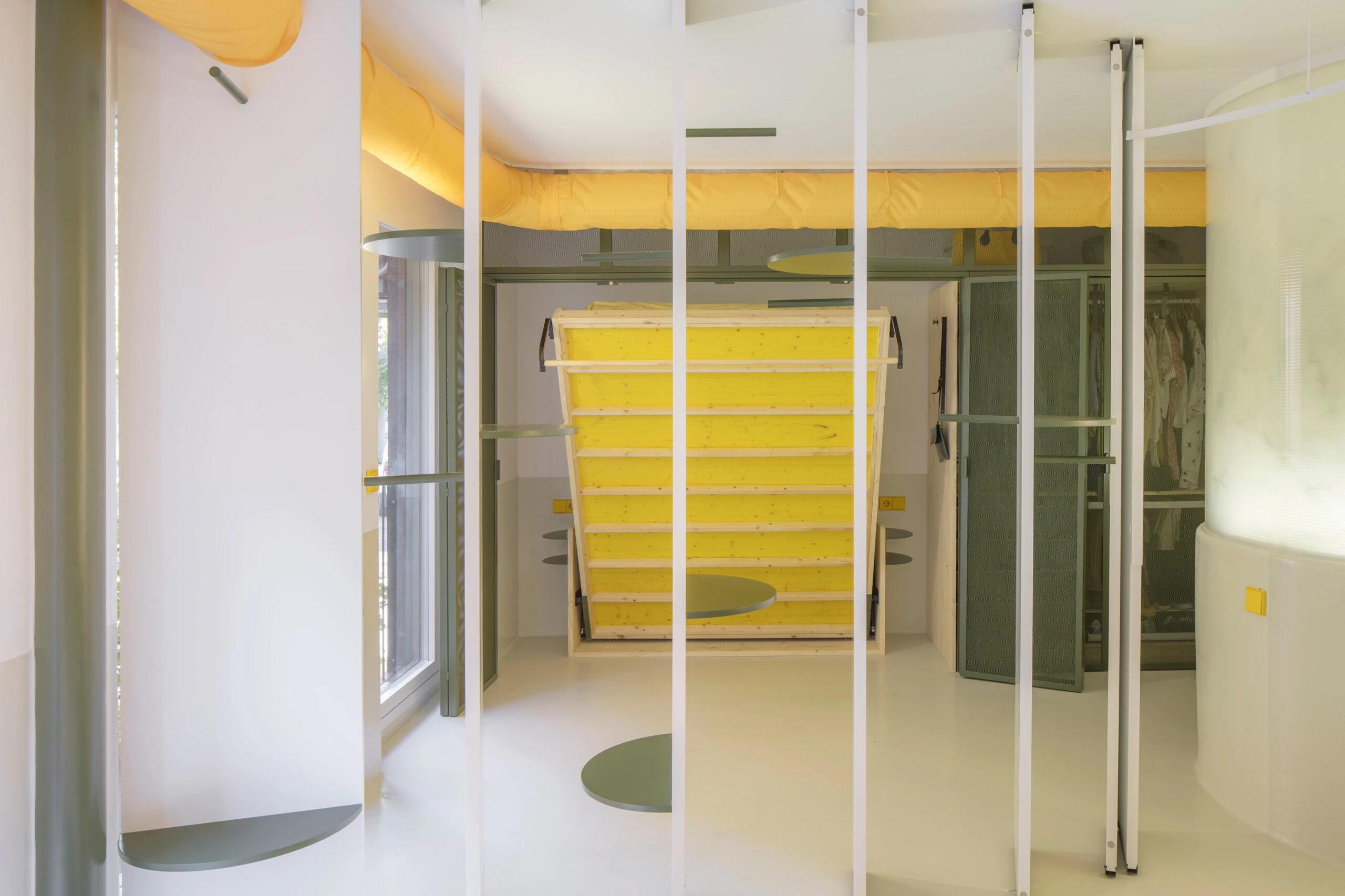
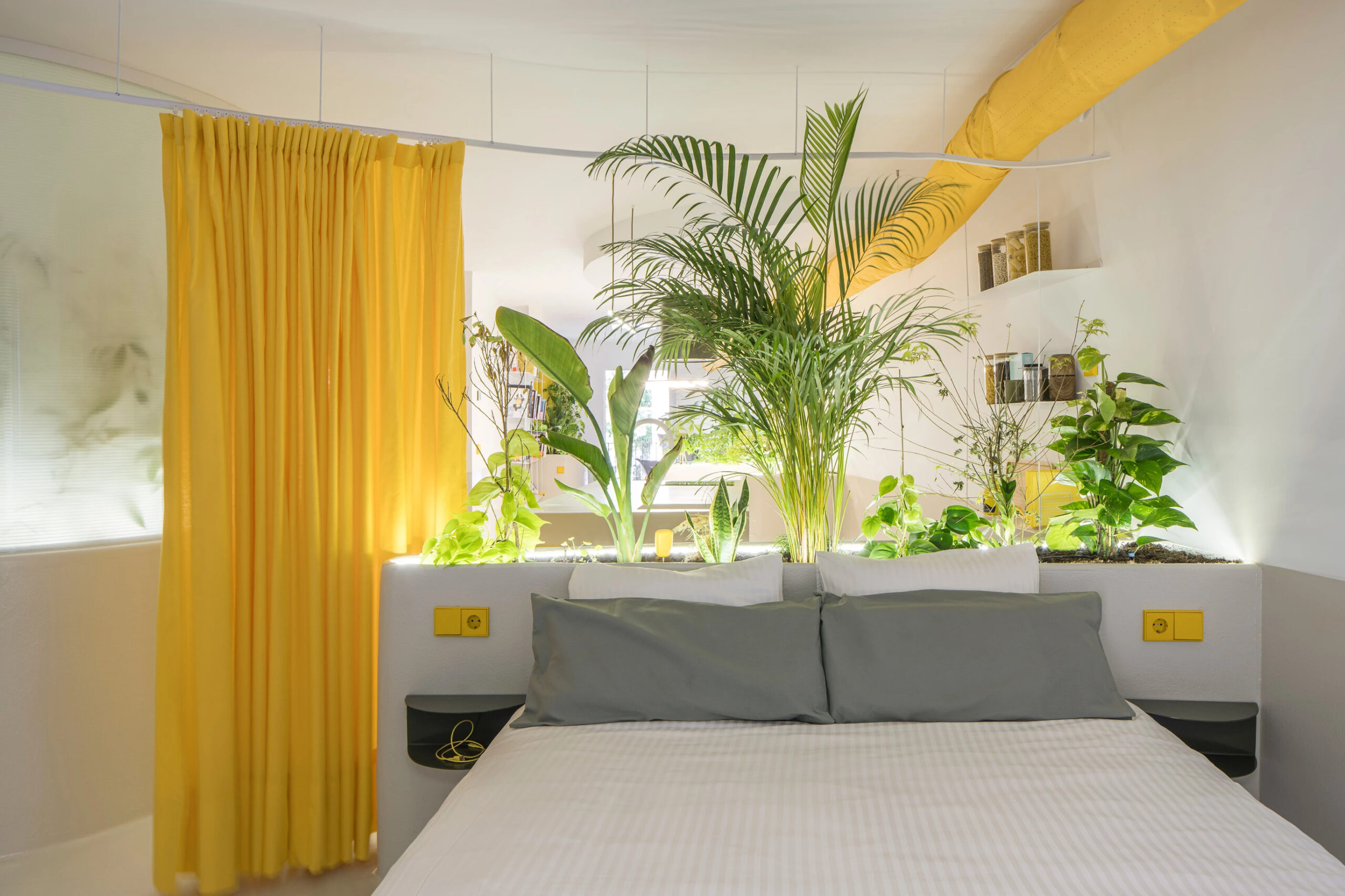
Corrigan Estudio therefore pushes the argument one step further. If a room can be produced through atmosphere rather than walls, colour can participate in architecture without becoming construction. Spatial definition becomes conditional, adjustable, temporal, and architecture creates the conditions through which different forms of inhabitation can emerge.
Colchón Exprés | Madrid, 2025
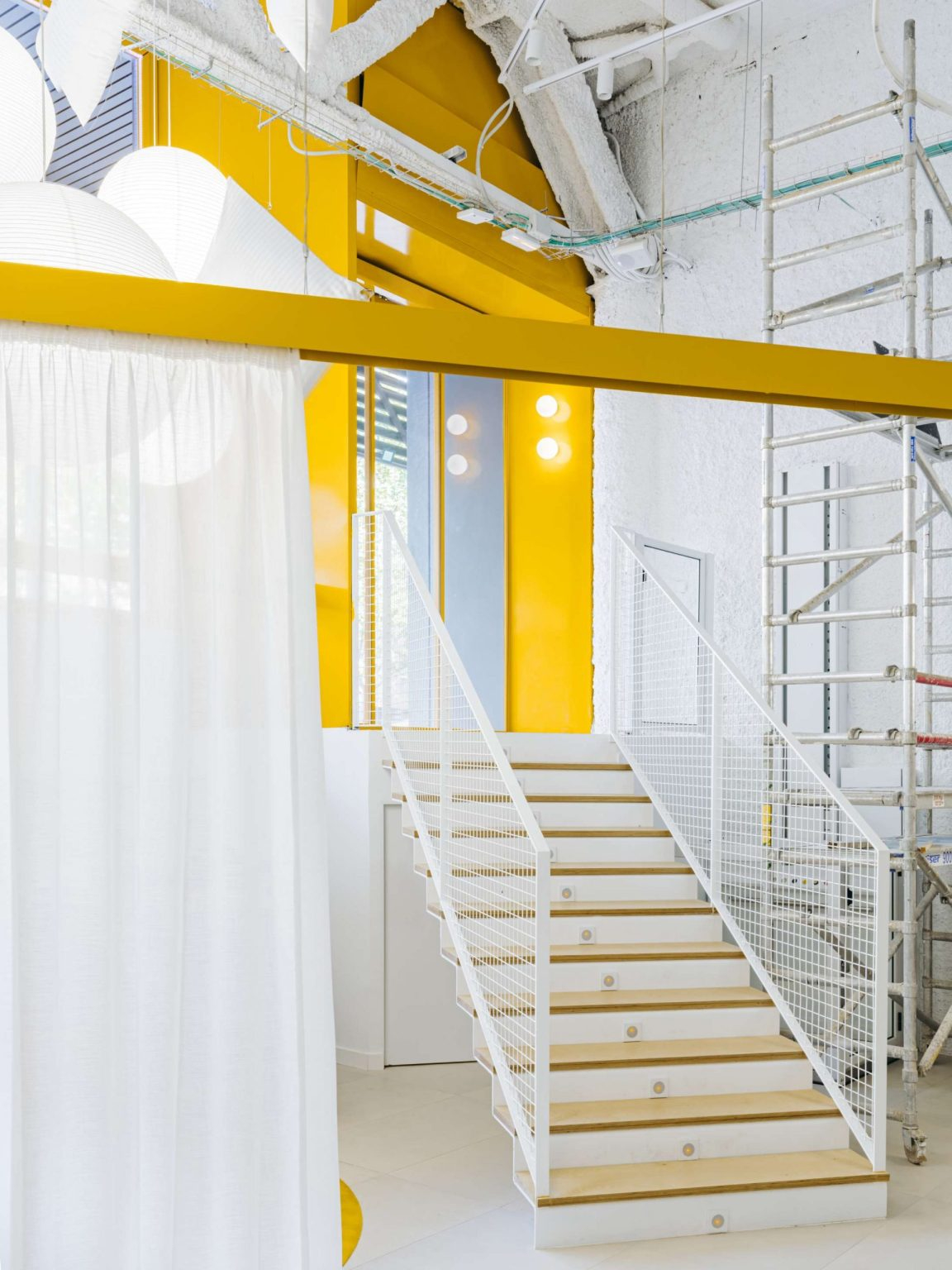
Similarly, in a commercial interior in Madrid, JOTAJOTA+ gives yellow even more architectural efficiency; zoning without walls, orienting without signage, distinguishing without separating.
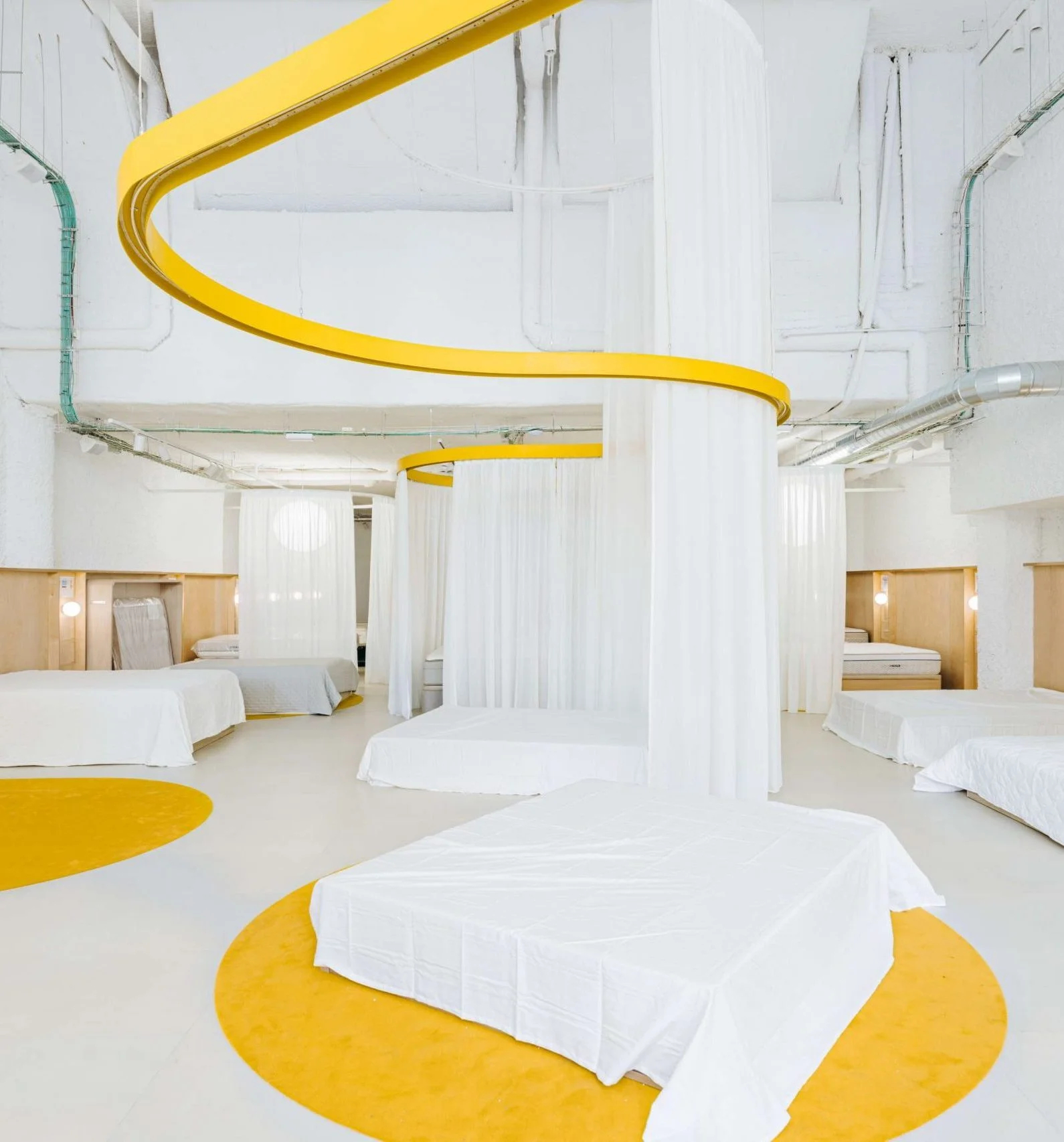
A large yellow moulding marks the façade and turns the entrance into an urban signal; inside, yellow carpets distinguish individual domestic environments within an otherwise continuous retail floor. Curtains and suspended tracks provide privacy without requiring conventional enclosed rooms.
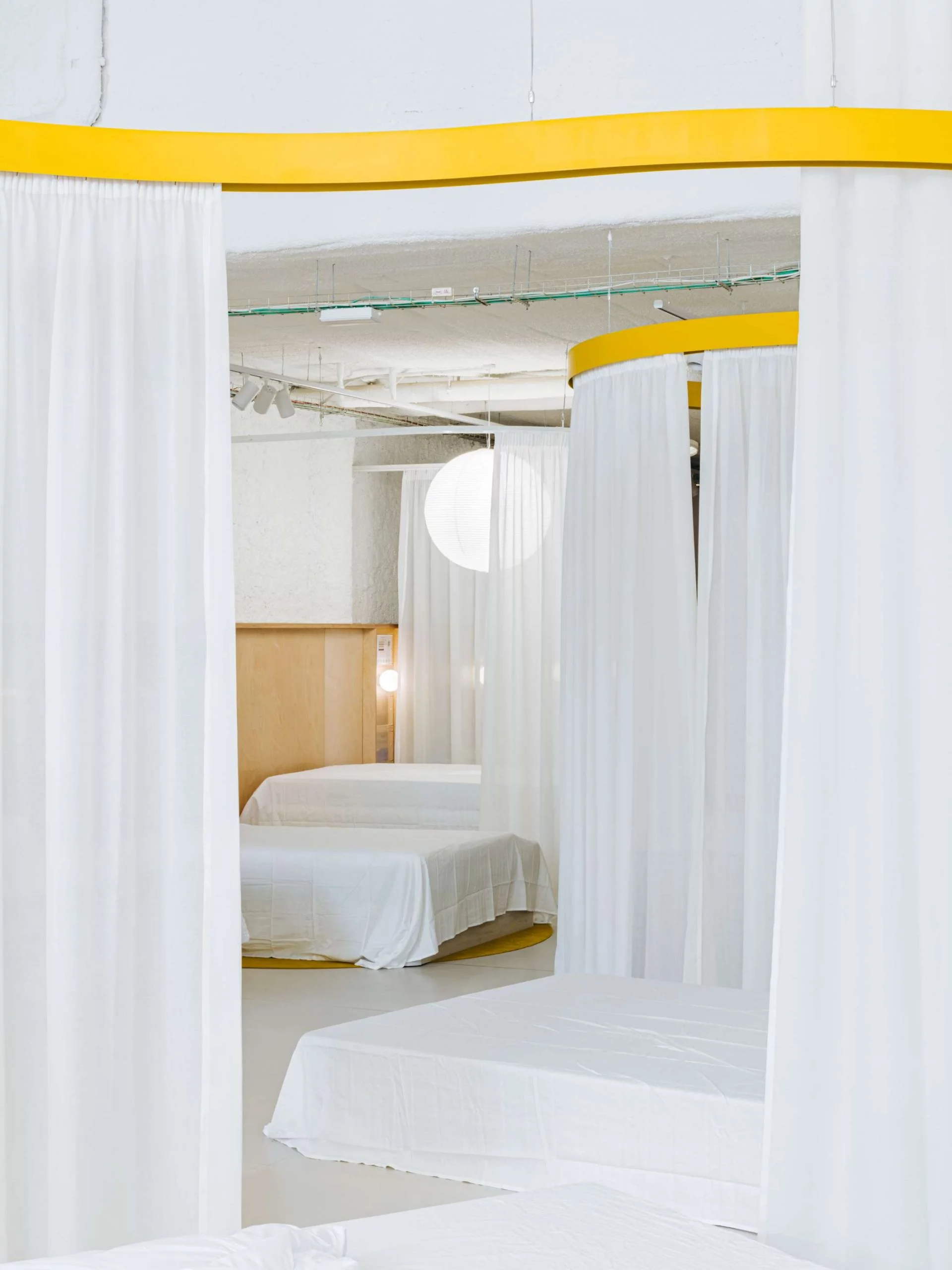
Read together, Corrigan Estudio and Colchón Exprés reveal how the logic identified at the scale of housing can be compressed into the interior. A chromatic surface, a curtain, a carpet or a piece of furniture can perform tasks traditionally assigned to heavier architectural elements. This may be one reason saturated colour feels so compatible with a contemporary Spanish culture of economical intervention: colour can assume responsibilities traditionally delegated to construction.
A painted frame can establish hierarchy.
A yellow stair can explain circulation.
A coloured floor can construct a room.
A curtain can replace a partition.
A piece of furniture can organise a plan.
Architecture begins to migrate from the production of objects towards the choreography of relationships and conditions.
From Necessity to Language
Architecture is never produced by a single historical cause. Spain already possessed powerful traditions of material experimentation, colour, climatic intelligence, collective urban life and adaptive construction. Contemporary practices, meanwhile, operate within newer pressures: housing affordability, ecological urgency, tourism, changing domestic structures and the need to decarbonise Europe’s enormous existing building stock. But 2008 remains an important rupture because it challenged the assumption that architectural progress necessarily meant more building.
The experience was especially formative for practices emerging at precisely that moment. Lacol’s account is instructive: collective organisation, shared resources and the questioning of conventional modes of practice were not abstract theoretical positions detached from material circumstances; they developed within a construction sector devastated by economic crisis. Spanish architecture showcases that the most productive response to limited resources is to reconsider how these resources—materials, buildings, labour, knowledge and space—are distributed in the first place, ultimately producing an architecture that can be economical and exuberant at once.
Yellow becomes emblematic of this paradox. It is inexpensive yet visually excessive. Lightweight yet spatially powerful. Reversible yet transformative. Ordinary yet capable of producing identity.
Its effectiveness lies precisely in this disproportion between material means and spatial consequence. Yellow can make a new intervention unmistakably contemporary without demanding the disappearance of what preceded it.
What Can We Learn from the New Generation of Spanish Architects?
Perhaps the lesson is ultimately not about colour at all. It concerns an understanding of architectural value that has gradually moved away from quantity to quality; from adding to carefully deciding what does not need to be added.
Value can be generated through editing, exposing, retaining, painting, opening, connecting, filtering and reorganising—not only through constructing.
MARTÍ JULIA retains its concrete skeleton and lets yellow articulate transformation. Seven Lives accepts the ordinary rules of its neighbourhood and produces difference from within them. Collumpio House turns an economical steel frame into an architecture of unexpected joy. La Carolina works with accumulated material history rather than against it. Corrigan Estudio replaces predetermined rooms with atmospheric gradients and lightweight filters. Colchón Exprés constructs spatial territories through carpets and curtains rather than walls. Different projects, different scales, different architects. Yet across them emerges a shared confidence that architectural intensity does not require material abundance.
And perhaps this is why yellow feels so appropriate. It announces itself as an intervention: immediate, artificial, optimistic and potentially reversible. Seen this way, its recurrence in contemporary Spanish architecture can be read as the visible expression of a broader disciplinary shift: from replacement towards transformation, from fixed programme towards adaptability, and from material abundance towards spatial intelligence. What began under conditions of constraint has matured into an architecture capable of doing less to the world while producing more within it.
Bibliography
Courrèges, K. and de Ferrari, F. (2021) ‘The Architecture of Cooperation: Carles Baiges and Cristina Gamboa of Lacol on cooperativism, participatory design, and political engagement’, Canadian Centre for Architecture, 19 April. Available online (Accessed: 27 September 2026).
Fernández-Galiano, L. (2013) ‘Naciones en naufragio’, AV Monografías, 159–160, pp. 4–9. Available online (Accessed: 27 September 2026).
Fernández-Galiano, L. (2014) ‘Small Spain’, Arquitectura Viva, 163, 31 May. Available online (Accessed: 27 September 2026).
Fernández-Galiano, L. (2017) ‘Bling or Bare’, Arquitectura Viva, 30 November. Available online (Accessed: 27 September 2026).
Goodbun, J., Klein, M., Rumpfhuber, A. and Till, J. (2014) The Design of Scarcity. Moscow: Strelka Press.
Goodbun, J., Till, J. and Iossifova, D. (eds.) (2012) ‘Scarcity: Architecture in an Age of Depleting Resources’, Architectural Design, 82(4).
Serra Lluch, J., Torres Barchino, A., de la Torre Fornés, I. and García Codoñer, Á. (2018) ‘Experimentation with Colour in Architectural Spaces’, in Castaño Perea, E. and Echeverria Valiente, E. (eds.) Architectural Draughtsmanship: From Analog to Digital Narratives. Cham: Springer, pp. 215–226.