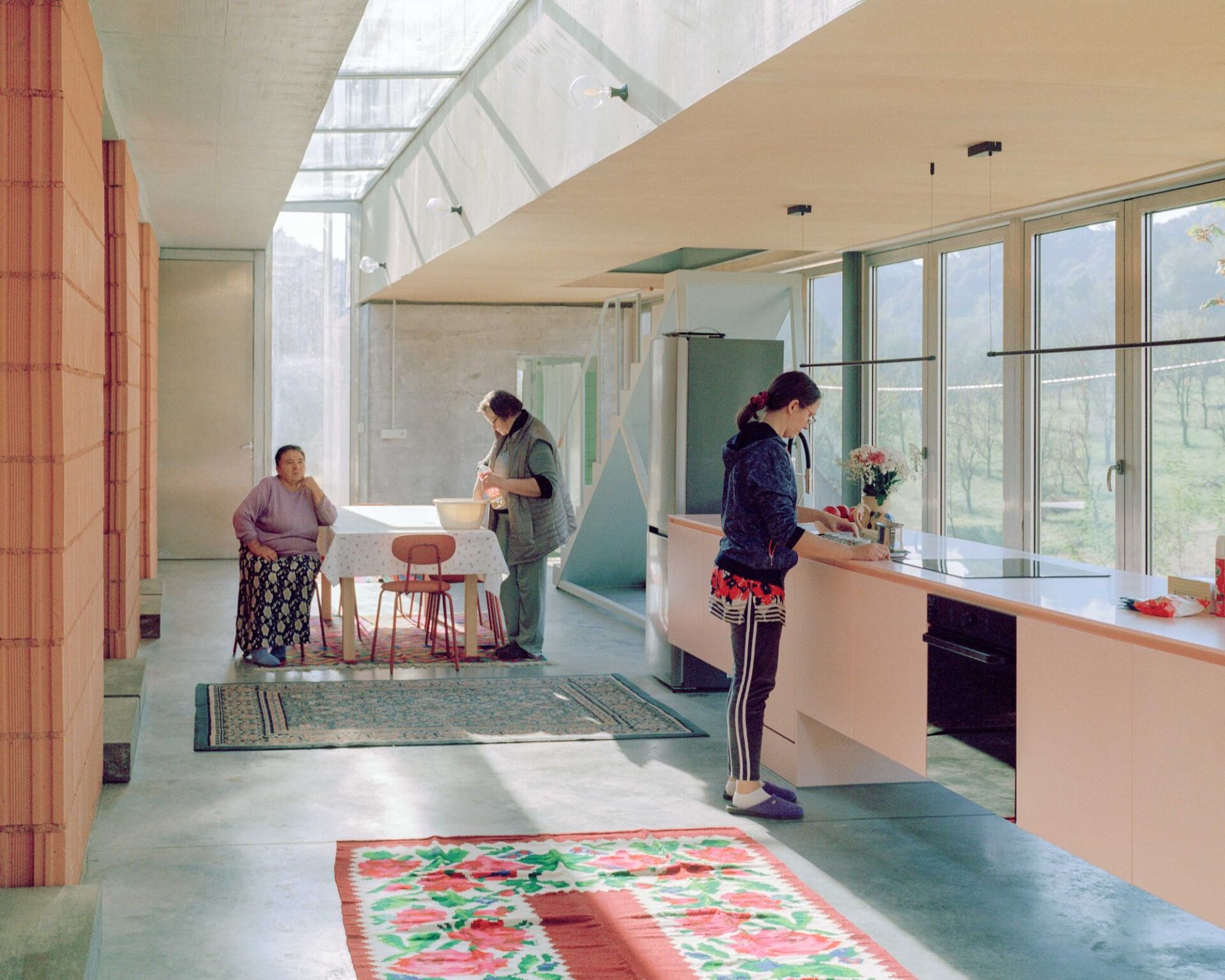
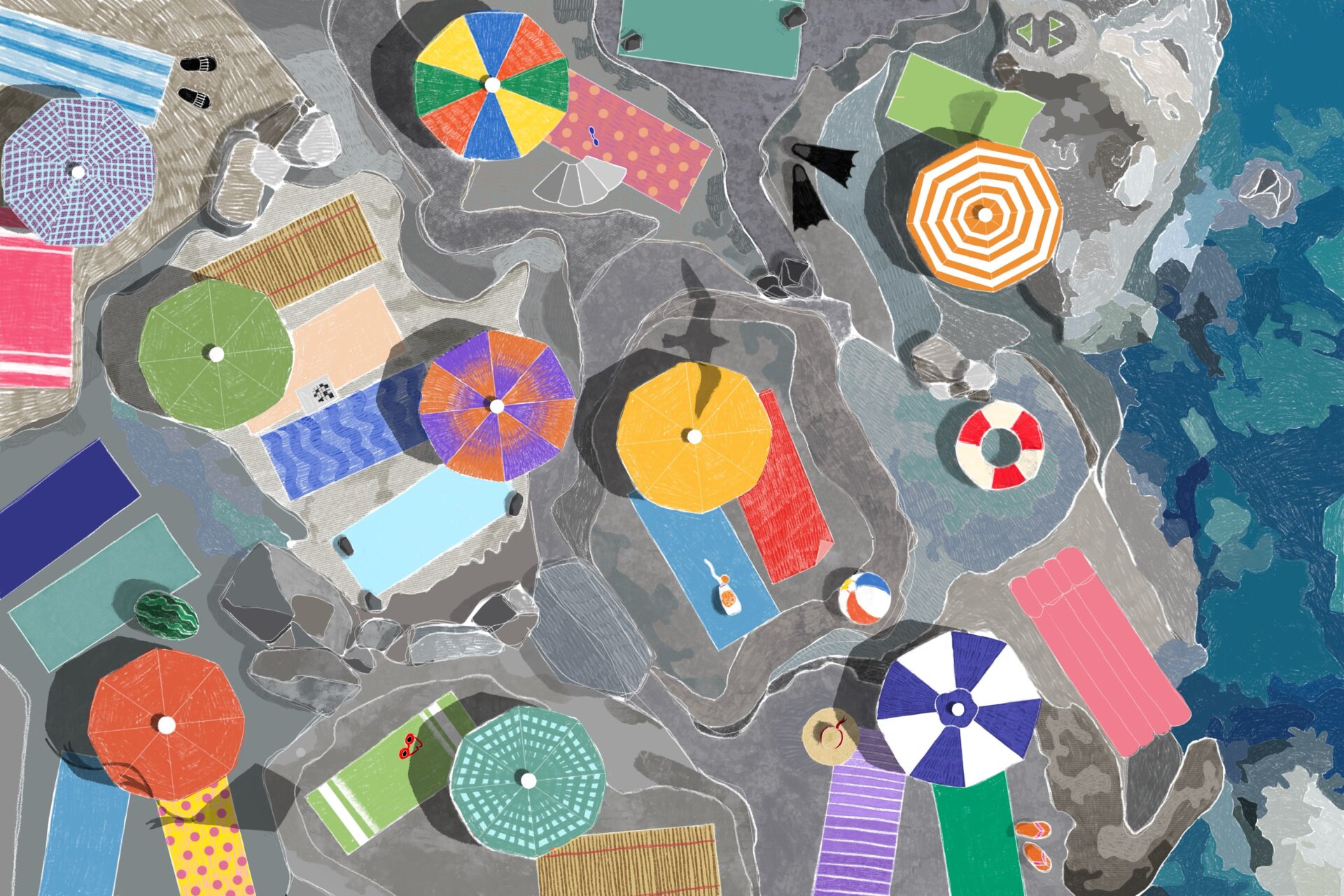
Stories of Contemporary Domesticity >> HOMEland

— για Ελληνικά δείτε παρακάτω —
‘Stories of contemporary domesticity or HOMEland’ series poses questions about the concept of home through an open dialogue with contemporary architectural practices in housing.

Home can be a lot of things.
It can be a verb, an adjective, a noun.
An action, a feeling, a place or possession.
noun
- the place where one lives permanently, especially as a member of a family or household.
e.g. “the floods forced many people to flee their homes” - an institution for people needing professional care or supervision.
e.g. “an old people’s home”

adjective
- (of a sports fixture) played at the team’s own ground.
e.g. “their first home match of the season”

verb
- (of an animal) return by instinct to its territory after leaving it.
e.g. “a dozen geese homing to their summer nesting grounds” - move or be aimed towards (a target or destination) with great accuracy.
e.g. “more than 100 missiles were launched, homing in on radar emissions”

home is where we meet
sometimes we talk
sometimes we watch
sometimes we eat


Home is tangible and intangible.
Sometimes it’s made of stones, concrete and bricks and other times it’s made by memories, smells, flavours, whispers and clatters.

Home is a personal story and a collective notion.
For James Baldwin home is “an irrevocable condition” since “you don’t have a home until you leave it and then, when you have left it, you never can go back.” For Baldwin, home is a long-gone heaven where our lost childhood innocence resides. Nostalgic and bittersweet as it is, somewhere well hidden in the past, we find our adult selves wonder: will home take me back?

Home was never a place for me
No place could cease the chaos in my head
For home were always the people
Who in my eyes weren't the strangers who want me dead

They would cover me in blanket
With a gentle kiss on the forehead
Banish the monster under the bed
And write a letter I would've kept forever

I never knew why they left
Or maybe I scared them away myself
"Nothing ever lasts forever"?
I guess my home was meant to be forgotten

I just wish it could stay a little longer
Wish for another kiss on my forehead
Wish I could read another letter
And have a final talk about our World

World that was never real
World that was purely dream
World that was always only my wish

My home by Khadija

Home is yet another body.
Home is the body carrying our body. A body for the body that everyone inhabits in its very own, unique and, completely, different way. A body which is home to the spirit and soul. Home is yet another body carrying the weight of our memories. Our very own personal space: the center of our dreams, recollections and fantasies. “There is no memory without body memory”, argues philosopher Edward S. Casey and architect Juhani Pallasmaa in his essay “Space, place, memory and imagination” adds on, “Body is not only the locus of remembrance, it is also the site and medium of all creative work, including the work of the architect.”

Following Pallasmaa’s train of thought, the architect’s role is, after having recognised their own body, their own place and their own home, to support other people doing the same for themselves; through the architect’s aware design other creatures, human or not, should be guided to wear their true bodies and their true selves inside intimate spaces functioning as homes.

Home is hidden deep inside ourselves and home surround us. And, of course, home, just like Michel Foucault puts it for the body, has its own biopolitical systems requiring an architecture of care.

i wear my soul inside my body
i stretch it to come out

i wear my body inside my house
i fetch it to go round

look at this woman
she is her man
she hides her home
inside his heart

Melina Arvaniti-Pollatou, Her Home

A home is its own ecosystem.
A household with its own logic, emotional intelligence and interrelated patterns. Home can nurture and home can hurt. Home can be open and free and home can be supervised, ferociously, by rules and silent policies. Home can be safe and home can be dangerous.

Home can be somewhere you are running to or running away from.

I'm building a home for myself
where doors don't slam
and people don't yell
and love is scattered around a kitchen table
that was built with kindness and respect,
I'm building a home for myself
where the floors can be painted yellow
and the tables can be painted blue
because there is no right way to do anything
except to do it with you,
I'm building a home for myself
that will echo the feelings
that live deep inside my chest,
but you will know that
when you step into the rooms
that were built by people
who love one another
with nothing but respect,
I'm building a home for myself
that was made
for lovers like me
where there is space
for you to be
everything that you've always wanted to be.

Cammie Dennis from 'there's coffee in the pot'

Home is a legacy.
Home is where a family is. Hence, in its core, it is inseparable of it. Home can be a parental apparatus letting wonderful or awful things to happen even when the real people are no longer alive. As Virginia Woolf puts it in her novel The Waves, we raise our children, boys and girls, we educate them, we look after them so as to inherit our homes. Our home is our legacy going straight from us to our offsprings. A legacy filled with memories and fantasies of all kinds.

I was a child of that house,
filled with the memory of its smells,
filled with the coolness of its hallways,
filled with the voices that had given it life.

Antoine de Saint-Exupery, Wind, Sand and Stars, London: Penguin Books, 1991, p.39.

References from poetry, literature, philosophy, performing arts and cinema help us understand how a home works and what it looks like as a lived world – as a universe or cosmos of experiences.
DOGTOOTH (2009) | Directed by Yorgos Lanthimos, Written by Efthimis Filippou & Yorgos Lanthimos.
A controlling, manipulative father locks his three adult offsprings in a state of perpetual childhood by keeping them prisoner within the sprawling family compound.

MATCHBOX (2003) | Directed by Yannis Economides, Written by Yannis Economides & Lenia Spyropoulou.
During an unbearably hot Athenian summer, a cramped flat becomes a hellish urban battlefield for an ornamental paterfamilias and his family. Now, ugly truths and deleterious words become weapons in a dirty war. Can they emerge unscathed?

Home can be a house but a house isn’t always a home.
So, which houses we call homes and what do they reveal for us?

How hard do we hold on to our homes, and how hard do our homes hold on to us?

If architecture creates a house, then poetry turns this house into a home; a domestic experience releasing intimacy and a tendency for the bad or for the good. As Pallasmaa puts it, architecture shapes a house, in real time and space, as much as psychology, psychoanalysis and sociology define a home projecting its vast and various versions in the parallel spacetime of poetry, literature and cinema.


Home is the Point Omega.
Apparently, home needs us just like we need home. It’s an interactive relationship; there is no home without self and there is no self without home. Discussing existential homelessness, architect Juhani Pallasmaa correlates Teilhard de Chardin’s Omega Point with the notion of home as the place or the event from which the world can be seen in its entirety. Home is where and also when the person has access to the lived world, as Pallasmaa phrases it, a mental world where “the material and the spiritual, as well as the experienced, remembered and imagined, constantly fuse into each other.” “The house shelters daydreaming, the house protects the dreamer, the house allows one to dream in peace”, states Gaston Bachelard in The Poetics of Space.

Well, that’s, definitely, a house we can call a home. A home that “is closer to the reality of dream than any scientific description” and is separated from physical and geometrical space by the fact that it is our existential space; the lived world where the core of our being is spaced.

Pallasmaa thinks of home as a root to this earth, to this fast and ever-changing world and to ourselves. Home links us with our identity, with our true selves. “Home is an expression of personality (…) a set of rituals, personal rhythms and routines of everyday life (…) a gradual product of the family’s and individual’s adaptation to the world”, says Pallasmaa.

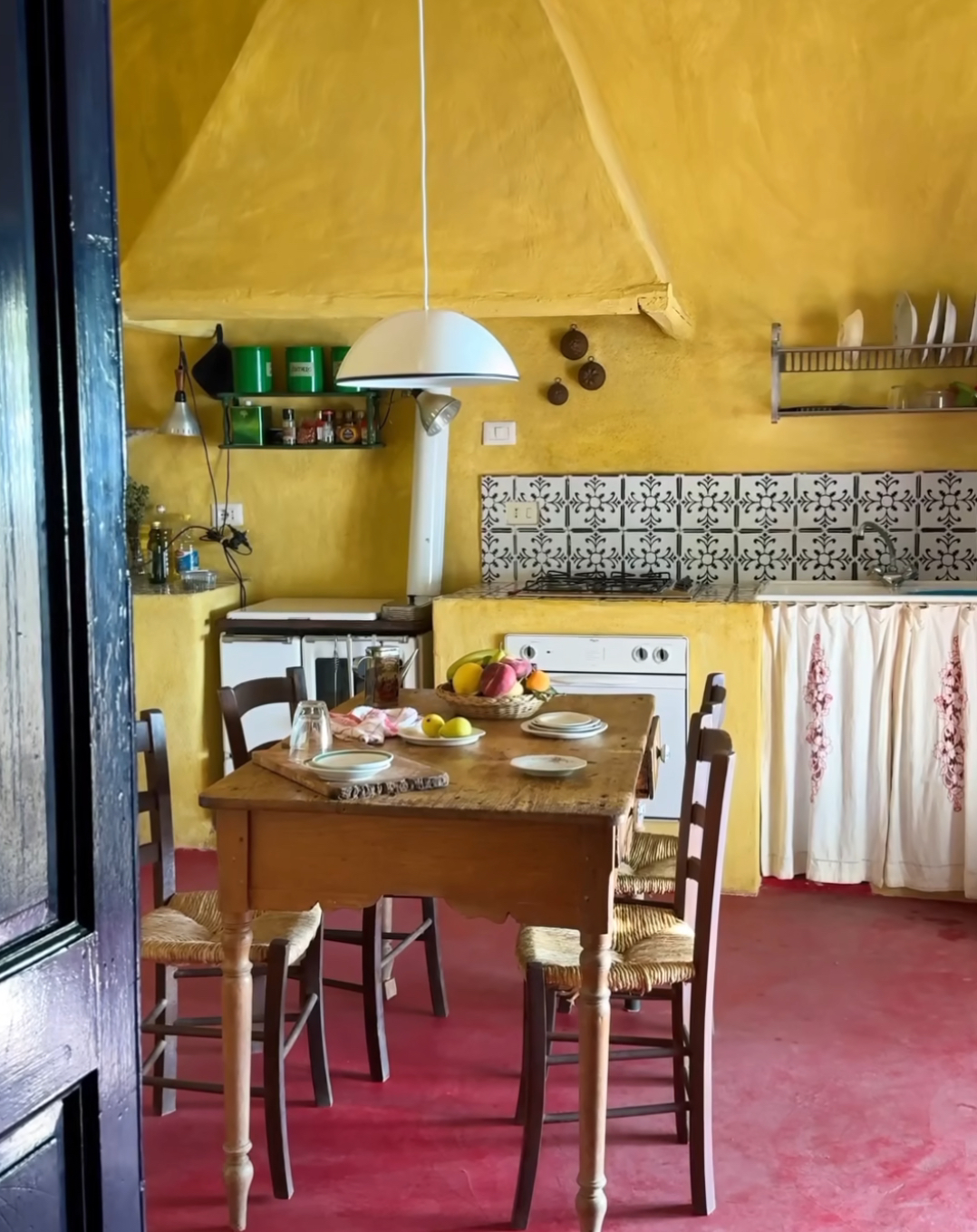

Home is a psychic state.
“(…) as I settle in a space, the space settles in me. I live in a city and the city dwells in me. We are in a constant exchange with our settings; simultaneously we internalise the setting and project our own bodies, or aspects of our body schemes, on the setting”, argues architect Juhani Pallasmaa in his essay “Space, place, memory and imagination”.

Through our lived spatial experiences, we build and carry our home inside us. We keep our home tight into our psychic fabric and we dwell or even hide there, in this dispersed, sometimes fragmented, yet always so very sensible world, lying under our skin. Home as psychic state is this internalised space where “memory and actuality, perception and dream merge” sums up Pallasmaa. Home as psychic state is the self-directed reflection of the surrounding world around us – landscapes, places and building spaces – that forms our inside core and foundations of personality fostering or preventing change to happen; in a level of manners, behaviours and mindsets.

Thus, if an architectural proposal changes the way we inhabit the public space of the city or our private rooms, it can change, in the long run, the way we inhabit our body, the way we live with others and ourselves.

‘Stories of contemporary domesticity or HOMEland’ series explores the capacity of contemporary architecture to produce dwellings that provide domesticity to the dweller.


How capable is architecture, nowadays, to deliver houses which are homes?

Facing architecture not as a powerful move but as a set of gentle, empathetic gestures providing meaning to everyday life, this series:
- follows Aldo van Eyck’s demand to find out the architect’s margin of facilitating ‘homecoming’ thus overturning the belief – often cultivated in architecture schools – that architecture and home are conflicting notions.

There are still houses with low ceilings,
window-splays where children climb up
and squatting, chin against knees,
watch the wet snow falling
peacefully over dark, narrow courtyards.
There are still rooms that speak of lives,
of cupboards of clean, hereditary linen.
There are quiet kitchens where someone sits
reading with the book propped against the loaf of bread.
The light falls there with the voice of a white blind.
If you shut your eyes you can see
that a morning, however fleeting, awaits
and that its warmth mingles with the warmth in here
and that each flake’s fall
is a sign of homecoming.

Bo Carpelan, Homecoming

- supports the “architecture of accommodation” as Juhani Pallasmaa puts it.
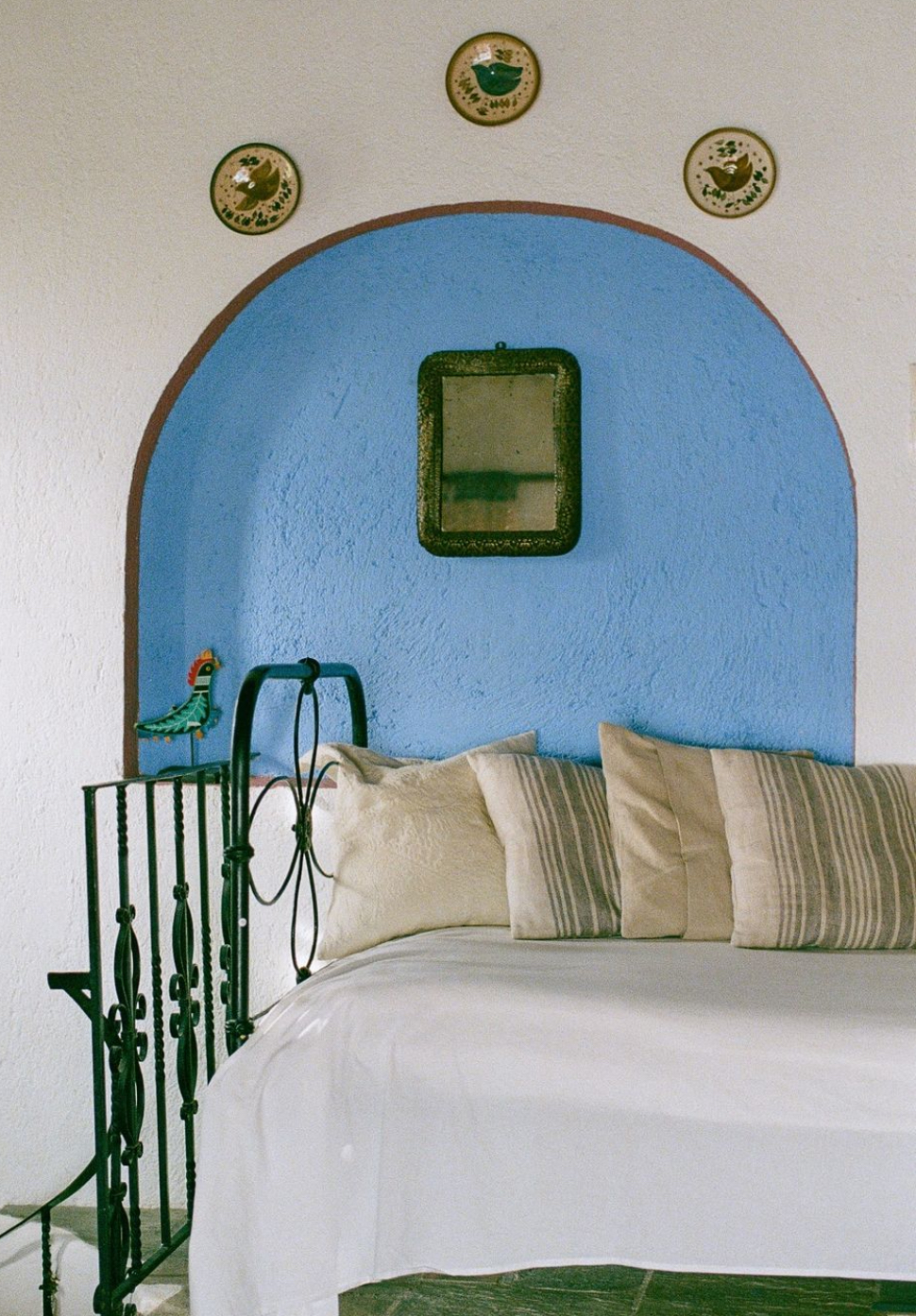

Embracing Bachelard’s point of view that home “is an instrument with which to confront the cosmos” we identify home’s great importance as a medium of personal survival and resilience that “strengthens the dweller’s self-image and concretizes his world order”.

By supporting the dweller’s homecoming through an architecture of accommodation, Stories of contemporary domesticity aspire to empower an approach on architecture as a radical act of care that supports individual’s self-awareness and self-improvement aiming at collective, social change.

Starting from the city, we pause to watch how citizens breathe in the private realm. How do they live when no-one is watching? Who are they behind closed doors? What do they like and what do they not? And what about architecture?

If apartment buildings are the modern movement’s lasting legacy to today’s cities, designating who we have been and who we were, how do architects reshape them, mainly inside out, to narrate who we now are?


An apartment renovation is a complex redesign process reshaping the past into the future. Restoring a marble floor can be an intriguing procedure for a bunch of reasons, practical or not. Do the materials have the capacity to store memories and if yes, how do they unfold them? Who used to lie on this floor and who will step on it now? Are these people strangers to one another? Can you meet someone through a parquet or a piece of wall?
Can you restore and recycle feelings?

But most unforgettable of all were the walls themselves.
The stubborn life of these rooms had not let itself be  trampled out.
lt was still there; it clung to the nails that had been left there,
it stood on the remaining hand-breadth of flooring,
it crouched under the corner joints where there was still a little bit of interior.

The Notebooks of Malte Laurids Brigge, Rainer Maria Rilke, pp. 47-48.

Story One
The Cabanon by STAR & BOARD: the biggest smallest apartment in the world
6,89 square meters of pure architectural charm located in Rotterdam speak the unspoken: the city beats through the Home[land] just like a body beats through the muscle we call heart.

Architects and owners Beatriz Ramo and Bernd Upmeyer, founders of STAR strategies + architecture and BOARD (Bureau of Architecture, Research and Design) respectively, created Cabanon as their common experiment in space, their second home or, merely, a floating bed for two under the stars, a living room with a view, and their very own spa!


Read the whole story about The Cabanon of Rotterdam, here!
Story Two
Troias Apartment by threshold
threshold strategically reshaped Troias apartment, in the heart of Kypseli, as if treating a body in need of cleansing and space. Located on the first floor of a 1970s Athenian polykatoikia, the first move the architects took was to remove all blind, non-structural walls, letting the space breathe with the promise of creating a home that is both unified and translucent.
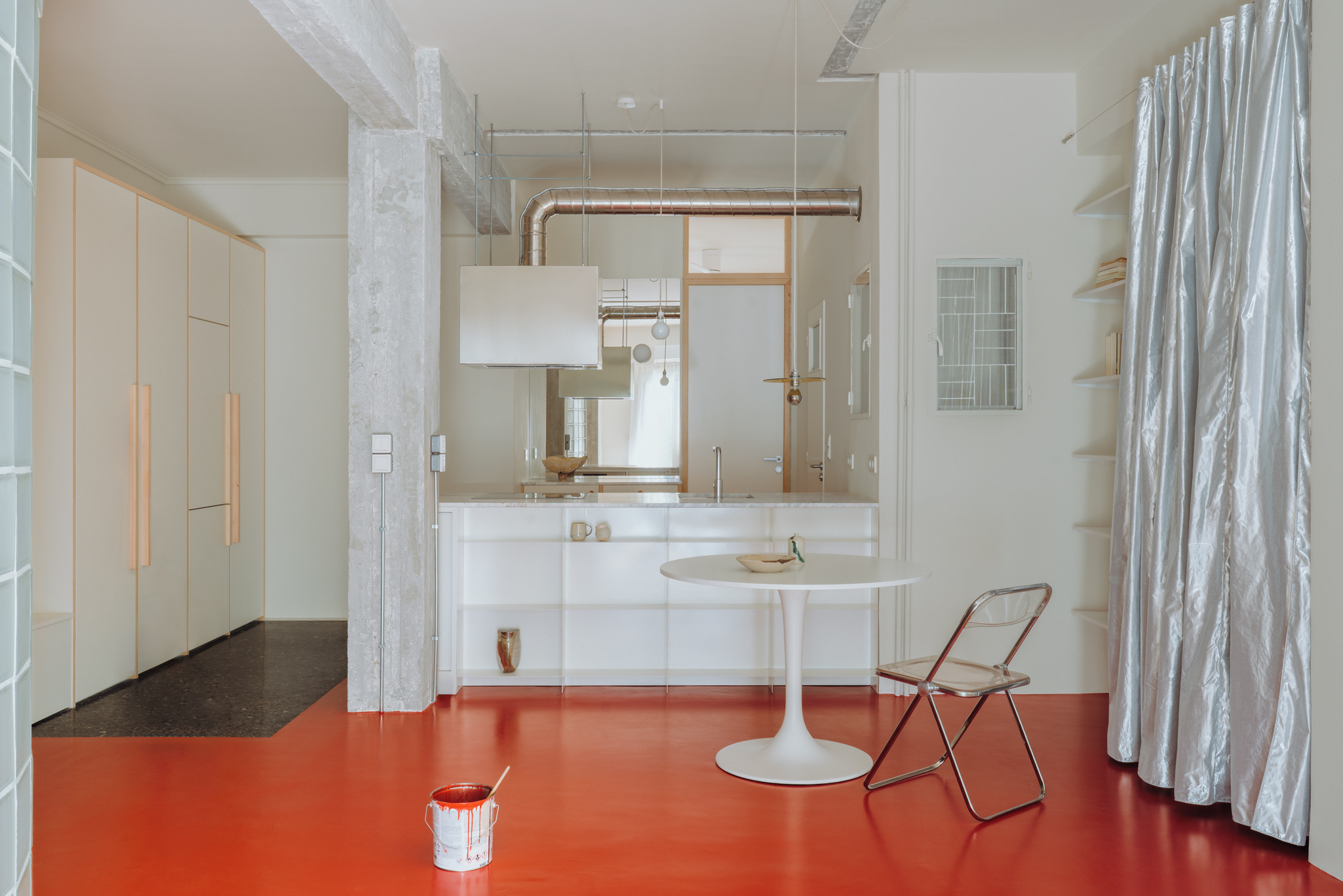
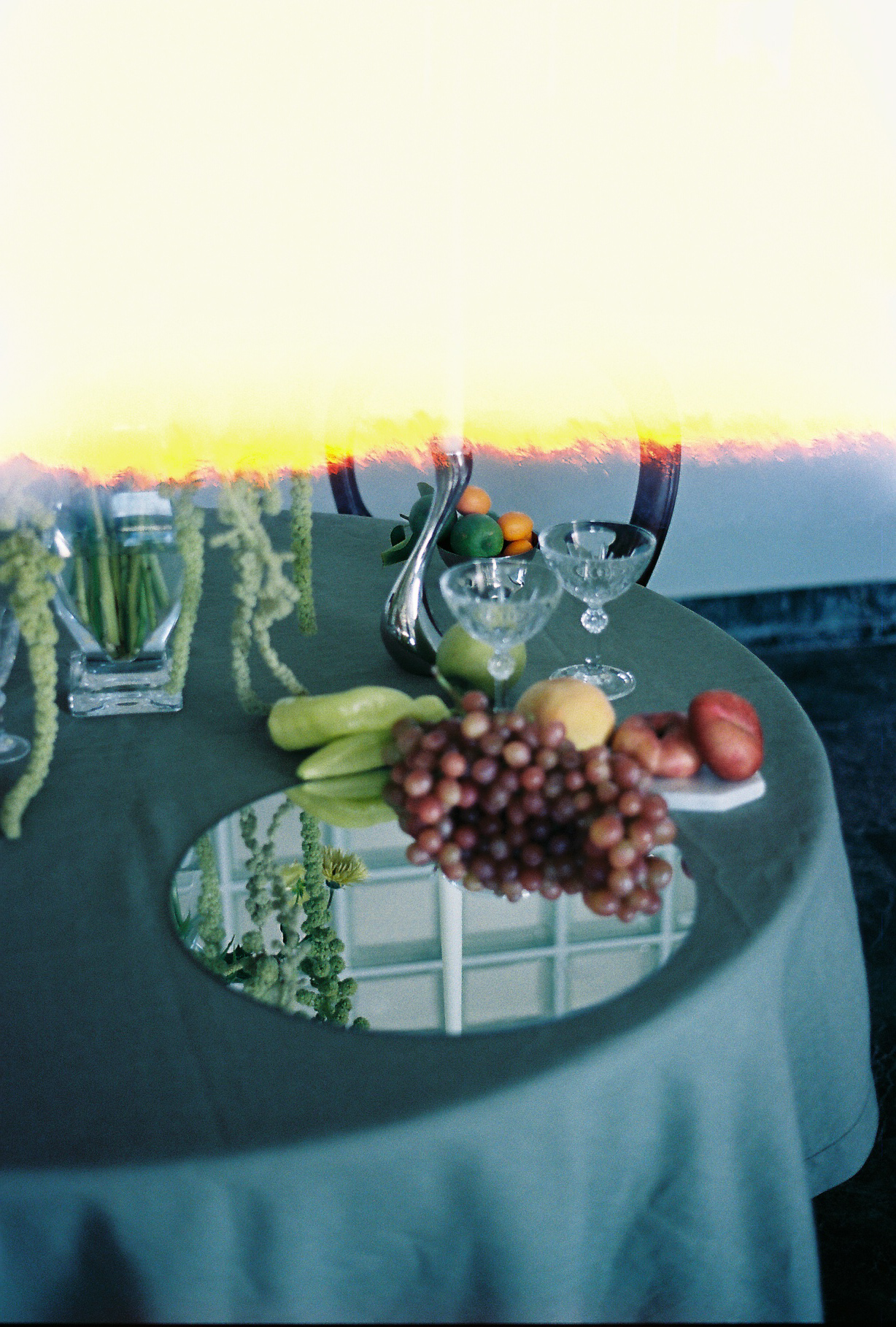
The core of the house – an open-plan common space including the cooking, dining, and living areas – is composed through an intriguing architectural bricolage; the apartment’s original wooden and black terrazzo flooring meets a revealing tomato-red floor, a futuristic silver curtain, a signature free-standing kitchen and, by evenings, a glowing glass box.
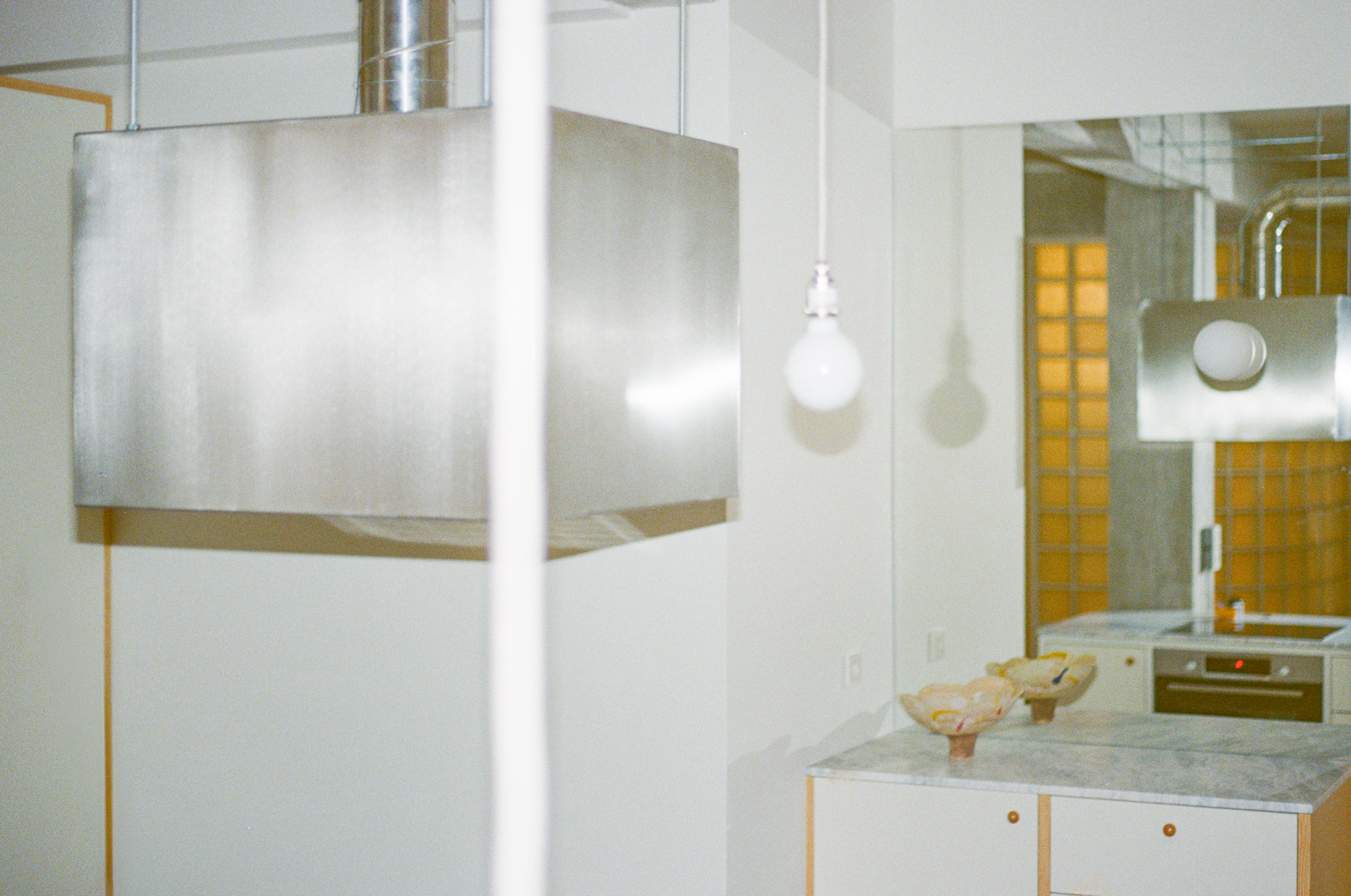
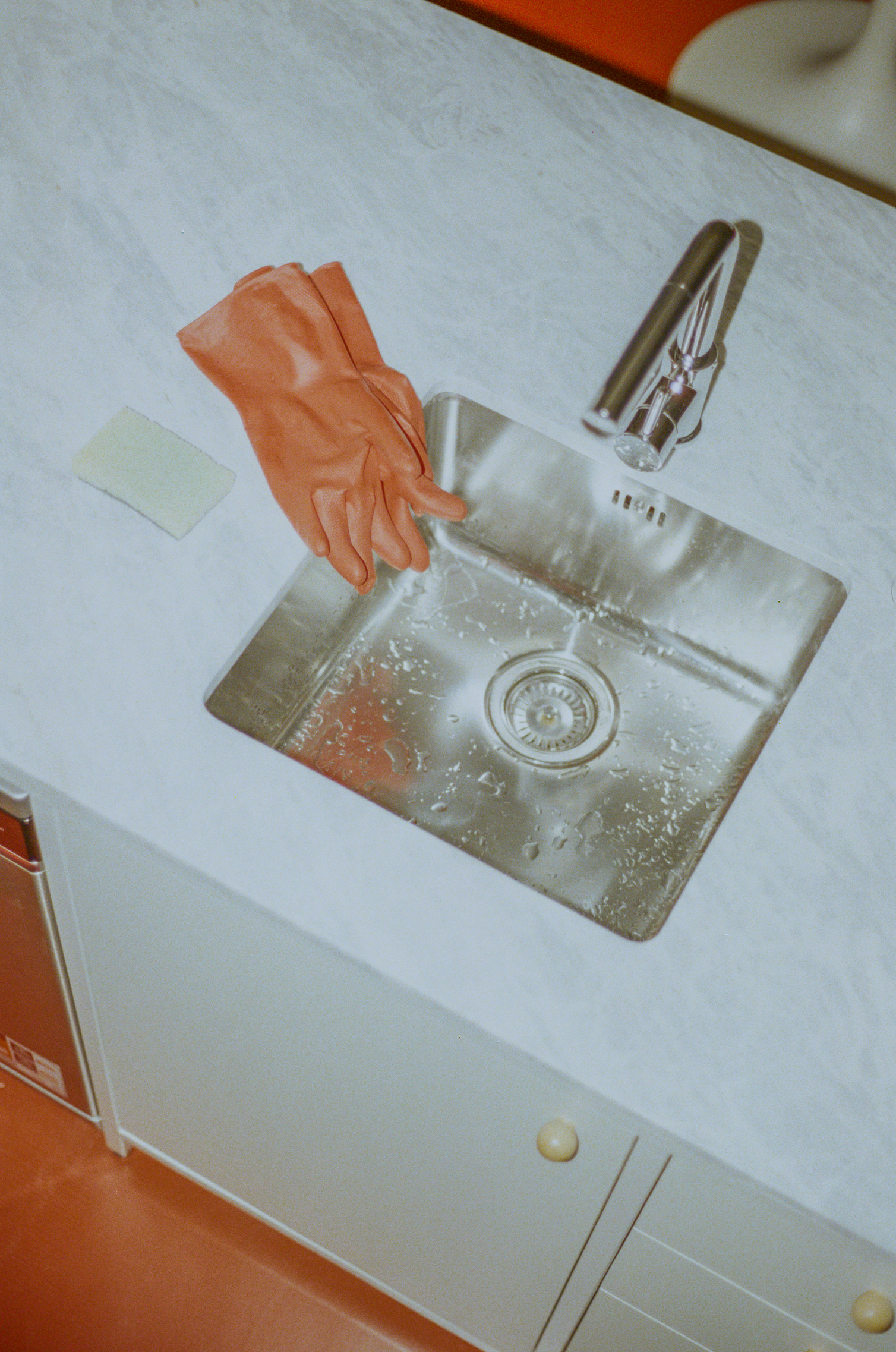
Following Suzana Antonakakis’ train of thought about home being a secret world within which our sensitivity is being practiced, Troias apartment tells a story about domestic honesty and liberation; a story about refractions and reflections, where the light guides us back home.
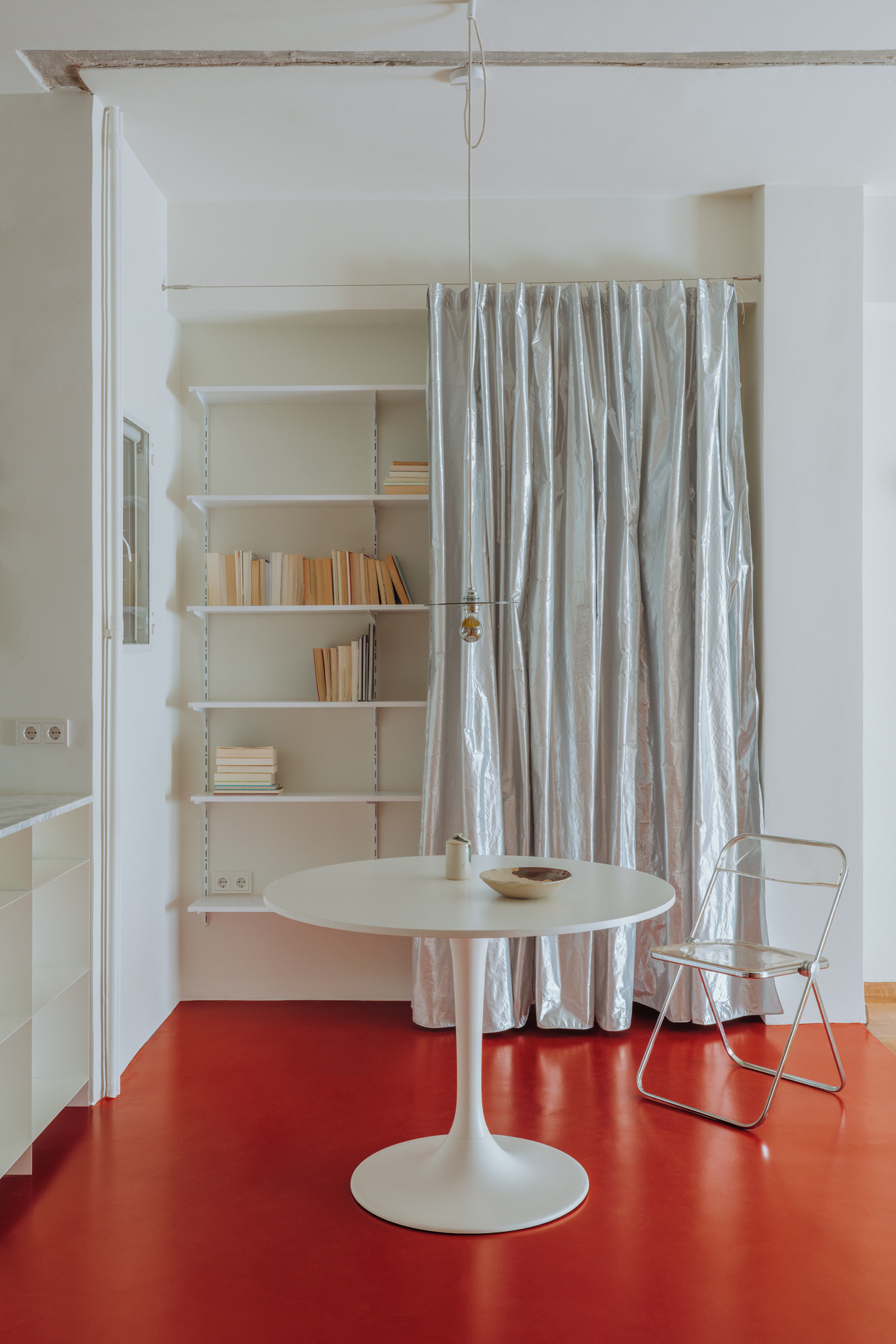
Read the whole story about Troias Apartment, here!
Story Three
1:1 STUDY MODEL, A House as a Laboratory by AMAA
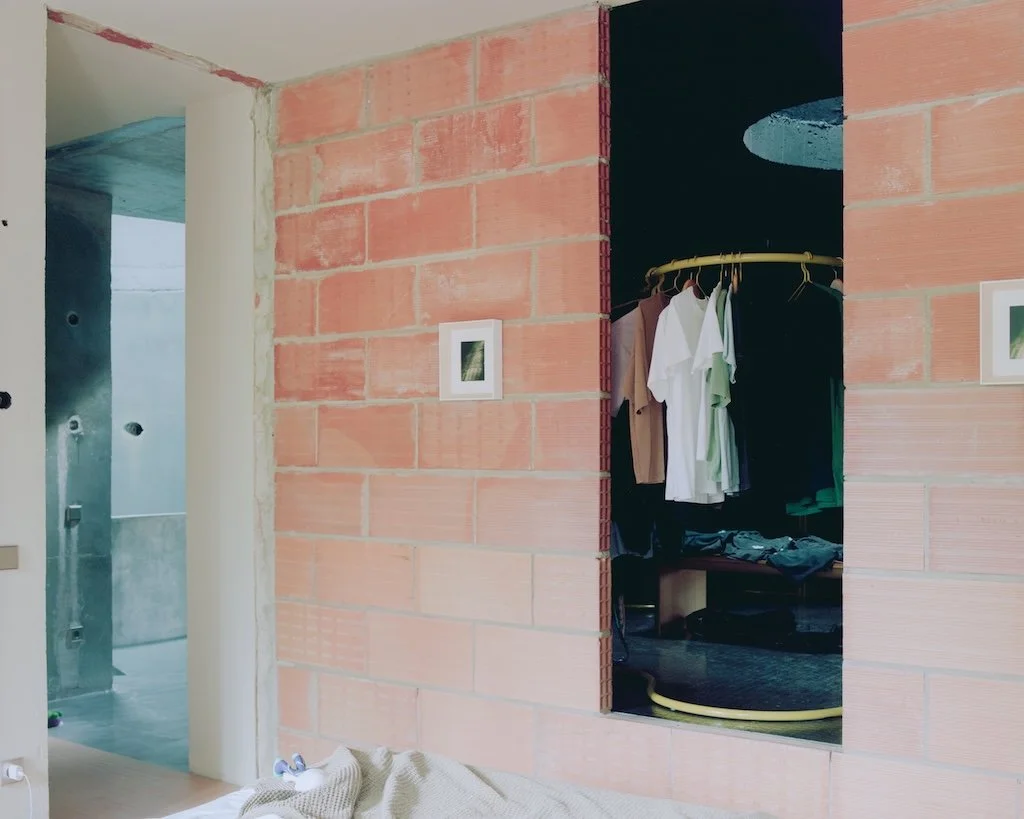
The third episode, follows AMAA in Arzignano at the province of Vicenza, Italy stripping away the interior maximalism of a once-bourgeois two-storey house transforming it into a home as a laboratory thus redefining what it means to be “complete”. 1:1 STUDY MODEL is an ongoing, in-situ investigation on homecoming, domesticity and architecture as an open-ended, ever-evolving process.
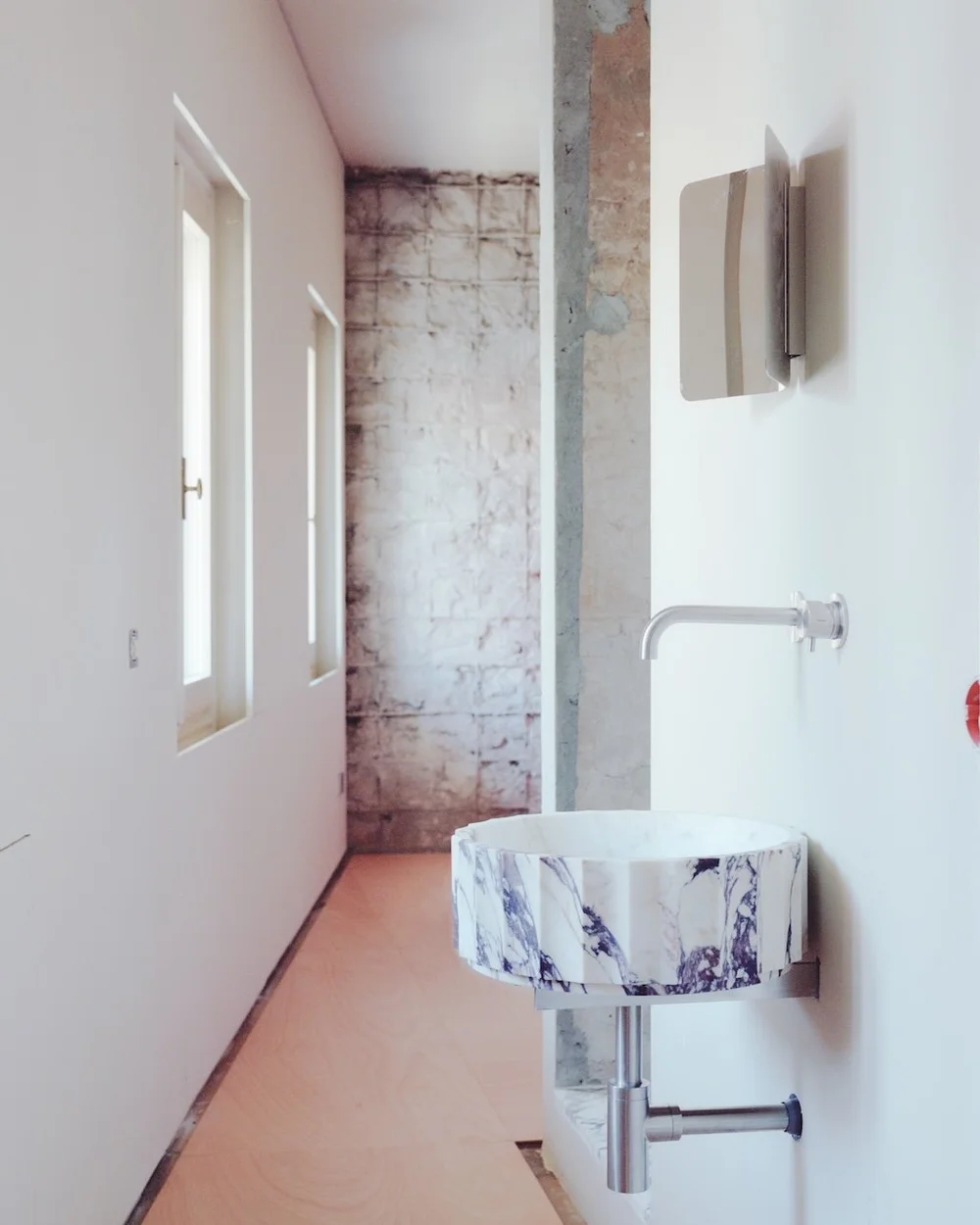
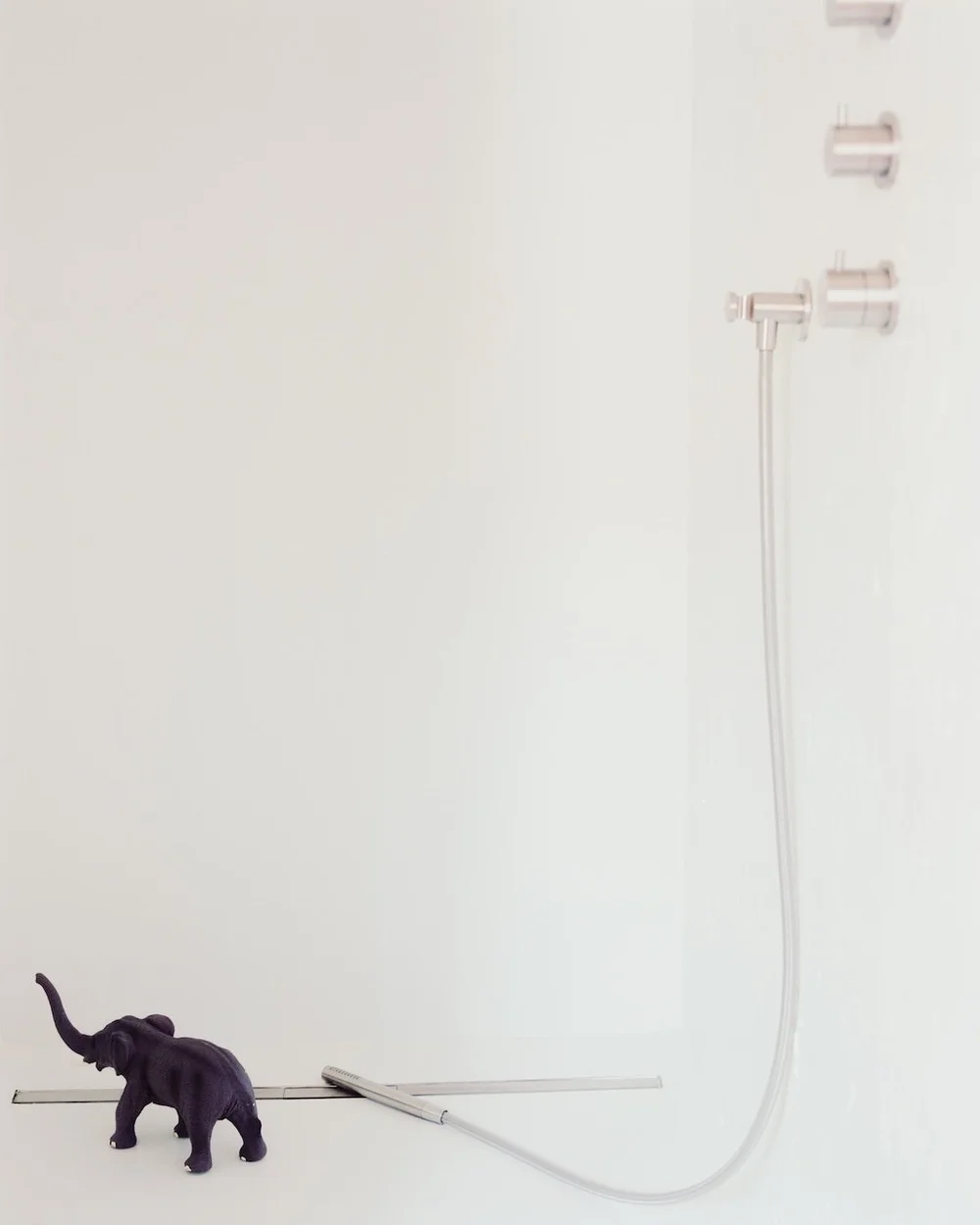
Read the whole story about 1:1 Study Model, here!
Story Four
Home as a legacy: a 1960s Athenian penthouse renovation by architects Christina Iliopoulou & Aspassia Mitropapa
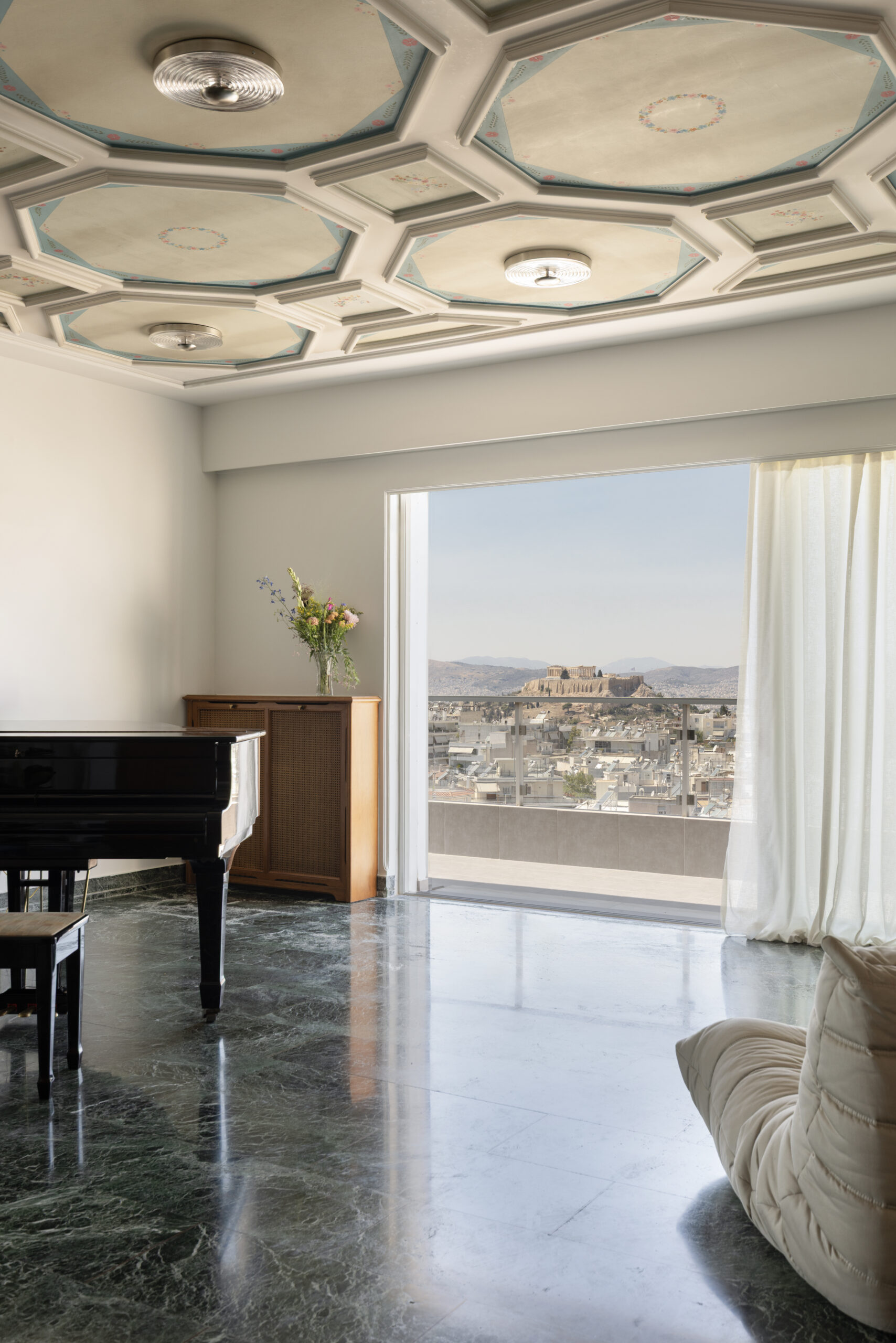
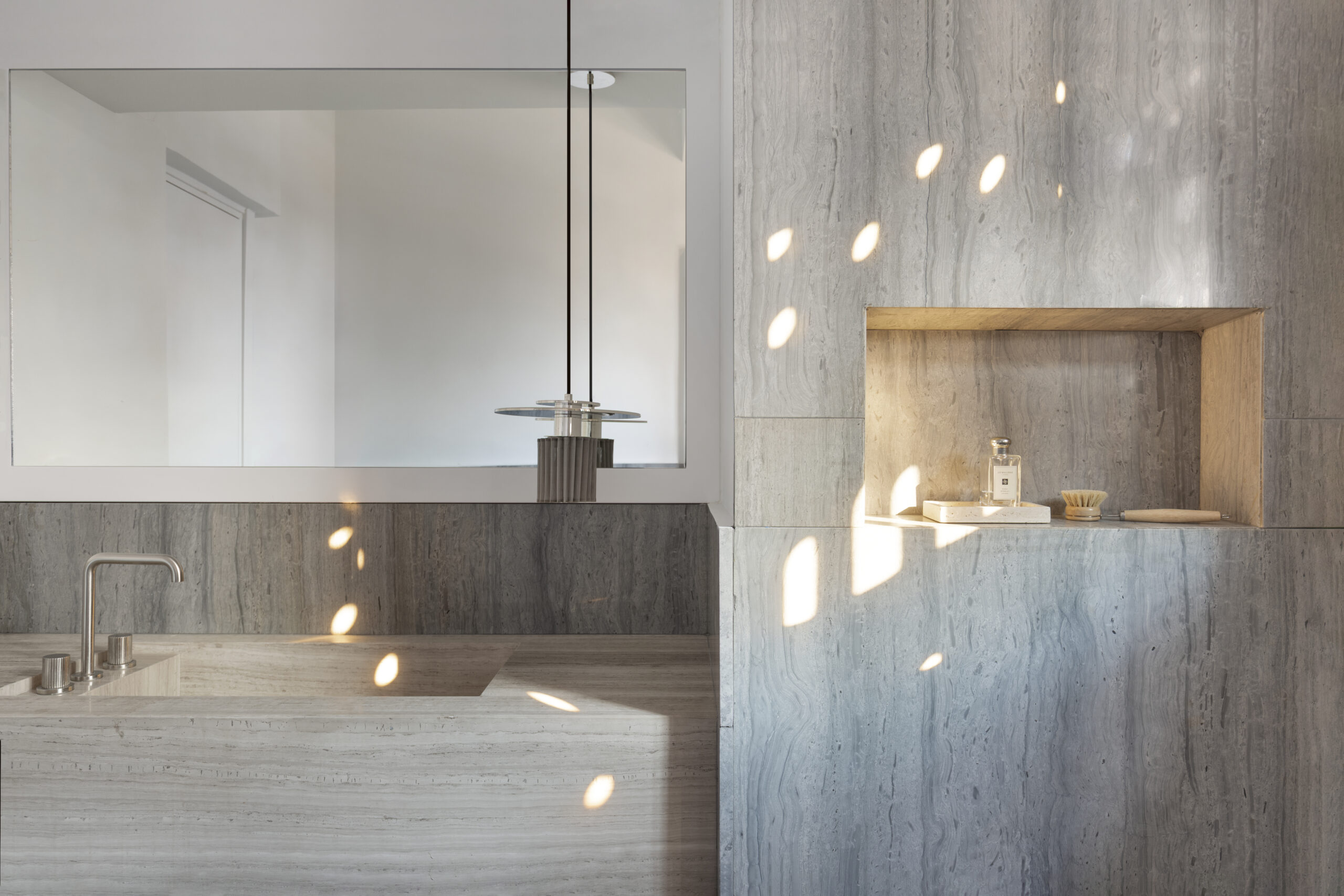
The fourth episode follows architects Christina Iliopoulou and Aspassia Mitropapa as they redesign a classy 1960s corner Athenian penthouse, honoring the post-war material legacy of the 20th century on the one hand, while redefining inherited luxury as a matter of sophisticated elegance, authentic materiality, detailed craftsmanship, and the familiarity of the handmade on the other.
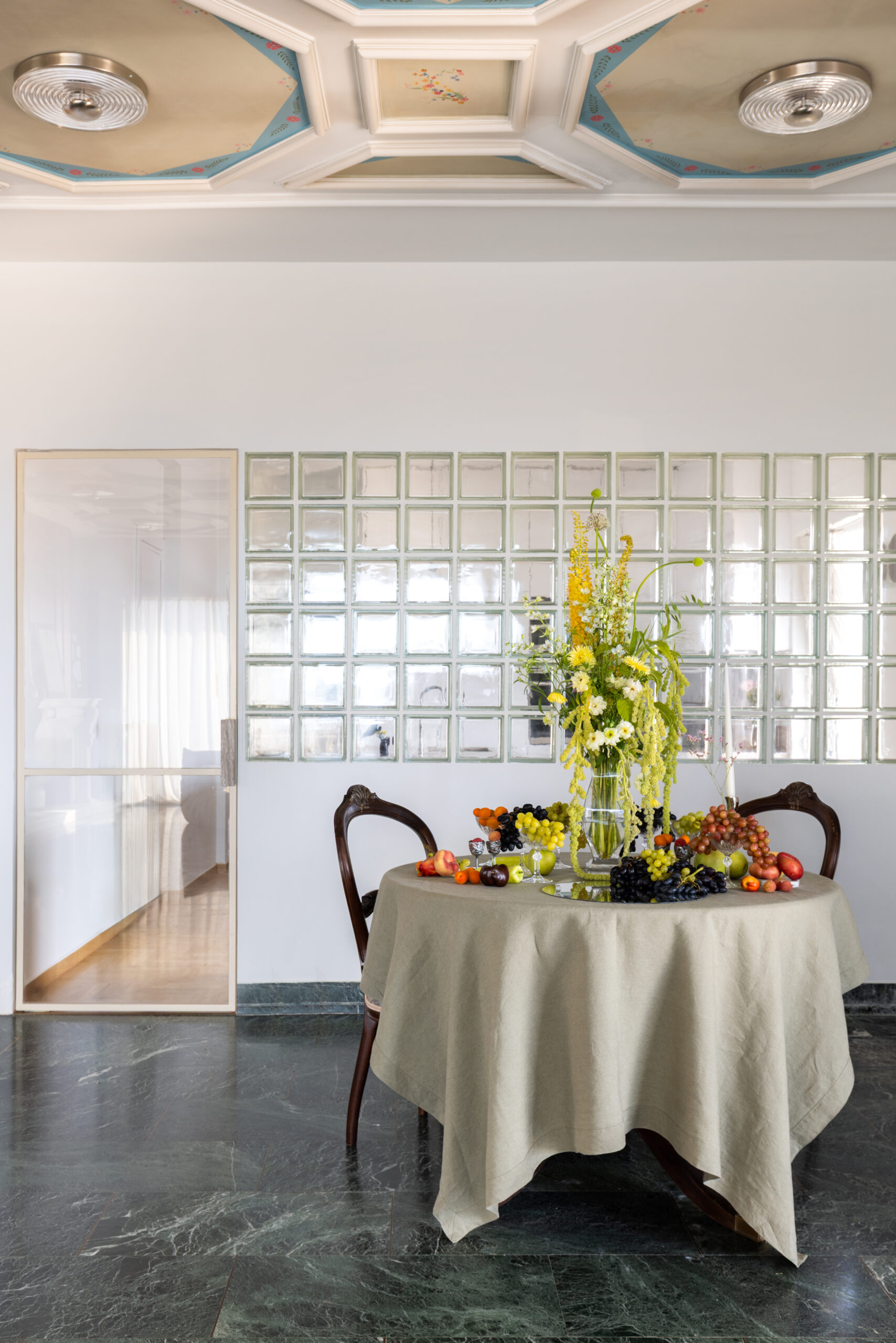
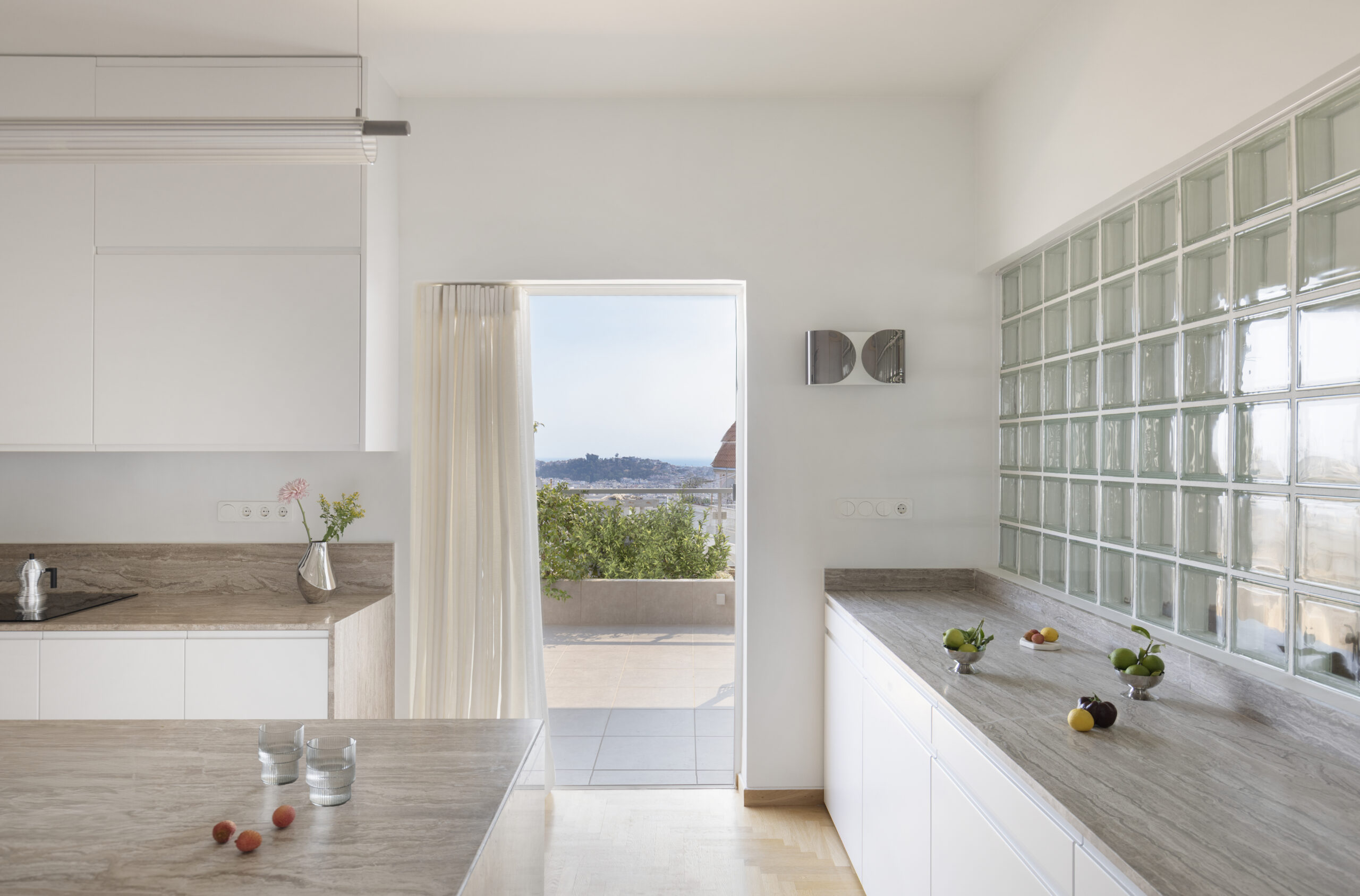
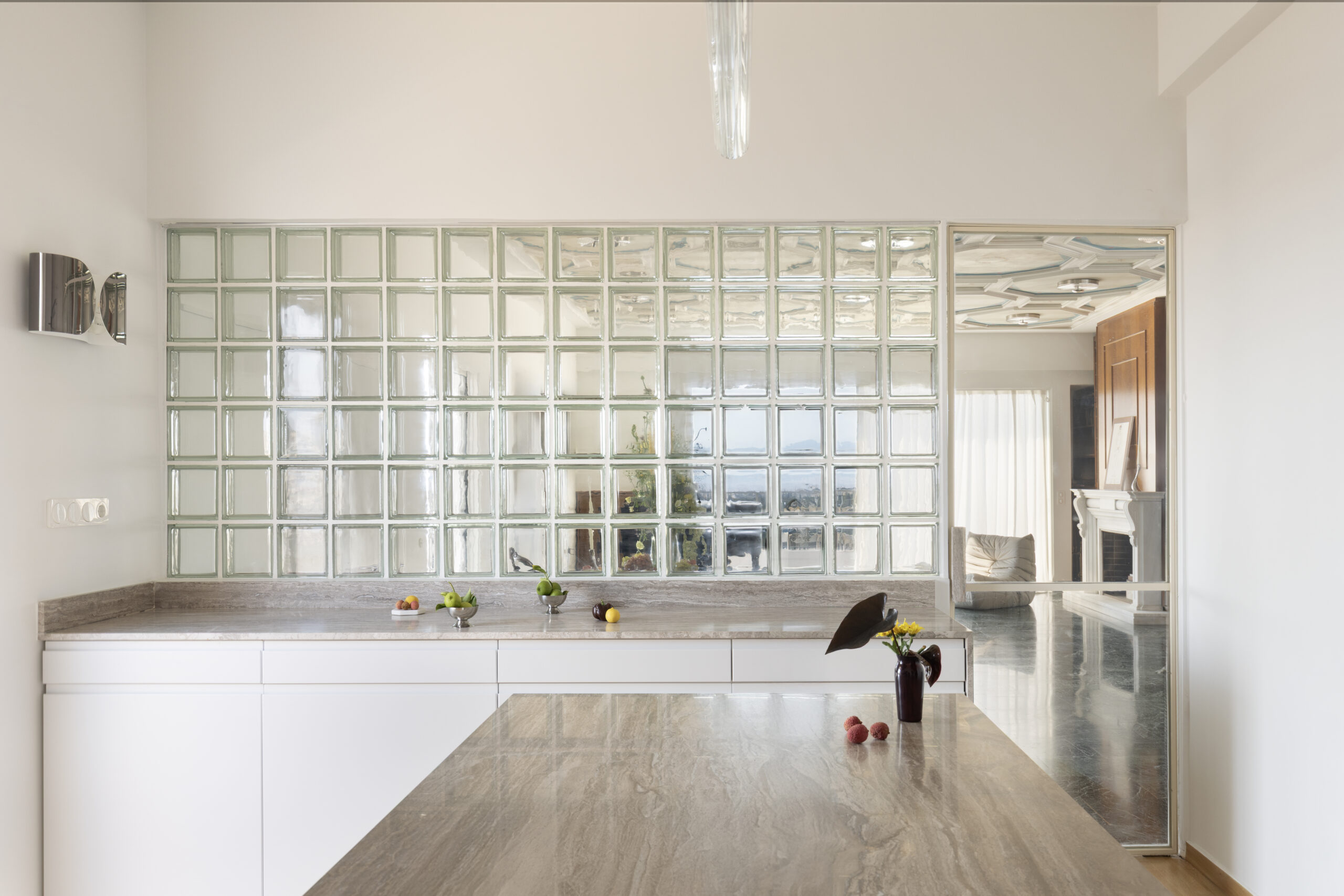
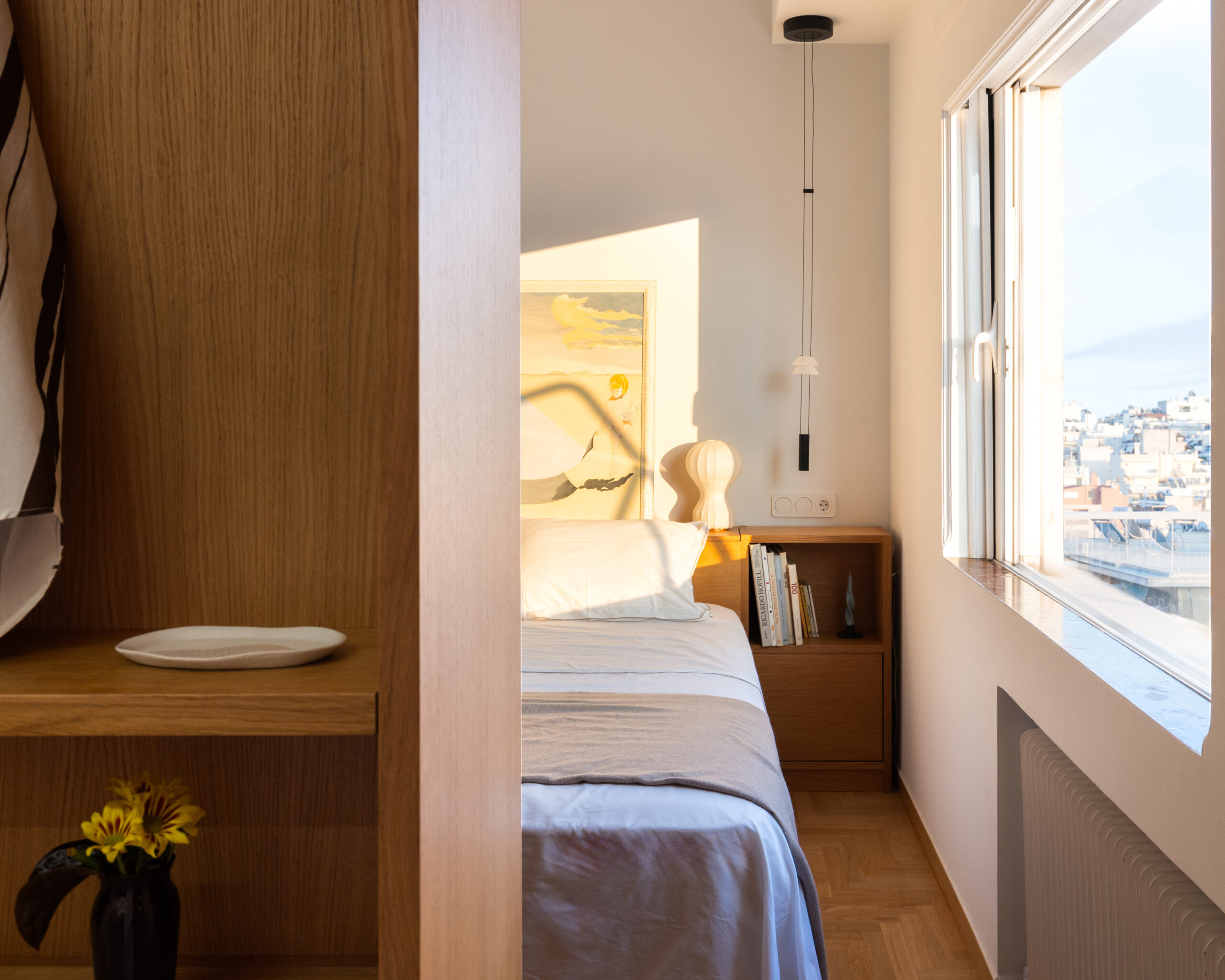
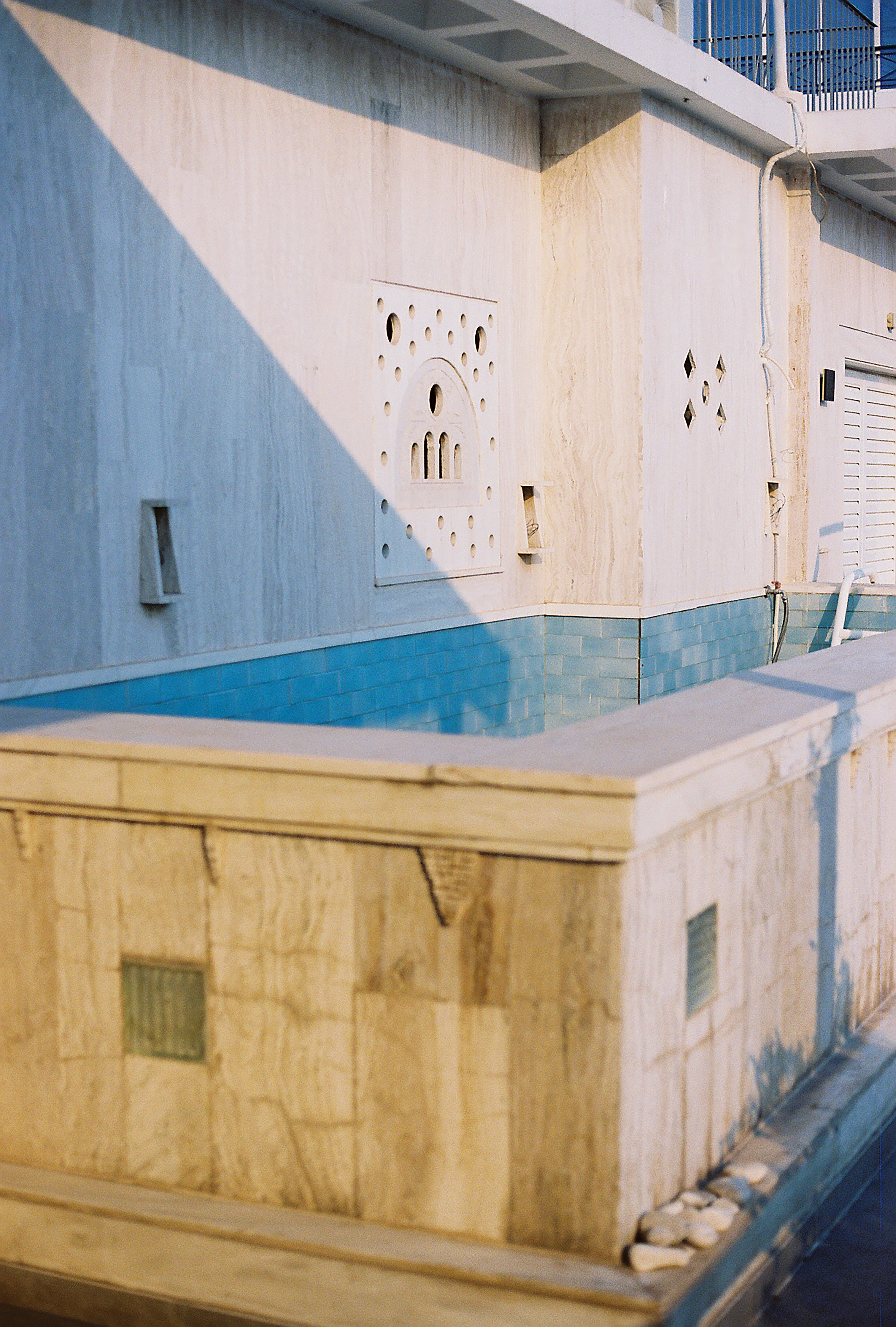
If this apartment home had a name, it would be Alma because it shelters what is left of our romantic Athenian hearts. Featuring breathtaking panoramic views of the Acropolis, Lycabettus Hill, Panathenaic Stadium, and the city’s vast coastline, the house works inside-out, grounding its inhabitants into the historical context, cultural landscape, and natural topography of the city of Athens. The new design approach cherishes the apartment’s legacy while building around it, simultaneously, restoring its key architectural features, revealing inscribed memories, and reviving old ways of being.
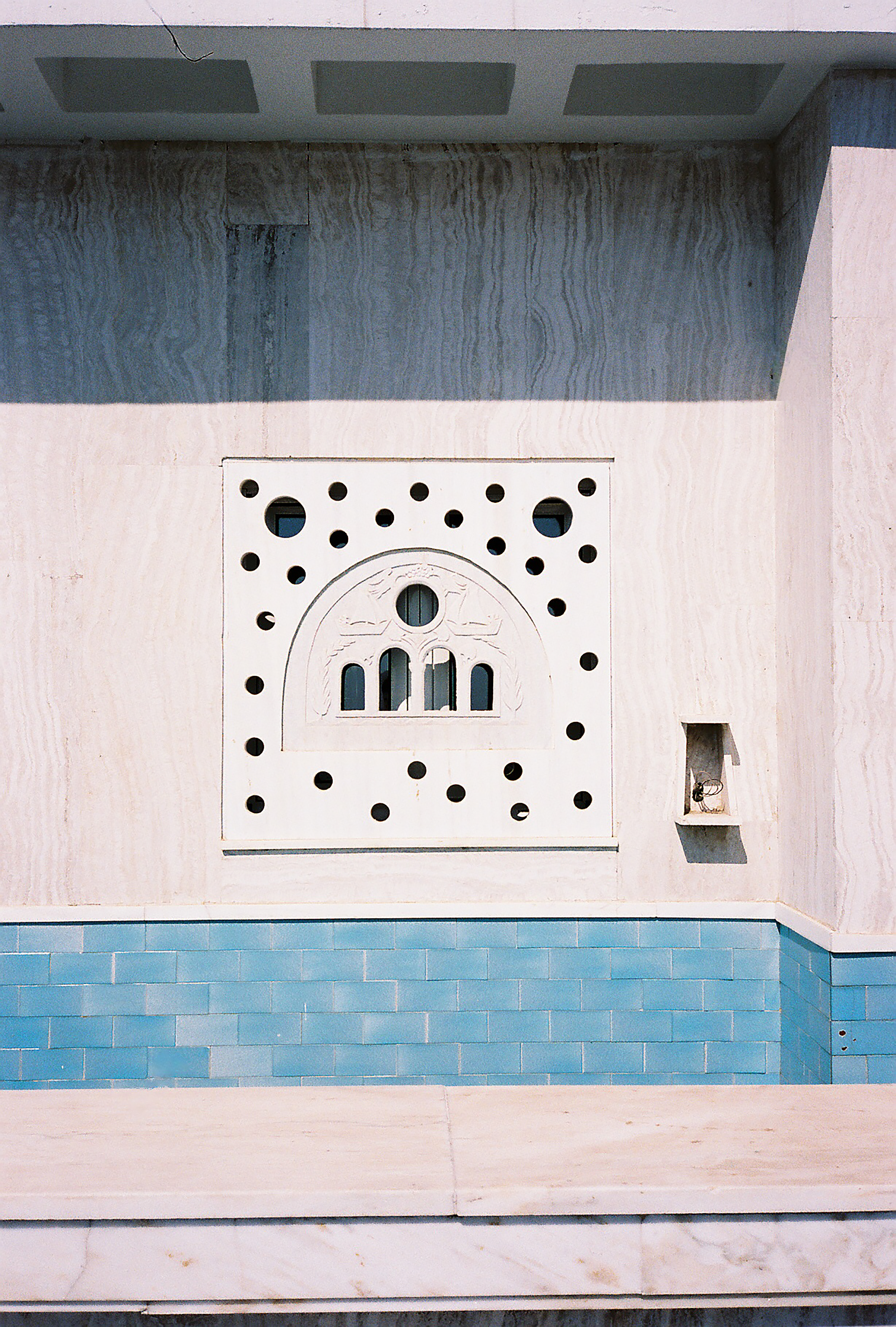
Read the whole story about the renovation of the 1960s Athenian penthouse, here!
Story Five
Home as a psychic state: pensi pascual‘s architectural acupuncture
Following a design approach that sees architecture as a set of meaningful gestures instead of majestic moves, pensi pascual reimagined two different existing homes as if performing two acts of acupuncture.
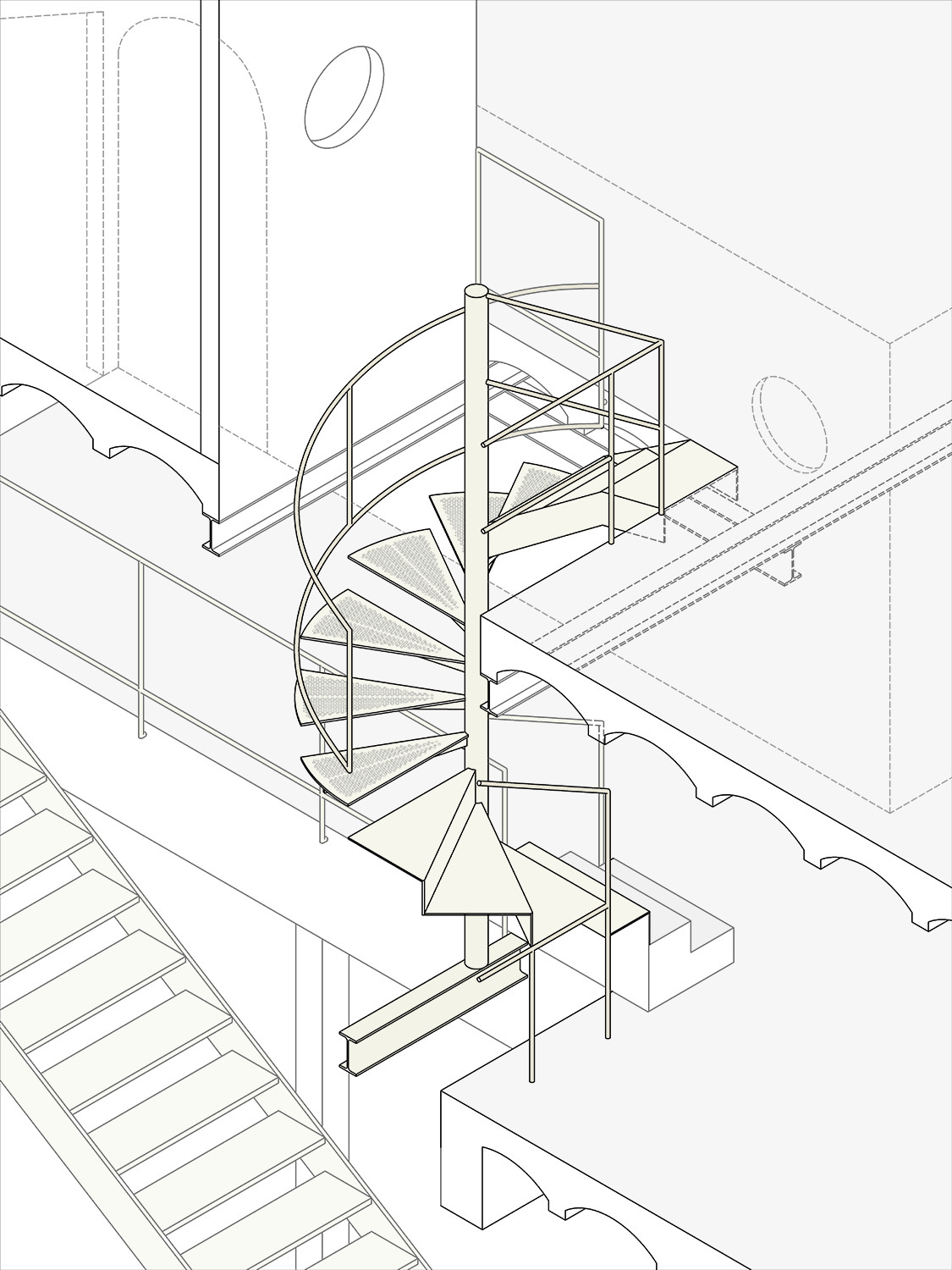
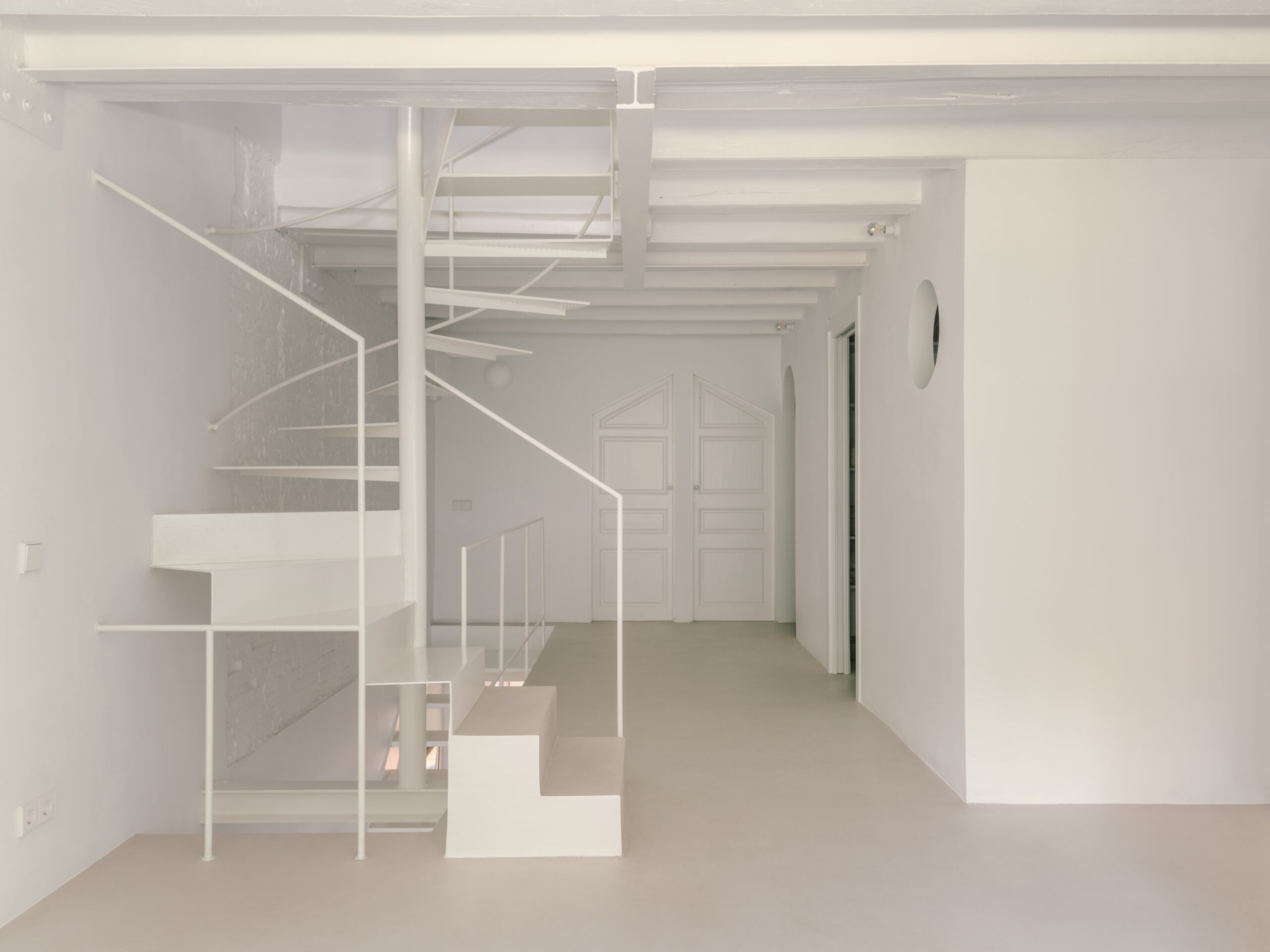
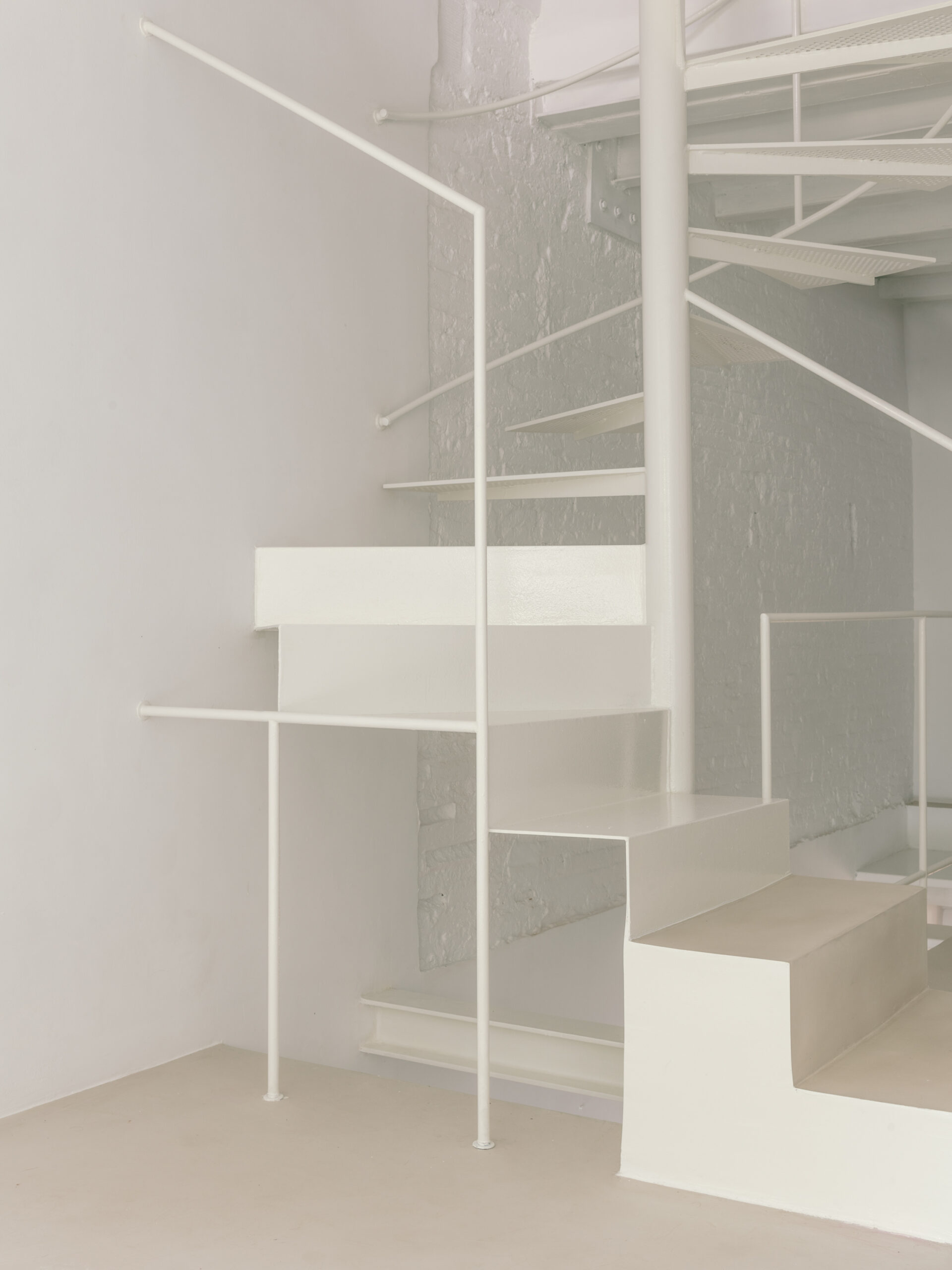
If stairs could speak they would rattle, if they could move they would shiver and twirl. For Staircore project, pensi pascual explored the role of a staircase as a space-producing tool in a Barcelonian house. Making this daily up-and-down movement a theatrical act for two little girls, and thus the staircase the core of the house, this total-white poetic design turned into a driving force for the surrounding space to shape up in a dynamic rhythm.
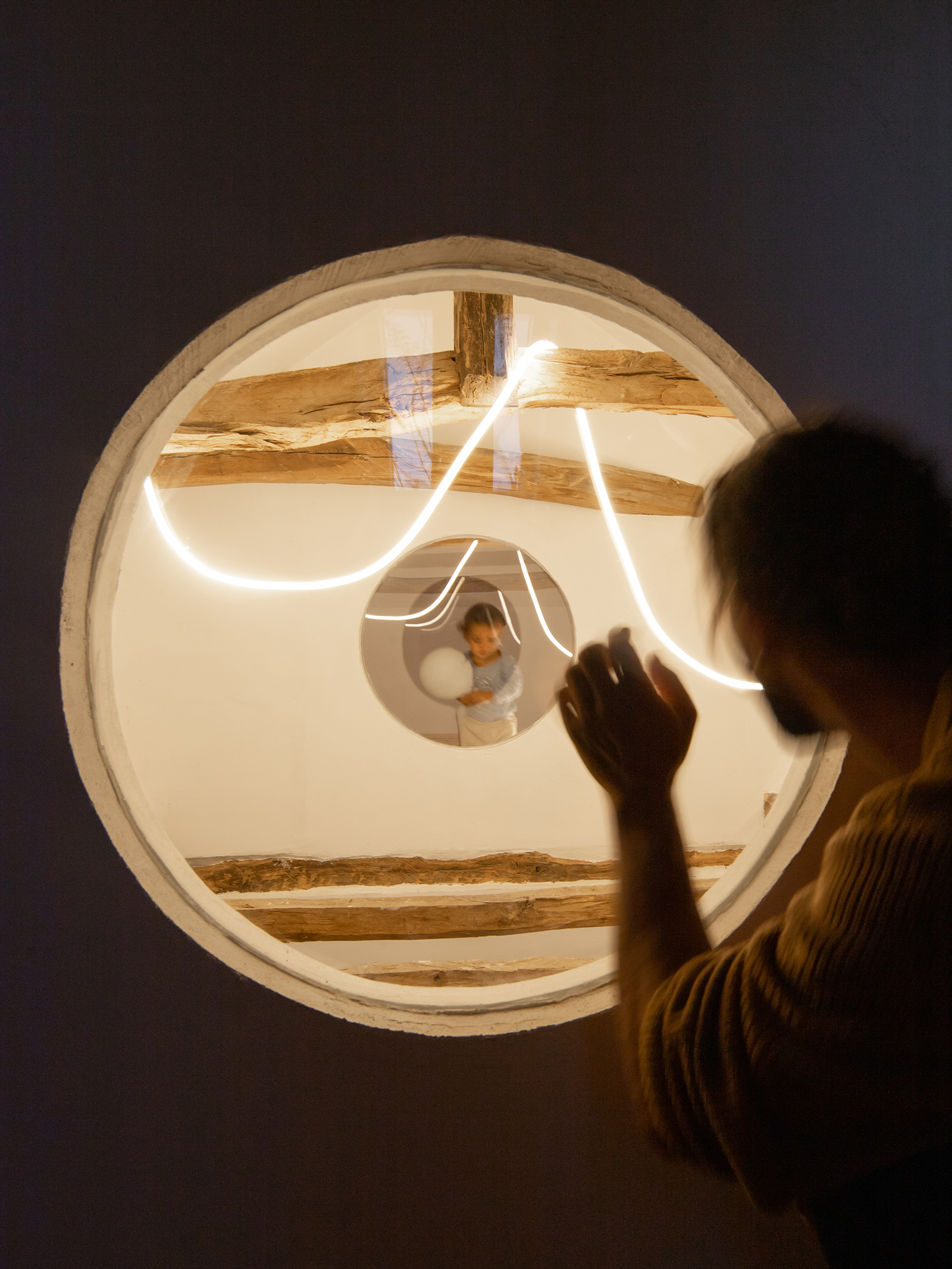
In La Floresta village in Spain two pre-existing self-built volumes are reassembled into a Painter’s House as if decluttering is the cure to all dissimilar things. All blind, non-structural walls were removed, allowing an architecture of light to shape the form of the house along with some pinches of concrete and wood.
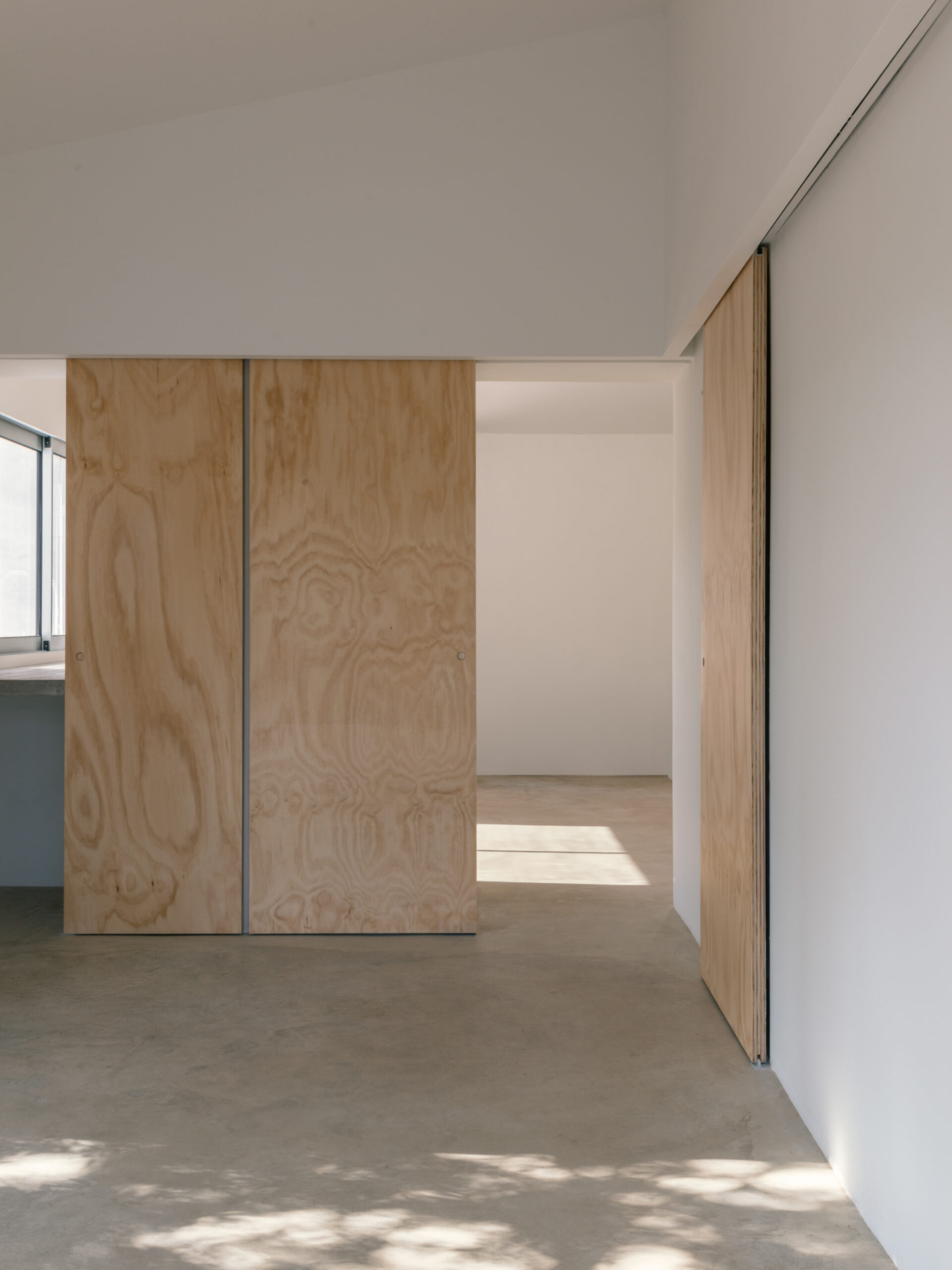
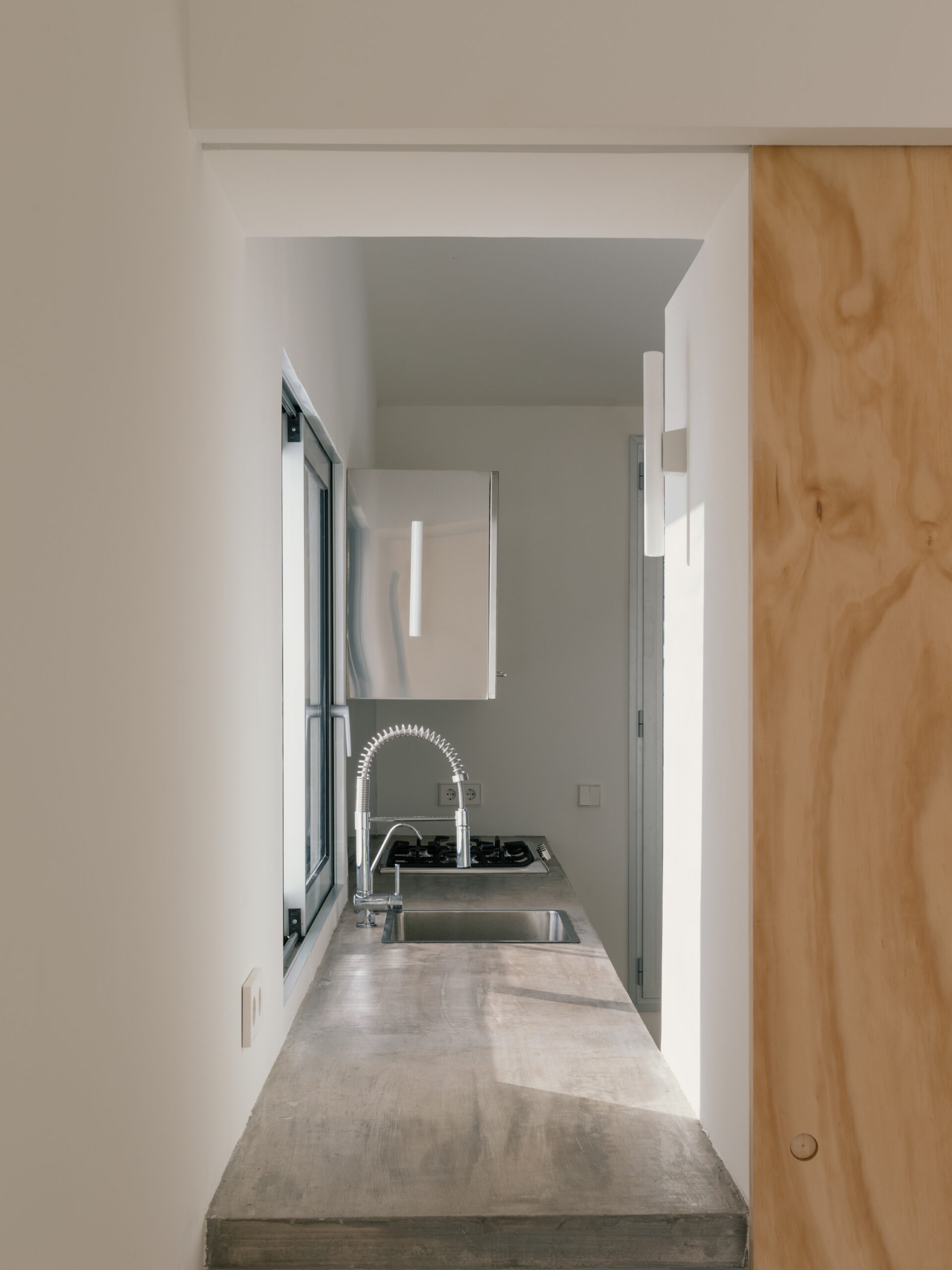
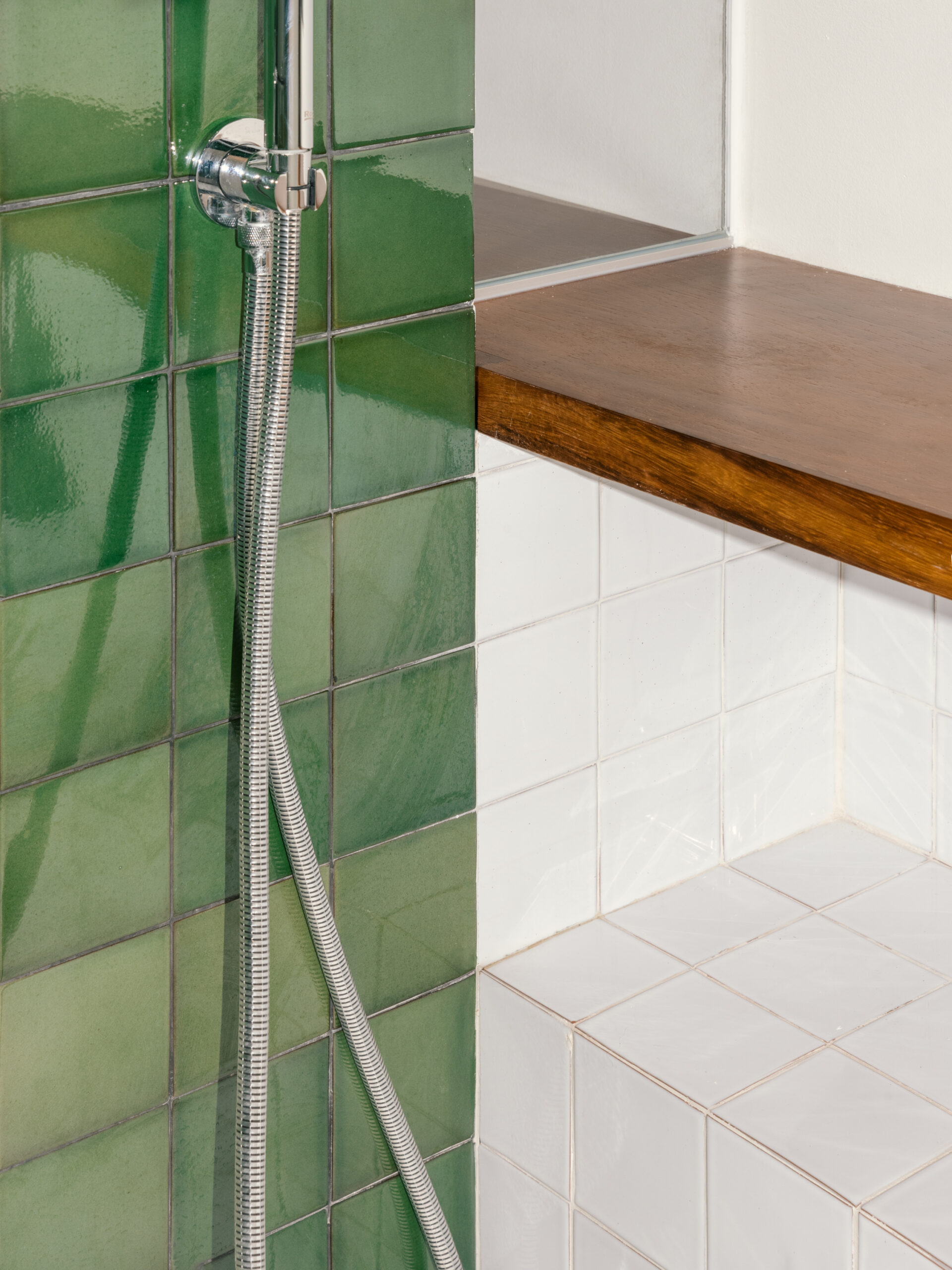
Home as a psychic state confirms architecture is not always made of stones; it’s a song or a whistle animating the body, fascinating the mind, stimulating the feelings while climbing the stairs or enjoying a forest view.
Read the whole story, here!
Story Six
Home is tangible and intangible: Laza House in Methana by Natalia Bazaiou
In the sixth episode, reflecting on architecture’s relationship with time around a home named Laza, architects Melina Arvaniti-Pollatou, lead editor of Archisearch.gr, and Natalia Bazaiou discuss on the distance between time and space, the homeland of limbo and the fragile state we call being complete.
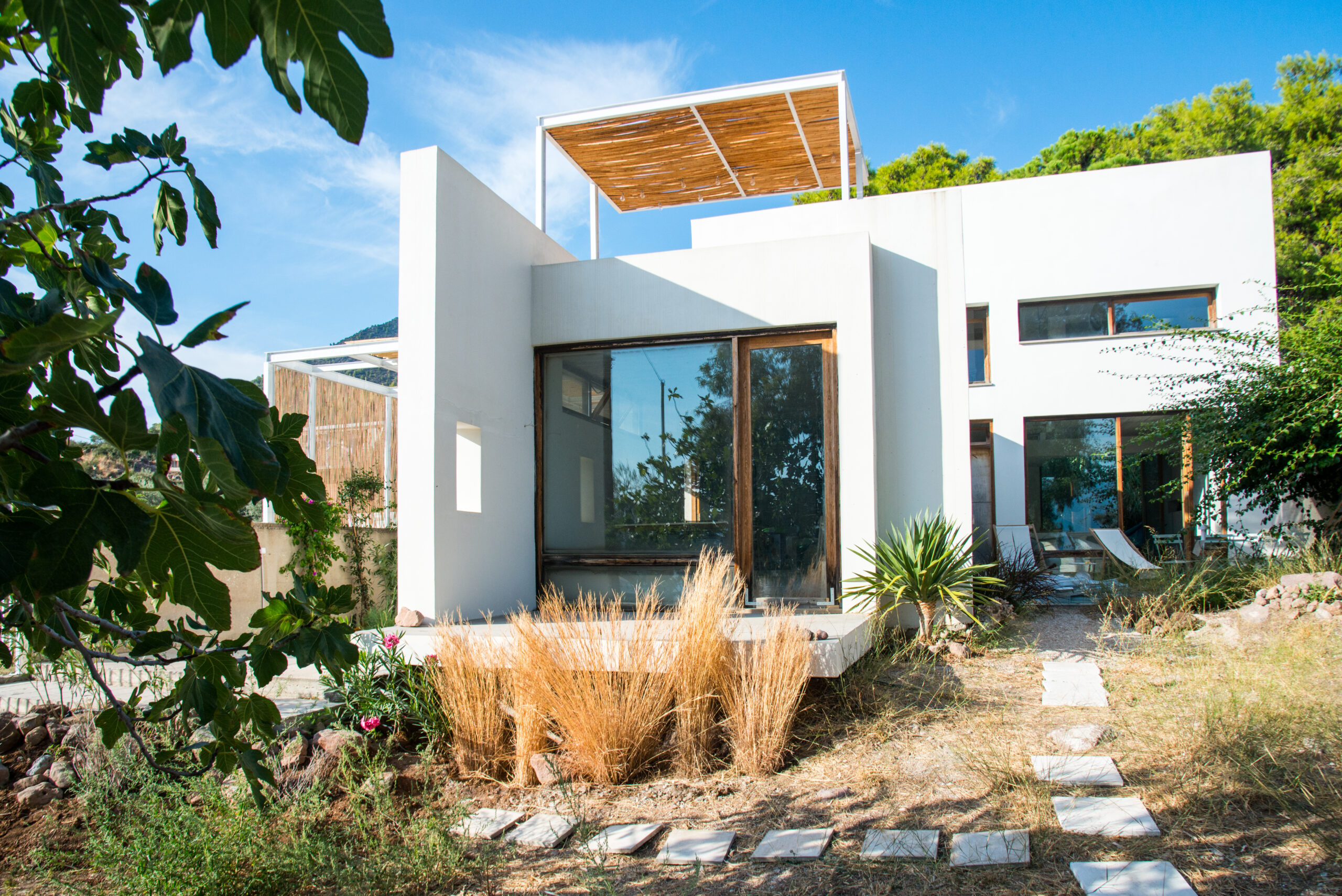
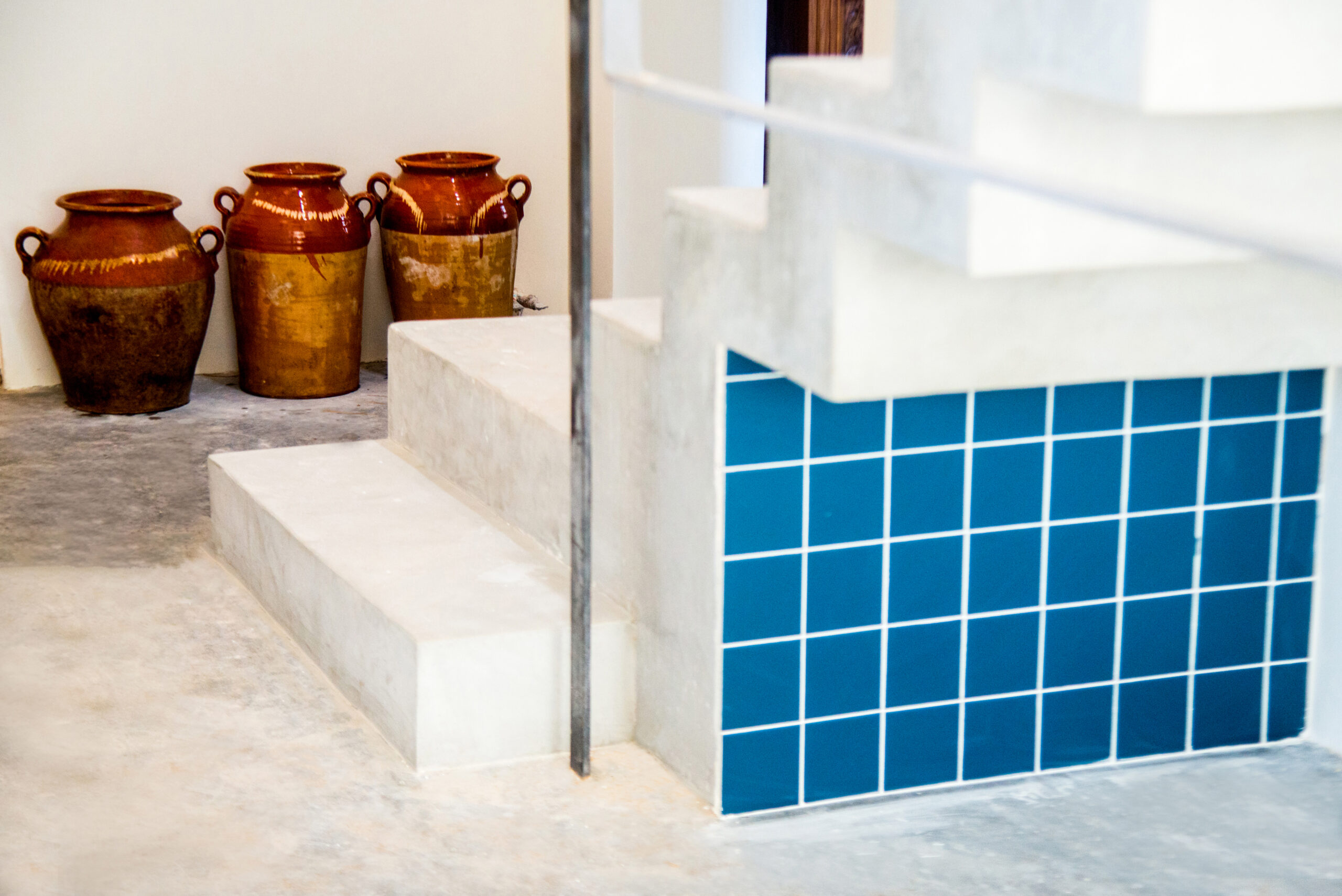
Often enough, we catch ourselves wonder whether architecture is able to influence, move or even change, the creatures living inside it. Maybe that’s the philosophical equivalent of the primal rhetorical question “what does it mean to be a human being”. As the Beatles put it, let it be. Before anyone else, architects silently inhabit the narratives they design and this intangible habitation, most of the times, change their being.
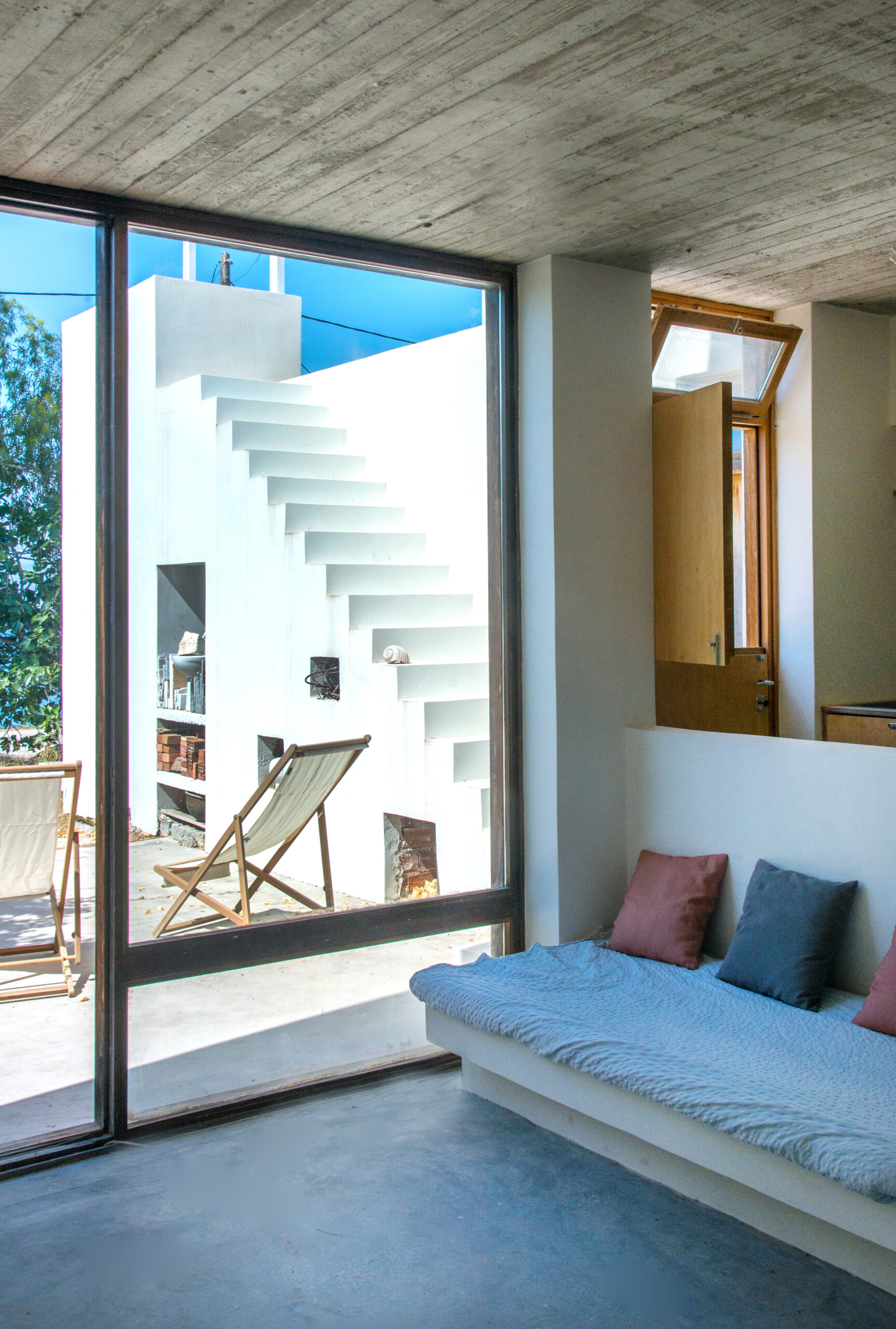
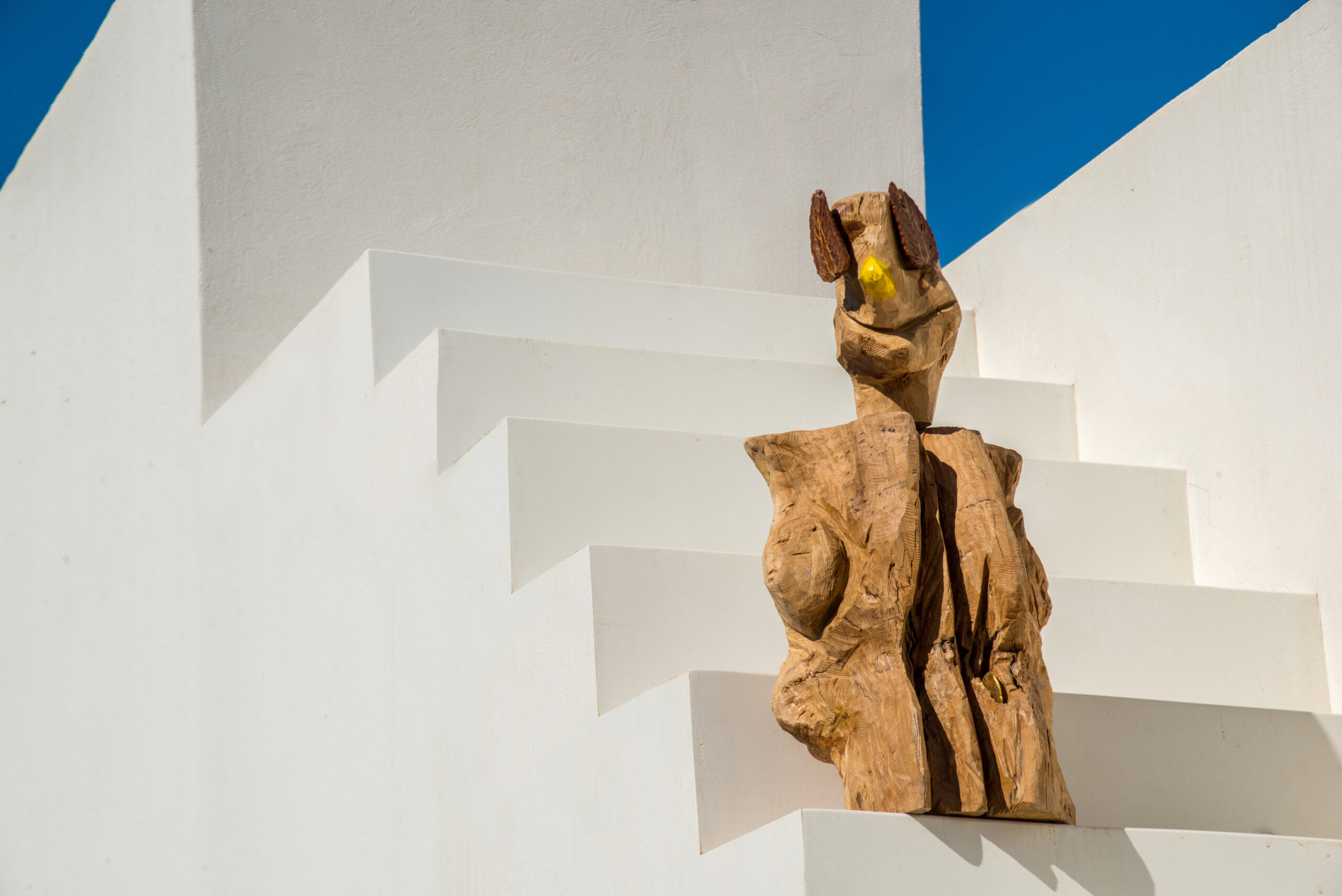
Laza is a house but it could as well be a person; a child as Natalia Bazaiou states – the architect who, in 2004, envisioned, then designed and, in 2024, built Laza in flesh and bone, in plaster and bricks. As the architect’s first design project, conceived at the beginning of her professional path for her family and herself, the holiday house in Methana does not follow a linear design process; rather, it constitutes a years-long meditation on the very essence of architecture. Over the course of twenty years, allowing the space to reveal itself freely in time, Laza was inhabited by the architect in thought and emotion, steadily shaping her design ethos and her understanding of architecture as both a force of action and a way of living.
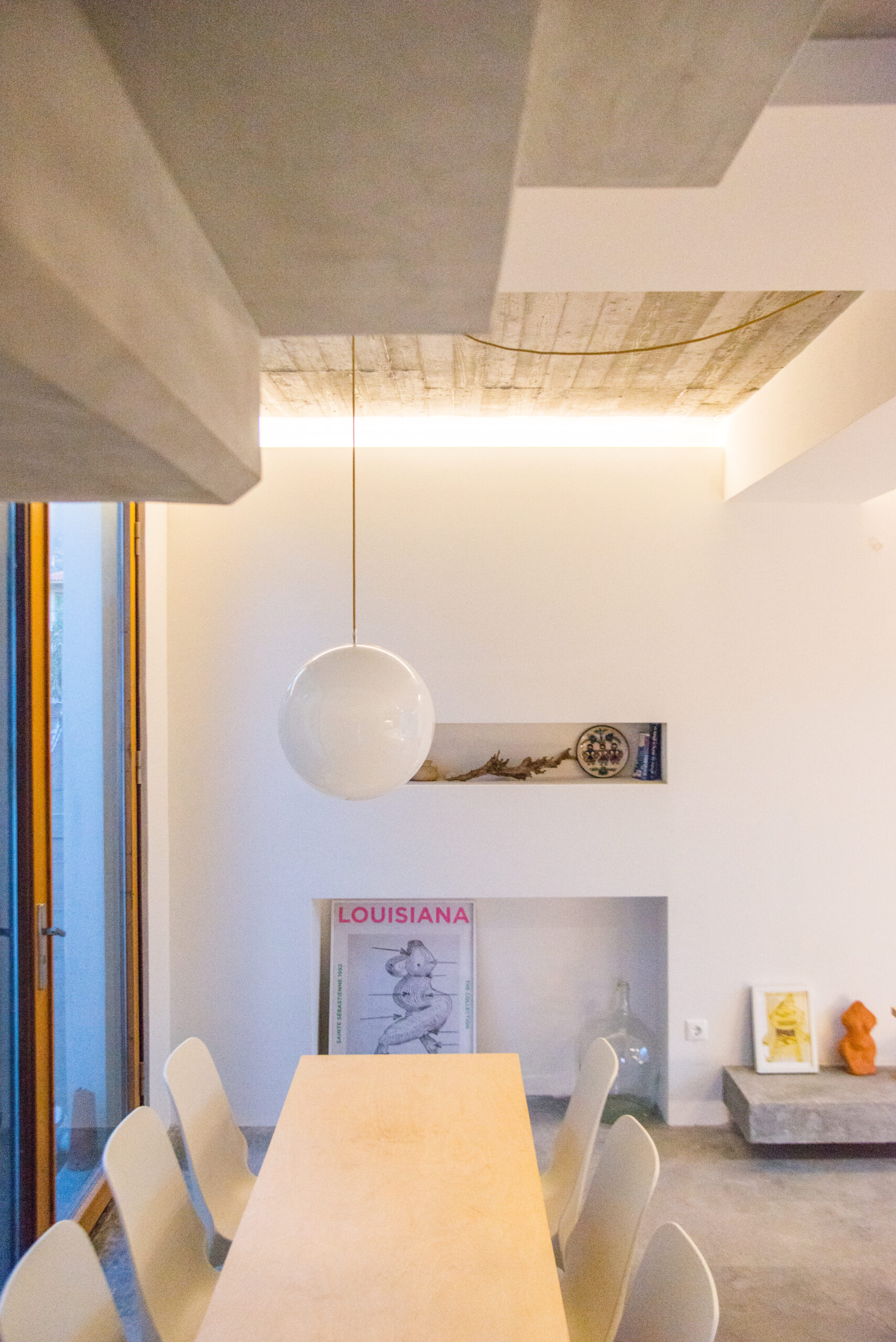
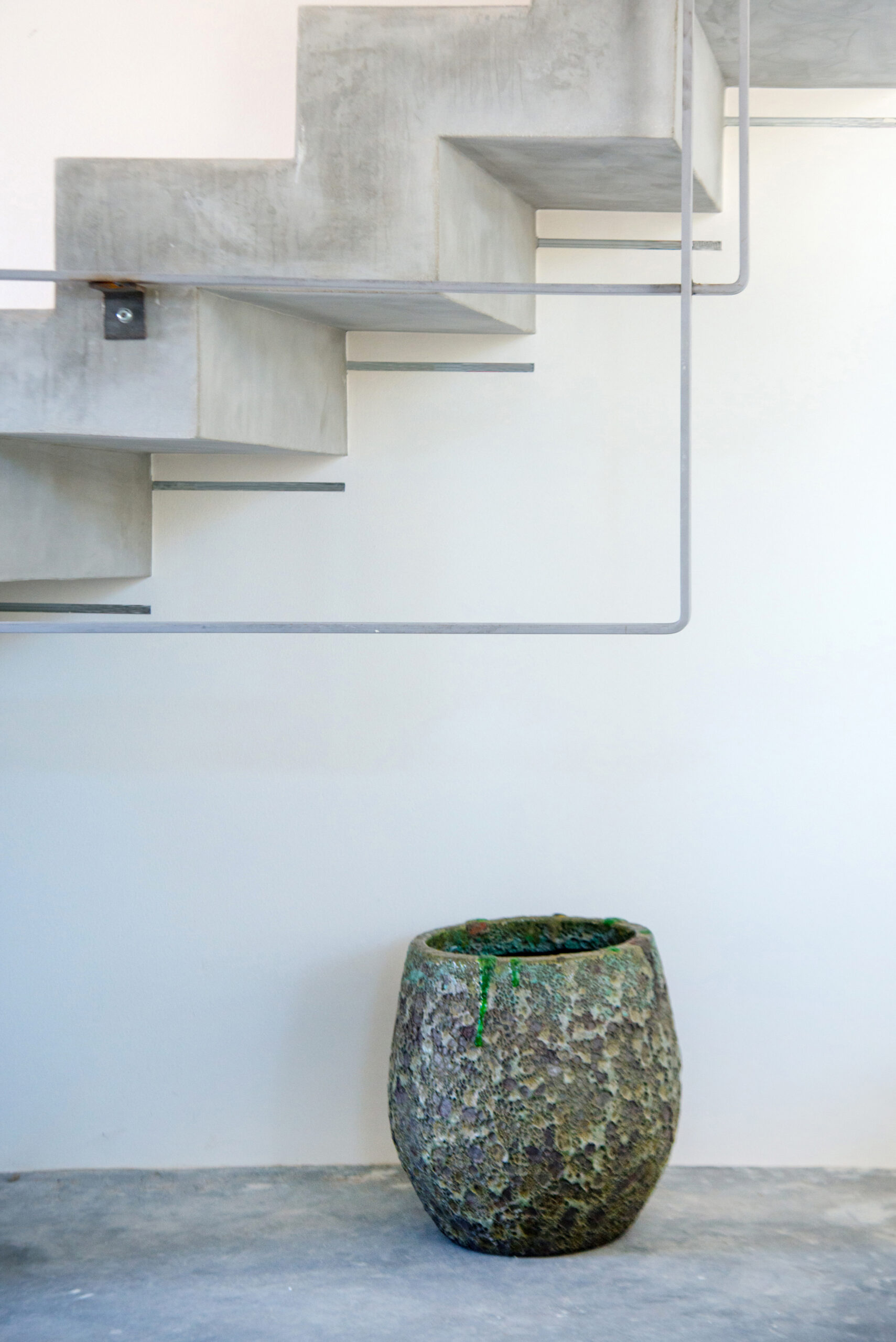
In continuous dialogue with the meaning and essence of time—with the anticipation of completion and the state of waiting—the architectural realization of Laza emerged through its harmonious integration into the sense of place and the flow of nature, in accordance with the teachings of Zen master Eihei Dōgen: “completion is not reaching some place, but returning to where you have already been.” This is not a story about a house that remained unfinished for twenty years. It is a story about an intangible, both eternal and ephemeral, home that each one of us carries within, expressed as a state of inner harmony, poetic completion, and active anticipation.
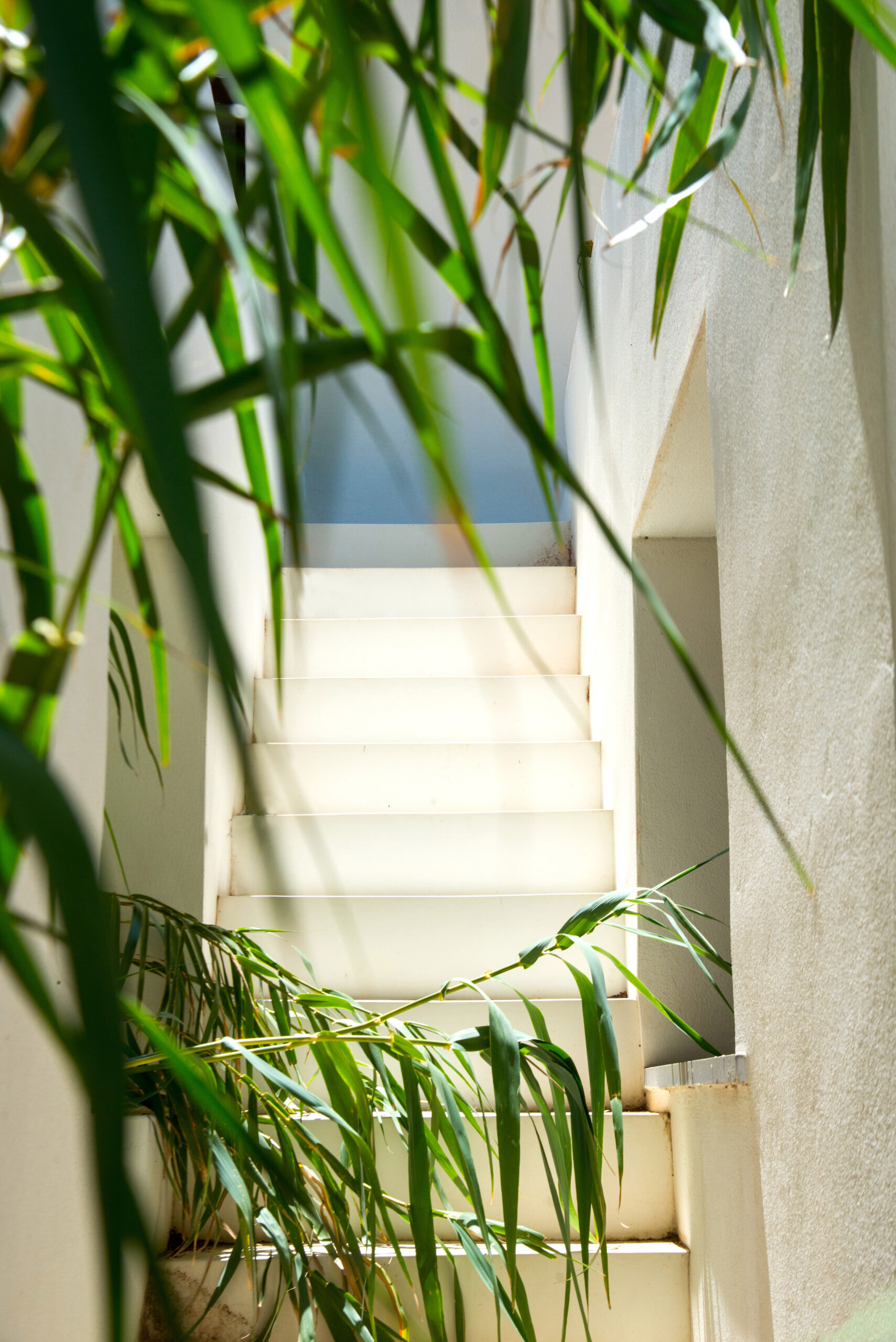
Read the interview, here!
Story Seven
Home is a personal story and a collective notion: Domus Laetitiae in Nicosia, Cyprus by Studio Kyriakos Miltiadou

In the seventh episode, we follow Studio Kyriakos Miltiadou shaping Domus Laetitiae, the home of a young family, within the derelict shell of a building in a high-density refugee settlement in Nicosia, Cyprus proving that home is a personal story materialized within a collective consciousness.

Home takes root in memory, and the Domus Laetitiae residence confirms that. Indelibly inscribed in the collective memory of the island as both havens and sites of exile after the Turkish invasion of 1974, refugee settlements were created in the open wound of the Cypriots’ collective trauma as zones of temporary dwelling for bodies violently displaced. Here, dwelling is presented as a solution rather than a choice. Within this dense weave of memory, constraint, and aspiration, architect Kyriakos Miltiadou reimagines the shell of the old settlement into a home for a young family. Limited resources give way to a generosity of spirit: Domus Laetitiae, its very name proclaiming joy, is reborn through acts of architectural care and imaginative transformation.


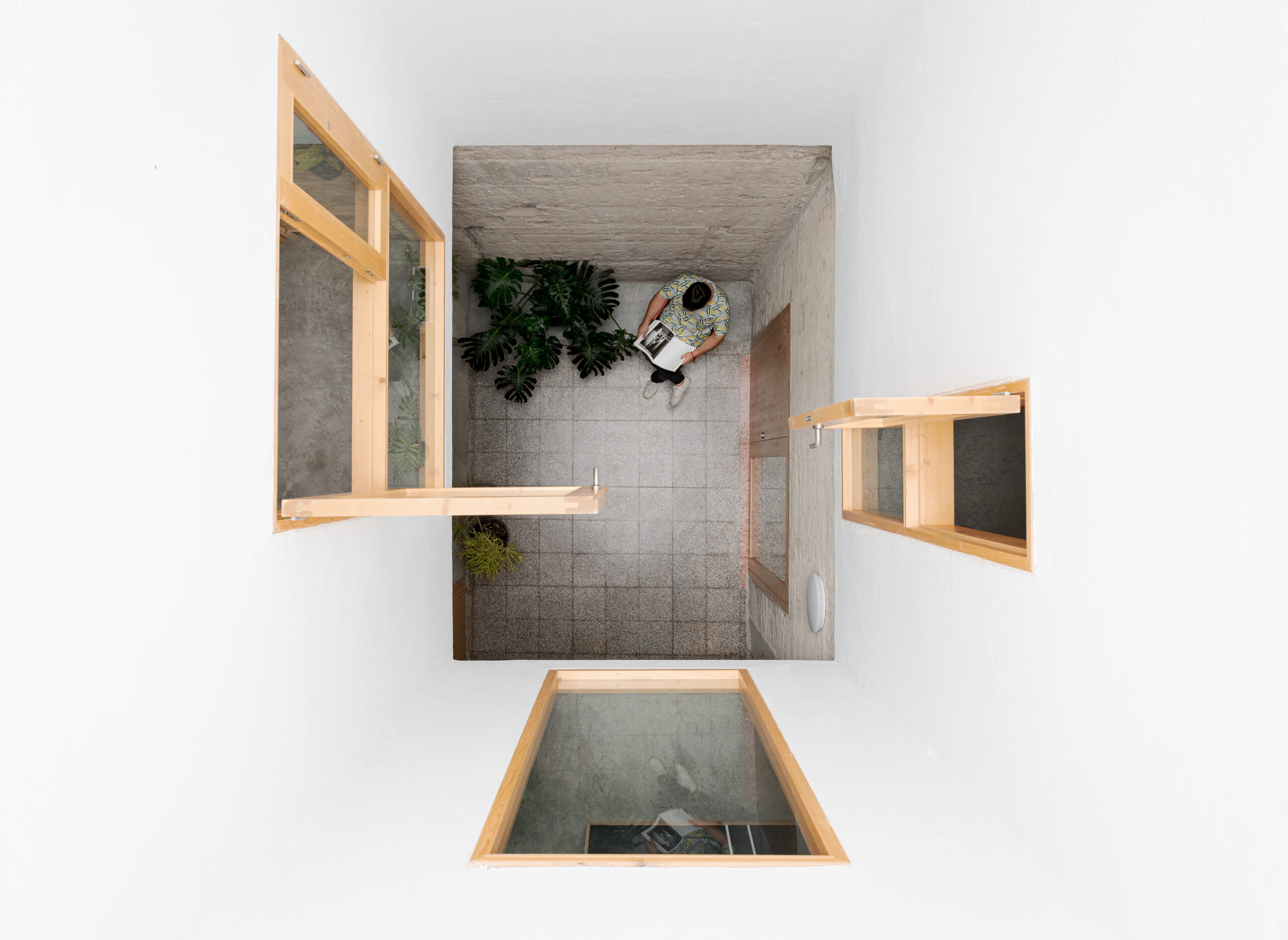
The design pivots around boundaries and intermediate spaces, structuring the house through two central atria that shape both lived experience and built environment. These voids enhance the building’s bioclimatic performance while transforming it into a true home—a place for gathering and spiritual exchange, a place where mundane everyday life poetically unfolds. Native Cypriot flora—jasmine and honeysuckle—inhabit semi-outdoor spaces, ascending perforated metal panels and creating intimate microclimates. Carpentry and metalwork, executed by local artisans, imbue the structure—with its reinforced concrete frame and thermally insulated brick walls—with tactile richness and a sense of craftsmanship.

Domus Laetitiae does not recount a return to a womb. It tells of a home that takes root in the past, grows in the present, and blossoms toward the future. Memory, architecture, and life converge here, producing a dwelling that is at once refuge, narrative, and celebration.


Read the whole story, here!
Story Eight
Home as an ecosystem: Scenes from the Everyday in Thessaloniki by Louizi–Louizis Architects

In the eighth episode, we follow Louizi–Louizis Architects as they transform a double-height ground-floor commercial space in Thessaloniki into a four–micro-dwelling ecosystem. Informed by the spatial traditions of theatre, the project choreographs domestic life as a sequence of scenes in which privacy and intimacy are performed, concealed, and revealed at the volatile edge of the urban public realm.


In the vertically dense cities of postmodernity, where dwelling hovers above the ground, architects E. Louizi, O. Morfaki, and K. Louizis bring the home back to the surface of the city, confronting—imaginatively and boldly—the critical question: how do we meet the gaze of the Other? The house is conceived as a scenographic space, and the home as an internalized spectacle that must be simultaneously protected and revealed.


Three architects re-anchor urban dwelling in the ground, framing it as a performative daily action that produces a theatrical domestic space, simultaneously familiar and strange, identical yet different.

Read the whole story, here!
Story Nine
Home as a Political Act: 10k House in Barcelona, Spain by TAKK
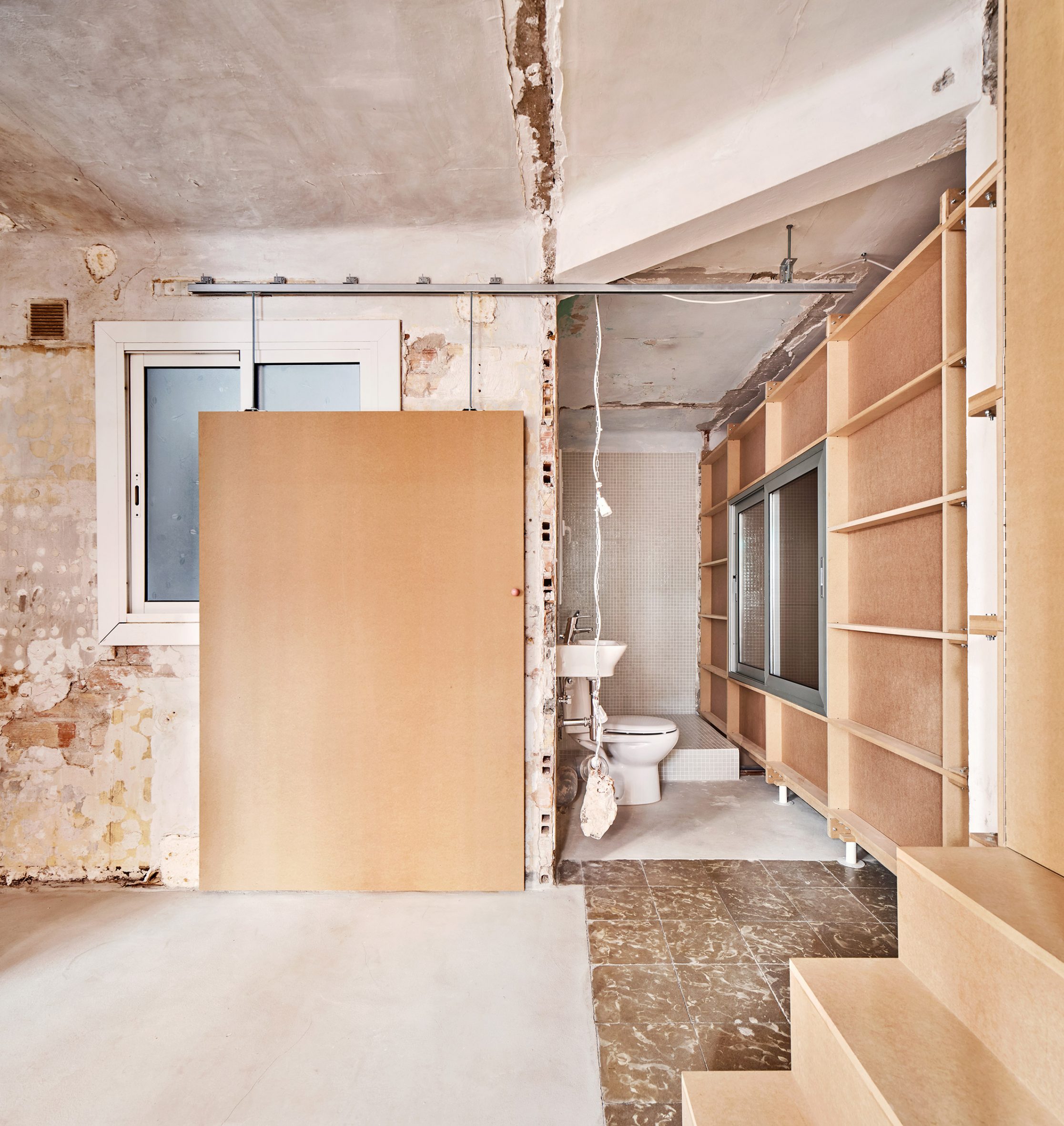
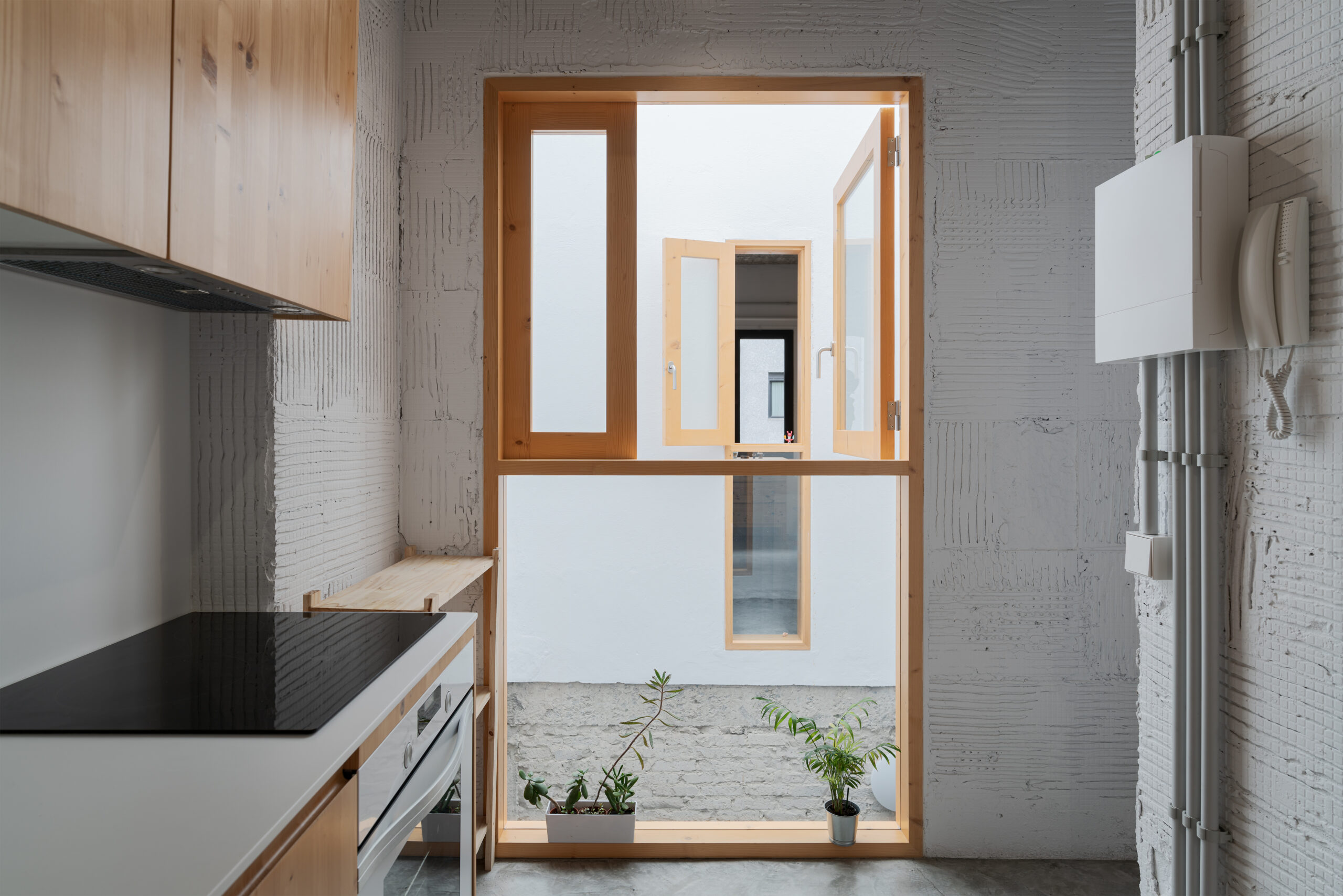
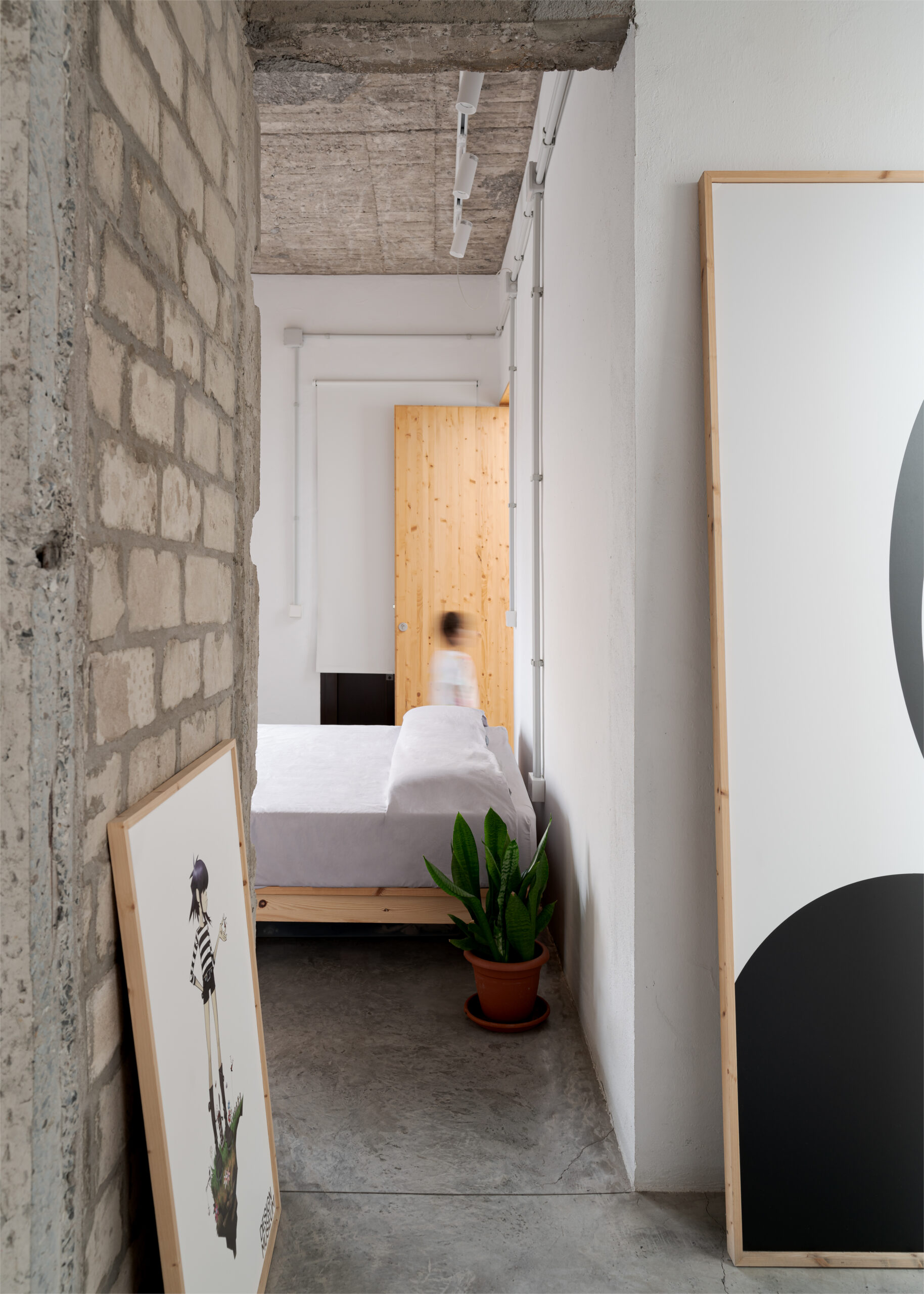
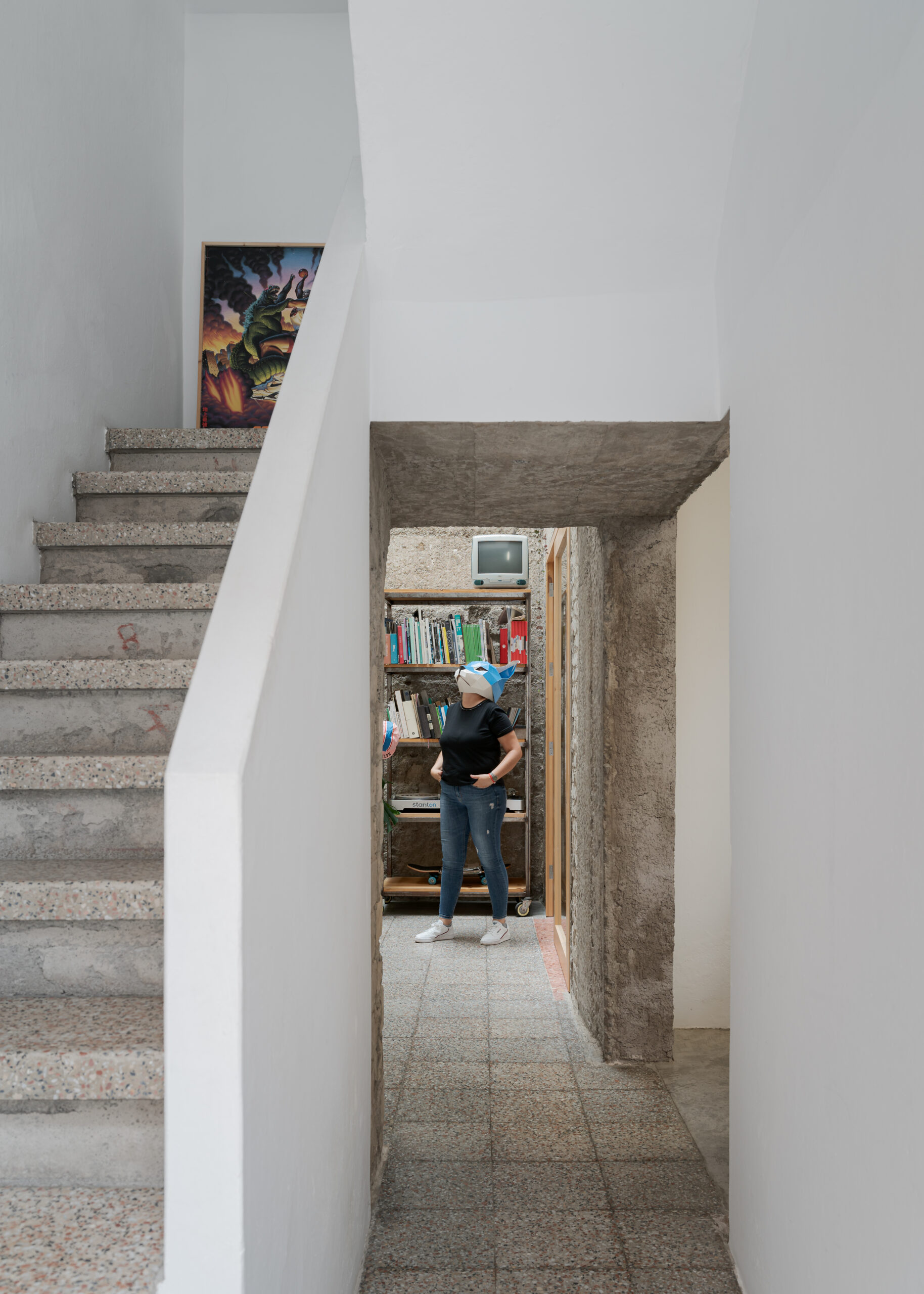
In the ninth episode, we follow Spanish studio Takk as they renovate a 50 m² apartment in Barcelona on a remarkably modest budget of 10,000 euros, addressing both the current housing crisis and climate change challenges. The project unfolds through an inclusive, open-ended design strategy in which rooms are nested within one another, prioritizing affordability, material honesty, and an energy-efficient domestic model.
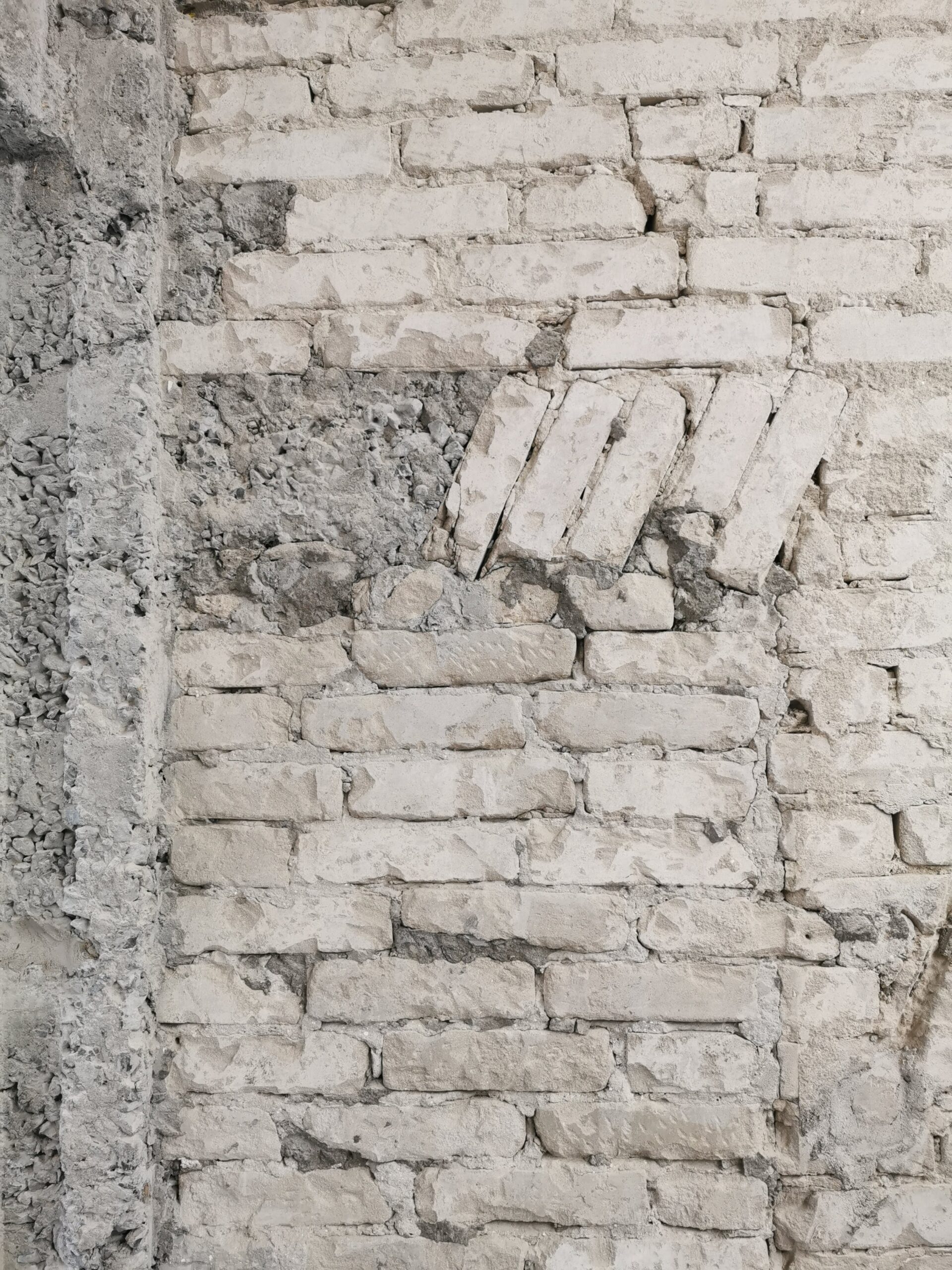
Traces of removed partitions and dismantled light fixtures remain visible, lending the apartment a raw, brutal honesty while preserving the memory of its former layout. Challenging entrenched domestic conventions, Takk positioned the exposed metal kitchen sink and the bathtub directly adjacent to the apartment’s façade windows. In doing so, the body is placed in plain sight—as a free, ungendered presence—disrupting the traditional hierarchies of privacy and use. Extending this logic, the architects introduced an internal window between the entrance corridor and the bathroom. Once again, the naked body is exposed—this time as a hedonistic spectacle—transforming the bathroom from a secluded, utilitarian enclosure into a space “that can be used even in company”, social and luminous rather than isolated and opaque.
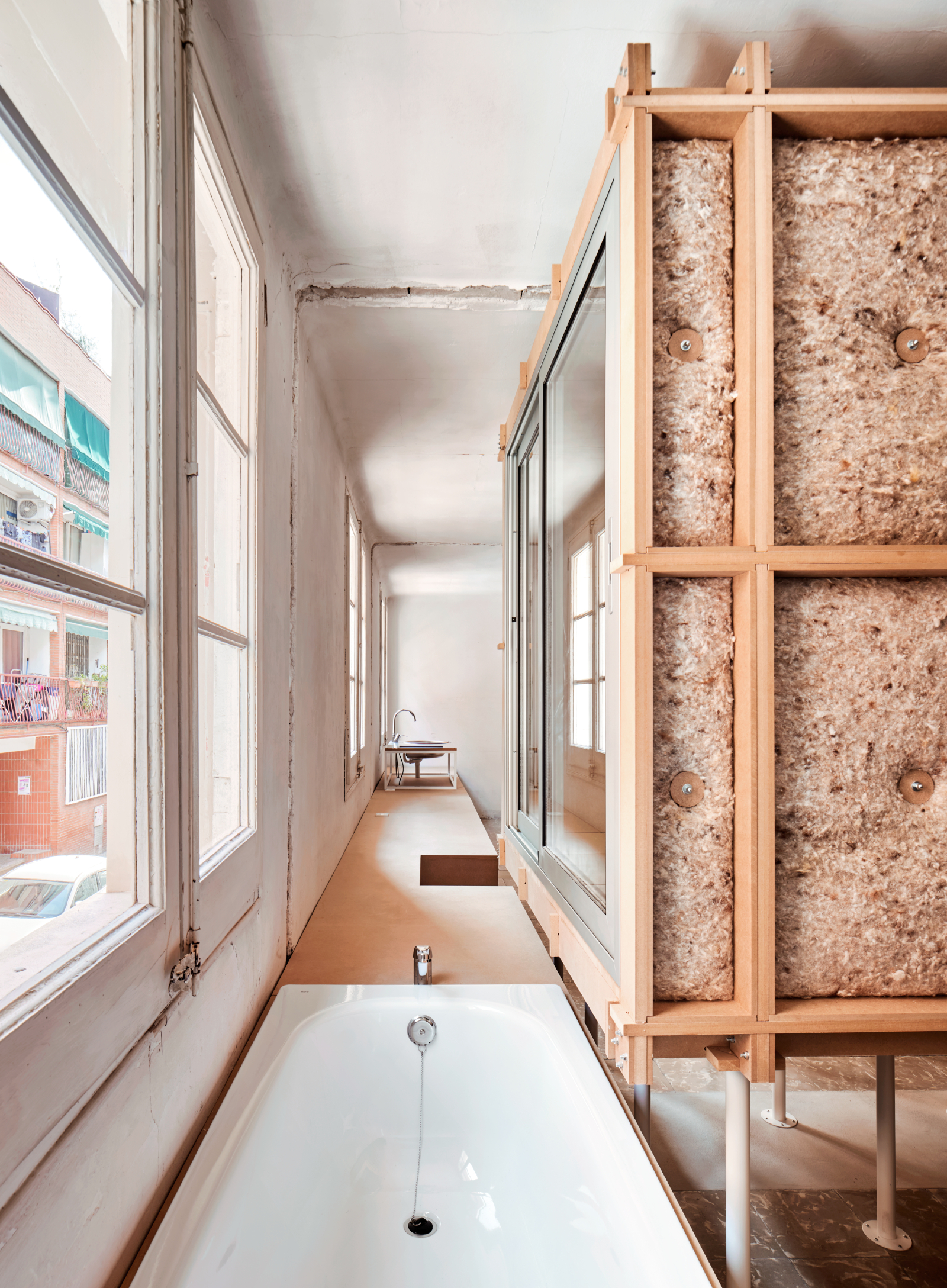
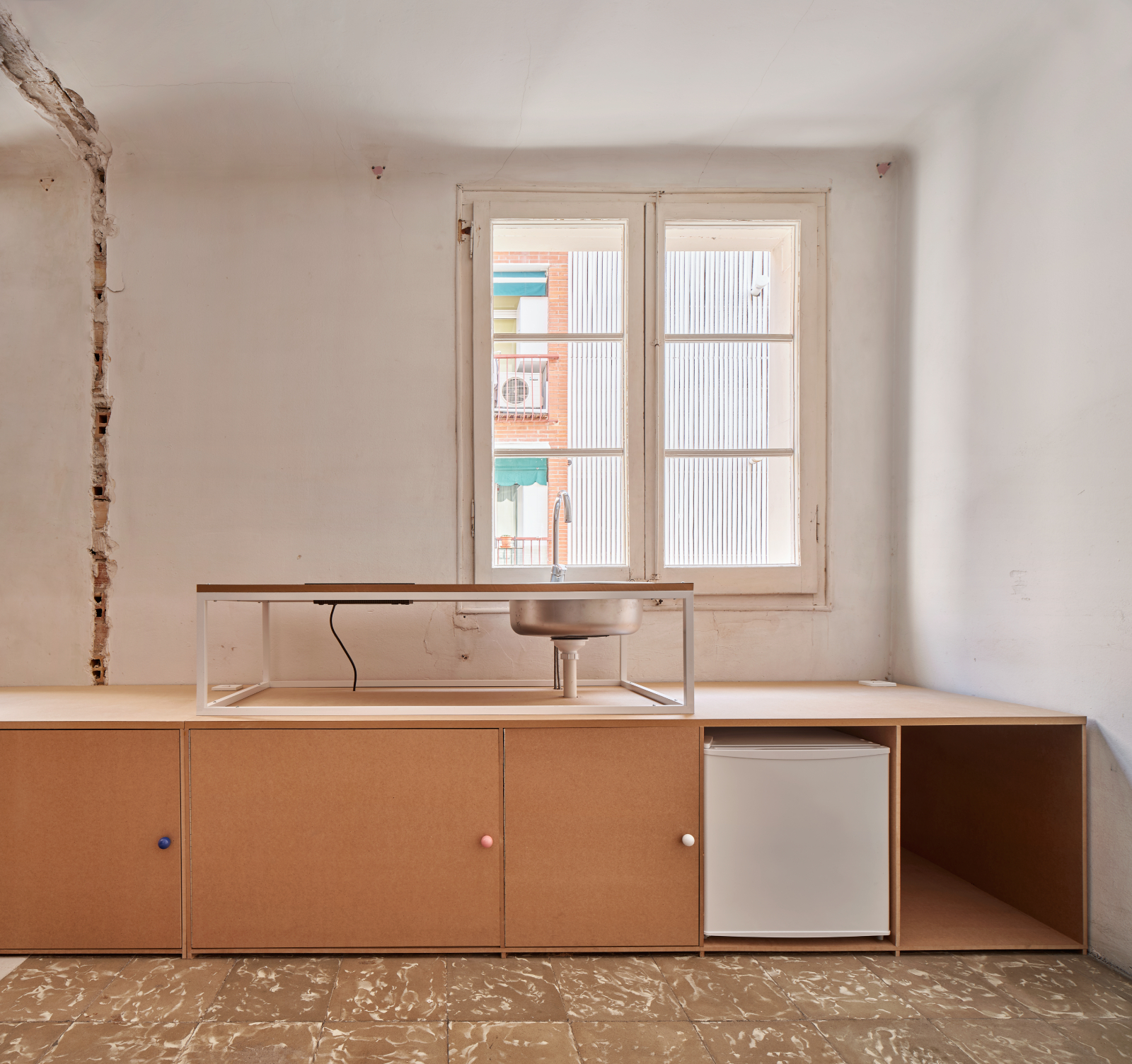
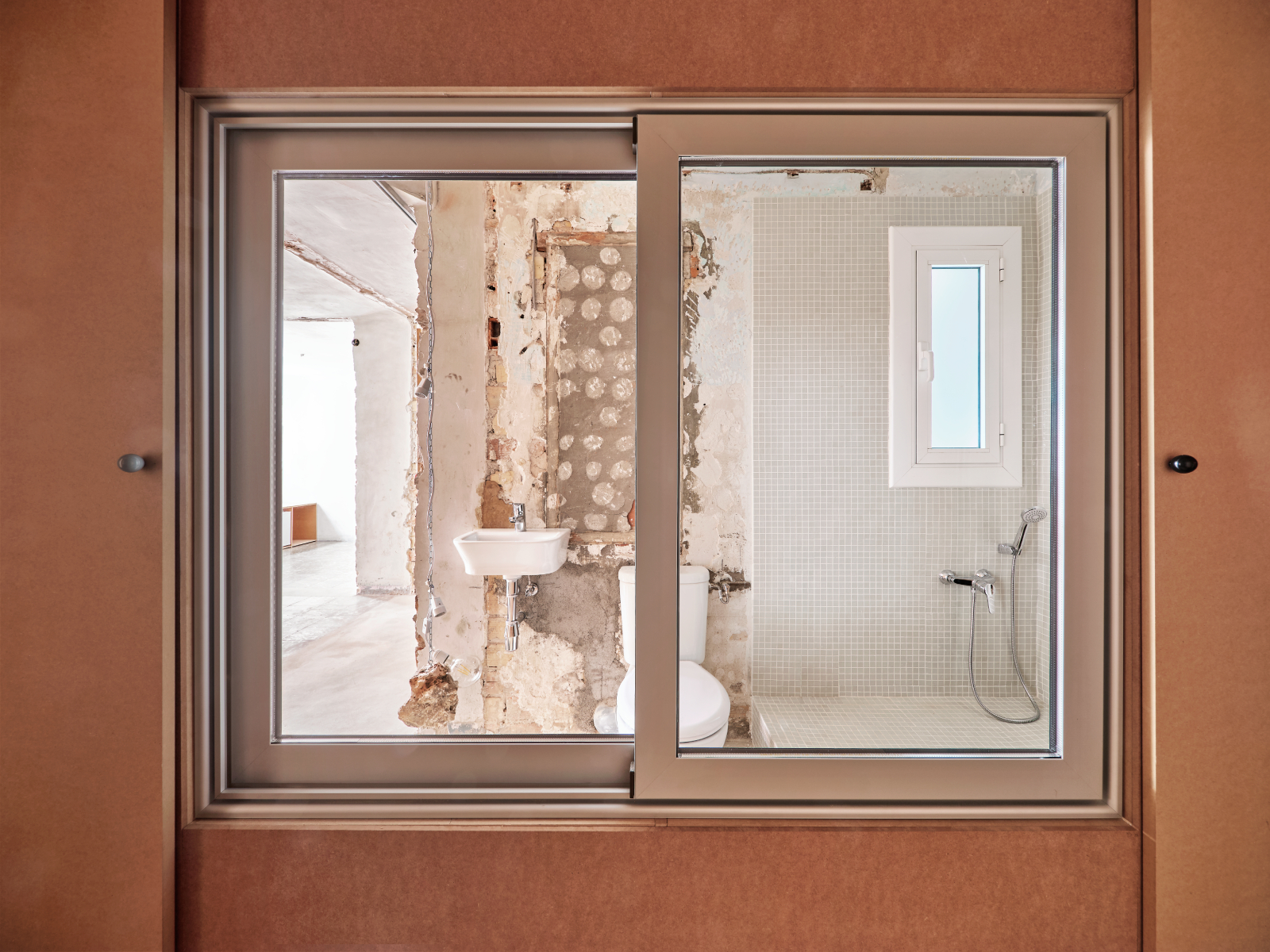
Conceived as both home-as-laboratory and home-as-construction-site, the project deliberately promotes a DIY ethos and the inclusion of non-experts in the building process. The renovation was executed entirely through dry assembly: all components were prefabricated, cut off-site, and assembled using standard screws by the architects and the client themselves, without the involvement of specialized labor. This groundbraking self-construction technique allowed the inhabitants to assemble aspects of their house by themselves as if “the apartment were a piece of furniture”.
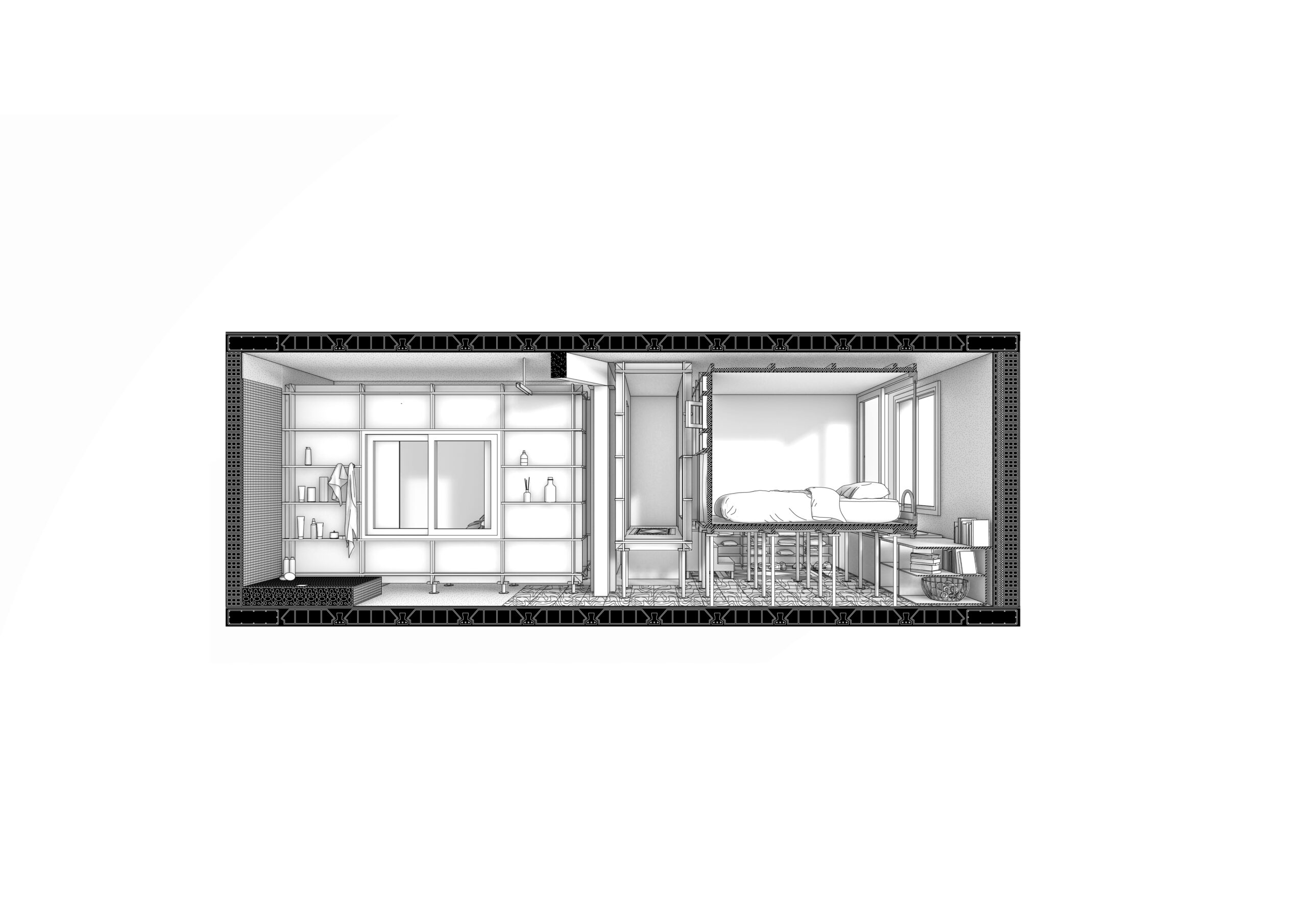
In 10k House, Takk weaves ecological frameworks into spatial production while seeking to cultivate new material, social, and political imaginaries—reframing how the built world is conceived, inhabited, and transformed.
Read the whole story, here!
Story Ten
Home as an Ecosystem: Pacarizi Studio Reimagines the Multigenerational Home in Albania as Inhabitable Topography

In the tenth episode, we follow Pacarizi Studio in the vast agricultural landscape of the coastal village Ishull-Lezhë in Albania, where they redefine the typology of the multigenerational single-family house in response to shifting social realities such as the “transnationalization of everyday life” and “domestic absence.” The project unveils an almost pink, almost red, low-cost, low-tech house embedded in the land as an ecosystem of indoor and outdoor rooms: an inhabitable topography shaped by climate and grounded in a circular building economy.
Single-family houses account for more than half of Albania’s built fabric, making the private dwelling the country’s most persistent architectural and social typology. Albania has experienced one of the most intense and prolonged waves of emigration in Europe, resulting in what Russell King describes as a “transnationalization of everyday life,” where families are spatially dispersed yet symbolically connected through the home. At the same time, demographic aging and increased mobility have altered domestic use patterns, blurring the distinction between permanent residence and holiday house, village and city, presence and absence. Julie Vullnetari notes that many Albanian houses now exist in a state of partial occupation—inhabited seasonally, maintained through remittances, and preserved as sites of belonging rather than daily use. Sociologist Linda Kalcuni further conceptualizes this condition as a form of “domestic absence,” in which homes remain physically intact while care, labor, and everyday life unfold elsewhere. In this context, domestic space is no longer defined solely by cohabitation, but by anticipation, return, and adaptability.
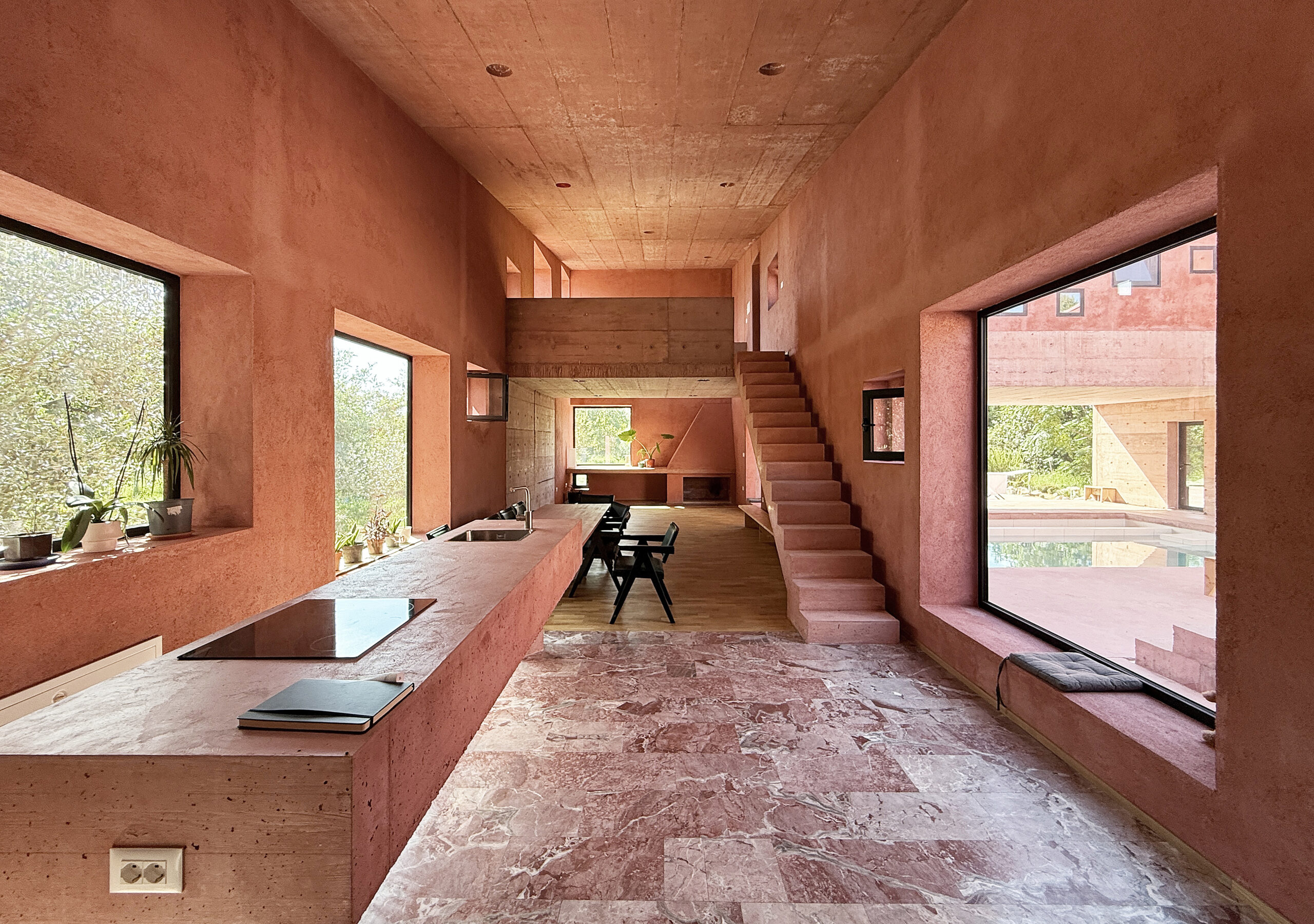
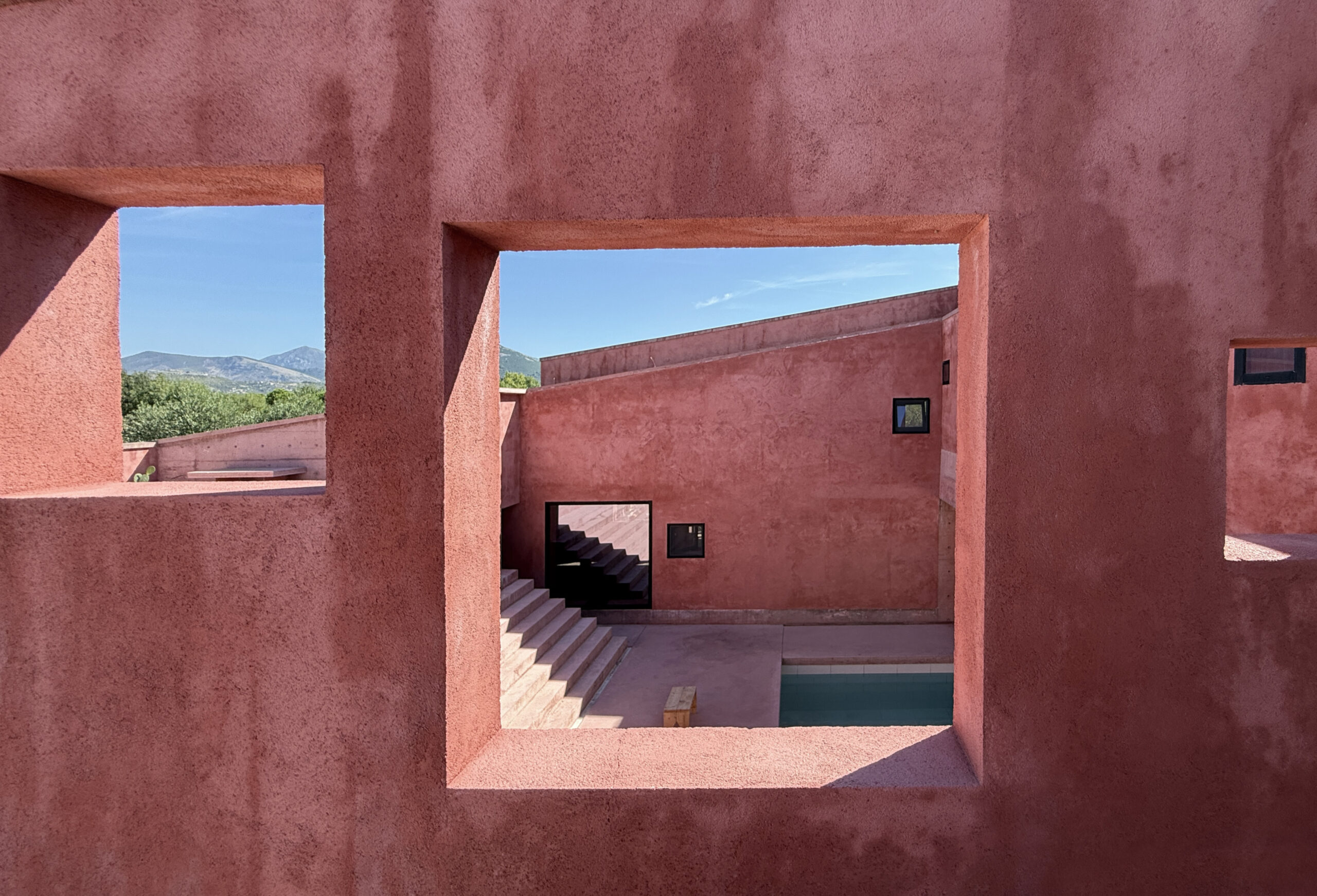
Red House emerges as an architectural response to the redefinition of the single-family home for a cohesive yet geographically dispersed family. Acknowledging the contemporary Albanian condition of fluctuating presence, global climatic pressures, and enduring local building traditions, Pacarizi Studio proposes a house that reads less as a conventional domestic object and more as a man-made landscape unfolding around a concrete courtyard, anchored by a central pool and shaped by light, climate, and everyday use.
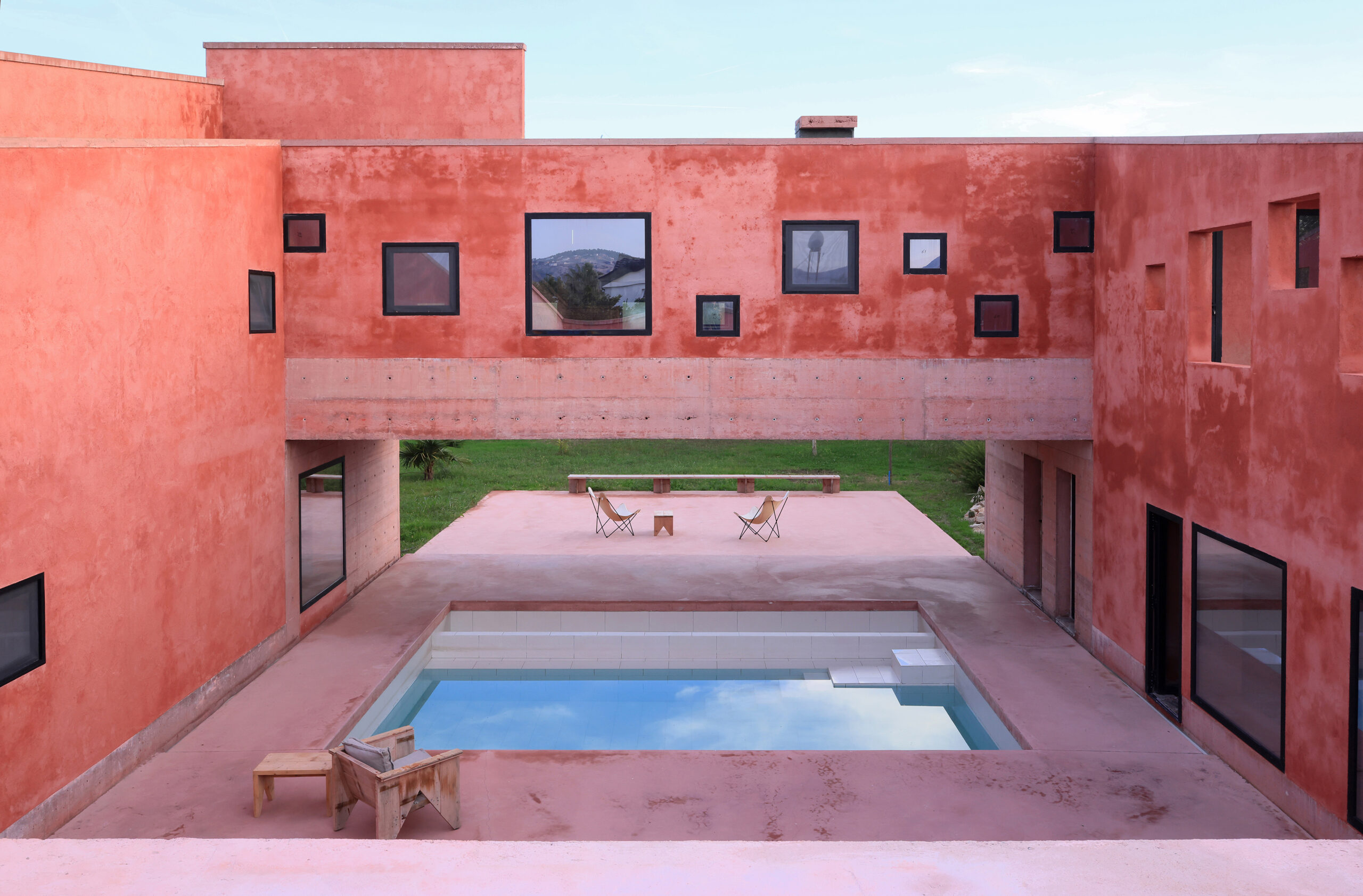
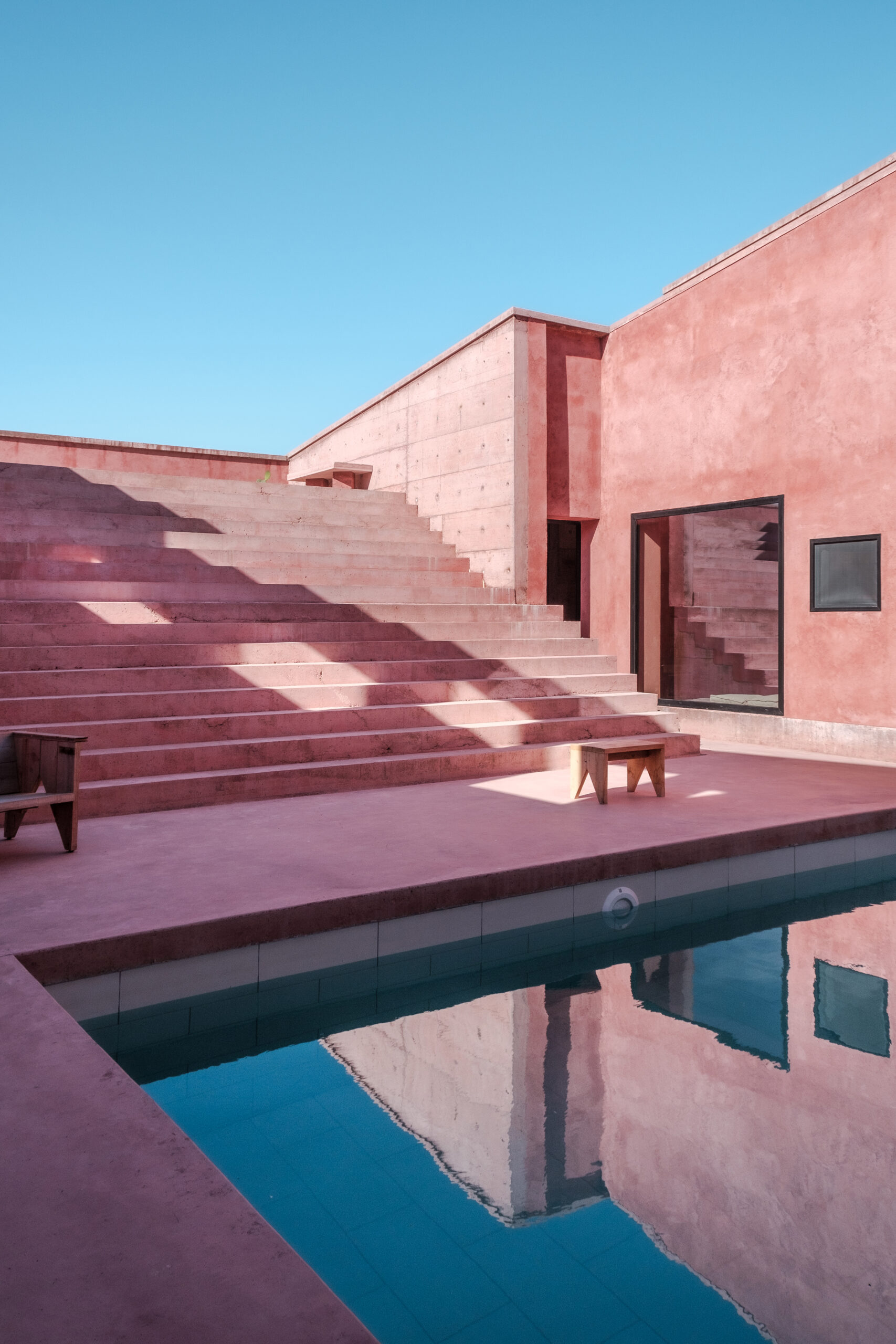
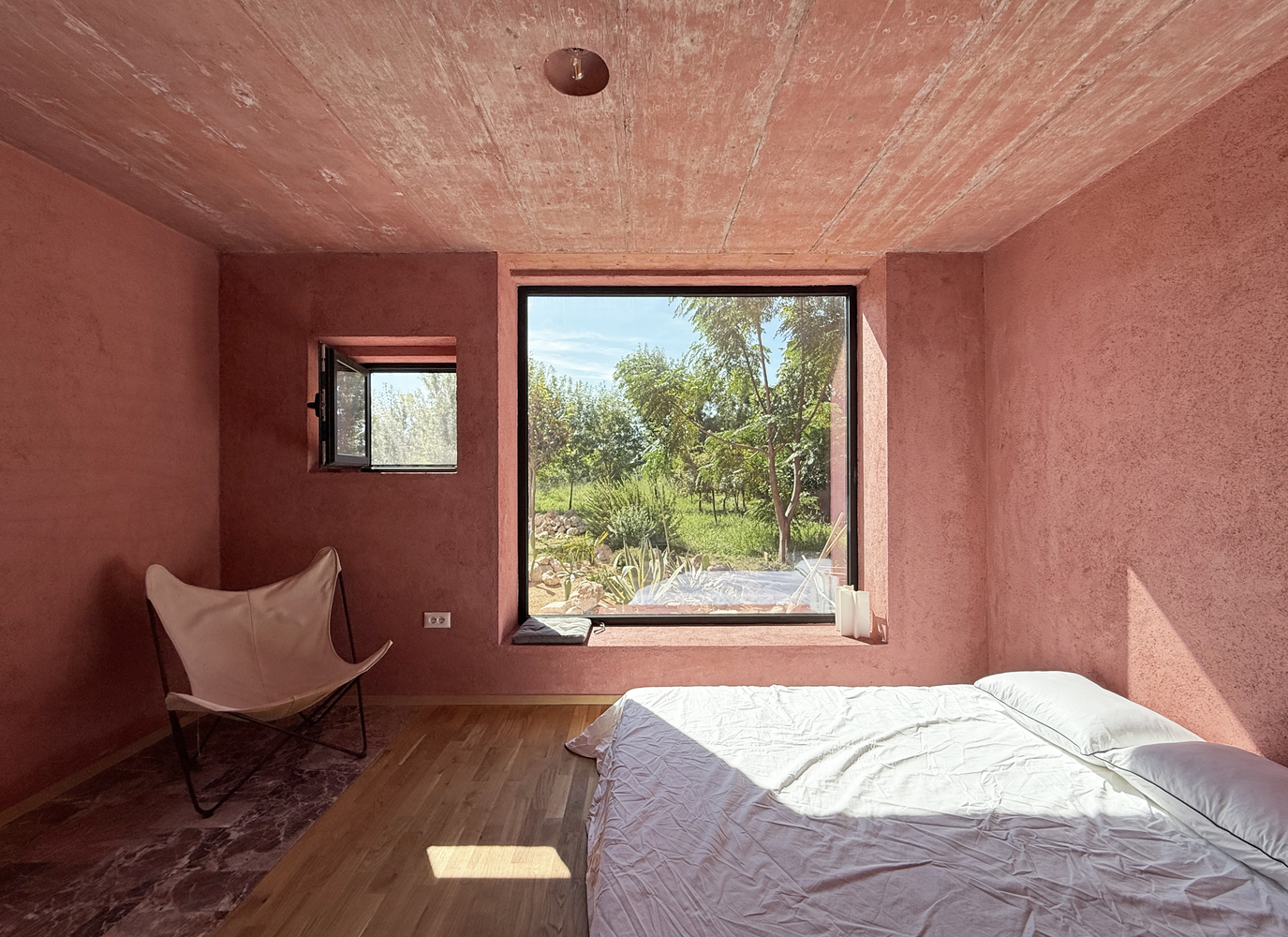
Set within an expansive agricultural plot planted with olive, pomegranate, and orange trees, the house orchestrates a fluid balance between indoor and outdoor living. Openings—precise, square incisions in the enveloping surfaces—act as calibrated frames choreographing perception and turning everyday acts of dwelling into a continuous dialogue with the territory. The project engages low-tech climatic intelligence through passive strategies, material restraint, no-waste construction, local labour and natural building techniques. Pigmented with red iron oxide, the mineral surface carries its color within the material itself, intended to age without the need for repainting. A concrete structure is paired with 46-centimeter-thick walls of local hollow brick, insulated and plastered with a mixture of straw, sand, and lime bound with casein—a traditional milk protein that fully replaces cement. Floors are finished in regional pink marble and wood.

Red House operates as an adaptive domestic ecosystem—capable of accommodating fluctuating patterns of presence, absence, and return. It suggests a model of rural living that is grounded, resilient, and deeply attuned to the social and environmental textures of its place.
Read the whole story, here!
Story Eleven
Home as a legacy: Kouloura House by Architectural bureau 11 Reinvents the Anonymous Athenian Modernist Home
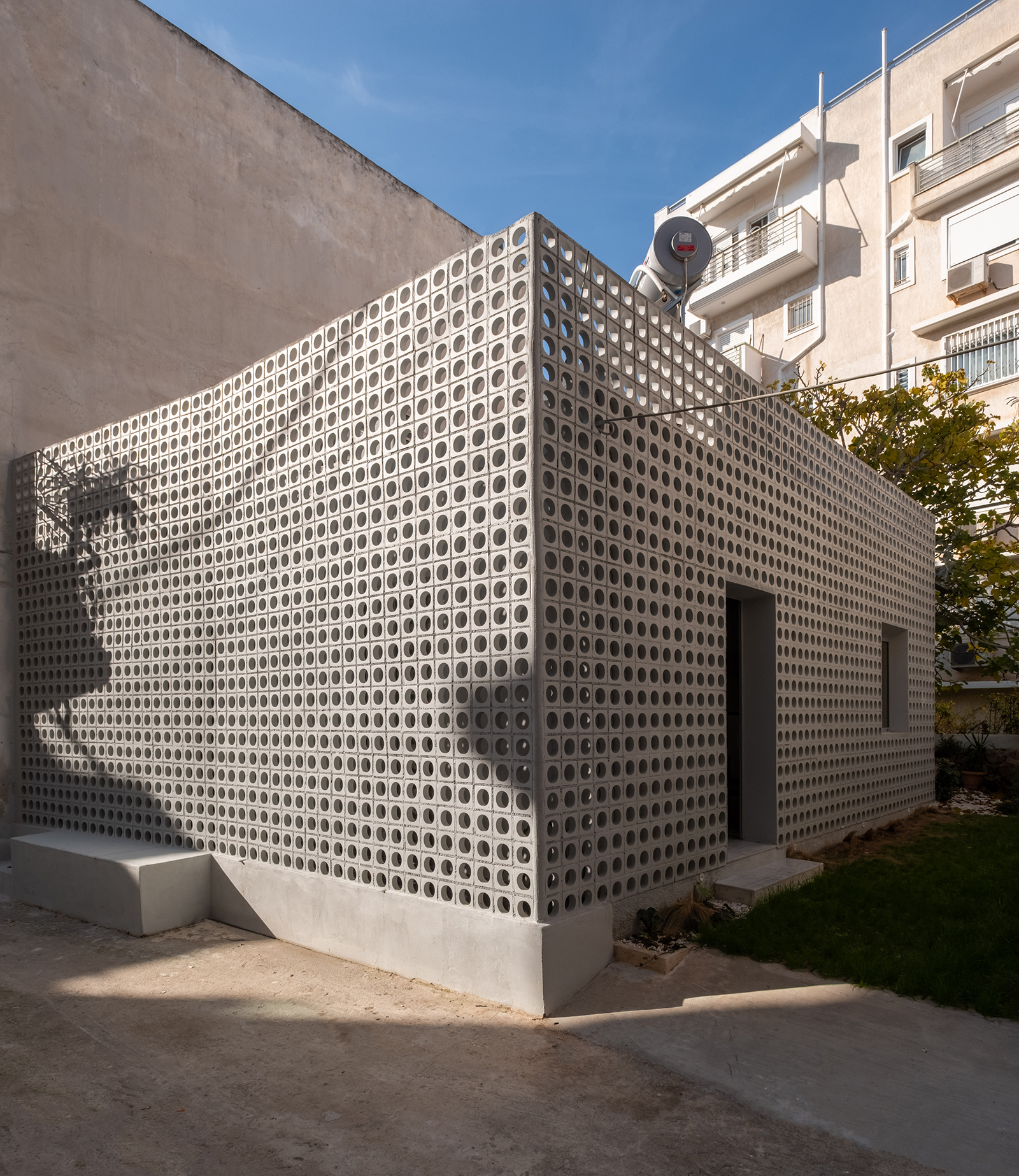
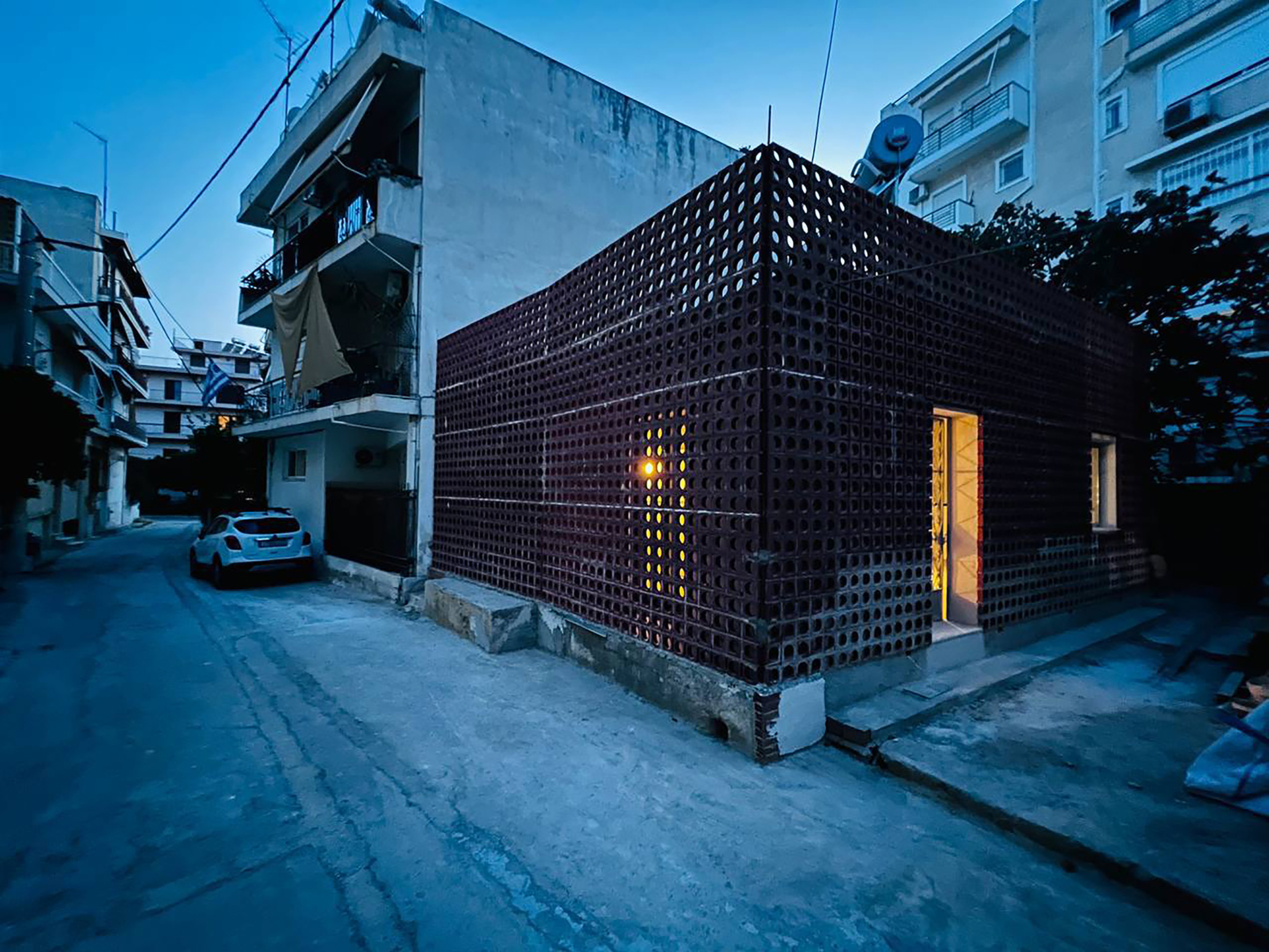
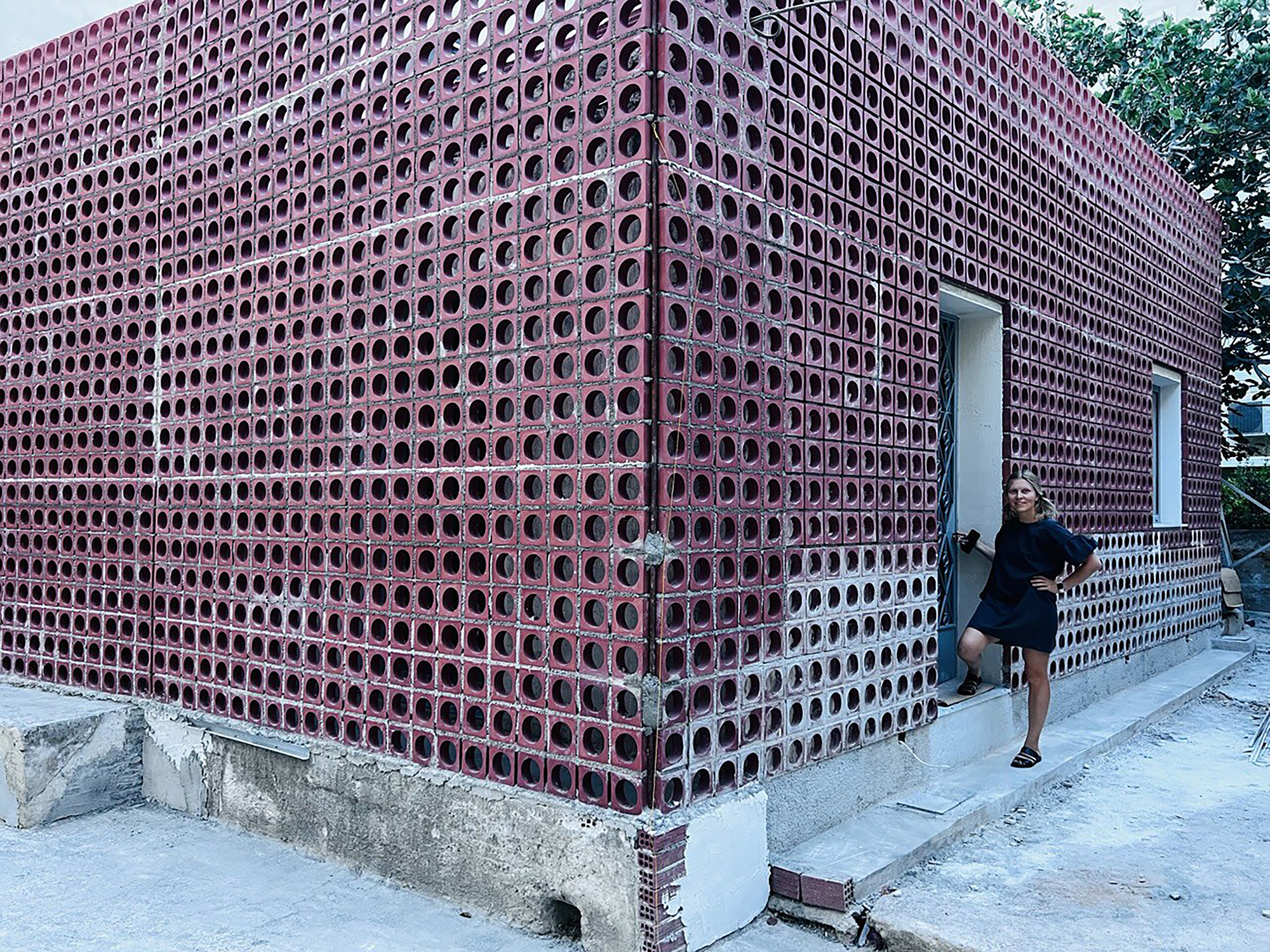
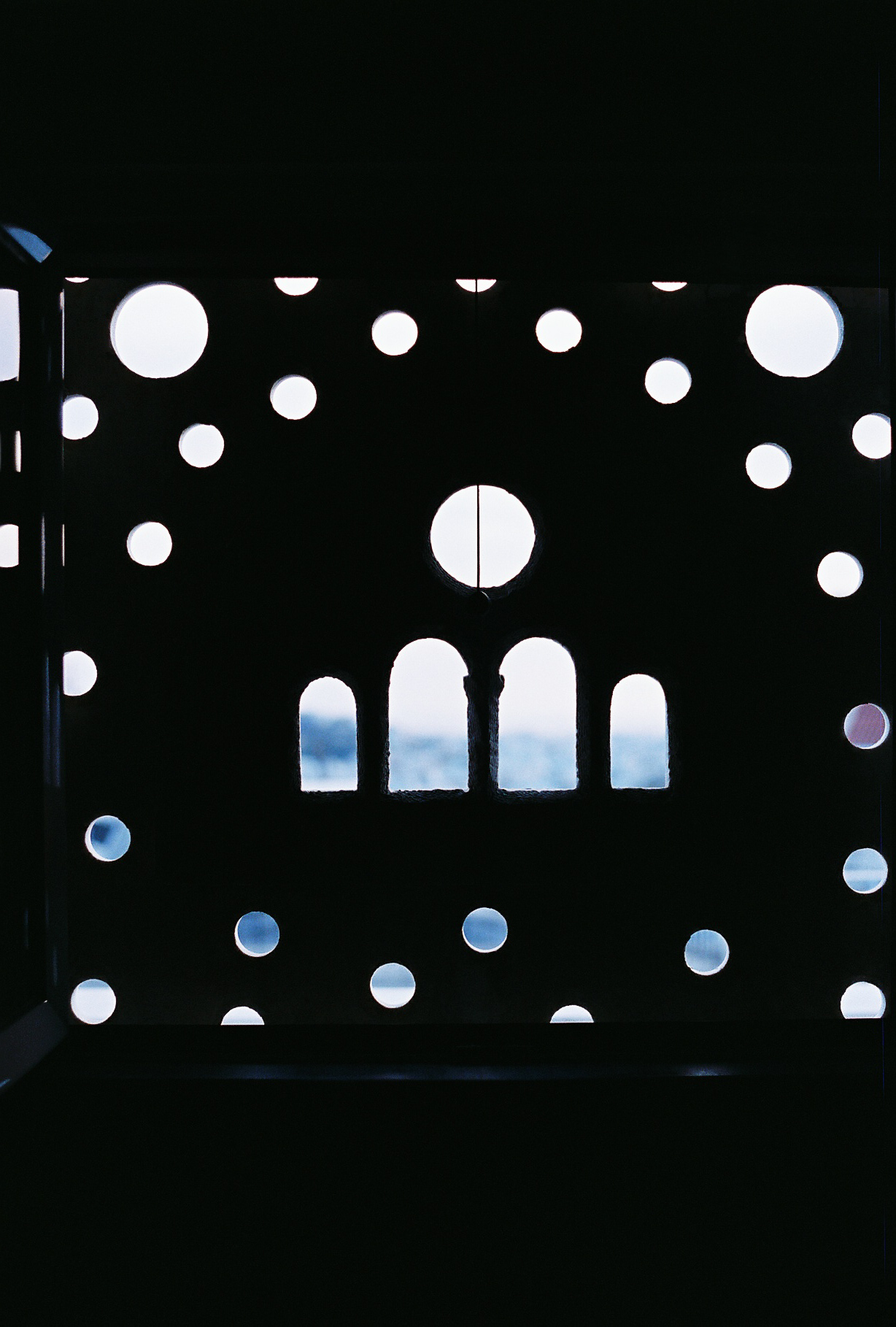
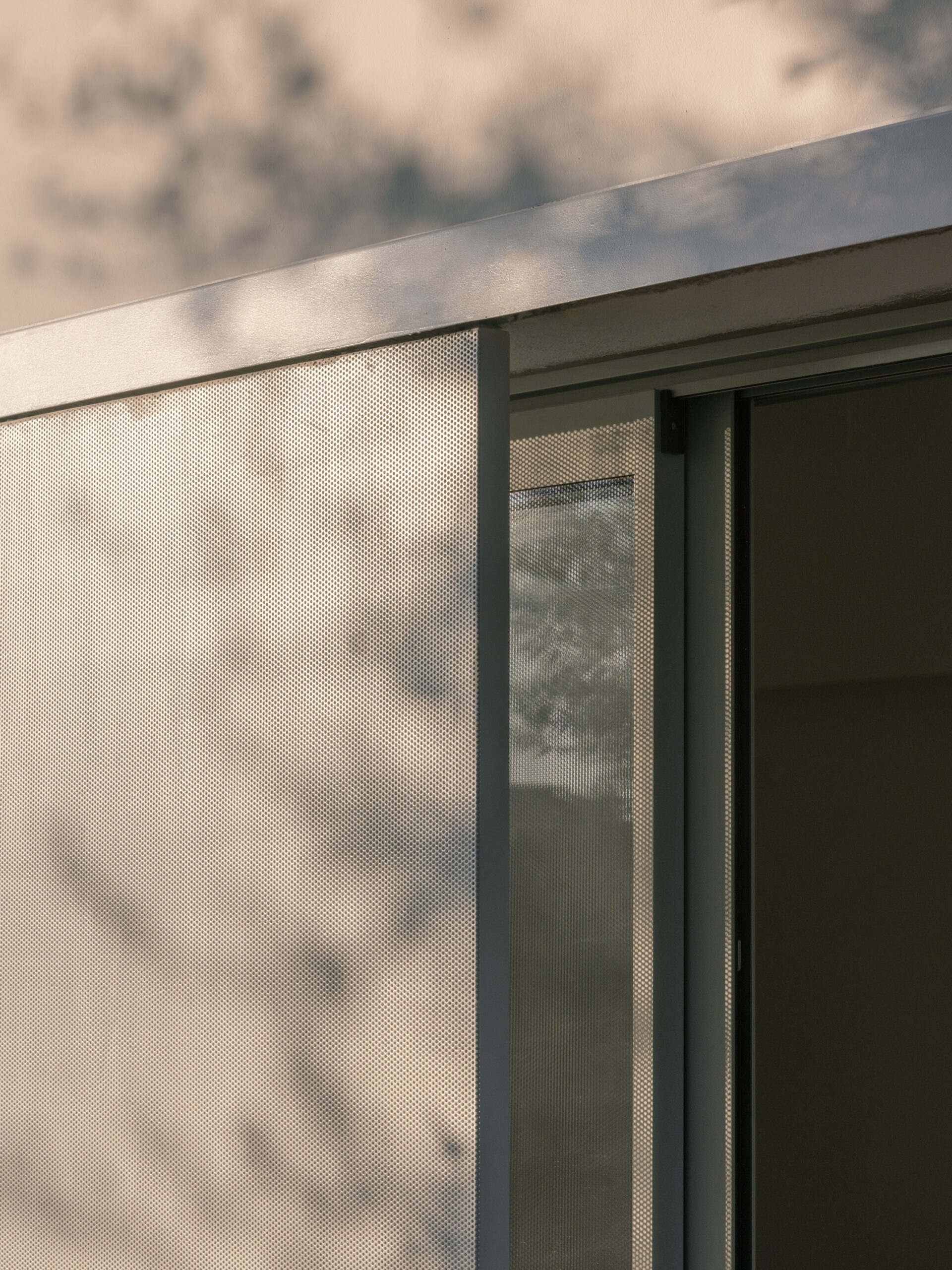
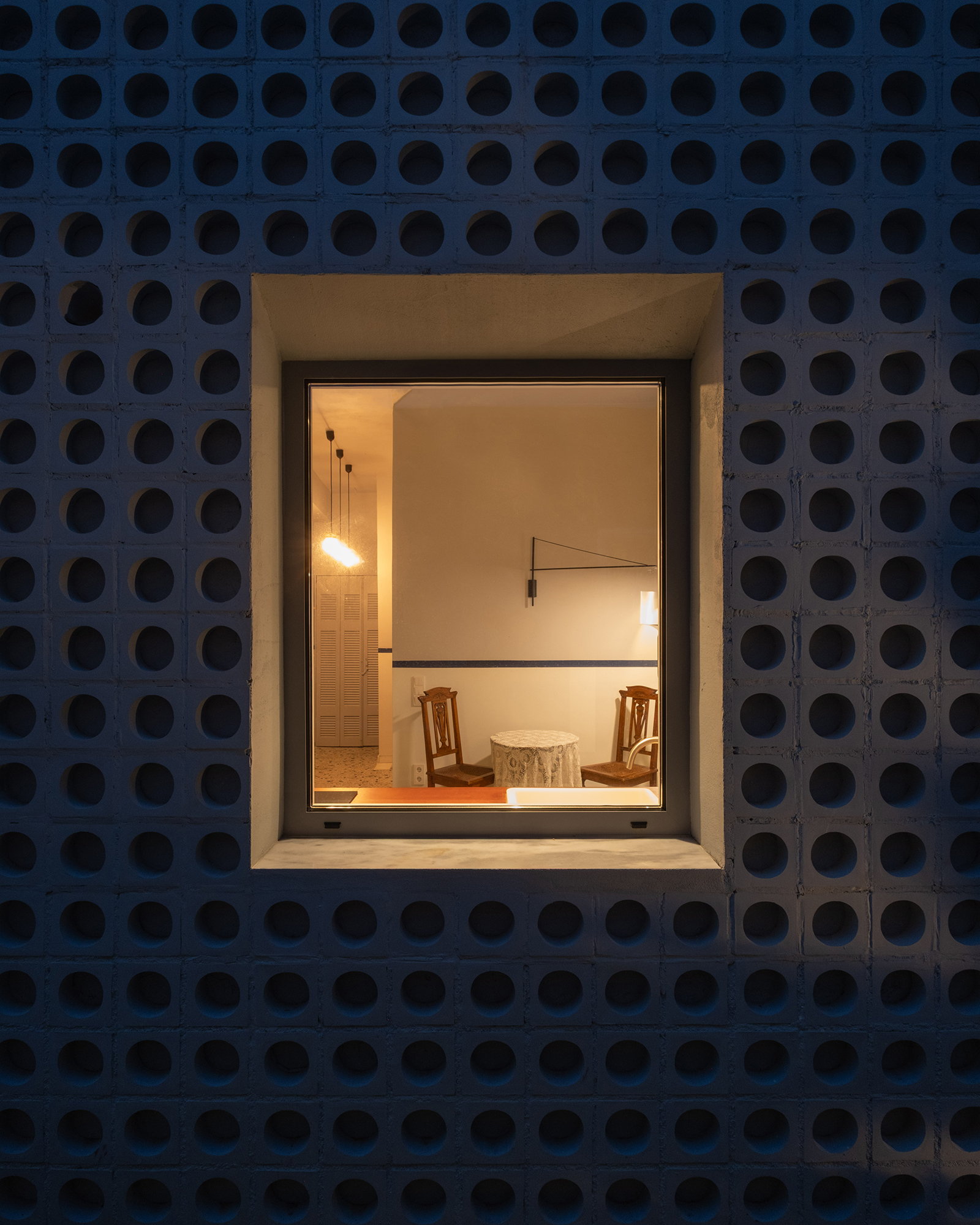
In the eleventh episode, we follow architect Anna Delgiado of Architectural bureau 11 as she reintroduces into the urban fabric of Palaio Faliro an abandoned ground-floor residence from the 1950s—a typical example of early Athenian modernism—in a totally whimsical way. Drawing from the architectural vocabulary of the period, the architect envelops the house with a perforated mantle of klostra, around which a vine is expected to grow over time. Through this permeable ceramic façade, which both delineates and contains a renewed domestic life, the house acquires a breathing cocoon that redefines it morphologically and charges it semiologically, transforming it into a landmark that raises questions about the relationship between contemporary and modern, private and public, dwelling and urbanity, as well as about architecture’s romance with time.
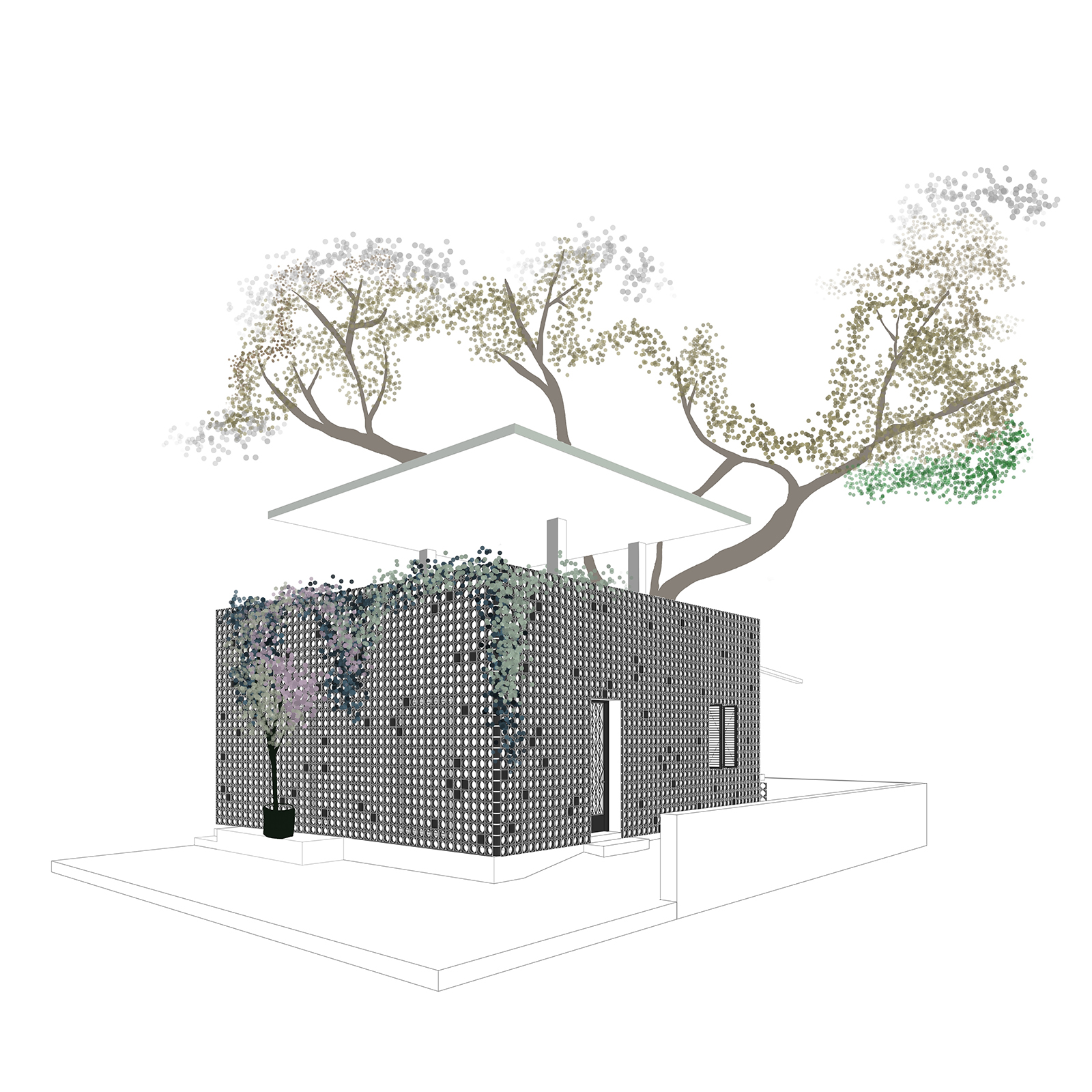
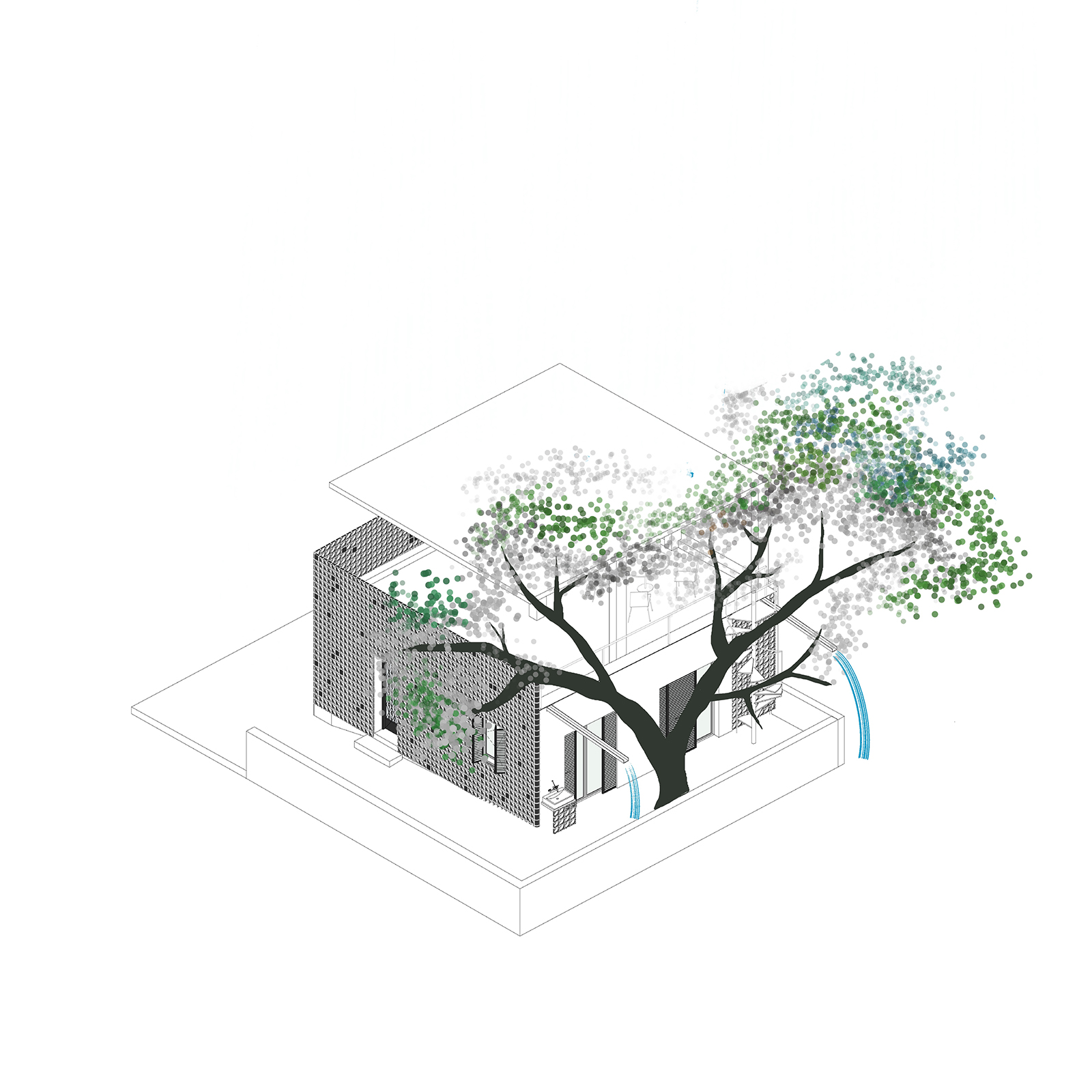
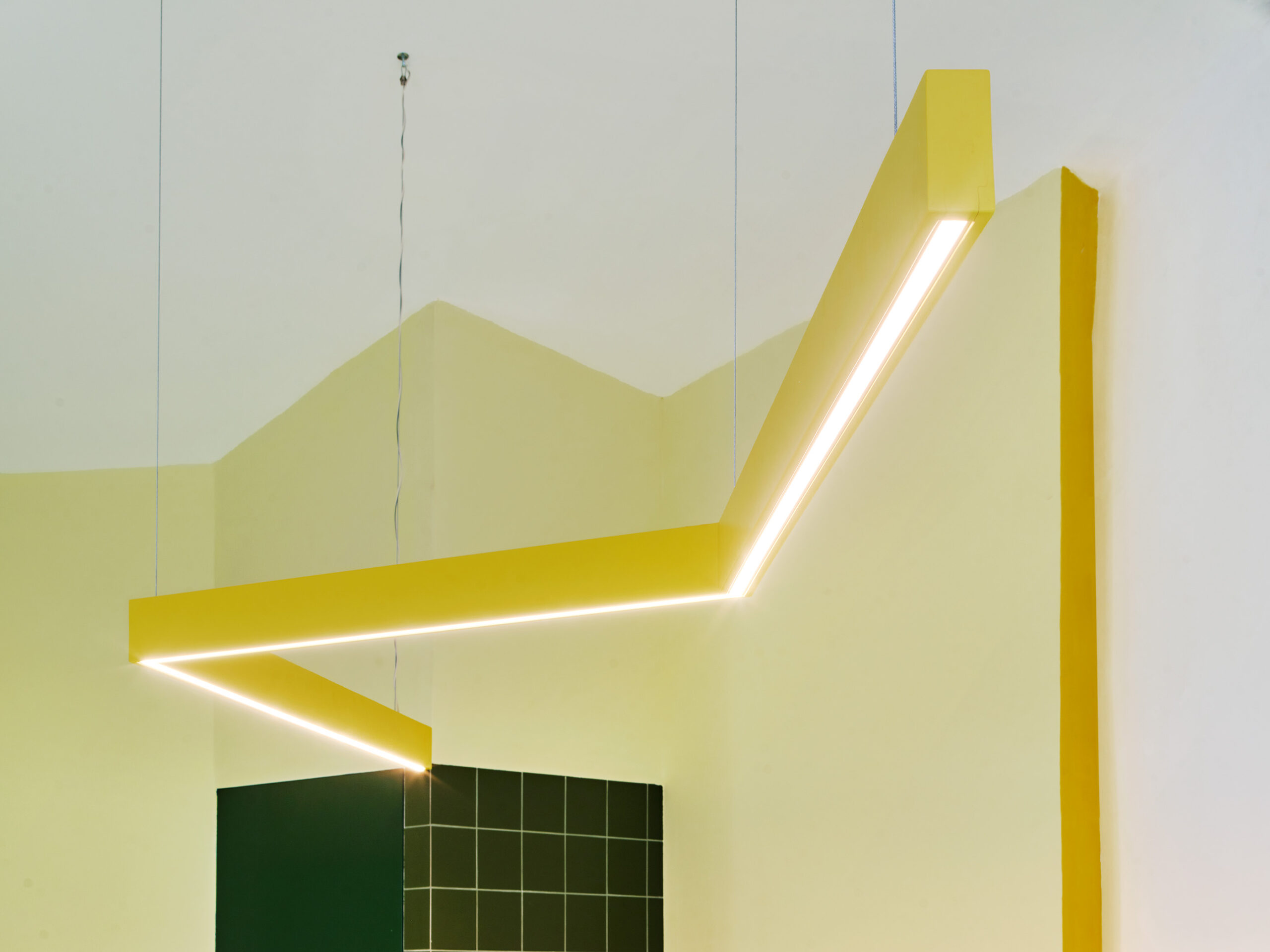
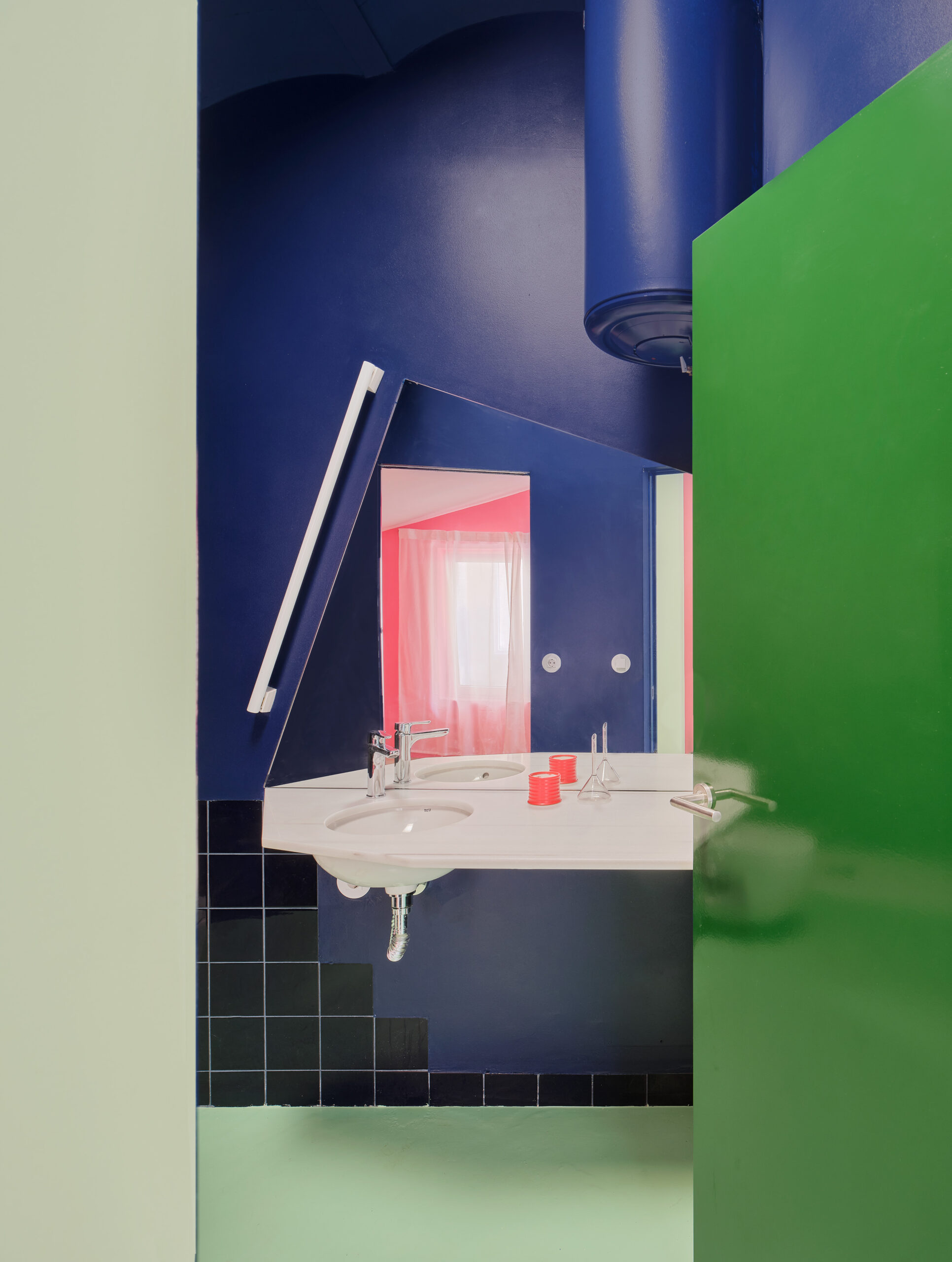
Following the traces of Athenian chiaroscuro (Tournikiotis, 2009), the house’s new perforated ceramic façade employs a play of revelation and concealment, light and shadow, to articulate a way of inhabiting the world in which shade allows things to acquire memory and duration. Behind the perforated filter of the façade, the old house breathes—protected and intact—preserving the memory of those who built it behind wooden shutters and metal gates, mosaic floors, and courtyards with shady trees. A blue line divides the interior walls into two distinct zones, adhering to modernist horizontality with visual references to De Stijl. Vintage wooden furniture, imbued with the aesthetic of craftsmanship, interact dialectically with contemporary lighting and metallic textures.
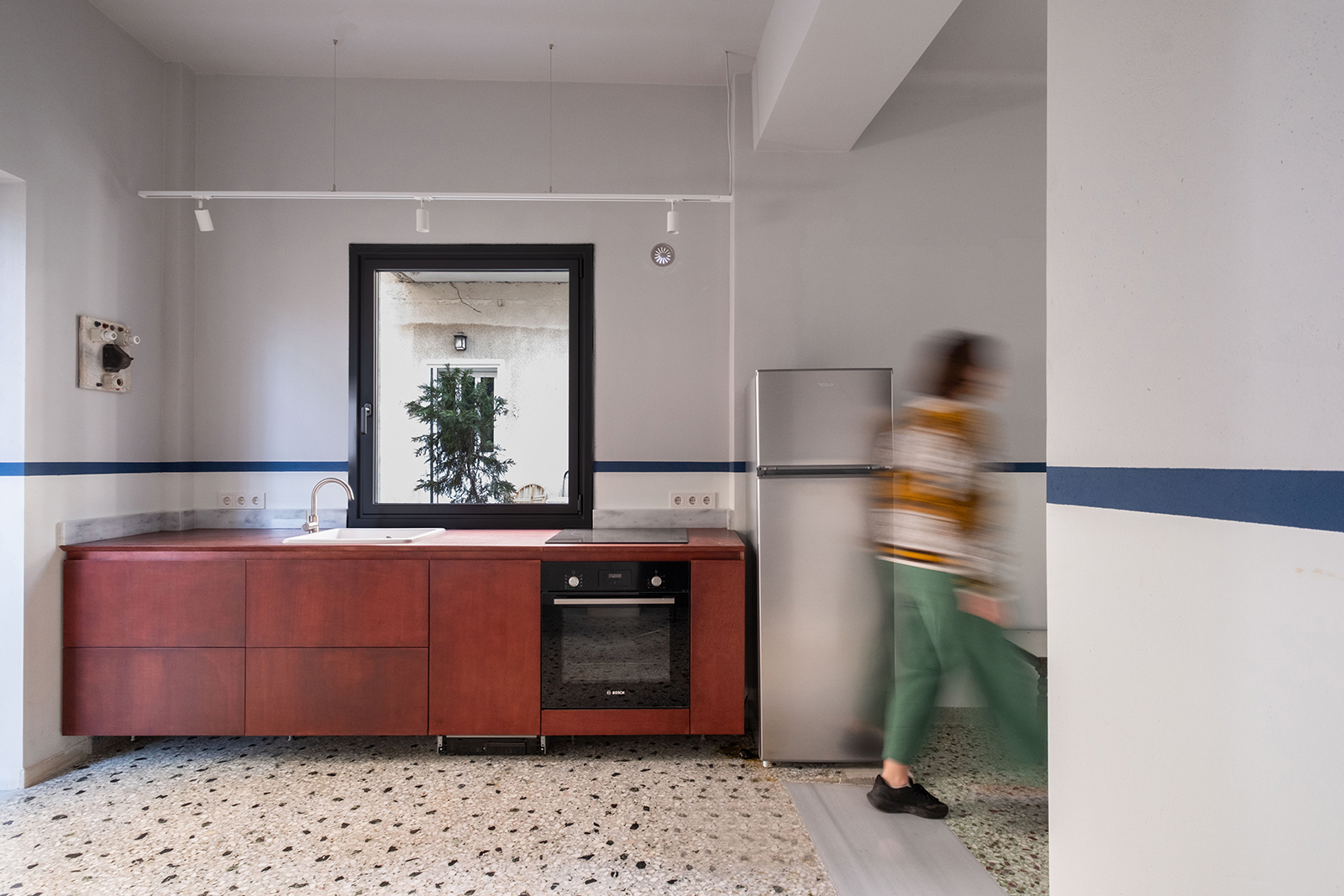
Built in the mid-20th century by a couple from Lesvos, “The House in Its Shadow,” as the architects now call it, brings the Athenian modernism of the anonymous, everyday house back to the forefront of contemporary architectural discourse. How do we inhabit the modern today? How do we relate to its characteristic architectural elements, and what does contemporary restoration mean? By positioning klostra as early bioclimatic tools, bearers of historical continuity, memory, and, in that case, radical reconfiguration, the renovation by Architectural bureau 11 frames contemporary Athenian domesticity within a critical regionalism that seeks to reconnect place, climate, and form (Frampton, 2007).
Read the whole story, here!
Story Twelve
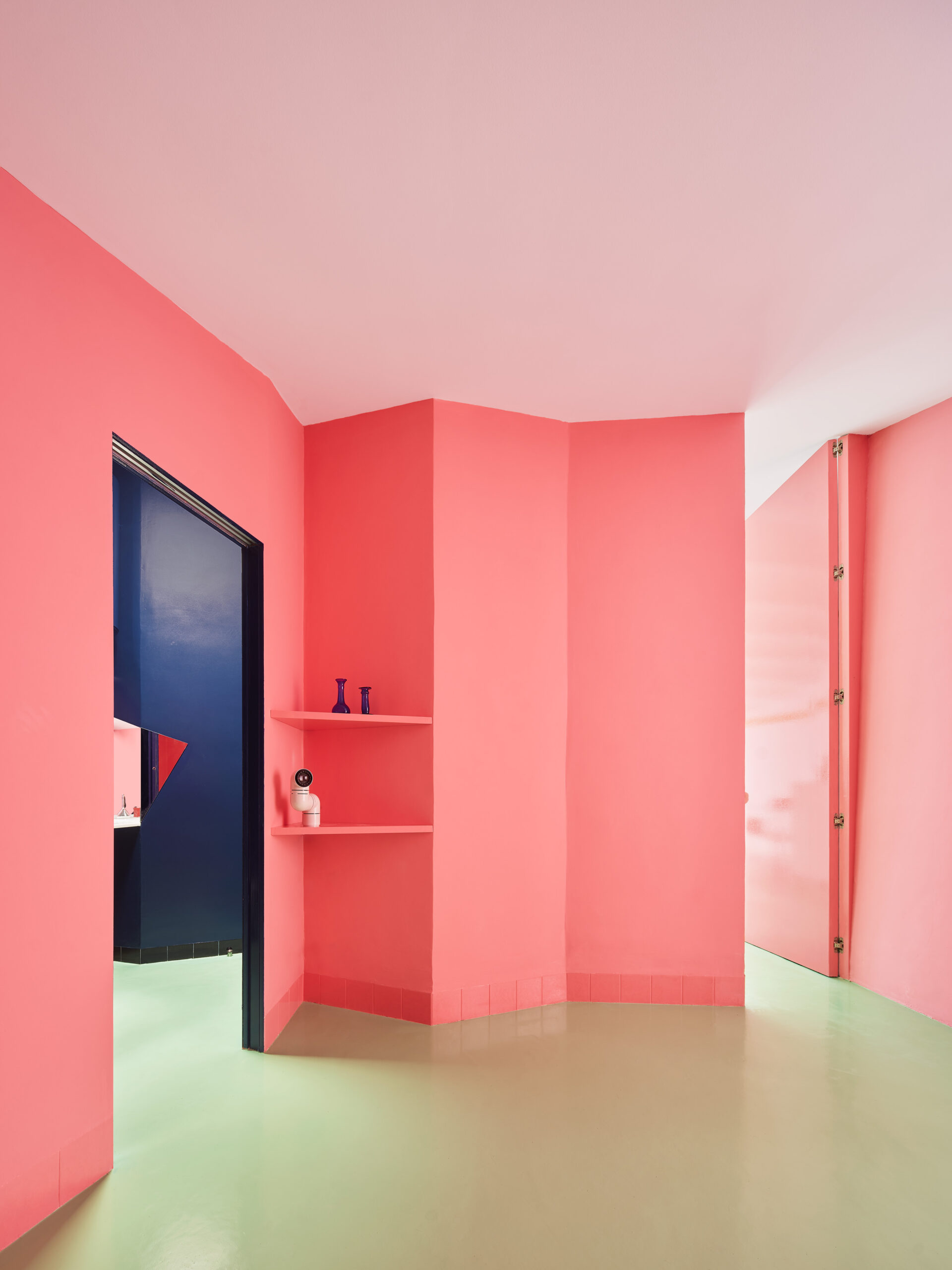
Relámpago House by H3o Architects Celebrates Transcendence and Renewal Through a Folk Legend
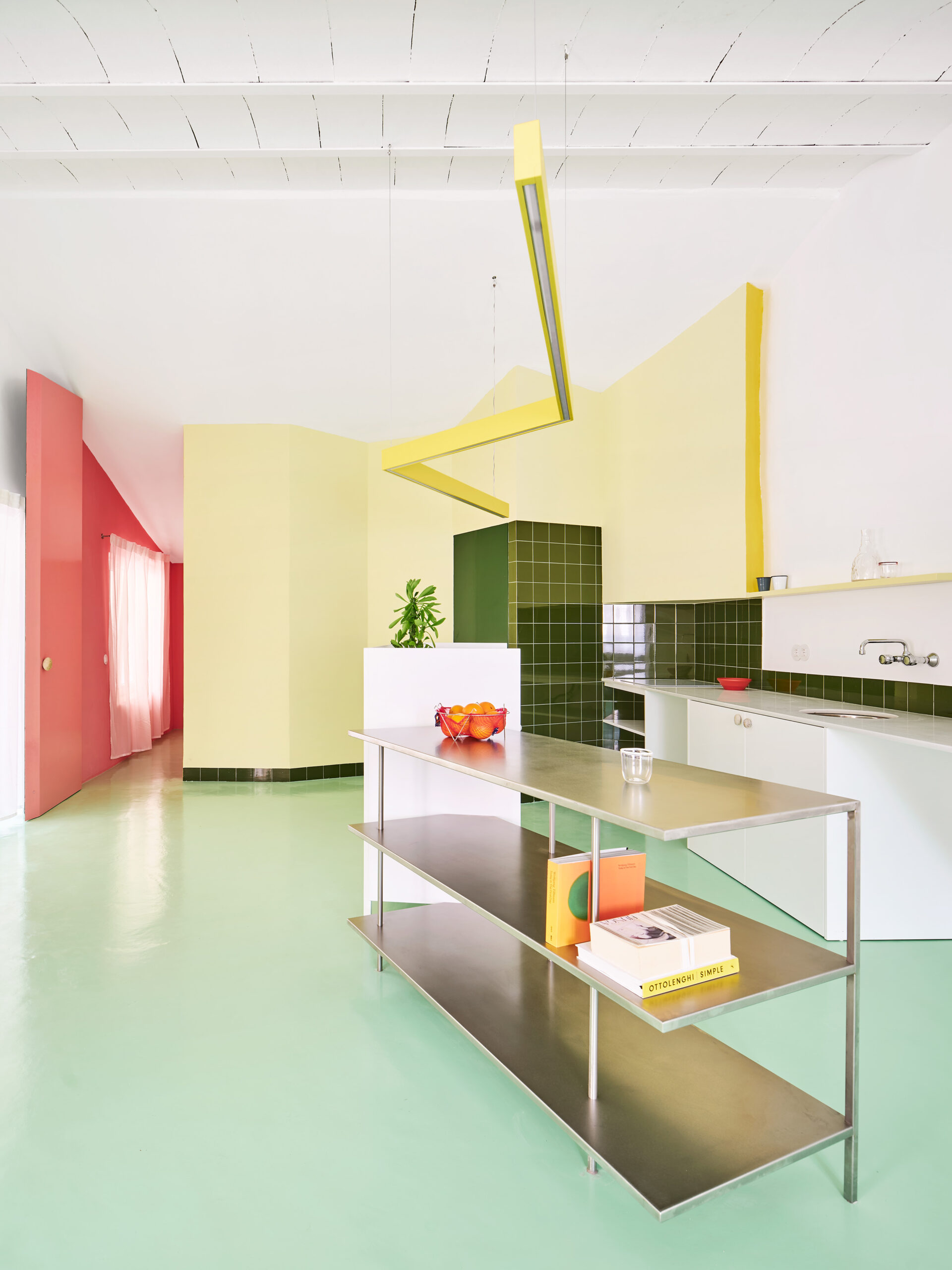
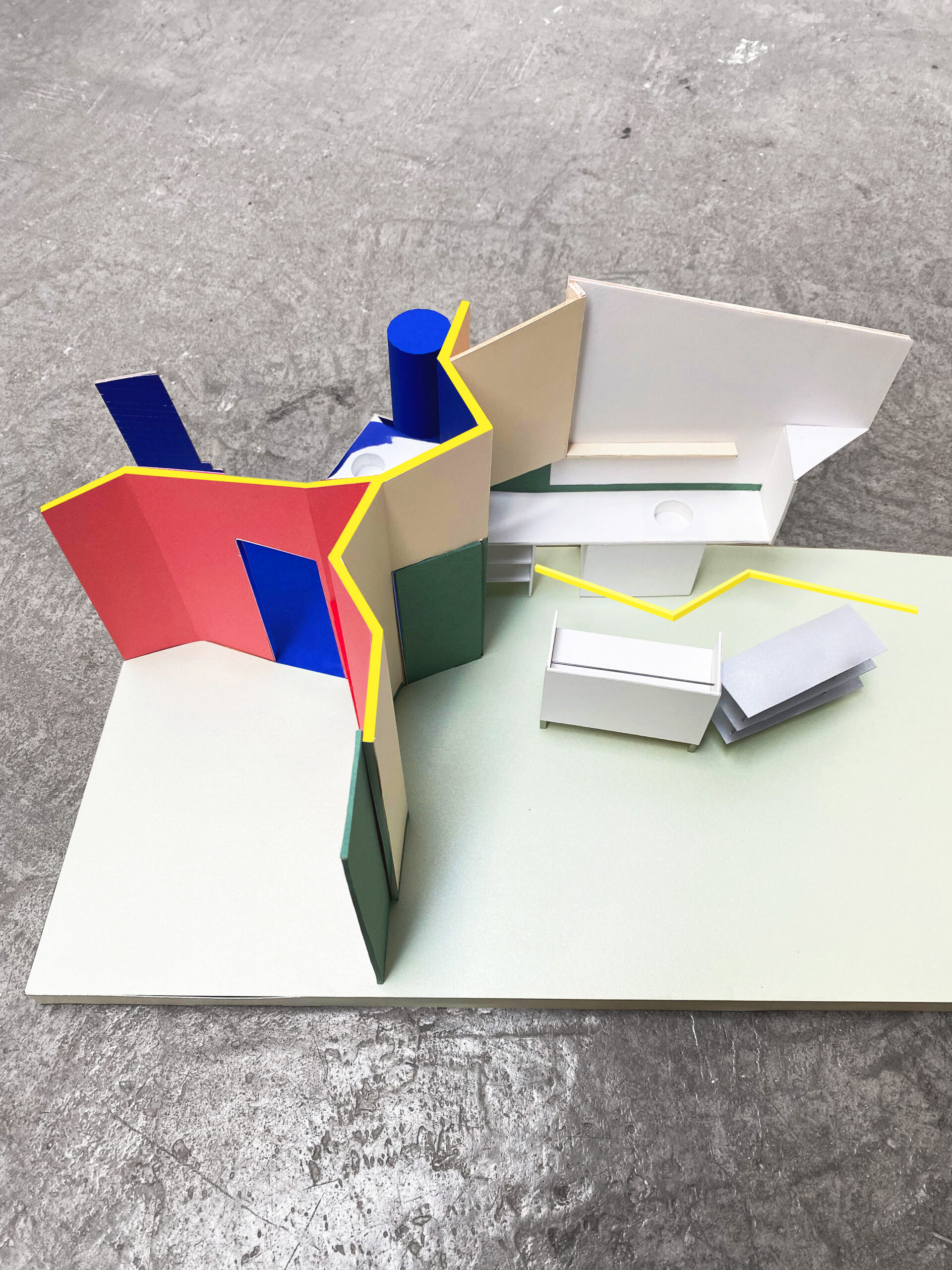
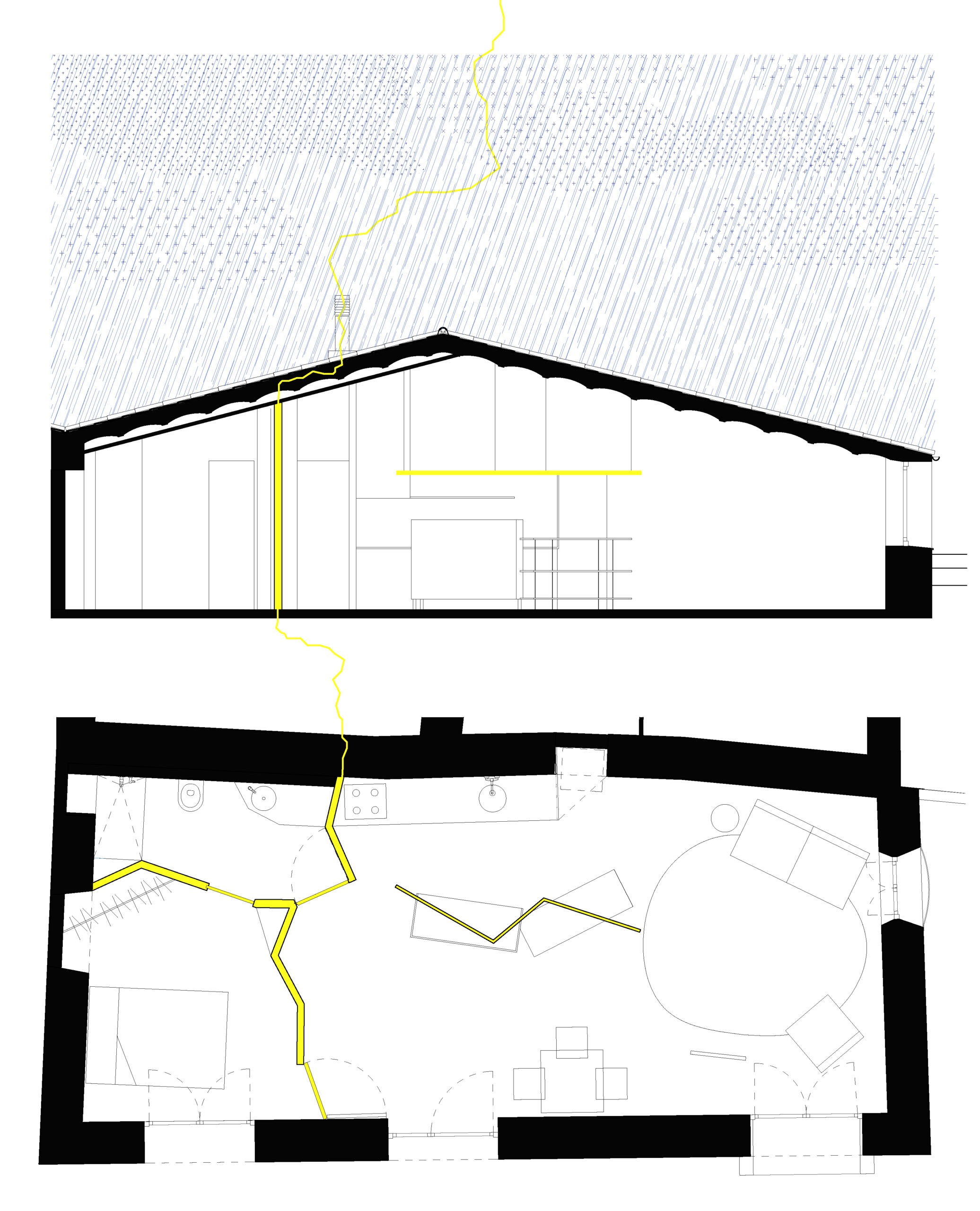
The twelfth episode follows H3o Architects, a young architecture studio based in Barcelona, as they shape Relámpago House in the small town of Sant Just Desvern, Catalonia, as a symbolic space of transcendence, liberation, and renewal, born out of a folk legend directly linked to the local collective consciousness. Zigzagged geometries and vibrant colors, symbolizing life’s joyful dynamism, mark a festive domestic experience for a historian with a passion for creativity and the arts. With the striking power of lightning, this idiosyncratic home advocates for a suspension of ordinary spatial norms and hierarchies, allowing the self to explore repressed parts of itself and practice inner freedom.
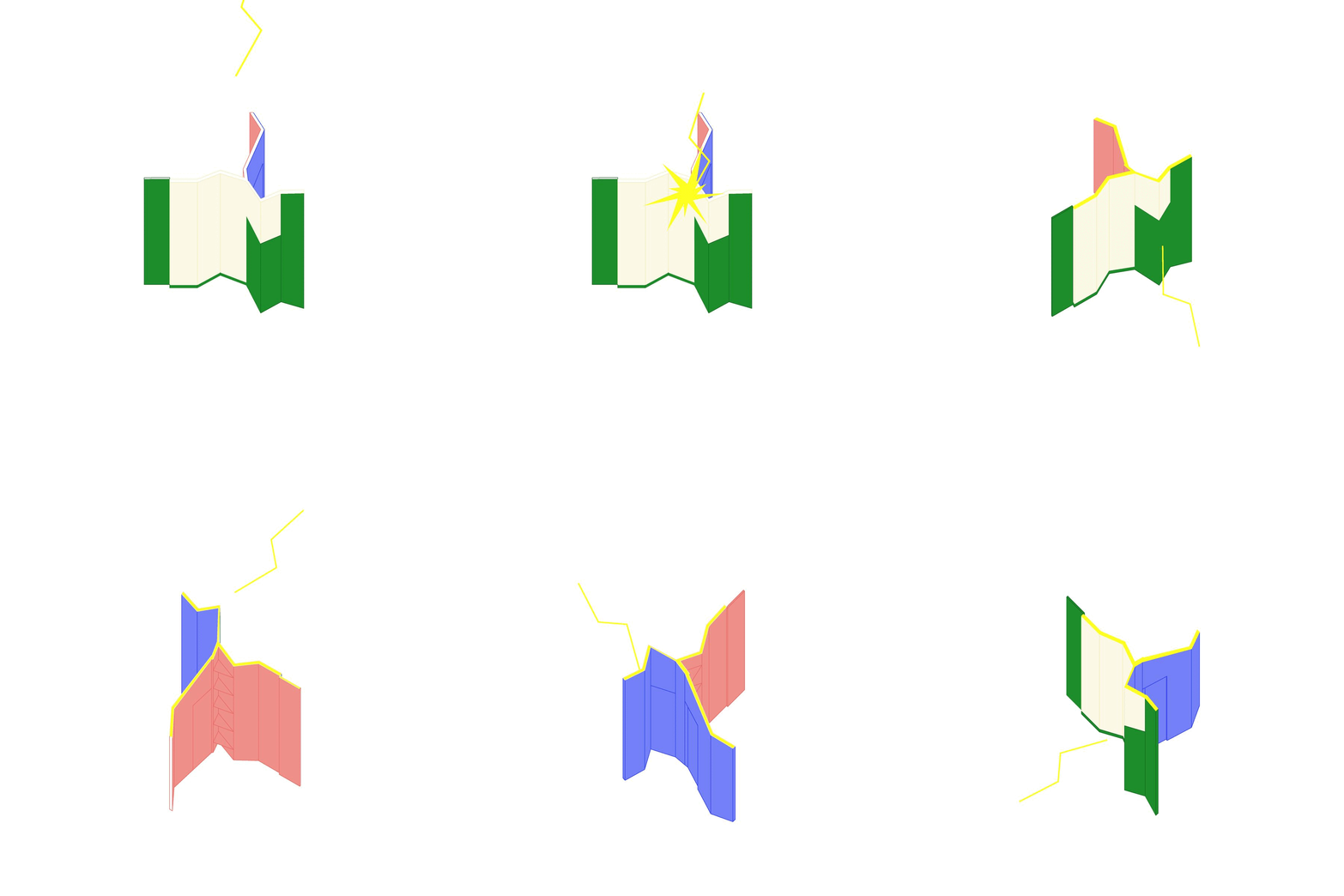
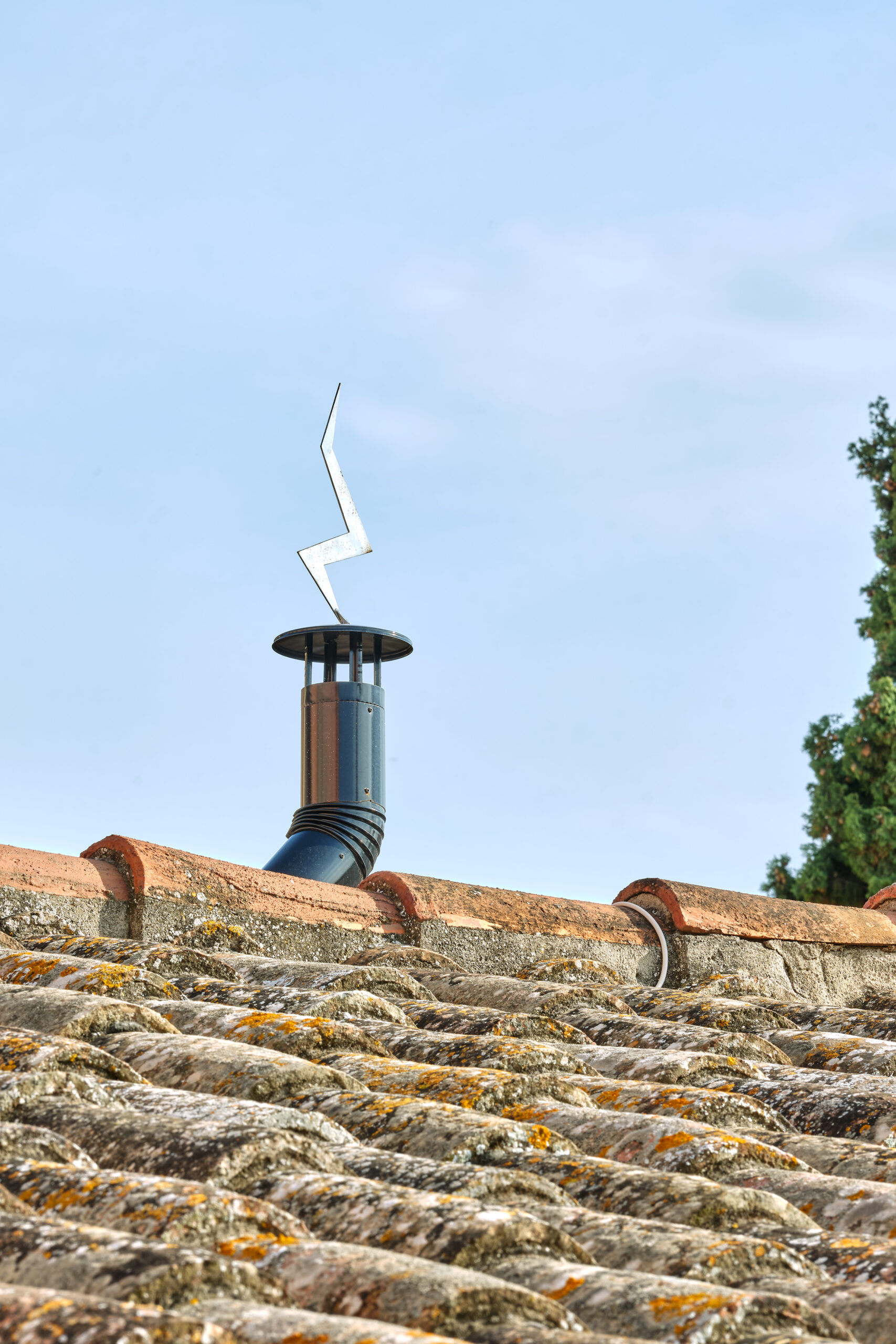
“As if you could choose love, as if love were not the lightning bolt that splits you in two and leaves you stricken in the middle of the courtyard,” writes Julio Cortázar in Hopscotch. Lightning, just like love, is a totally unexpected phenomenon that happens and changes profoundly the shape of things. From this electrical starting point, Adrià Orriols, Joan Gener, and Miquel Ruiz, the founders of H3o Architects, renovated a modest 55 m² old barn situated within the historic rural estate Can Cardona in the small town of Sant Just Desvern on the outskirts of Barcelona, inspired by the legend of the lightning that struck the traditional Catalan farmhouse many years ago.
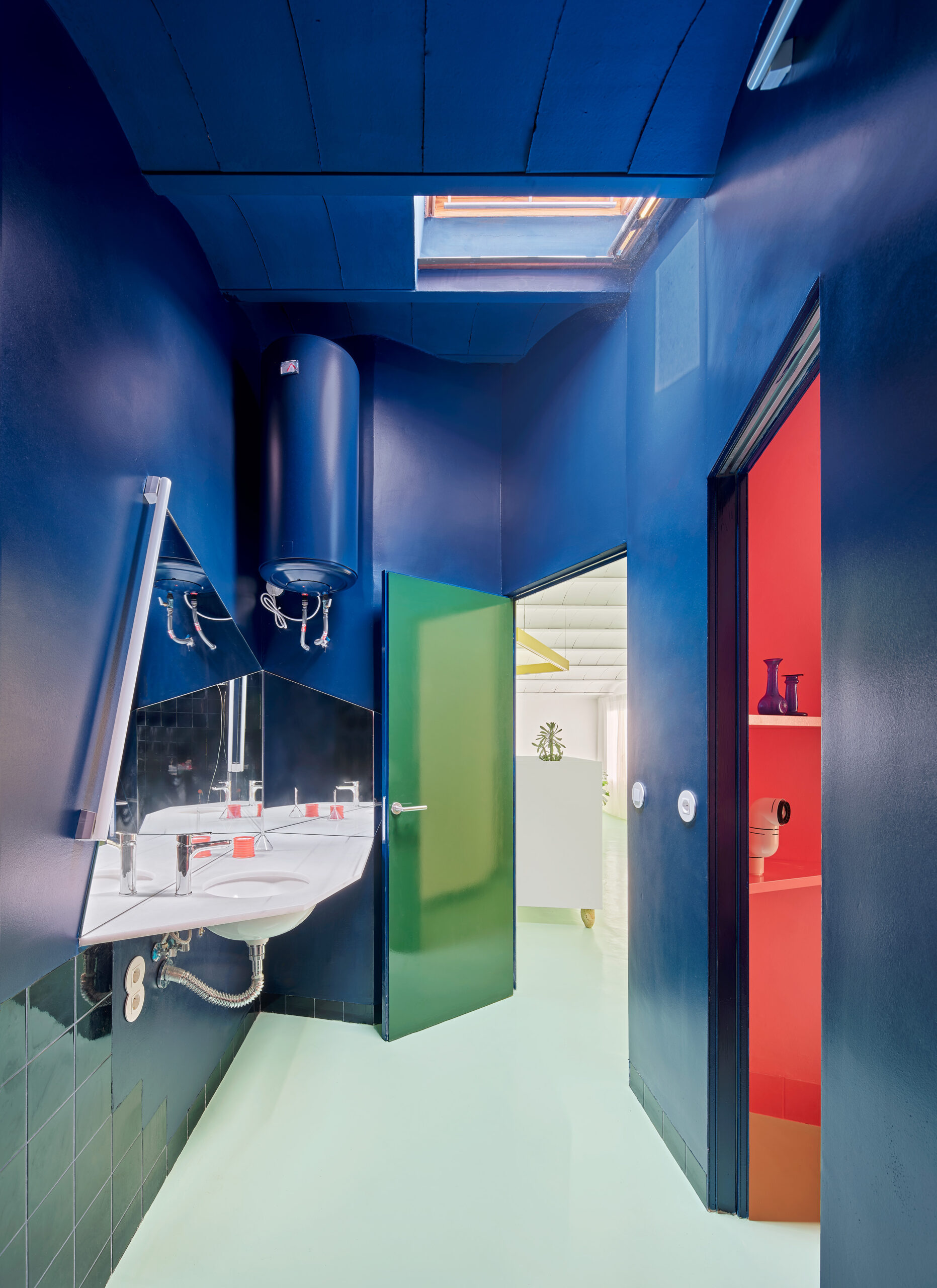
The concept and form of lightning as an abrupt encounter that reorganizes relationships between space, atmosphere, and meaning reveal architecture as a field of imaginative energies rather than a fixed object. Relámpago, the Spanish word for lightning, forms a home rooted in local oral history, collective memory, and myth. Transcending the conventional notion of house, this joyful narrative aims to introduce a theatrical version of domesticity where everyday life playfully unfolds.
Read the whole story, here!
Story Thirteen
Interwoven Voids by Di Architecture Studio Is A House That Is Also a Home
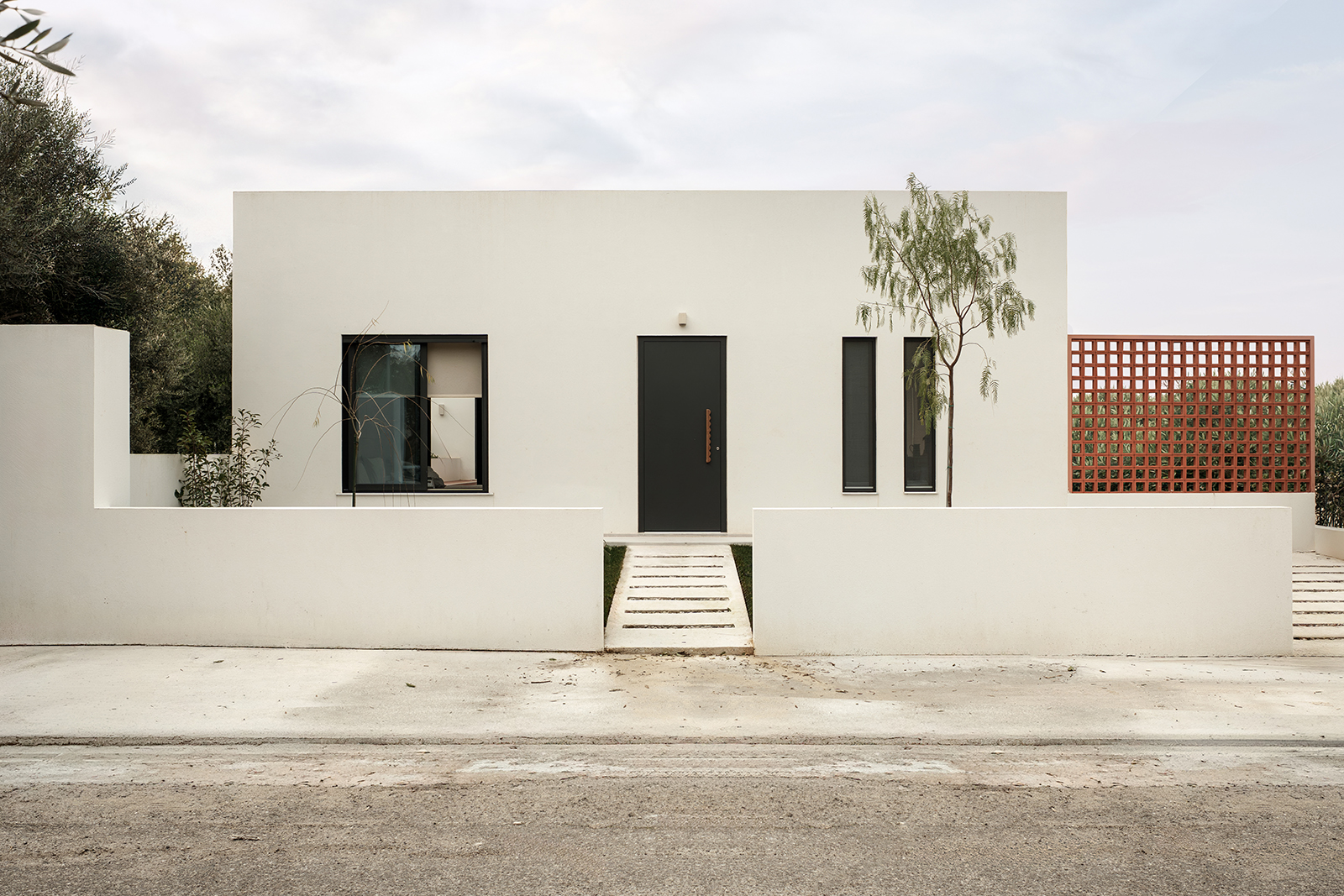
Martina Diamantopoulou: “Perhaps we need to design not only for a given way of life, but also for the possibility of its transformation.”
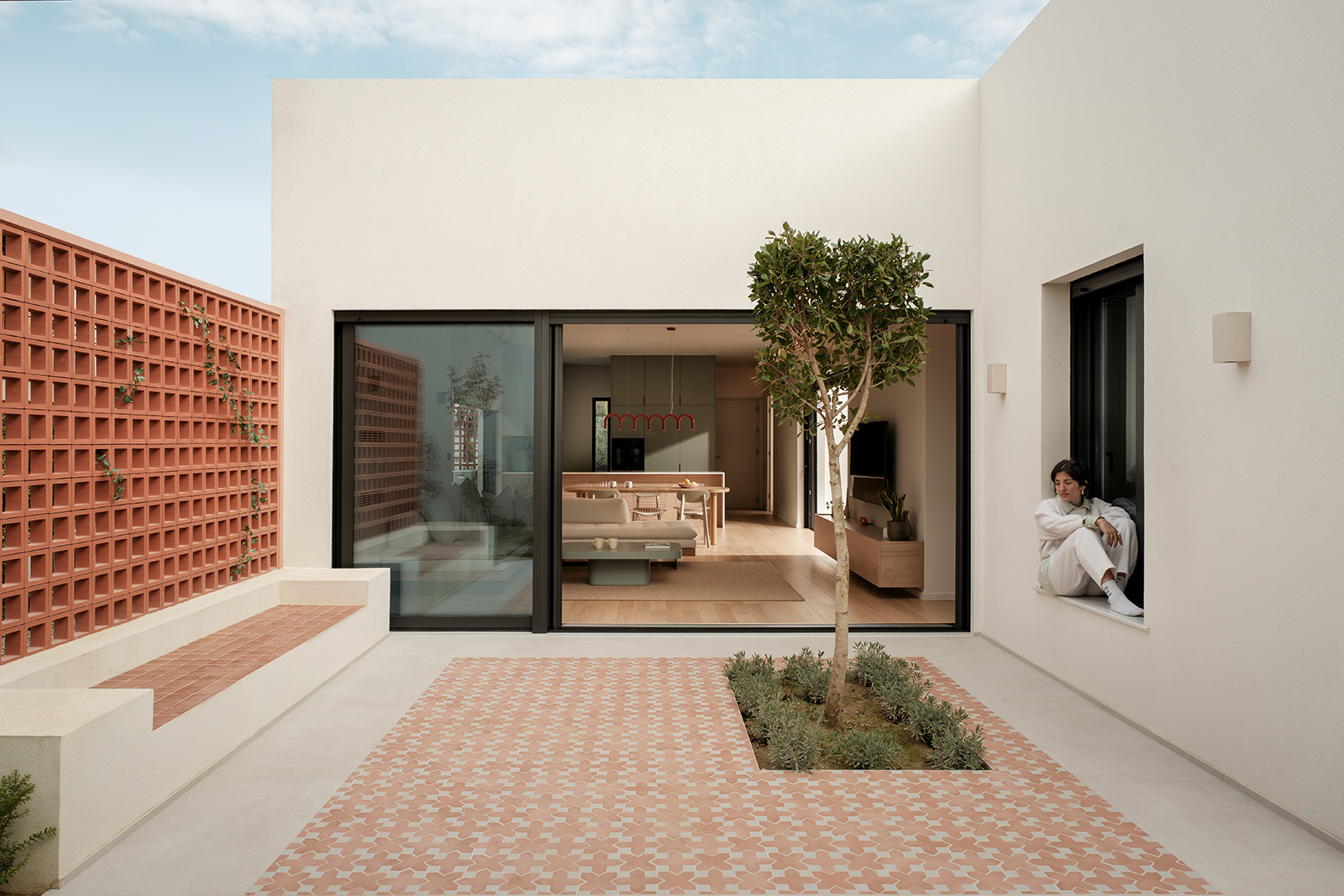
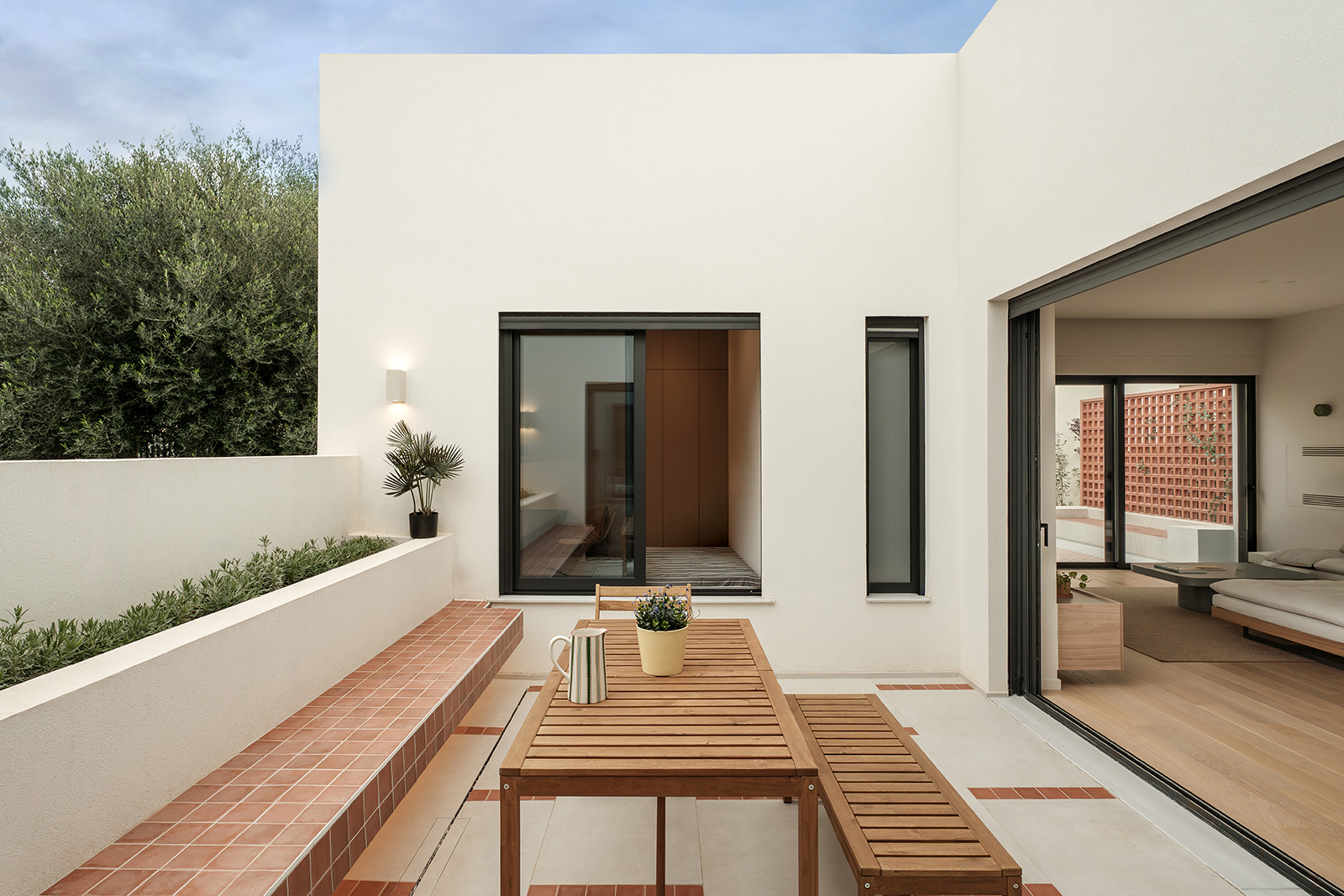
In the 13th episode, Archisearch’s editor-in-chief, Melina Arvaniti-Pollatou, speaks with Martina Diamantopoulou, founder of DI Architecture Studio, about the Interwoven Voids residence in Patras—a house that manages to be, simultaneously, a home: a dense domestic experience rooted in Mediterranean materiality, the bioclimatic function of the patio, and Greek modernism.
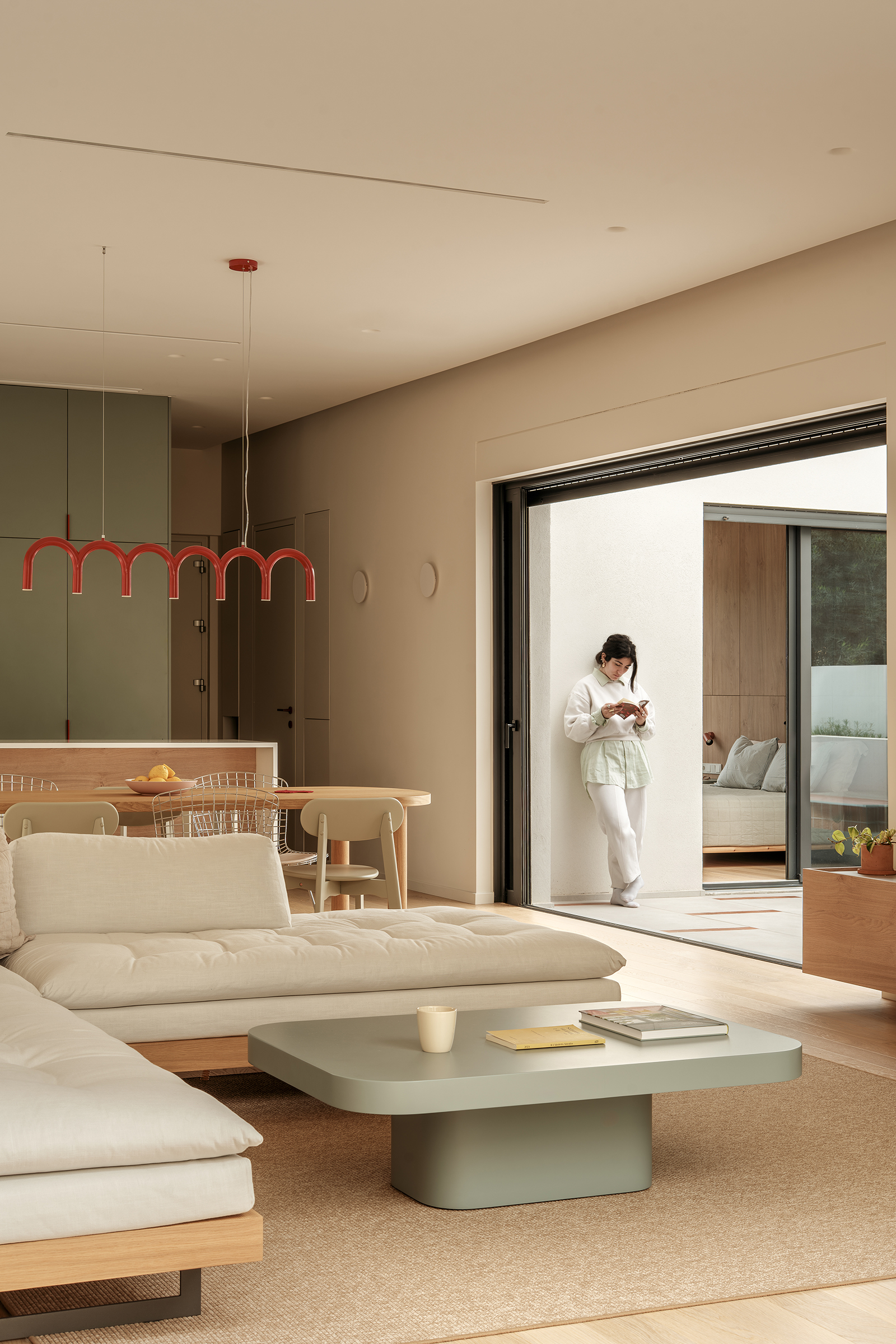
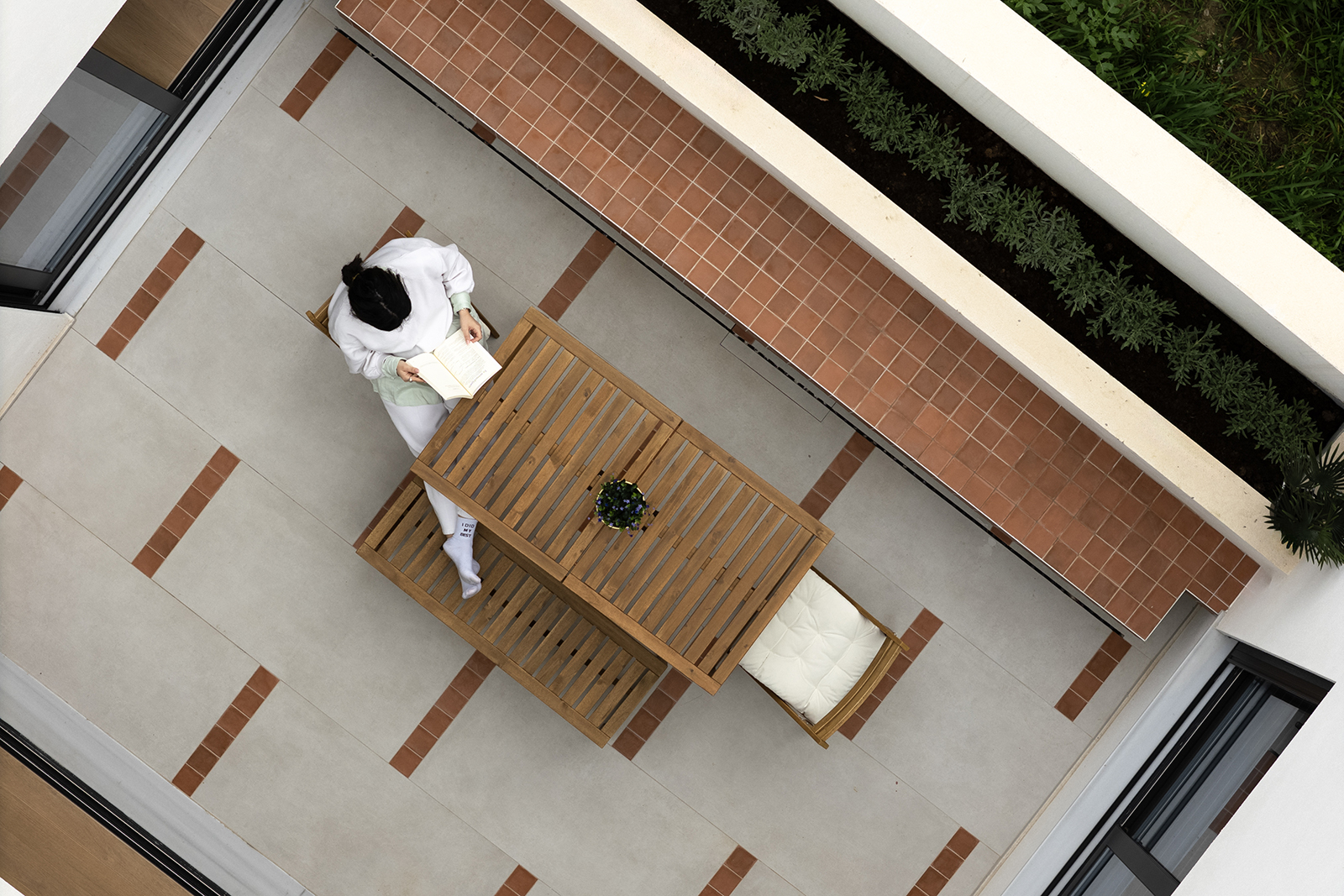
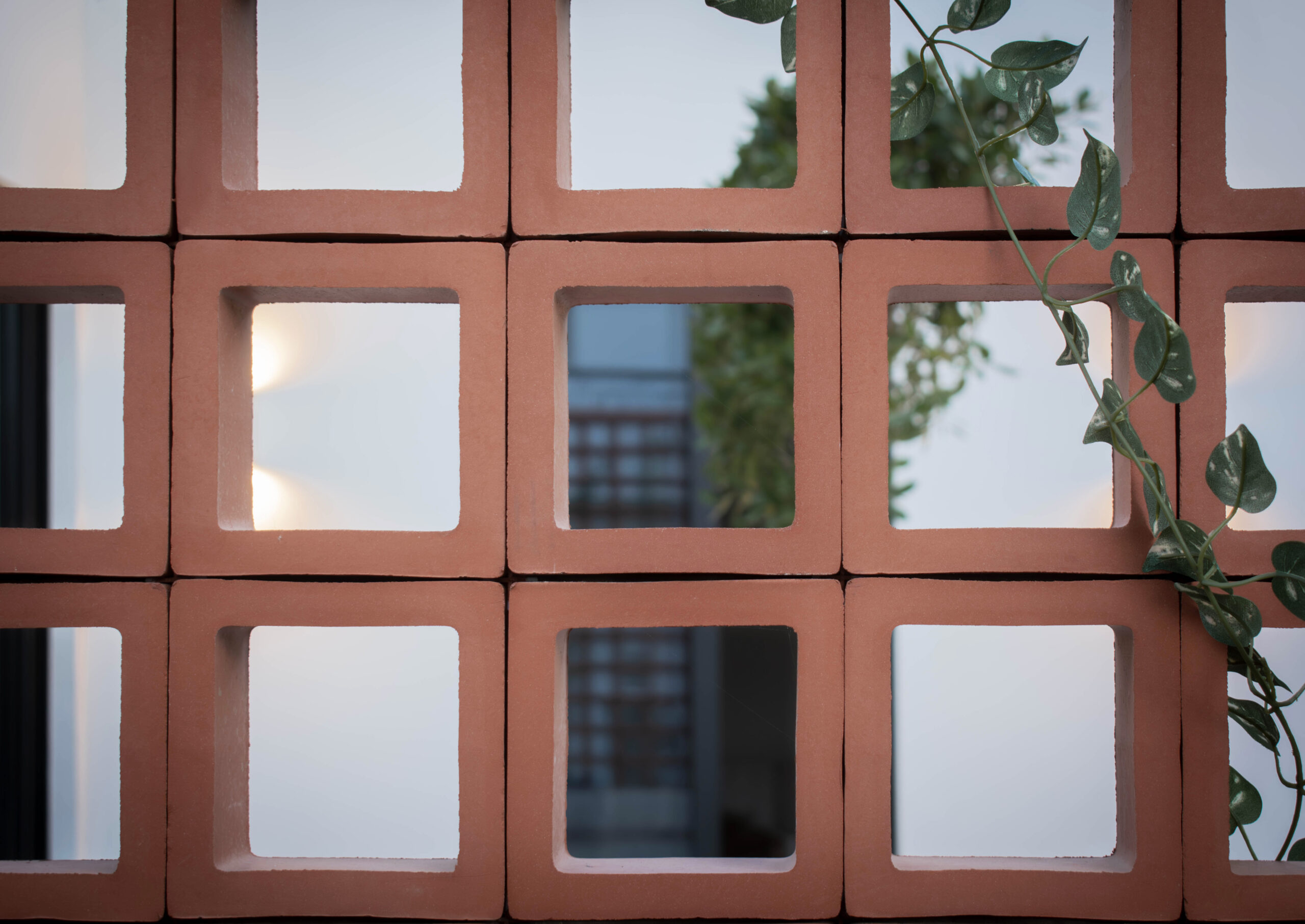
Every new house is a fresh beginning, where architecture artfully shapes a harmonious dialogue with the natural elements of the universe. Following the famous phrase by Le Corbusier, describing architecture as “the magnificent play of volumes in light,” the Interwoven Voids single-family house in Patras unfolds in correspondence with its surrounding landscape. Within the elongated plot, the house sits as a white, single-storey volume under the sun—a fluid dwelling experience, carved through the interrelation of void and solid, light and shadow, indoor and outdoor ecologies.
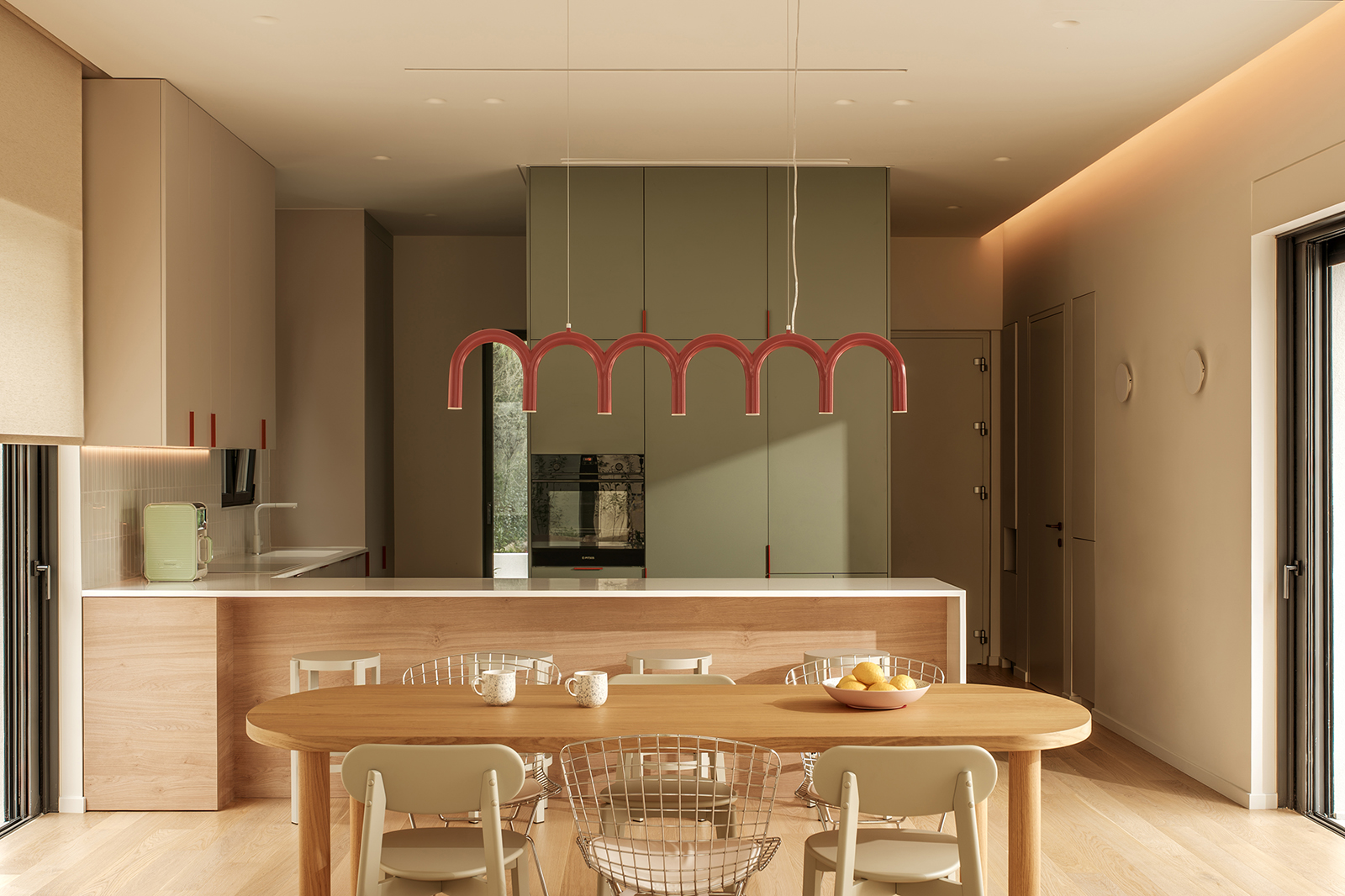
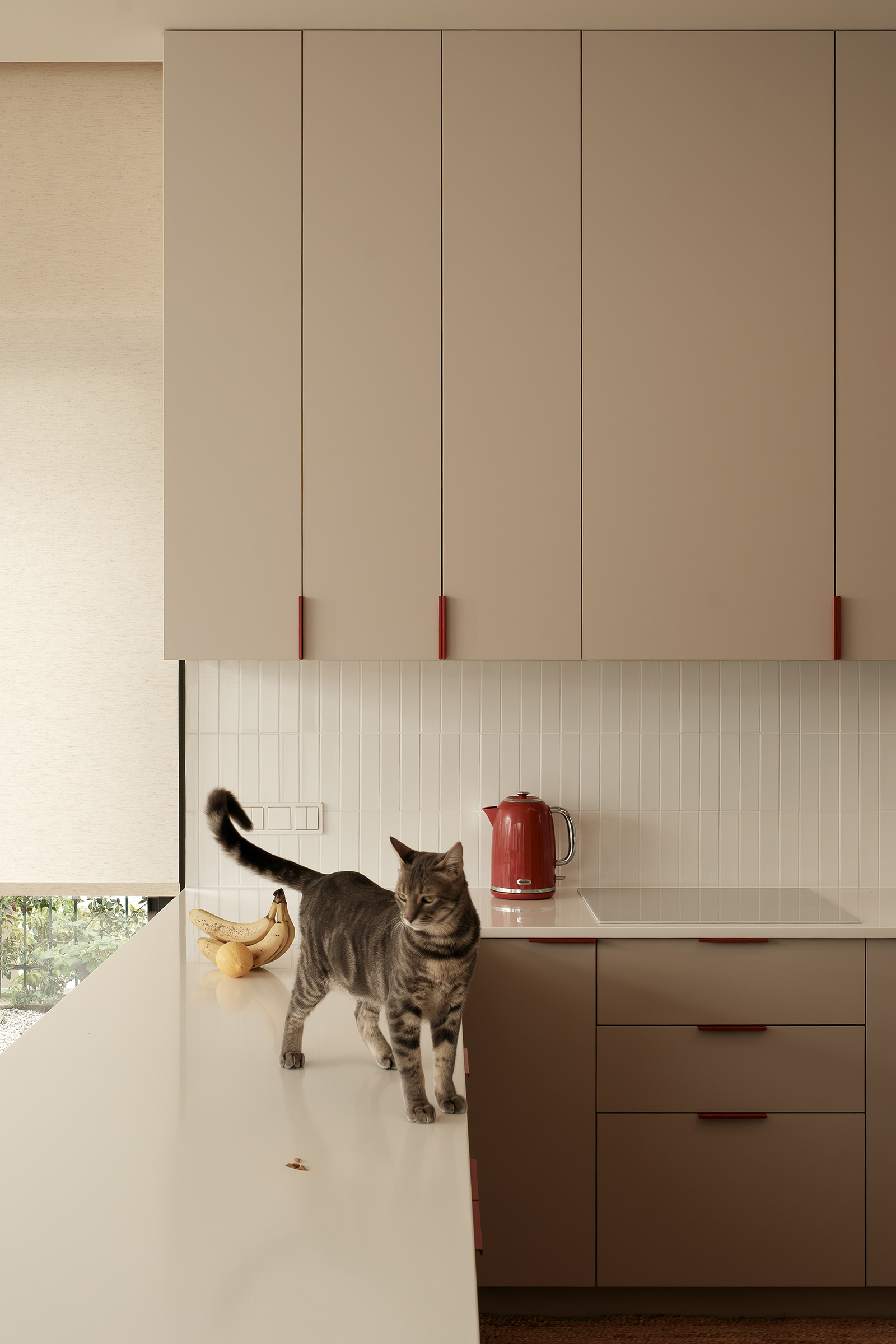
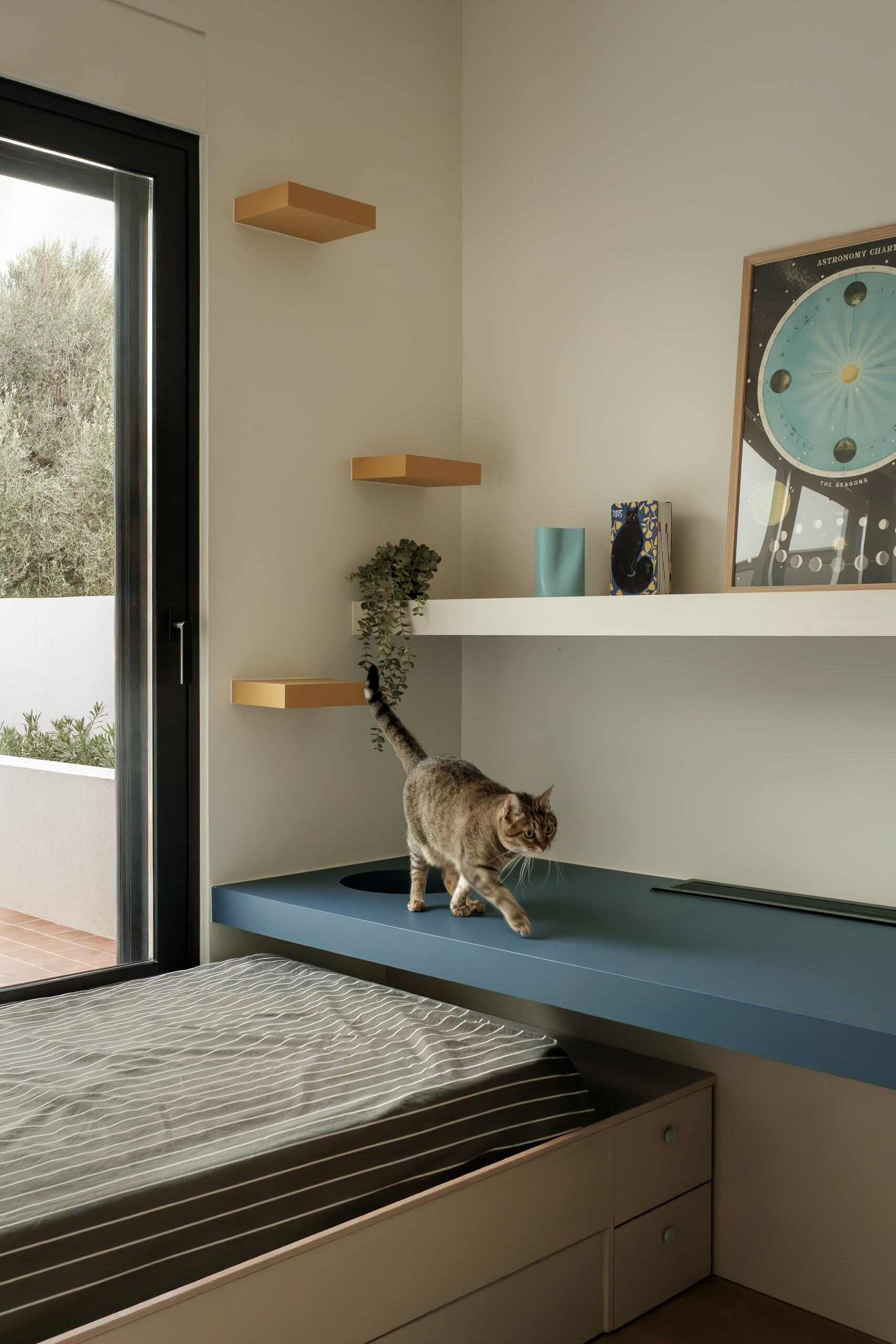
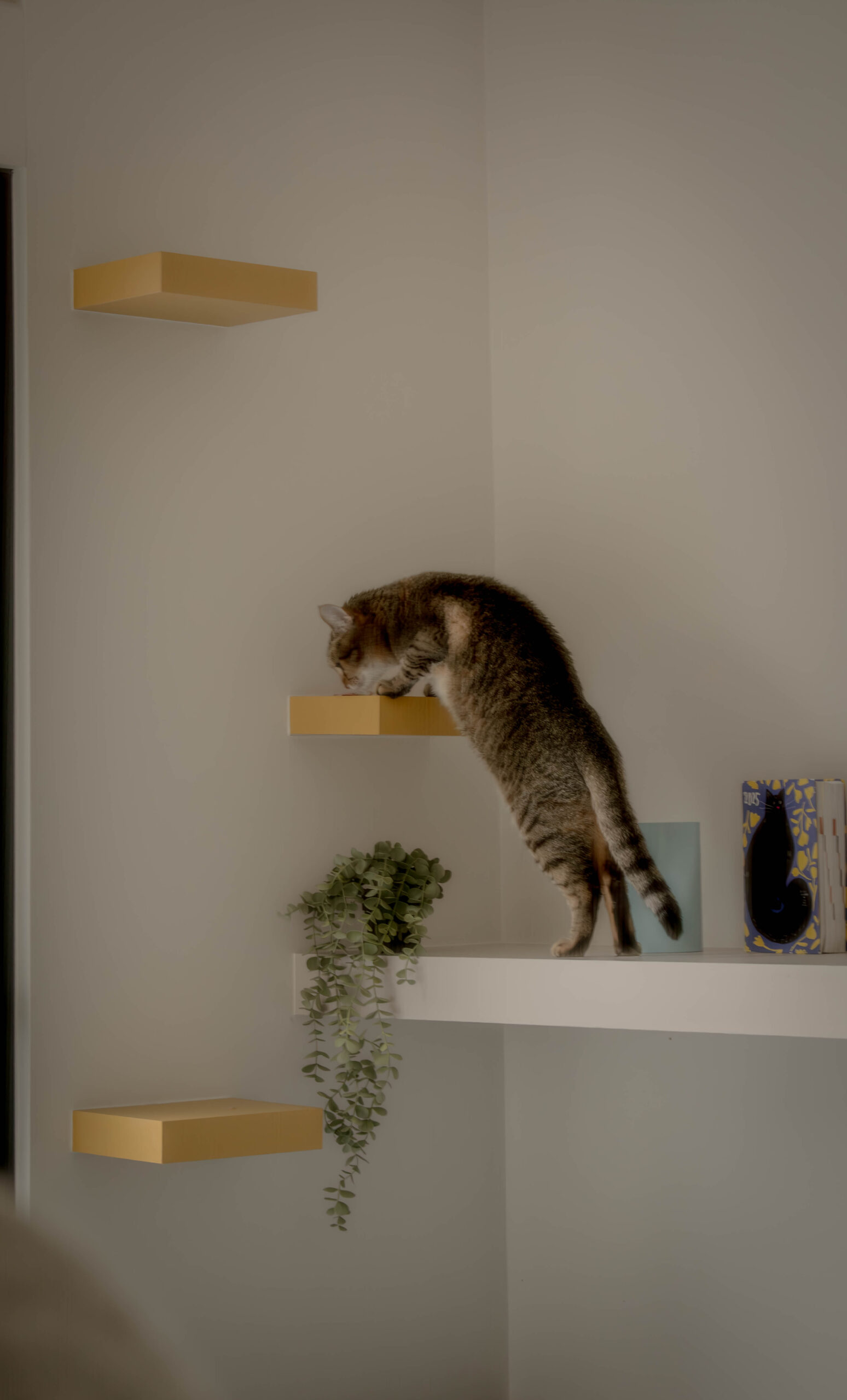
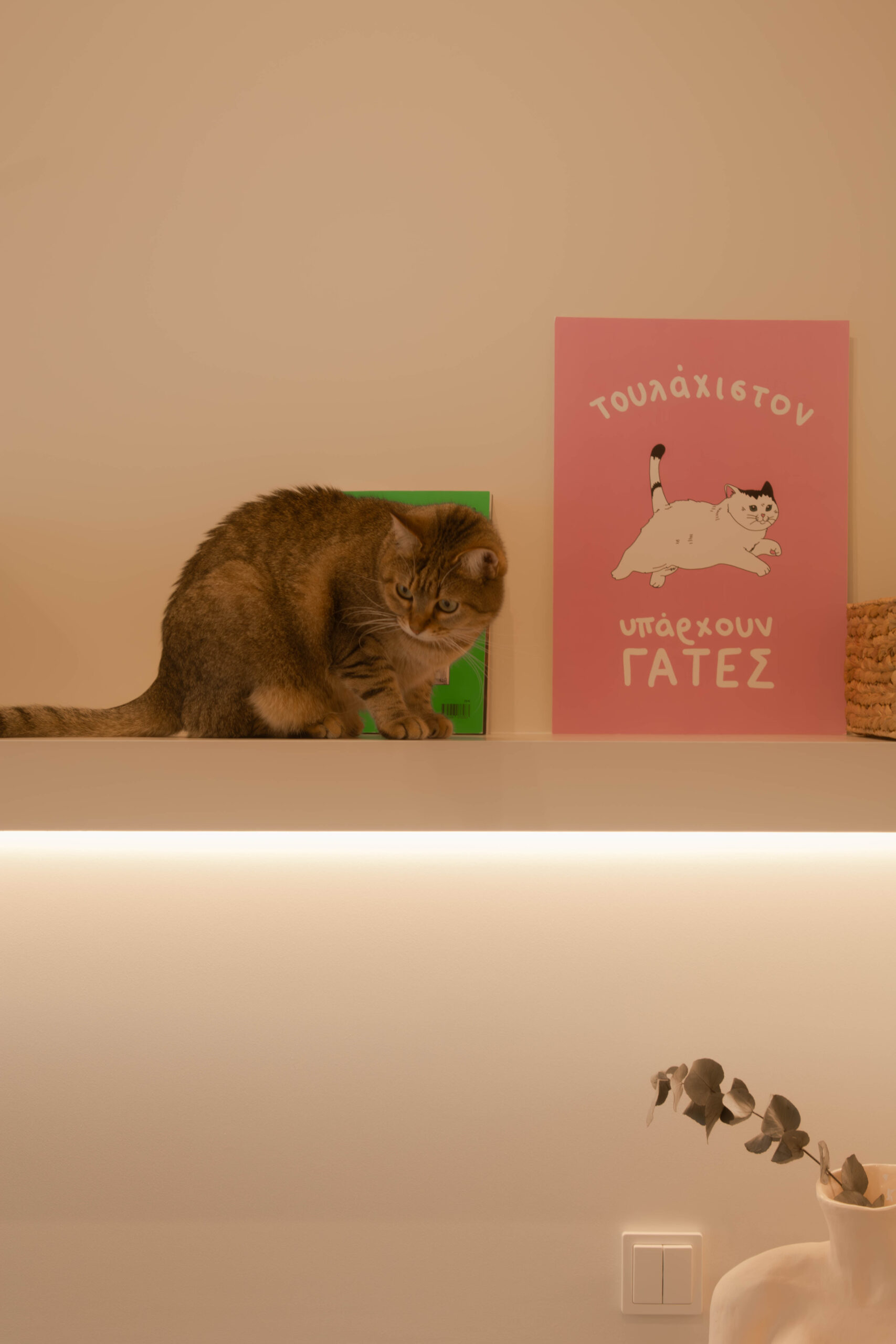
Design references from Greek modernism and the handcrafted materiality of the Mediterranean lend the residence a disarming simplicity and the unpretentious appeal of the familiar. Ceramic lattice screens and cotto tiles, windows as thresholds, shaded patios, rooms, and courtyards meet elevated walkways for cats, weaving together the domestic experience of a home created to shelter the shared desire of two people to build a life together.
Read the whole story, here!
Story Fourteen
The House and the Portals by Studio Nada is a Material Archive in Rural Bulgaria
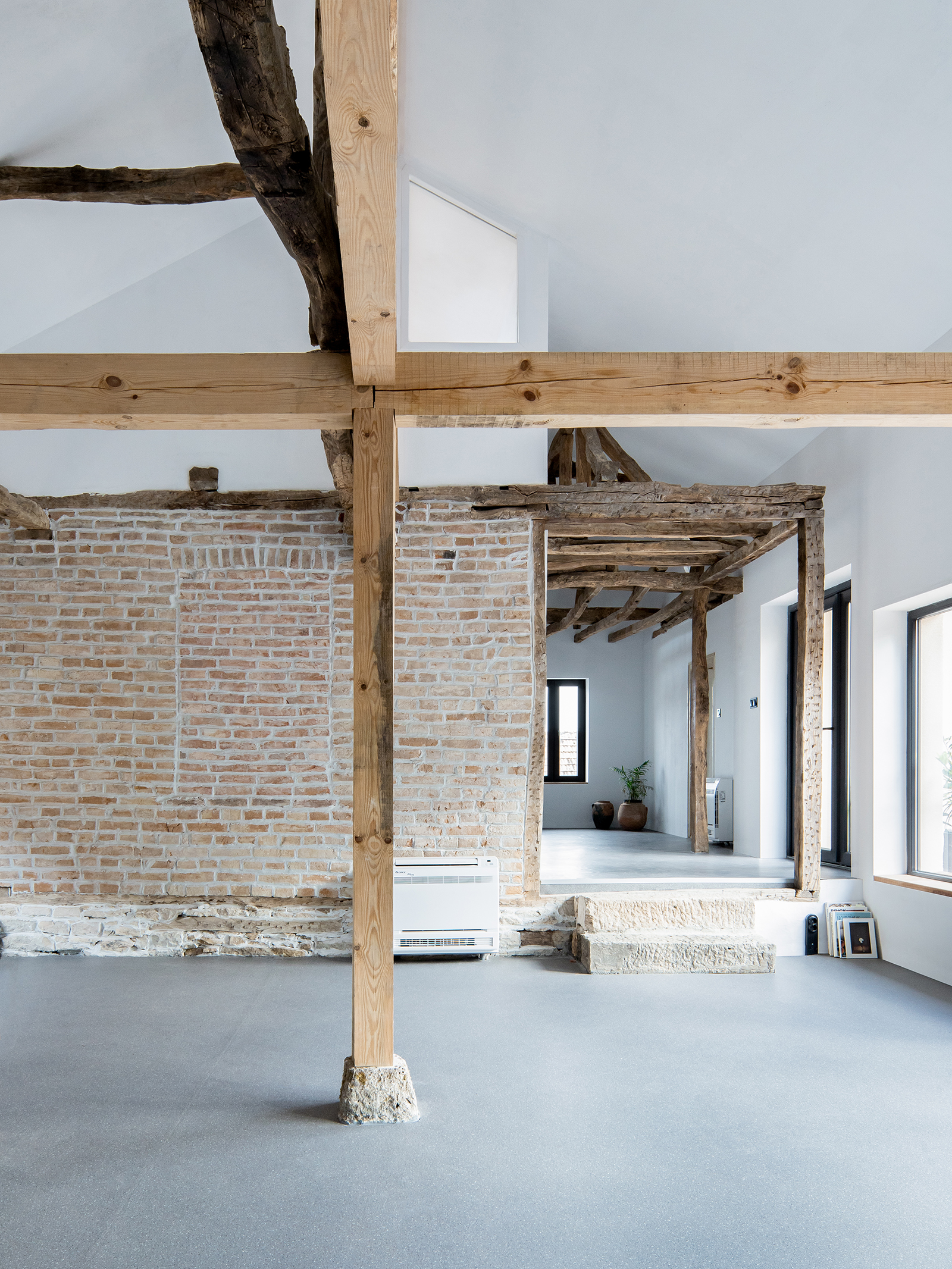
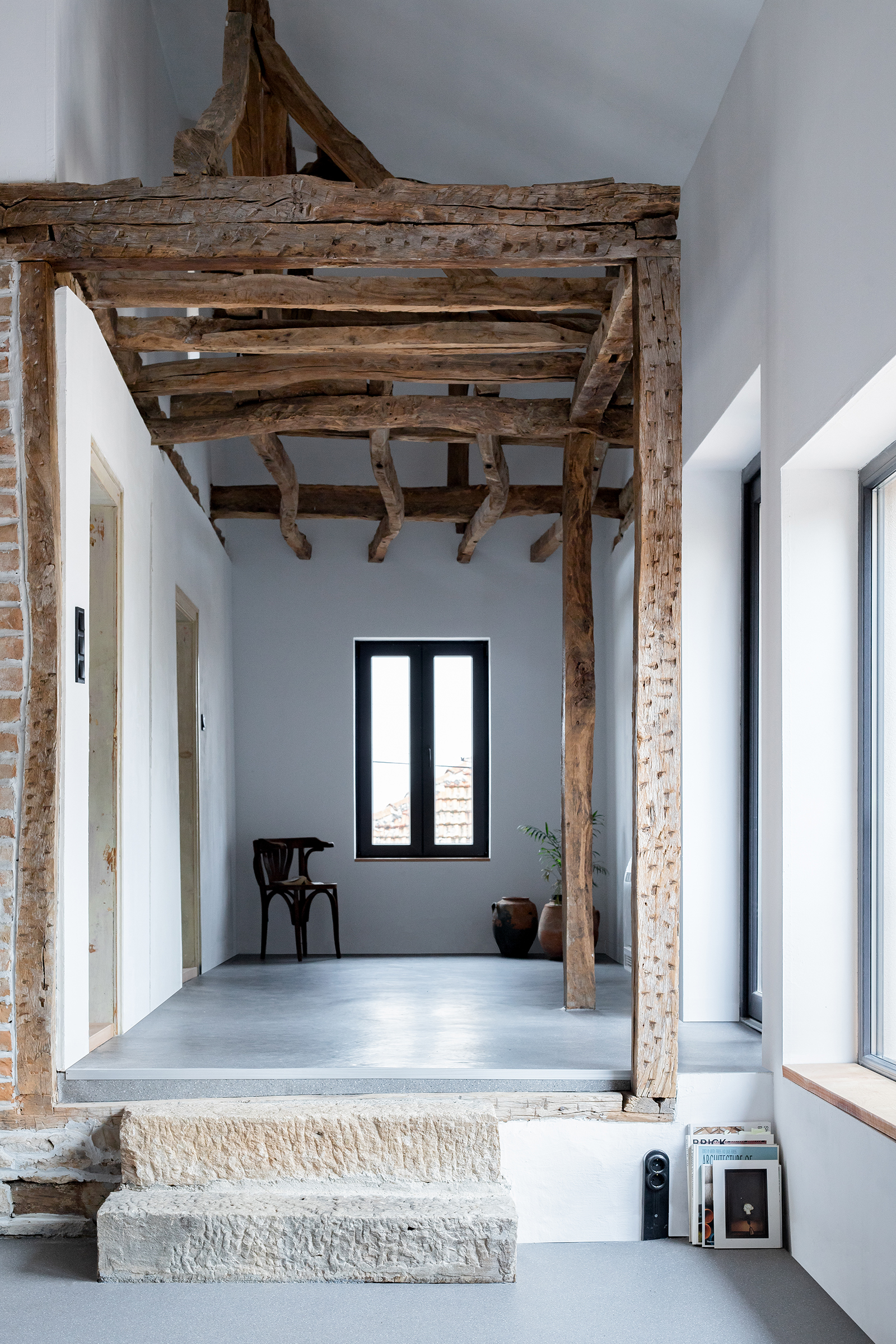
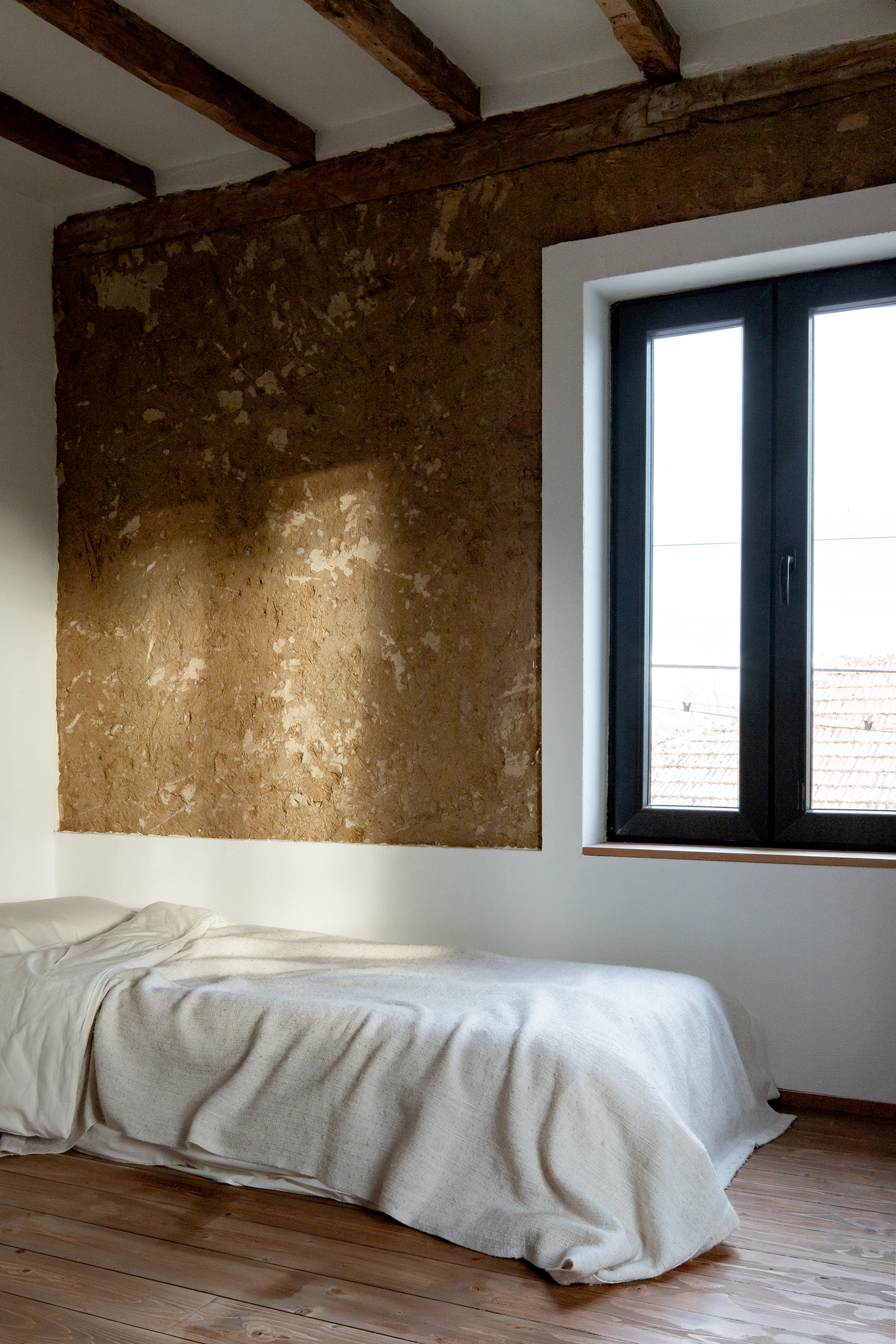
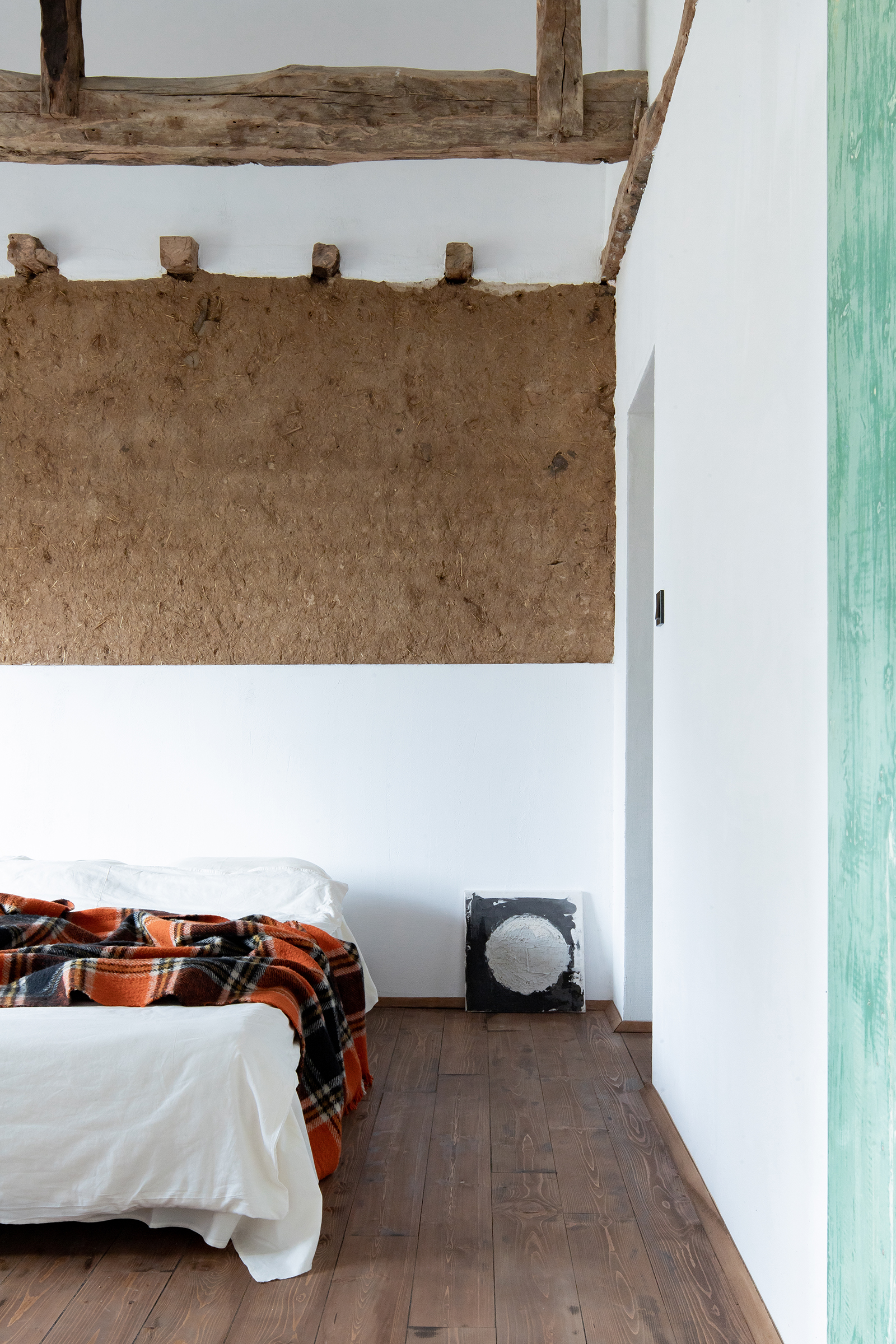
The fourteenth episode follows Studio Nada as it reinterprets a rural house, dismantling the myth of urban domesticity and creating a home where past and present coexist. The project explores the tension between contemporary living and the preservation of architectural memory, revealing the layered history embedded in the original structure. Composed of adobe and clay bricks, local stone, and irregular timber, the house embodies a form of unintentional sustainability and “honest” construction logic shaped over generations. Exposed fragments of walls and ceilings act as portals—thresholds of memory—where textures, techniques, and traces of past inhabitation are simultaneously preserved, exhibited, and reactivated.
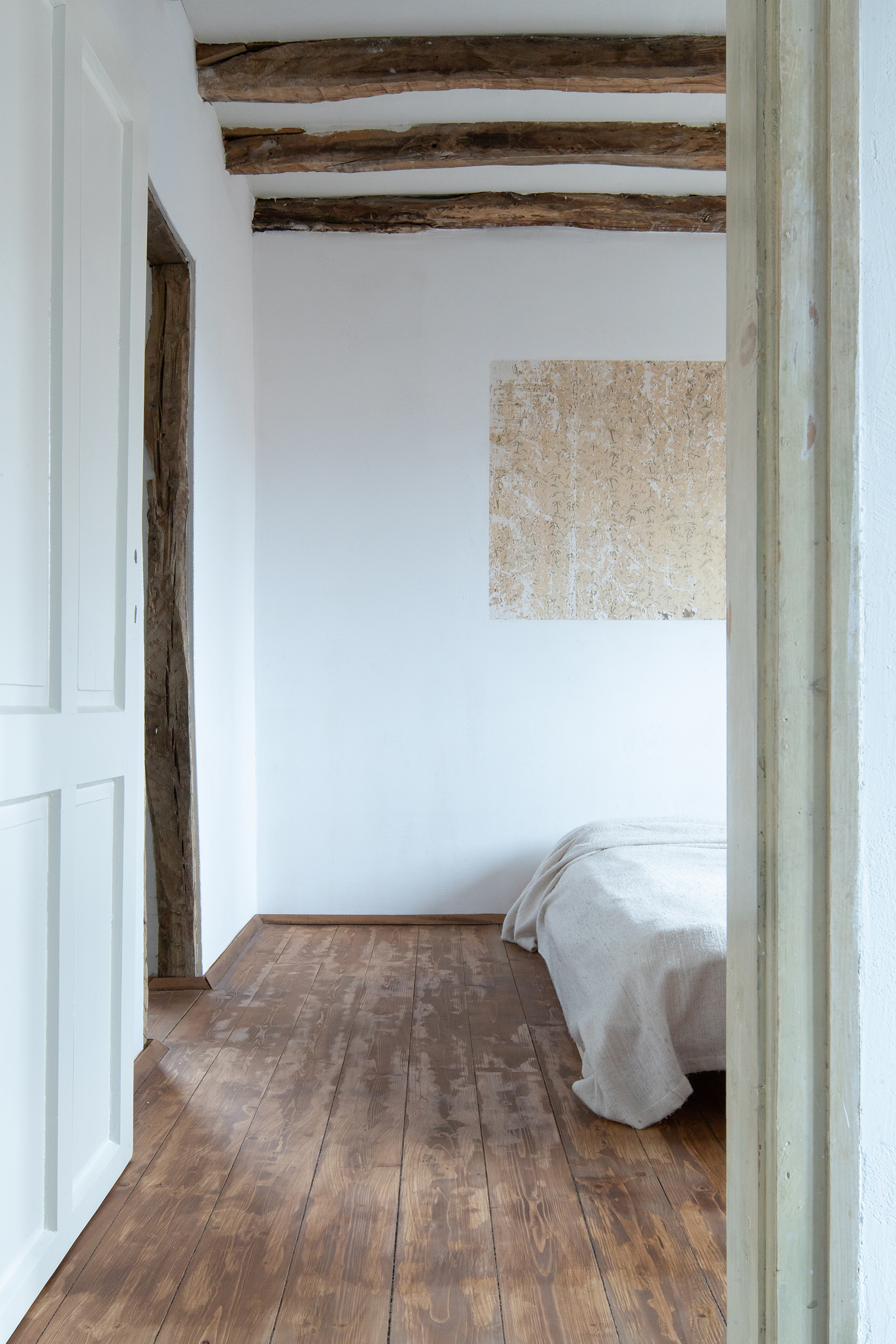
These moments frame the house as a living archive, in which contemporary life unfolds within the enduring intelligence of rural craft. Rooted in local knowledge, craftsmanship mediates the dialogue between materiality and time, lending precision and cultural continuity. Architecture here resists erasure, instead rendering temporality visible through thickened, layered, and unresolved interventions. In a fast-paced, capitalist world where domesticity is too often conflated with urbanity, The House and the Portals emerges as a domestic landscape where preservation, adaptation, and everyday inhabitation converge, redefining the home as an evolving archive shaped by memory, material intelligence, and the quiet persistence of rural life.
Read the whole story, here!
Story Fifteen
Through Urban Mining, Alexander and David Brodsky Shape the Unfinished House in Tbilisi.
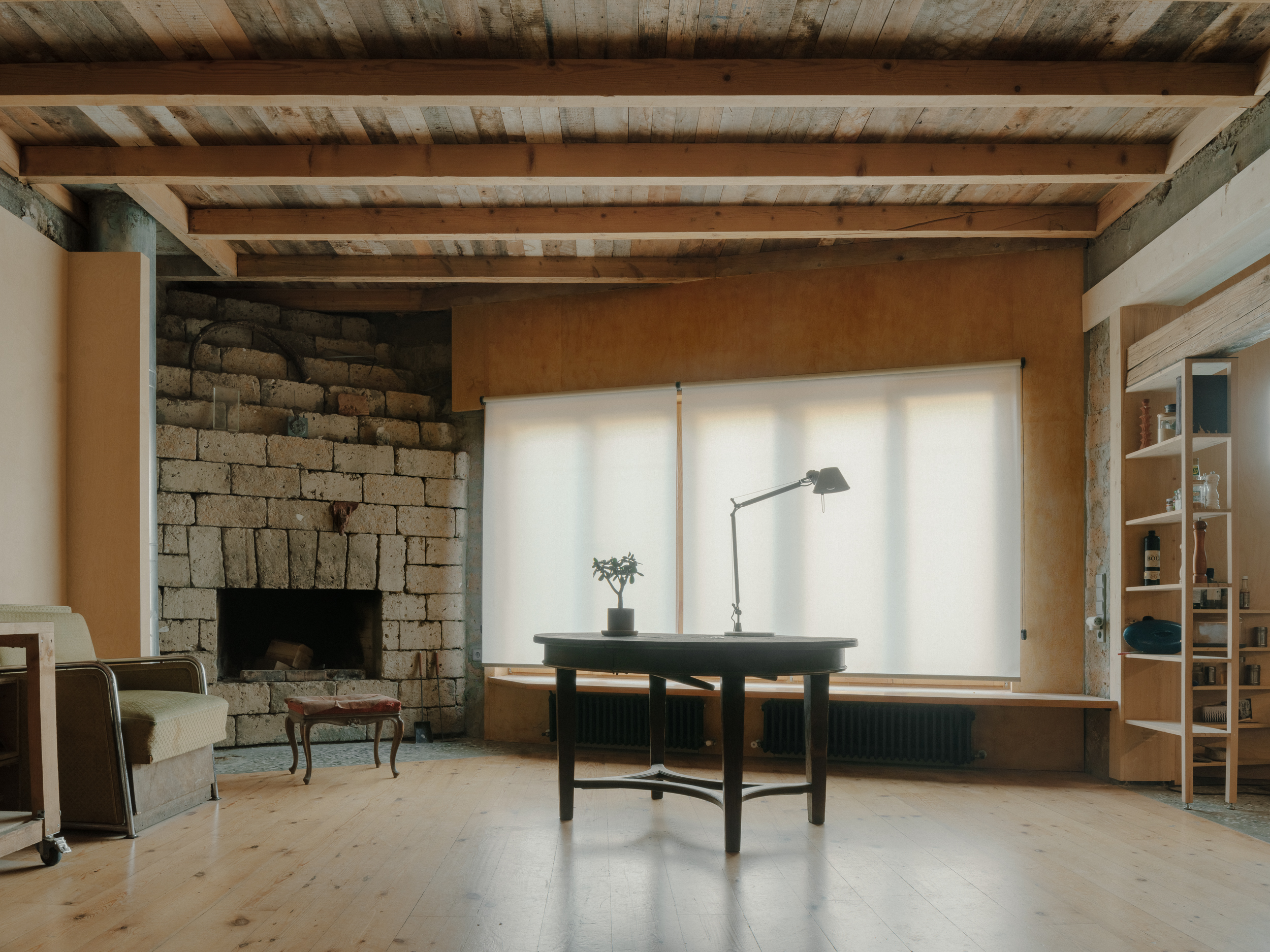
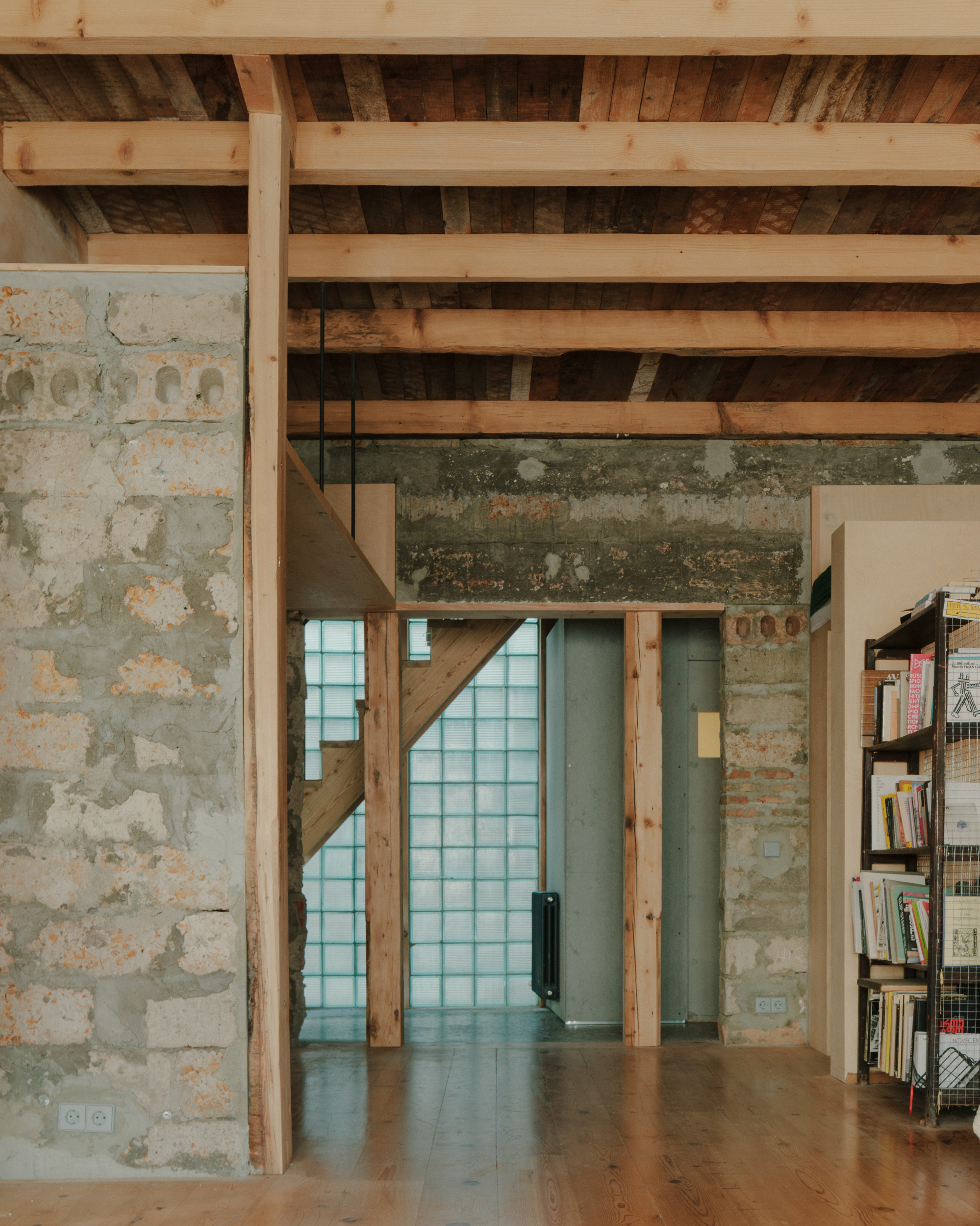
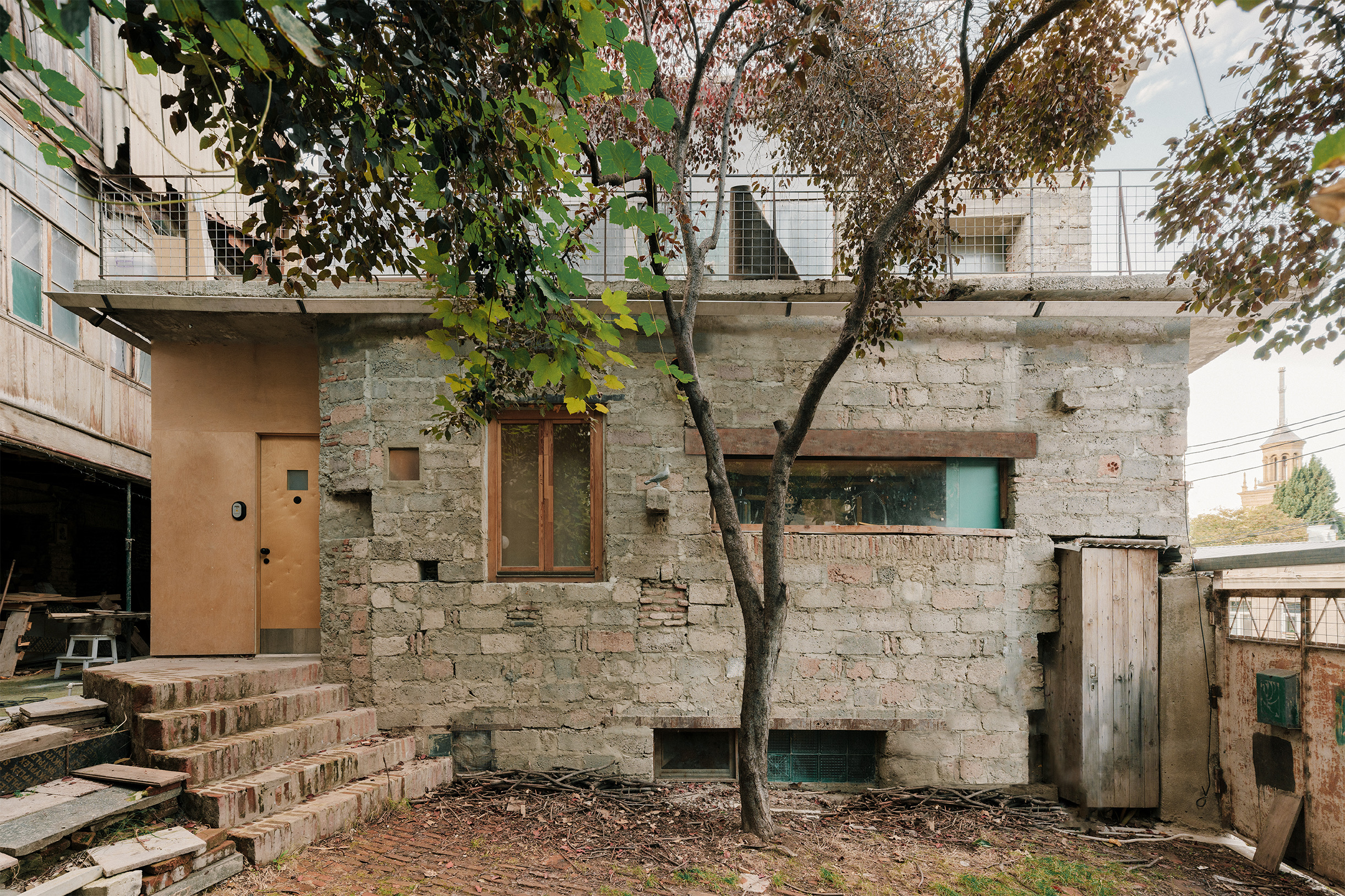
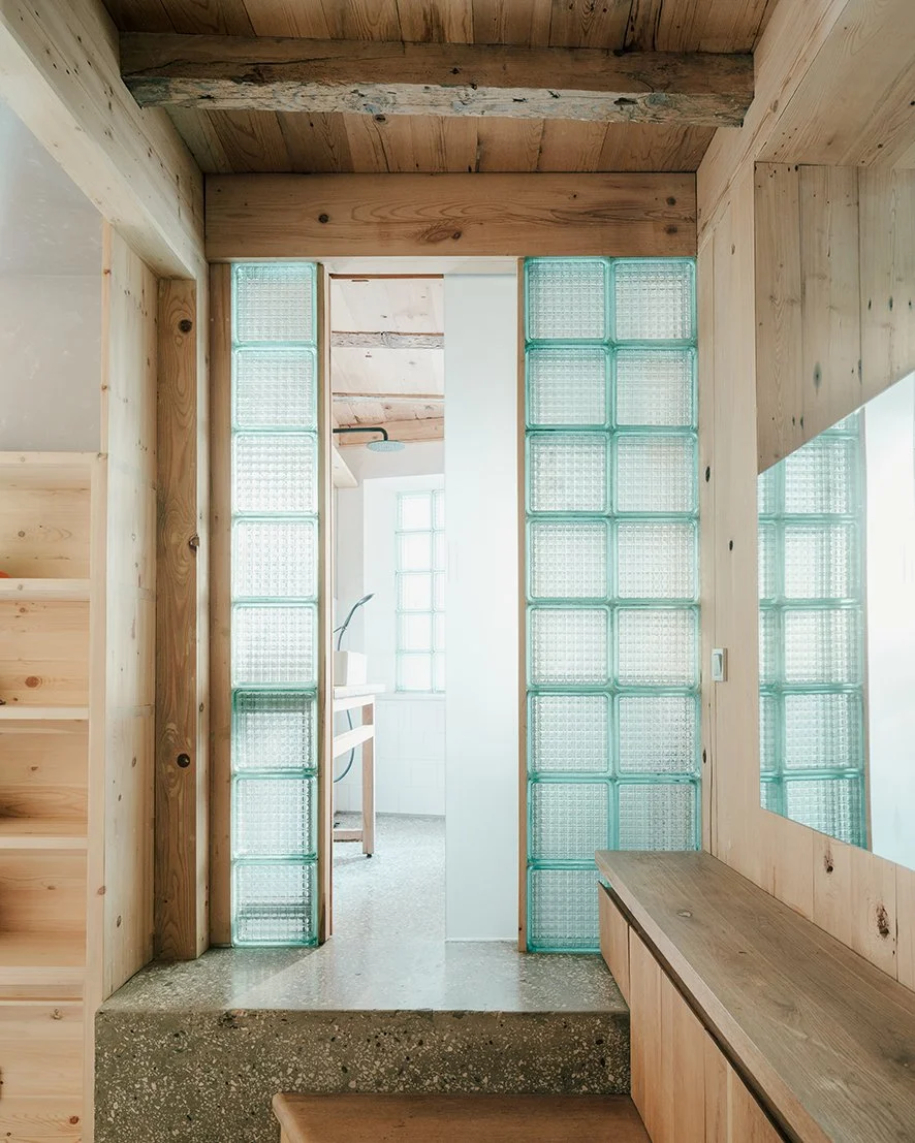
The fifteenth episode traces architects Alexander and David Brodsky across the weathered fabric of Tbilisi’s historic district, where the Unfinished House emerges as a palimpsest of the city’s architectural identity. Here, local bricks and timber, handmade cement blocks, corrugated metal sheets, and Soviet-era glass bricks are gathered and reassembled through urban mining, shaping a domestic landscape grounded in raw materiality, collective construction, and an intentionally open-ended design—one that remains receptive to future transformations.
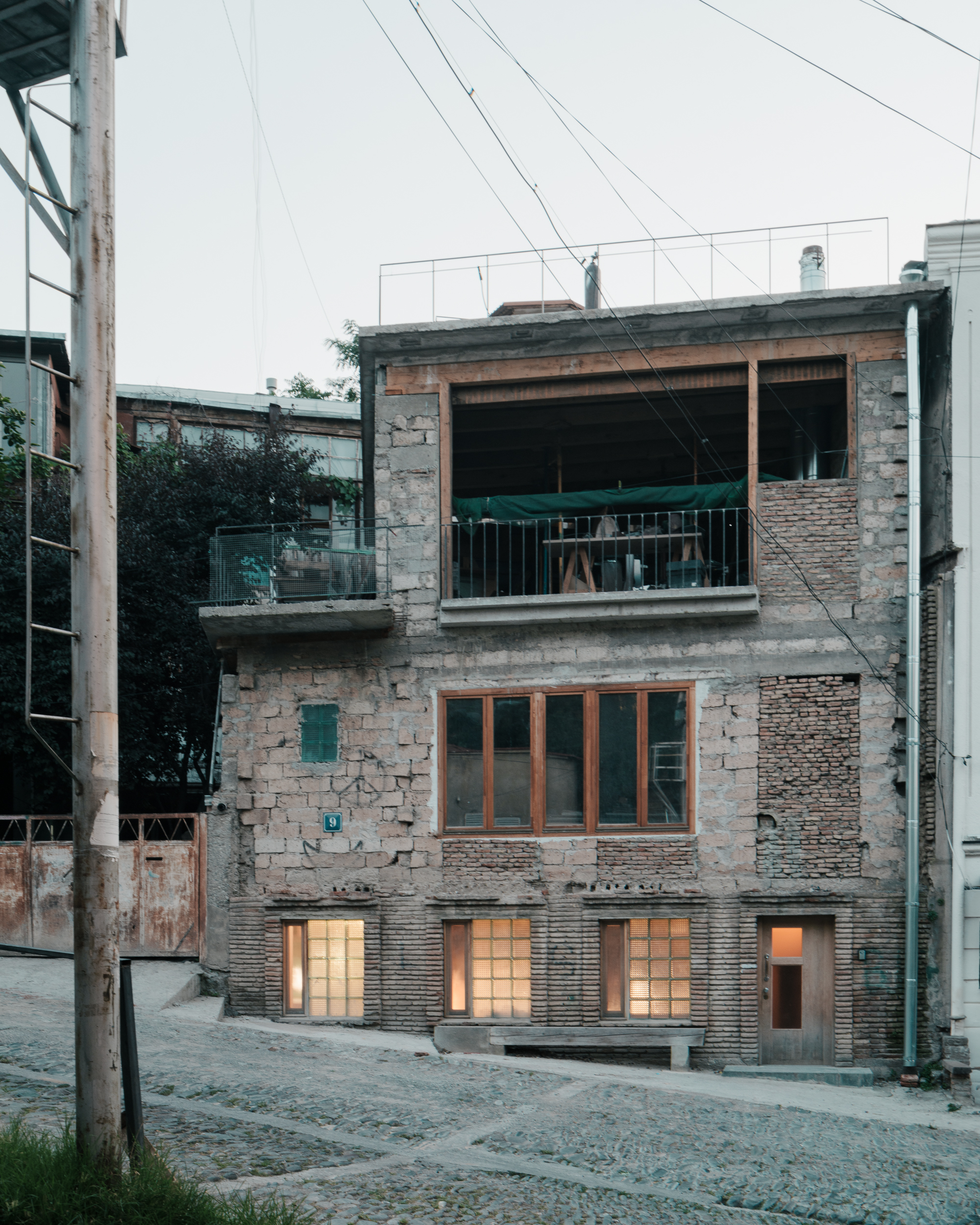
The Unfinished House stands as a compelling case study in which architects operate simultaneously as thinkers, archaeologists, and builders. As the third iteration of a 1920s structure shaped through urban mining and ad hoc, self-built methods, the new design frame reuse as both ecological and cultural act. The project bridges past, present, and future, embodying a hybrid condition rooted in Tbilisi’s material and social context. Its flat roof, inspired by traditional baniani houses, becomes a social platform for everyday life.
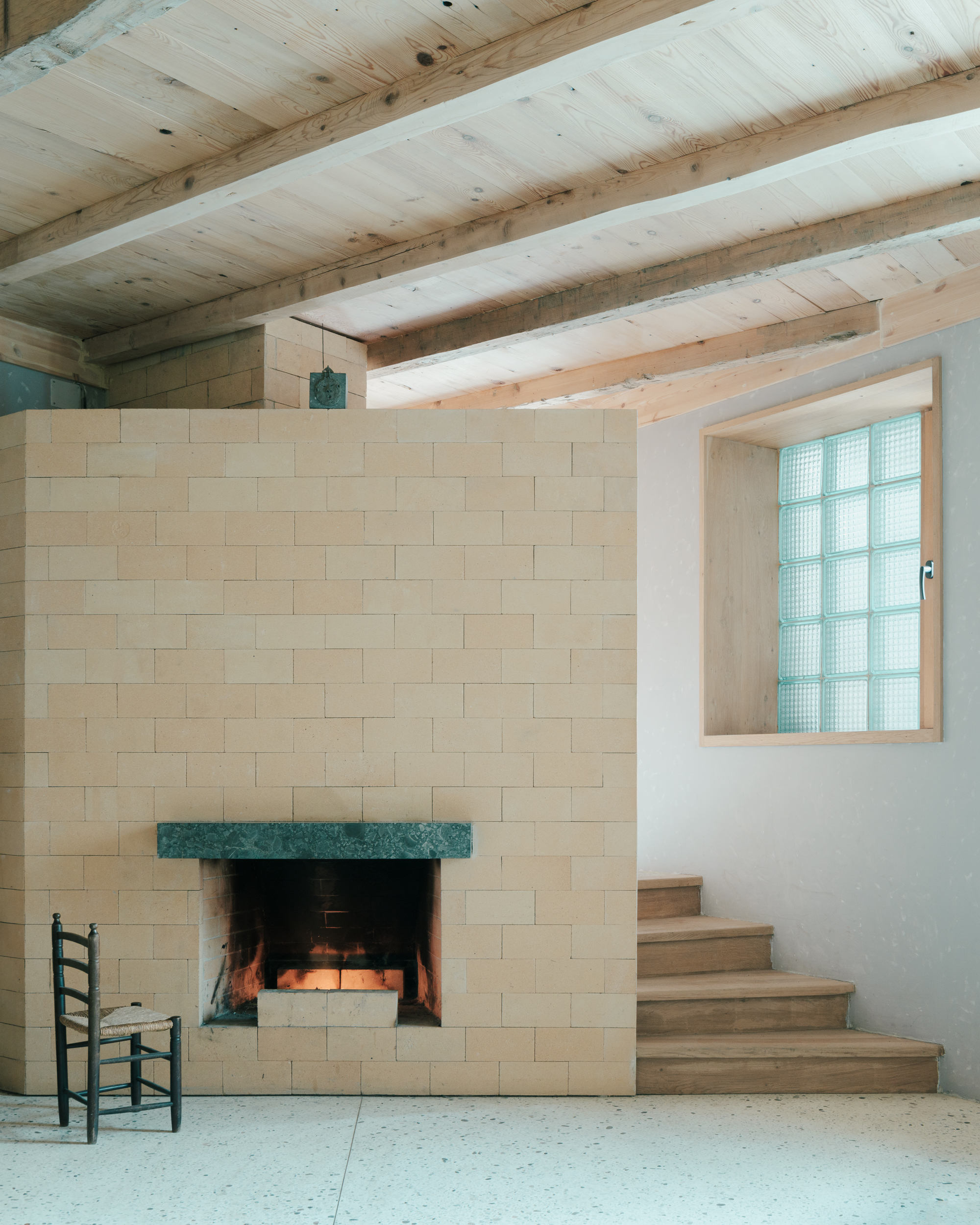
Layered like a patchwork, the house integrates memory and decay, extending material life cycles while anchoring itself in local building culture. Framing architecture as an ongoing negotiation, and the house as a process rather than a fixed outcome, Unfinished House prioritizes adaptability, collective authorship, and the city as a living palimpsest of intertwined histories.
Read the whole story, here!
Story Sixteen
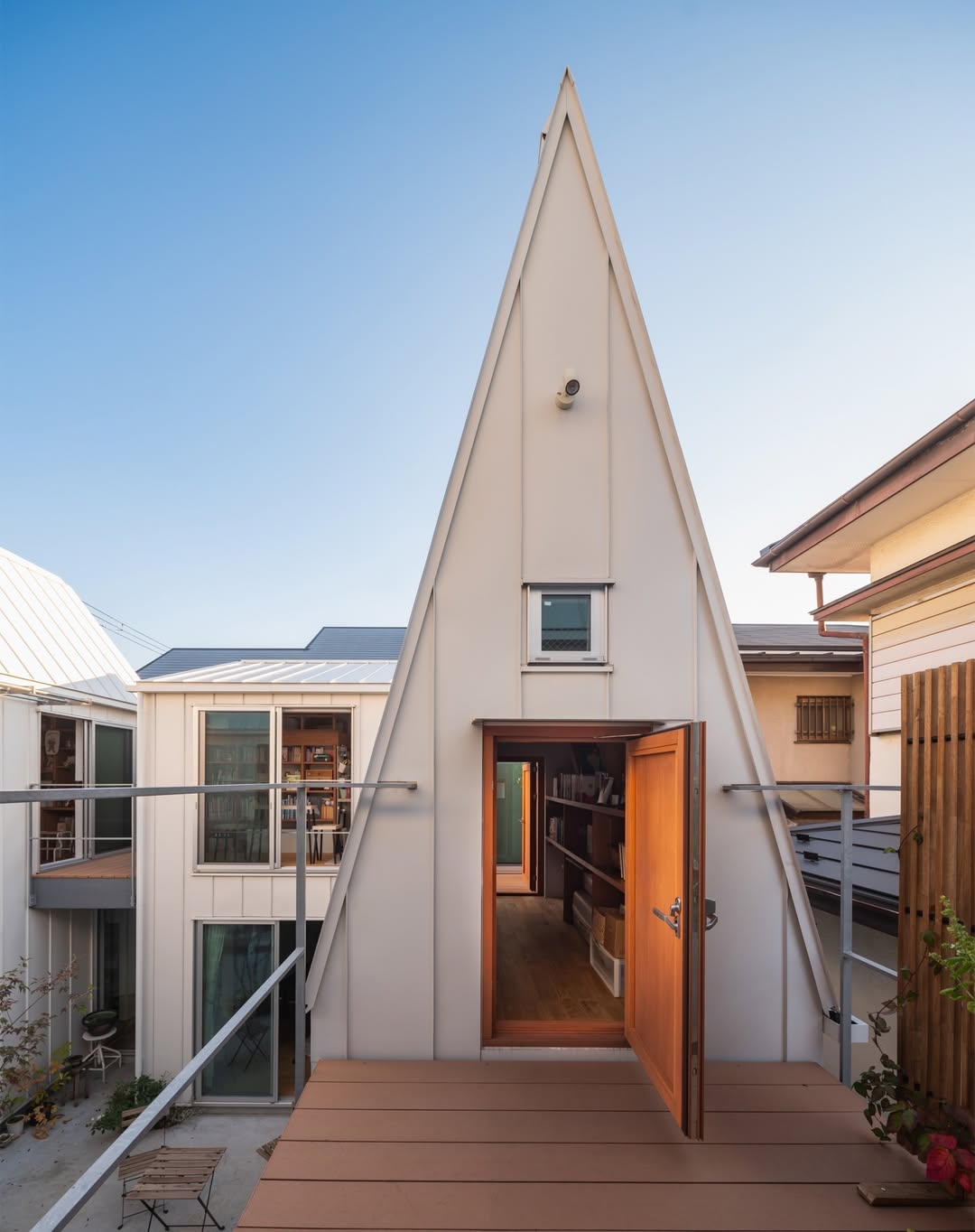
Kaku Kaku Kanadel in Tokyo by Takeshi Hosaka Architects is a Village-Like Domestic Ecosystem.
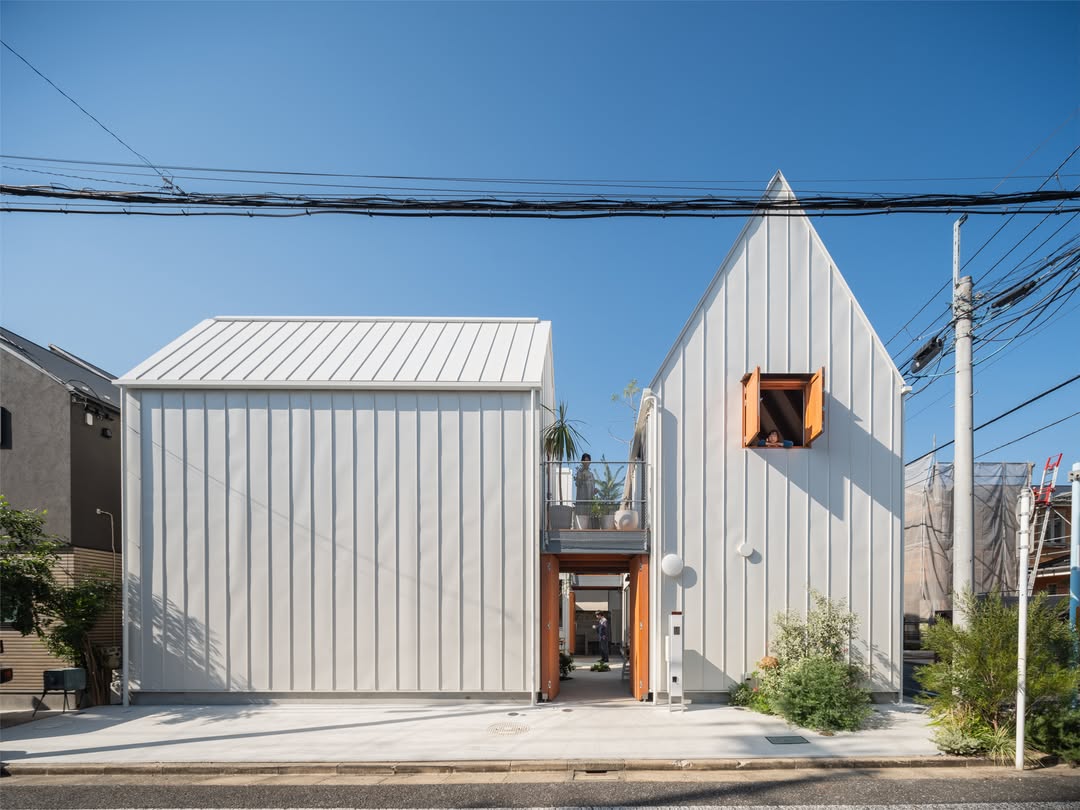
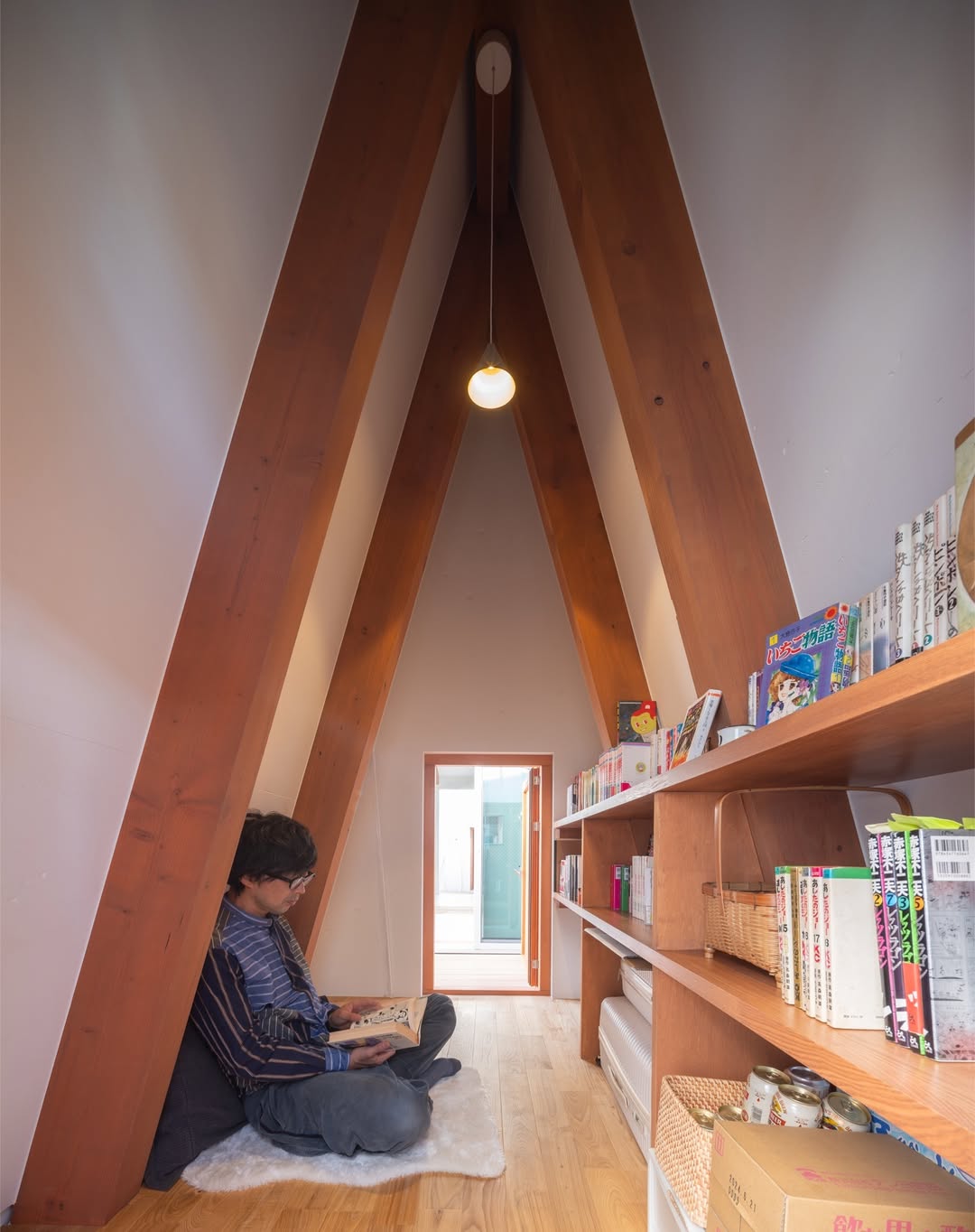
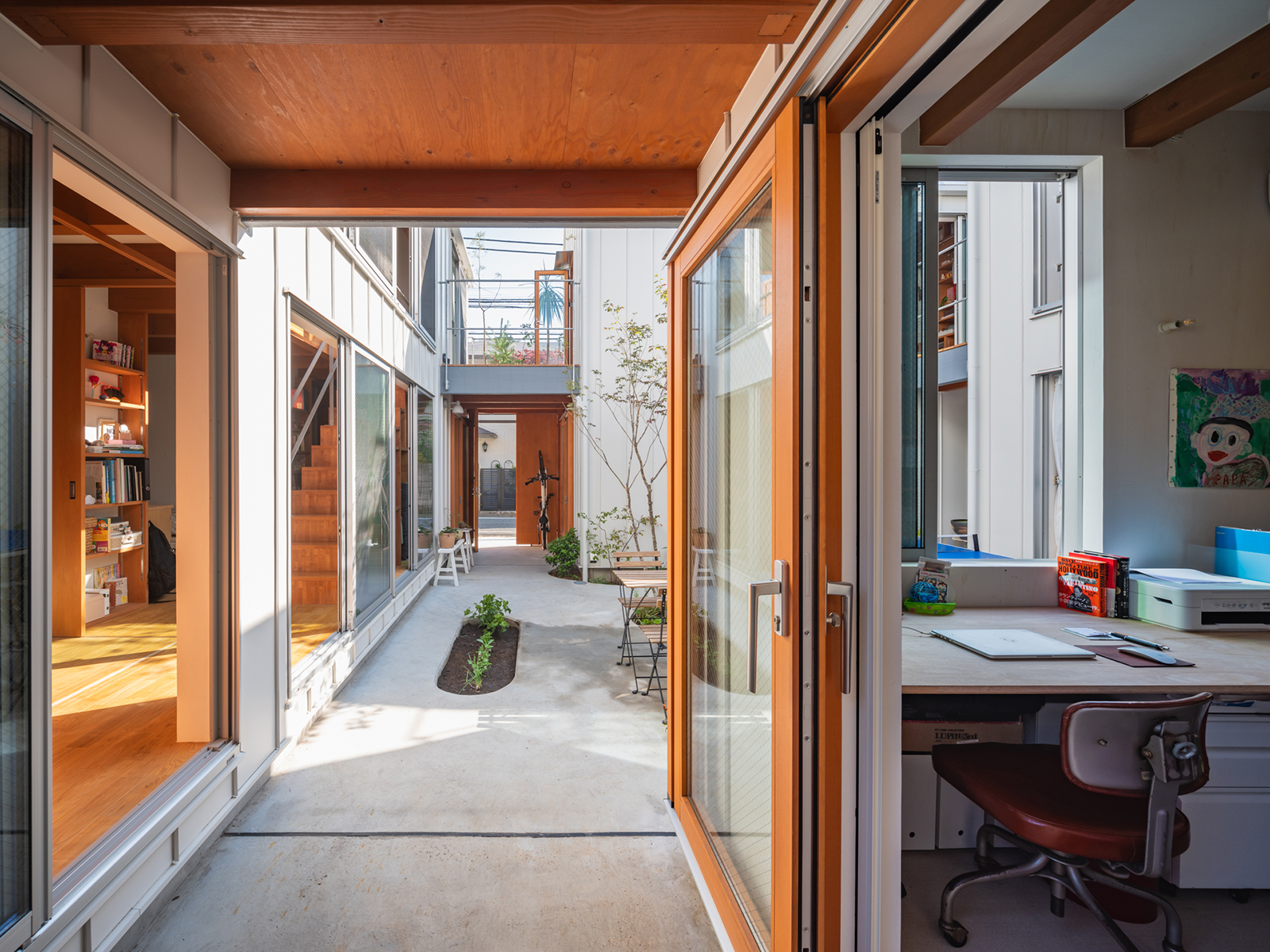
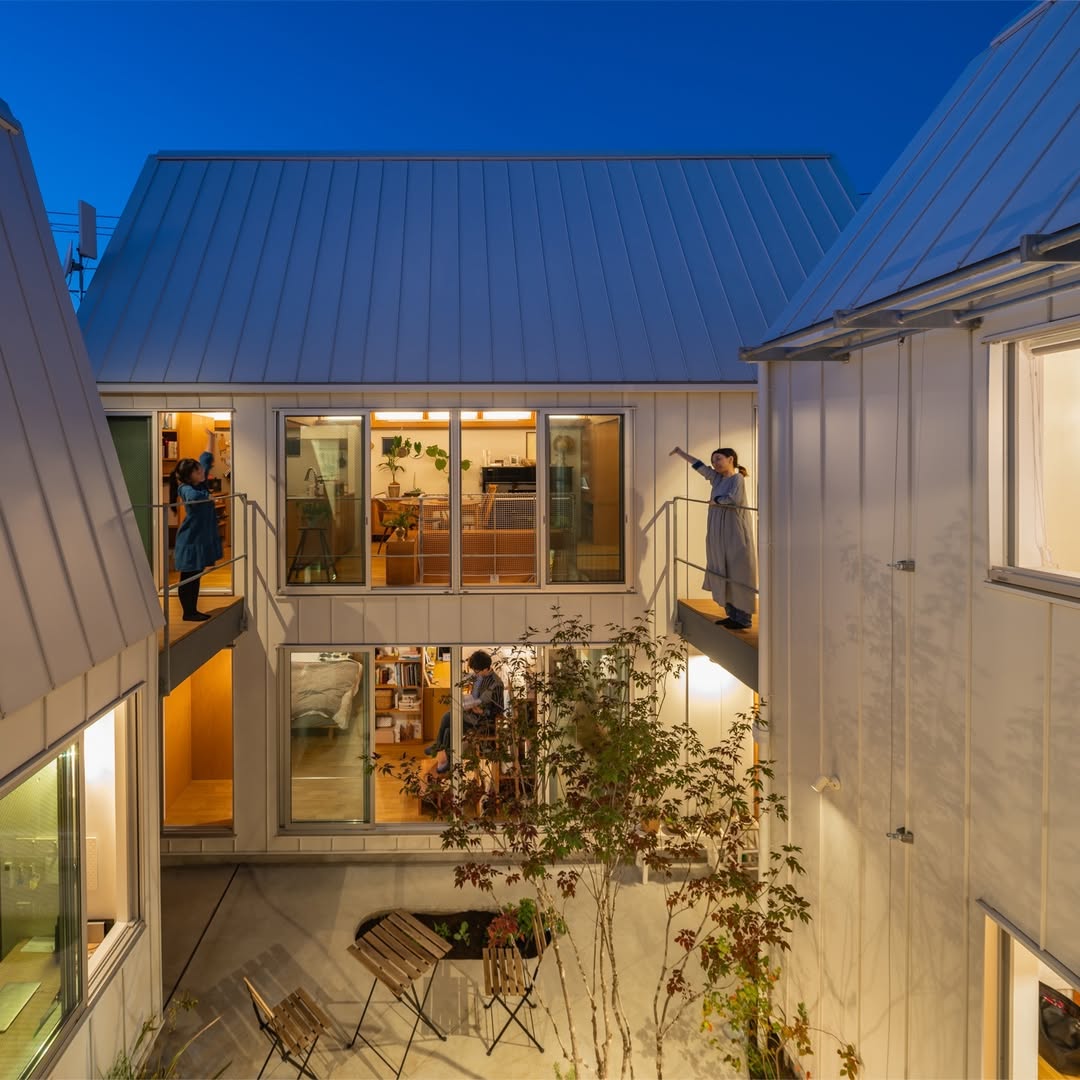
The sixteenth episode traces Takeshi Hosaka Architects shaping a Japanese house into a constellation of creative worlds for a family of three artists; a father who is also a scriptwriter; a mother who is also an illustrator; and their daughter Haru, an aspiring pianist and multidisciplinary talent. Kaku-Kaku Kanadel—literally meaning to write (kaku, 書く), to draw (kaku, 描く), and to play (kanadel, 奏でる)—emerges as a poetic ecosystem with its own logic, emotional intelligence, and interrelated rhythms.
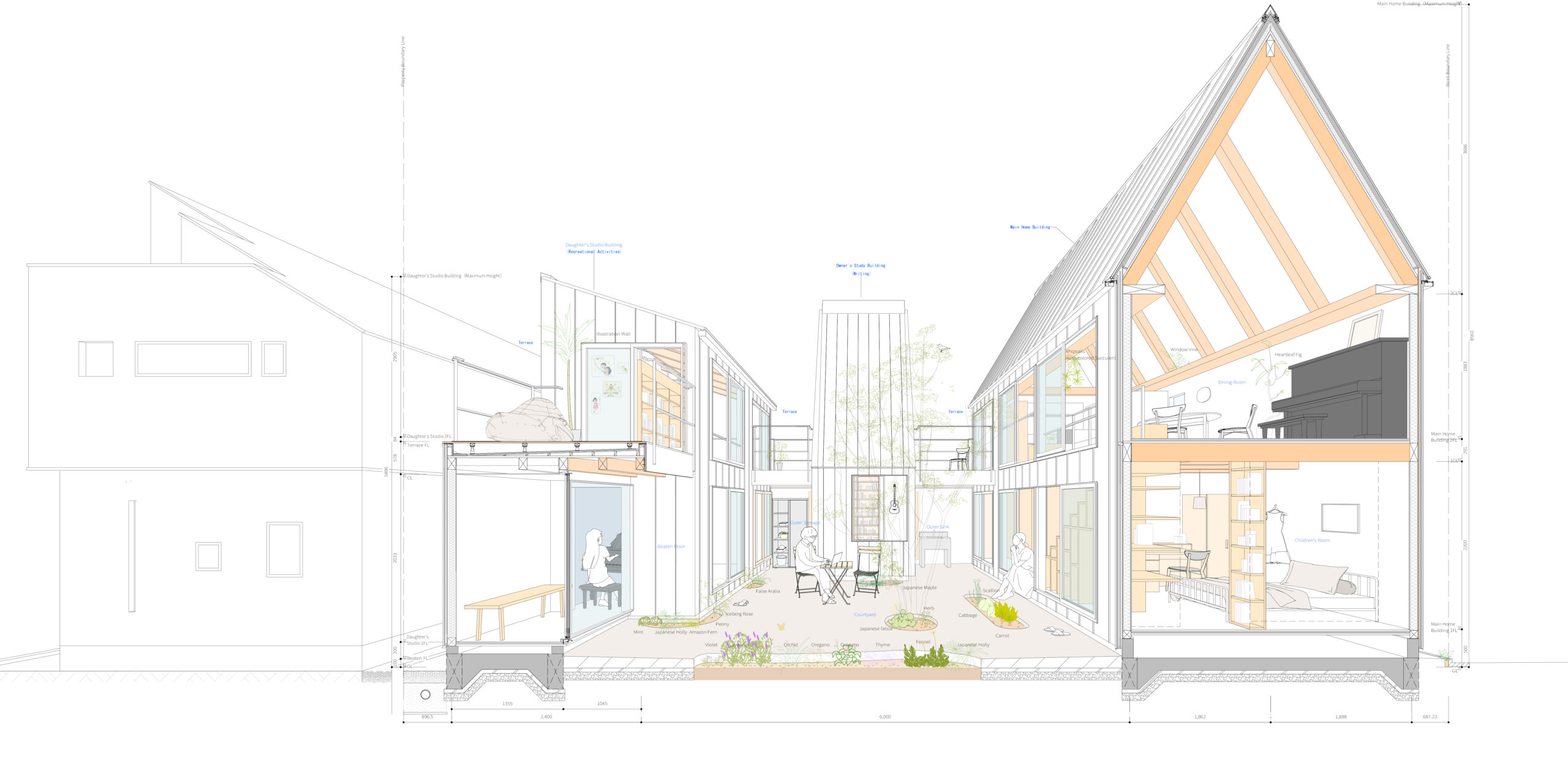
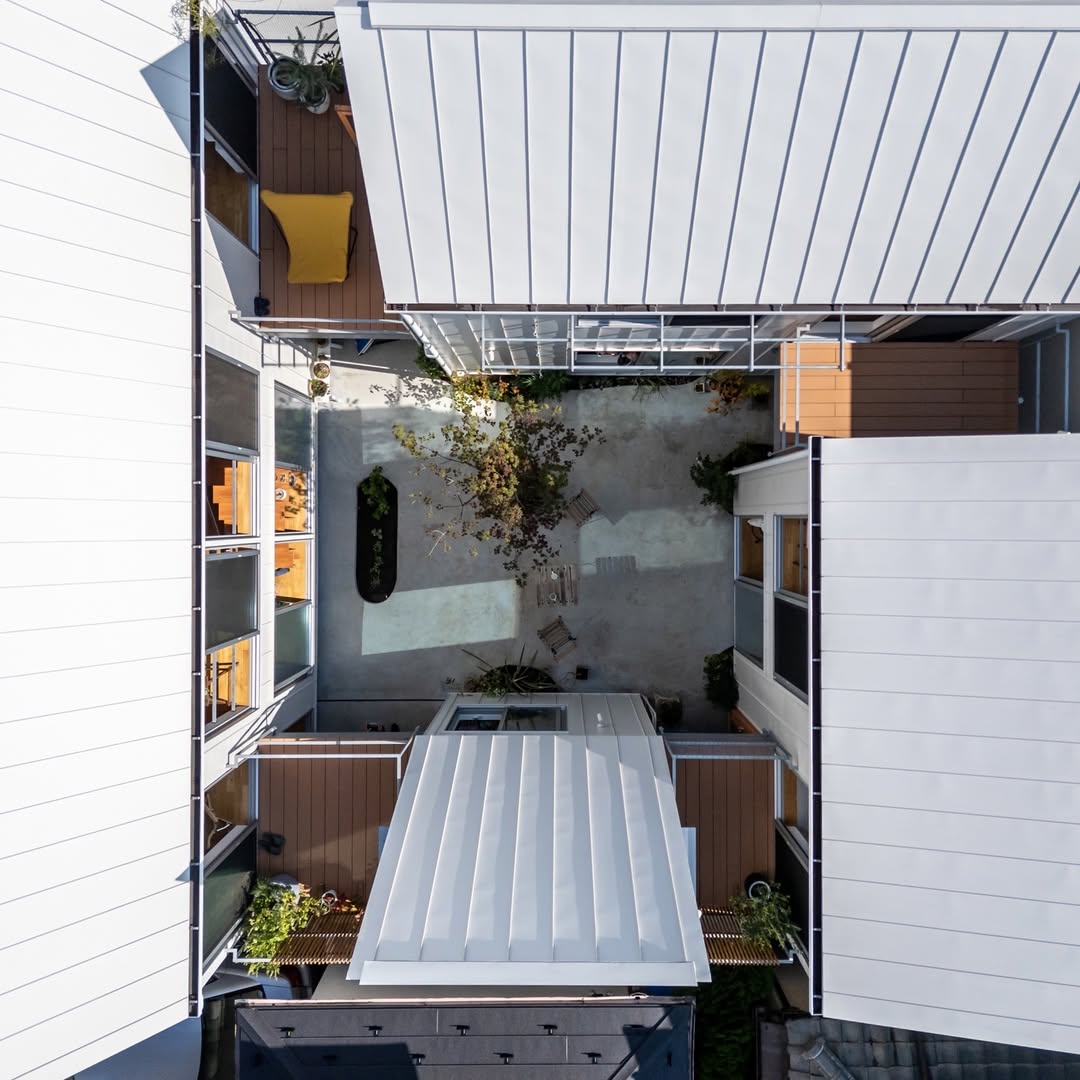
In Japanese culture, home is less about fixed rooms and more about a flexible, atmospheric system shaped by light, seasonality, and ritual. Starting from there, the house unfolds in the urban landscape of Tokyo tailored for an everyday life that fosters creativity, self-expression, and playfulness. Composed of four interconnected volumes, each crowned with a distinct roof, the house negotiates autonomy and togetherness around a central courtyard that becomes the existential and spatial heart of the dwelling. Smaller gardens, elevated terraces, secret nooks, and narrow paths weave a village-like domestic landscape that invites play, curiosity, and quiet wonder. Space is not given in advance but unfolds through bodily movement, sensory perception, and daily habits.
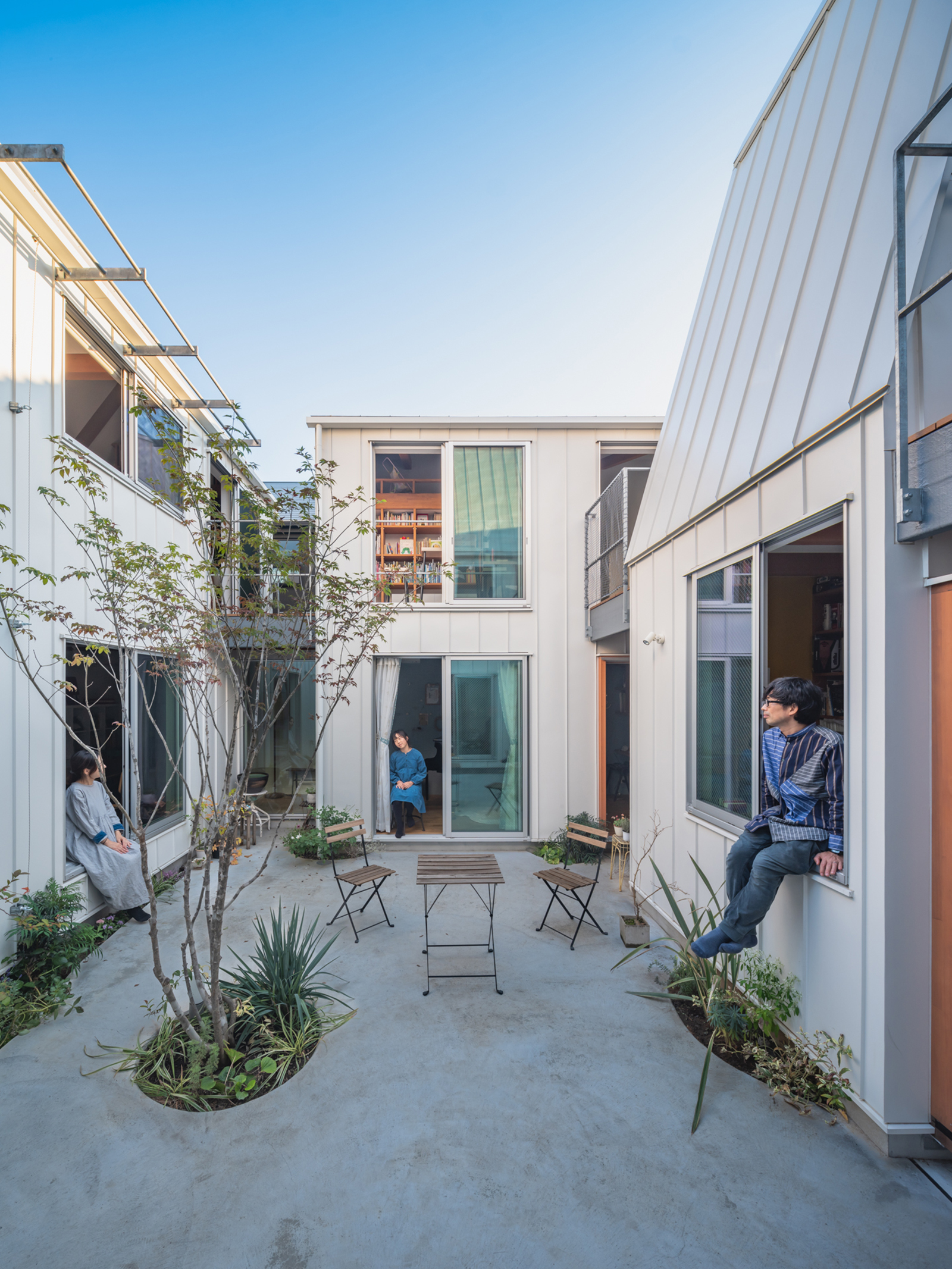
Kaku-Kaku Kanadel transcends conventional notions of domesticity, becoming a constellation of partial enclosures, sensory passages, and lived intervals in which architecture does not impose order but reveals the fragile, evolving structure of everyday coexistence. Through its fragmentation, connectivity, and expressive form, the project redefines the home as a spatial embodiment of coexistence—between autonomy and collectivity, routine and imagination—proposing a renewed paradigm of dwelling as an act of creative emancipation.
Read the whole story, here!
Story Seventeen
The Well-Tempered House by EMI Architekt*innen is an ecosystem of varying microclimates.
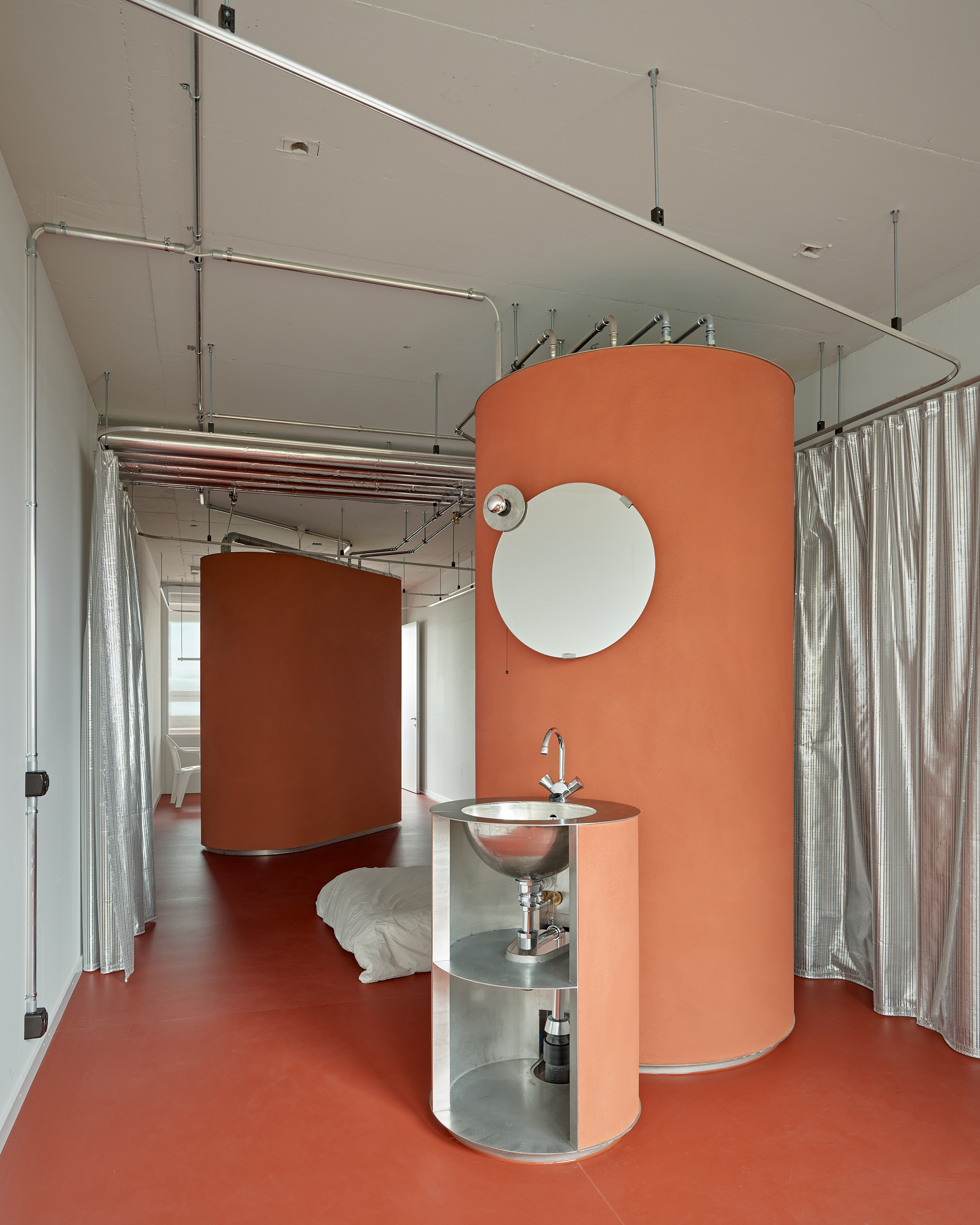
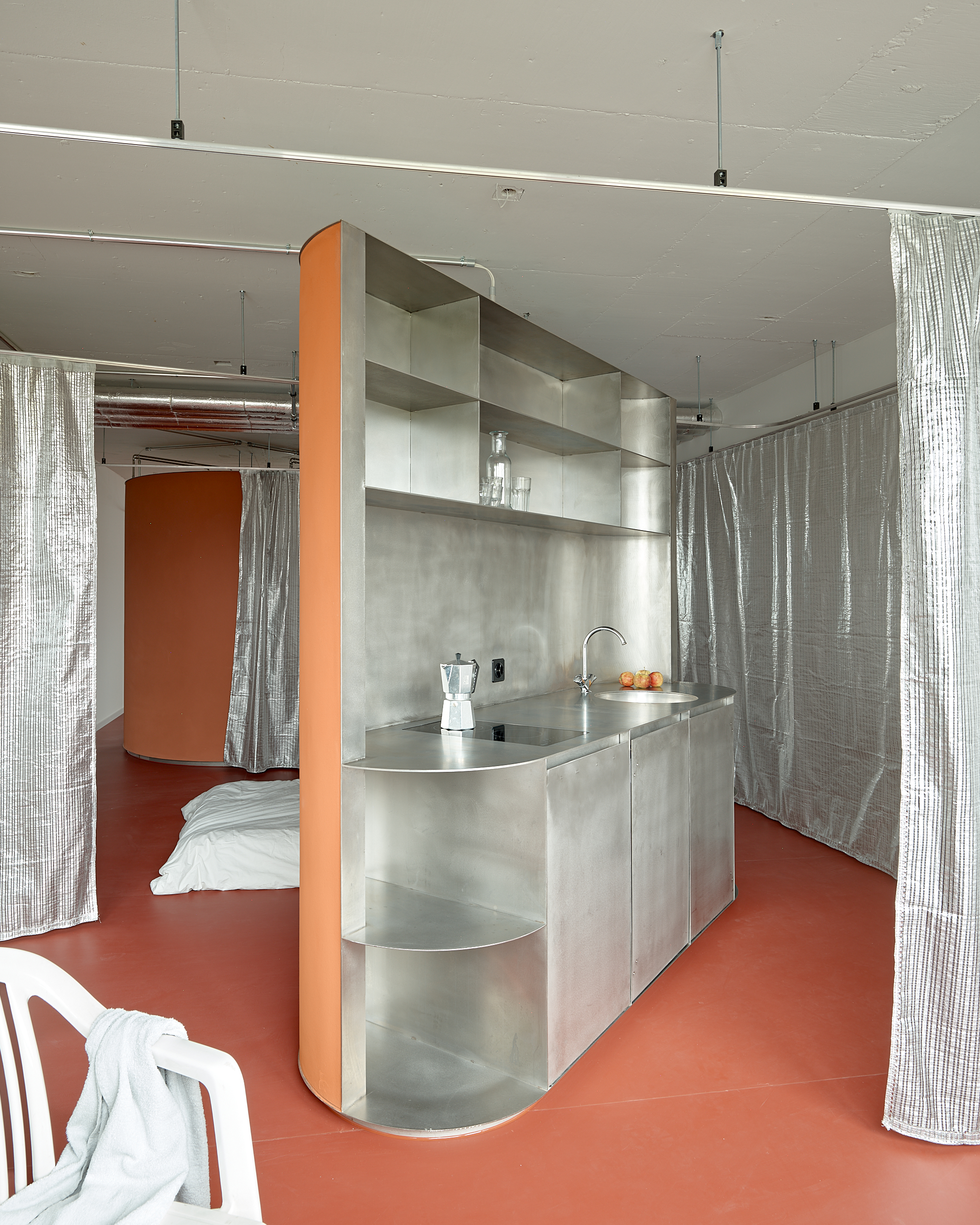
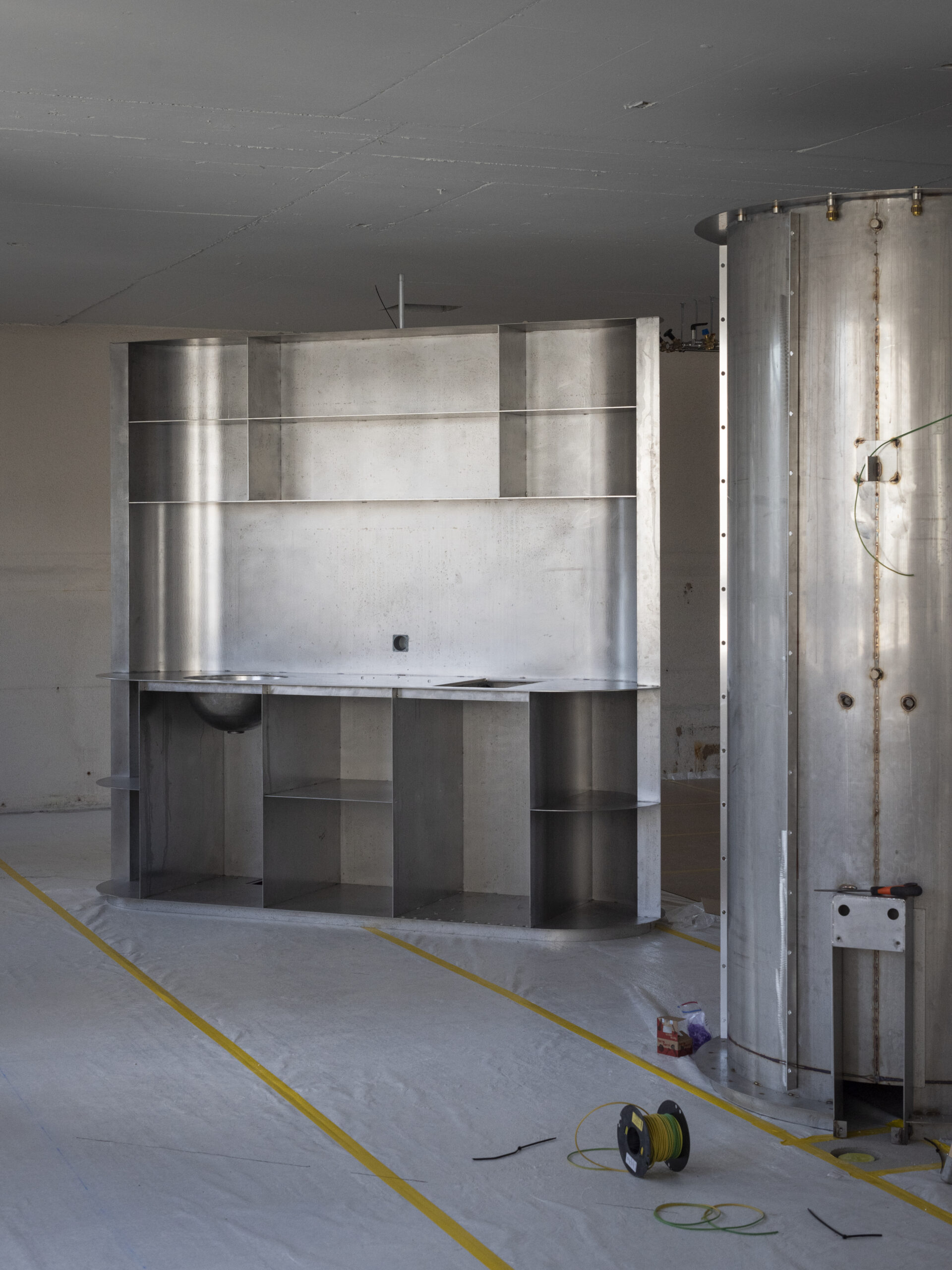
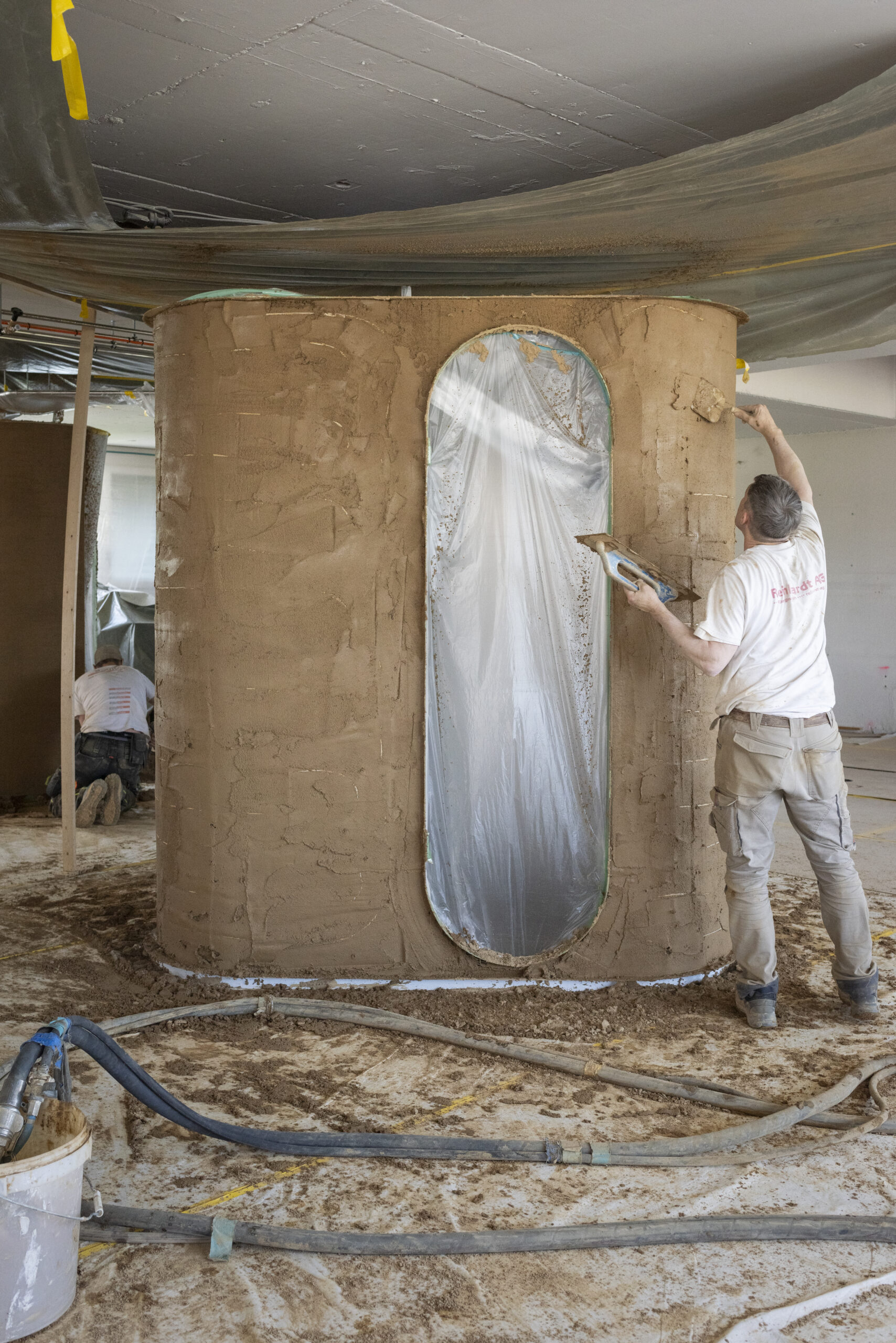
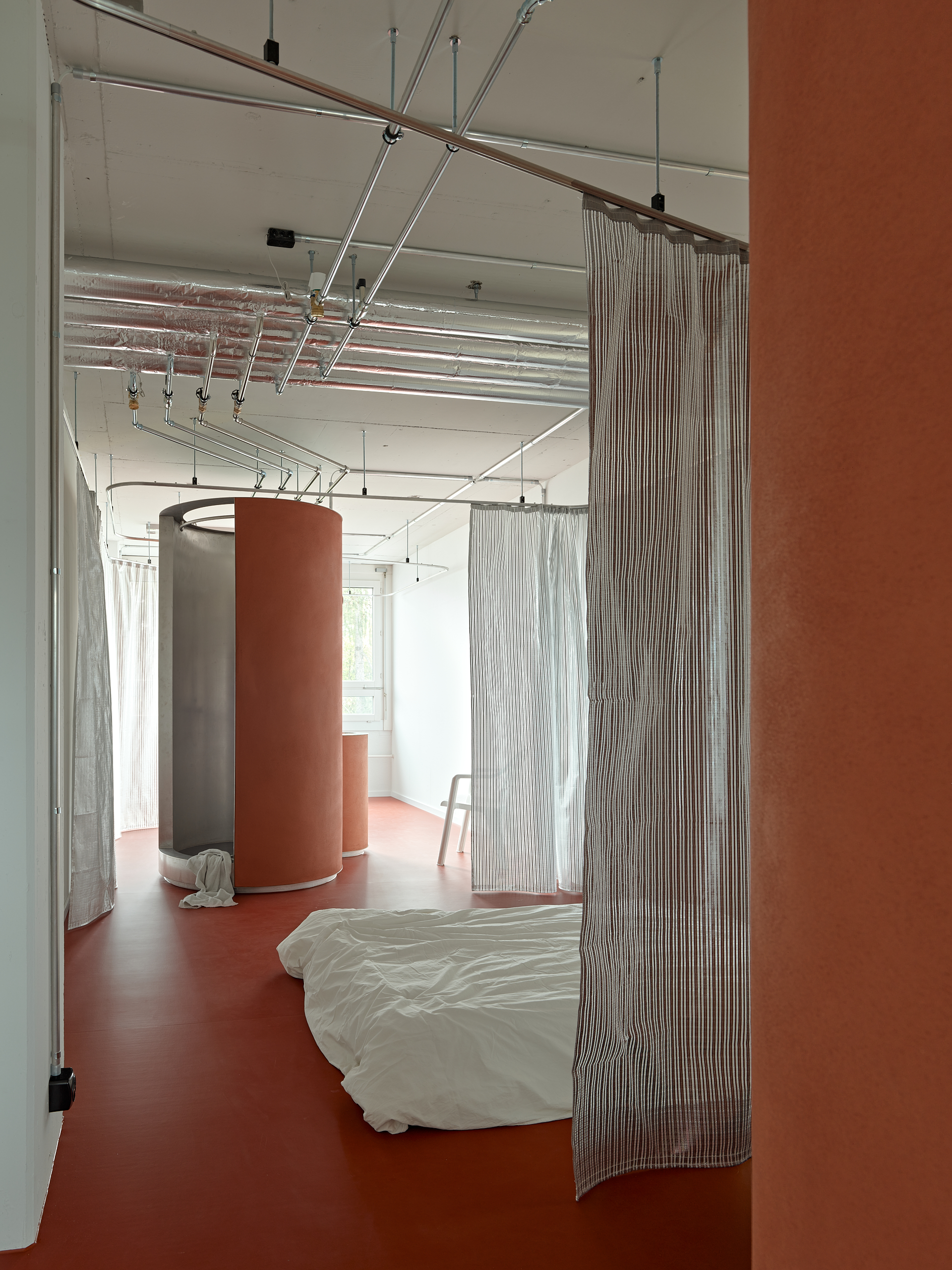
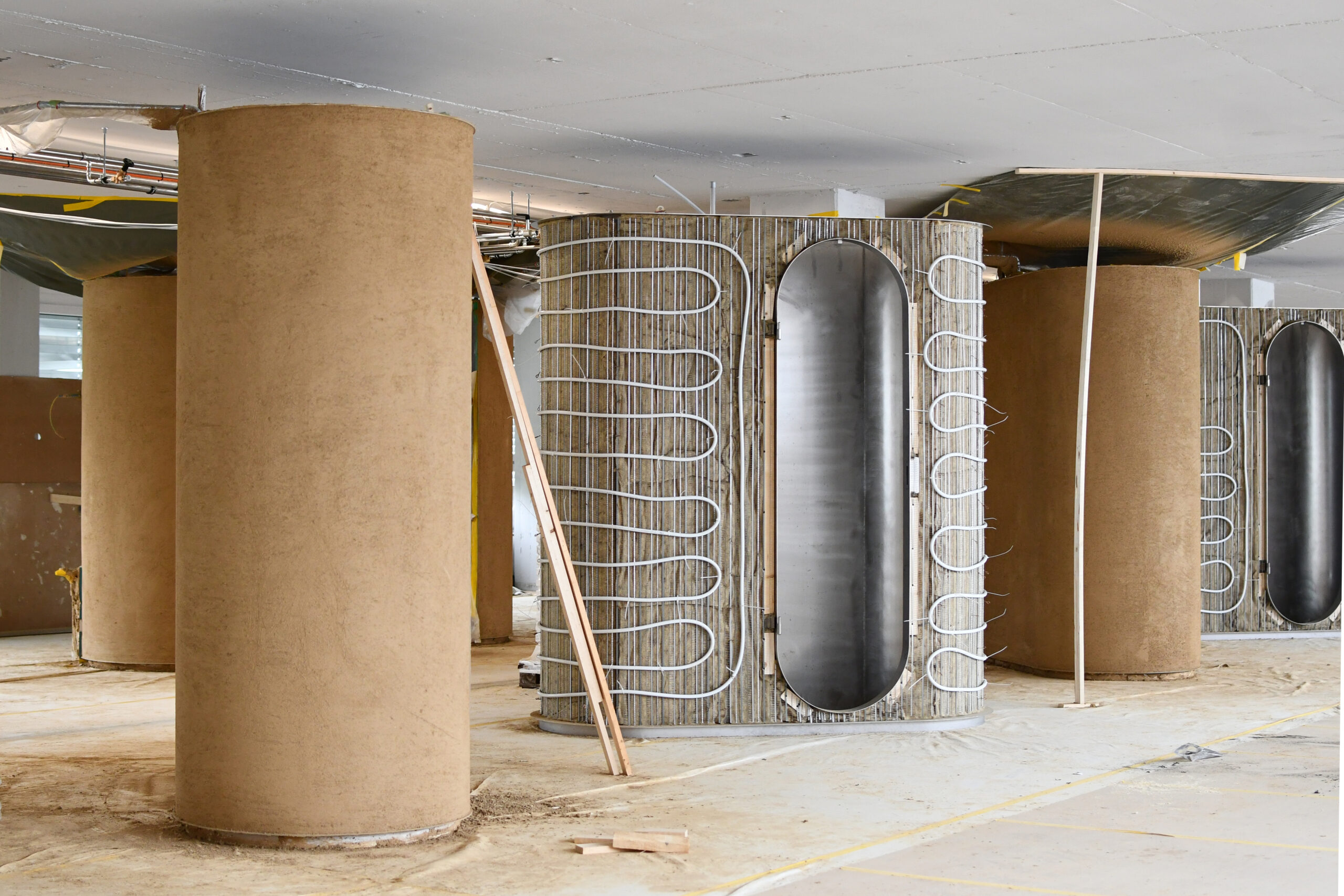
The seventeenth episode traces EMI Architekt*innen’s conversion of a former office space into affordable student housing in Regensdorf, Switzerland. Conceived as both an architectural intervention and a spatial research project, The Well-Tempered House proposes a radical reconsideration of domestic comfort, energy consumption and the thermal politics of inhabitation. Redirecting attention toward the interior — the building’s metabolic core, its flesh and heart — free-standing circular and oval modules, aluminum-coated curtains and a distinctive terracotta hue compose a domestic temperature ecosystem of varying microclimates: a living environmental field shaped by thermal gradients, bodily rhythms and seasonal change.
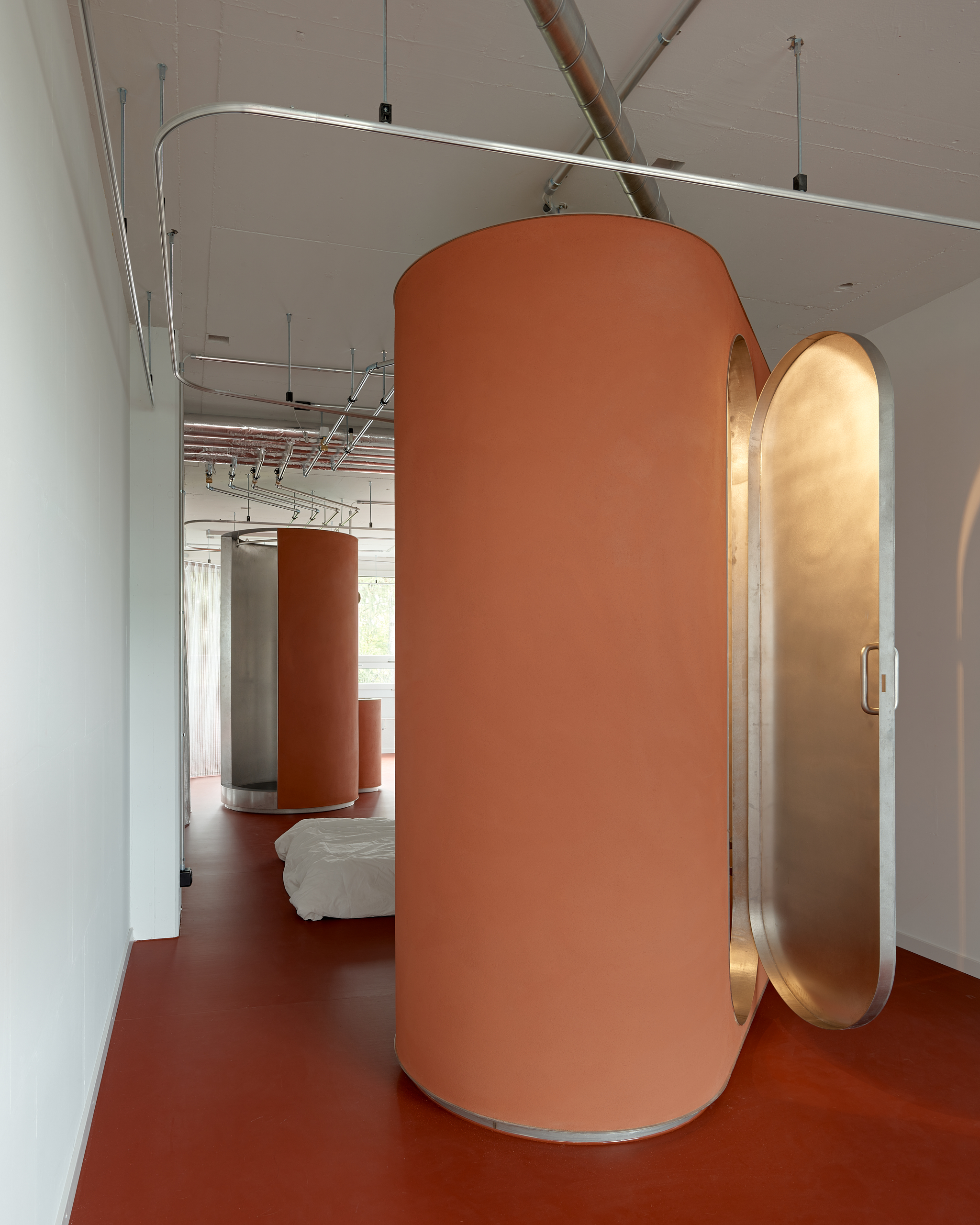
At a moment of rising office vacancy rates and intensifying housing shortages across European cities, the project questions the ideal of the “well-tempered environment”. Resonating with Stewart Brand’s understanding of buildings as evolving systems rather than static objects (1994), the project rejects the universalized indoor climate and the mechanized logic of comfort associated with late modernity, described by Reyner Banham (1969), where atmosphere became standardized, invisible and endlessly regulated. Aligning with Philippe Rahm’s meteorological approach to architecture, where temperature, humidity and air are primary spatial materials shaping forms of inhabitation (2009), EMI reintroduce thermal awareness into domestic life. Recalling pre-industrial houses organized around the stove as both thermal and social nucleus, heat becomes perceptible and embodied once again, while the home regains seasonal rhythms in which warmer zones foster intimacy and cooler zones encourage movement and adaptation.
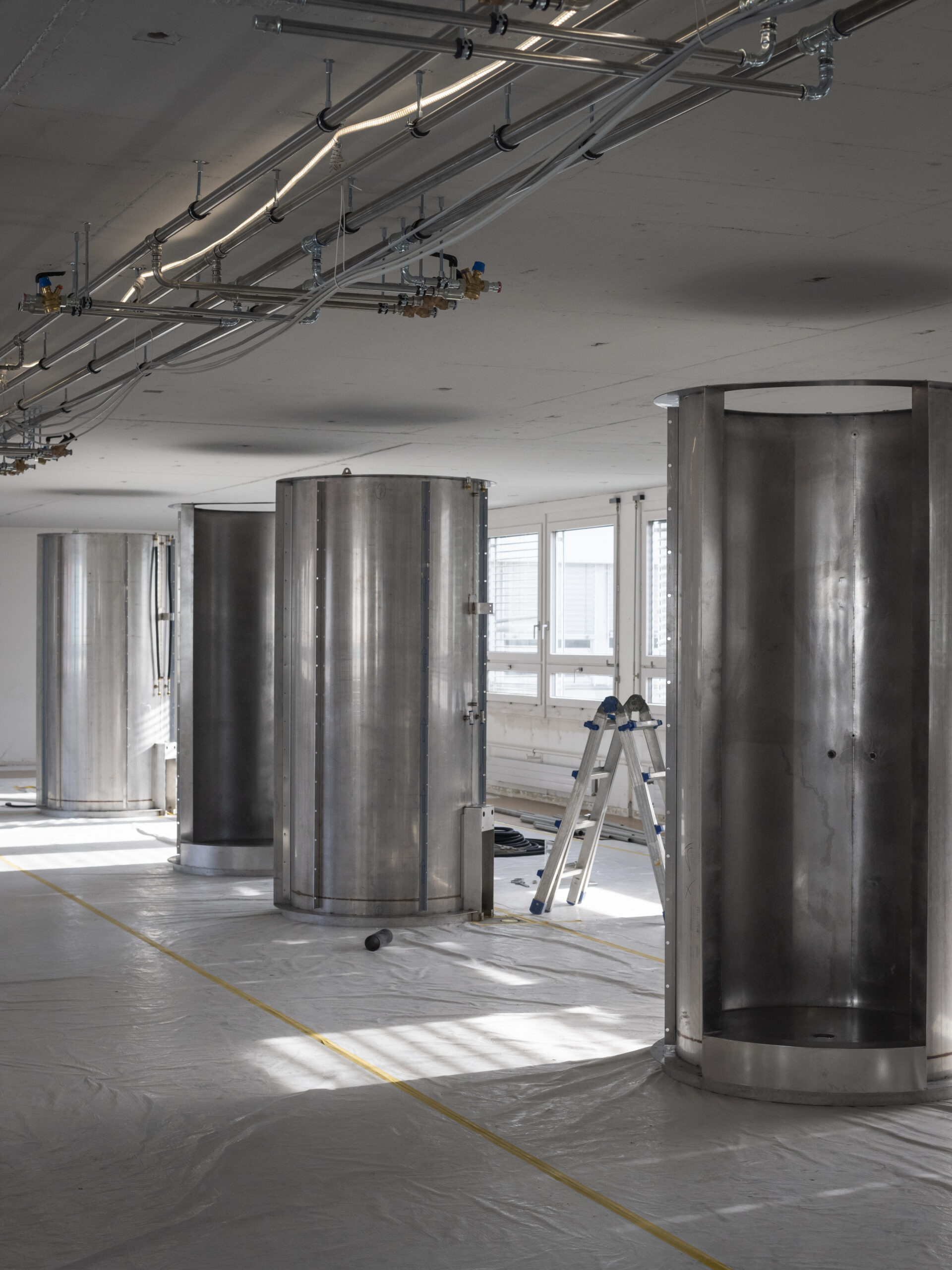
In an era increasingly shaped by environmental instability, The Well-Tempered House reimagines domesticity as an ecosystem, suggesting that the task of ecological architecture is not to produce technologically overdetermined “smart” buildings that isolate us from climate, but to teach us, once again, how to live within it.
Read the whole story, here!
Story Eighteen
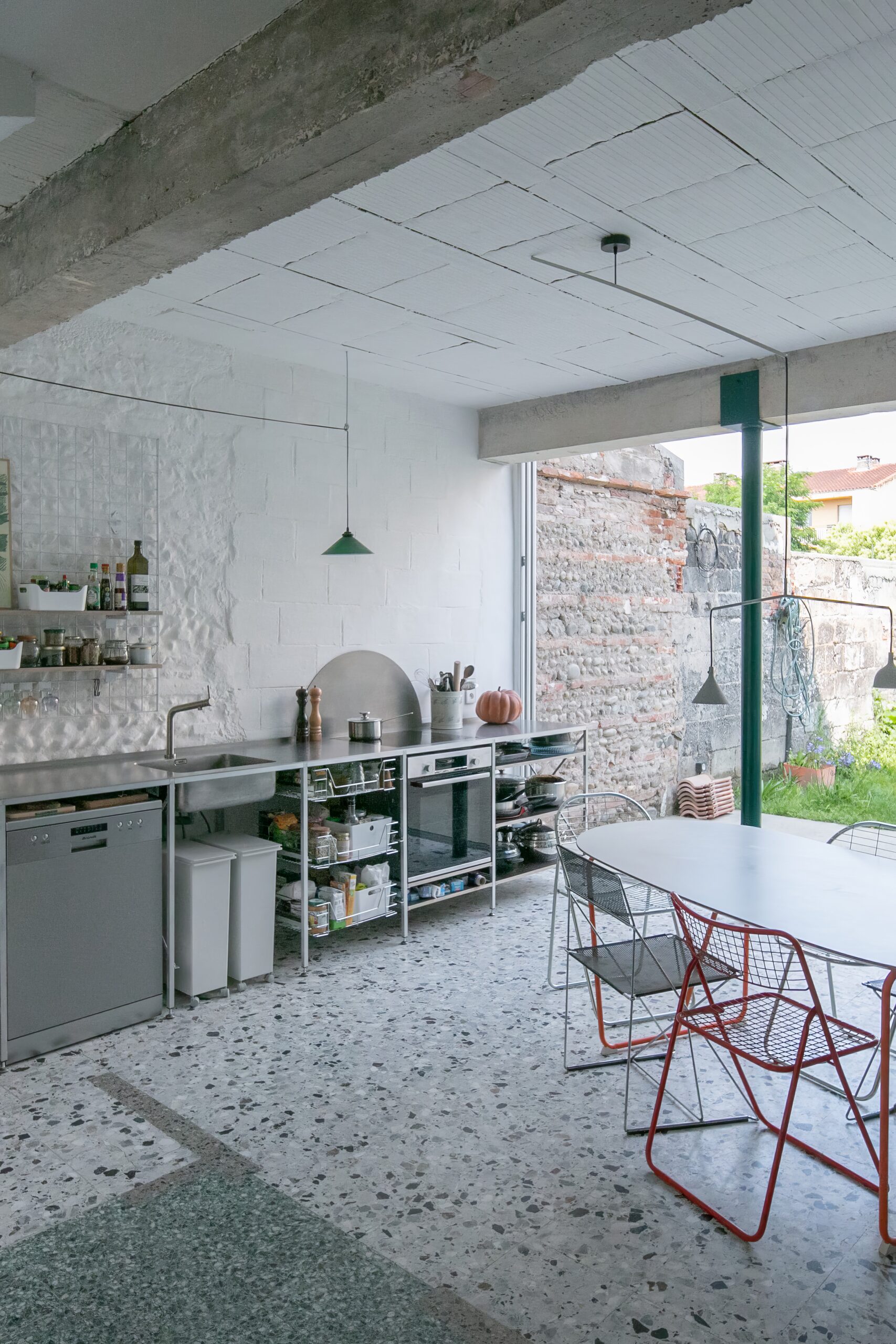
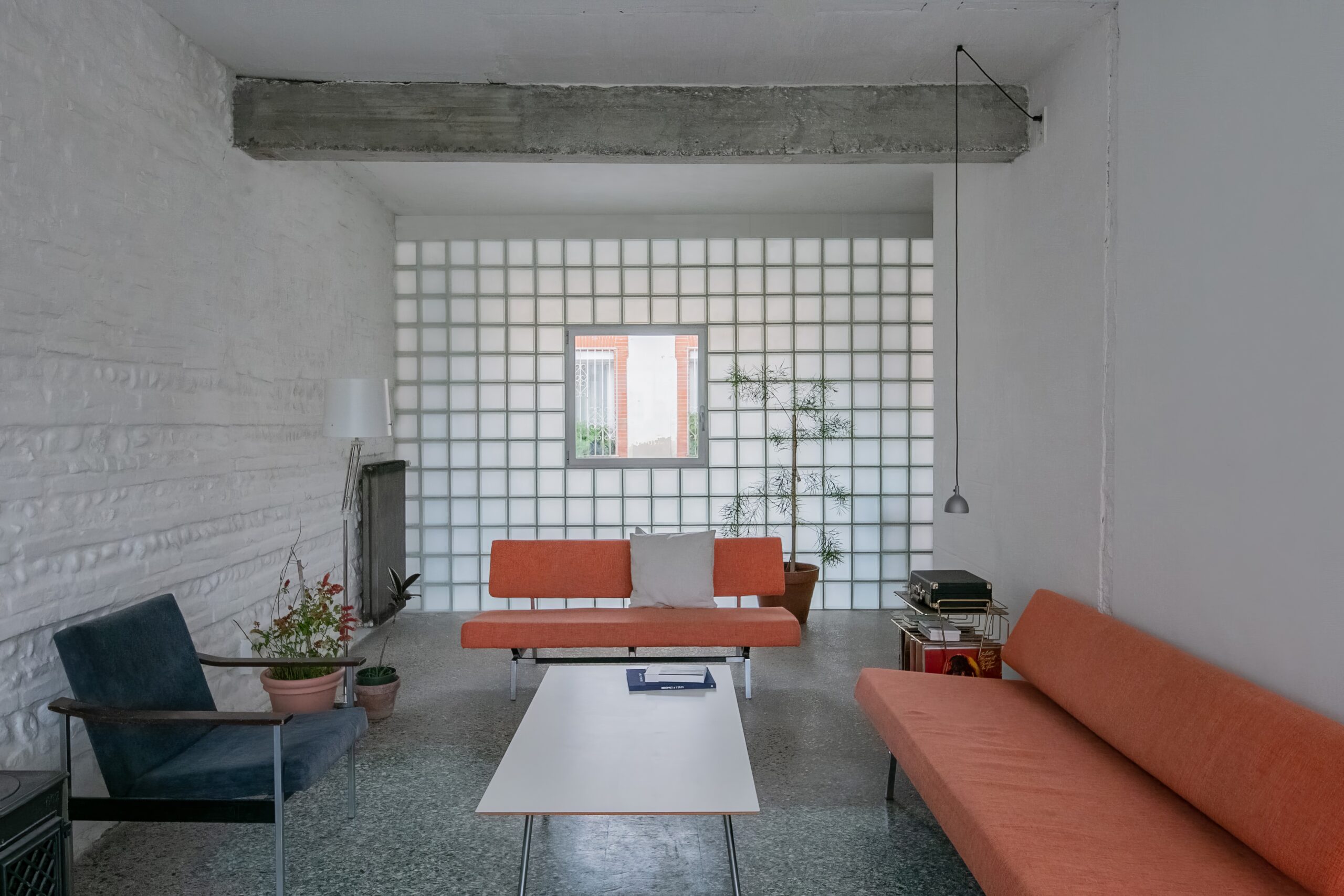
Gabrielle Vinson Reactivates a Working-Class Toulousaine Through Urban Mining.
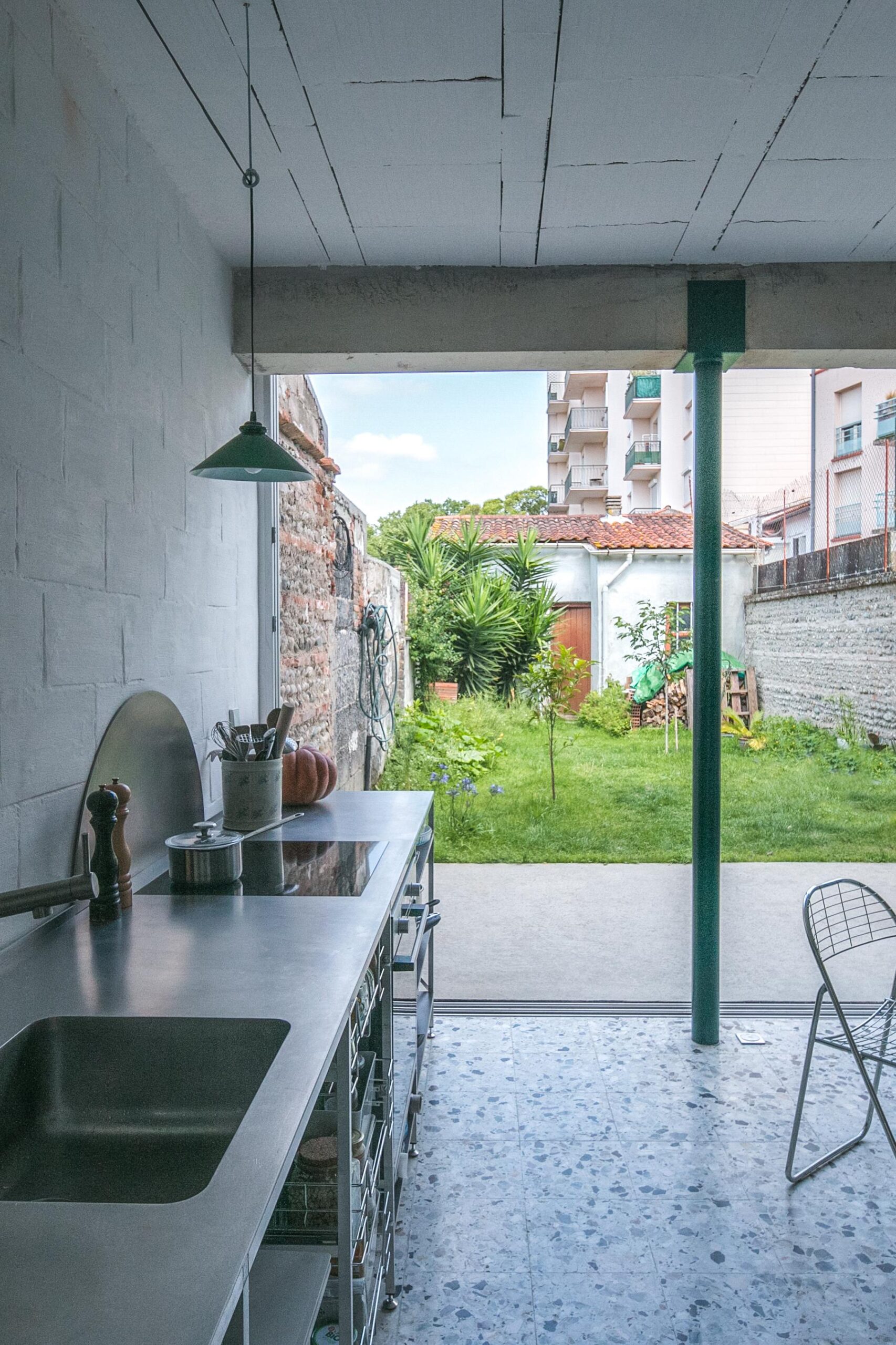
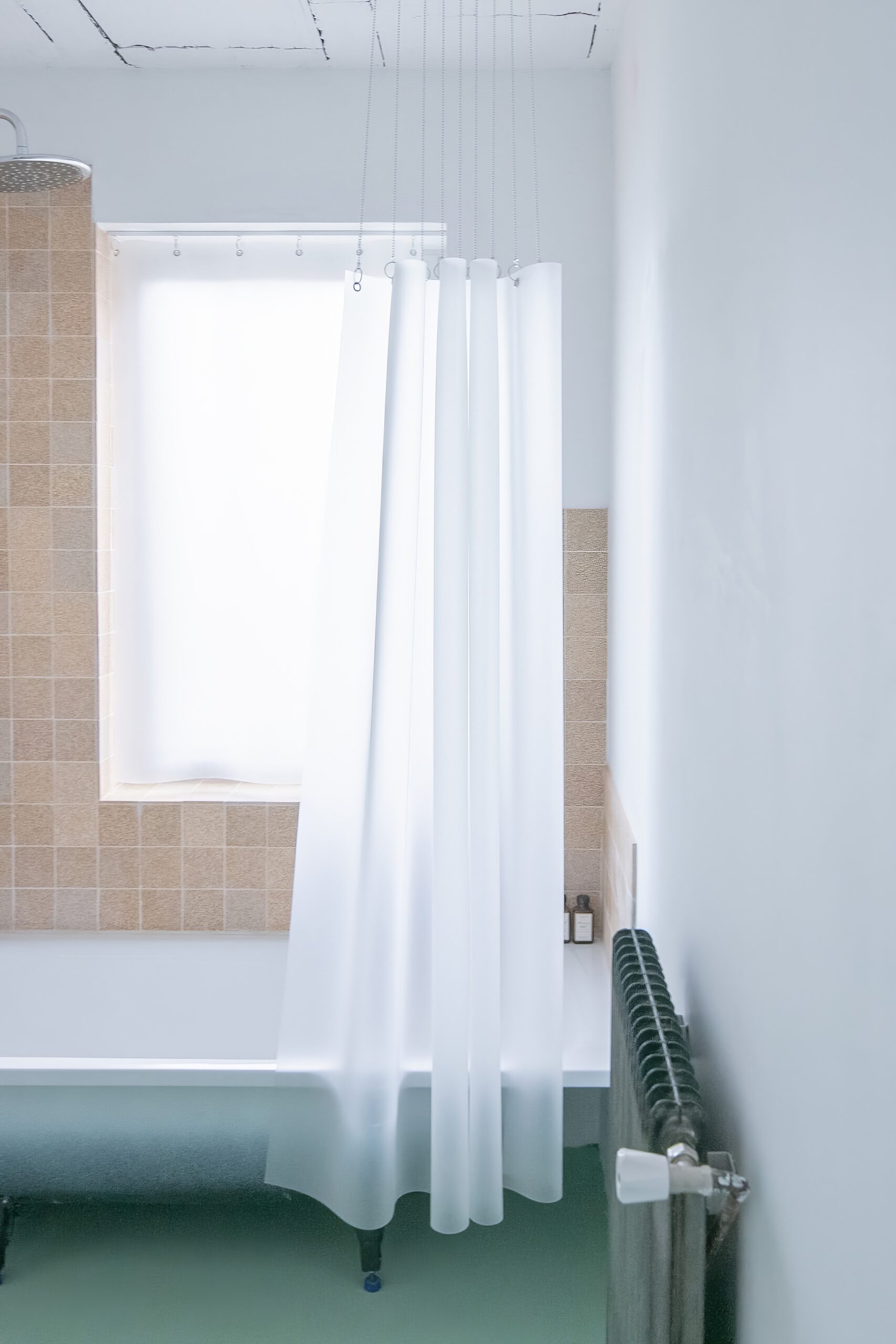
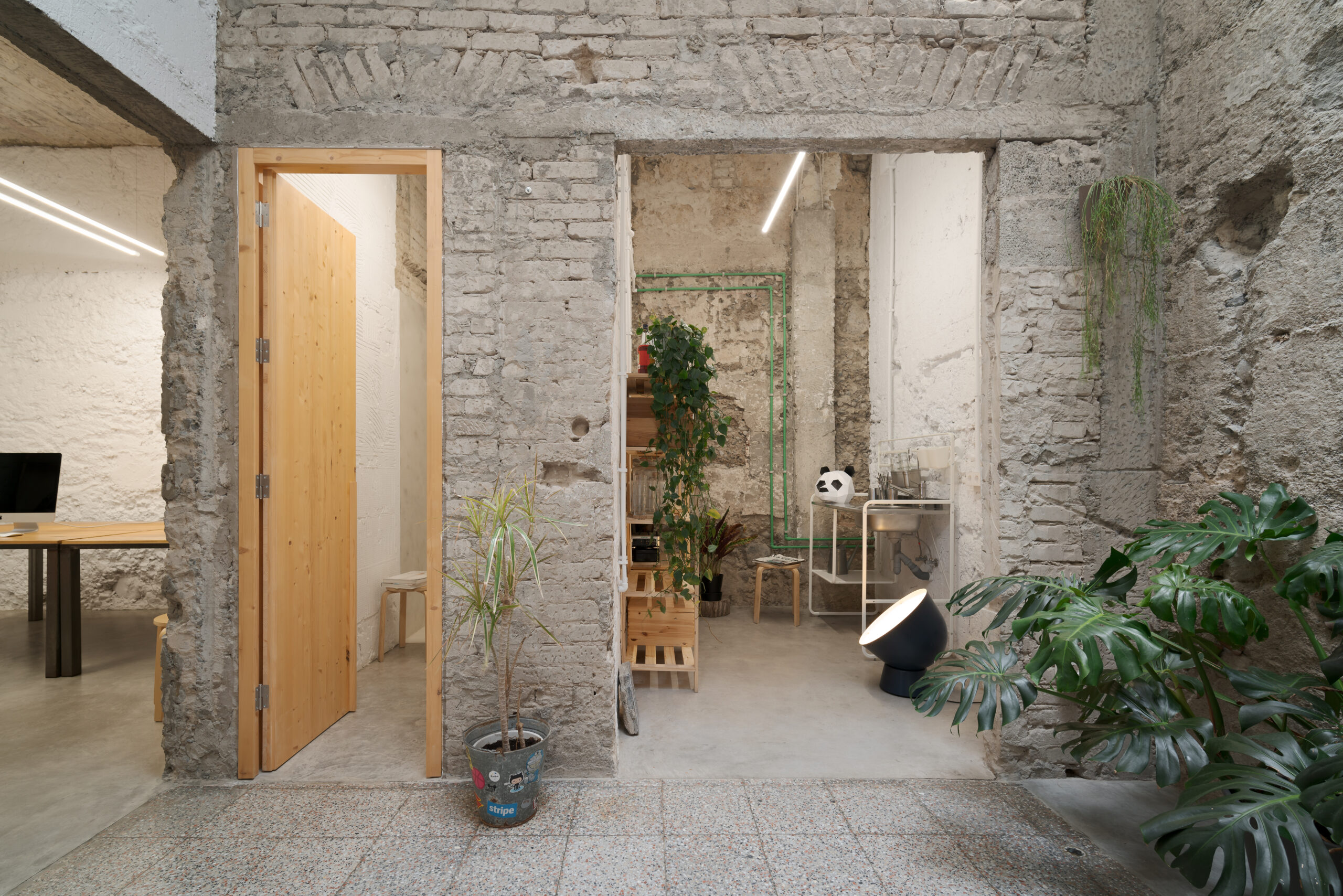
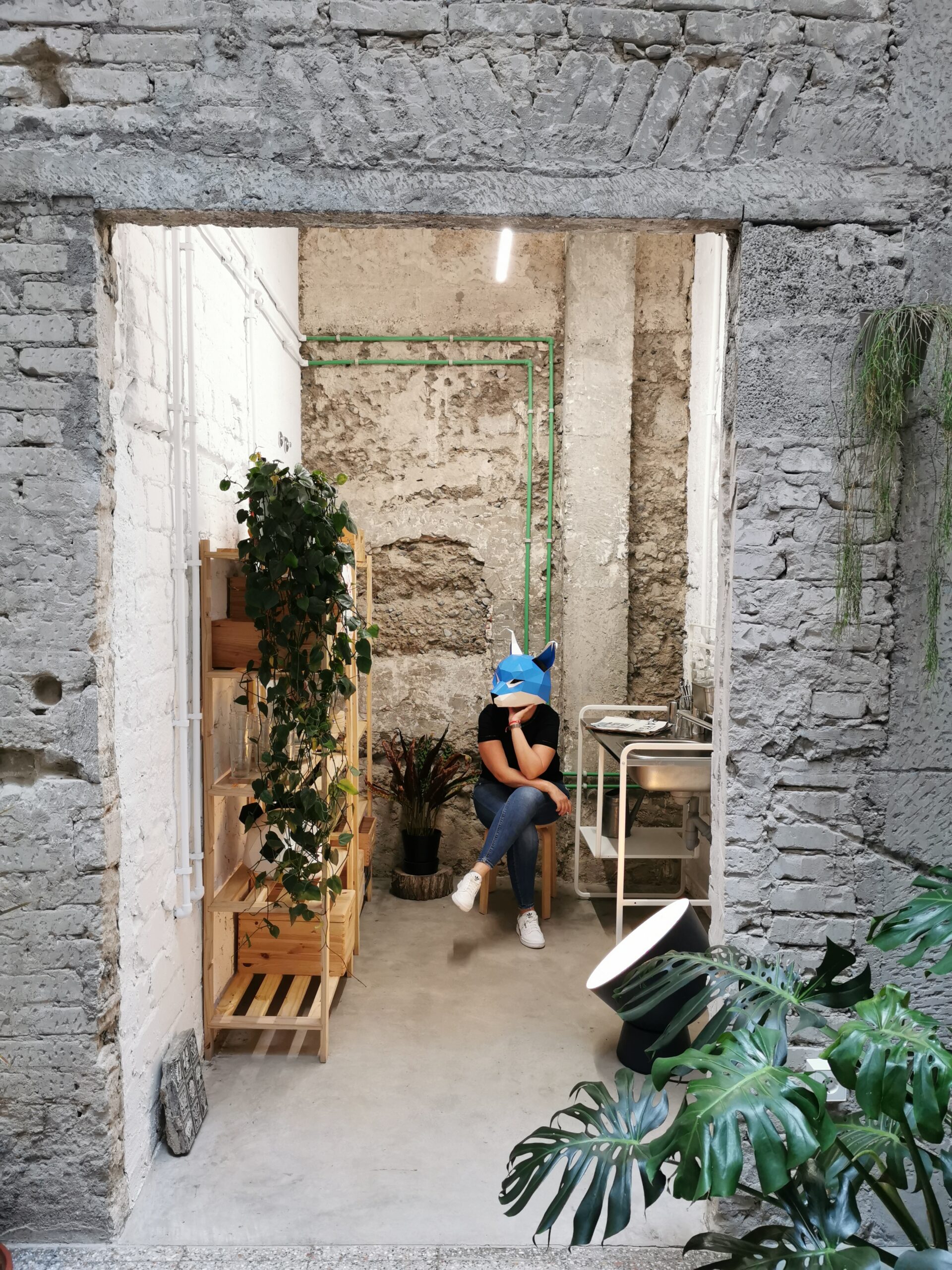
The eighteenth episode traces architect Gabrielle Vinson treating a typical urban house in Toulouse’s working-class Saint-Cyprien quarter, the so-called Toulousaine, as a living body in need of healing through an urban mining process adapted to a domestic context. Through selective subtraction, material exposure, and reuse, the Nestor Brun House becomes a bricolaged archive of the neighbourhood’s layered social and material memory.
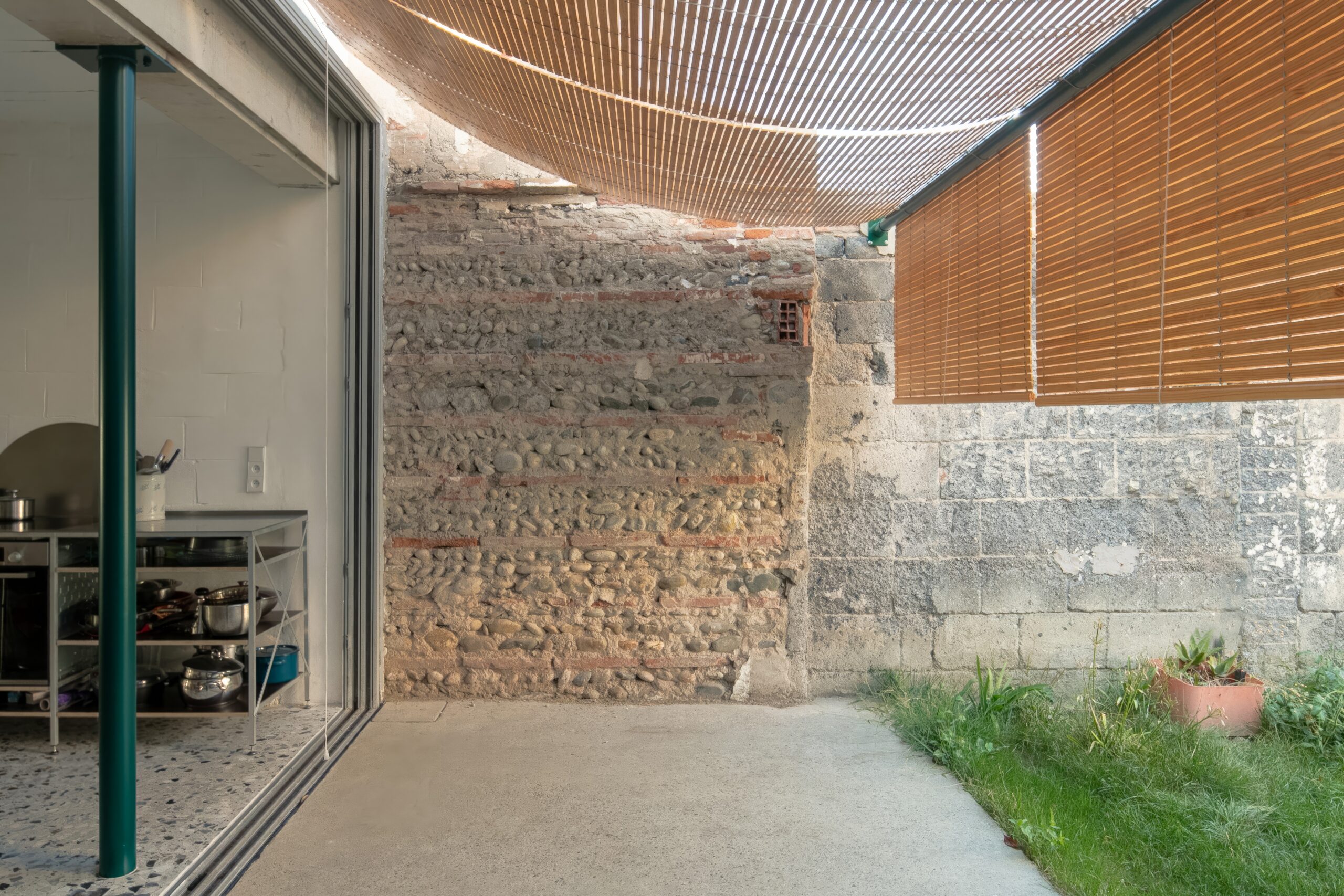
Approaching the existing house as both a cultural artefact and a material reservoir, the architect adopts urban mining as a design methodology rooted in the recovery and reactivation of the built environment (Bergmann, 2020). Interior partitions are removed to strengthen the connection with the garden, and allow natural light to penetrate more deeply into the house, while accumulated finishes are carefully stripped away to reveal the authentic structure beneath: brick and pebble walls, hollow-tile ceilings, and exposed concrete beams bearing visible traces of time and successive occupations. Guided by attentive transformation, preserved and reclaimed elements are selectively reintegrated into the redesign, allowing past and present to remain materially intertwined. Within this process, construction is reframed as an act of harvesting and recirculating existing resources rather than producing anew (Hebel, Wisniewska & Heisel, 2021). Autonomous insertions — including a lightweight metal kitchen and custom-built elements fabricated in situ — reinforce the project’s raw architectural language.
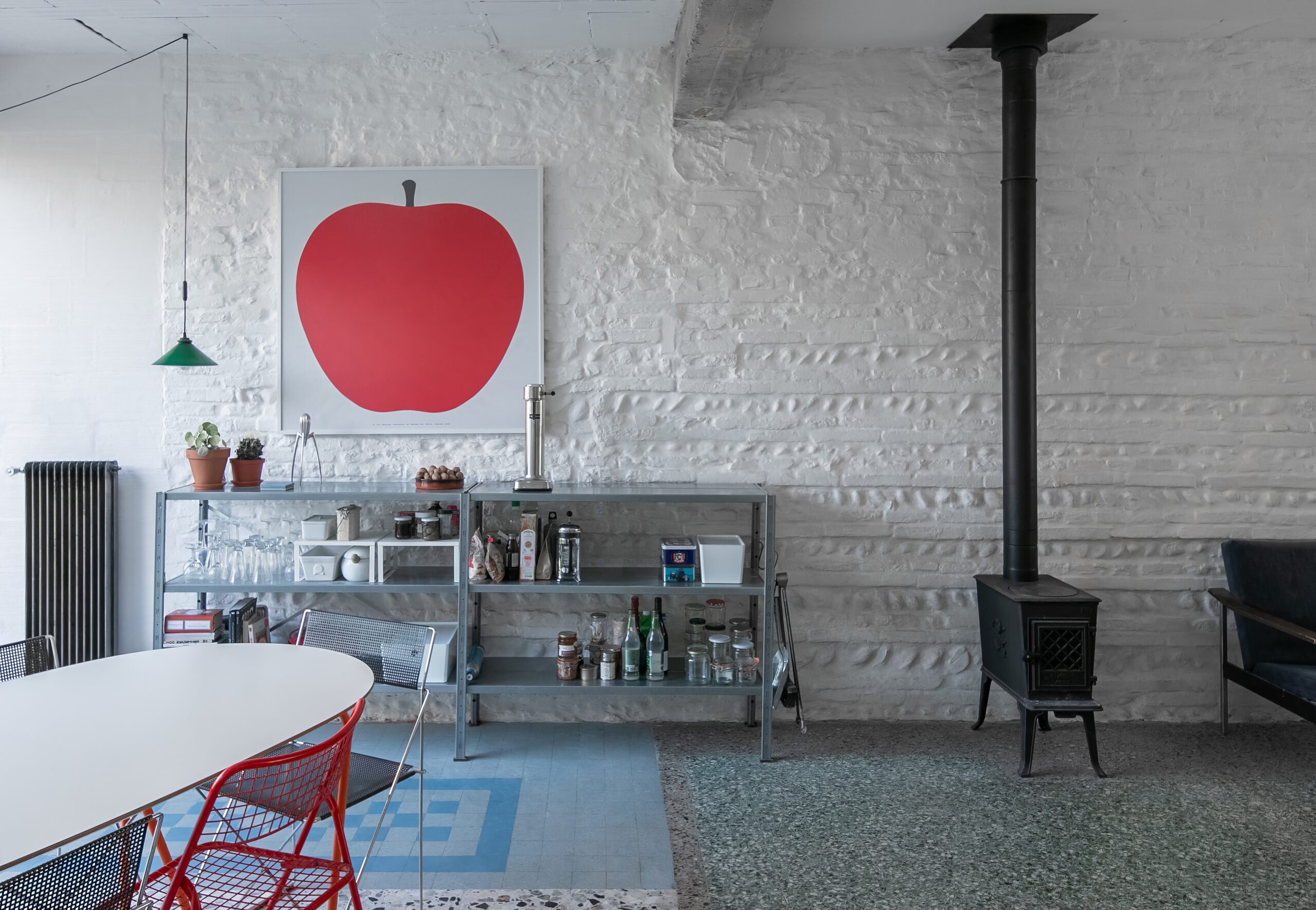
Nestor Brun House proposes an alternative ethos for contemporary domesticity in which the house is treated as a living body whose capacity to shelter resides precisely in its ability to remain authentic, vulnerable, free of any unnecessary concealment and ultimately unique.
Read the whole story, here!
Story Nineteen
Naked House by Xstudio Reframes Home as Social Infrastructure within Las Palmas’ Ordinary Urbanism.
The nineteenth episode follows Xstudio’s transformation of a 1949 self-built casa terrera in Guanarteme, the historic working-class quarter of Las Palmas de Gran Canaria. Through Naked House, the project reflects on domestic space as both a personal archive shaped by memory, climate, and everyday rituals, and a collective form of social infrastructure capable of resisting the homogenizing pressures of speculative urbanization embedded within the city’s ordinary urban fabric.
Guanarteme, in Las Palmas de Gran Canaria, emerged through incremental working-class urbanization tied to the Port of La Luz, evolving as a dense yet human-scaled example of “ordinary urbanism” shaped by everyday life rather than master planning (Crawford, Chase and Kaliski, 1999). Its dominant domestic typology, the casa terrera, embodied intergenerational living, climatic adaptation, and collective forms of inhabitation through self-construction and gradual expansion. Comparable to the bottom-up development of the Athenian polykatoikia made by its inhabitants (Theocharopoulou, 2022), the casa terrera resonates with “housing as a verb” rather than a product, meaning housing continuously produced through social process and collective agency (Turner, 1976). Today, tourism, financialization, and speculative development increasingly threaten this fragile urban fabric.
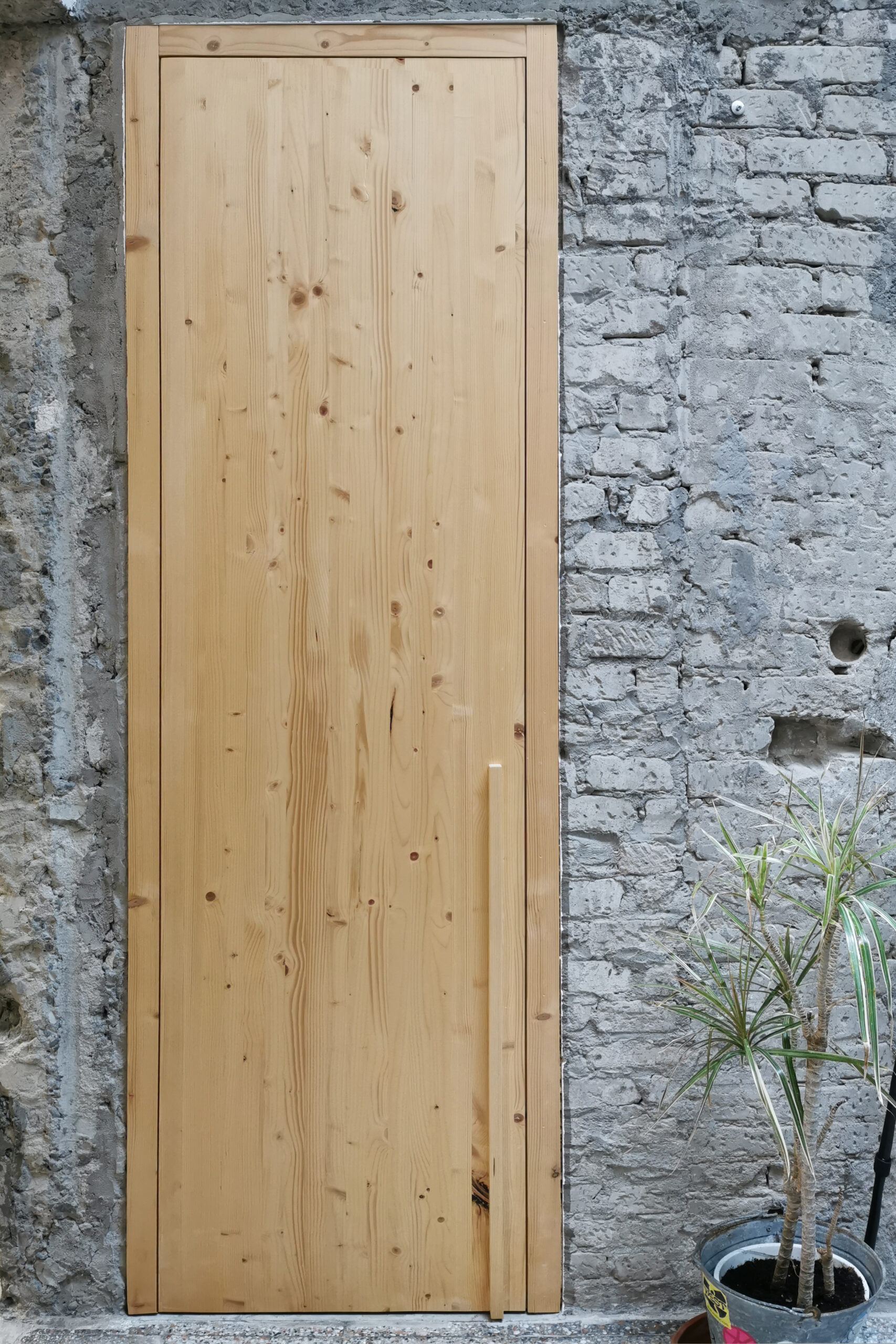
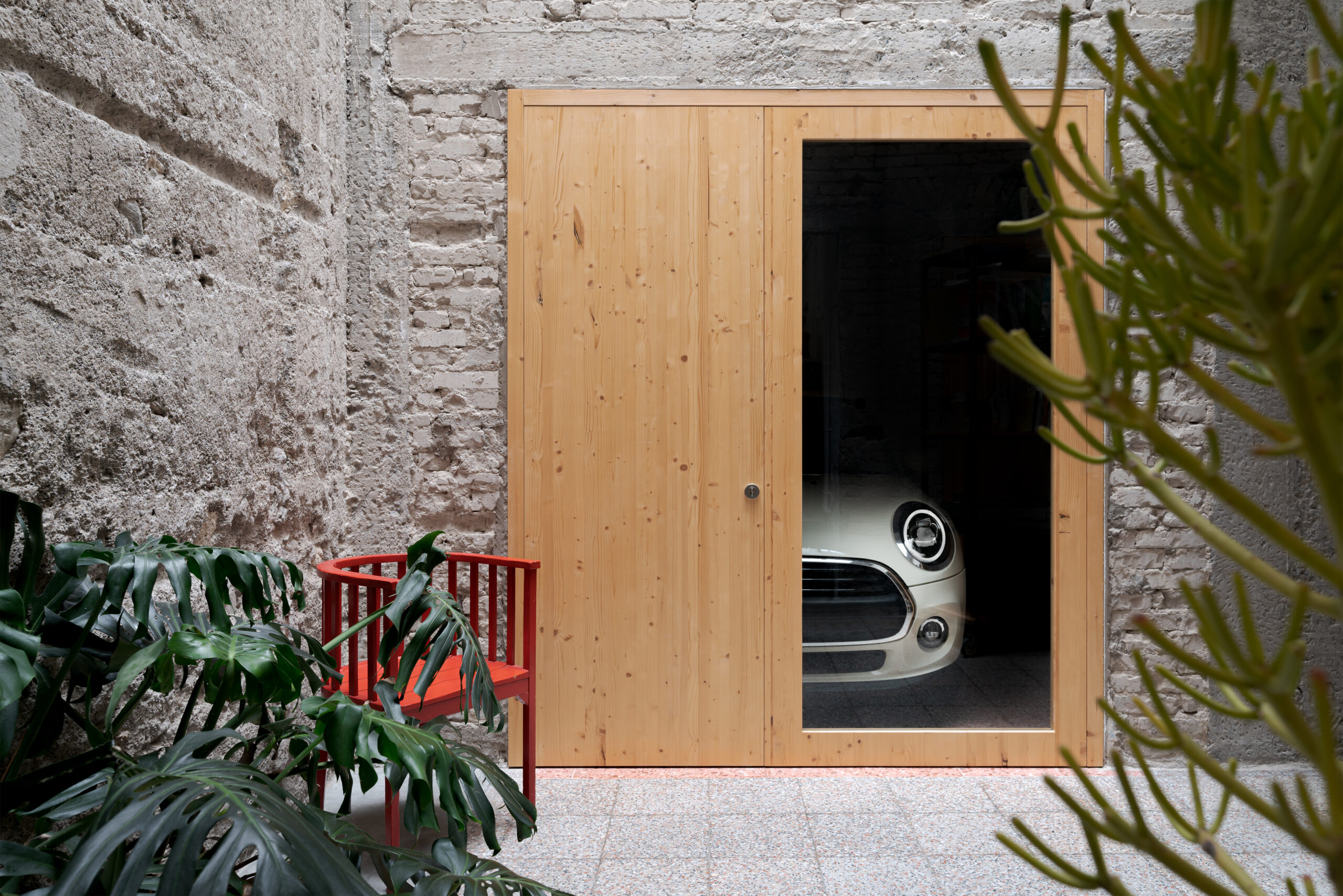
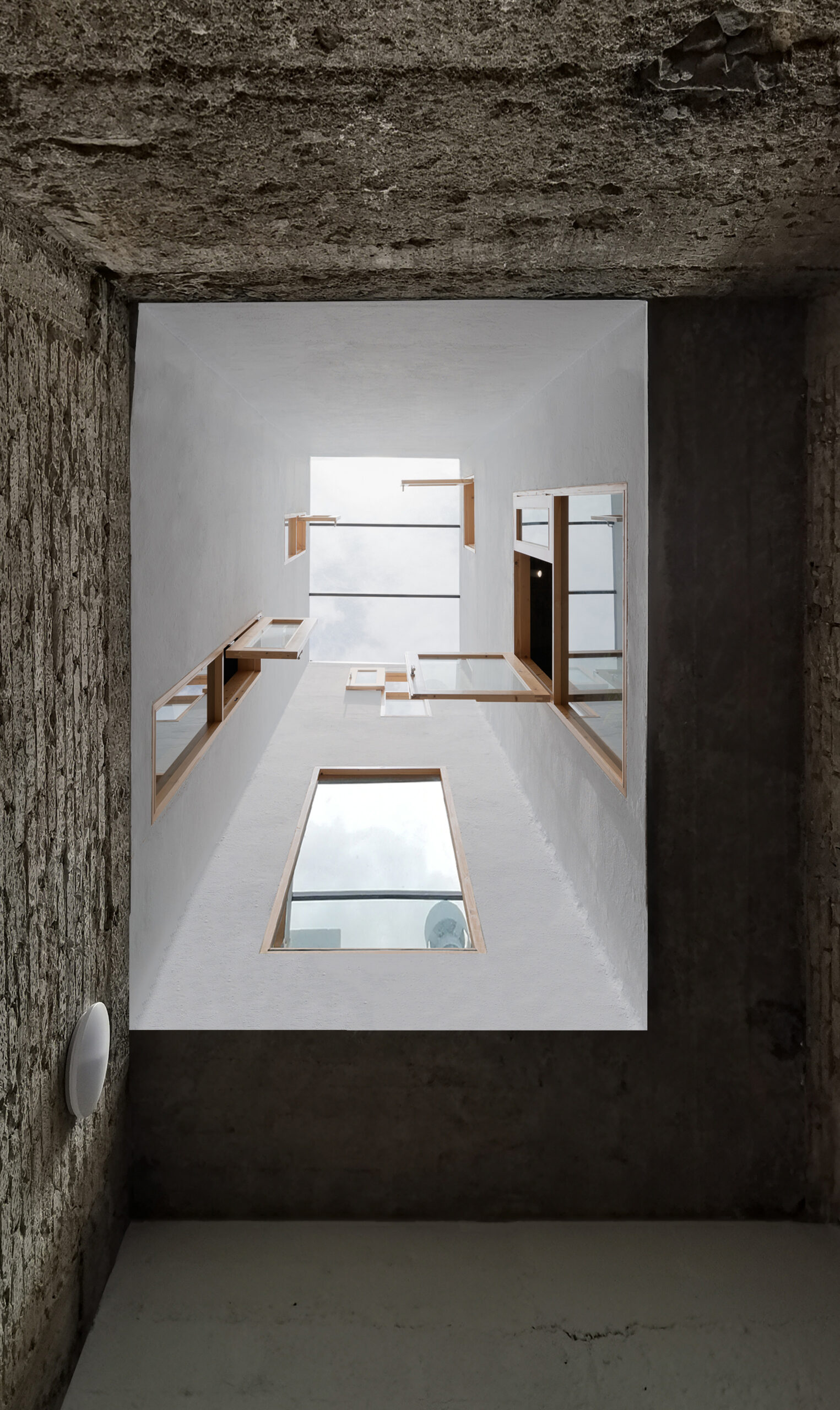
Xstudio shapes Naked House through an architecture of subtraction that works “with what is already there.” Constrained by a €50,000 budget for 225 square meters, the program unfolds vertically across three levels: a graphic design studio on the ground floor, the designer’s own residence on the first floor, and a leisure space on the roof. Reactivating the patio as the house’s central void, the architects enlarge openings and introduce three new skylights, making light itself the primary architectural material. Layers are peeled away to expose the original constructive logic, resulting in domesticity defined through the coexistence of raw and white surfaces. Pine wood carpentry, microcement, and floated concrete floors establish a restrained contemporary vocabulary. Positioned against the escalating housing affordability crisis, Naked House reframes domestic space as memory, shelter, and social infrastructure rather than extractable real estate capital.
Read the whole story, here!
Story Twenty
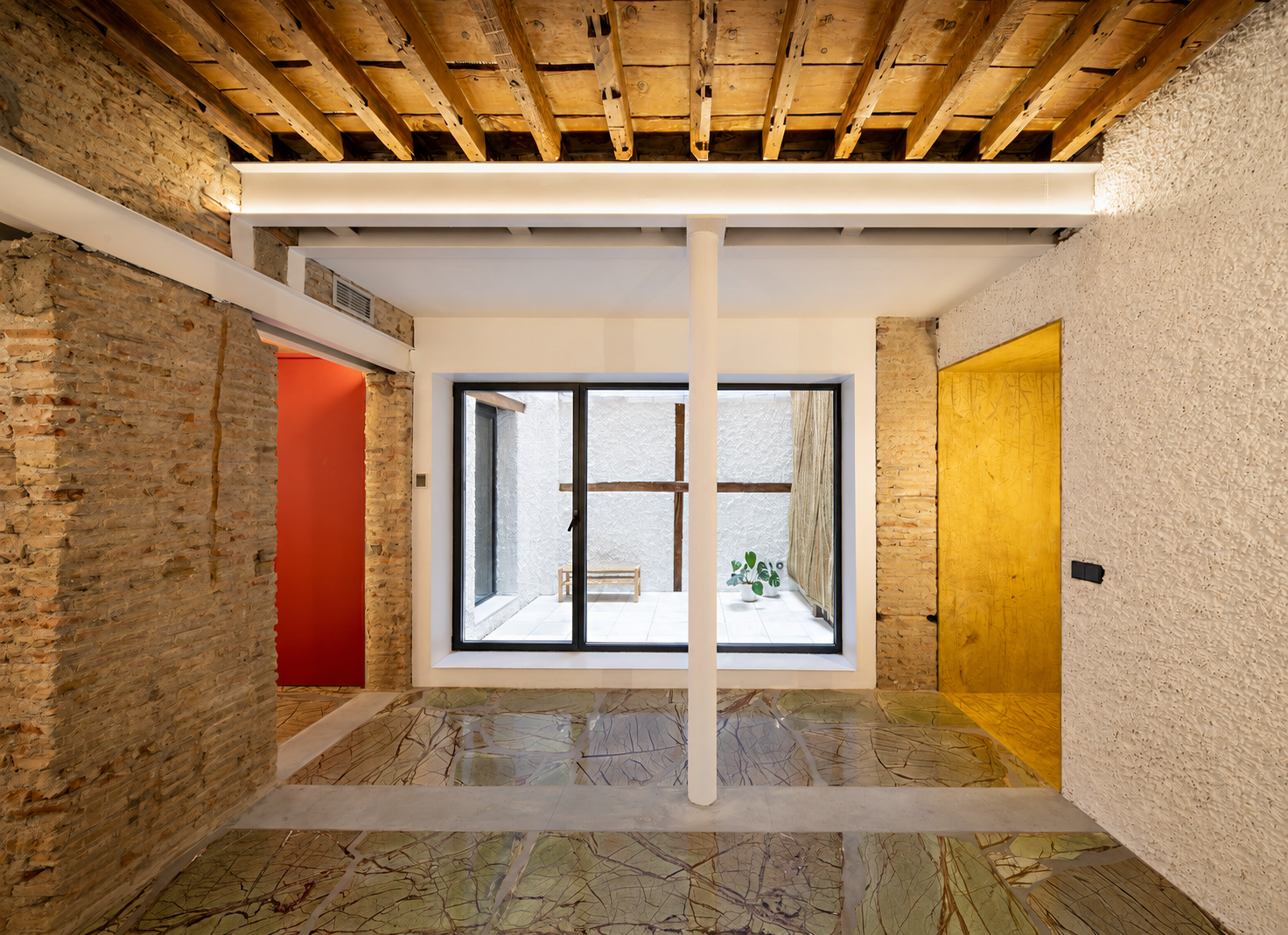
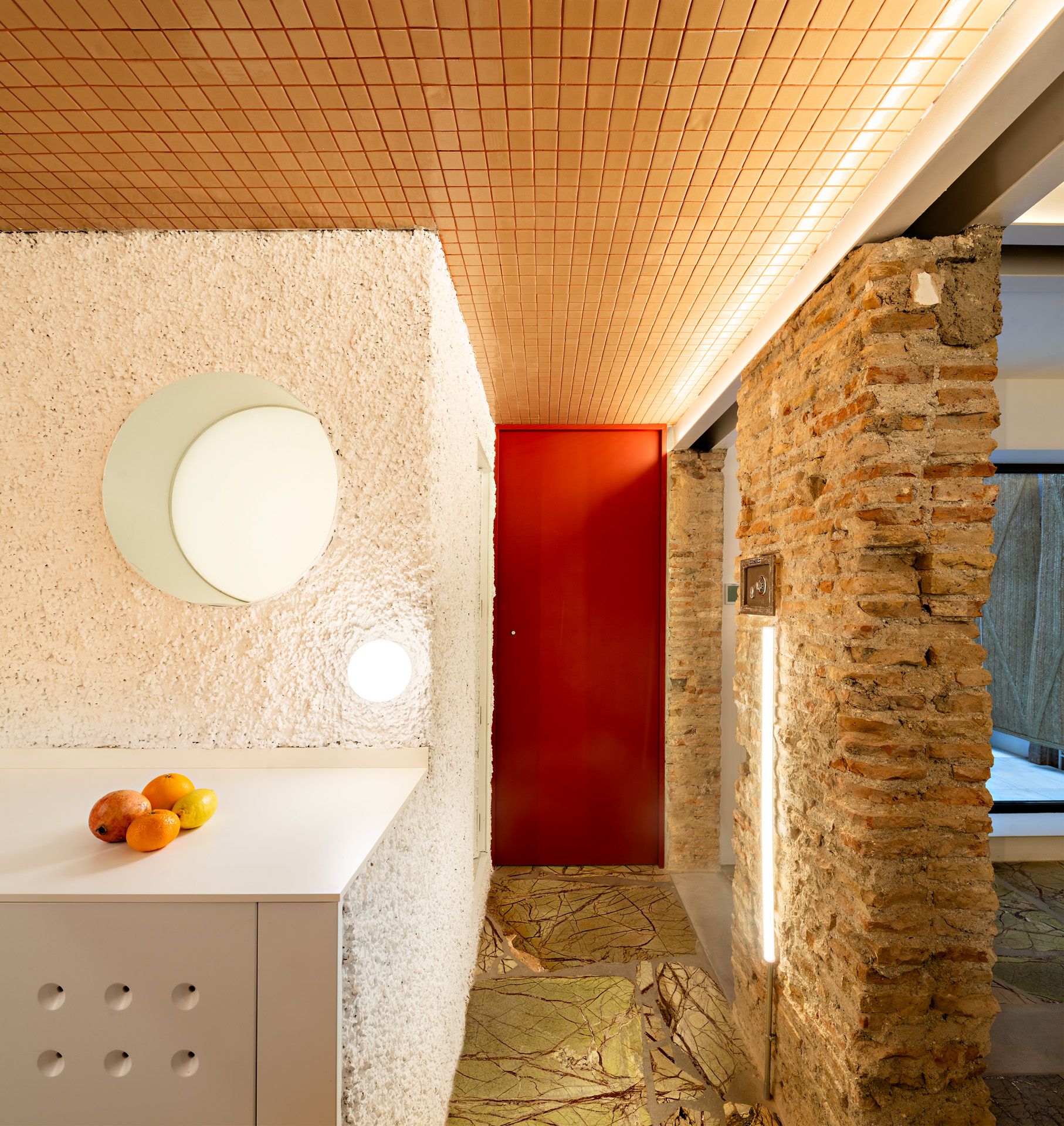
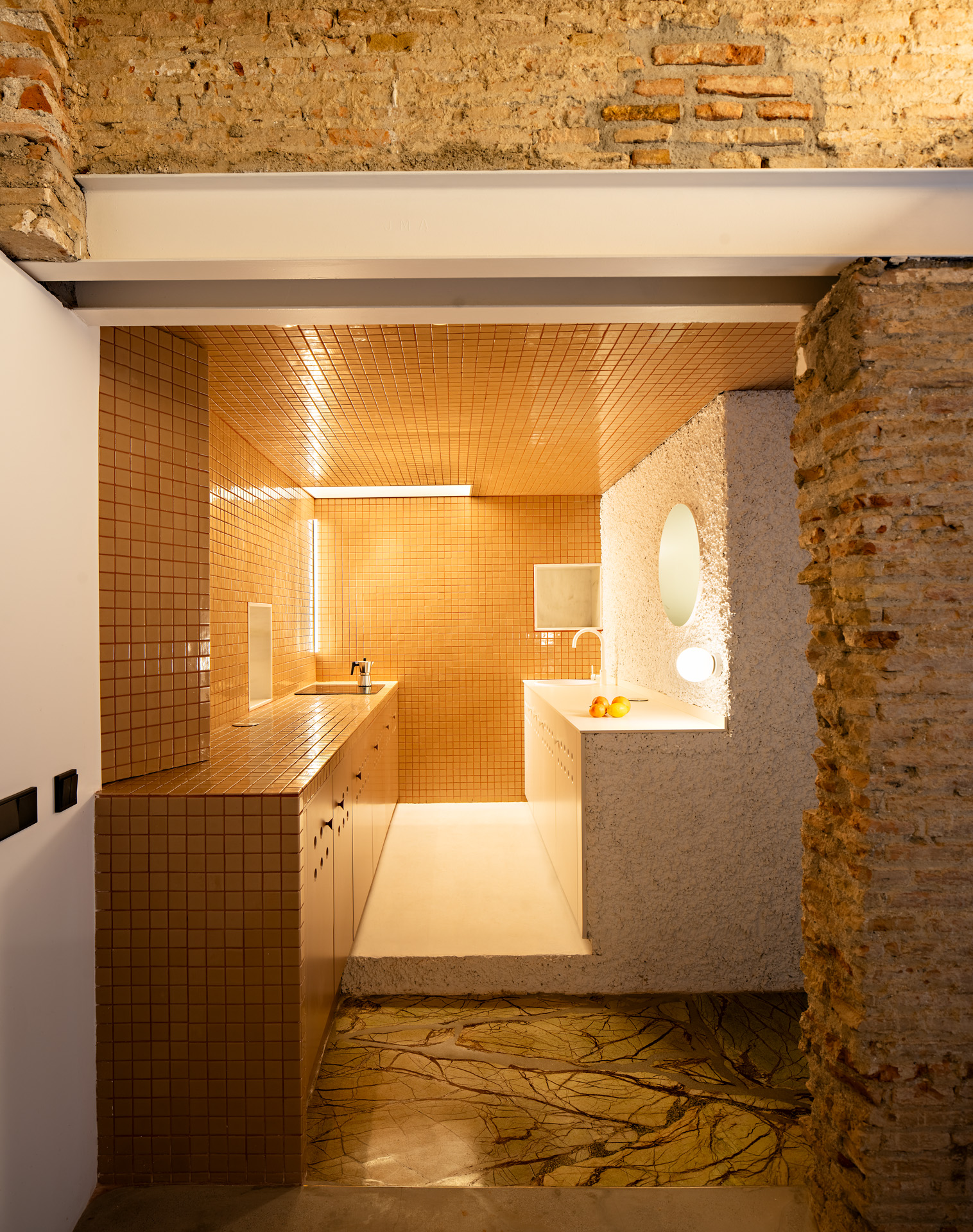
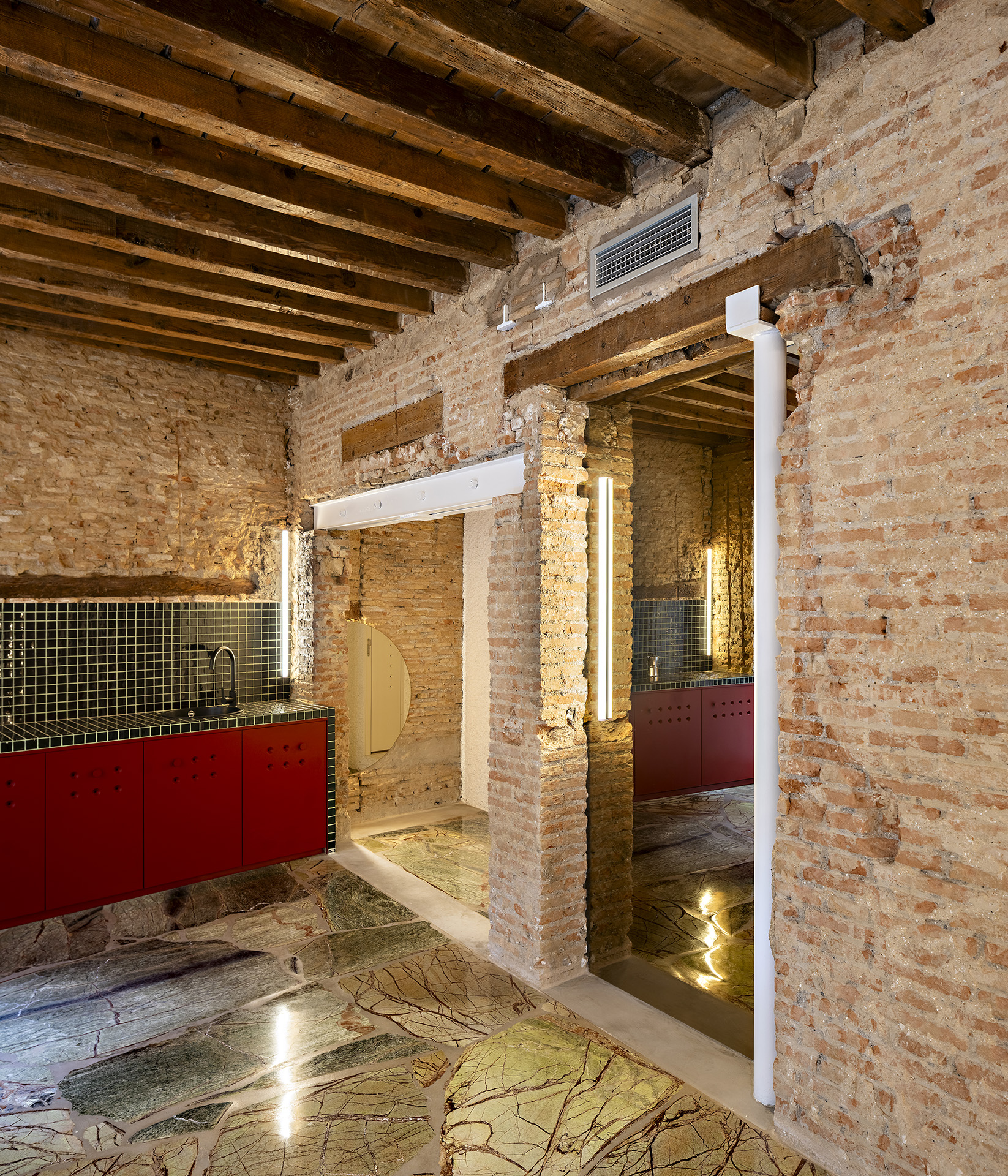
Dos Casas Magdalena by Agustín Gor is a domestic palimpsest of Andalusian materiality.
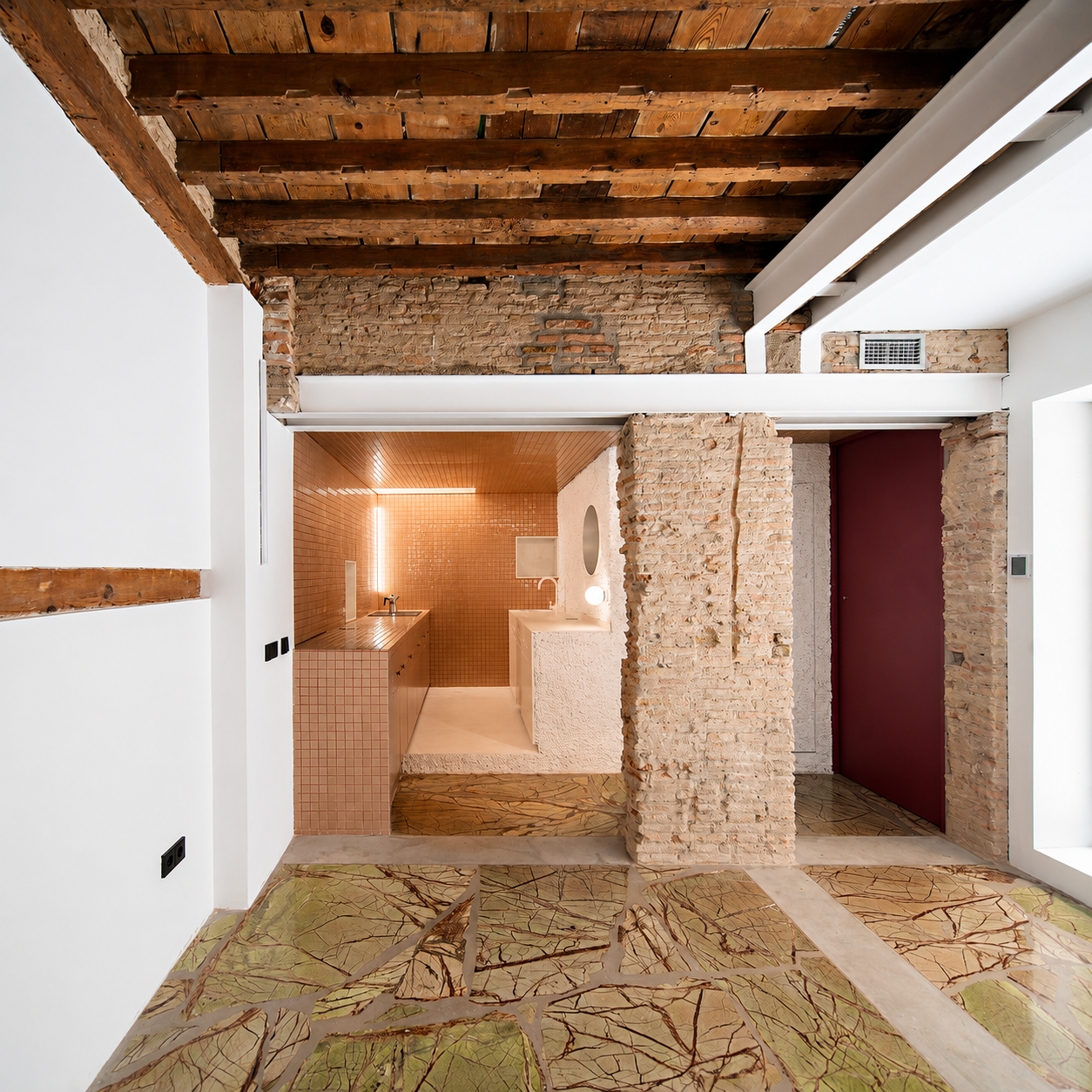
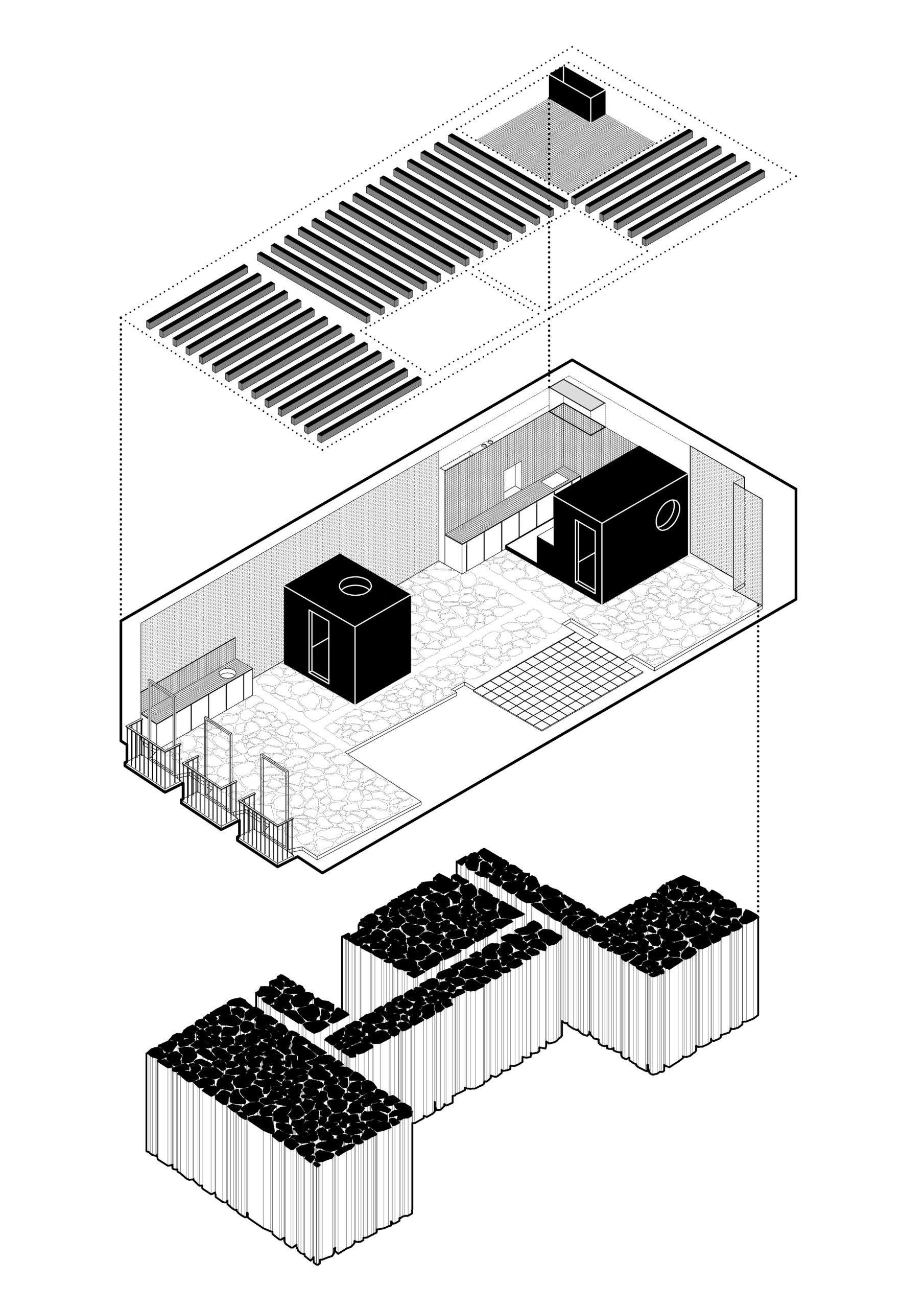
The twentieth episode turns to Granada, where architect Agustín Gor transforms an anonymous 1950s dwelling into a nuanced reflection on memory, materiality, and domestic adaptation. Located in the city’s historic Barrio de la Magdalena, the project reconfigures a modest 90 m² house into two autonomous homes of 35 m² and 55 m² respectively, revealing and extending a process of transformation that has unfolded over decades in response to shifting family structures and evolving housing demands. The resulting architecture embodies a distinctly Andalusian condition, framing the home as an evolving palimpsest shaped by successive generations of inhabitation, material contrasts, and a rich layering of textures.
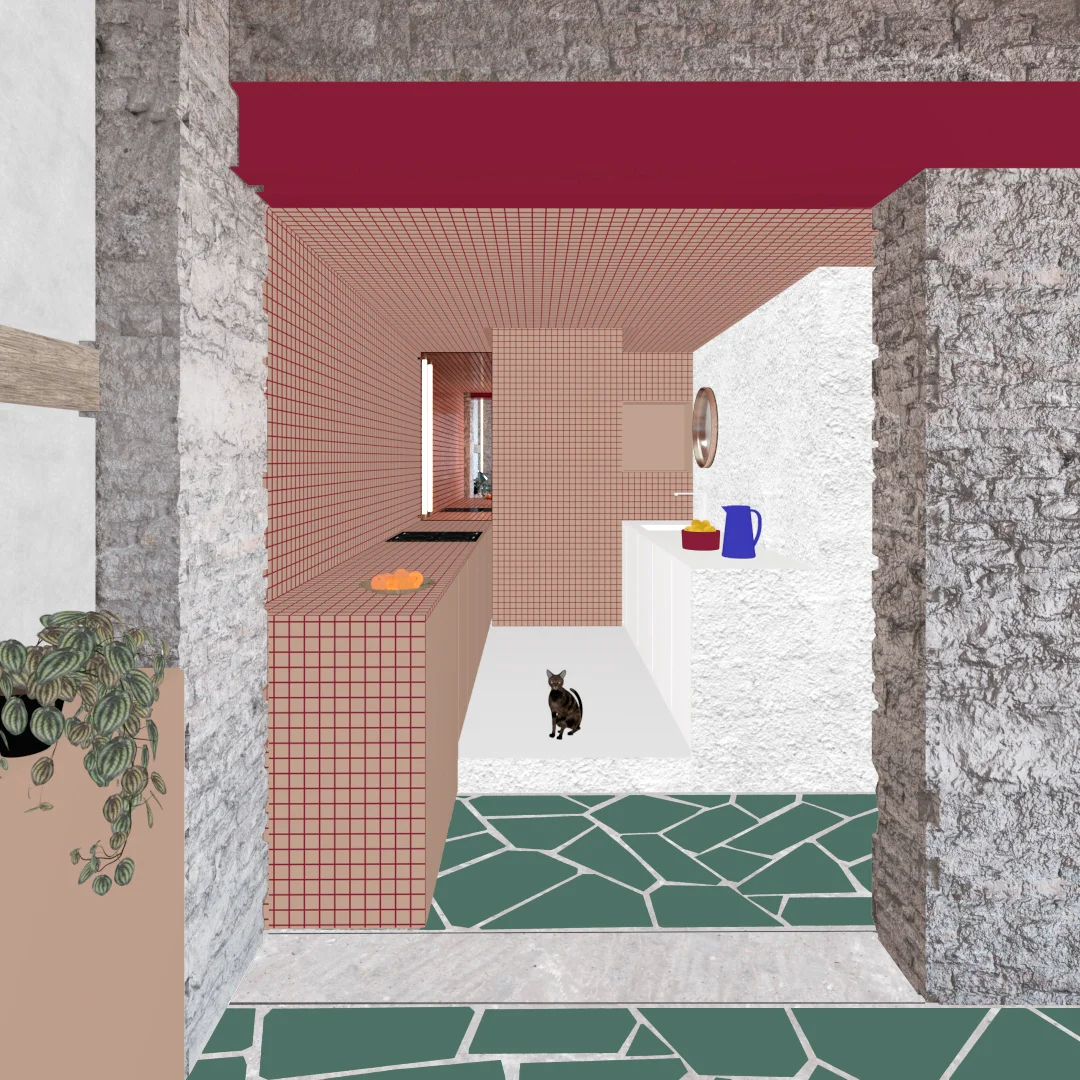
Drawing on André Corboz’s conception of territory as a palimpsest, where architecture acquires value through visible traces of repair, reinforcement, and transformation, Agustín Gor carefully orchestrates a material dialogue between exposed brick masonry, timber structures, recycled beams, rough tirolesa render, glossy ceramic surfaces, steel reinforcements, and an exotic Indian Green stone plane. In doing so, the project echoes Rafael Moneo’s assertion that architecture derives meaning from its ongoing dialogue with time and successive occupations. Simultaneously, it aligns with Mostafavi & Leatherbarrow’s understanding of weathering and material ageing as evidence of life rather than decline, positioning restoration as an act of continuity in which new interventions intensify, rather than erase, the legibility of the existing fabric.
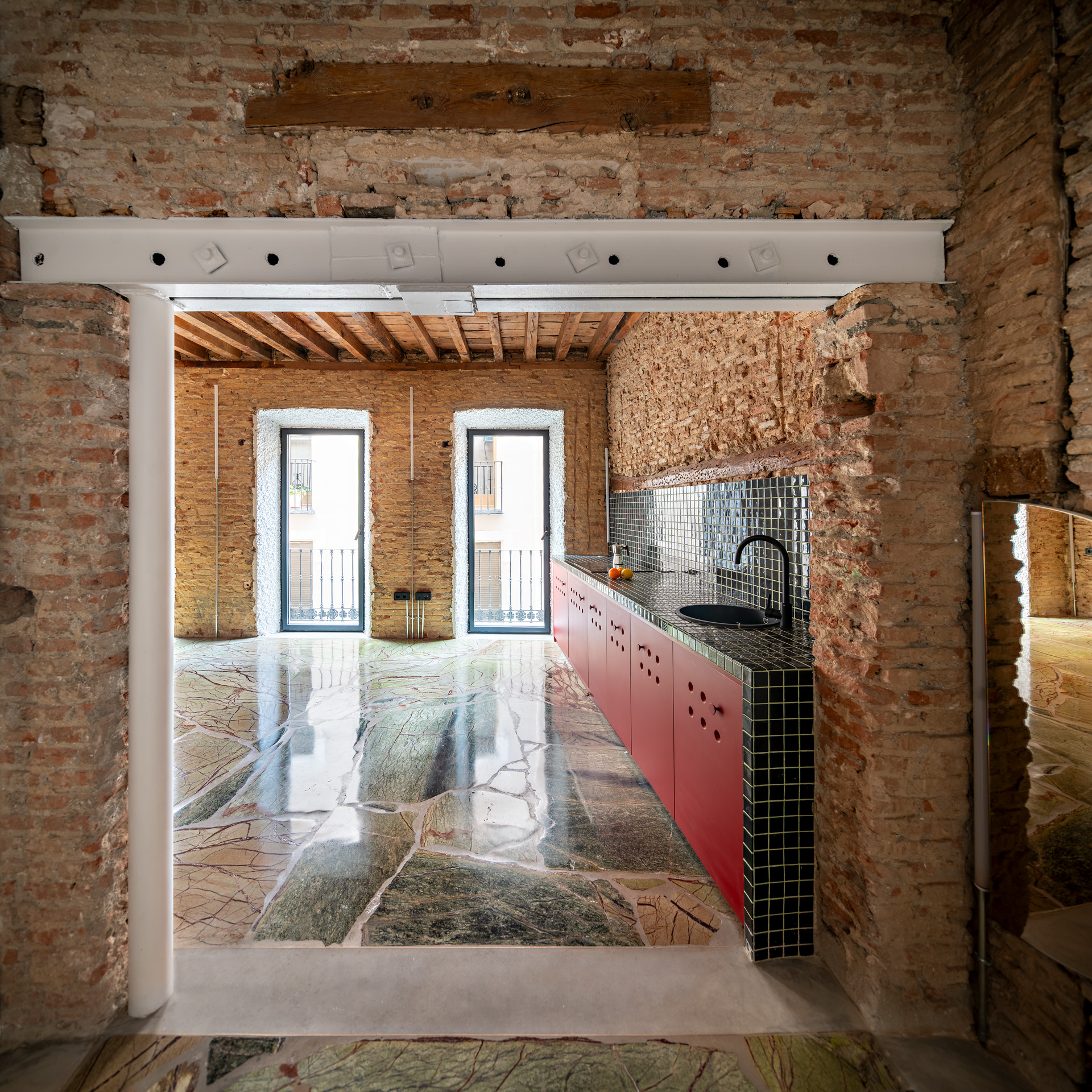
Dos Casas Magdalena illustrates how architecture can uncover, preserve, and project the narratives embedded within ordinary buildings, conceiving heritage not as the preservation of a static past but as the continuation of an evolving cultural memory.
Read the whole story, here!
Story Twenty-One
LOU by 127af reimagines an ordinary Parisian workers’ house as an evolving ecosystem that grows with life.
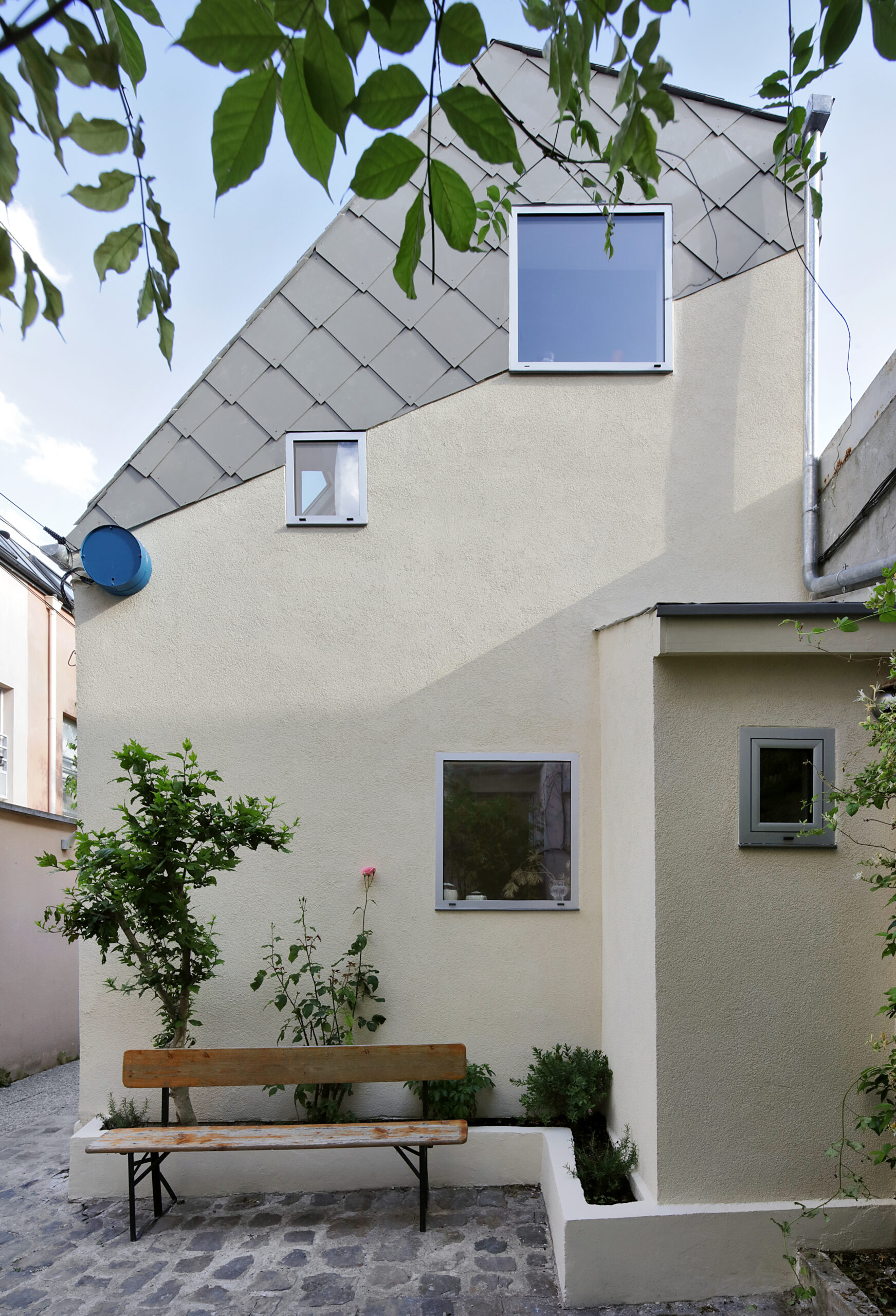
The twenty-first episode follows 127af architects as they transform a modest workers’ house, characteristic of the urban fabric of Bagnolet in the eastern suburbs of Paris, through a rooftop extension. The result is LOU—an adaptable domestic ecosystem that evolves with its inhabitants, accommodating both present and future needs while redefining their relationship with light, air, and everyday life.
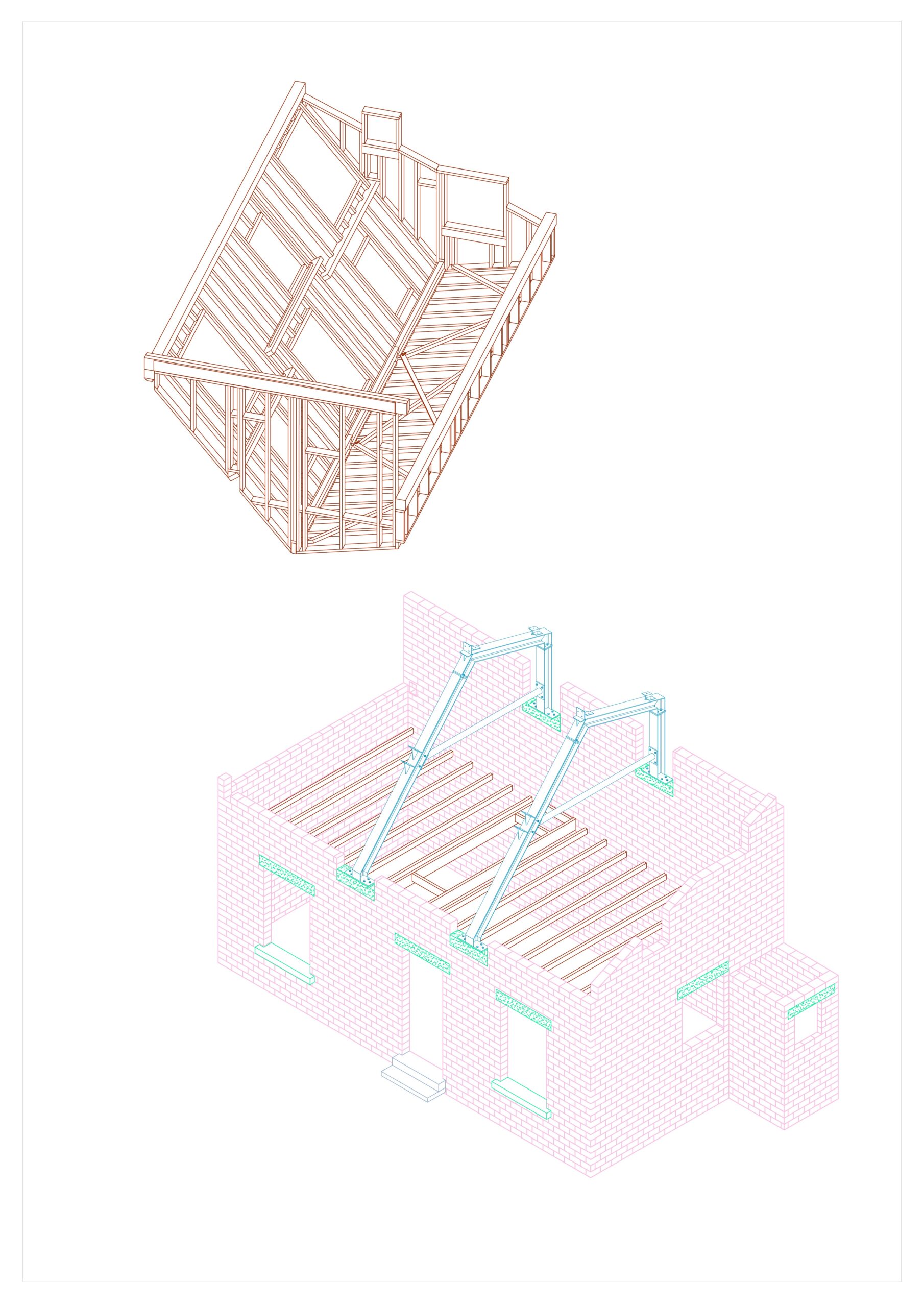
Developed incrementally from a rural village into an industrial suburb, Bagnolet’s deeper architectural condition lies in an urban fabric of workers’ houses, narrow plots, and self-built dwellings shaped through gradual transformation rather than comprehensive planning, recalling the historical faubourg described by Françoise Choay (1965) as a territory formed by everyday practices, incremental growth, and the coexistence of domestic and productive life. These modest dwellings derived their architectural value from their capacity to adapt over time, echoing anonymous architecture as a form of intelligence generated through necessity (Rudofsky, 1964), as well as the understanding of housing as an open framework capable of accommodating change (Habraken, 1972).
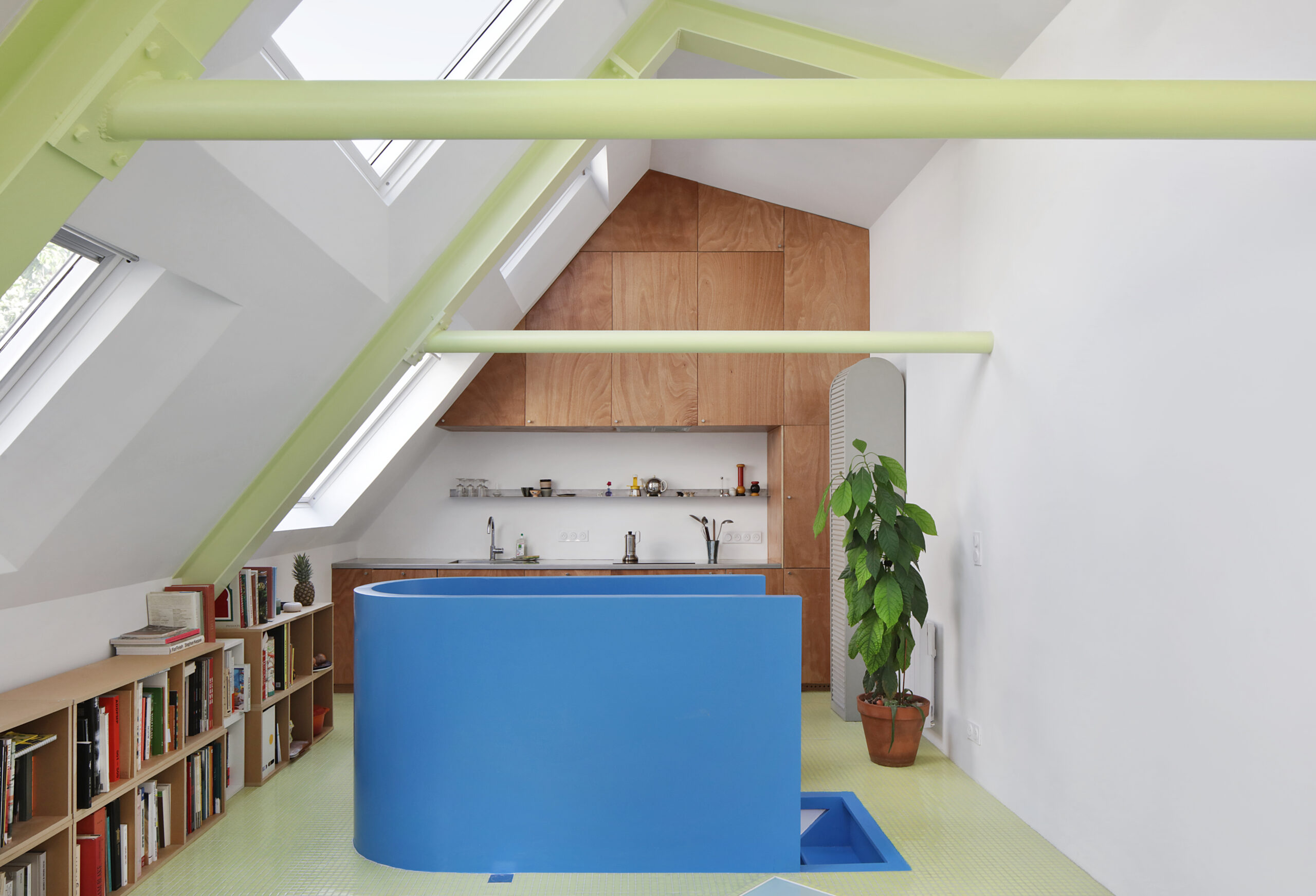
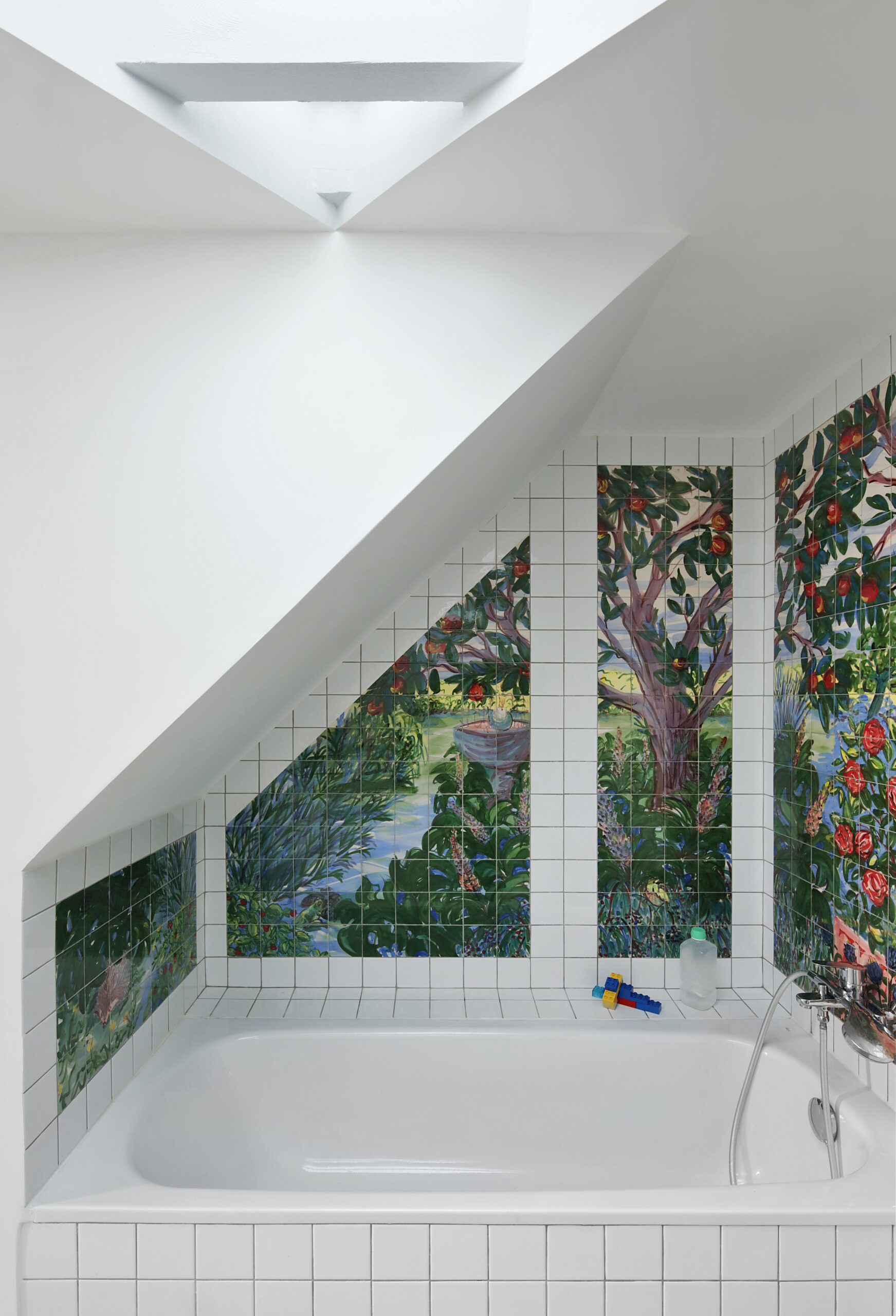
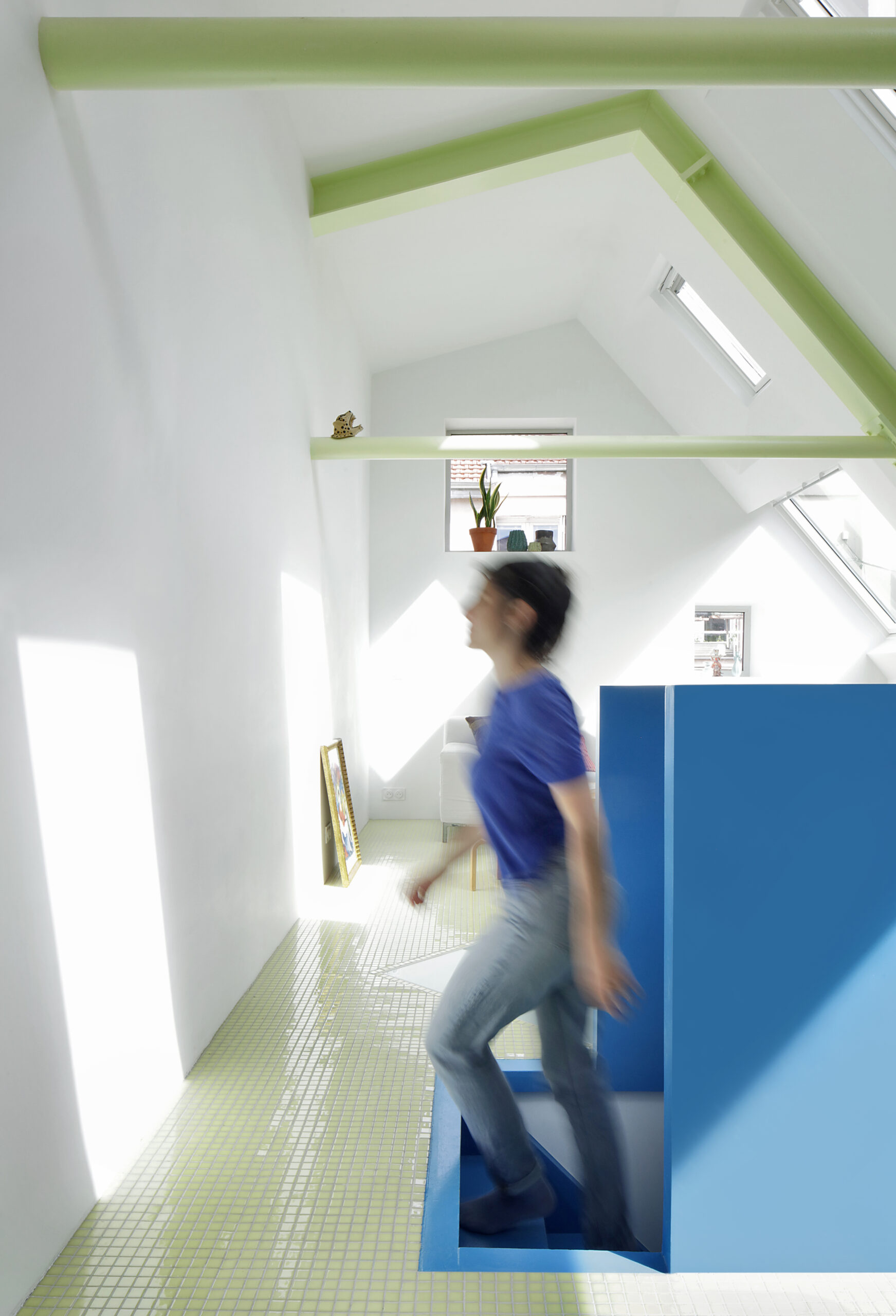
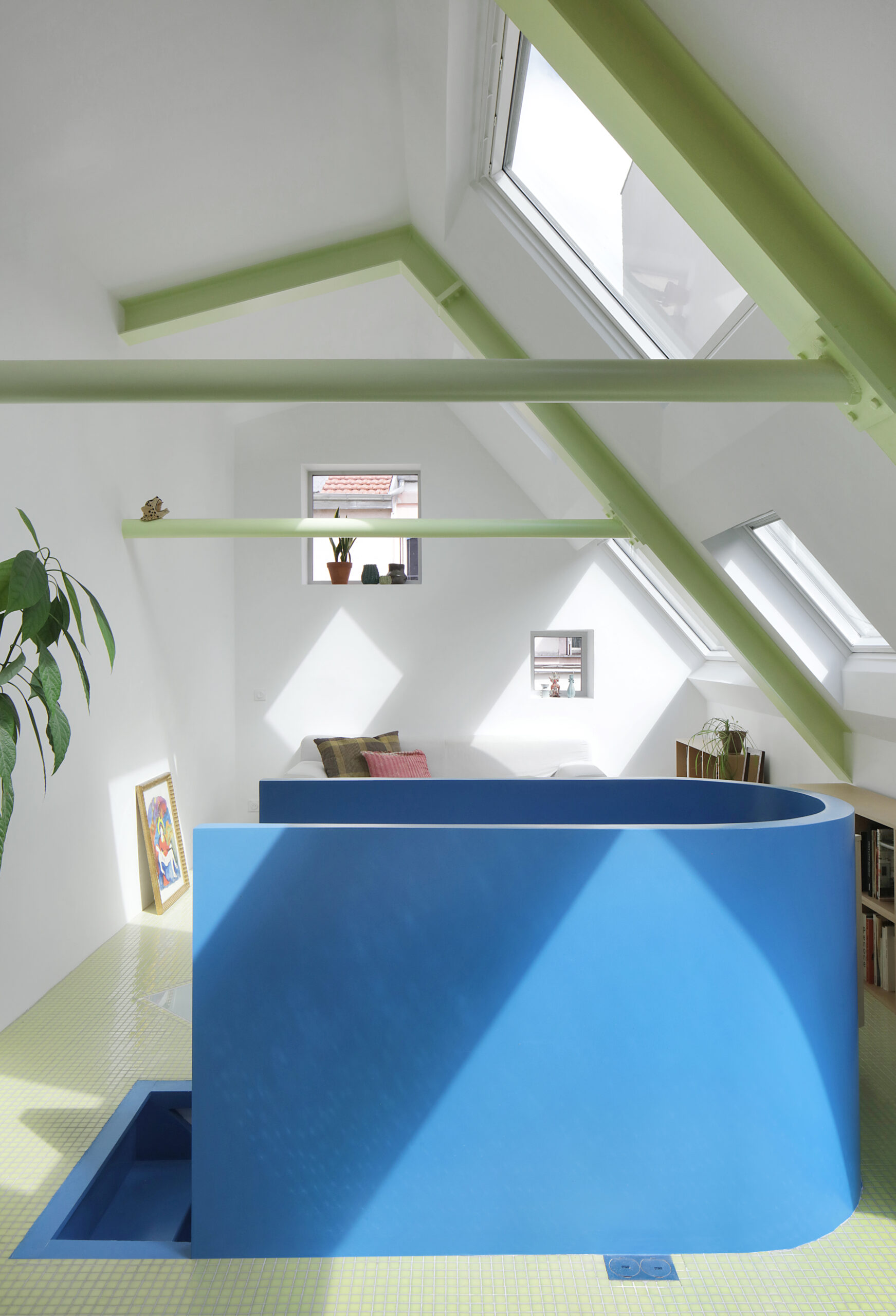
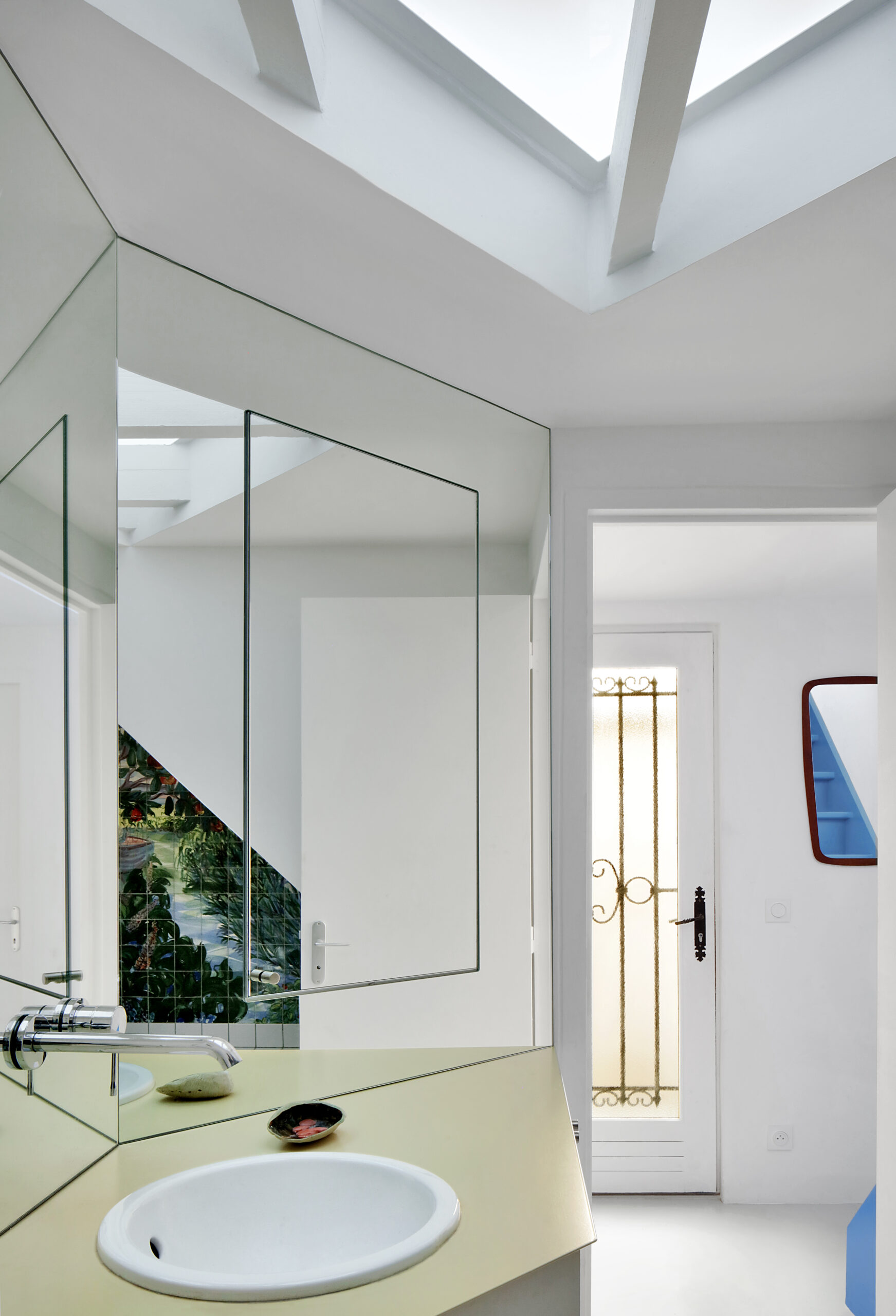
Responding to family needs and structural constraints, 127af architects shape LOU through a strategy of spatial inversion: private functions are placed on the cooler ground floor, while communal life shifts into a light-filled roof extension. A compact skylit bathroom becomes a luminous domestic sanctuary, while a lightweight timber structure insulated with recycled textile fibres and clad in fibre-cement slates accommodates the addition. Exposed lime-green steel trusses anticipate future modifications, allowing the house to continue evolving. Rather than preserving the worker’s house as a static object, LOU extends its original logic of flexibility, demonstrating how existing buildings can adapt to contemporary life while preserving their capacity for transformation.
Read the whole story, here!
Story Twenty-Two
AUX Shapes Hannelore’s First Home of Her Own Between Modernist Housing and Postmodern Privacy
“Home is where one starts from,” writes T. S. Eliot locating home as the origin of identity—a point from which every departure, transformation, and return unfolds. Every emotional geography begins with a room, a wall, a window, a threshold.
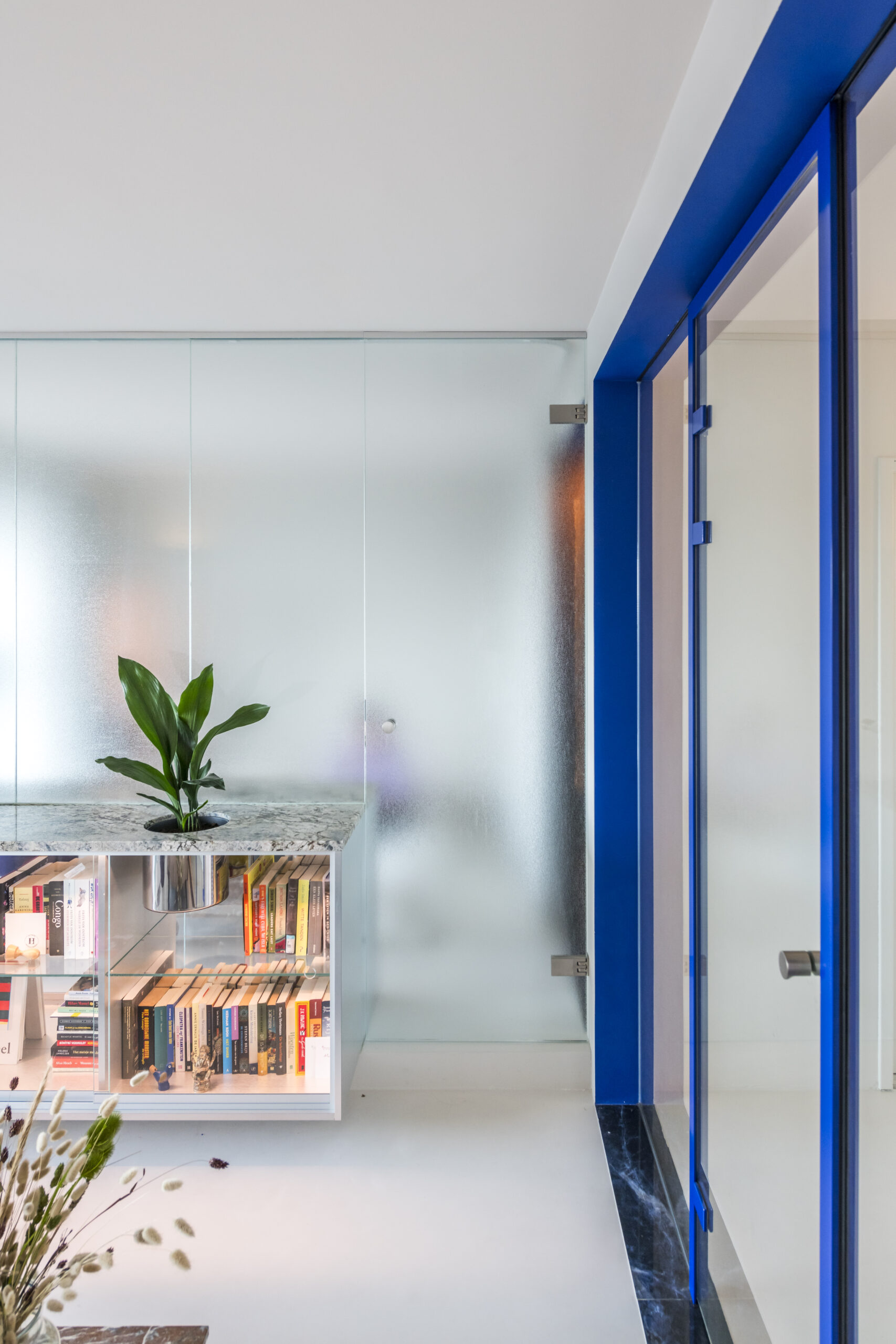
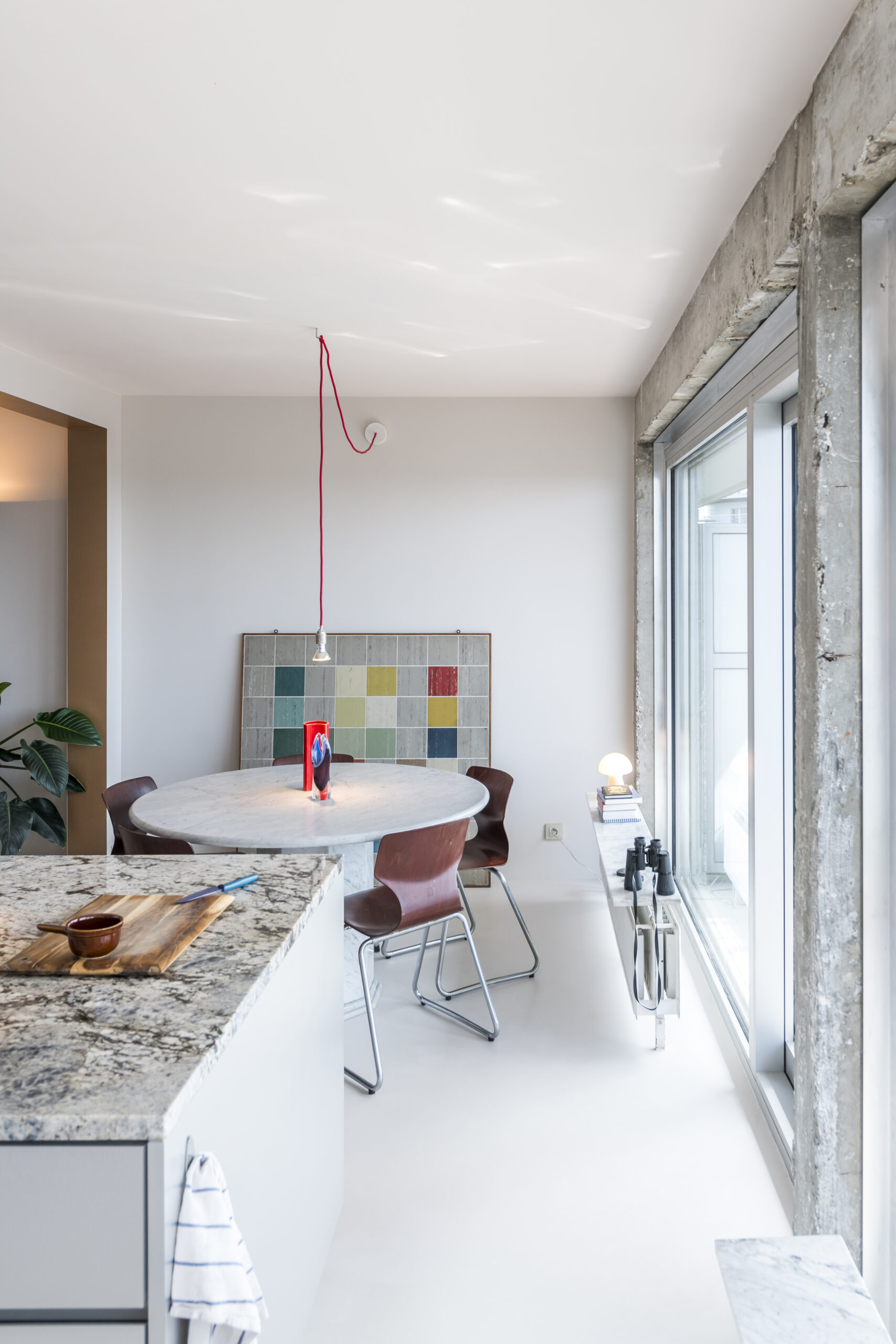
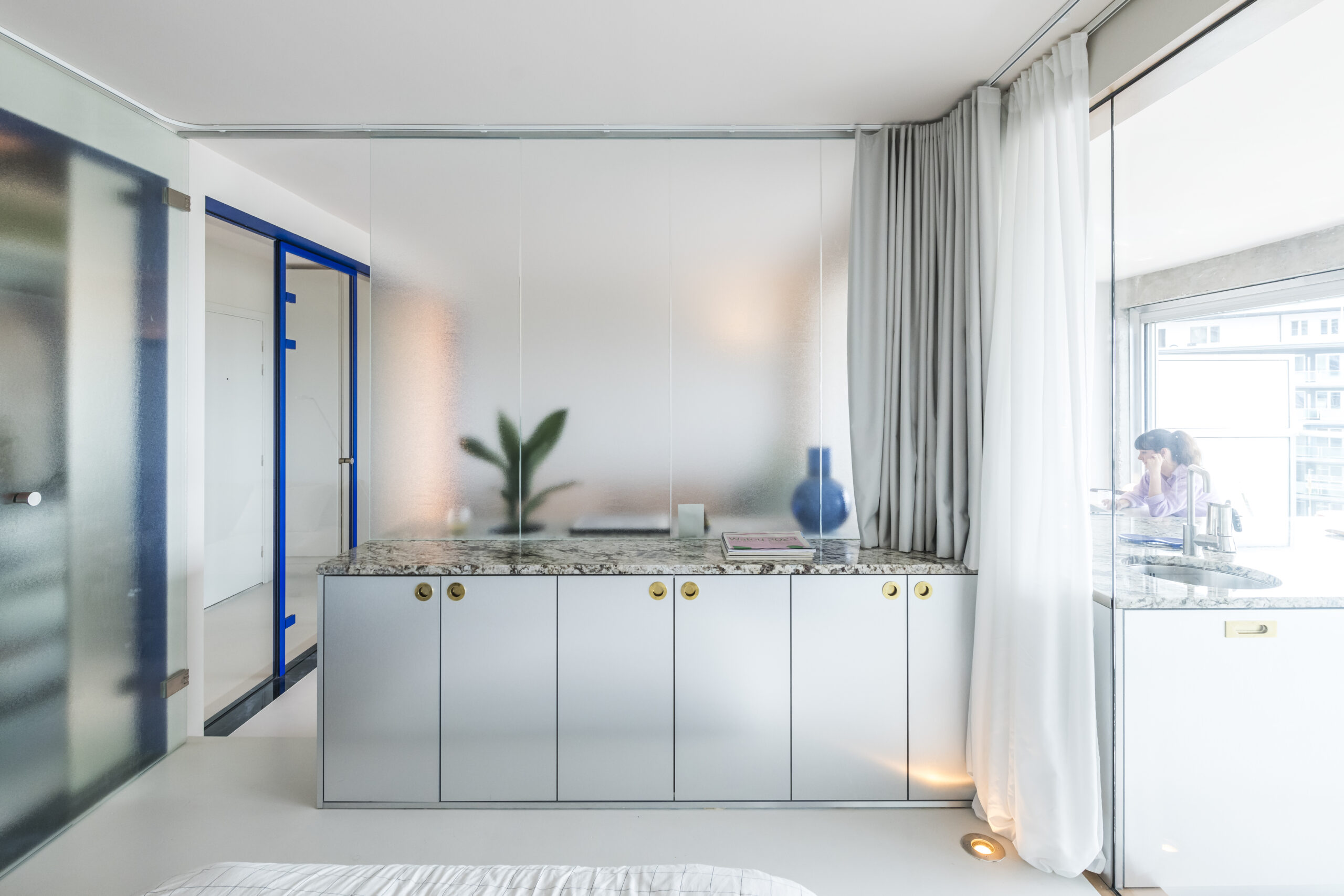
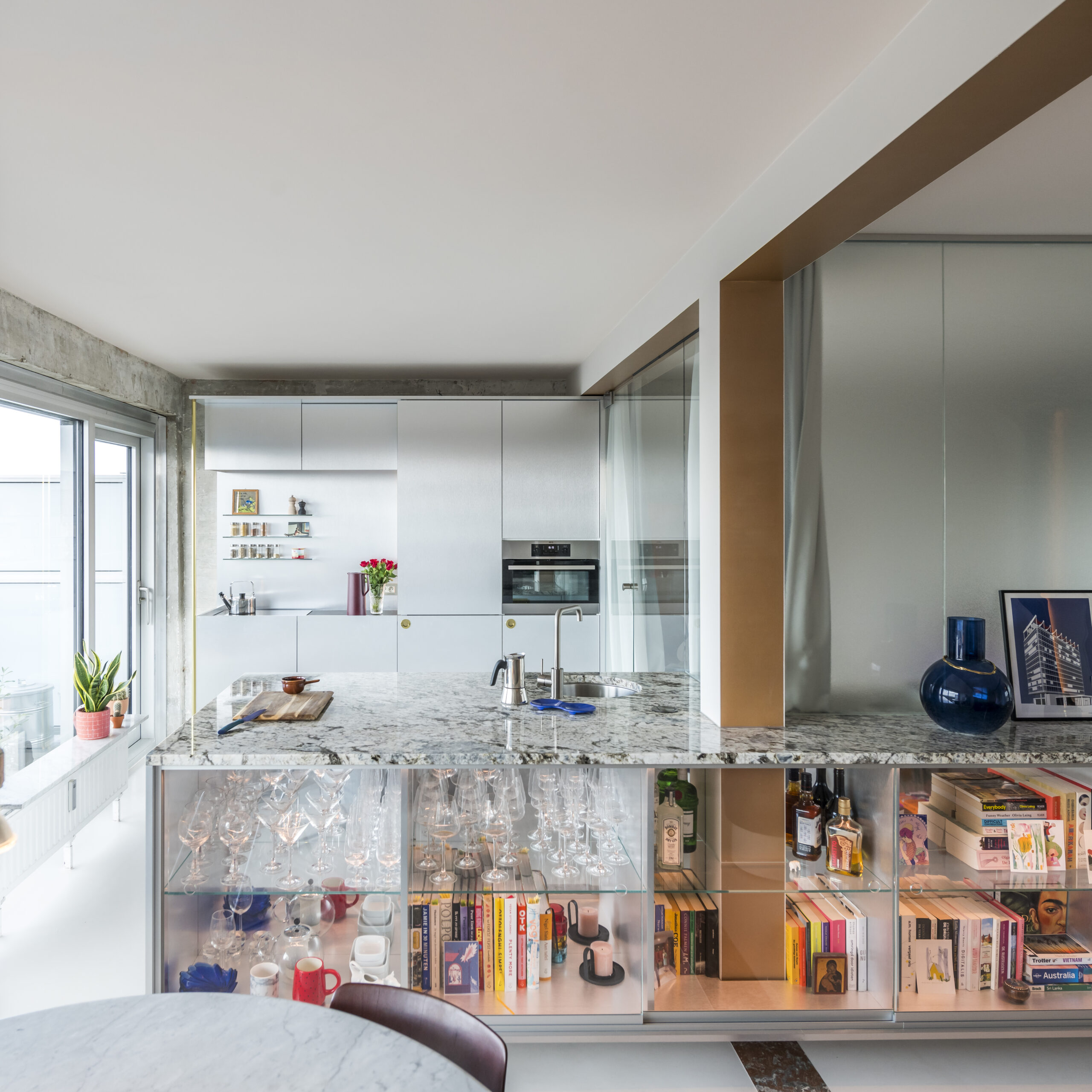
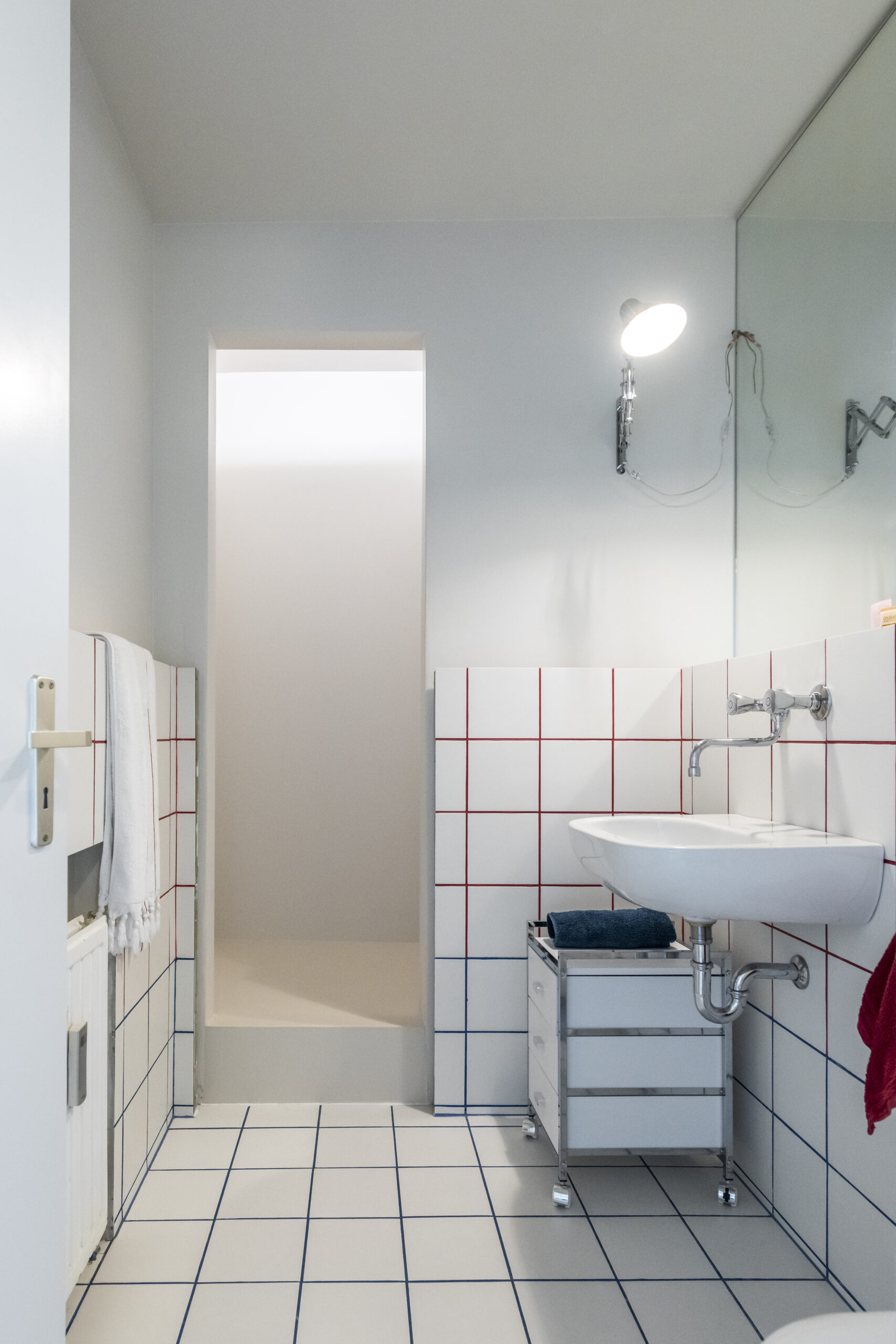
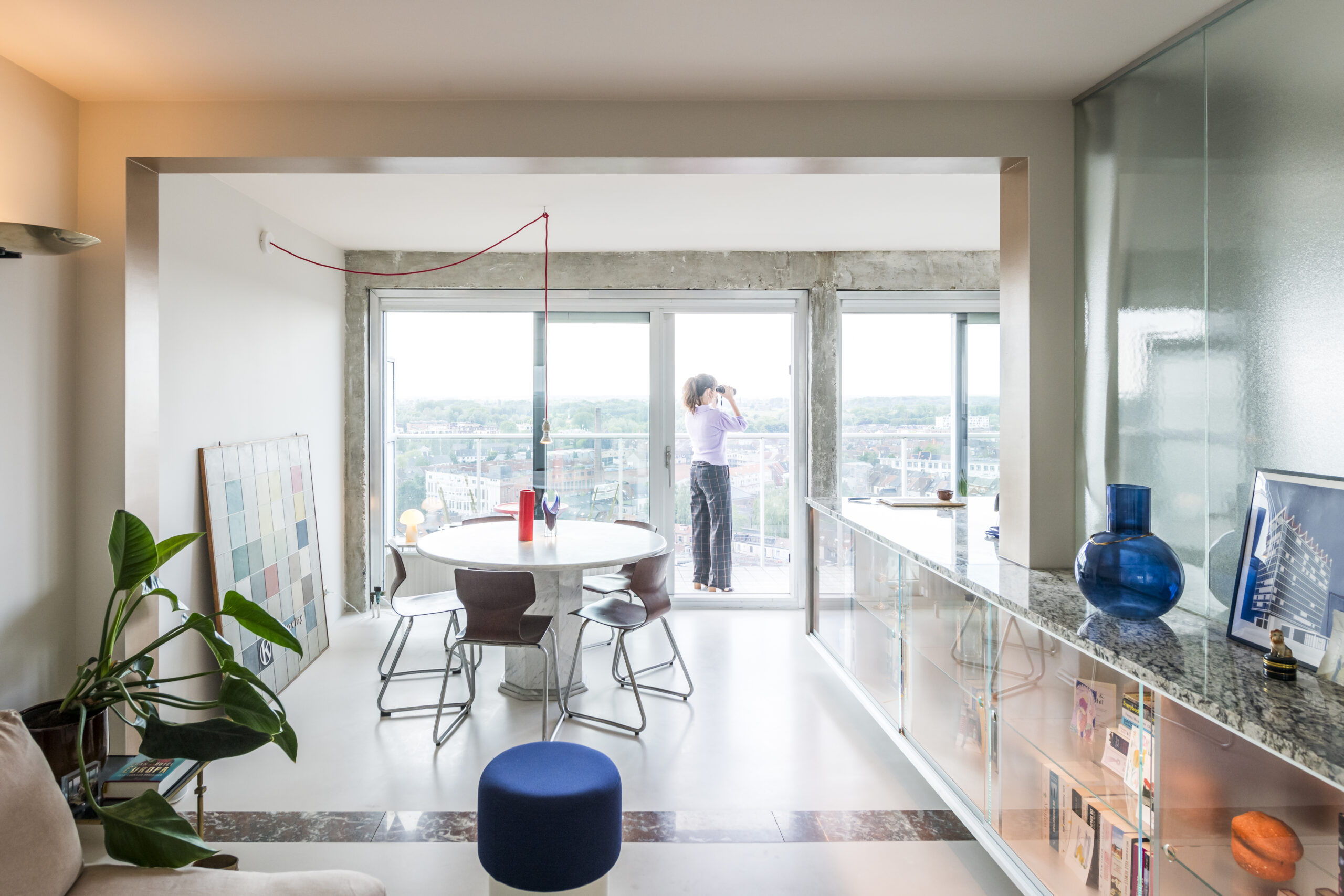
The twenty-second episode follows AUX architects as they translate Hannelore’s dream of her first home of her own into a domestic landscape of selfhood composed by aluminium surfaces, shifting boundaries, and multifunctional objects. Located within one of Ghent’s late-modernist landmarks—the city’s highest residential tower— the project poses two fundamental questions: How does height and the distant horizon alter our experience of dwelling? And how can a standardized apartment within a massive collective structure become a deeply personal home?
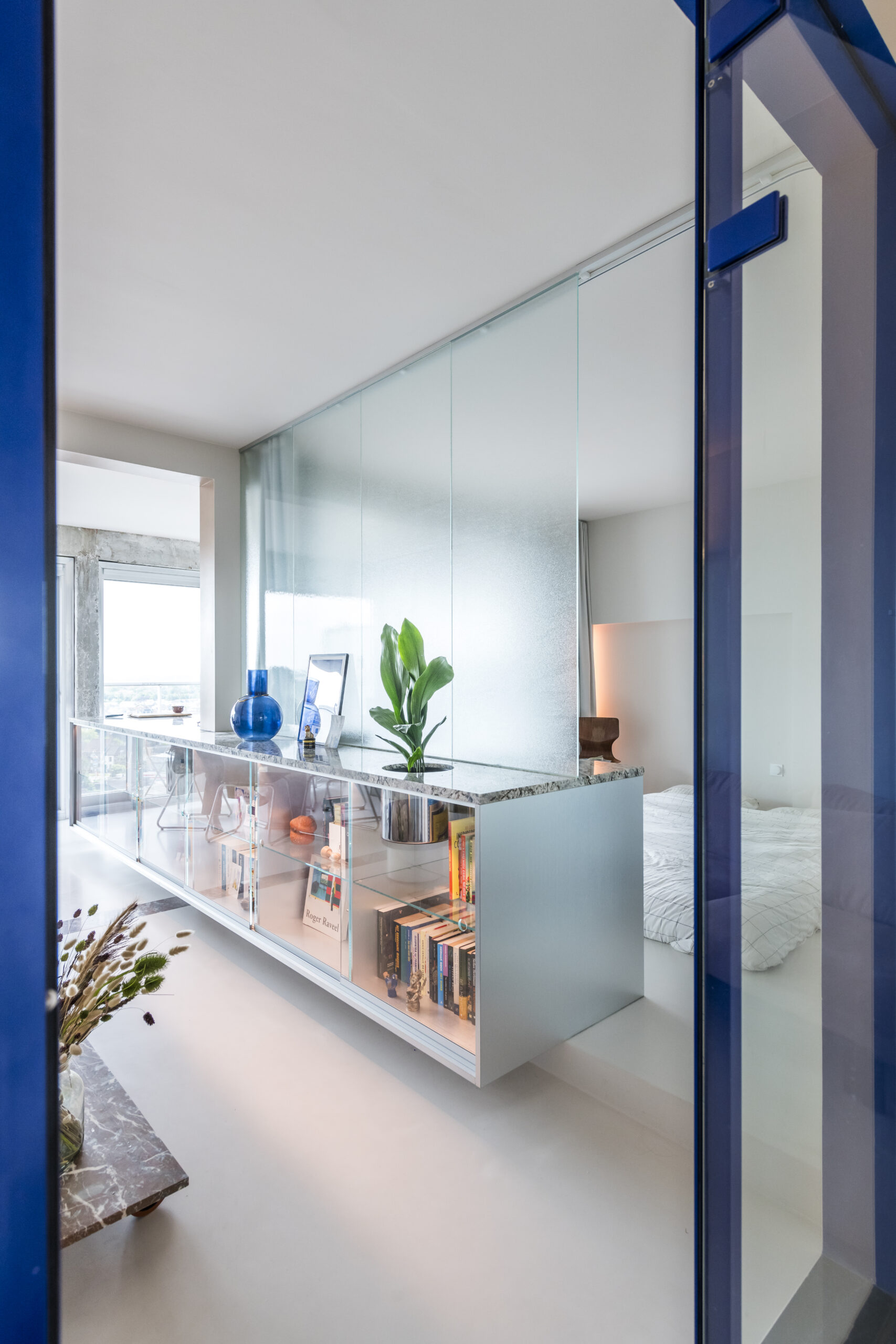
All non-structural interior walls are removed, allowing the apartment to be reimagined according to Hannelore’s personal rituals and desires where nothing possesses a single meaning or function. Three coloured frames—aluminium, red, and blue—organize the layout while reclaimed marble strips create a dialogue between the private interior and the collective architecture of the building. A versatile object acts as a domestic monument becoming wardrobe in the bedroom, library in the sitting area, and kitchen island in the culinary space.

Hovering above Ghent, La Lys apartment embodies a contemporary understanding of home that reconciles the modern dream of collective living with the postmodern desire for individuality, being simultaneously a cell in a vertical city and a private world of its own.
Read the whole story, here!
Story Twenty-Three
Monterols micro-apartment by NOT~A~STUDIO is a century-old family heirloom
“I was a child of that house,
filled with the memory of its smells,
filled with the coolness of its hallways,
filled with the voices that had given it life,” writes Antoine de Saint-Exupéry, reminding us that home is a parent, a caregiver, a living presence that endures across generations as an inherited legacy.
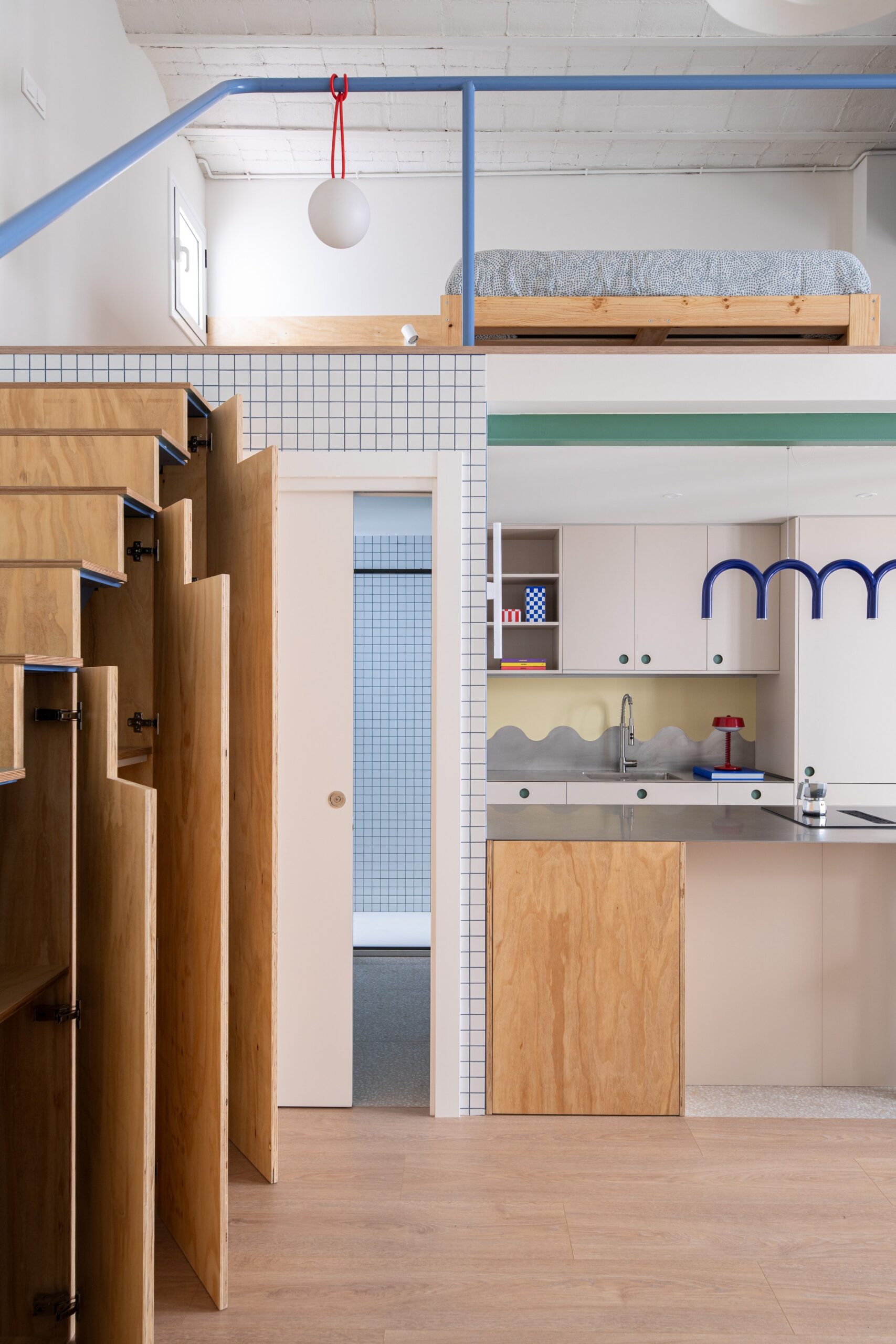
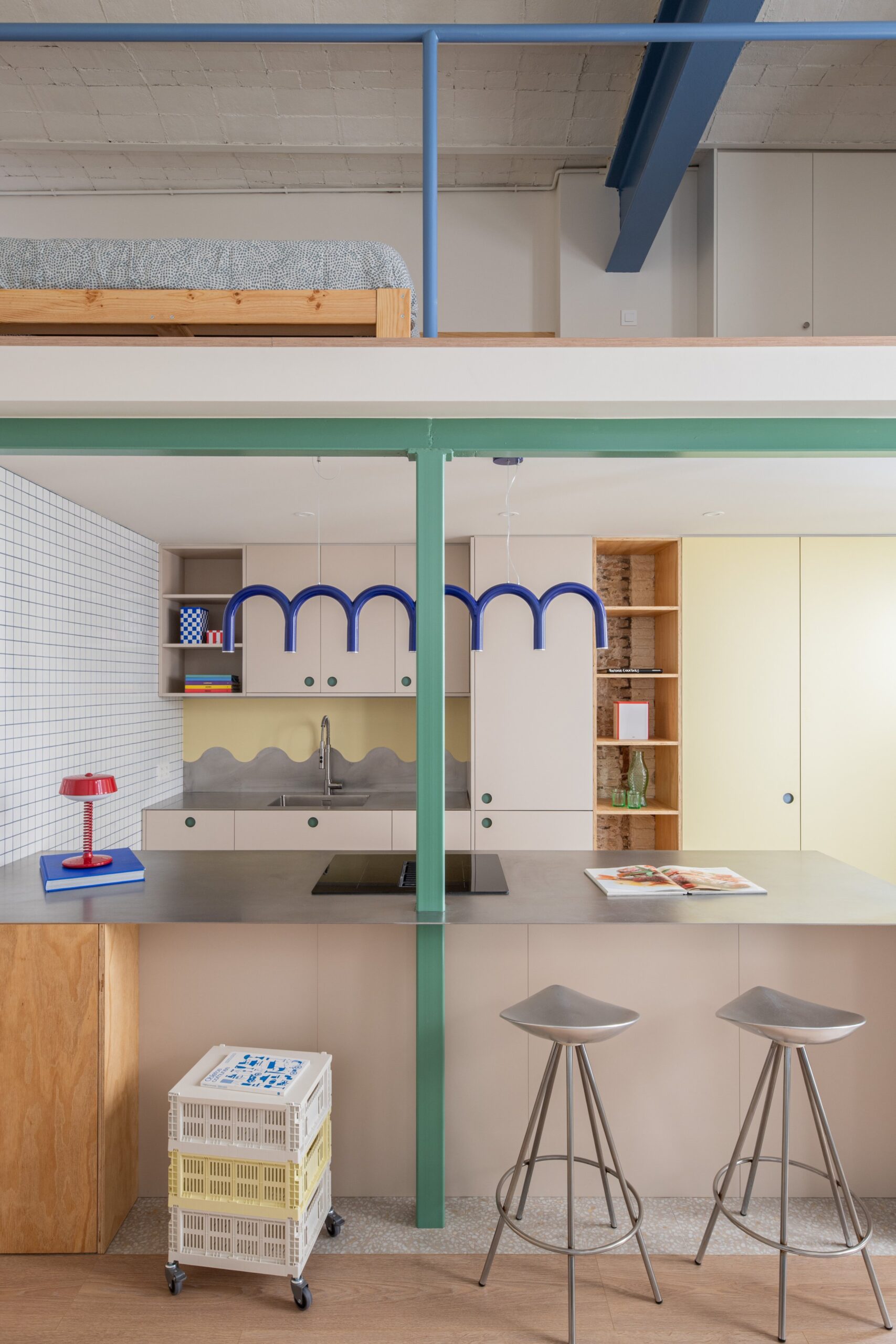
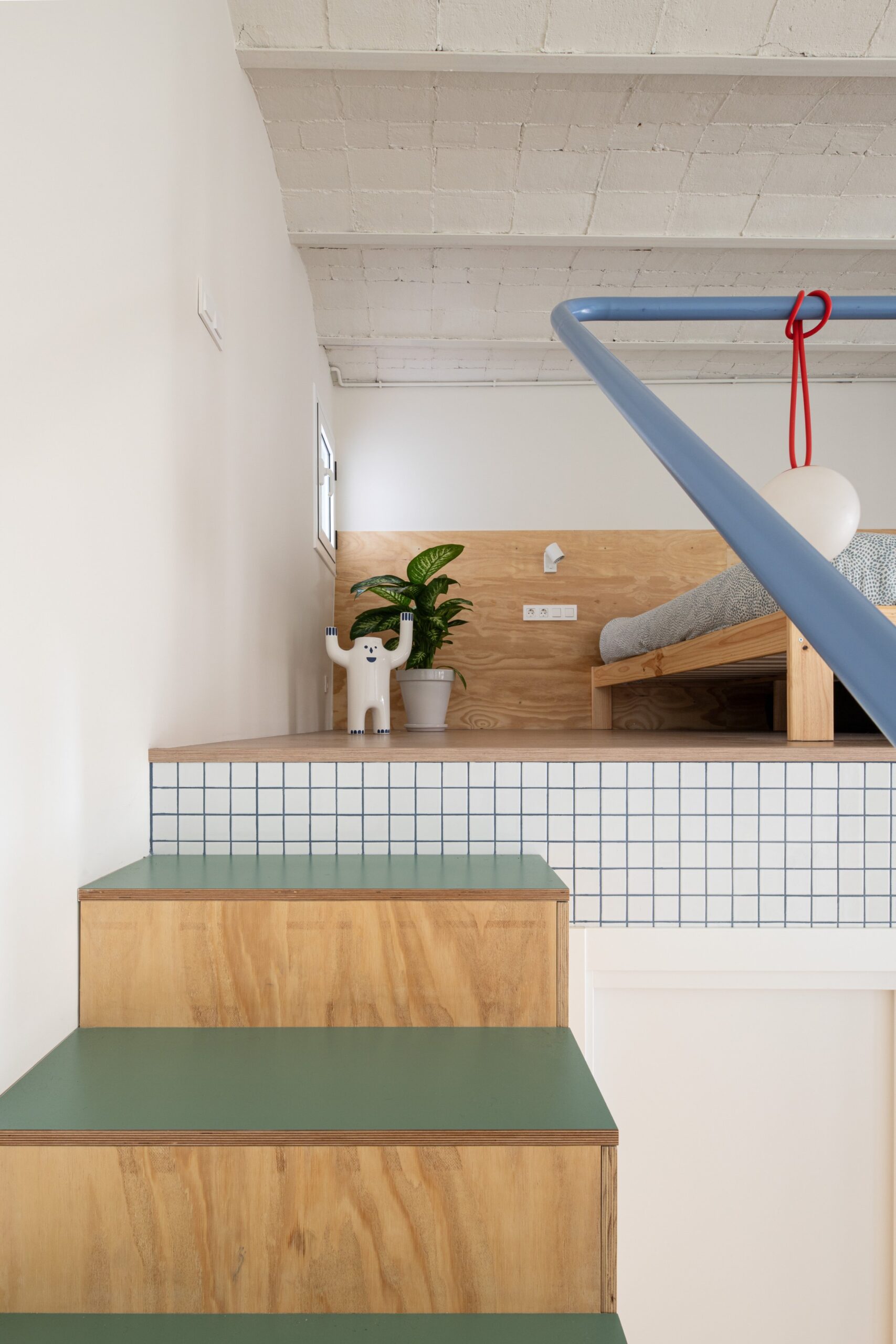
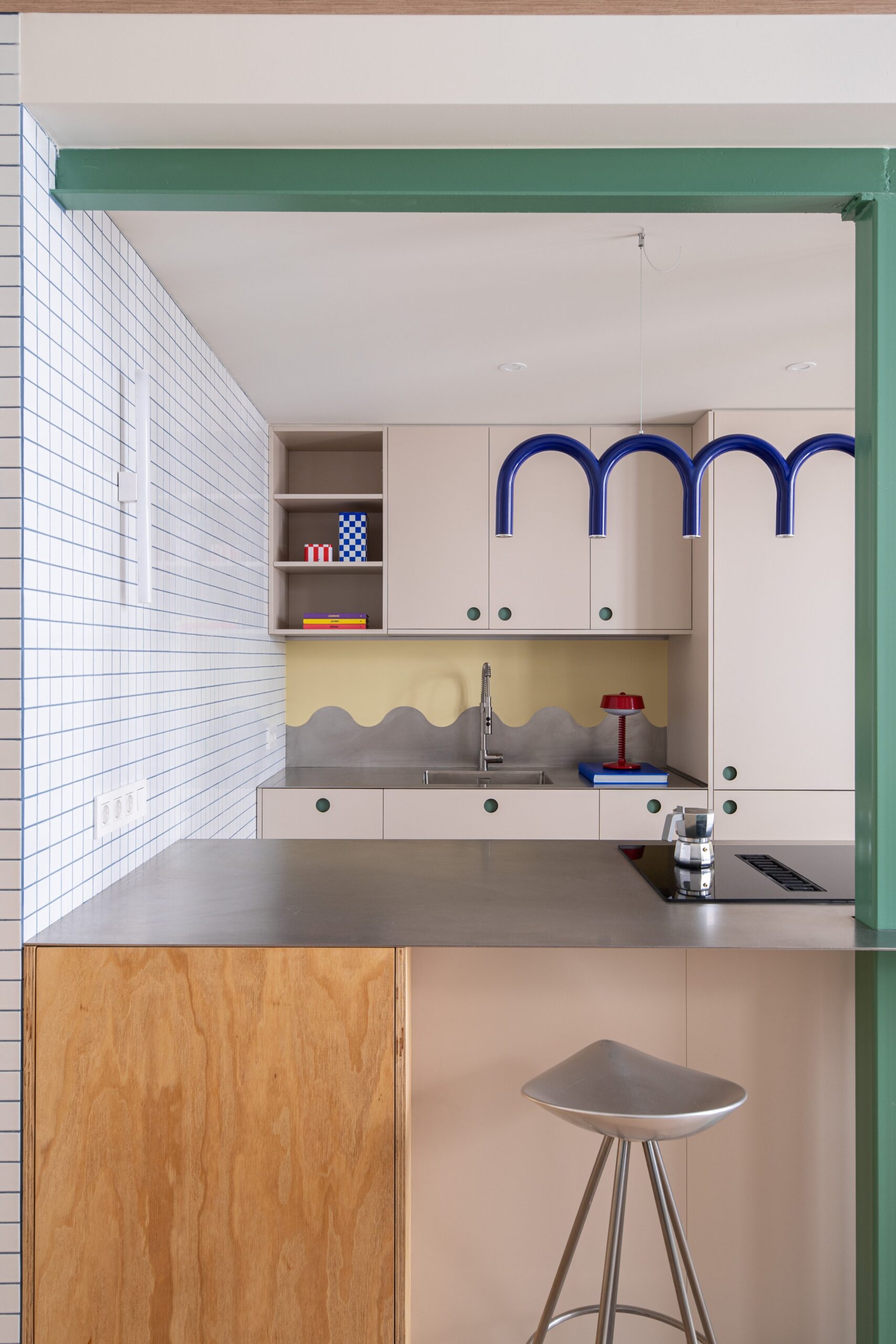
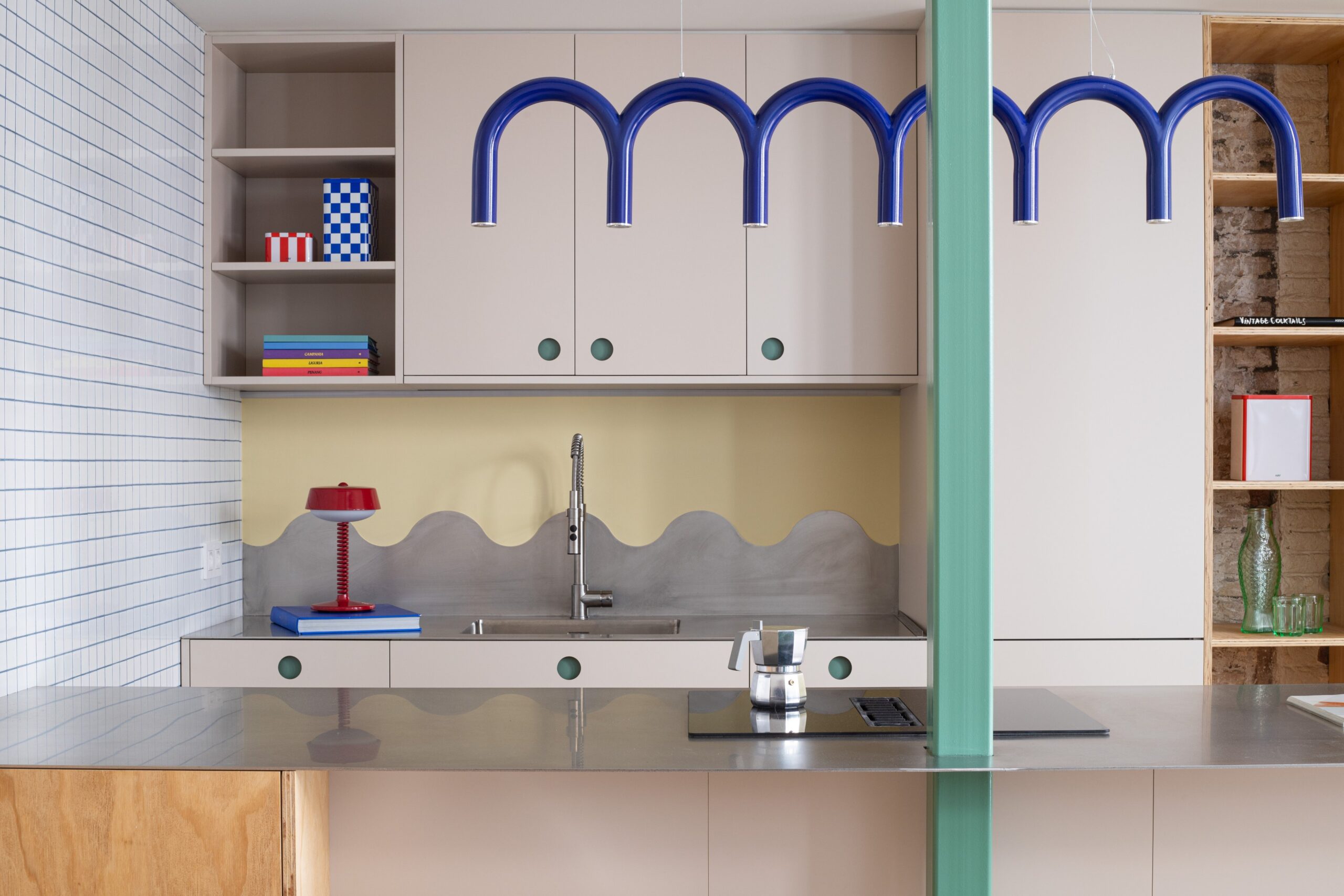
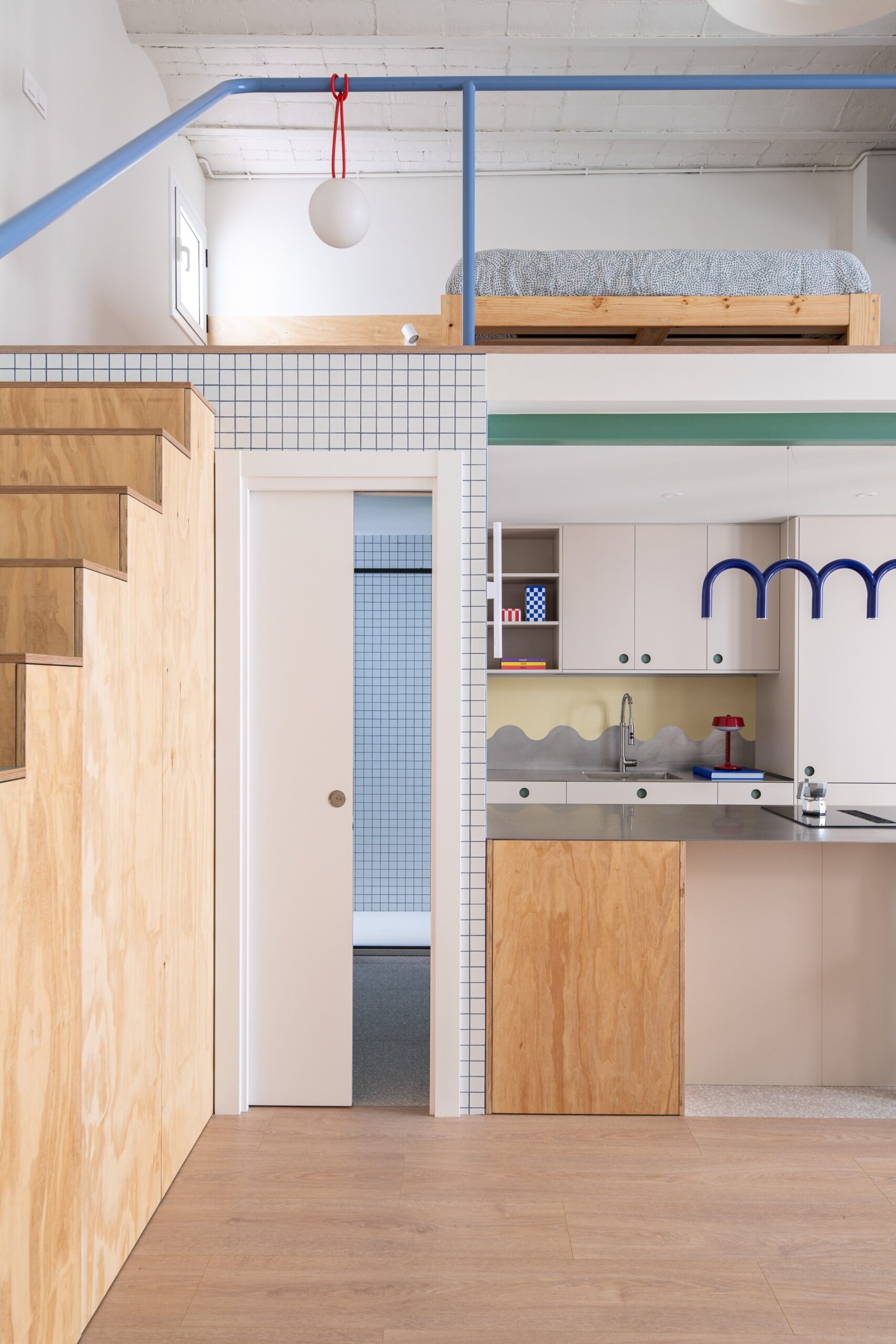
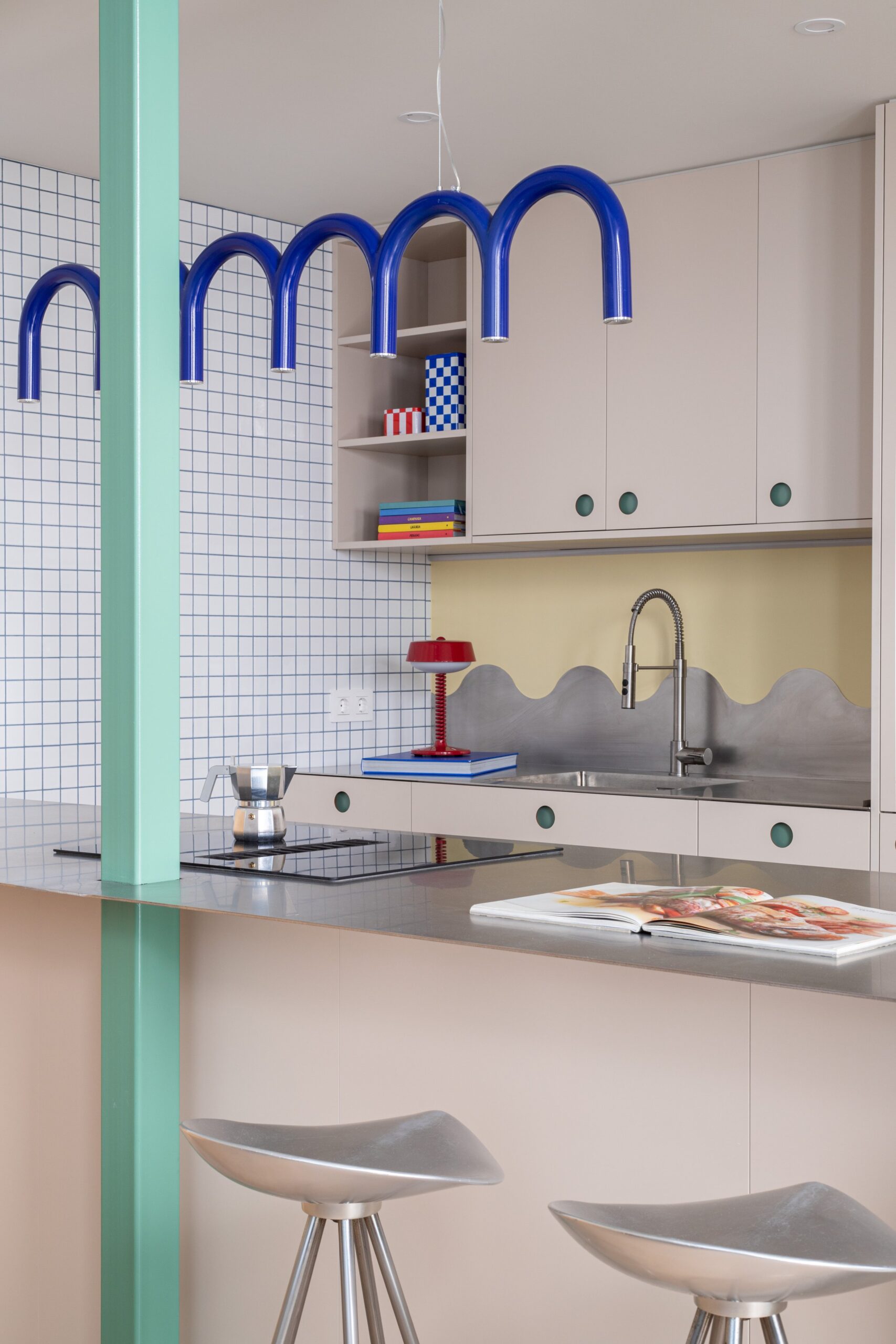
Monterols is an heirloom of this kind. The twenty-third episode of ‘Stories of Contemporary Domesticity or HOMEland’, follows NOT~A~STUDIO’s reimagining of Monterols: a 36m², century-old micro-apartment in Barcelona’s Sarrià neighbourhood, transformed into a family heirloom gracefully brought into the 21st century. Through a stripped-down construction process and a vivid yet subtle palette of blues, greens, and yellows, the project reveals how memory, contemporary materiality, and colour can coexist to reshape domestic life without erasing the traces of the past.
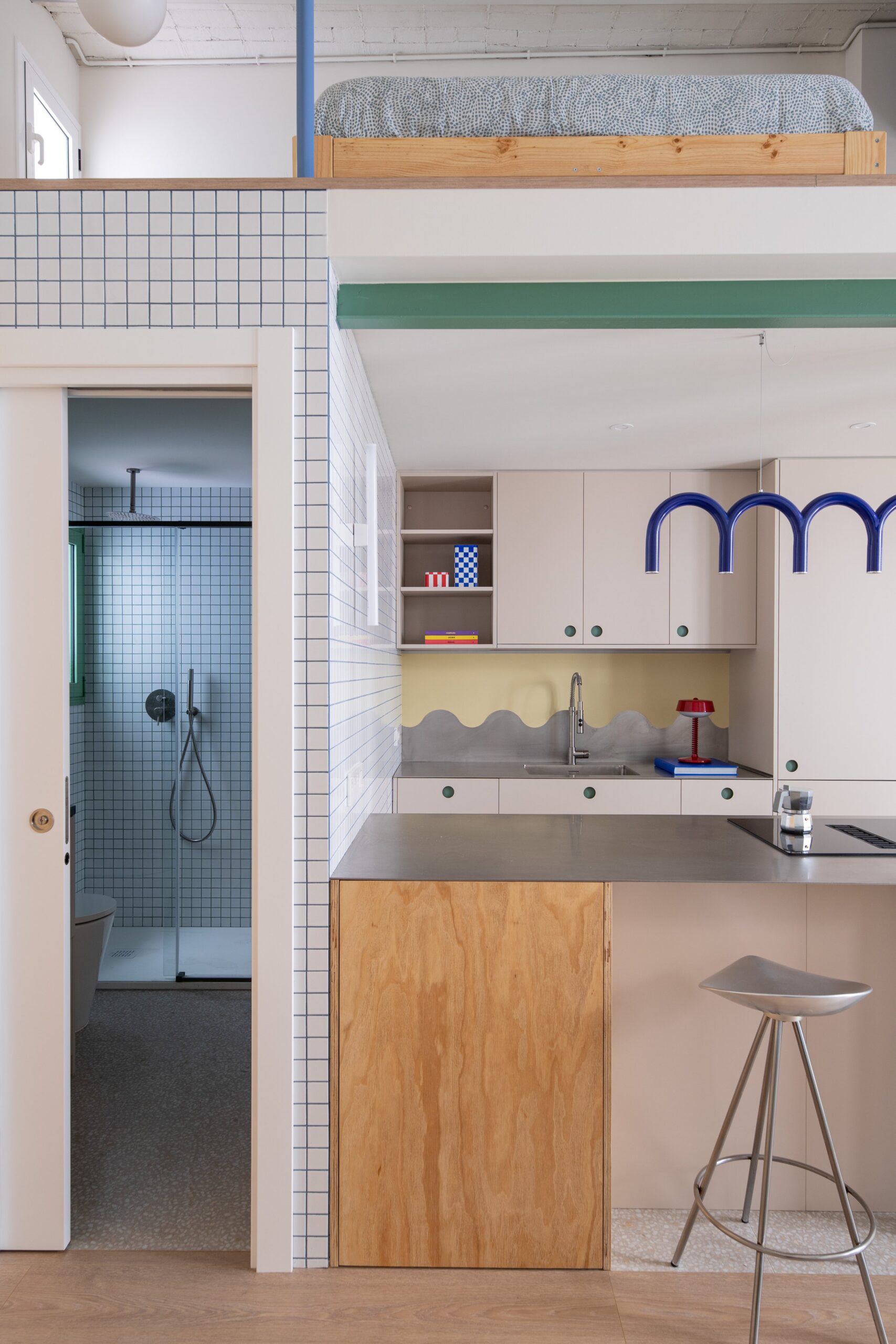
In this episode, Melina Arvaniti-Pollatou, founder of Archt. and Editor-in-Chief of Archisearch, speaks with Rocco Bibbiani, founder of Barcelona-based NOT~A~STUDIO, about architecture’s dialogue with history, the transformative power of pigment, and the right to inhabit, in real life, the home of one’s dreams.
Read the whole story, here!
Story Twenty-Four
agence ontwerp’s Debut Reworks Dutch Post-War Modernism by Translating Emptiness into Contemporary Domesticity
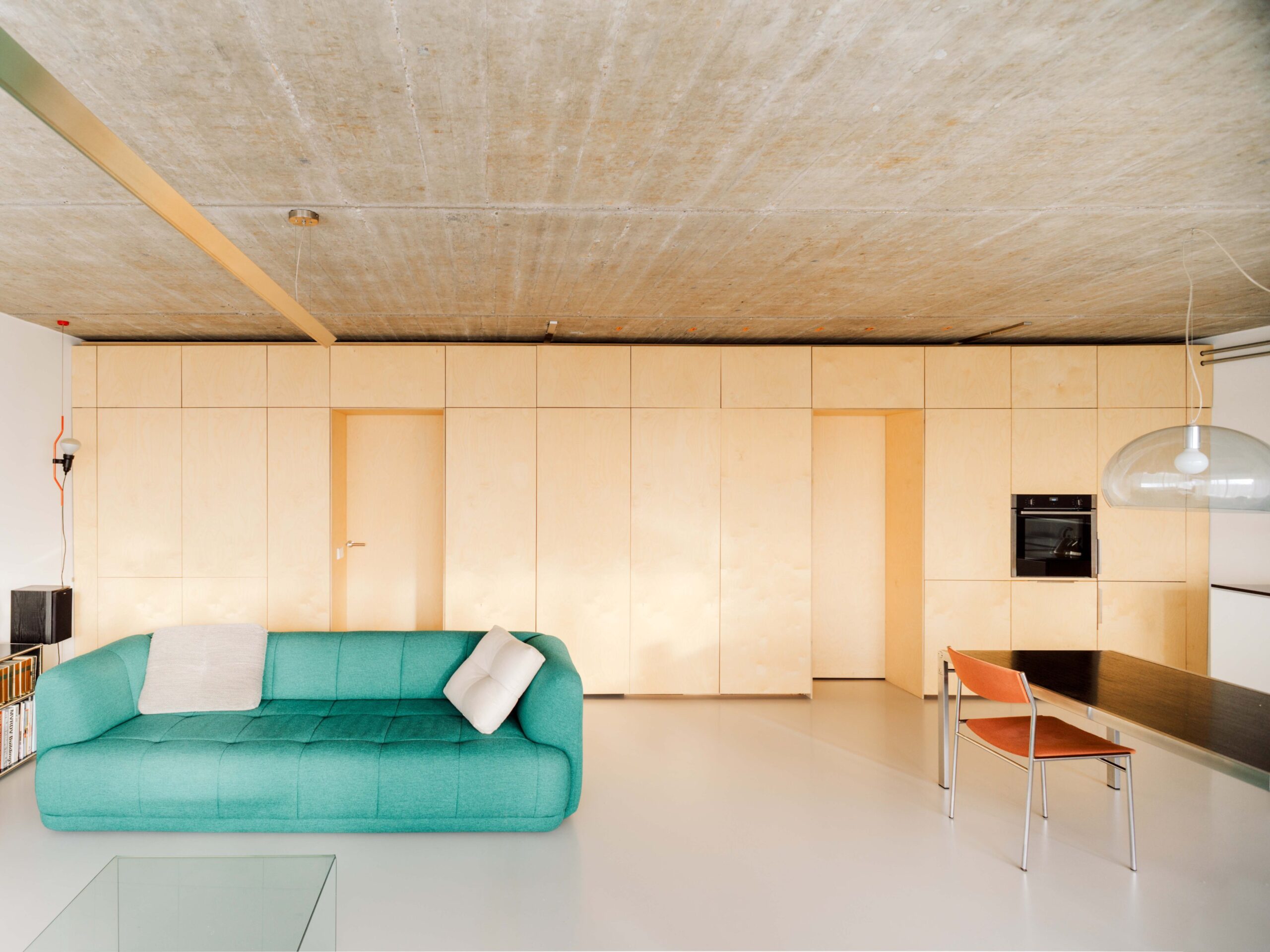
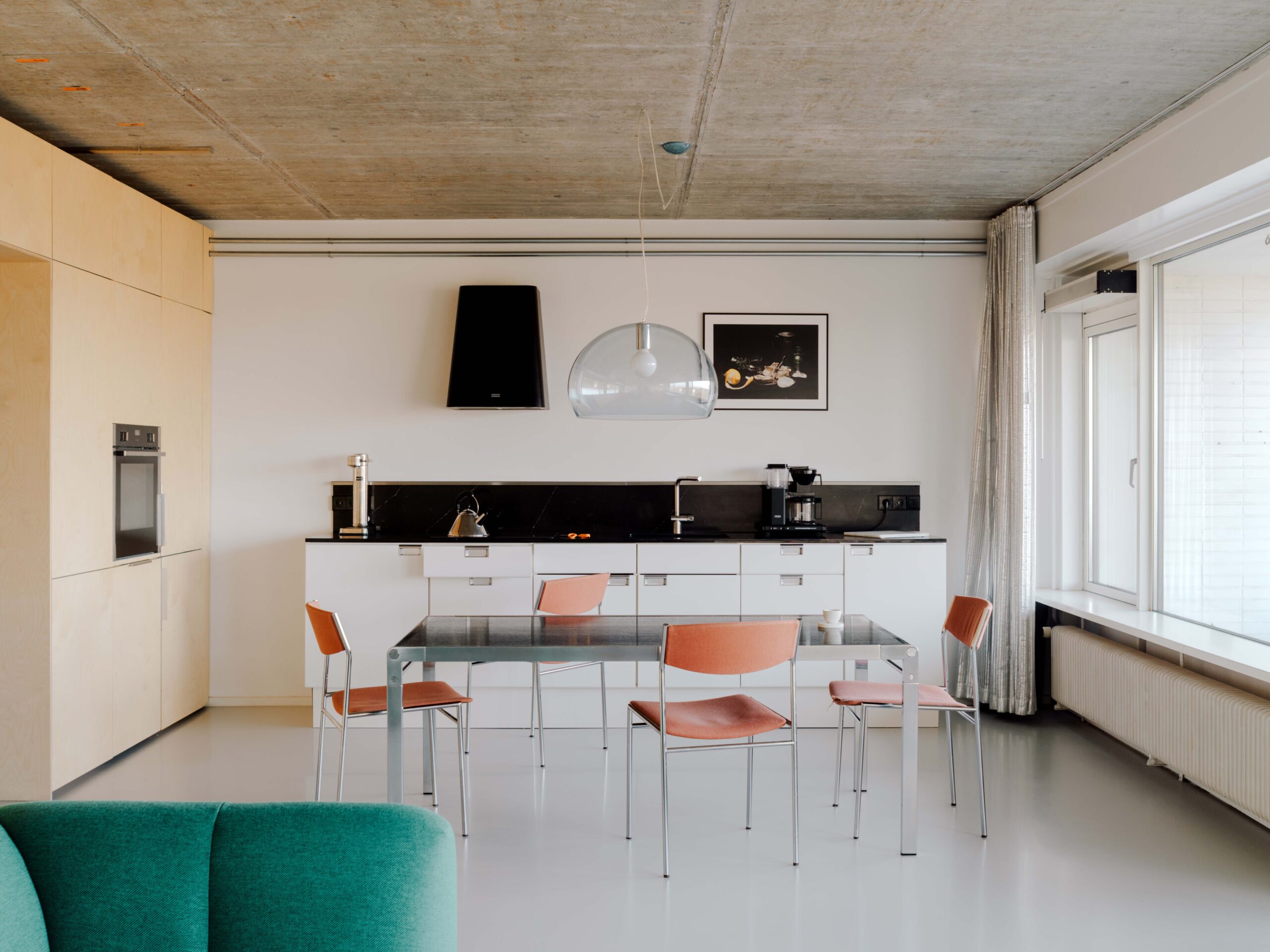
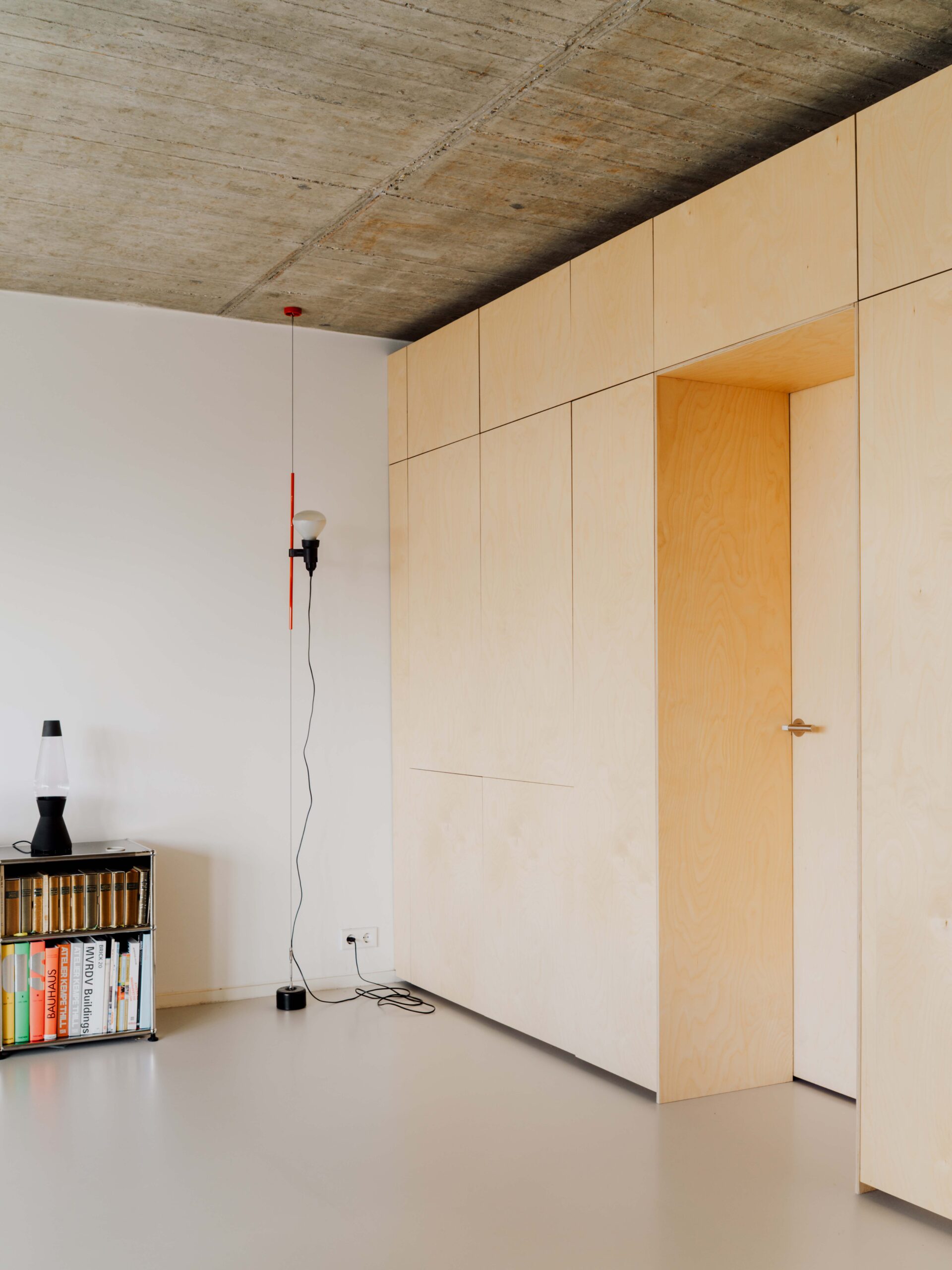
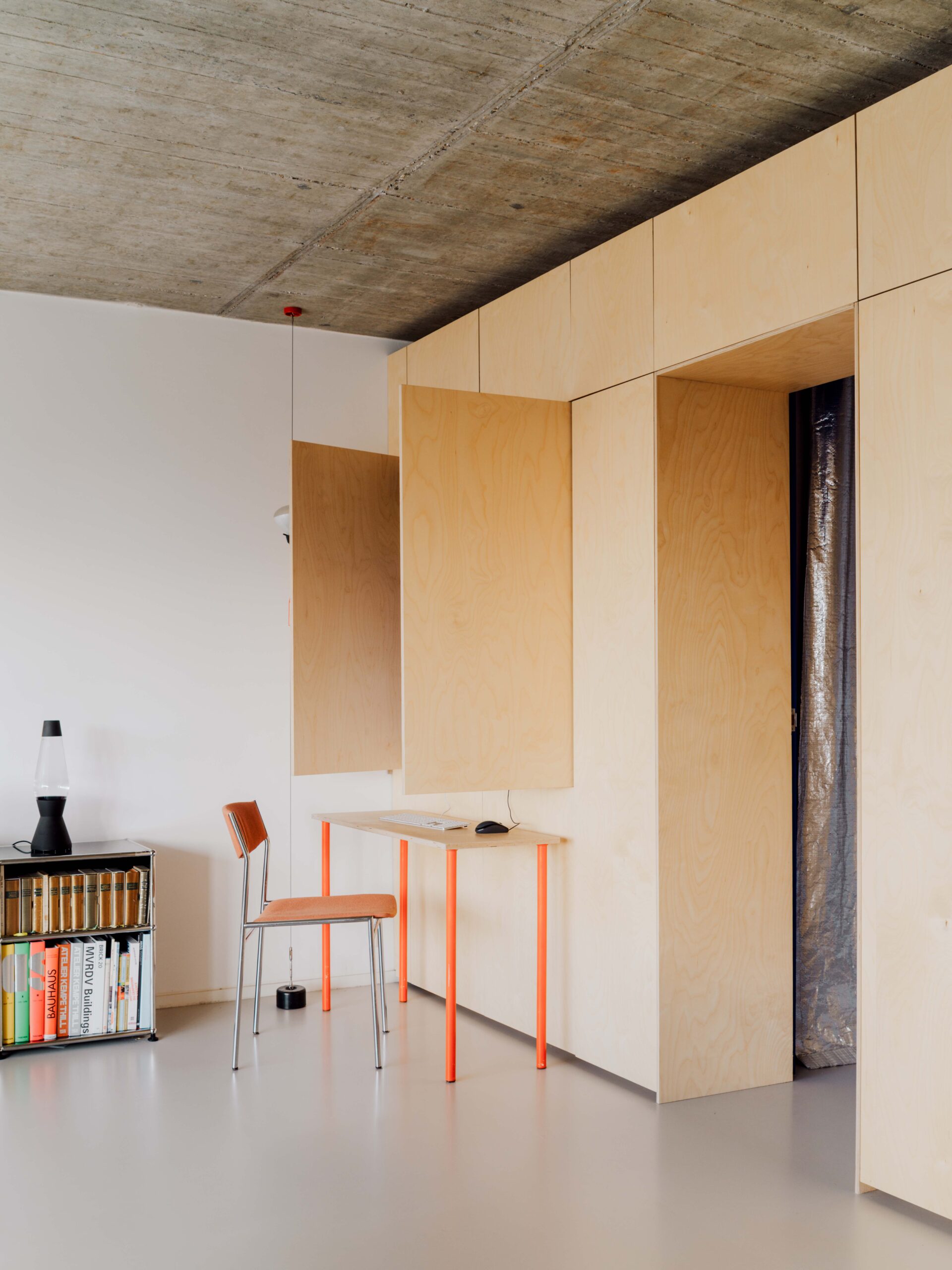
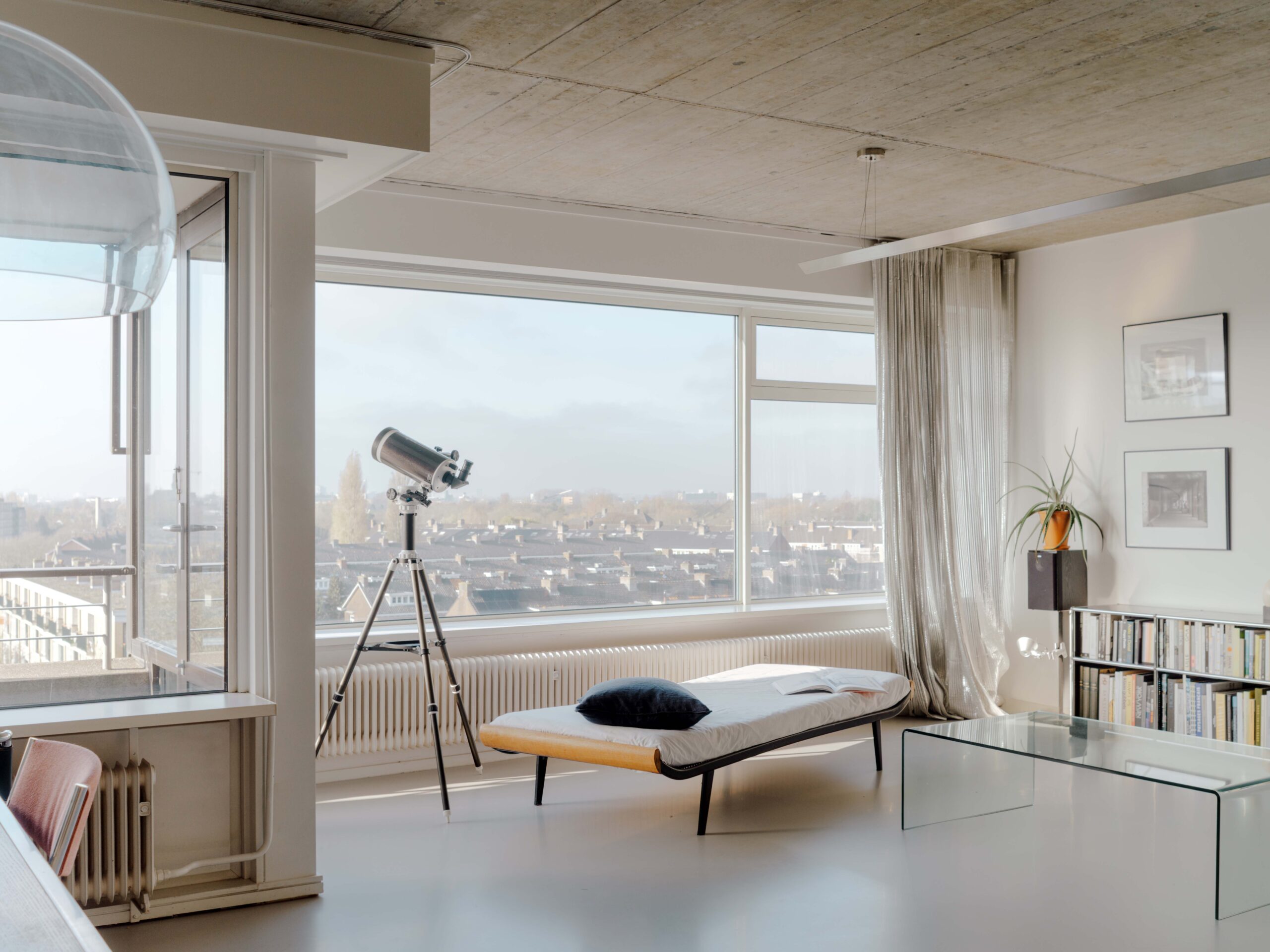
Emptiness in architecture is a fundamental condition – just as pause makes music happen. The twenty-fourth episode follows agence ontwerp, led by French architects Pauline Trochu and Mikaël Pors, through its debut project establishing emptiness as an active architectural condition through which space can be perceived and inhabited, recalling Le Corbusier’s conviction that free space is architecture’s true field of action. Designed by Harry Nefkens in 1958, Statenflat is a twelve-storey mixed-use residential building and a representative example of Rotterdam’s post-war Modernist reconstruction. By acknowledging the building’s highly adaptable structural grid, capable of accommodating radically different ways of living almost seventy years later, agence ontwerp redesigns a 90 m² apartment on Statenflat’s seventh floor, using as their primal design gesture an eight-metre-long plywood mur utile (usable wall) that liberates space for architecture to be animated—allowing life to unfold.
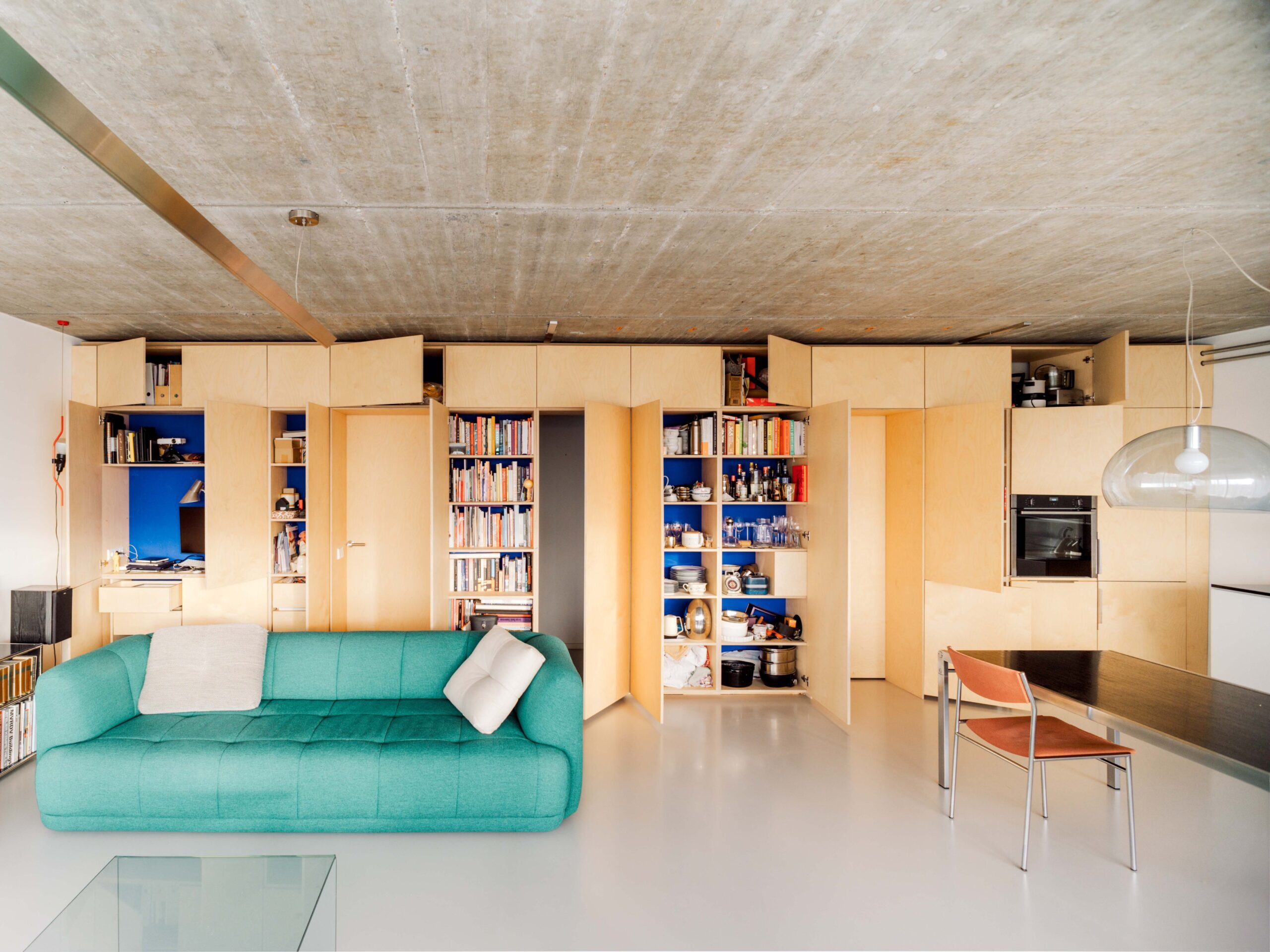
Statenflat’s signature glass façade, framing unobstructed views across the city, becomes an inextricable part of domestic rituals, allowing the gaze to wander, momentarily dissolve into the landscape, and ultimately return home. A restrained material vocabulary, reused joinery, and carefully selected moments of colour amplify the contemplative and sophisticated atmosphere of the overall design. An exposed concrete ceiling and a continuous grey floor further intensify the project’s spatial economy, allowing the interval between things—what Japanese culture defines as ma (間)—to give form, rhythm and meaning to everyday life. Suspended between Rotterdam’s mist-veiled skyline and the intimate life unfolding indoors as the delicate counterbalance amidst walls, objects, bodies, and time, the Bentinckplein renovation consciously addresses emptiness not as absence but as essence, creating a home that mediates the thresholds between inside and outside, private and public, permanence and change.
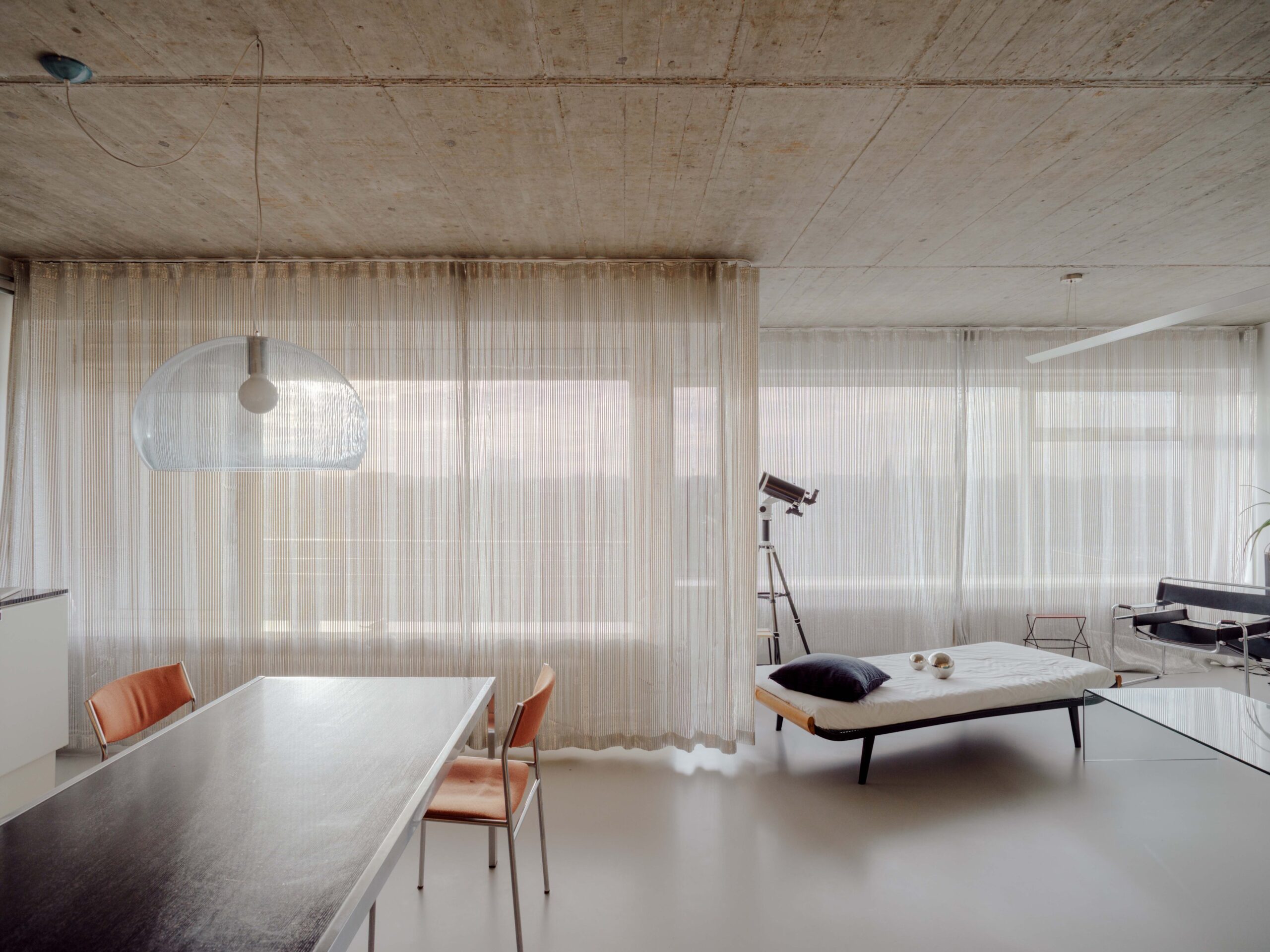
Read the whole story, here!
Story Twenty-Five
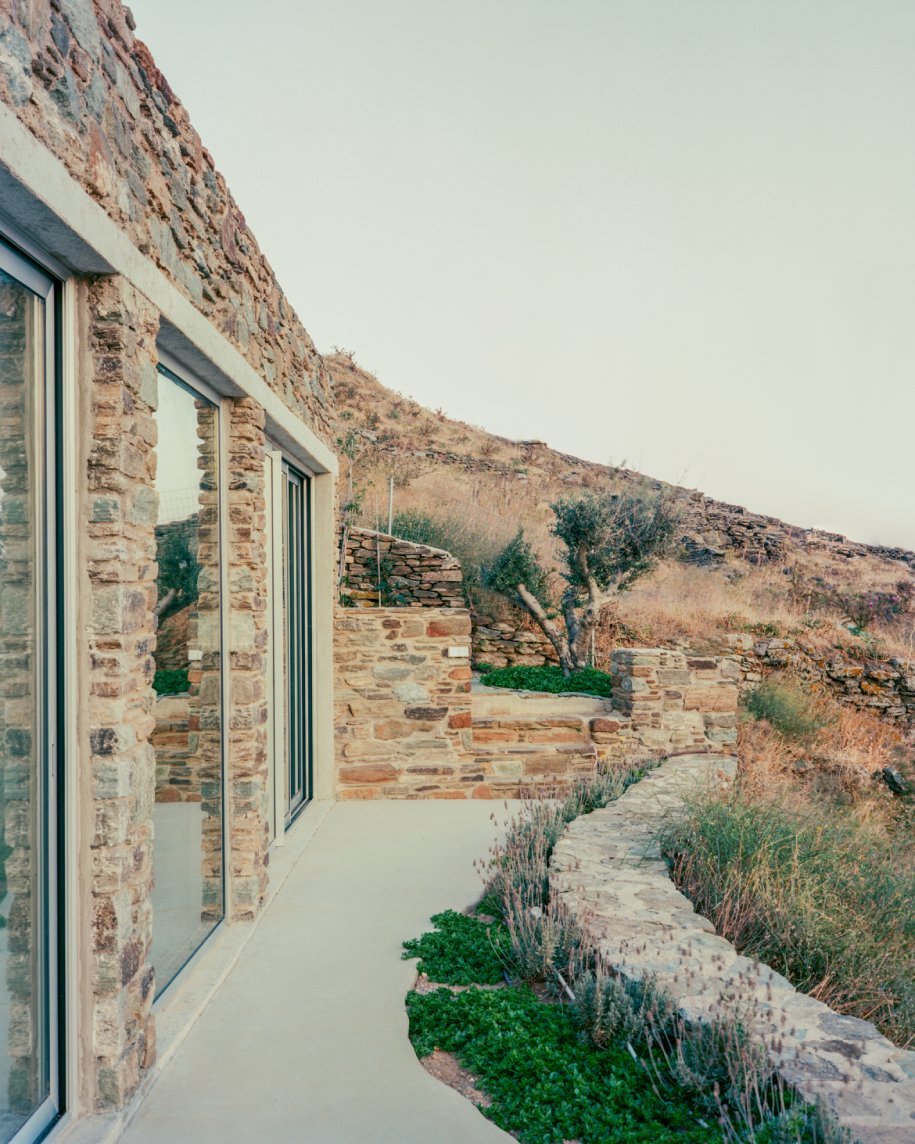
House in Tinos by Kelly Spanou Is a Brutalist Reinterpretation of the Island’s Rugged Cycladic Vernacular
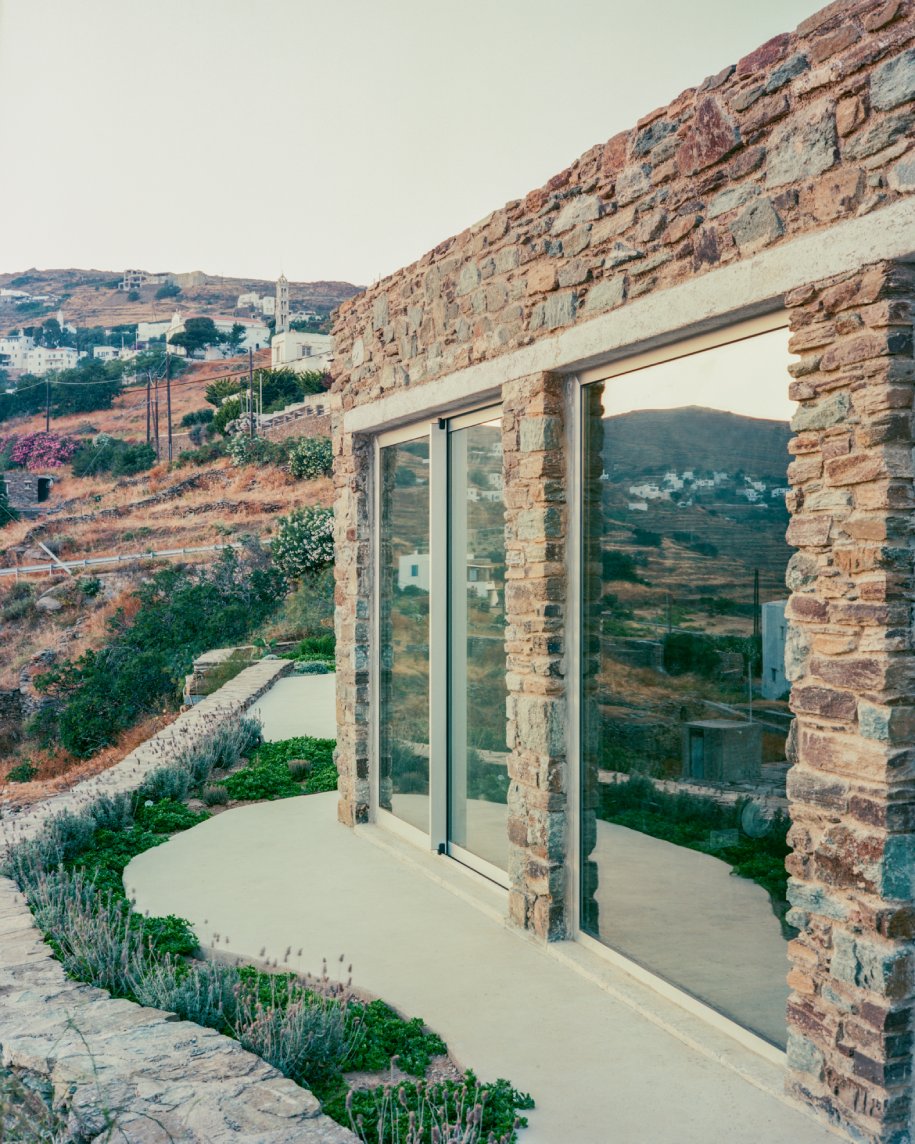
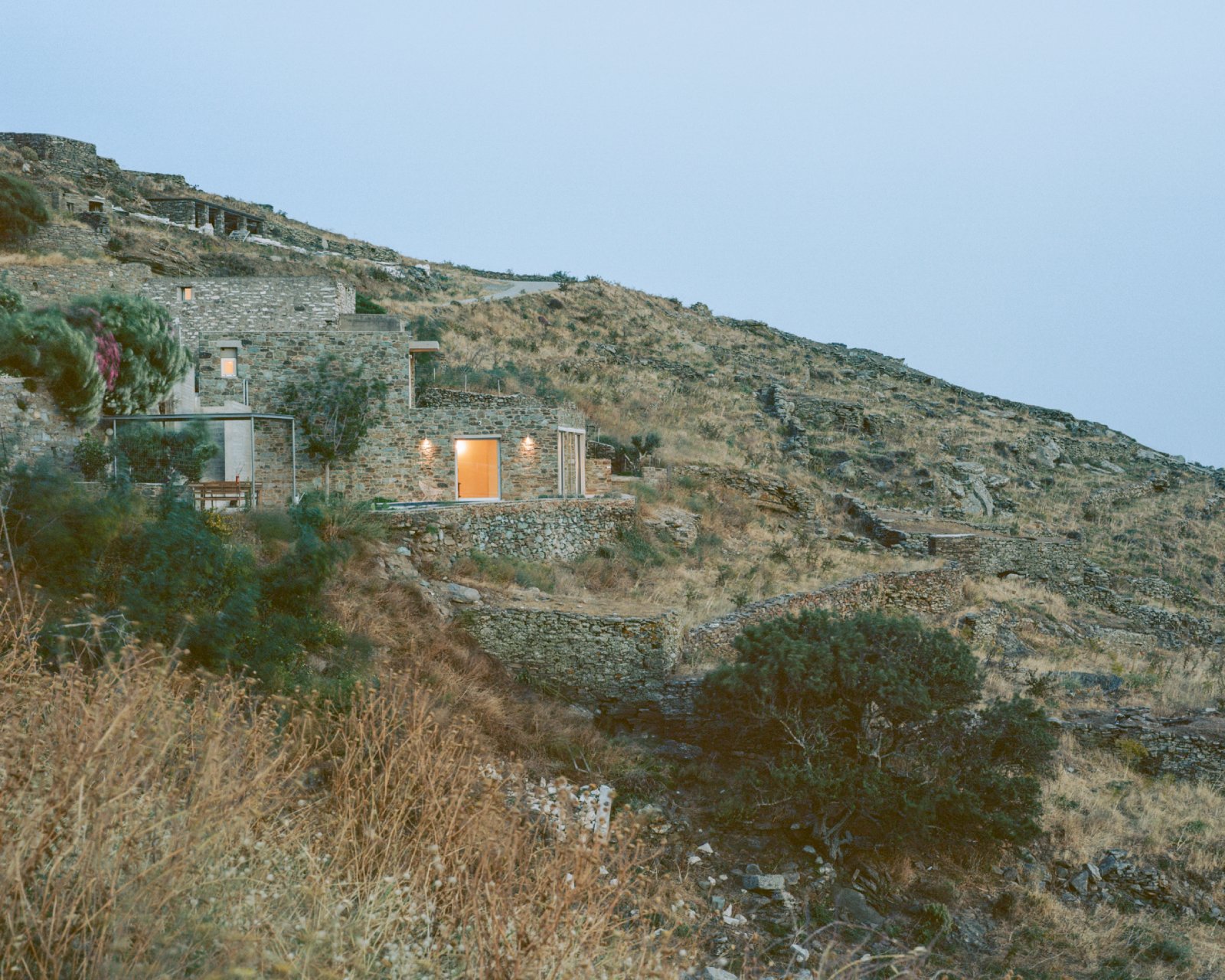
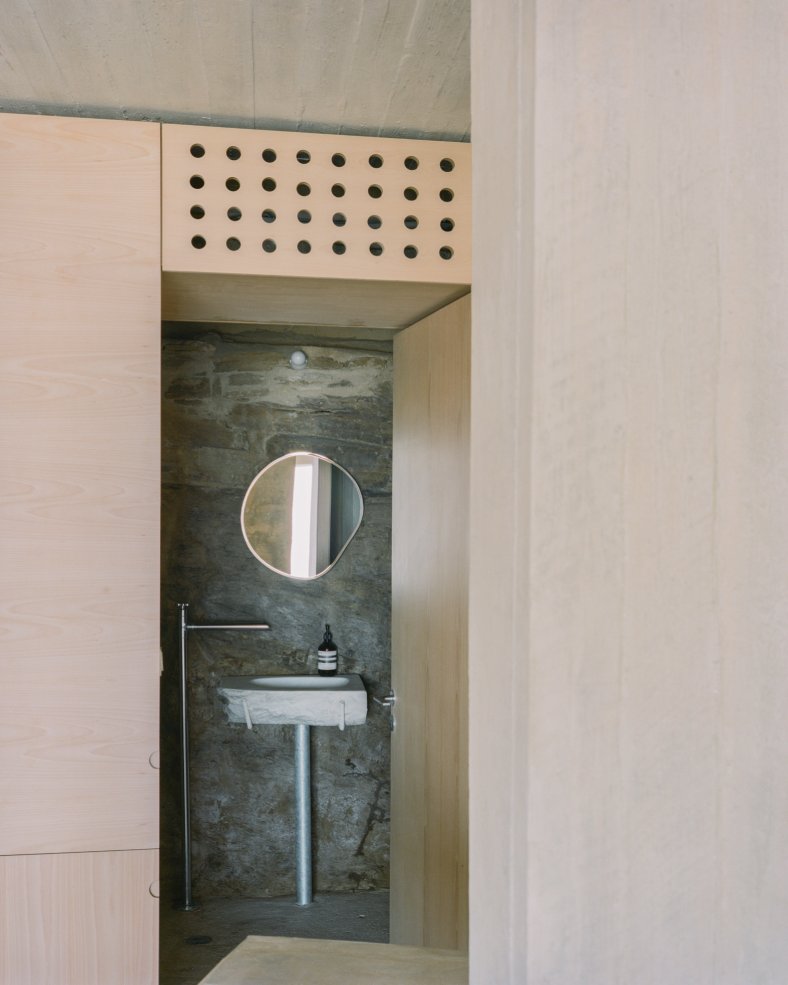
In a place where vernacular architecture and folk art are deeply woven into the landscape, designing anew in Tinos is an exercise in restraint: how to speak in contemporary terms without rupturing the continuity of place, or retreating into mimicry. The 25th episode of the series follows architect Kelly Spanou, in collaboration with Penny Alevizou, into the woven constellation of Tinos’ mountain villages. This is the story of a 115-square-metre house that, through architecture, found its way back to becoming a home.
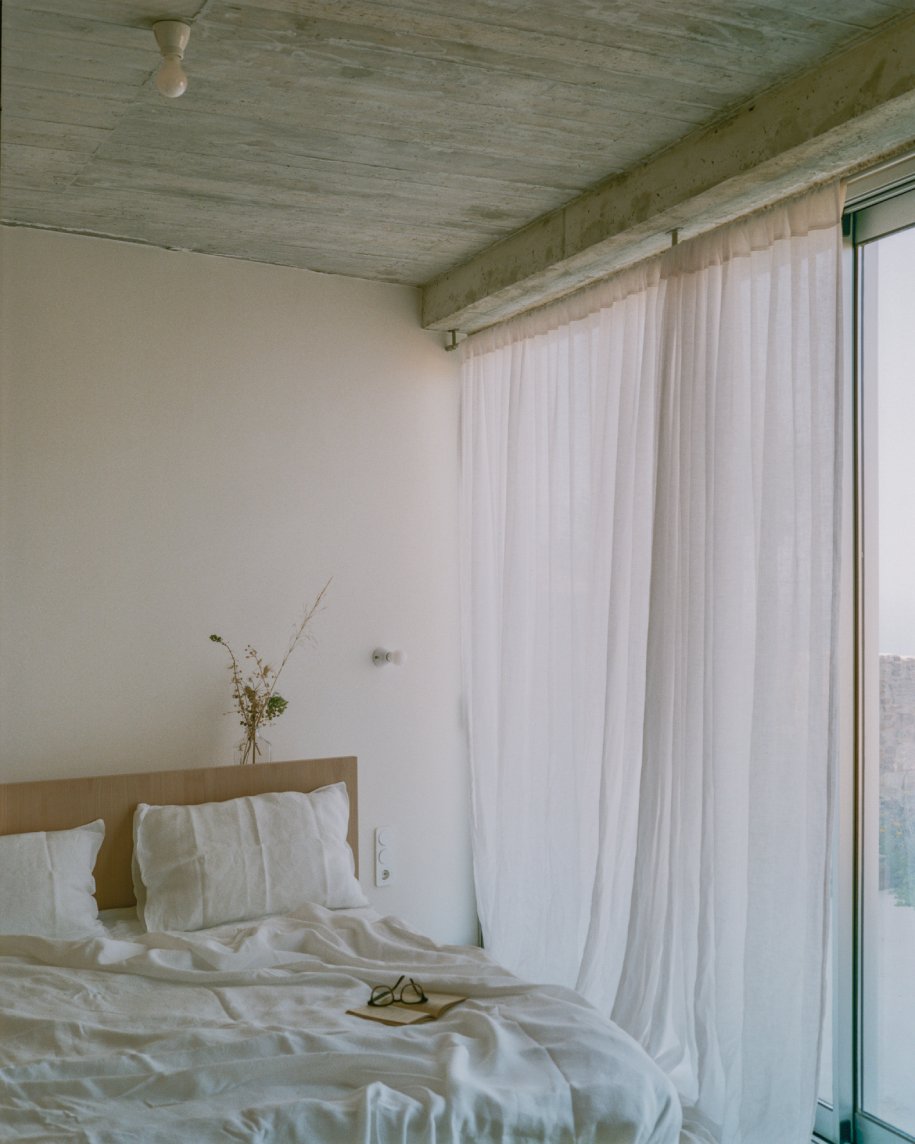
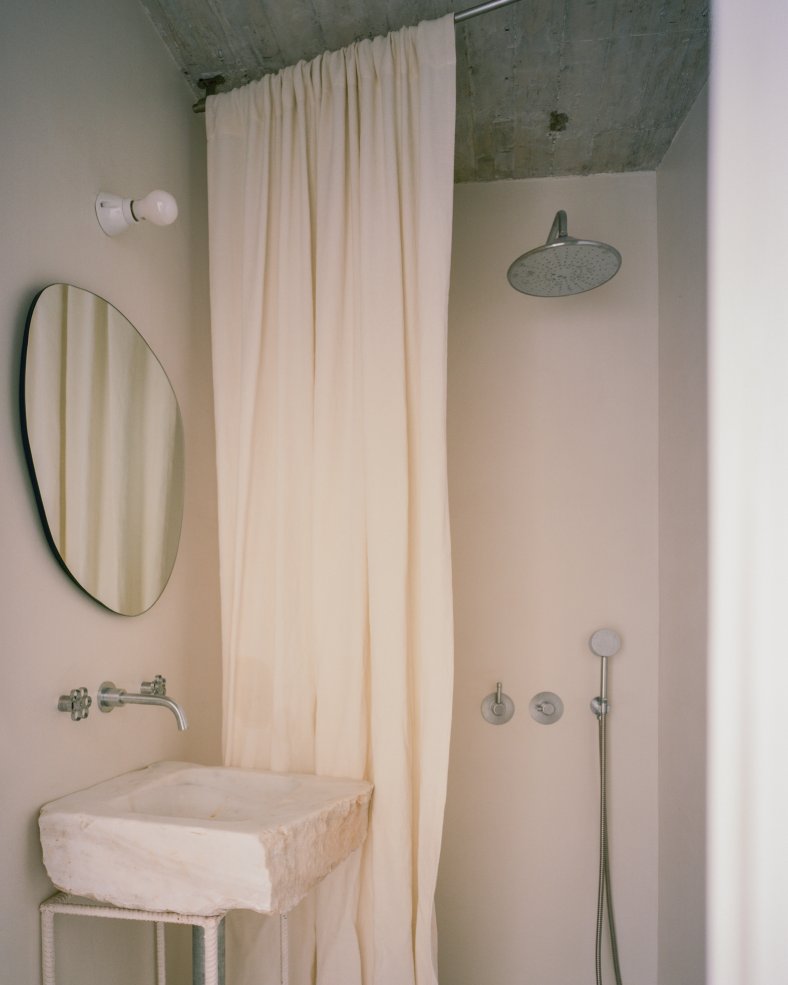
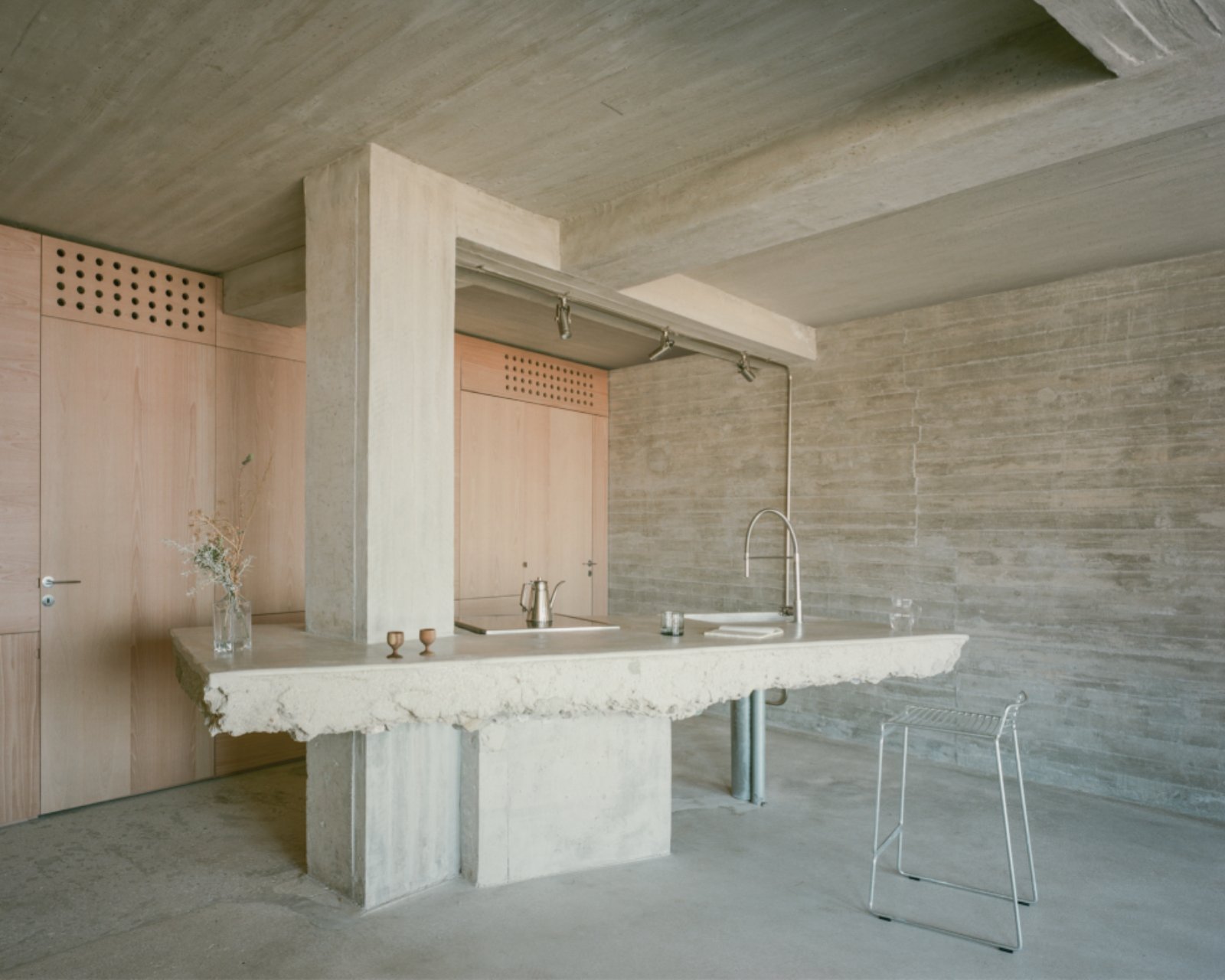
In recent years, resonating with British/Welsh eco-architect, self-builder and sculptor Christopher Day’s (2004) understanding of architecture, a new generation of architects has increasingly turned towards practices of restoration, reuse and care reframing architecture as a healing practice capable of bringing buildings back to their authentic core, their original being, their material essence. House in Tinos follows this path. Rooted in the keli (cell), the modest rural structure characteristic of Cycladic agricultural landscape, the house had been subjected to successive and intrusive alterations over time. Adopting a symbiotic design approach in which heterogeneity, irregularity, tactility and roughness coexist, the building is reconfigured as a contemporary continuation of its surroundings: from the outside, it reads as an extension of Tinos’ distinctive arid landscape, while within, a raw concrete, performative kitchen, built as a real-life domestic installation, resonates with an island building ethos in which architecture and sculpture have long existed in inseparable dialogue.
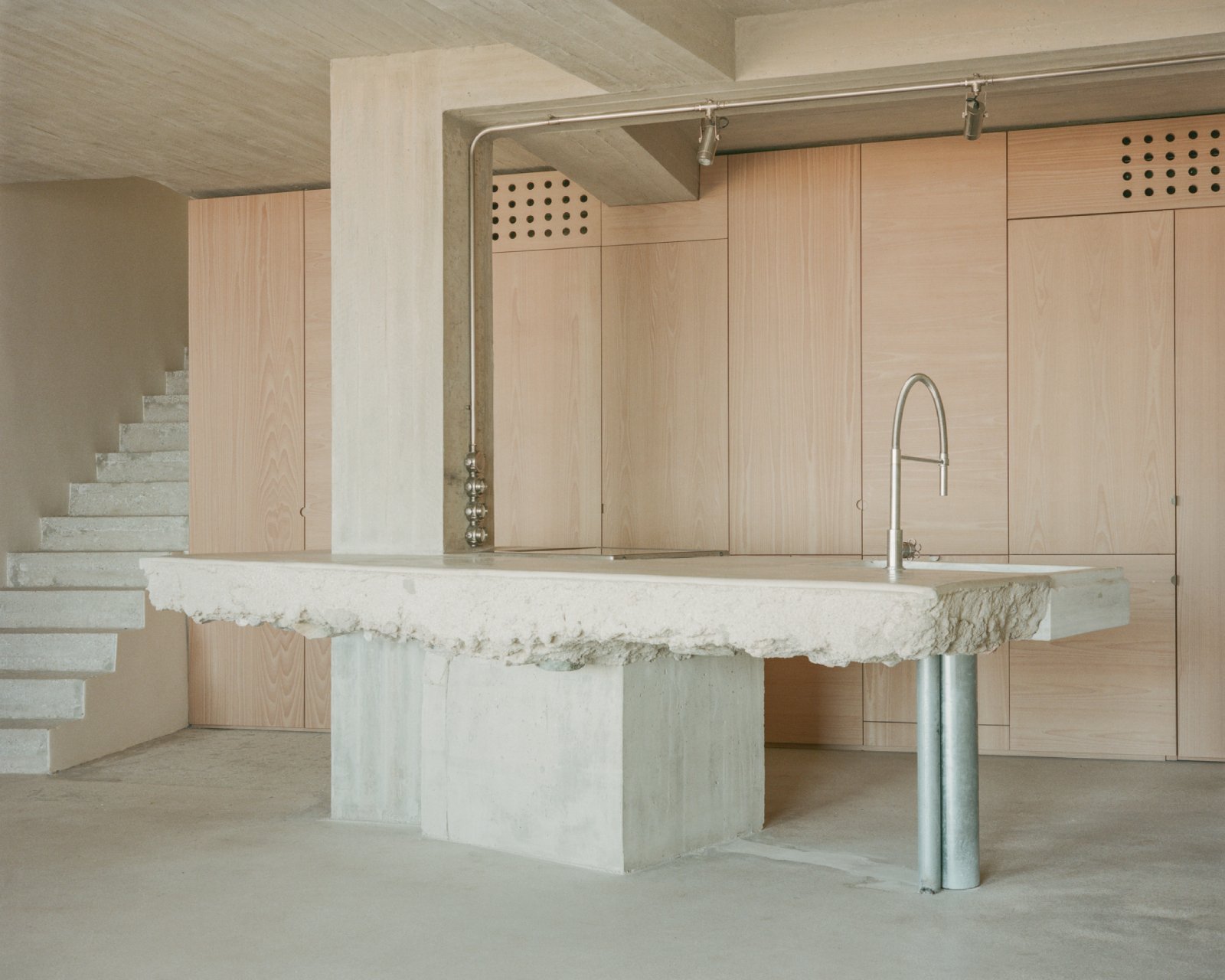
The house is approached as a body bearing the scars that allow its previous lives remain legible. Stone, marble and fida (oak) — the signature materials of the local building tradition — are revealed and reintroduced into an open dialogue with concrete, the material reminder of the building’s unsettled construction history. Its brutality is softened by tactility; its irregularity becomes a form of authenticity; its scars become part of its contemporary domestic character. Its beauty lies not in the absence of traces, but in its willingness to make a contemporary home between them.
Read the whole story, here!
Η σειρά ‘Σύγχρονες Ιστορίες Οικιακότητας ή ΚατΟΙΚΕΙΝ’ αναρωτιέται τί είναι και τί σημαίνει σπίτι σε ανοιχτό διάλογο με σύγχρονες αρχιτεκτονικές προσεγγίσεις στο πεδίο της κατοικίας.
Το σπίτι χωράει πολλά.
Είναι ρήμα, επίθετο και ουσιαστικό.
Πράξη, συναίσθημα, τόπος και κτήση.
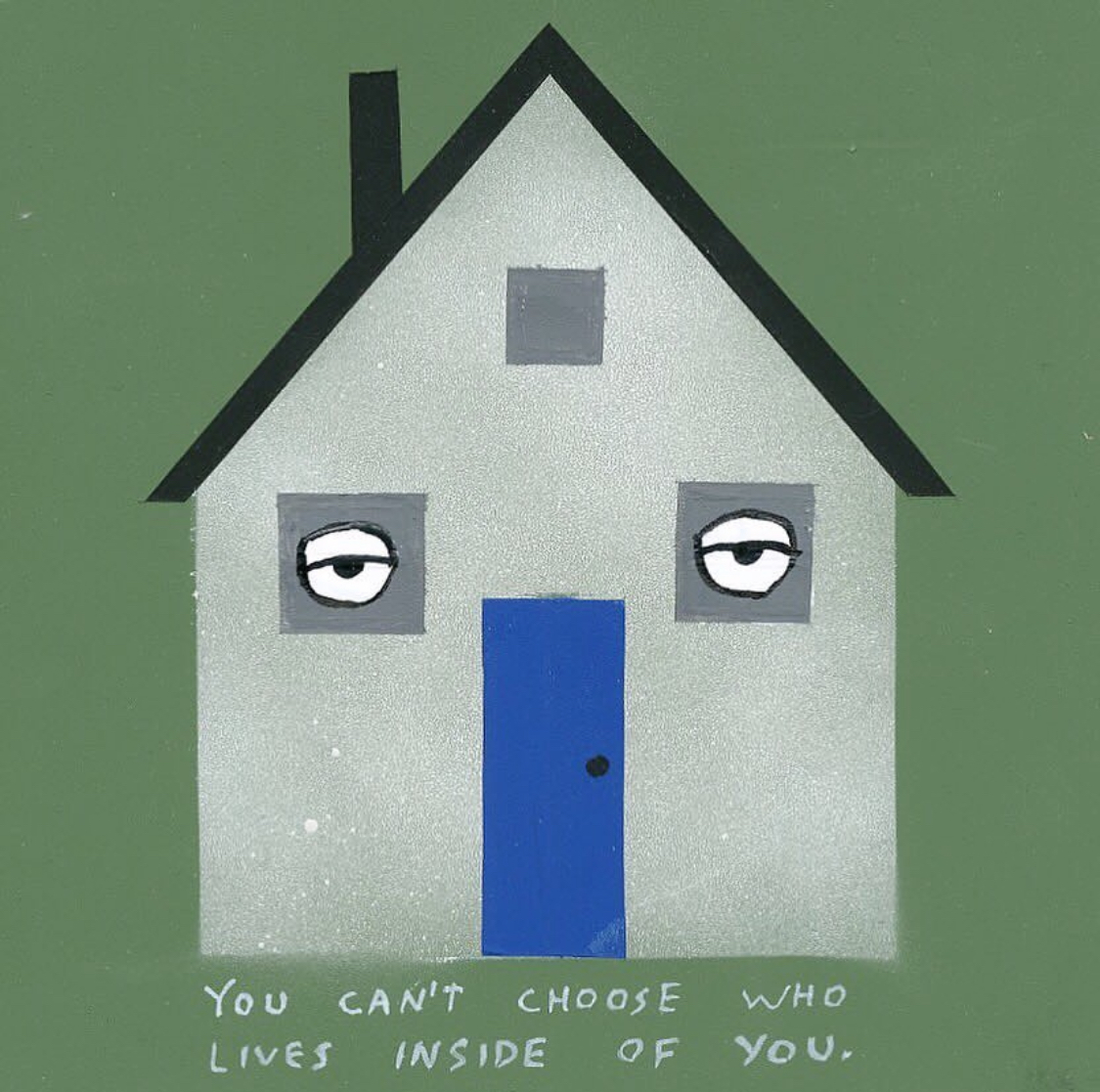
Το σπίτι είναι υλικό και άυλο.
Κάποτε δομείται από πέτρες, μπετόν και τούβλα και κάποτε είναι φτιαγμένο από αναμνήσεις, οσμές, γεύσεις, ψιθύρους και κρότους.

Το σπίτι είναι μια προσωπική ιστορία και μια συλλογική νοημοσύνη.
Για τον James Baldwin το σπίτι είναι μια ‘αμετάκλητη κατάσταση’ καθώς “δεν έχεις σπίτι μέχρι να το αφήσεις και τότε, αφού το έχεις αφήσει, δεν μπορείς ποτέ να γυρίσεις πίσω”. Για τον συγγραφέα, το σπίτι είναι η απρόσιτη πατρίδα όπου κατοικεί η, από καιρό χαμένη, παιδική αθωότητα, ο πρωτόλειος μύθος. Νοσταλγικό και γλυκόπικρο, το σπίτι-μήτρα του Baldwin κατοικεί στο μακρινό παρελθόν κάνοντας μας να αναρωτηθούμε: θα με δεχτεί πίσω το σπίτι ή είμαι καταδικασμένος σε μια ζωή μοναξιάς;

Το σπίτι είναι ένα ακόμα σώμα.
Το σπίτι είναι το σώμα που κουβαλάει το σώμα μας. Ένα σώμα για το σώμα που το κάθε πλάσμα κατοικεί με τον πολύ δικό του, μοναδικό και, εντελώς, διαφορετικό τρόπο. Ένα σώμα, σπίτι για την ψυχή και το πνεύμα. Το σπίτι είναι ένα ακόμα σώμα στο οποίο αποθηκεύουμε τις αναμνήσεις μας. Ο πολύ προσωπικός μας χώρος: το κέντρο της ονειροπόλησης, της μνήμης και της φαντασίας μας. “Δεν υπάρχει μνήμη χωρίς σωματική μνήμη” γράφει ο φιλόσοφος Έντουαρντ Σ. Κέισυ και ο αρχιτέκτονας Juhani Pallasmaa στο κείμενο ‘Χώρος, τόπος, μνήμη και φαντασία’ συμπληρώνει “το σώμα δεν είναι μόνο το κέντρο της μνήμης, αλλά και ο τόπος και το μέσο όλων των δημιουργικών έργων, συμπεριλαμβανομένου και του έργου του αρχιτέκτονα”.

Ακολουθώντας το νήμα της σκέψης του Pallasmaa, το έργο των αρχιτεκτόνων είναι, αφού αναγνωρίσουν το δικό τους σώμα, τον δικό τους τόπο, το δικό τους σπίτι, να υποστηρίξουν και άλλα άτομα να κάνουν το ίδιο: μέσα από ενσυνείδητο αρχιτεκτονικό σχεδιασμό που καθοδηγεί τα πλάσματα, ανθρώπινα ή μη, να φορέσουν το αληθινό τους σώμα, τον αληθινό τους εαυτό μέσα σε οικείους χώρους που λειτουργούν ως σπίτια.

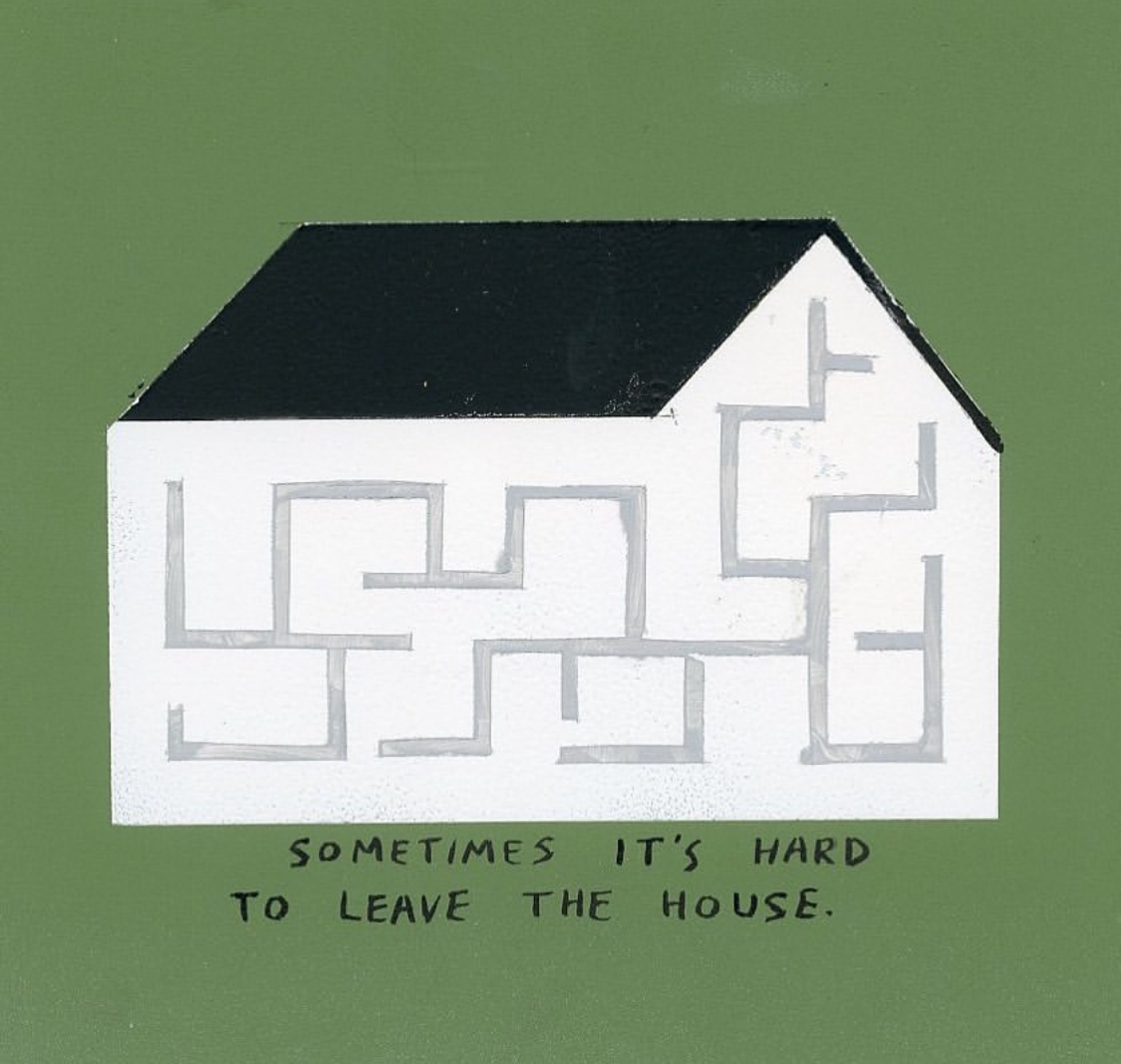
Το σπίτι είναι κρυμμένο βαθιά μέσα μας και το σπίτι μας περιβάλλει. Και, ασφαλώς, το σπίτι, ακριβώς όπως το θέτει ο Μισέλ Φουκώ για το σώμα, έχει τα δικά του βιοπολιτικά συστήματα που απαιτούν μια αρχιτεκτονική της φροντίδας (architecture of care).
(...)
Στο σπίτι
χτες
καθώς άνοιξα τη ντουλάπα έσβησε γίνηκε
σκόνη μ’ όλα τα ρούχα της μαζί
τα πιάτα σπάζουν μόλις κανείς τ’ αγγίξει
φοβάμαι κι έχω κρύψει τα πιρούνια και τα μαχαίρια
τα μαλλιά μου έχουν γίνει κάτι σαν στουπί
το στόμα μου άσπρισε και με πονάει
τα χέρια μου είναι πέτρινα
τα πόδια μου είναι ξύλινα
με τριγυρίζουν κλαίγοντας τρία μικρά παιδιά
δεν ξέρω πώς γίνηκε και με φωνάζουν μάνα.

Θέλησα να σου γράψω για τις παλιές μας τις χαρές
όμως έχω ξεχάσει να γράφω για πράγματα χαρούμενα.

 Να με θυμάσαι.

 Μίλτος Σαχτούρης | Ορυχείο | Άπαντα ποιήματα 1945-1971 | εκδόσεις Κέδρος |

Το σπίτι είναι ένα αυθύπαρκτο οικοσύστημα.
Ένα νοικοκυριό με τη δική του λογική, συναισθηματική ευφυία και διασυνδεδεμένα μοτίβα. Το σπίτι θρέφει και το σπίτι πληγώνει. Μπορεί να είναι ελεύθερο και ανοιχτό ή μπορεί να είναι περίκλειστο και να επιτηρείται, άγρια, από κανόνες και άγραφους νόμους. Μπορεί να είναι ασφαλές και μπορεί να είναι επικίνδυνο.


Το σπίτι μπορεί να είναι σημείο αναφοράς ή τόπος αποστροφής.


Το σπίτι είναι κληρονομιά.
Στο σπίτι ζει η οικογένεια. Άρα, στον πυρήνα του είναι αδιαχώριστο από αυτήν. Το σπίτι μπορεί να λειτουργήσει ως μια γονεϊκή μηχανή που επιτρέπει να συμβούν υπέροχα ή απαίσια πράγματα ακόμη κι όταν οι άνθρωποι, που το έστησαν, δεν είναι πια ζωντανοί. Όπως το θέτει η Βιρτζίνια Γούλφ στα Κύματα, μεγαλώνουμε τα παιδιά μας, αγόρια και κορίτσια, τα μορφώνουμε, τα φροντίζουμε για να κληρονομήσουν τα σπίτια μας. Το σπίτι είναι το κληροδότημα και η κληρονομιά που παραχωρείται από εμάς, κατευθείαν, στους απογόνους μας. Μια κληρονομιά φορτωμένη με όλων των ειδών τις αναμνήσεις και τις φαντασίες.

Ήμουν παιδί αυτού του σπιτιού,
γεμάτο με την ανάμνηση των μυρωδιών του,
γεμάτο από τη δροσιά των διαδρόμων του,
γεμάτο με τις φωνές που το είχαν ζωντανέψει.

Antoine de Saint-Exupery, Wind, Sand and Stars, London: Penguin Books, 1991.

Αναφορές από την ποίηση, την λογοτεχνία, τη φιλοσοφία, τις παραστατικές τέχνες και τον κινηματογράφο μας βοηθούν να κατανοήσουμε πως λειτουργεί και πως μοιάζει το σπίτι ως βιωμένος τόπος, ως ένα σύμπαν ή ένας κόσμος εμπειρίας.
ΚΥΝΟΔΟΝΤΑΣ (2009) | Σκηνοθεσία: Γιώργος Λάνθιμος, Σενάριο: Ευθύμης Φιλίππου, Γιώργος Λάνθιμος.
Ένας χειριστικός πατέρας εγκλωβίζει τα τρία ενήλικα παιδιά του, στο σπίτι, σε ένα καθεστώς αέναης παιδικότητας υπό μορφή αιχμαλωσίας εντός της οικογενειακής εστίας.

ΣΠΙΡΤΟΚΟΥΤΟ (2003) | Σκηνοθεσία: Γιάννης Οικονομίδης, Σενάριο: Γιάννης Οικονομίδης, Λένια Σπυροπούλου.
Εν μέσω καύσωνα, ένα μικροαστικό διαμέρισμα στην Αθήνα γίνεται πεδίο μάχης ανάμεσα στον πατέρα και τα υπόλοιπα μέλη της οικογένειας. Όπλα τους οι ωμές αλήθειες που διαπερνούν την οικιακή ζωή σαν δηλητηριώδη βέλη. Θα επιβιώσουν από την σύγκρουση;
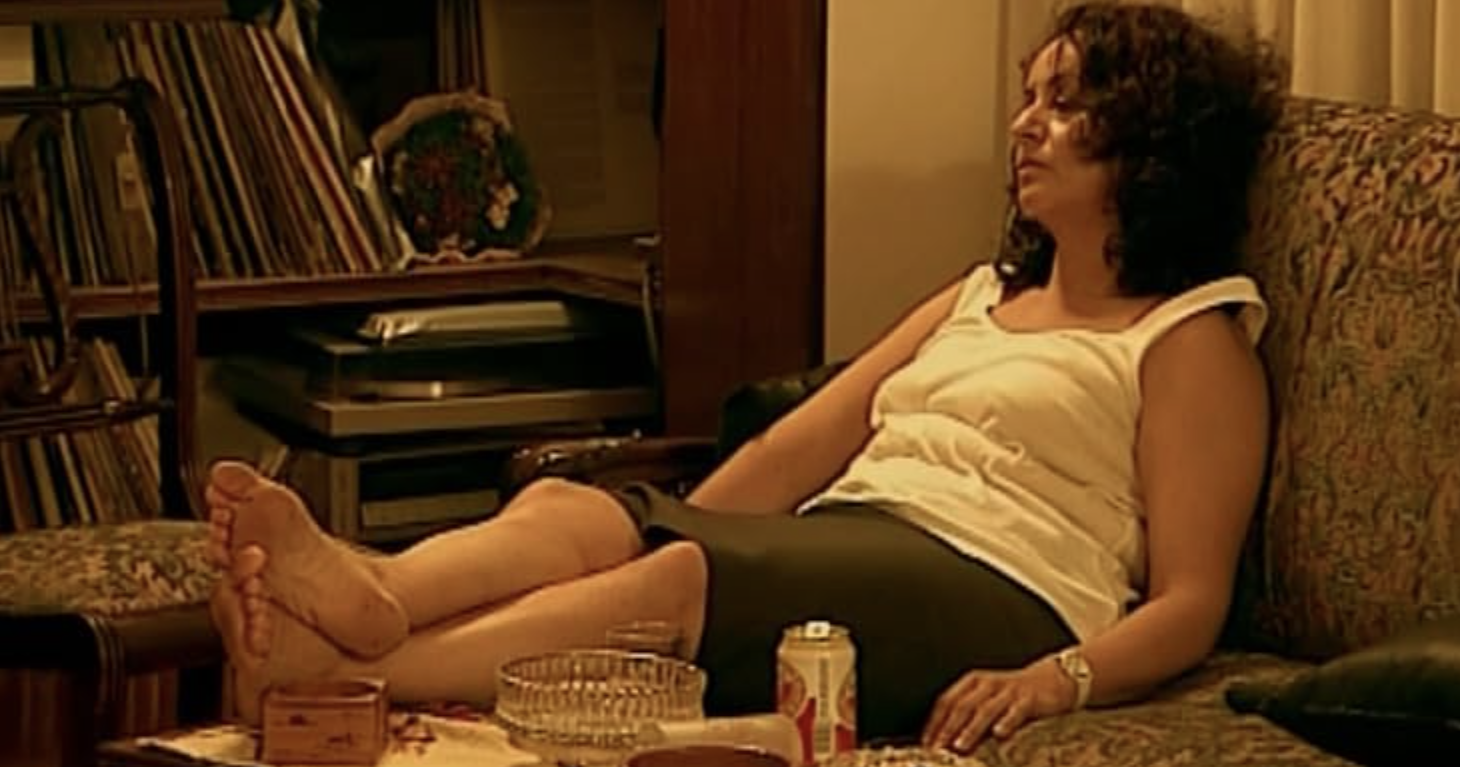
Σπίτι μπορεί να αποτελέσει μια κατοικία αλλά η κατοικία δεν είναι πάντα σπίτι.
Ποιες κατοικίες αποκαλούμε σπίτια και τι αποκαλύπτουν αυτά τα σπίτια για εμάς;


Μέχρι που θα φτάναμε για να υπερασπιστούμε τα σπίτια μας και μέχρι που μπορούν να φτάσουν τα σπίτια μας για να υπερασπιστούν εμάς;


Αν η αρχιτεκτονική περιγράφει την κατοικία, τότε η ποίηση μετατρέπει την κατοικία σε σπίτι: εμπειρία οικεία και οικιακή. Όπως σημειώνει και ο Juhani Pallasmaa αν η κατοικία βρίσκεται στην περιφέρεια της αρχιτεκτονικής, σε πραγματικό χώρο και χρόνο, το σπίτι βρίσκεται στην περιφέρεια της ψυχολογίας, της ψυχανάλυσης και της κοινωνιολογίας με τις πολλές και διαφορετικές εκδοχές του να προβάλλονται στον παράλληλο χωροχρόνο της λογοτεχνικής, ποιητικής και κινηματογραφικής αφήγησης.


Το σπίτι είναι το Σημείο Ωμέγα.
Ως φαίνεται, το σπίτι μας χρειάζεται τόσο όσο χρειαζόμαστε κι εμείς σπίτι. Είναι μια διαδραστική σχέση: δεν υπάρχει σπίτι χωρίς εαυτό και εαυτός χωρίς σπίτι. Συζητώντας την υπαρξιακή ανεστιότητα, ο αρχιτέκτονας Juhani Pallasmaa συσχετίζει το σημείο Ωμέγα, τον όρο που εισήγαγε ο Τεγιάρ ντε Σαρντέν, με το Σπίτι ως το σημείο “από το οποίο ο κόσμος μπορεί να ιδωθεί ως ένα όλον, και σωστά”. Το σπίτι είναι το σημείο που παρέχει πρόσβαση στο βιωμένο κόσμο, όπως τον ορίζει ο Pallasmaa όπου “το υλικό και το πνευματικό (…) το απομνημονευμένο και το επινοημένο από τη φαντασία, αναμειγνύονται συνεχώς μεταξύ τους.” “Το σπίτι είναι το καταφύγιο της ονειροπόλησης, το σπίτι προστατεύει τον ονειροπόλο, μας επιτρέπει να ονειρευόμαστε εν ειρήνη”, γράφει στην Ποιητική του χώρου ο Μπασελάρ. Το σπίτι “βρίσκεται πιο κοντά στην πραγματικότητα του ονείρου απ’ ό,τι οποιαδήποτε επιστημονική περιγραφή” και διακρίνεται από τον υλικό και γεωμετρικό χώρο γιατί είναι ο υπαρξιακός μας χώρος: ο βιωμένος κόσμος όπου στεγάζεται το είναι μας.
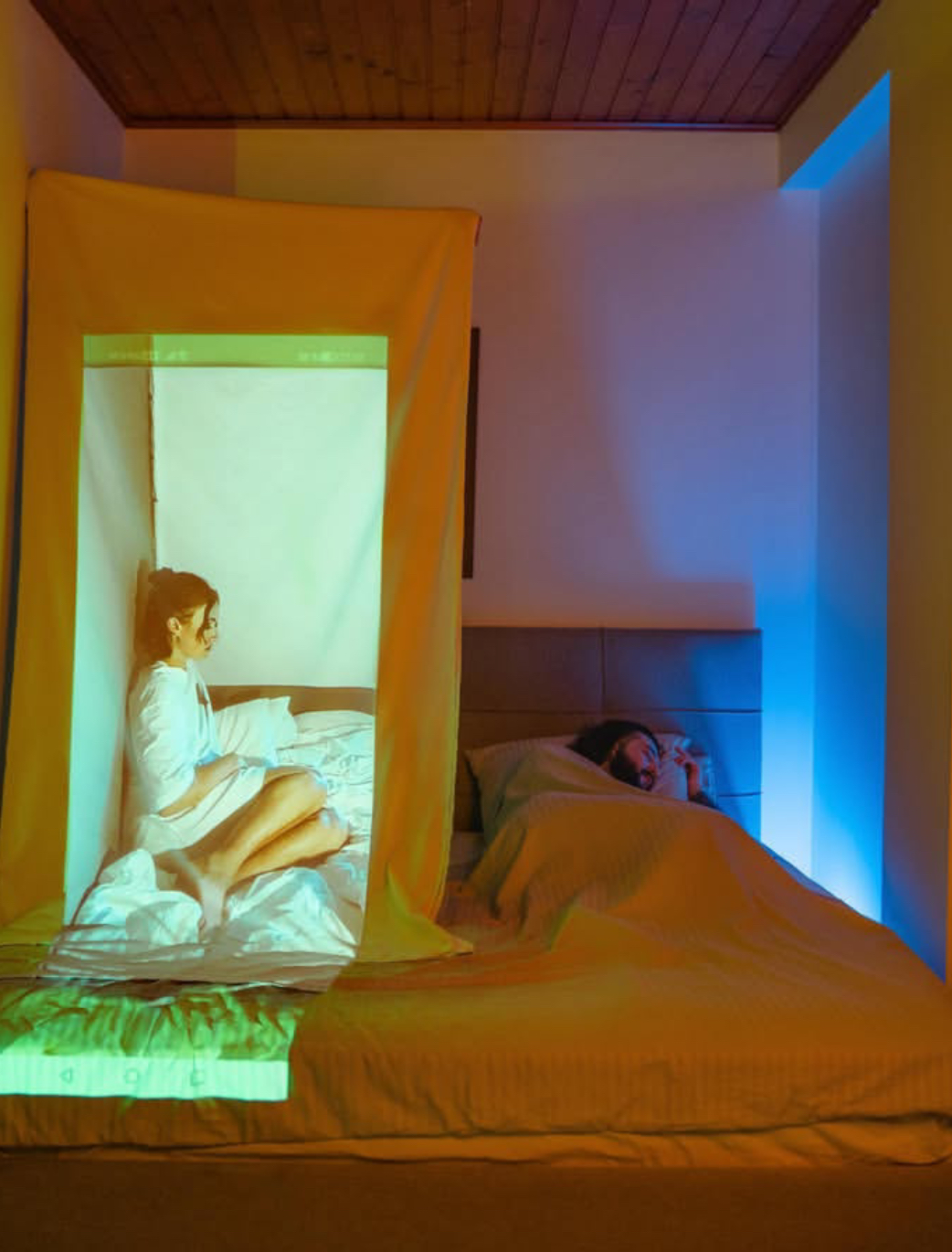
Ο Pallasmaa θεωρεί το σπίτι ως την ρίζα που μας ενώνει με τη γη, με τον κόσμο, που αλλάζει γρήγορα και διαρκώς, και με τον εαυτό. Το σπίτι μας συνδέει με την ταυτότητά μας, με τον αυθεντικό μας εαυτό. “Η ουσία του σπιτιού απορρέει από τον κάτοικο (…) Το σπίτι είναι έκφραση της προσωπικότητας του κατοίκου και του ιδιάζοντα τρόπου ζωής του. (…) σπίτι είναι επίσης μια σειρά από τελετουργικά, προσωπικούς ρυθμούς και ρουτίνες της καθημερινής ζωής (…) ένα διαρκές προϊόν της προσαρμογής του ατόμου και της οικογένειας στον κόσμο”, λέει ο Pallasmaa.


Το σπίτι είναι ψυχική κατάσταση.
“(…) καθώς εγκαθίσταμαι σε έναν χώρο, ο χώρος εγκαθίσταται μέσα μου. Ζω σε μια πόλη και η πόλη κατοικεί μέσα μου. Αλληλεπιδρούμε συνεχώς με όσα μας περιβάλλουν, την ίδια στιγμή εσωτερικεύουμε τον περίγυρο και προβάλλουμε πάνω σ’ αυτόν το δικό μας σώμα, ή όψεις των σωματικών μας χαρακτηριστικών”, γράφει ο αρχιτέκτονας Juhani Pallasmaa.

Μέσα από τις βιωμένες χωρικές εμπειρίες μας, χτίζουμε κι, έπειτα, κουβαλάμε το σπίτι μέσα μας, το αποθηκεύουμε στον ψυχισμό μας και κατοικούμε εκεί, στον διάχυτο αλλά άμεσα αισθητό κόσμο, που περικλείει το δέρμα μας. Το σπίτι ως ψυχική κατάσταση είναι ο εσωτερικευμένος χώρος όπου “η μνήμη και η πραγματικότητα, η αντίληψη και τα όνειρα συγχωνεύονται”, συνοψίζει ο Pallasmaa. Το σπίτι ως ψυχική κατάσταση είναι η σκηνοθετημένη, από τον ίδιο τον εαυτό, αντανάκλαση του κόσμου (τόπου, τοπίου, κτηριακού χώρου) γύρω μας, που επενδύει την εσωτερική δομή, τα θεμέλια, της προσωπικότητάς μας ευνοώντας ή αποτρέποντας την αλλαγή: τρόπων, συμπεριφορών, νοοτροπίας.

Άρα, αν μια αρχιτεκτονική πρόταση αλλάξει τους τρόπους που κατοικούμε τον δημόσιο χώρο της πόλης ή το προσωπικό μας δωμάτιο, μπορεί να αλλάξει, μακροπρόθεσμα, τον τρόπο που κατοικούμε το σώμα μας, βιώνουμε τη σχέση με τους άλλους ανθρώπους και τον ίδιο μας τον εαυτό.

Η σειρά ‘Σύγχρονες Ιστορίες Οικιακότητας ή ΚατΟΙΚΕΙΝ’ εξερευνά την ικανότητα της σύγχρονης αρχιτεκτονικής να παράξει κατοικίες που προσφέρουν οικιακότητα στον κάτοικο.


Μπορεί η αρχιτεκτονική, στις μέρες μας, να δημιουργήσει κατοικίες που είναι, ταυτόχρονα, σπίτια;

Αντιμετωπίζοντας την αρχιτεκτονική όχι ως μια ισχυρή κίνηση αλλά ως ένα σύστημα ήπιων χειρισμών, που παρέχουν νόημα στην καθημερινή ζωή, αυτή η σειρά:
- ακολουθεί την προτροπή του Aldo van Eyck να αναζητήσουμε τα περιθώρια που έχει ένας αρχιτέκτονας για να διευκολύνει το “homecoming” ανατρέποντας, έτσι, την πεποίθηση – που καλλιεργείται συχνά στις αρχιτεκτονικές σχολές – πως η αρχιτεκτονική και το σπίτι είναι έννοιες αντίρροπες.

Υπάρχουν ακόμα σπίτια με χαμηλά ταβάνια,
παράθυρα με πλατύ περβάζι όπου σκαρφαλώνουν τα παιδιά
και καθισμένα στις φτέρνες, με το πηγούνι πάνω στα γόνατα
κοιτάνε το υγρό χιόνι να πέφτει
ήσυχα πάνω από σκοτεινές, στενές αυλές.
Υπάρχουν ακόμη δωμάτια που μιλούν για ζωές,
για ντουλάπια με καθαρά παλιακά λινά.
Υπάρχουν ήσυχες κουζίνες όπου κάποιος κάθεται
και διαβάζει, στηρίζοντας το βιβλίο του σ' ένα καρβέλι ψωμί.
Το φως πέφτει εκεί με τη φωνή μιας λευκής τυφλότητας.
Σαν κλείσεις τα μάτια σου μπορείς να δεις
ότι ένα πρωινό, οσοδήποτε φευγαλέο, περιμένει
και ότι η ζεστασιά του σμίγει με τη ζεστασιά μέσα εδώ
και πως η κάθε νιφάδα που πέφτει
είναι ένα σημάδι του ερχομού του σπιτιού (homecoming).

Bo Carpelan, Homecoming, μτφρ. Α.-Σ. Λαδά.

- υποστηρίζει την “αρχιτεκτονική της διαμονής”, όπως θέτει τον όρο ο Juhani Pallasmaa.


Αγκαλιάζοντας την άποψη του Μπασελάρ πως το σπίτι “είναι ένα εργαλείο για ν’ αντιμετωπίσουμε τον κόσμο” αναγνωρίζουμε την θεμελιώδη σημασία της έννοιας “σπίτι” για την επιβίωση και την ανθεκτικότητα του ατόμου καθώς “δυναμώνει την αυτοεκτίμηση του κατοίκου και σταθεροποιεί την κοσμική του τάξη”.


Υποστηρίζοντας την ιδέα μιας αρχιτεκτονικής της διαμονής, η σειρά Σύγχρονες Ιστορίες Οικιακότητας φιλοδοξεί να ενδυναμώσει μια προσέγγιση της αρχιτεκτονικής ως ριζοσπαστικής φροντιστικής πράξης που προστατεύει και οδηγεί τον άνθρωπο σε έναν πιο συνειδητό τρόπο ζωής που στοχεύει στην αυτεπίγνωση, στην προσωπική εξέλιξη και, συνεπακόλουθα, στη κοινωνική αλλαγή.

Ξεκινώντας από το άστυ, σταματάμε για να παρατηρήσουμε την αναπνοή των πολιτών στην, πλέον, ιδιωτική τους επικράτεια. Πως ζουν όταν δεν τους βλέπει κανείς; Ποιοι είναι εντός των τειχών; Τι τους αρέσει και τι όχι; Και, τι συμβαίνει με την αρχιτεκτονική;

Αν οι πολυκατοικίες είναι το βασικό κληροδότημα του μοντέρνου κινήματος στις σύγχρονες μητροπόλεις, σηματοδοτώντας ποιοι έχουμε υπάρξει και ποιοι ήμασταν, πως τις επαναδιαμορφώνουν οι αρχιτέκτονες, κυρίως από μέσα προς τα έξω, για να διηγηθούν ποιοι είμαστε σήμερα;

residential apartment as a result of a yearlong collaboration with pioneering Greek architect, Dionisis Sotovikis.

Μια ανακαίνιση διαμερίσματος είναι μια σύνθετη διαδικασία επαναπροσδιορισμού του παρελθόντος και αναπροσαρμογής του στο μέλλον. Η αποκατάσταση ενός μαρμάρινου δαπέδου μπορεί να είναι μια αρκετά απαιτητική διαδικασία για μια σειρά από λόγους, πρακτικούς και μη. Εχουν τα υλικά την δυνατότητα να αποθηκεύουν μνήμες και, αν ναι, πως τις απελευθερώνουν; Ποιος ξάπλωνε σε αυτό το πάτωμα και ποιος θα το πατάει τώρα; Είναι αυτοί οι άνθρωποι ξένοι μεταξύ τους; Μπορείς να “γνωρίσεις” το Άλλο μέσα από ένα δάπεδο ή ένα κομμάτι τοίχου;


Μπορούν να ανακυκλωθούν ή να αποκατασταθούν τα συναισθήματα;

Όμως, αυτό που δεν θα μπορούσες να ξεχάσεις ποτέ ήταν οι ίδιοι οι τοίχοι.
Η πεισματική ζωή που διαδραματιζόταν ανάμεσά τους αρνιόταν να σβηστεί.
Υπήρχε ακόμα εκεί, κρατιόταν από τα καρφιά που είχαν μείνει,
την έβλεπες στα υπολείμματα των πατωμάτων που είχαν μέγεθος παλάμης,
βρισκόταν κάτω από τις κόχες,
όπου υπήρχαν ακόμη μικρά τμήματα του εσωτερικού χώρου.

Οι Σημειώσεις του Μάλτε Λάουριντς Μπρίγκε, Ράινερ Μαρία Ρίλκε, μτφρ. Α.-Σ. Λαδά.

Ιστορία 1η
Cabanon από STAR & BOARD: το μεγαλύτερο μικρότερο διαμέρισμα στον κόσμο
6,89 τετραγωνικά μέτρα απαράμιλλης αρχιτεκτονικής γοητείας στο Ρότερνταμ της Ολλανδίας μαρτυρούν το ρηξικέλευθο: η πόλη χτυπάει μέσα από το σπίτι όπως το σώμα χτυπάει μέσα από τον μυ που αποκαλούμε καρδιά.

Οι αρχιτέκτονες και ιδιοκτήτες Beatriz Ramo και Bernd Upmeyer, ιδρυτές των γραφείων STAR strategies + architecture και BOARD (Bureau of Architecture, Research and Design) αντίστοιχα, δημιούργησαν το Cabanon ως το κοινό τους χωρικό πείραμα, το δεύτερο σπίτι τους ή απλά ένα αιωρούμενο κρεβάτι για δύο, κάτω απ’ τ’ αστέρια, ένα καθιστικό με θέα στη πόλη, και ένα ολόδικό τους σπα!

Διαβάστε ολόκληρη την ιστορία του Cabanon του Ρότερνταμ, εδώ!
Ιστορία 2η
Διαμέρισμα στην οδό Τροίας από το αρχιτεκτονικό γραφείο threshold
Tο αρχιτεκτονικό γραφείο threshold ανασχεδίασε, στρατηγικά, το διαμέρισμα στην οδό Τροίας, στο κέντρο της Κυψέλης, σαν να θεραπεύει ένα σώμα που χρειάζεται αποσυμφόριση και επαναπροσδιορισμό. Στον πρώτο όροφο τυπικής Αθηναϊκής πολυκατοικίας του ’70, με έντονα κατακερματισμένη εσωτερική διαρρύθμιση, όλη η μη φέρουσα προϋπάρχουσα τοιχοποιία αφαιρείται με στόχο τη δημιουργία ενός ενιαίου χώρου καθημερινής κατοίκησης με εναλλαγές φωτός και ποικίλα επίπεδα οπτικής διαπερατότητας.
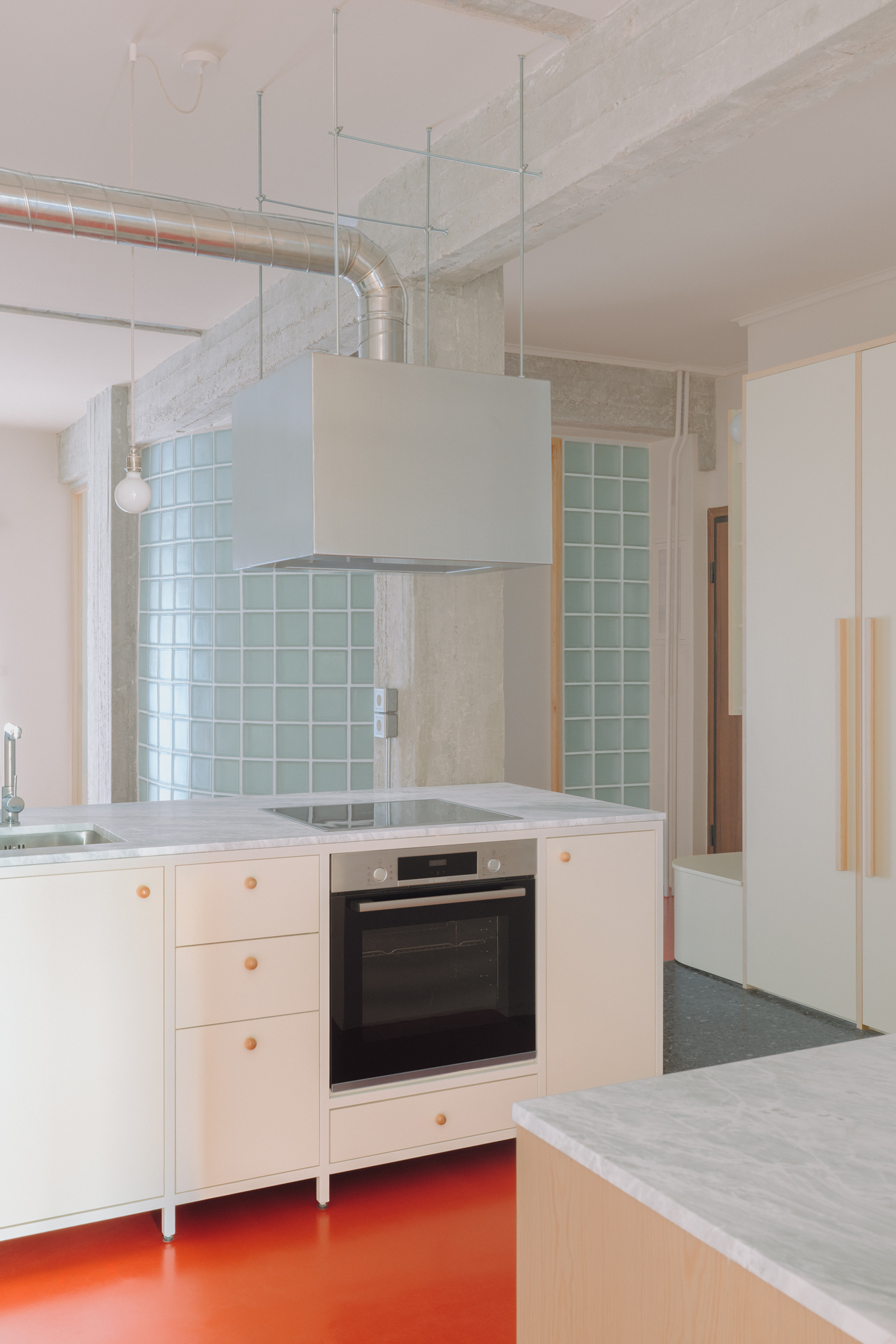
Πραγματοποιώντας ένα ‘αρχιτεκτονικό μπρικολάζ’, οι threshold συνδυάζουν νέα και παλιά, ετερόκλητα και αναπάντεχα σχεδιαστικά στοιχεία: τα αυθεντικά ξύλινα δάπεδα και το μαύρο μωσαϊκό του διαμερίσματος συναντούν ένα αποκαλυπτικό κόκκινο πάτωμα, μια σκηνογραφική ασημένια κουρτίνα, μια κουζίνα με χαρακτήρα και, τα δειλινά, ένα φωτεινό γυάλινο κουτί.
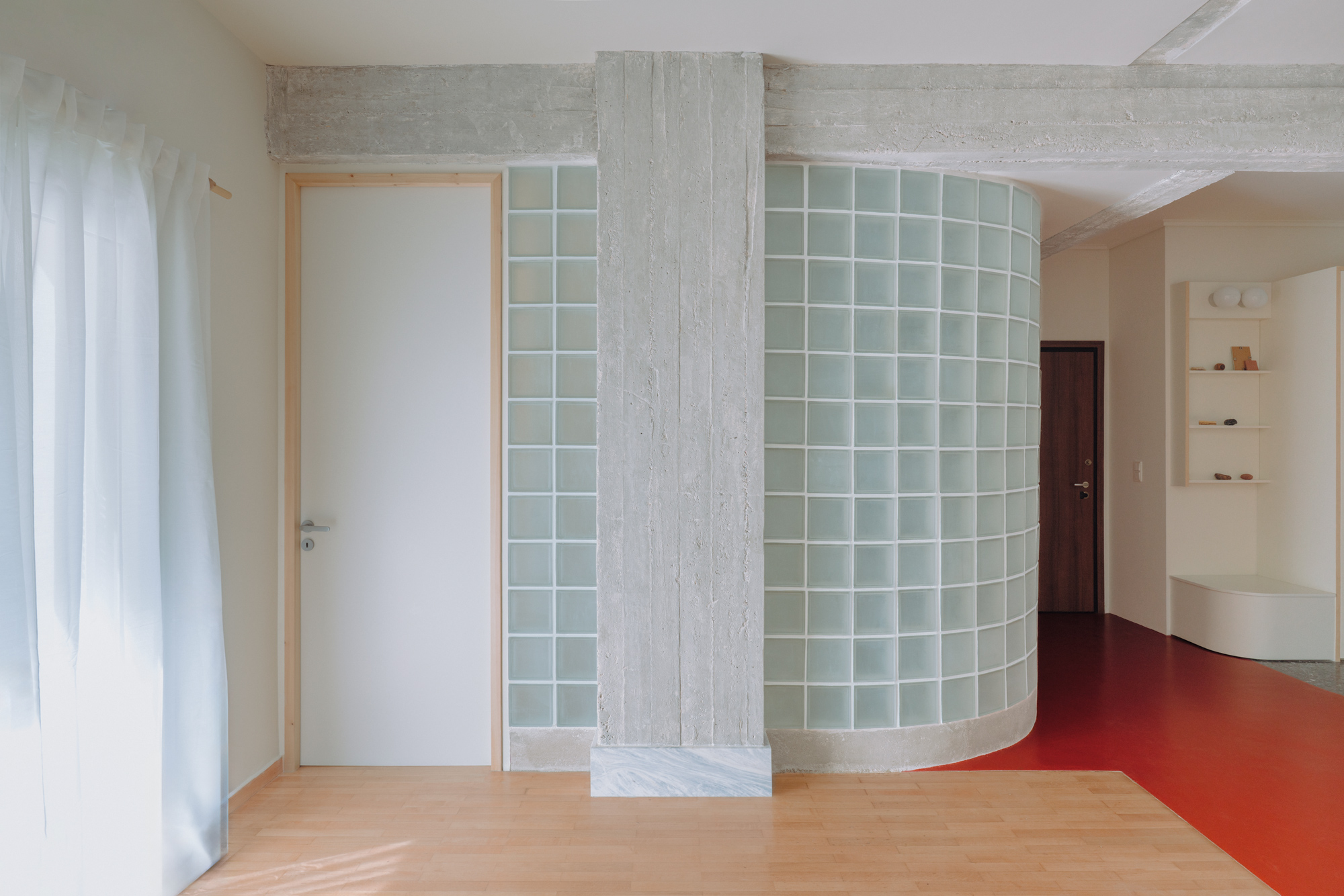
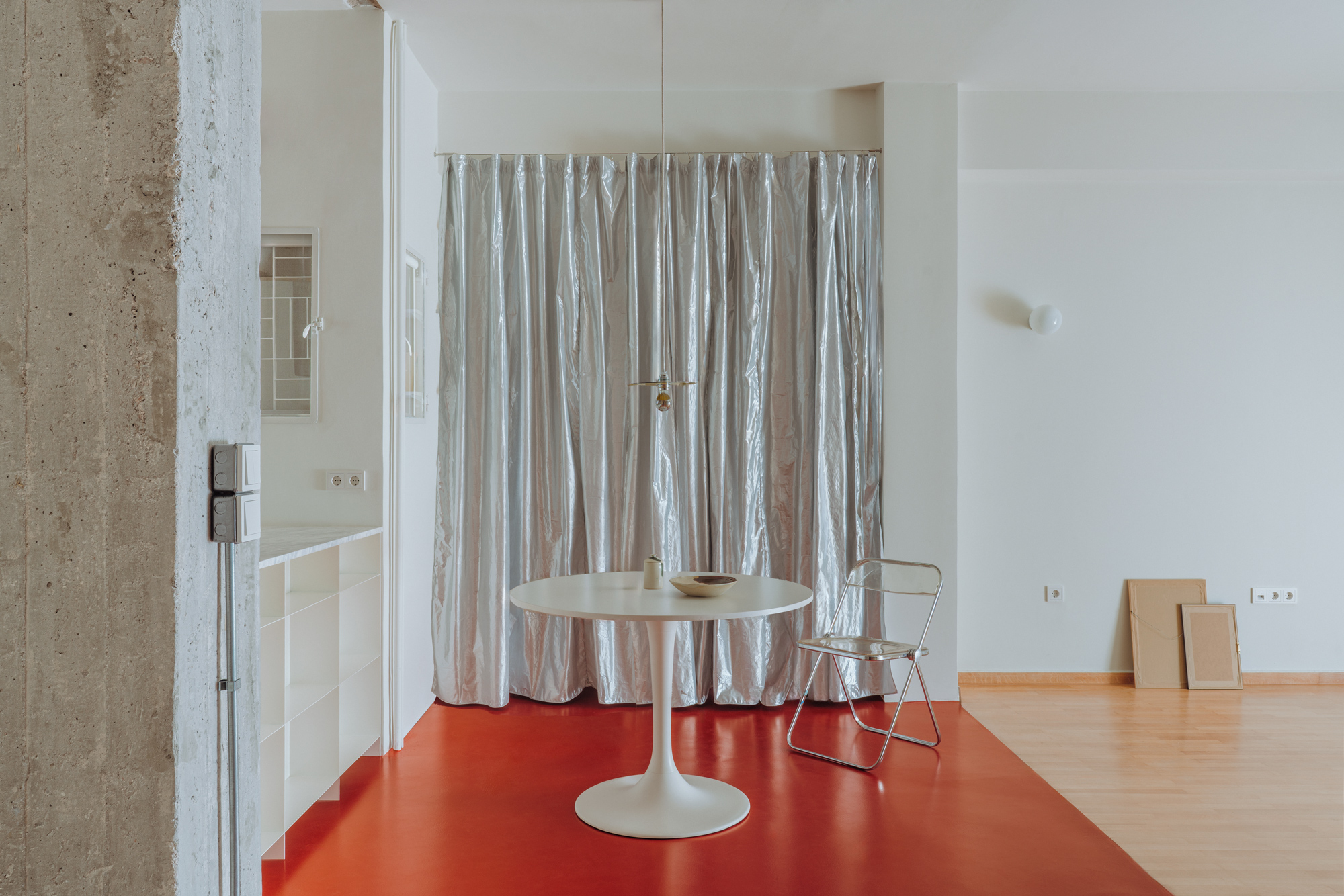
Ακολουθώντας τη σκέψη της Σουζάνας Αντωνακάκη που θέλει τα σπίτια μικρούς κόσμους εντός των οποίων ασκείται η ευαισθησία μας, το διαμέρισμα στην οδό Τροίας λέει μια ιστορία για οικιακή απελευθέρωση μέσα από τη γυμνή αλήθεια – μια ιστορία διαθλάσεων και αντανακλάσεων όπου το φως μας οδηγεί πίσω στο σπίτι.
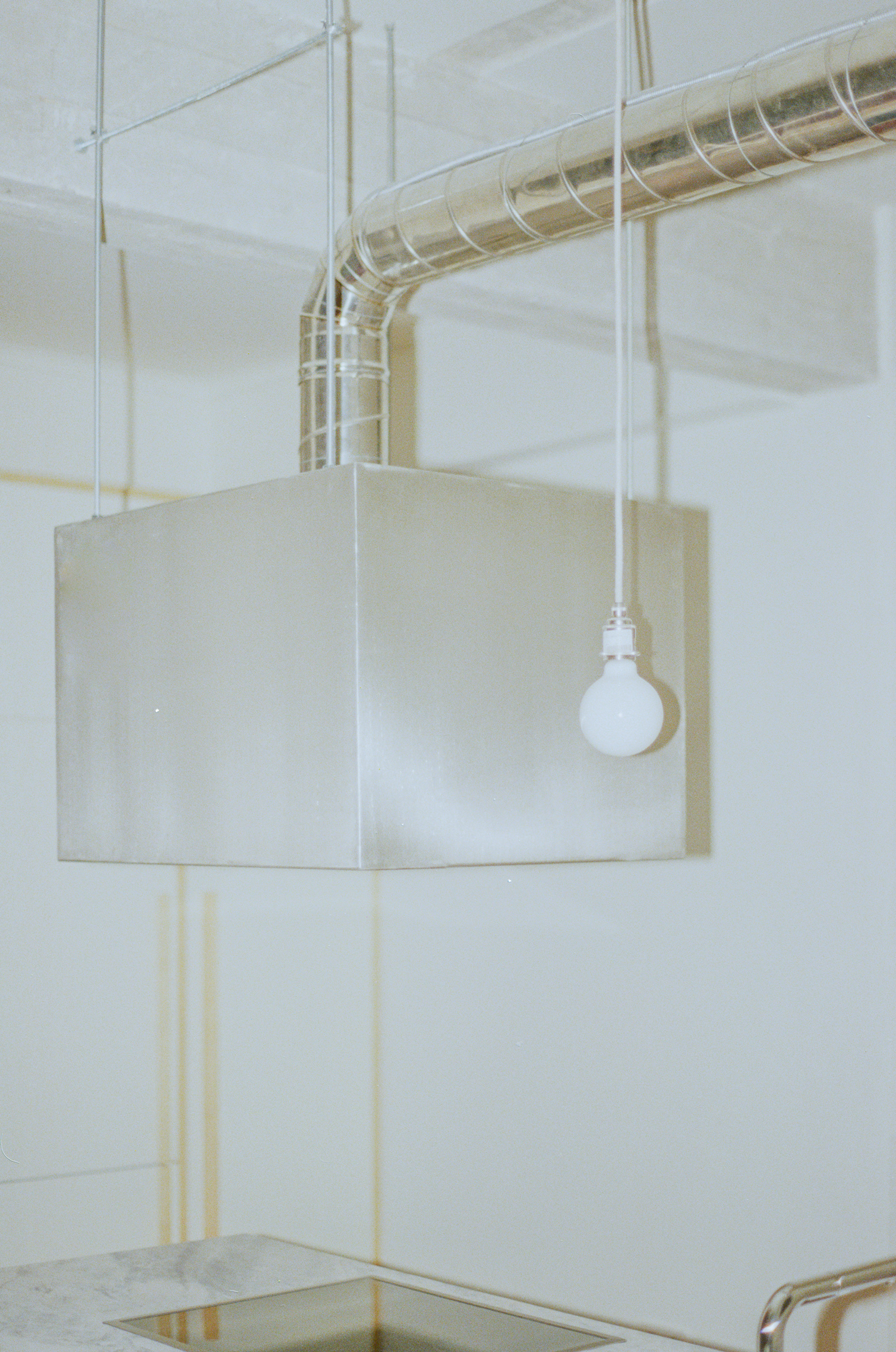
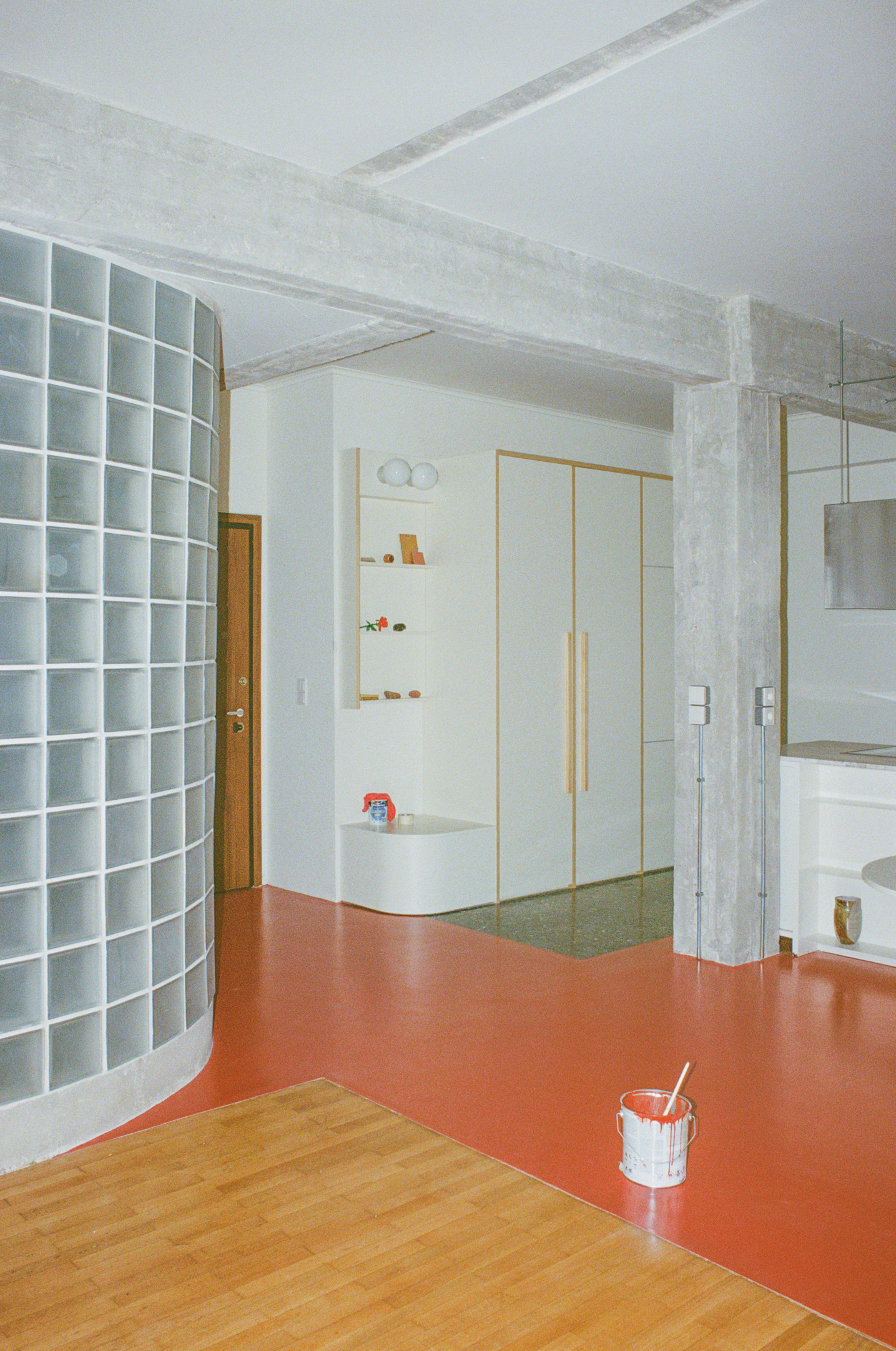
Διαβάστε ολόκληρη την ιστορία του Διαμερίσματος στην οδό Τροίας, εδώ!
Ιστορία 3η
1:1 STUDY MODEL, Ένα Σπίτι-Εργαστήριο ή «κατοικώντας το γιαπί» από το γραφείο AMAA
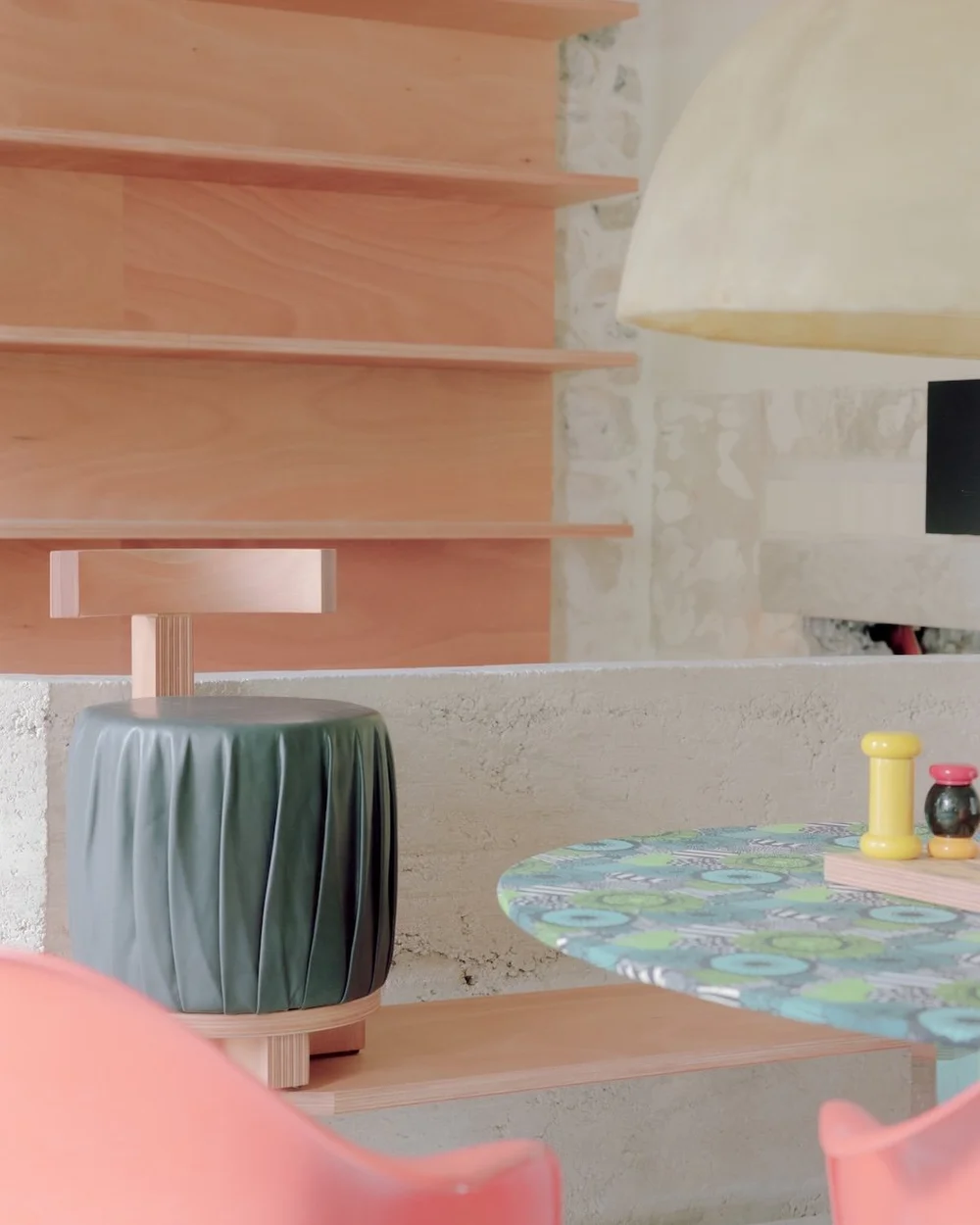
Το τρίτο επεισόδιο ακολουθεί το αρχιτεκτονικό γραφείο ΑΜΑΑ στη περιοχή της Βιτσέντσα στην Ιταλία να μετατρέπει μια αστική διώροφη κατοικία σε ένα σπίτι «εν εξελίξει» επανερμηνεύοντας την έννοια «ολοκληρωμένο» στην αρχιτεκτονική. Το σπίτι-εργαστήριο των ΑΜΑΑ αποτελεί μια επιτόπια έρευνα για την σύγχρονη οικιακή ζωή και τη σχέση της με την αρχιτεκτονική ως μια ανοιχτή, διαρκώς εξελισσόμενη διαδικασία που κατοικείται αδιάκοπα.
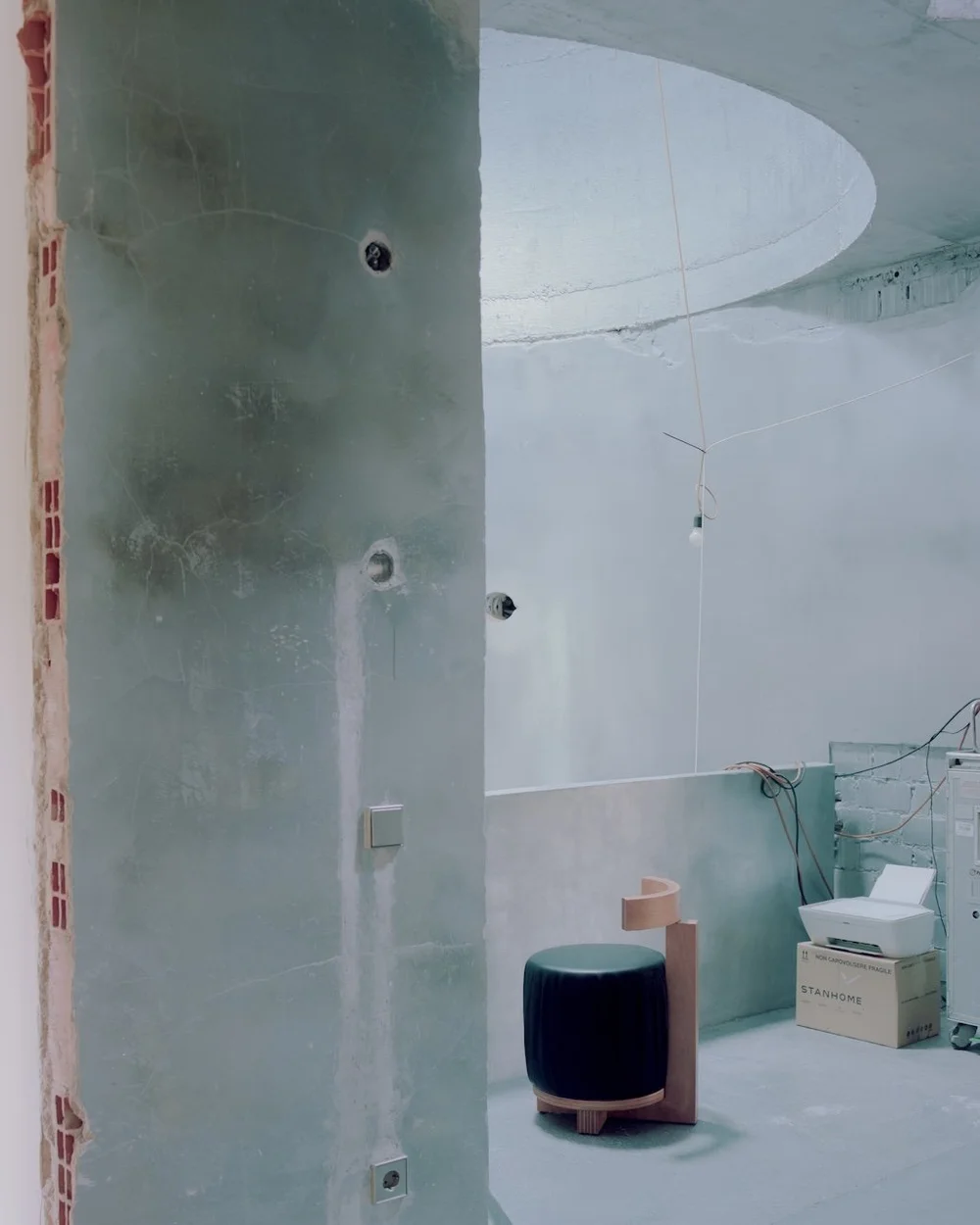
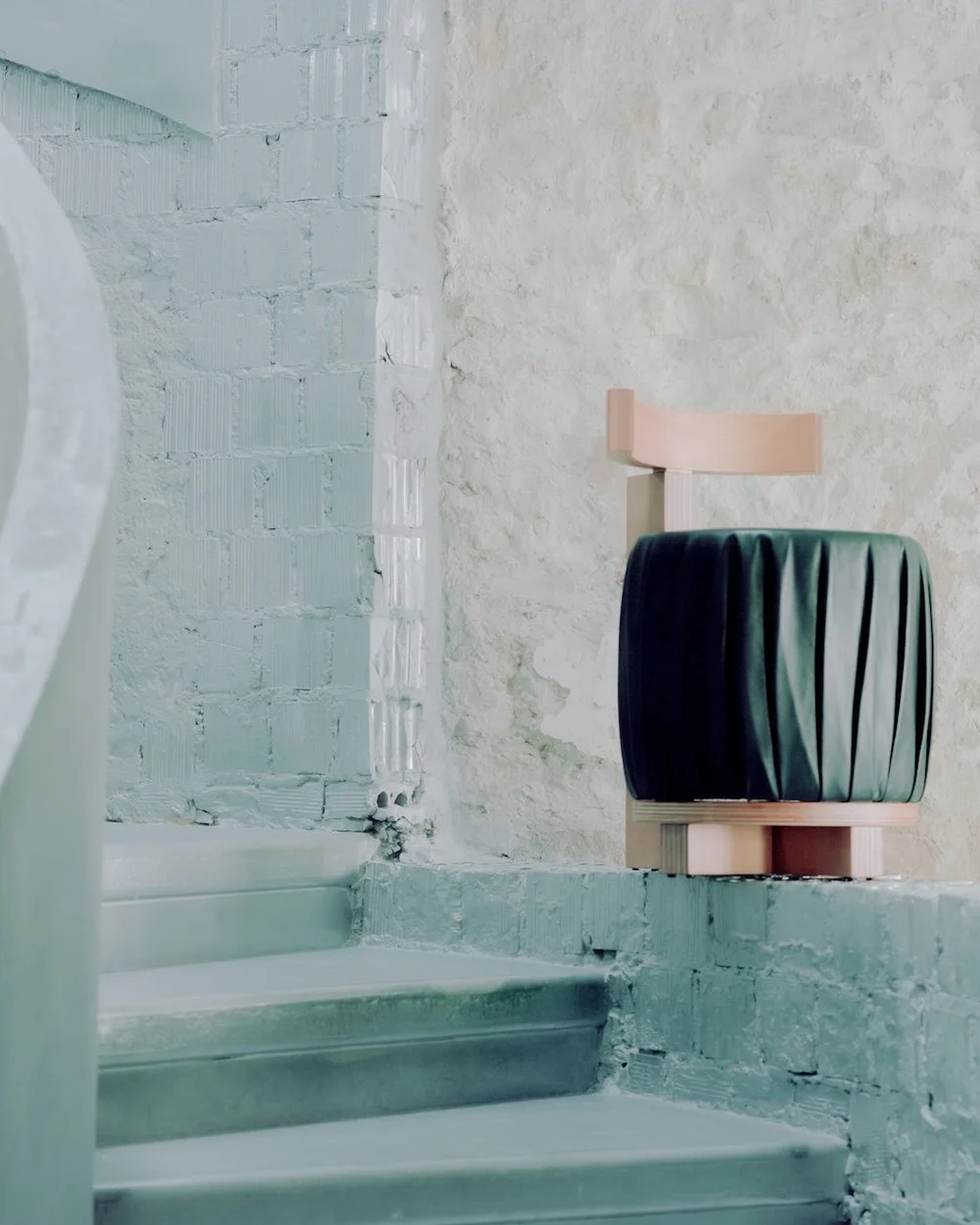
Διαβάστε ολόκληρη την ιστορία του 1:1 Study Model, εδώ!
Ιστορία 4η
Το σπίτι ως κληρονομιά: ανακαίνιση Αθηναϊκού ρετιρέ του 1960 από τις αρχιτεκτόνισσες Χριστίνα Ηλιοπούλου και Ασπασία Μητροπάπα
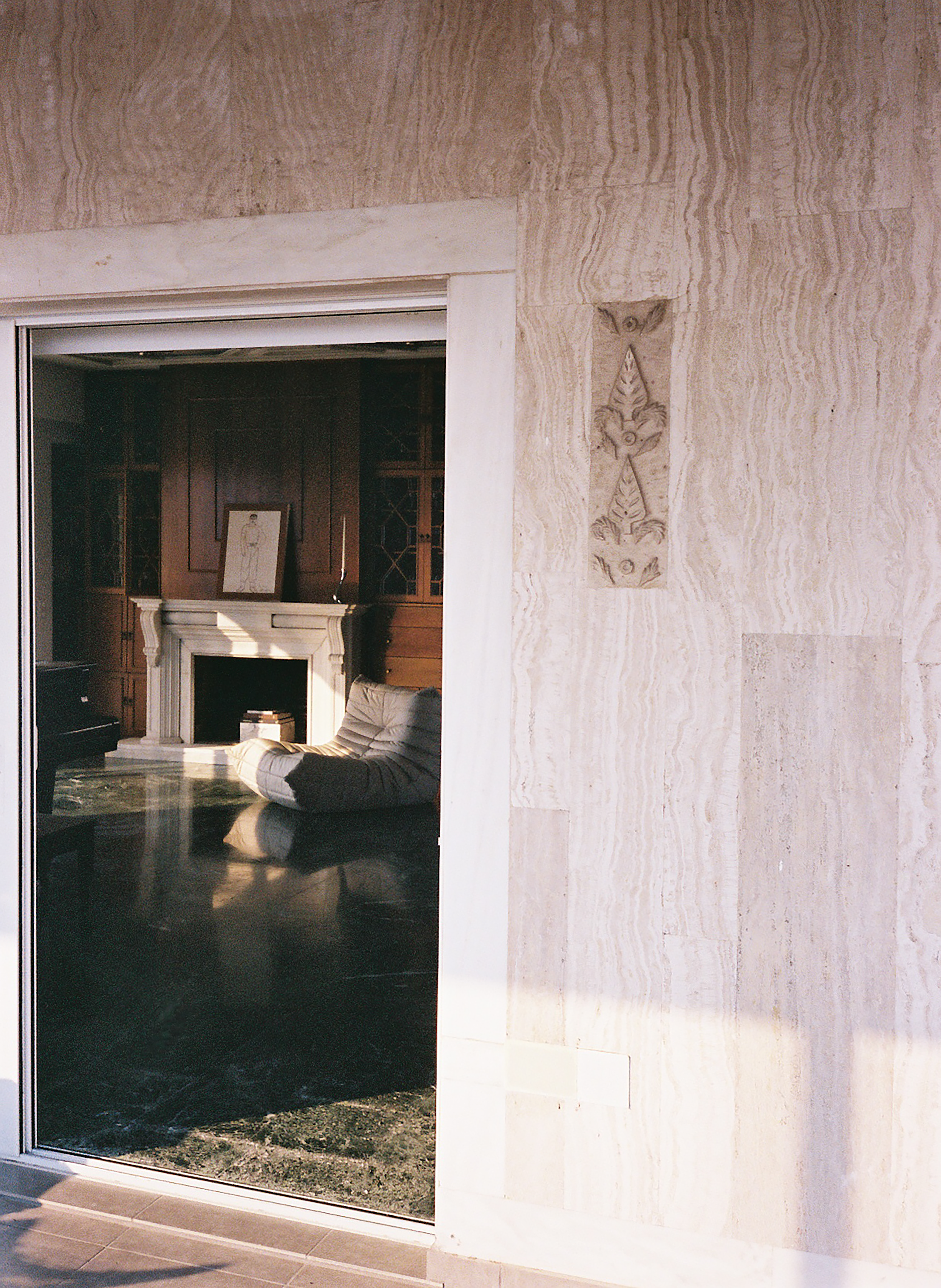
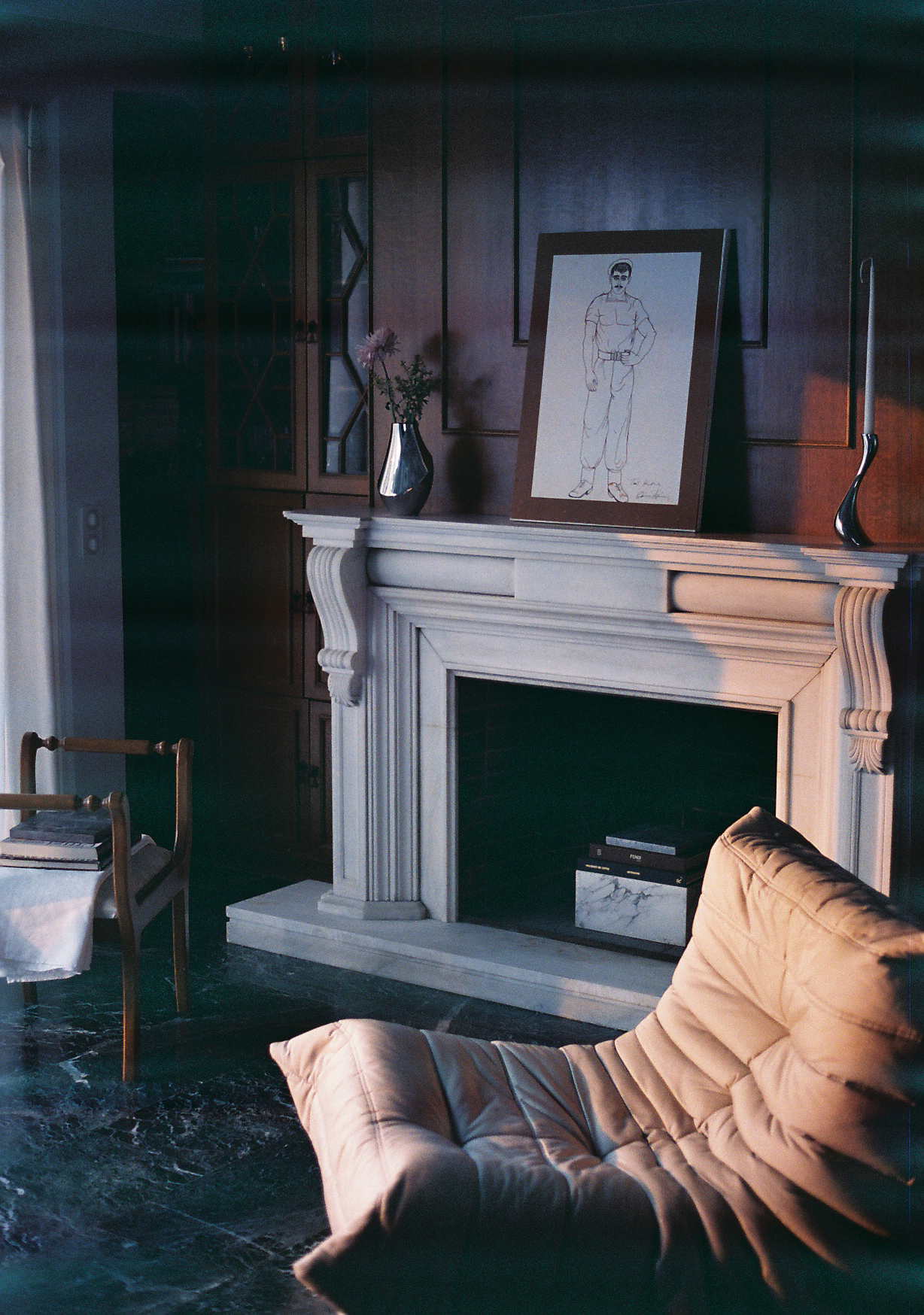
Το τέταρτο επεισόδιο ακολουθεί τις αρχιτεκτόνισσες Χριστίνα Ηλιοπούλου και Ασπασία Μητροπάπα στον ανασχεδιασμό γωνιακού ρετιρέ, της δεκαετίας του 1960, ενσωματώνοντας τη μαγνητική αίγλη της μεταπολεμικής αστικής Αθήνας στην ετερόκλητη φυσιογνωμία της σύγχρονης πρωτεύουσας. Η νέα σχεδιαστική προσέγγιση αναδεικνύει την αρχιτεκτονική γλώσσα της εποχής υπενθυμίζοντας πως, διαχρονικά, η πολυτέλεια ορίζεται από την ειλικρίνεια των υλικών, την προσοχή στη λεπτομέρεια, και την δεξιοτεχνία του χειροποίητου.
Αν αυτό το διαμέρισμα είχε όνομα, θα το φώναζαν Άλμα διότι διαφυλάσσει ότι έχει απομείνει από τις ρομαντικές αθηναϊκές μας καρδιές. Προσφέροντας απρόσκοπτη, πανοραμική θέα στο βράχο της Ακρόπολης, στο λόφο του Λυκαβηττού, στο Καλλιμάρμαρο, και στην Αθηναϊκή ακτογραμμή, το σπίτι αντανακλά το αστικό περιβάλλον στην εσωτερική οικιακή ζωή, γειώνοντας τους κατοίκους του στο ιστορικό πλαίσιο, το πολιτισμικό τοπίο και το φυσικό ανάγλυφο της πόλης. Ο νέος σχεδιασμός αποκαθιστά κι ενσωματώνει την αρχιτεκτονική κληρονομιά του κτηρίου και της εποχής που αυτό οικοδομήθηκε, αποκαλύπτοντας εσωτερικευμένες αναμνήσεις και τρόπους ζωής του παρελθόντος.
Διαβάστε ολόκληρη την ιστορία της ανακαίνισης του μεγαλοαστικού ρετιρέ, εδώ!
Ιστορία 5η
Το σπίτι ως ψυχική κατάσταση: ο αρχιτεκτονικός βελονισμός των pensi pascual
Ακολουθώντας μια σχεδιαστική προσέγγιση που θέλει την αρχιτεκτονική ως ένα σύνολο ουσιαστικών χειρονομιών έναντι μεγαλόπνοων κινήσεων, το αρχιτεκτονικό γραφείο pensi pascual φέρνει νέα πνοή σε δύο διαφορετικά υπάρχοντα σπίτια στην Καταλονία σαν να εκτελεί δύο πράξεις “αρχιτεκτονικού βελονισμού”.
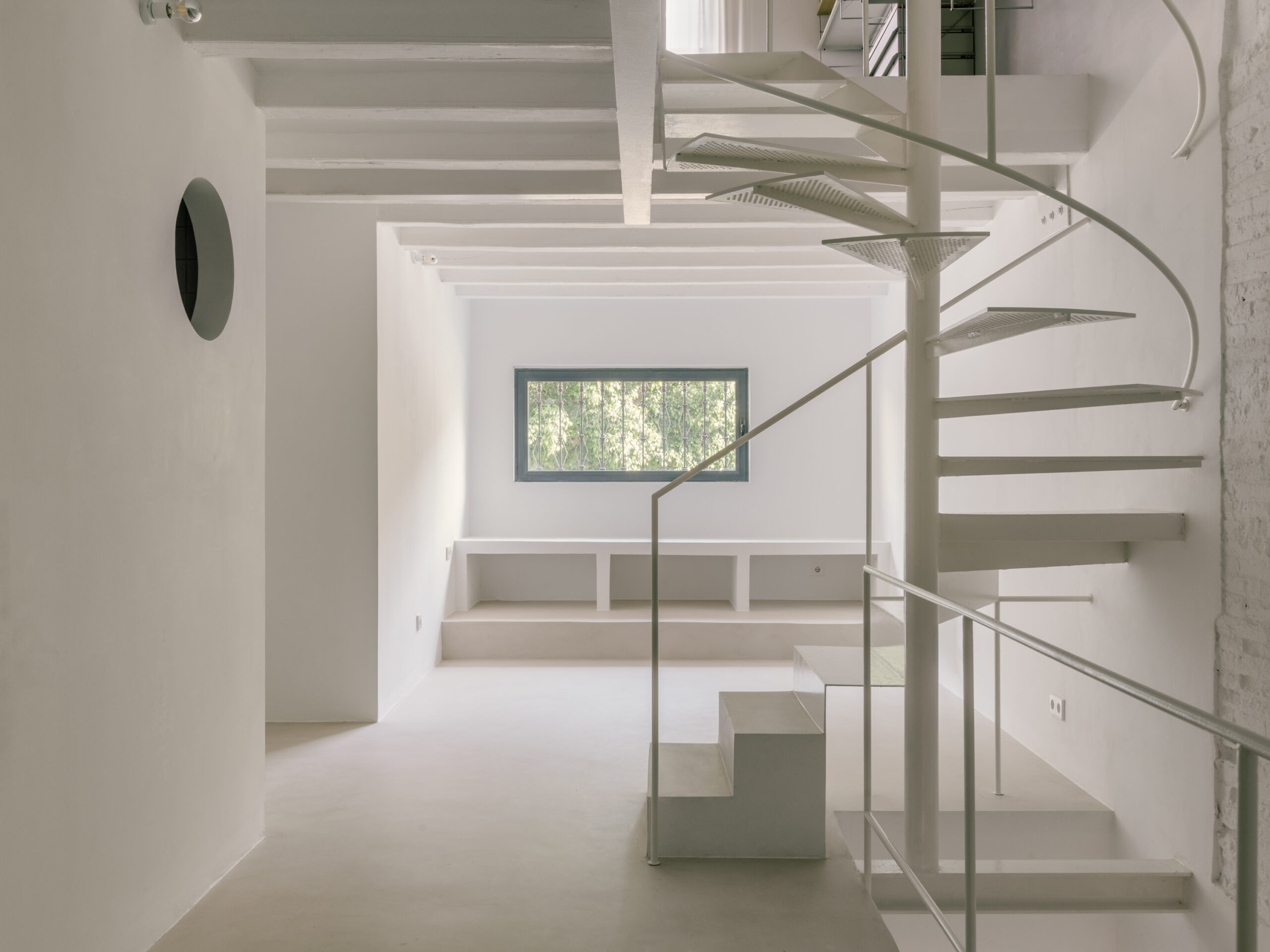
Αν οι σκάλες μπορούσαν να μιλήσουν, θα κροτάλιζαν· αν μπορούσαν να κινηθούν, θα έτρεμαν και θα στριφογύριζαν στο ρυθμό κάθε σπιτιού. Στο έργο Staircore, οι pensi pascual διερευνούν τον ρόλο του κλιμακοστασίου ως εργαλείου παραγωγής χώρου σε κατοικία στη Βαρκελώνη. Κάνοντας την επικοινωνία μεταξύ 2 ορόφων μια θεατρική πράξη που επιτελείται, καθημερινά, από δύο μικρά κορίτσια, και συνεπακόλουθα τη σκάλα την καρδιά του σπιτιού, αυτός ο ολότελα λευκός, ποιητικός σχεδιασμός μετατρέπει την κατακόρυφη μετάβαση, εντός του σπιτιού, σε κινητήρια δύναμη που διαμορφώνει τον περιβάλλοντα χώρο γύρω της.
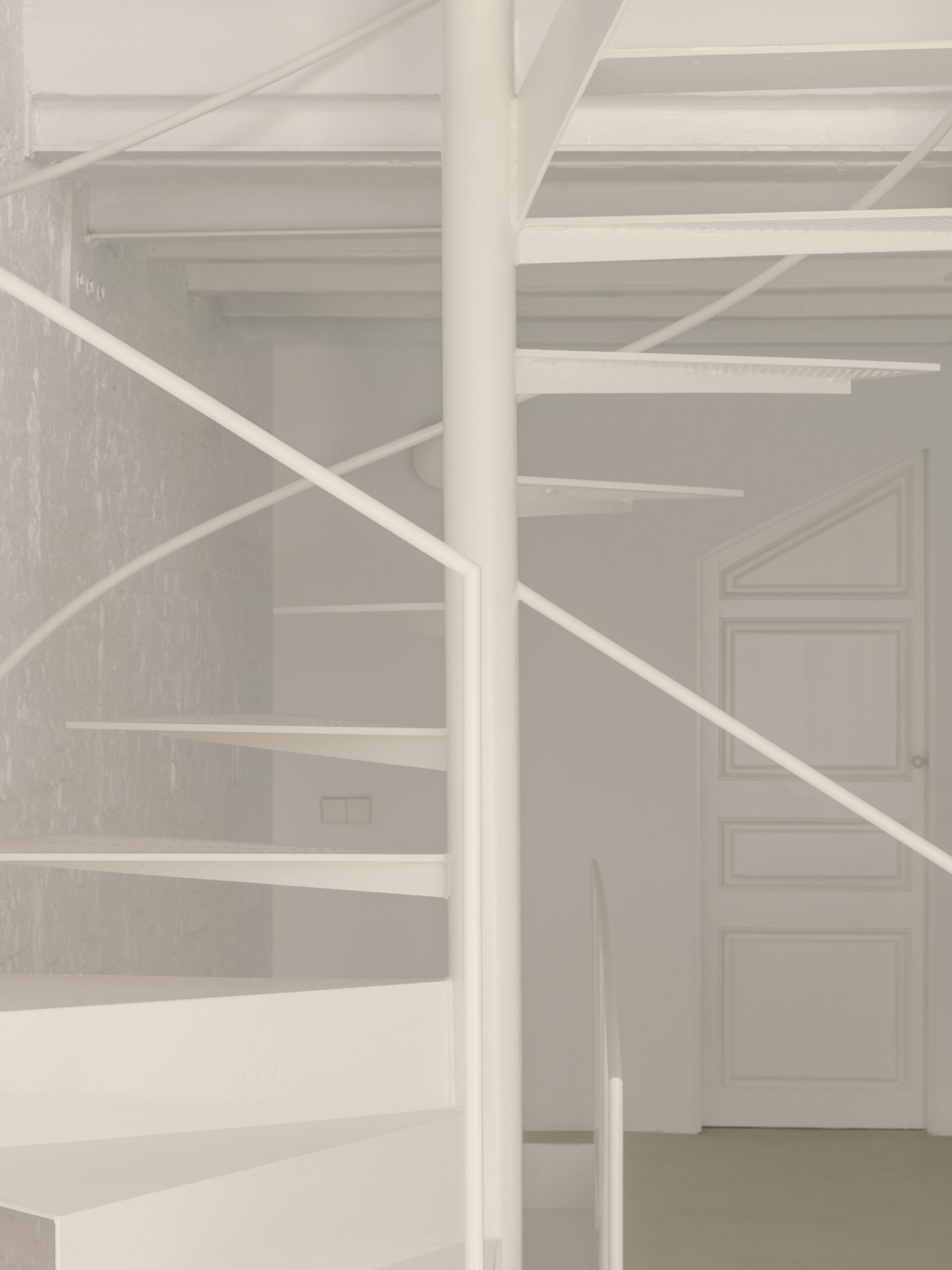
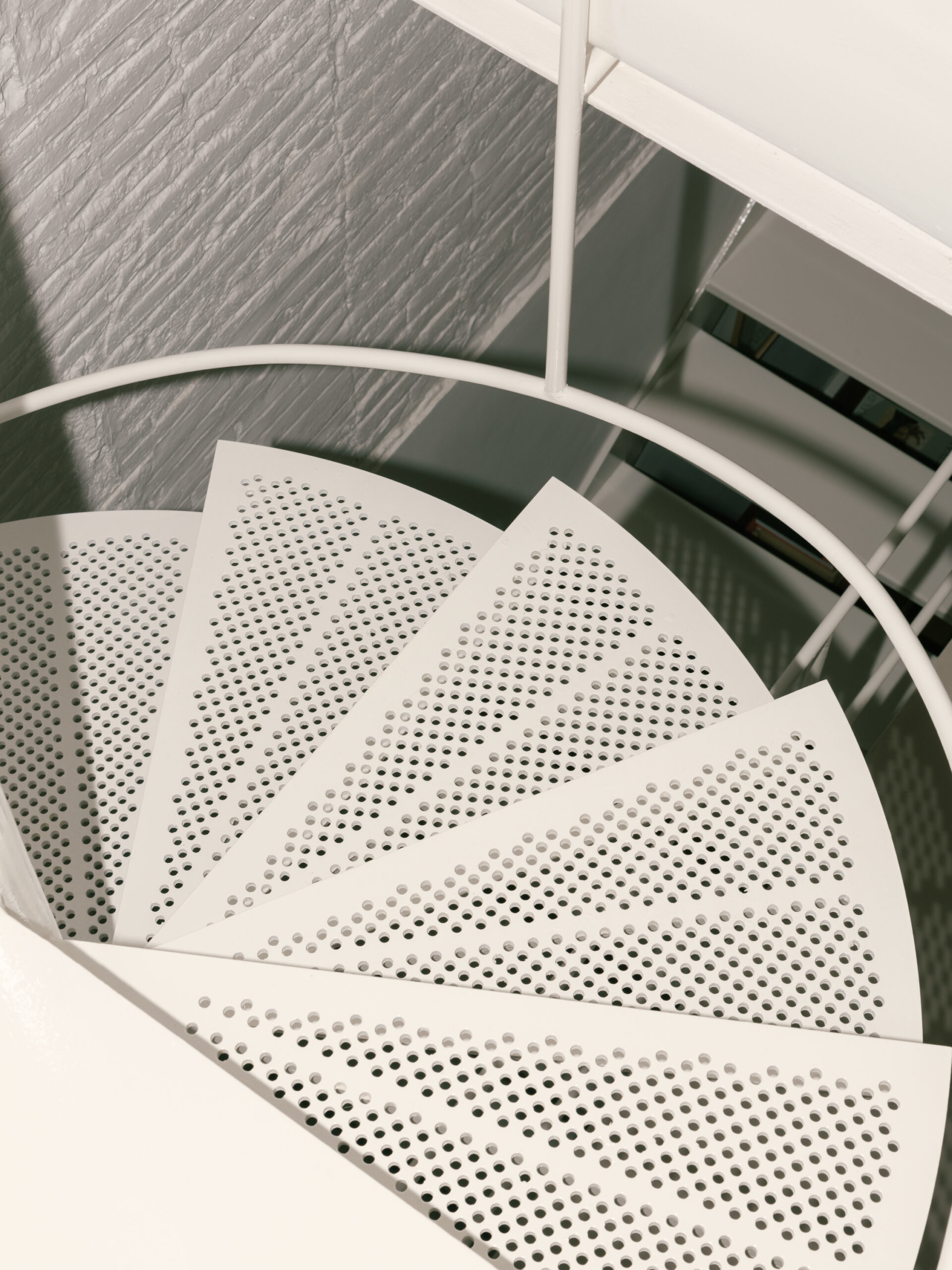
Στο χωριό La Floresta στην Ισπανία, δύο υπάρχοντα αυτοσχέδια κτίσματα επανασχηματίζονται και μετατρέπονται στην Κατοικία ενός Ζωγράφου, αποκαθιστώντας την αρμονία και την τάξη σε μια κατακερματισμένη δομή. Όλοι οι μη φέροντες τοίχοι καταργούνται, επιτρέποντας σε μια αρχιτεκτονική του φωτός να δώσει στο σπίτι μορφή σε συνδυασμό με ειδικά σχεδιασμένες, από τους αρχιτέκτονες, κατασκευές από ανοξείδωτο ατσάλι, τσιμέντο και ξύλο.
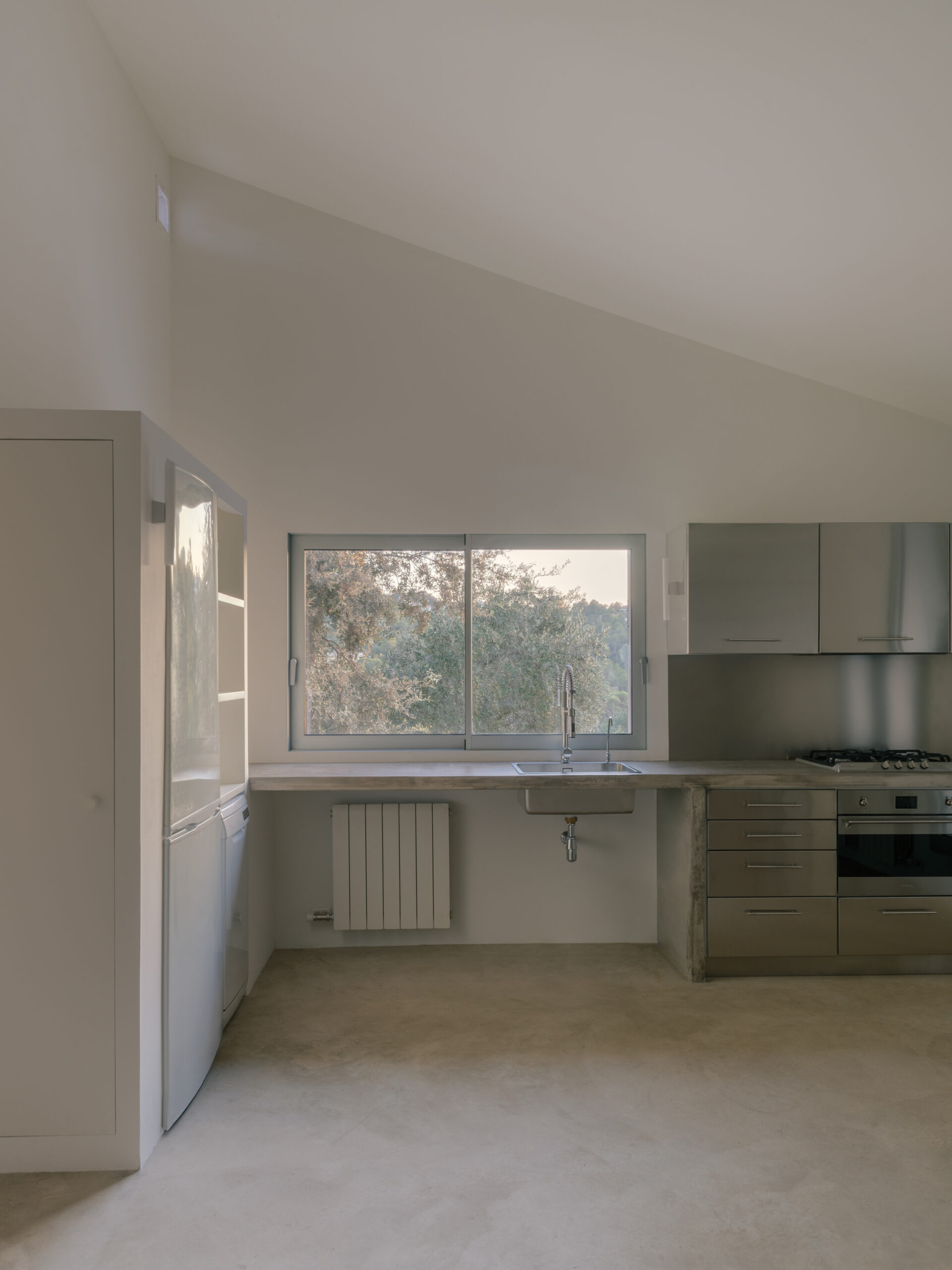
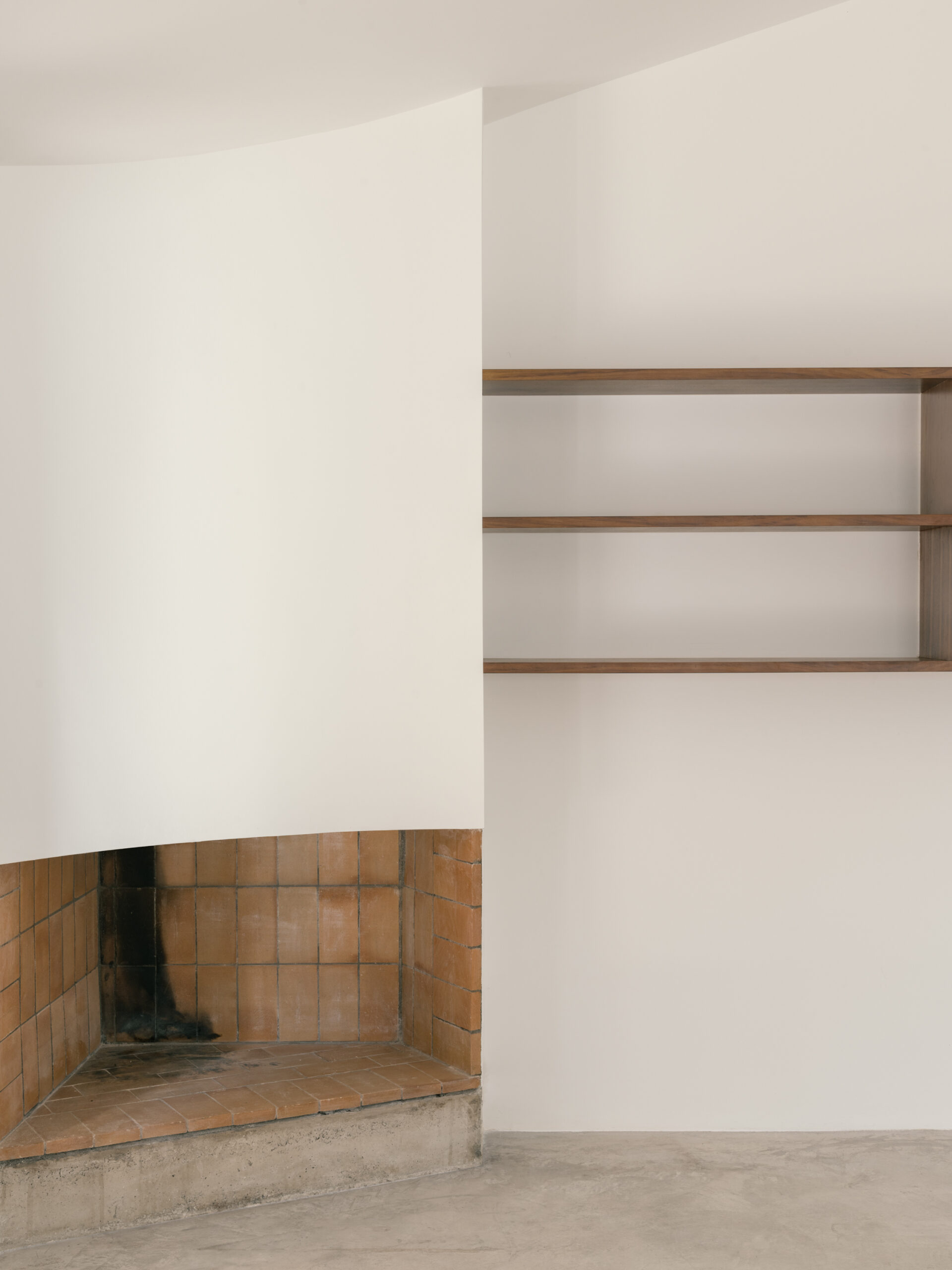
Το σπίτι ως ψυχική κατάσταση επιβεβαιώνει ότι η αρχιτεκτονική δεν φτιάχνεται πάντα από πέτρες· κάποτε είναι τραγούδι που διεγείρει το μυαλό και το σώμα καθώς ανεβαίνεις τις σκάλες ή ρεμβάζεις τη θέα του δάσους.
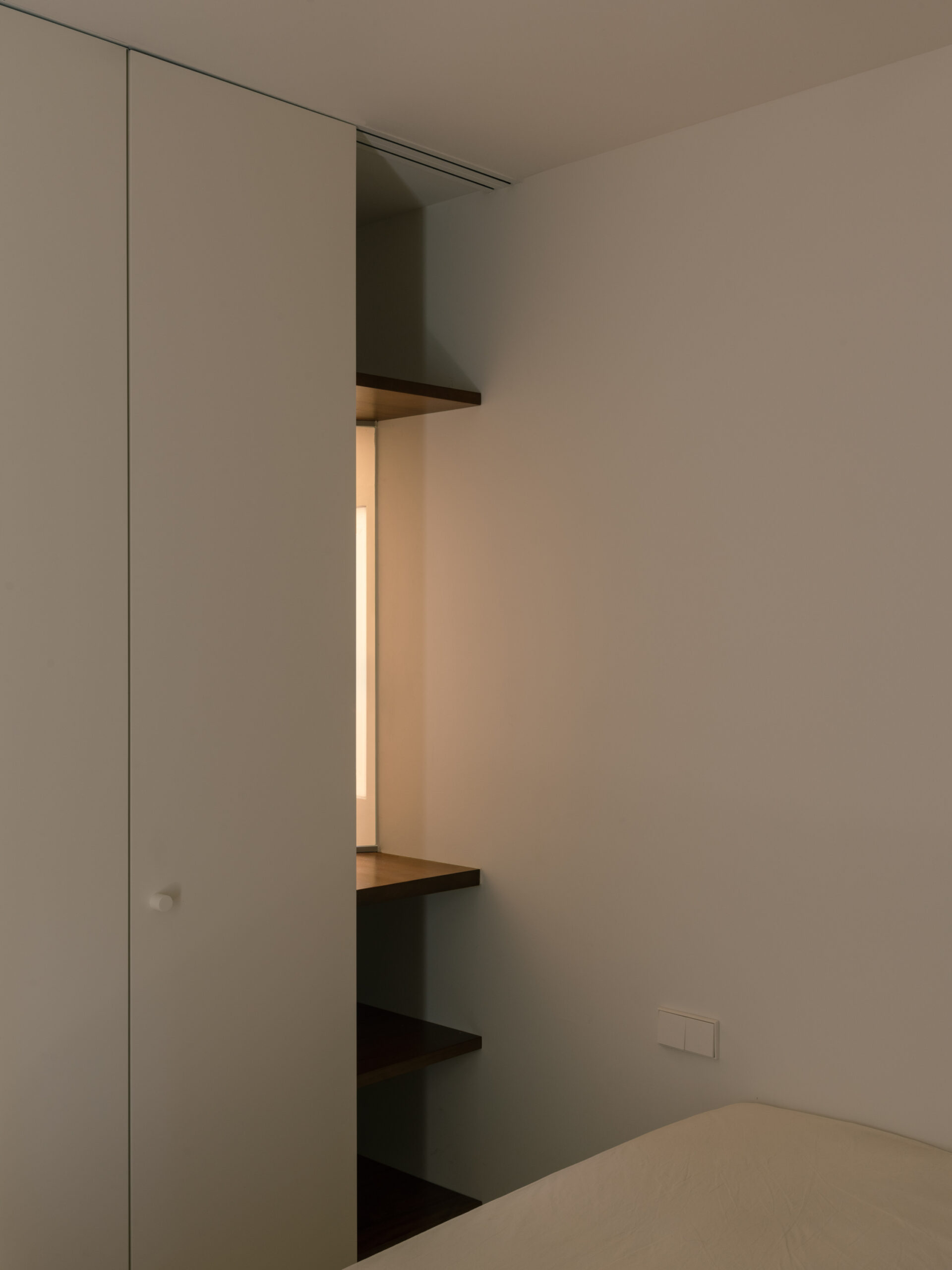
Διαβάστε ολόκληρη την ιστορία, εδώ!
Ιστορία 6η
Tο σπίτι είναι υλικό και άυλο: κατοικία Λάζα στα Μέγαρα από την Ναταλία Μπαζαίου
Στο έκτο επεισόδιο, με αφετηρία την σχέση της αρχιτεκτονικής με τον χρόνο γύρω από μια κατοικία που τη φωνάζουν Λάζα, οι αρχιτεκτόνισσες Μελίνα Αρβανίτη-Πολλάτου, αρχισυντάκτρια του Archisearch.gr, και Ναταλία Μπαζαίου συζητούν για το διάνυσμα του χώρου στο χρόνο και την αναμονή της ολοκλήρωσης που δεν τελειώνει με την ολοκλήρωση της αναμονής.
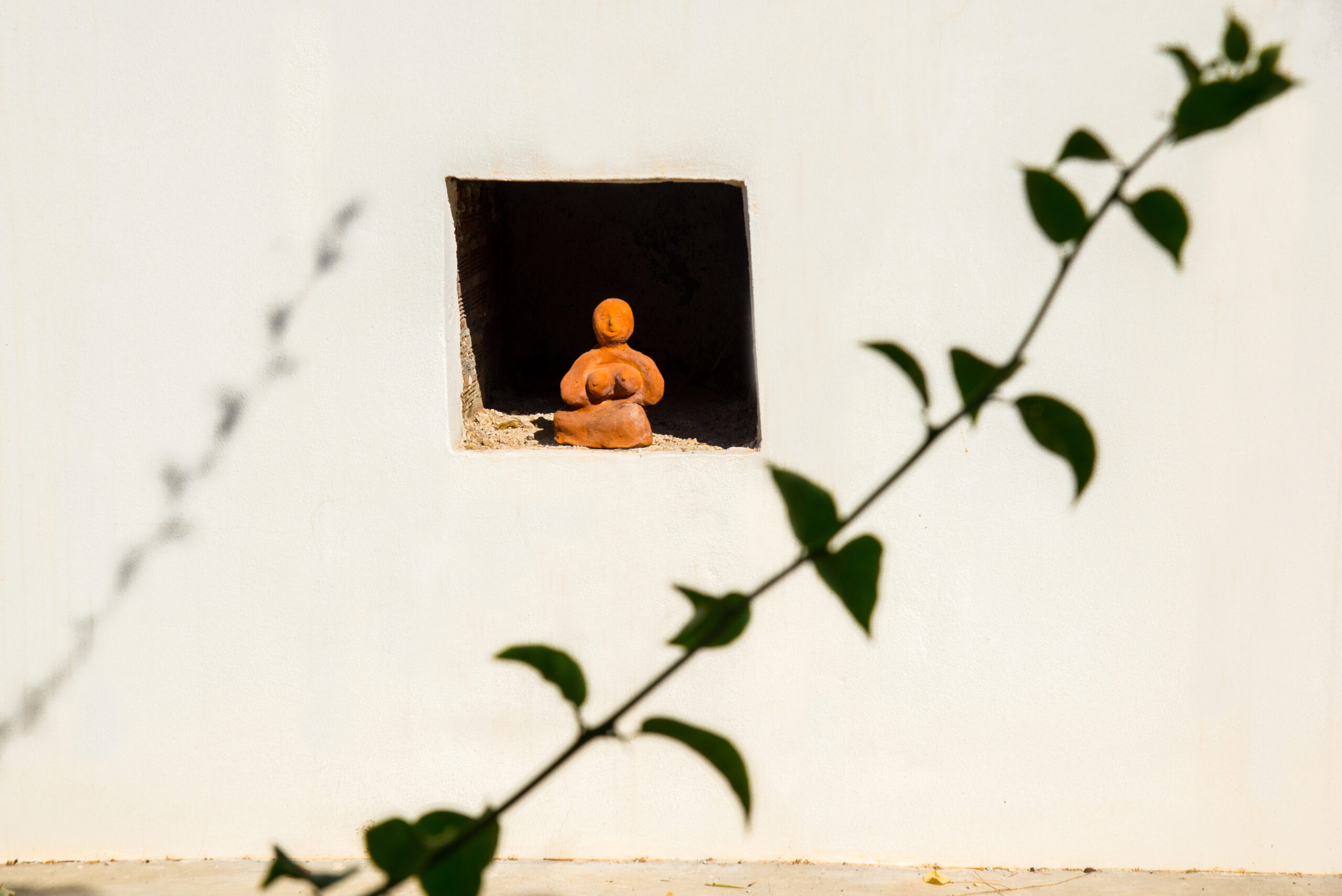
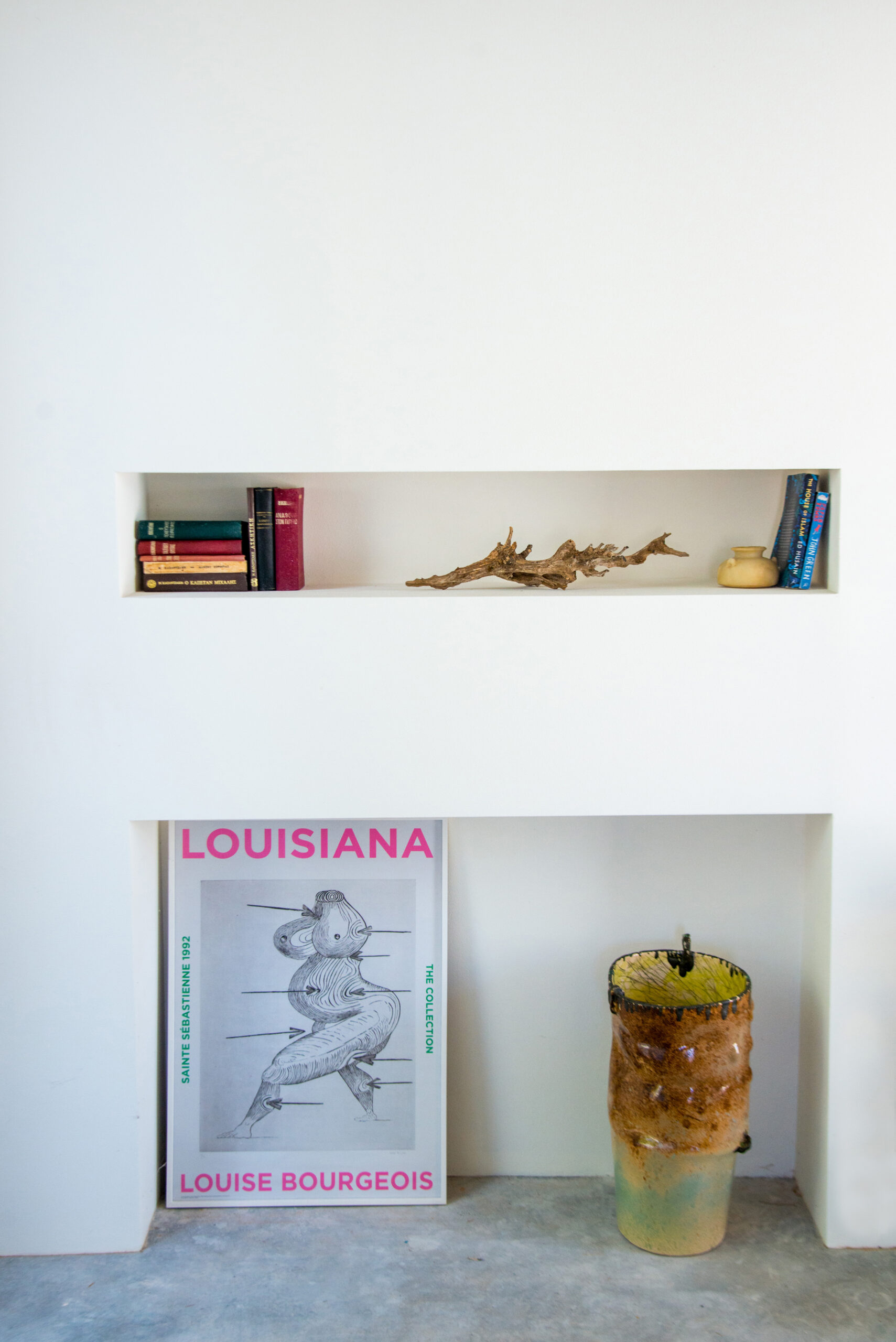
Πολλές φορές αναρωτιόμαστε αν η αρχιτεκτονική μπορεί να επηρεάσει, ακόμα και ν’ αλλάξει, όσους την κατοικούν. Ίσως αυτή η συνεχής διερώτηση, να είναι το φιλοσοφικό αντίστοιχο του προαιώνιου ρητορικού ερωτήματος «τι είναι ο άνθρωπος». Ας είναι. Οι αρχιτέκτονες κατοικούν νοερά, πριν απ’ όλους, τα σενάρια που σχεδιάζουν κι αυτή η άυλη κατοίκηση τους αλλάζει, πολλές φορές, τη ζωή.
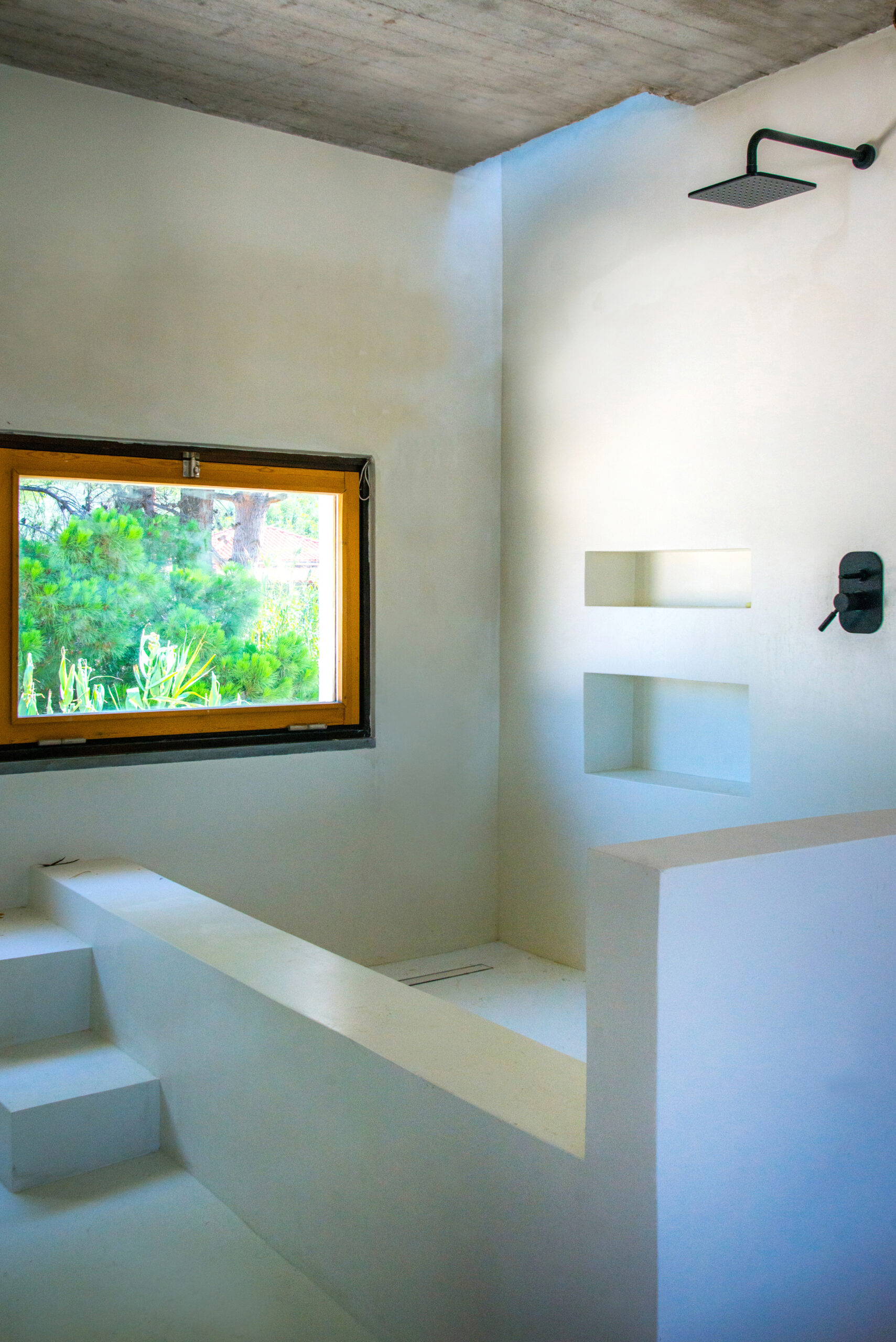
Η Λάζα είναι ένα σπίτι μα θα μπορούσε, κάλλιστα, να είναι κι ένας άνθρωπος – ένα παιδί, όπως σημειώνει η Ναταλία Μπαζαίου, η αρχιτέκτονας που, το 2004, την οραματίστηκε, την σχεδίασε και, το 2024, την έφερε, με λάσπη και τούβλα, με σάρκα και οστά, στη ζωή. Αποτελώντας το πρώτο έργο που σχεδίασε η αρχιτέκτονας, στην έναρξη της επαγγελματικής της διαδρομής για την ίδια και την οικογένειά της, η εξοχική κατοικία στα Μέθανα δεν είναι μια γραμμική σχεδιαστική διαδικασία αλλά μια πολυετής σπουδή στη φύση της αρχιτεκτονικής. Αφήνοντας τον χώρο να ξεδιπλωθεί στο χρόνο ελεύθερα, για μια εικοσαετία, η Λάζα κατοικήθηκε από την αρχιτέκτονα νοερά, σε νοητικό και συναισθηματικό επίπεδο, διαμορφώνοντας, σθεναρά, το σχεδιαστικό της ήθος και τη σχέση της με την αρχιτεκτονική ως ενέργεια δράσης και στάση ζωής.
Σε διαρκή επαφή με την έννοια και την ουσία του χρόνου, την προσμονή της τελείωσης και την αναμονή, η αρχιτεκτονική ολοκλήρωση της Λάζας πραγματοποιήθηκε μέσα από την αρμονική ένταξή της στο τόπο και στη ροή της φύσης σύμφωνα με τις διδαχές του Ζεν δασκάλου Εϊχέι Ντόγκεν: «η ολοκλήρωση δεν είναι να φτάσεις κάπου, αλλά να επιστρέψεις εκεί όπου βρίσκεσαι». Αυτή δεν είναι μια ιστορία για ένα σπίτι που έμενε 20 χρόνια ανολοκλήρωτο. Είναι μια ιστορία για ένα άυλο σπίτι, ταυτόχρονα αιώνιο κι εφήμερο, που φέρει μέσα του ο κάθε ένας άνθρωπος κι εκφέρεται ως σχέση εσωτερικής αρμονίας, ποιητικής ολοκλήρωσης και ενεργής αναμονής.
Διαβάστε τη συνέντευξη, εδώ!
Ιστορία 7η
Το σπίτι είναι μια προσωπική ιστορία και μια συλλογική νοημοσύνη: Domus Laetitiae στη Λευκωσία από το αρχιτεκτονικό γραφείο Studio Kyriakos Miltiadou


Στο έβδομο επεισόδιο, ακολουθούμε το αρχιτεκτονικό γραφείο Studio Kyriakos Miltiadou να σμιλεύει την κατοικία Domus Laetitiae, το σπίτι μιας νεαρής οικογένειας, στο ερειπωμένο σώμα κτιρίου εντός προσφυγικού συνοικισμού Ελληνοκύπριων στη Λευκωσία αποδεικνύοντας ότι το σπίτι είναι μια προσωπική ιστορία που αποκτά υλική υπόσταση εντός μιας συλλογικής νοημοσύνης.


Το σπίτι ριζώνει στη μνήμη κι η κατοικία Domus Laetitiae το επιβεβαιώνει αυτό. Εγγεγραμμένοι ανεξίτηλα στη συλλογική μνήμη του νησιού ως τόποι καταφυγής αλλά και εξορίας μετά την Τουρκική εισβολή του 1974, οι προσφυγικοί οικισμοί δημιουργήθηκαν στην ανοιχτή πληγή του συλλογικού τραύματος των Κυπρίων ως ζώνες προσωρινής διαμονής των βίαια εκτοπισμένων σωμάτων τους. Εδώ η κατοίκηση παρουσιάζεται ως λύση κι όχι ως επιλογή. Μέσα σε αυτό το συναισθηματικά, εννοιολογικά αλλά και πρακτικά, πυκνό πλαίσιο κανόνων, μηχανισμών και αναμνήσεων, ο αρχιτέκτονας Κυριάκος Μιλτιάδου καλείται να διαμορφώσει στο κουφάρι του παλιού προσφυγικού συνοικισμού, με σφιχτό οικονομικό προϋπολογισμό, το σπίτι μιας νεαρής οικογένειας γεμίζοντάς το, όπως δηλώνει και το όνομα Domus Laetitiae, με την χαρά που φέρνει η πράξη της αναγέννησης.

Εστιάζοντας στην ενεργοποίηση και διαχείριση εννοιών όπως το όριο και ο ενδιάμεσος χώρος, η αρχιτεκτονική πρόταση πλάθει την νέα διώροφη κατοικία μέσα από δύο κεντροβαρικά αίθρια που, κατασκευαστικά, συνεισφέρουν στη βιοκλιματική απόδοση του κτηρίου και, βιωματικά, μετατρέπουν την κατοικία σε σπίτι λειτουργώντας ως χώροι συνάντησης, συνάθροισης, συναναστροφής. Η νέα αρχιτεκτονική μελέτη δένει το σπίτι με τον τόπο σε πολλά και διαφορετικά επίπεδα. Φυτά που χαρακτηρίζουν την κυπριακή χλωρίδα, όπως το αγιόκλημα και το γιασεμί, κατοικούν τους ημιυπαίθριους χώρους της Domus Laetitiae, αναρριχώνται στις διάτριτες μεταλλικές επιφάνειες των όψεων και δημιουργούν μικροκλίμα. Οι ξυλουργικές και σιδηρικές εργασίες, στο σύνολό τους, υλοποιούνται από ντόπιους τεχνίτες επενδύοντας με υψηλής ποιότητας χειρωνακτική εργασία την κατασκευή με φέροντα οργανισμό από οπλισμένο σκυρόδεμα και τοιχοποιίες από θερμομονωτικά τούβλα.

Η ιστορία της Domus Laetitiae δεν είναι μια ιστορία κατοίκησης που αφορά την επιστροφή στη μήτρα· είναι μια ιστορία όπου το σπίτι ριζώνει στο χθες και βγάζει καρπούς στο σήμερα, στο αύριο, στο τώρα.

Διαβάστε ολόκληρη την ιστορία, εδώ!
Ιστορία 8η
Το σπίτι ως οικοσύστημα: Αρχιτεκτονική για την καθημερινότητα στη Θεσσαλονίκη από το γραφείο Louizi – Louizis Architects

Στο όγδοο επεισόδιο της σειράς, ακολουθούμε το γραφείο Louizi – Louizis Architects να μετατρέπει έναν ισόγειο πρώην επαγγελματικό χώρο στη Θεσσαλονίκη σε τέσσερις μικροκατοικίες που αντλούν αναφορές από τη χωρική δομή του θεάτρου, για να σκηνοθετήσουν μια ιδιωτική εμπειρία κατοίκησης στο μέτωπο της πόλης και του δρόμου.

Στις καθ’ ύψος πυκνοκατοικημένες πόλεις της μετανεωτερικότητας, όπου η κατοίκηση αιωρείται πάνω απ’ τη γη, οι αρχιτέκτονες Ε. Λουίζη, Ο. Μορφάκη και Κ. Λουίζης επαναφέρουν το σπίτι στην επιφάνεια της γης αντιμετωπίζοντας, ευφάνταστα και γενναία, το καίριο ερώτημα: πώς συναντάμε το βλέμμα; Η κατοικία σχεδιάζεται ως σκηνικός χώρος και το σπίτι ως το εσωτερικευμένο θέαμα που πρέπει ταυτόχρονα να προστατευθεί και να φανερωθεί.


Τρεις αρχιτέκτονες προσγειώνουν την αστική κατοίκηση στο έδαφος, σκηνοθετώντας την, με επιτελεστικούς όρους, ως καθημερινή δράση που παράγει έναν θεατρικό οικιακό χώρο, ταυτόχρονα οικείο και ξένο, ίδιο και διαφορετικό.

Διαβάστε ολόκληρη την ιστορία, εδώ!
Ιστορία 9η
Το σπίτι ως πολιτική πράξη: 10k House στη Βαρκελώνη από τους ΤΑΚΚ
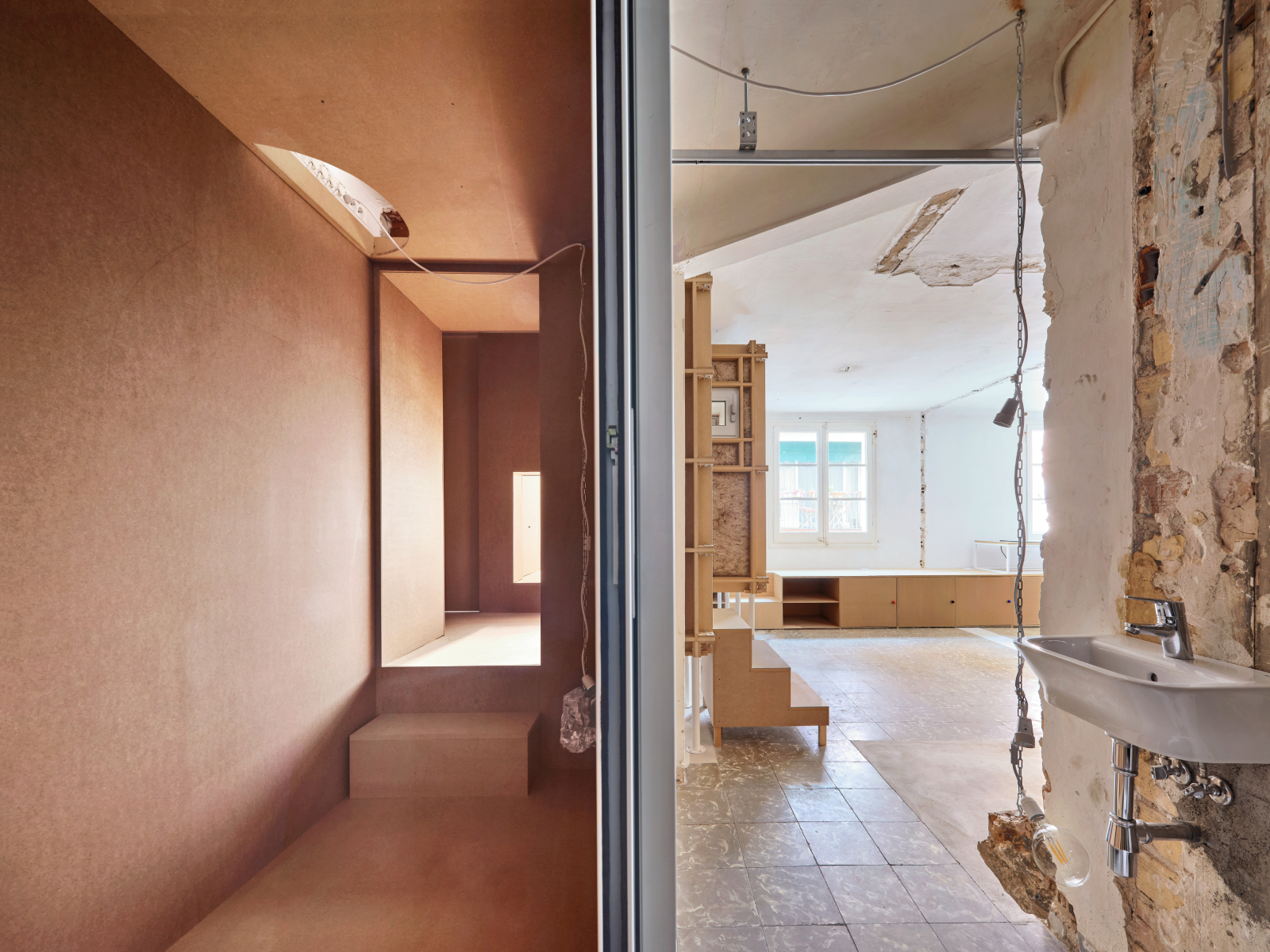
Στο ένατο επεισόδιο, παρακολουθούμε το ισπανικό γραφείο Takk καθώς ανακαινίζει ένα διαμέρισμα 50 τ.μ. στη Βαρκελώνη με έναν εντυπωσιακά περιορισμένο προϋπολογισμό της τάξης των 10.000 ευρώ, αντιμετωπίζοντας, ταυτόχρονα, τις προκλήσεις της σύγχρονης στεγαστικής κρίσης και της κλιματικής αλλαγής. Το έργο αναπτύσσεται μέσα από μια συμπεριληπτική, ανοιχτού τύπου σχεδιαστική στρατηγική, όπου οι χώροι «εγκιβωτίζονται» ο ένας μέσα στον άλλον, δίνοντας προτεραιότητα στην οικονομική προσιτότητα, την ειλικρίνεια των υλικών και ένα ενεργειακά αποδοτικό οικιακό μοντέλο.
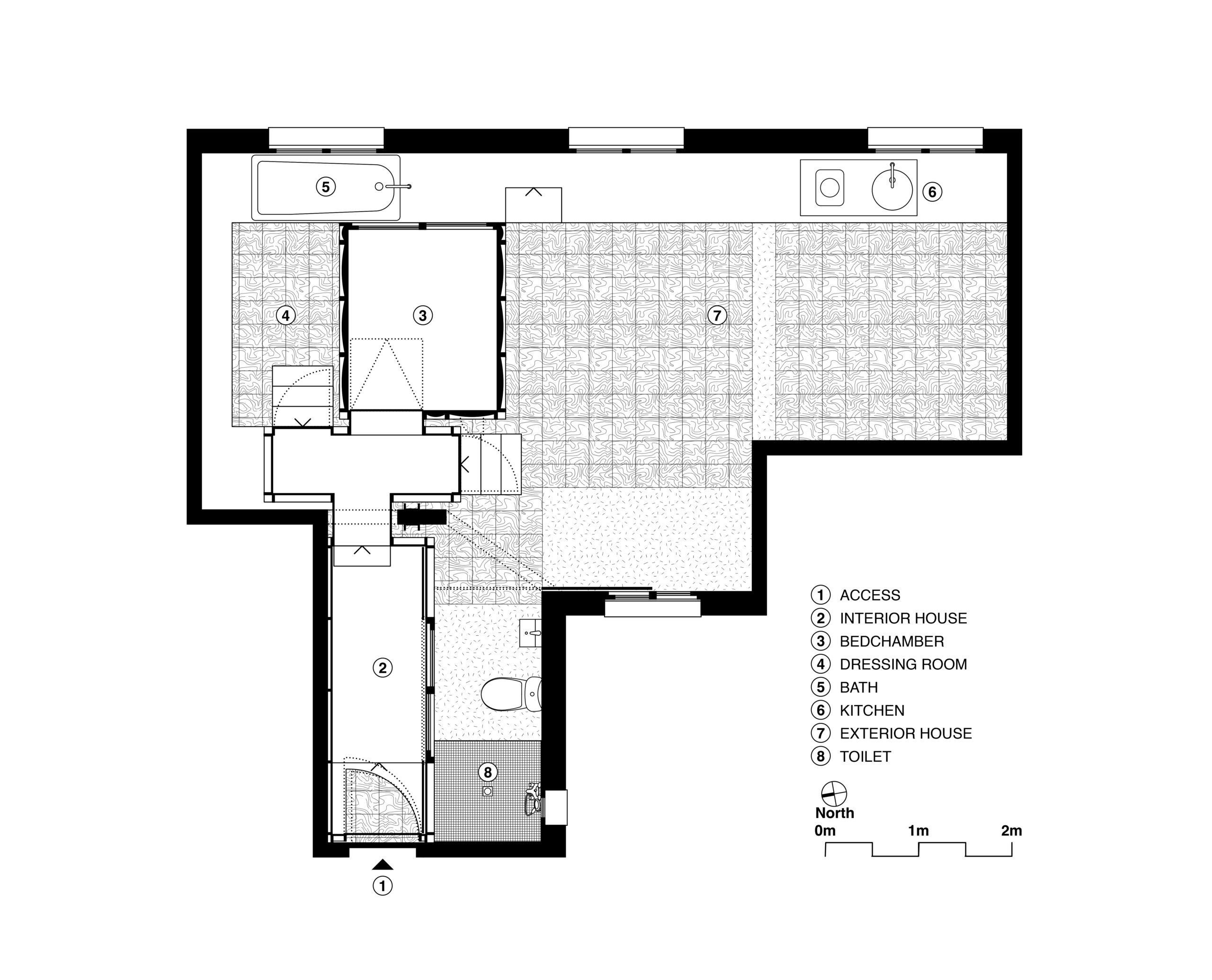
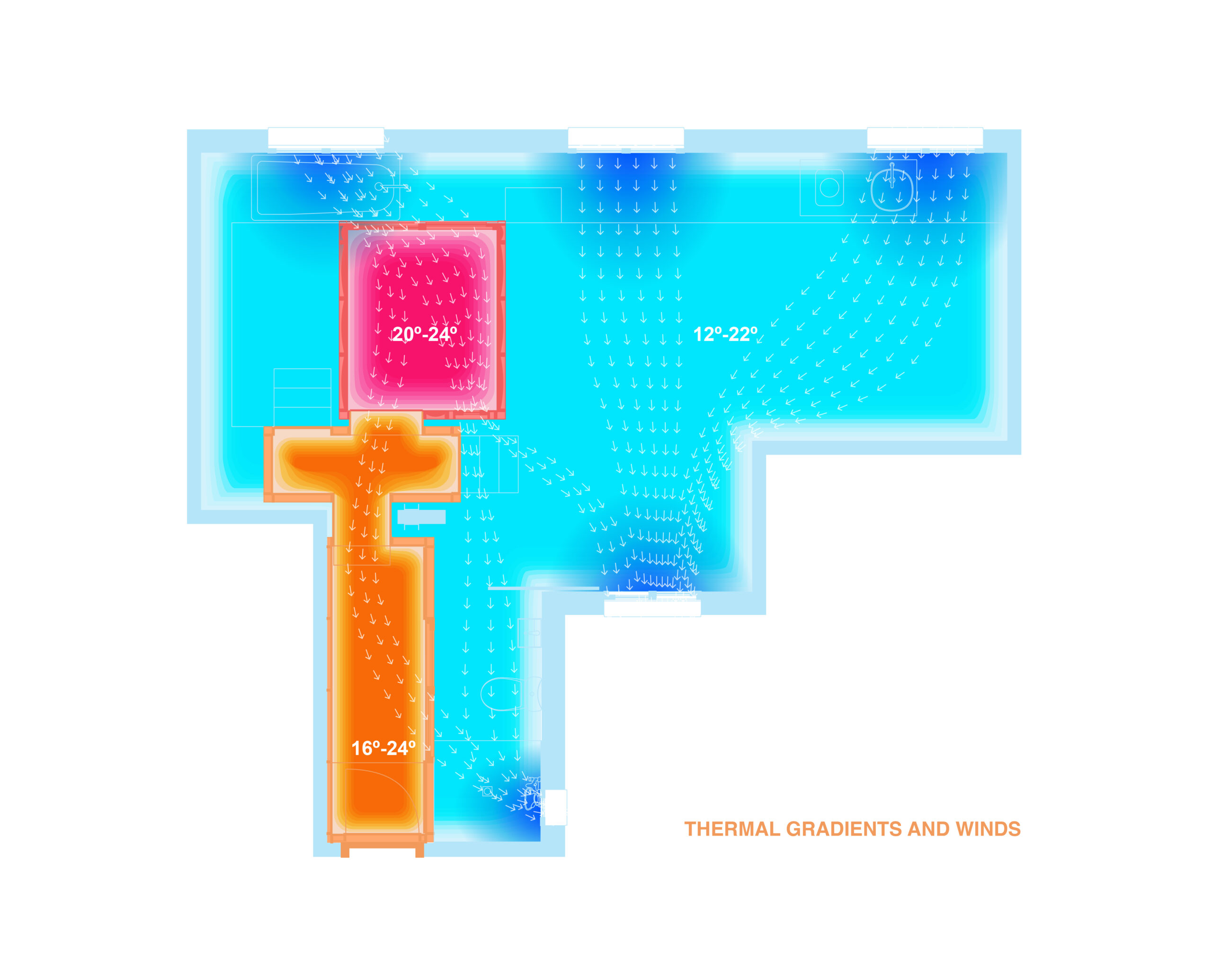
Τα ίχνη των κατεδαφισμένων τοίχων και τα αποξηλωμένα φωτιστικά παραμένουν ορατά, προσδίδοντας στο διαμέρισμα μια μπρουταλιστική ειλικρίνεια, διατηρώντας, ταυτόχρονα, τη ανάμνημη της προηγούμενης κάτοψής του. Αμφισβητώντας παγιωμένες οικιακές συμβάσεις, οι Takk τοποθέτησαν τον εκτεθειμένο μεταλλικό νεροχύτη της κουζίνας και την μπανιέρα ακριβώς δίπλα στα παράθυρα της πρόσοψης. Με αυτόν τον τρόπο, το σώμα τίθεται σε κοινή θέα διαταράσσοντας τις παραδοσιακές ιεραρχίες ιδιωτικότητας και χρήσης. Επεκτείνοντας αυτή τη λογική, οι αρχιτέκτονες εισήγαγαν ένα εσωτερικό παράθυρο μεταξύ του διαδρόμου εισόδου και του μπάνιου. Για άλλη μια φορά, το γυμνό σώμα εκτίθεται — αυτή τη φορά ως ηδονιστικό θέαμα — μεταμορφώνοντας το μπάνιο από έναν απομονωμένο, καθαρά λειτουργικό χώρο σε έναν χώρο κοινωνικό και φωτεινό «που μπορεί να χρησιμοποιηθεί ακόμη και με παρέα».
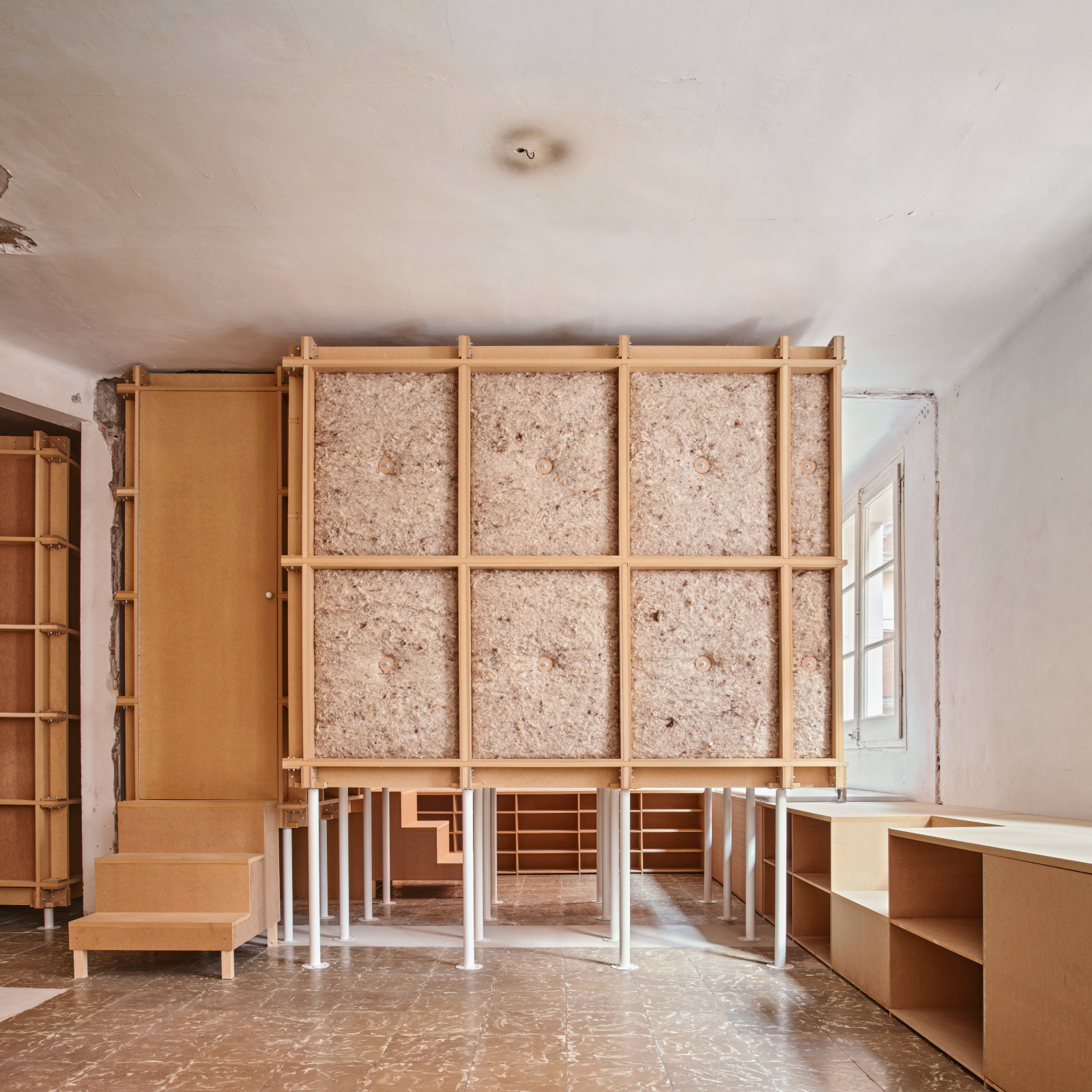
Σχεδιασμένο τόσο ως «σπίτι-εργαστήριο» όσο και ως «σπίτι-εργοτάξιο», το έργο προωθεί συνειδητά ένα DIY ήθος και την ένταξη μη ειδικών στη διαδικασία κατασκευής. Η ανακαίνιση υλοποιήθηκε εξ ολοκλήρου μέσω ξηράς δόμησης: όλα τα στοιχεία προκατασκευάστηκαν, κόπηκαν εκτός εργοταξίου και συναρμολογήθηκαν με απλές βίδες από τους ίδιους τους αρχιτέκτονες και τον ιδιοκτήτη, χωρίς τη συμμετοχή εξειδικευμένων τεχνιτών. Αυτή η πρωτοποριακή τεχνική αυτοκατασκευής επέτρεψε στους κατοίκους να συναρμολογήσουν τμήματα του σπιτιού τους μόνοι τους, σαν «το διαμέρισμα να ήταν ένα έπιπλο».
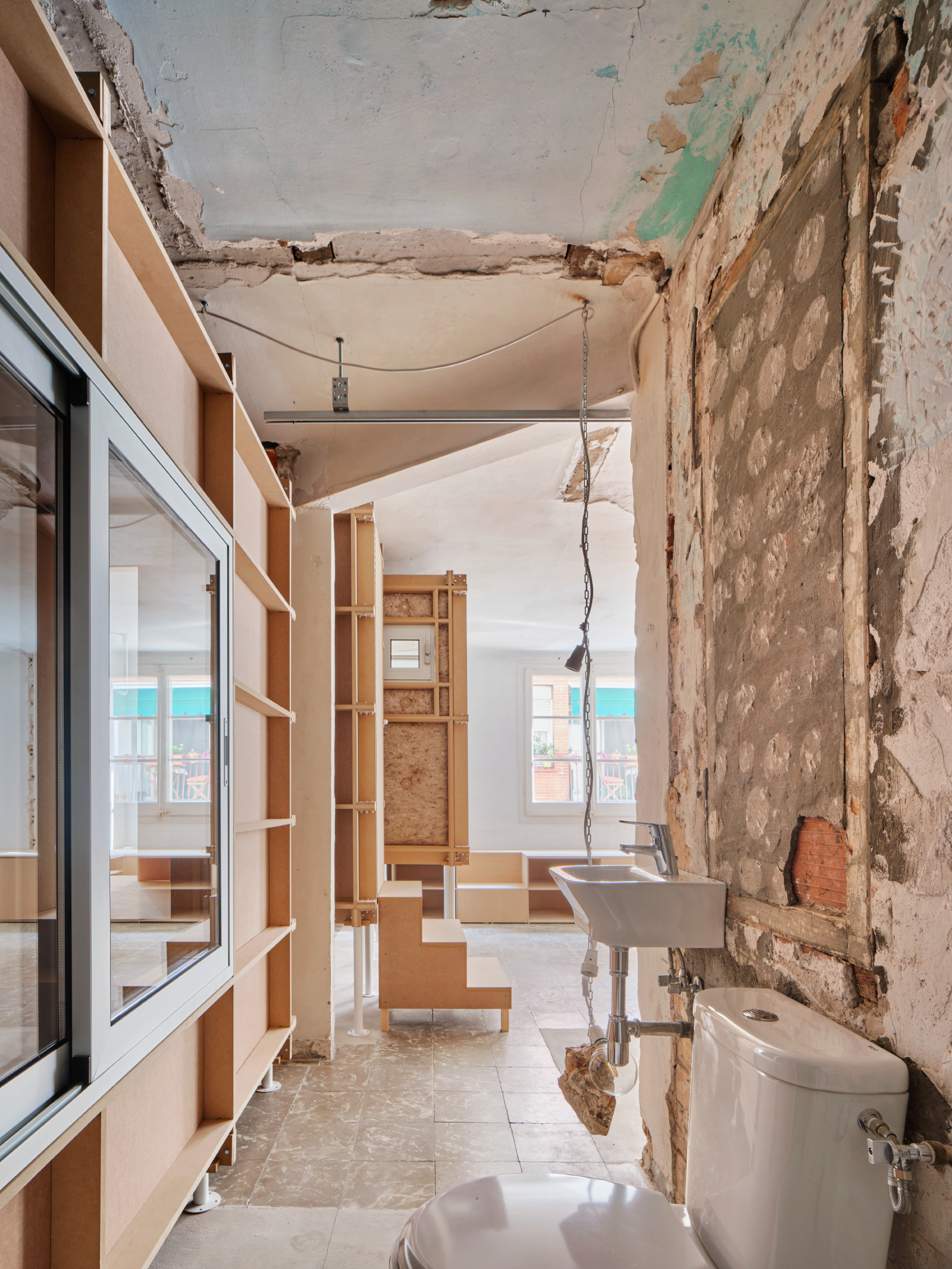
Στο 10k House, οι Takk εισάγουν πειραματικά μοντέλα και καινοτόμες οικολογικές λύσεις στη χωρική παραγωγή, επιδιώκοντας να καλλιεργήσουν νέα υλικά, κοινωνικά και πολιτικά φαντασιακά — επαναπροσδιορίζοντας τον τρόπο με τον οποίο ο δομημένος κόσμος συλλαμβάνεται, κατοικείται και μετασχηματίζεται.
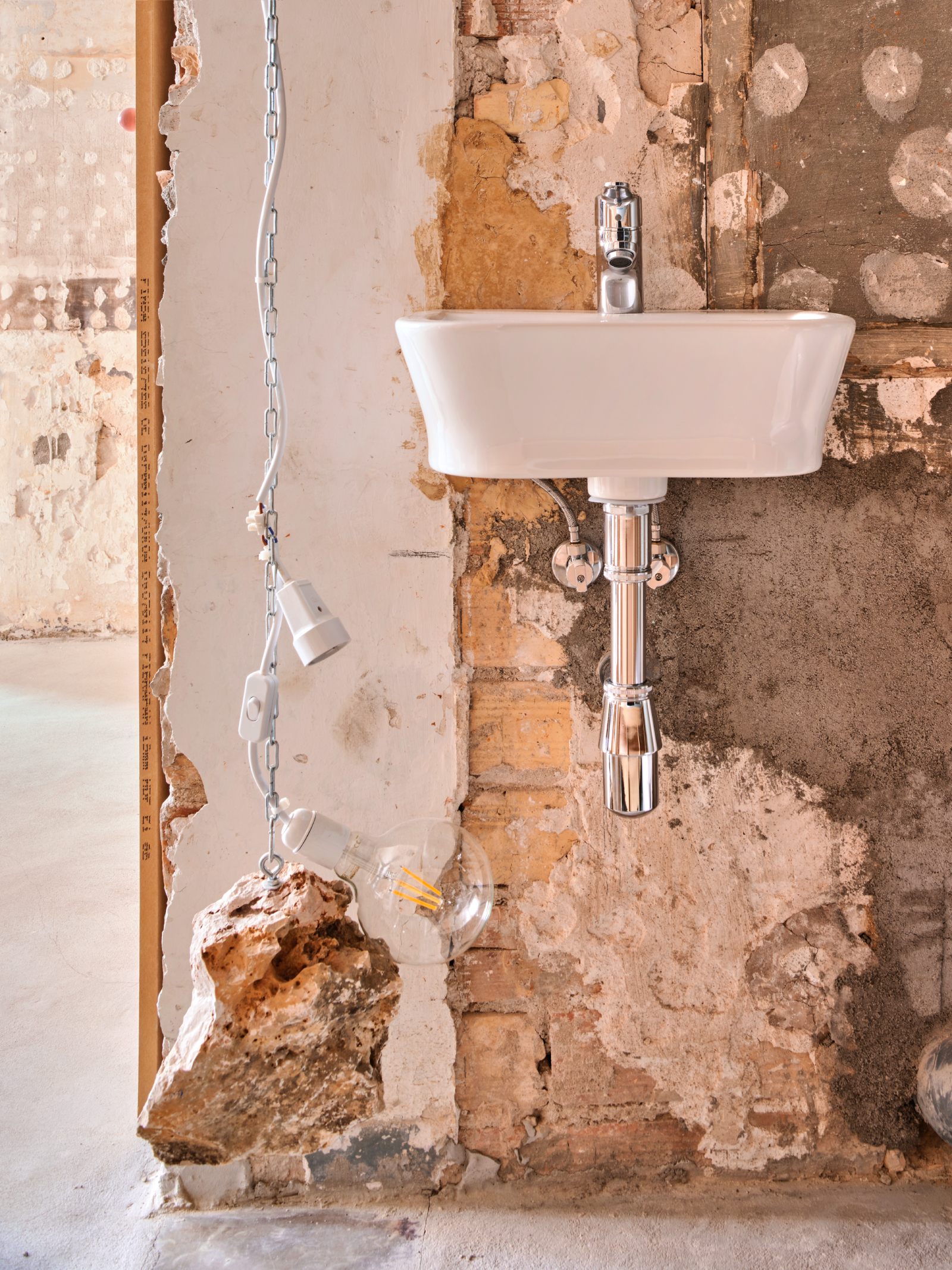
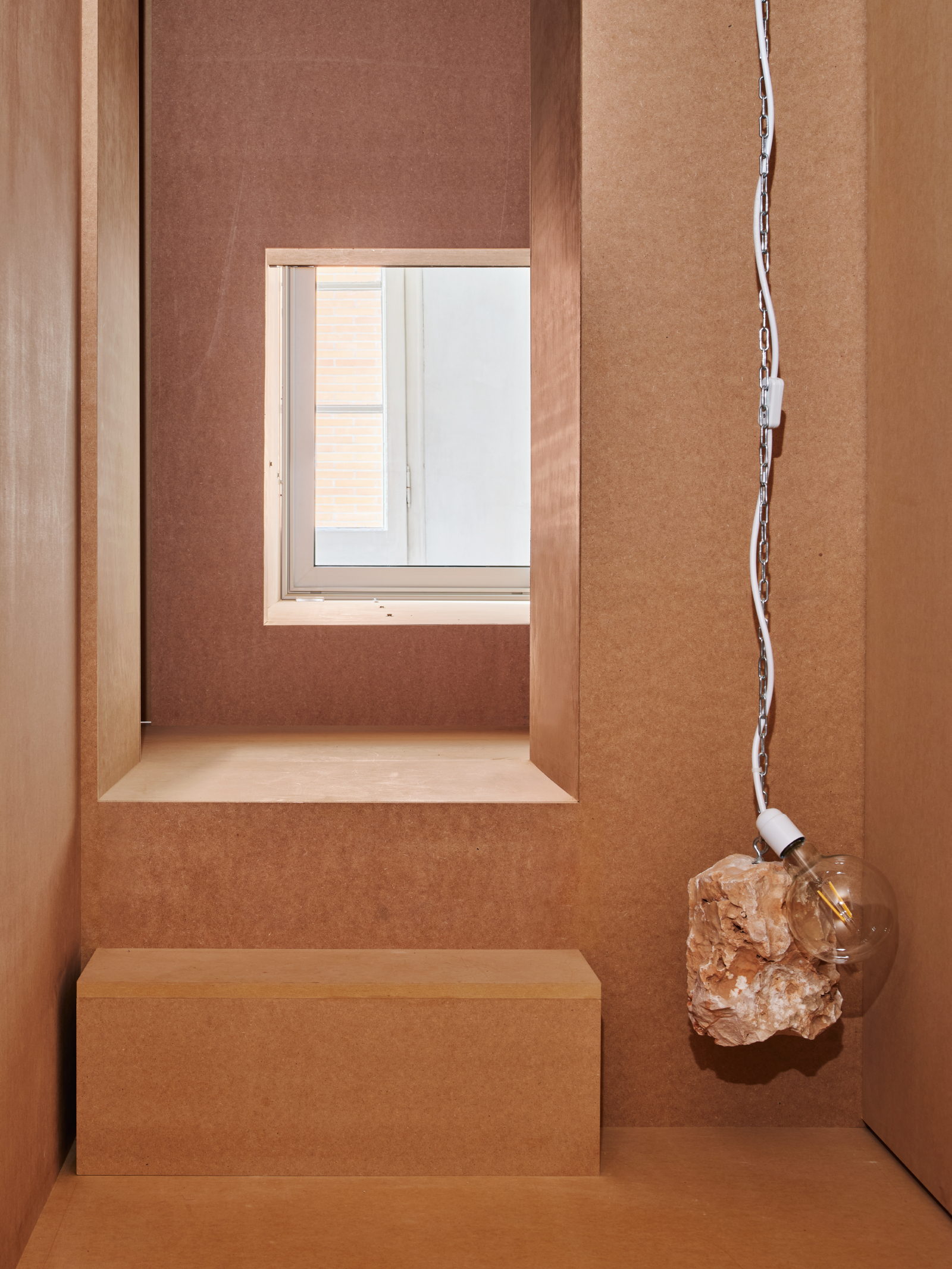
Διαβάστε ολόκληρη την ιστορία, εδώ!
Ιστορία 10η
Το σπίτι ως οικοσύστημα: το αρχιτεκτονικό γραφείο Pacarizi Studio επαναπροσδιορίζει την τυπολογία της διαγενεακής μονοκατοικίας στην Αλαβνία ως μια κατοικήσιμη τοπογραφία.

Στο δέκατο επεισόδιο, ακολουθούμε το αρχιτεκτονικό γραφείο Pacarizi Studio, στο εκτενές αγροτικό τοπίο του παράκτιου χωριού Ishull-Lezhë στην Αλβανία, να επαναπροσδιορίζει την τυπολογία της διαγενεακής μονοκατοικίας ως απάντηση σε κρίσιμες κοινωνικές αλλαγές, που επανακαθορίζουν την αλβανική σύγχρονη πραγματικότητα, όπως η «διακρατικοποίηση της καθημερινής ζωής» και η «οικιακή απουσία». Το έργο αποκαλύπτει ένα σχεδόν ροζ, σχεδόν κόκκινο, χαμηλού κόστους και χαμηλής τεχνολογίας σπίτι, ενσωματωμένο στο έδαφος ως ένα οικοσύστημα εσωτερικών και υπαίθριων χώρων – μια κατοικήσιμη τοπογραφία διαμορφωμένη από τις κλιματικές συνθήκες και θεμελιωμένη σε μια κυκλική οικονομία κατασκευής.
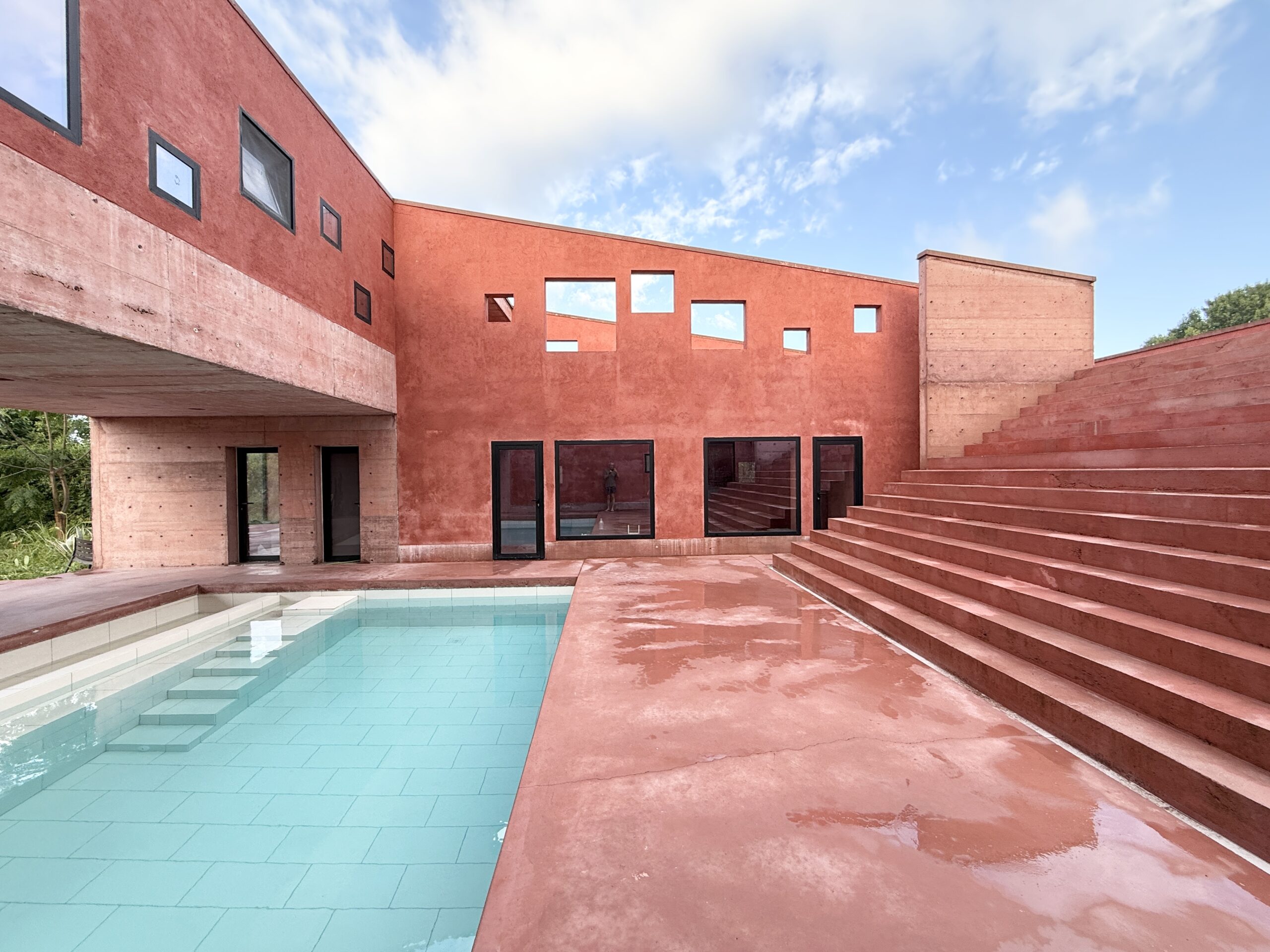
Οι μονοκατοικίες αντιστοιχούν σε περισσότερο από το ήμισυ του δομημένου αποθέματος της Αλβανίας, καθιστώντας την ιδιωτική κατοικία την πλέον καθοριστική αρχιτεκτονική και κοινωνική τυπολογία της χώρας. Η Αλβανία έχει βιώσει ένα από τα εντονότερα και μακροβιότερα κύματα μετανάστευσης στην Ευρώπη, γεγονός που οδήγησε σε αυτό που ο Russell King περιγράφει ως «διακρατικοποίηση της καθημερινής ζωής», όπου οι οικογένειες είναι χωρικά διασκορπισμένες αλλά συμβολικά συνδεδεμένες μέσω της κατοικίας. Παράλληλα, η δημογραφική γήρανση και η αυξημένη κινητικότητα έχουν μεταβάλει τα πρότυπα οικιακής χρήσης, θολώνοντας τη διάκριση μεταξύ μόνιμης και εξοχικής κατοικίας, χωριού και πόλης, παρουσίας και απουσίας. Η Julie Vullnetari επισημαίνει ότι πολλές αλβανικές κατοικίες βρίσκονται πλέον σε μια κατάσταση μερικής κατοίκησης: χρησιμοποιούνται εποχικά, συντηρούνται μέσω εμβασμάτων και διατηρούνται ως τόποι του ανήκειν παρά ως χώροι καθημερινής ζωής. Η κοινωνιολόγος Linda Kalcuni εννοιολογεί περαιτέρω αυτή τη συνθήκη ως μια μορφή «οικιακής απουσίας», κατά την οποία τα σπίτια υπάρχουν ως άδεια κελύφη, ενώ η φροντίδα, η εργασία και η καθημερινότητα εκτυλίσσονται πέρα και έξω από αυτά – σε κάποιο μακρινό αλλού. Σε αυτό το πλαίσιο, ο οικιακός χώρος δεν ορίζεται πλέον, αποκλειστικά, από την κατοίκηση, αλλά από την προσμονή, την επιστροφή και την προσαρμοστικότητα.
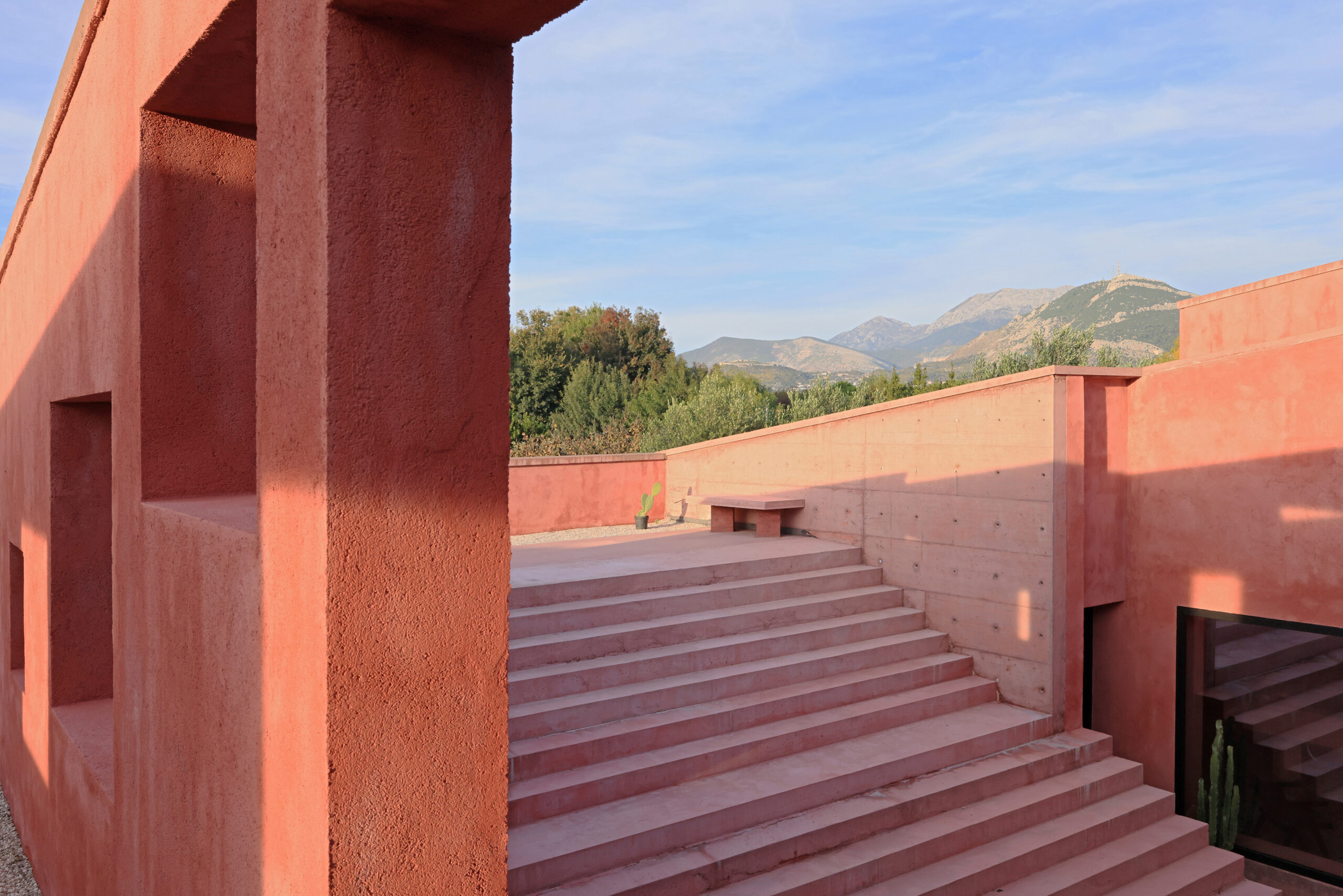
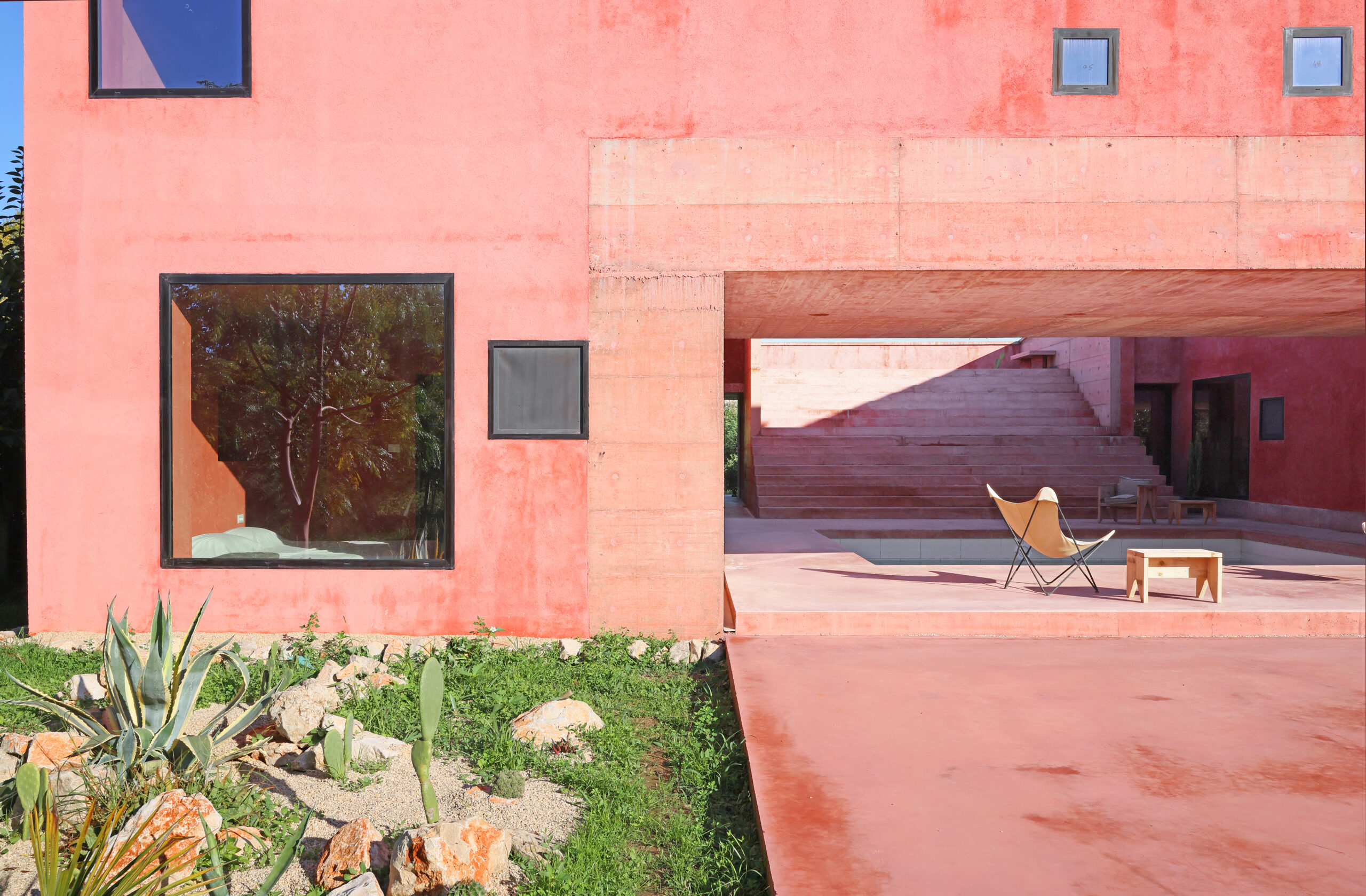
Το Red House αναδύεται ως μια αρχιτεκτονική απάντηση στον επαναπροσδιορισμό της μονοκατοικίας για μια συνεκτική αλλά γεωγραφικά διασκορπισμένη οικογένεια. Αναγνωρίζοντας τη σύγχρονη αλβανική συνθήκη της περιοδικής παρουσίας, τις παγκόσμιες κλιματικές πιέσεις και τις τοπικές οικοδομικές παραδόσεις, το Pacarizi Studio προτείνει ένα σπίτι που διαβάζεται λιγότερο ως συμβατικό οικιακό αντικείμενο και περισσότερο ως ένα ανθρωπογενές τοπίο που αναπτύσσεται γύρω από μια μπετονένια αυλή, οργανωμένη γύρω από μια πισίνα και διαμορφωμένη από το φως, τον αέρα και την καθημερινή χρήση.
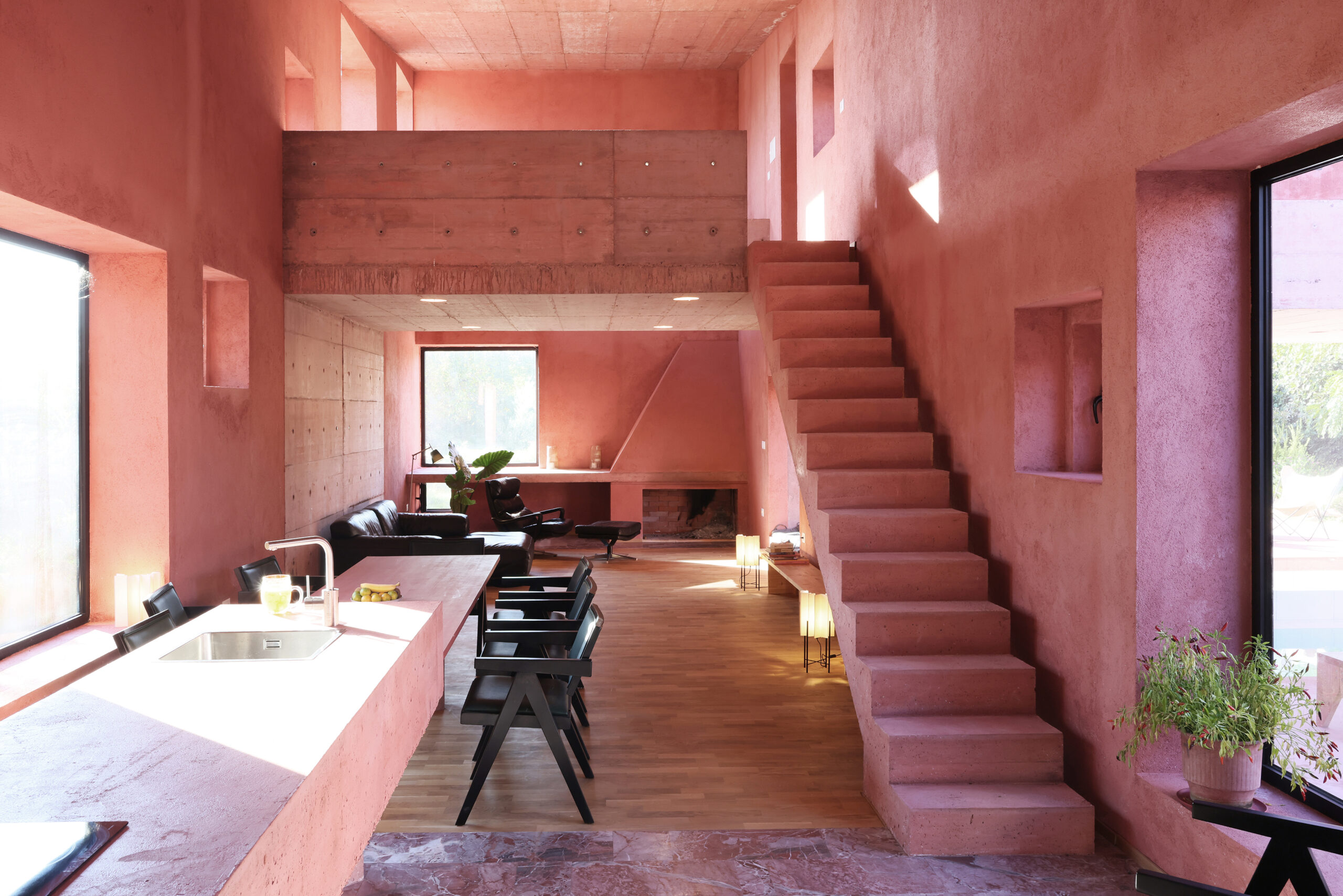
Τοποθετημένο μέσα σε ένα εκτεταμένο αγροτεμάχιο φυτεμένο με ελαιόδεντρα, ροδιές και πορτοκαλιές, το σπίτι ενορχηστρώνει μια ρευστή ισορροπία μεταξύ εσωτερικής και υπαίθριας διαβίωσης. Τα ανοίγματα—ακριβείς, τετράγωνες τομές στους περιμετρικούς τοίχους—λειτουργούν ως κάδρα που χορογραφούν την αντίληψη και μετατρέπουν τις καθημερινές πράξεις κατοίκησης σε έναν συνεχή διάλογο με το τοπίο. Το έργο αξιοποιεί χαμηλής τεχνολογίας κλιματική ευφυΐα μέσω παθητικών στρατηγικών, κατασκευής μηδενικών αποβλήτων, τοπικής εργασίας, υλικών και φυσικών τεχνικών δόμησης. Χρωματισμένη με κόκκινο οξείδιο του σιδήρου, η ορυκτή επιφάνεια φέρει το χρώμα της μέσα στο ίδιο το υλικό, σχεδιασμένη να γερνά χωρίς την ανάγκη να βαφεί ξανά. Ο φέρων οργανισμός από σκυρόδεμα συνδυάζεται με τοιχοποιίες πάχους 46 εκατοστών από τοπικό διάτρητο τούβλο, μονωμένες και επιχρισμένες με μίγμα άχυρου, άμμου και ασβέστη δεσμευμένου με καζεΐνη—μια παραδοσιακή πρωτεΐνη γάλακτος που αντικαθιστά πλήρως το τσιμέντο. Τα δάπεδα ντύνονται με τοπικό ροζ μάρμαρο και ξύλο.
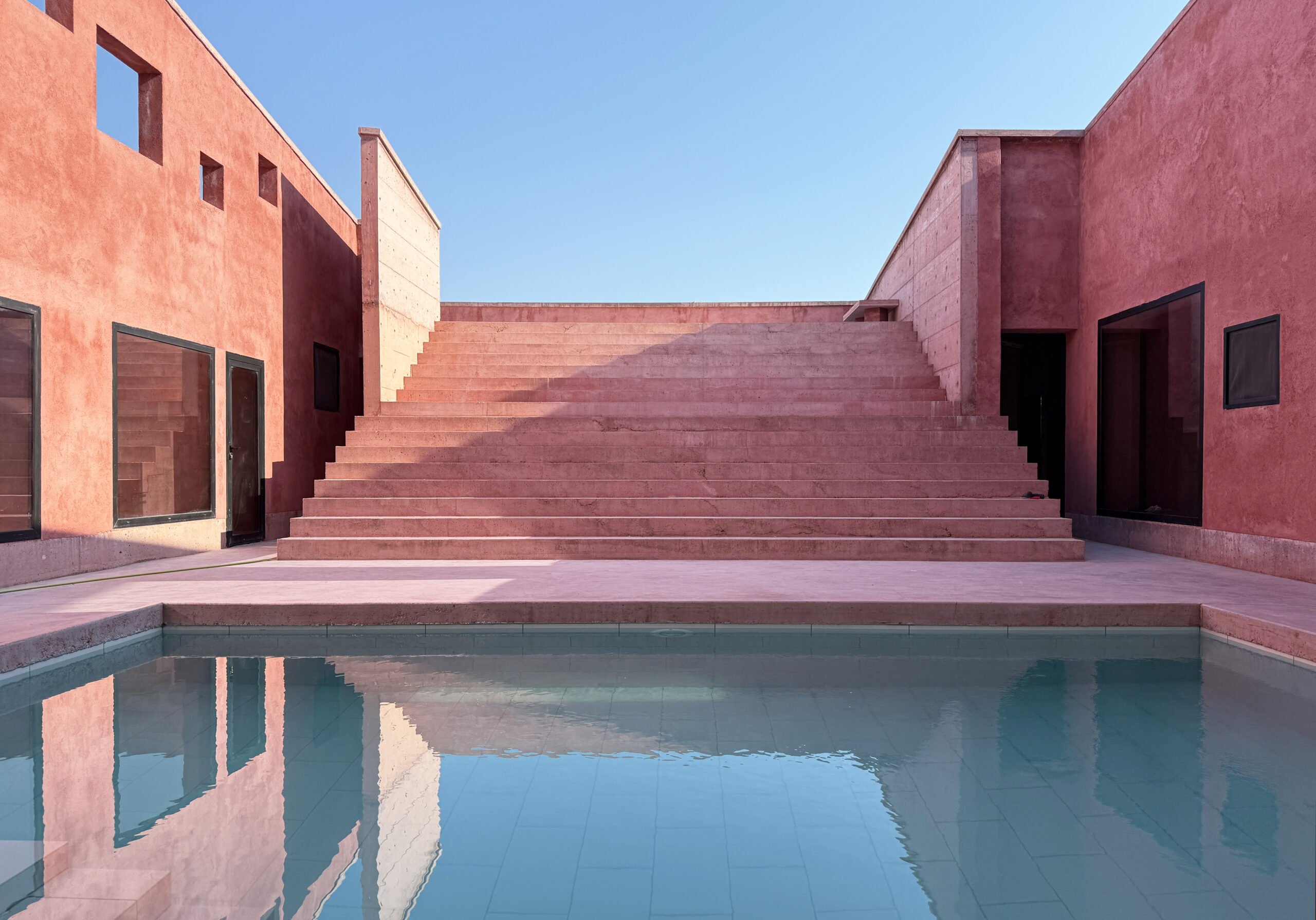
Το Red House λειτουργεί ως ένα προσαρμοστικό οικοσύστημα, ικανό να φιλοξενεί στιγμές παρουσίας, απουσίας και επιστροφής, προτείνοντας ένα μοντέλο αγροτικής κατοίκησης βαθιά εναρμονισμένο με τις κοινωνικές και περιβαλλοντικές υφές του τόπου και του τοπίου που το φιλοξενεί.
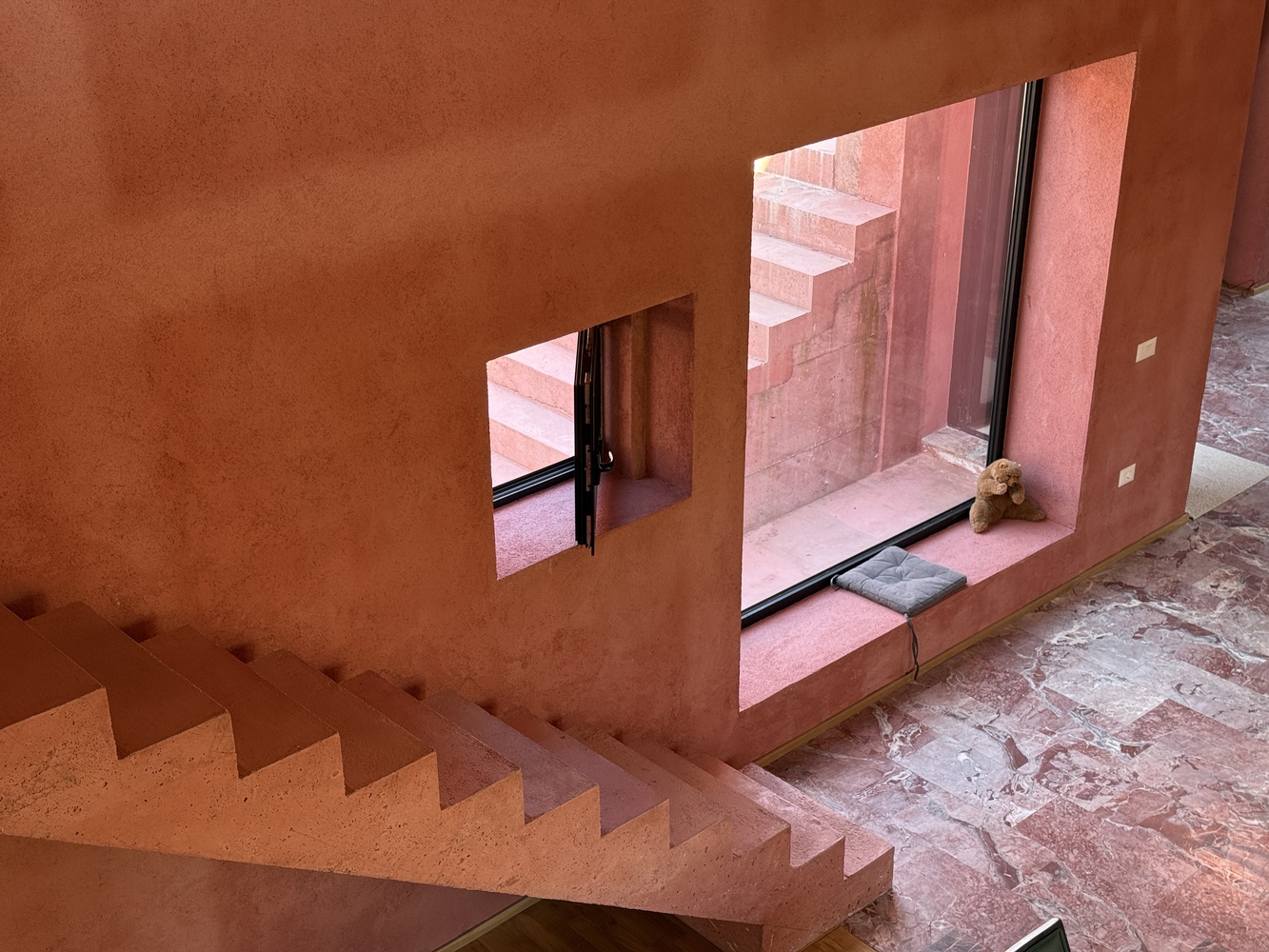
Διαβάστε ολόκληρη την ιστορία, εδώ!
Ιστορία 11η
Το σπίτι ως κληρονομιά: το γραφείο Architectural bureau 11 επανεφευρίσκει τον Αθηναϊκό μοντερνισμό της λαϊκής, ανώνυμης κατοικίας.
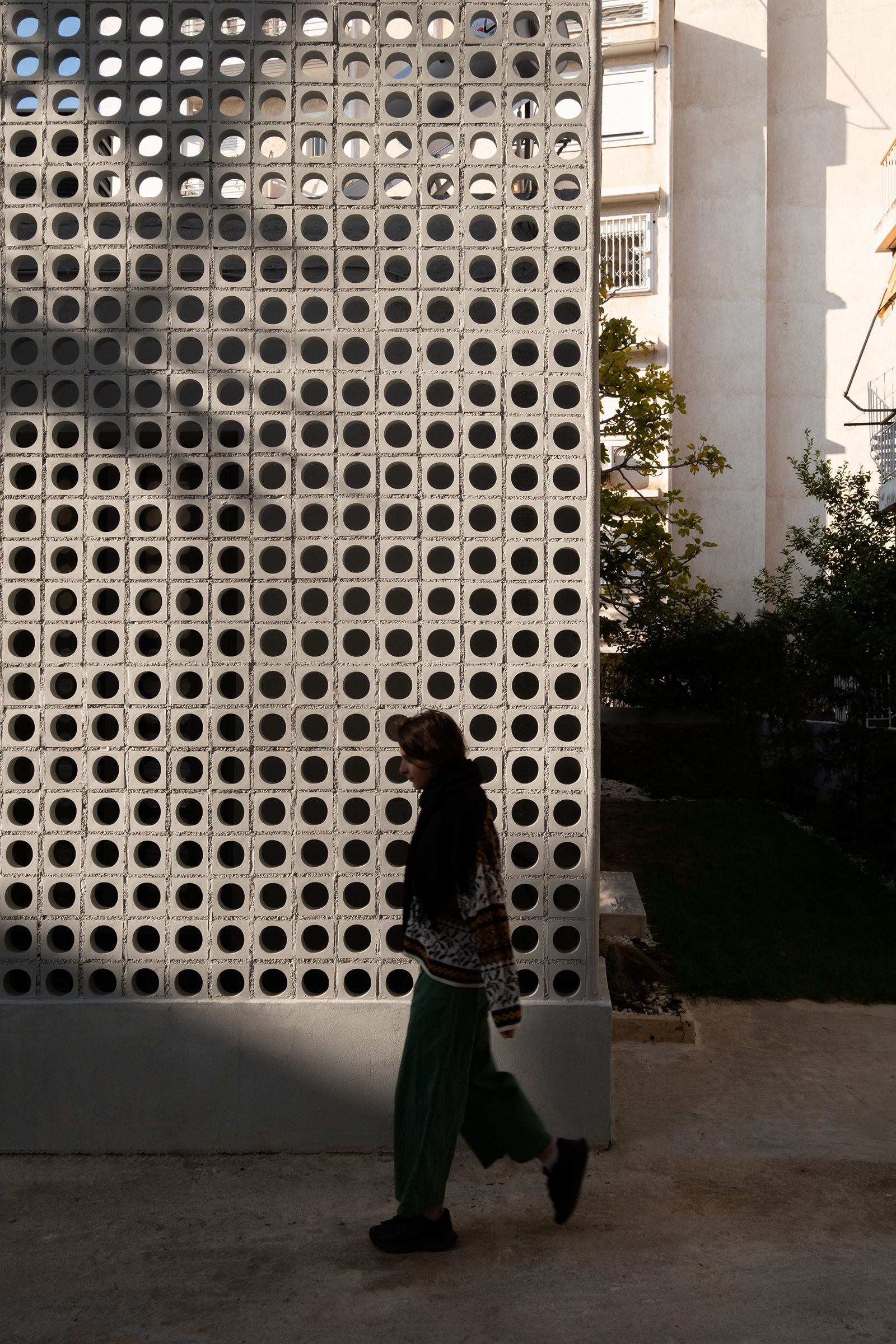
Στο ενδέκατο επεισόδιο, ακολουθούμε την αρχιτέκτονα Anna Delgiado, από το γραφείο Architectural bureau 11, να επαναφέρει στον αστικό ιστό του Παλαιού Φαλήρου μια εγκαταλελειμμένη ισόγεια κατοικία της δεκαετίας του 1950 —τυπικό δείγμα πρώιμου αθηναϊκού μοντερνισμού— με έναν εντελώς αναπάντεχο τρόπο. Αντλώντας από το σχεδιαστικό ιδίωμα της εποχής, οι αρχιτέκτονες ντύνουν το σπίτι, περιμετρικά, με έναν διάτρητο μανδύα από κλωστρά, πάνω στον οποίο, με το πέρασμα του χρόνου, αναμένεται να αναπτυχθεί μια κληματαριά. Μέσα από αυτή τη νέα, διάτρητη κεραμική πρόσοψη, που οριοθετεί και εμπεριέχει την οικιακή ζωή, το σπίτι αποκτά ένα διαπερατό κουκούλι που το επαναπροσδιορίζει μορφολογικά και το φορτίζει σημειολογικά, μετατρέποντάς το σε τοπόσημο που θέτει ερωτήματα για τη σχέση σύγχρονου–μοντέρνου, ιδιωτικού–δημόσιου, κατοίκησης–αστικότητας, και για την ερωτική σχέση της αρχιτεκτονικής με τον χρόνο.
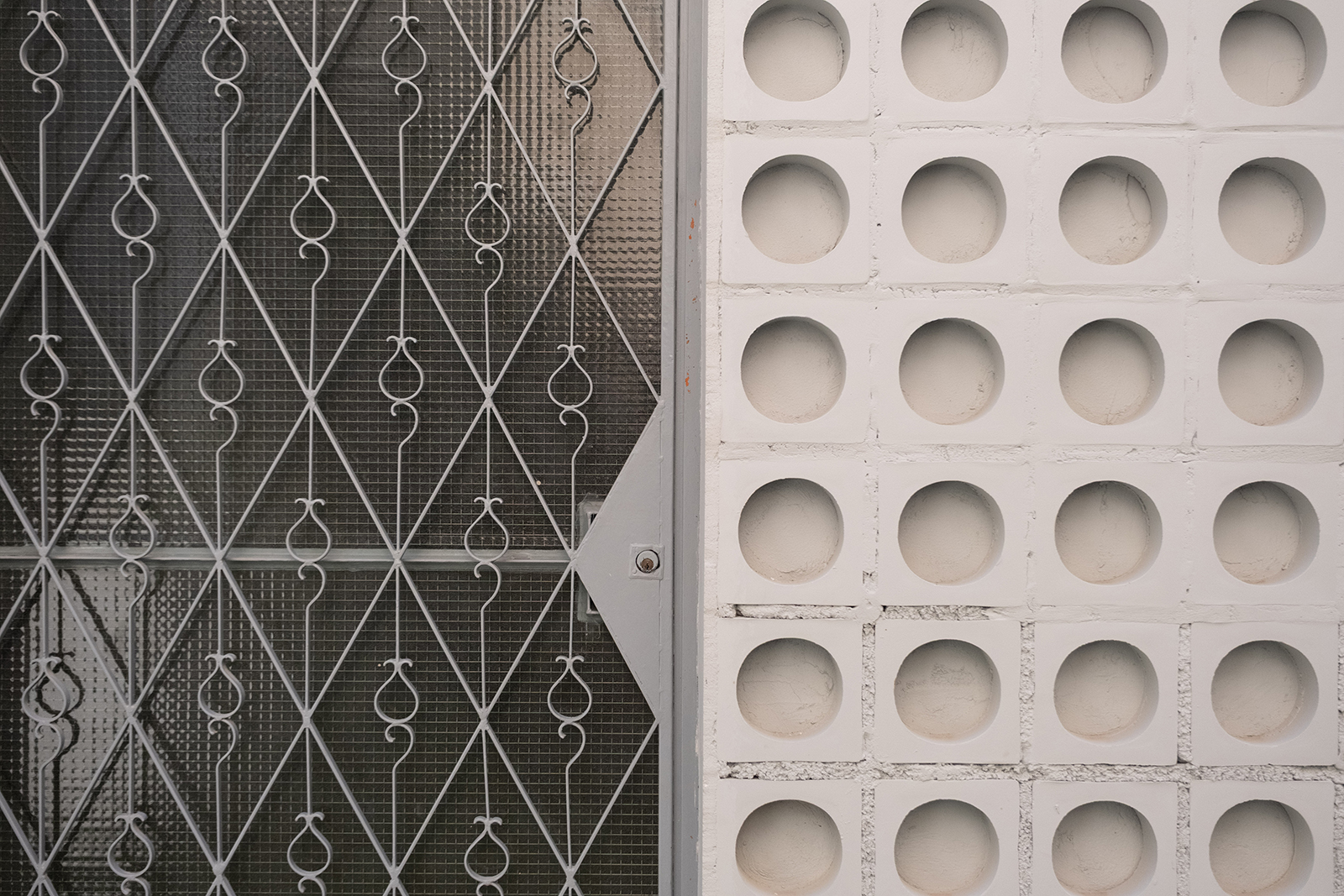
Στα ίχνη του αθηναϊκού chiaroscuro, η νέα διάτρητη κεραμική πρόσοψη της κατοικίας αξιοποιεί το παιχνίδισμα αποκάλυψης–απόκρυψης και φωτός–σκιάς για να περιγράψει έναν τρόπο κατοίκησης του κόσμου, όπου η σκιά επιτρέπει στα πράγματα να αποκτούν μνήμη και διάρκεια. Πίσω από το διάτρητο φίλτρο της πρόσοψης, το παλιό σπίτι ανασαίνει προστατευμένο και ανέπαφο, διατηρώντας τη μνήμη όσων το έχτισαν: ξύλινες γρίλιες και μεταλλικά πορτόνια, μωσαϊκά δάπεδα, αυλές με σκιερά δέντρα. Ο κήπος με την αιωνόβια συκιά, που εφάπτεται στη βορινή πίσω όψη, εντάσσεται στη νέα οικιακή ζωή ως προέκταση και αναπόσπαστο μέρος της καθημερινότητας των κατοίκων. Μια μπλε γραμμή χωρίζει τις τοιχοποιίες στο εσωτερικό του σπιτιού σε δύο διακριτά τμήματα, εμμένοντας στη μοντερνιστική οριζοντιότητα με εικαστικές αναφορές στο De Stijl. Βίντατζ ξύλινα έπιπλα, που αποπνέουν την αισθητική του χειροποίητου, συνομιλούν διαλεκτικά με σύγχρονα φωτιστικά και μεταλλικές υφές.
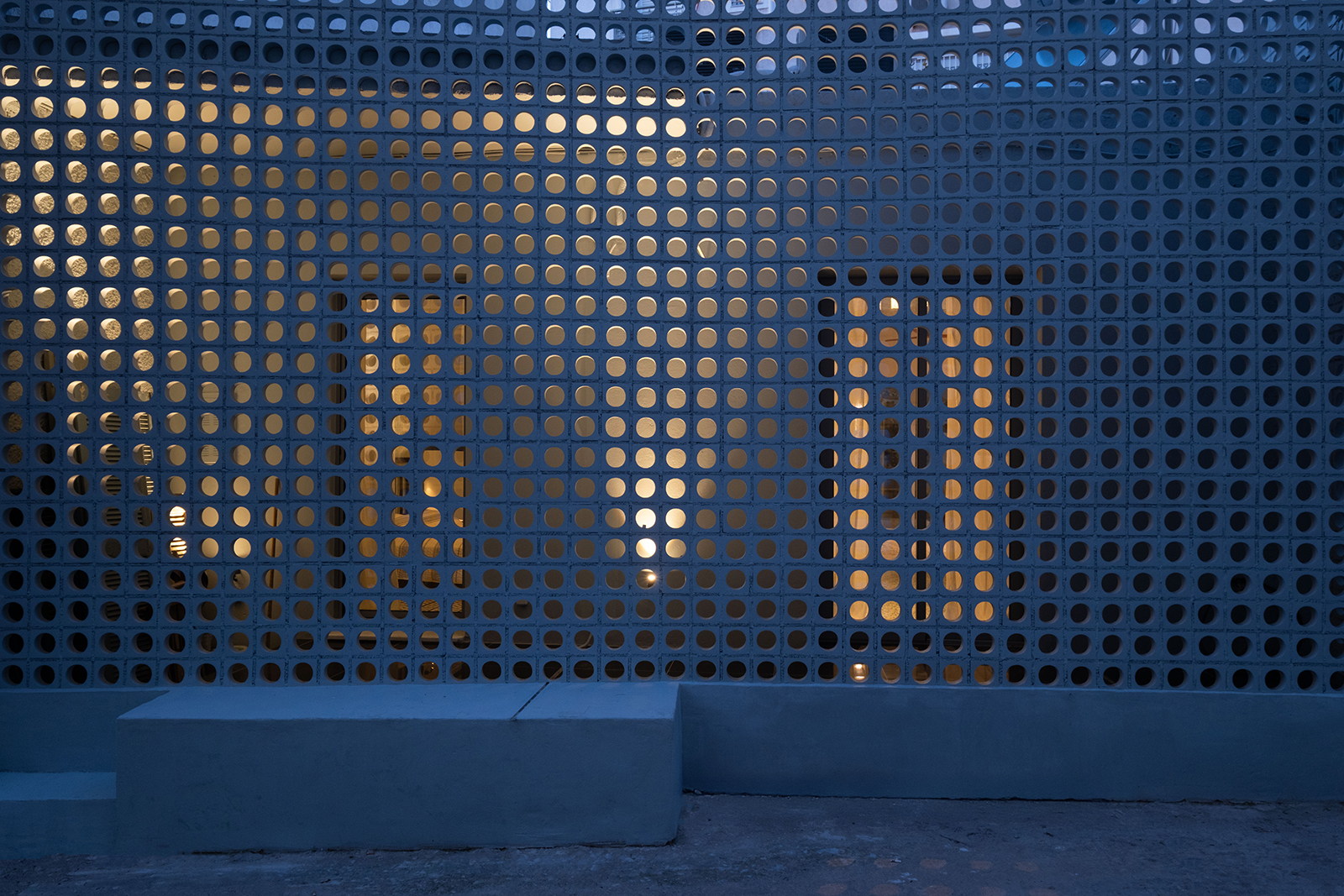
Χτισμένο στα μέσα του 20ού αιώνα από ένα ζευγάρι εσωτερικών μεταναστών από τη Λέσβο, “Το Σπίτι στη Σκιά του”, όπως το ονομάζουν σήμερα οι αρχιτέκτονες, επαναφέρει τον αθηναϊκό μοντερνισμό της λαϊκής, ανώνυμης κατοικίας στο επίκεντρο της σύγχρονης αρχιτεκτονικής συζήτησης. Πώς κατοικούμε σήμερα το μοντέρνο; Πώς σχετιζόμαστε με τα χαρακτηριστικά αρχιτεκτονικά του στοιχεία και τι σημαίνει σύγχρονη αποκατάσταση; Θέτοντας τα κλωστρά ως πρόδρομα βιοκλιματικά εργαλεία, φορείς ιστορικής συνέχειας, μνήμης αλλά και ριζοσπαστικής αναδιάταξης, η ανακαίνιση του Architectural bureau 11 πλαισιώνει τη σύγχρονη αθηναϊκή κατοικία κριτικά αναζητώντας τη σύνδεση τόπου, κλίματος και μορφής (Frampton, 2007).