The Tinian Threshing Floor >>> Το Τηνιακό Αλώνι
«Τα μάτια μου δεν είδαν τόπον ενδοξότερον από τούτο το αλωνάκι», writes Dionysios Solomos in The Free Besieged, transforming the humble aloni—the threshing floor—into the symbolic ground of sacrifice and resistance. Yet, on the “handmade island” of Tinos, as philosopher Cornelius Castoriadis describes it, referring to the extraordinary degree to which the Tinian landscape appears to have been worked by human hands, this line of verse finds a literal meaning.
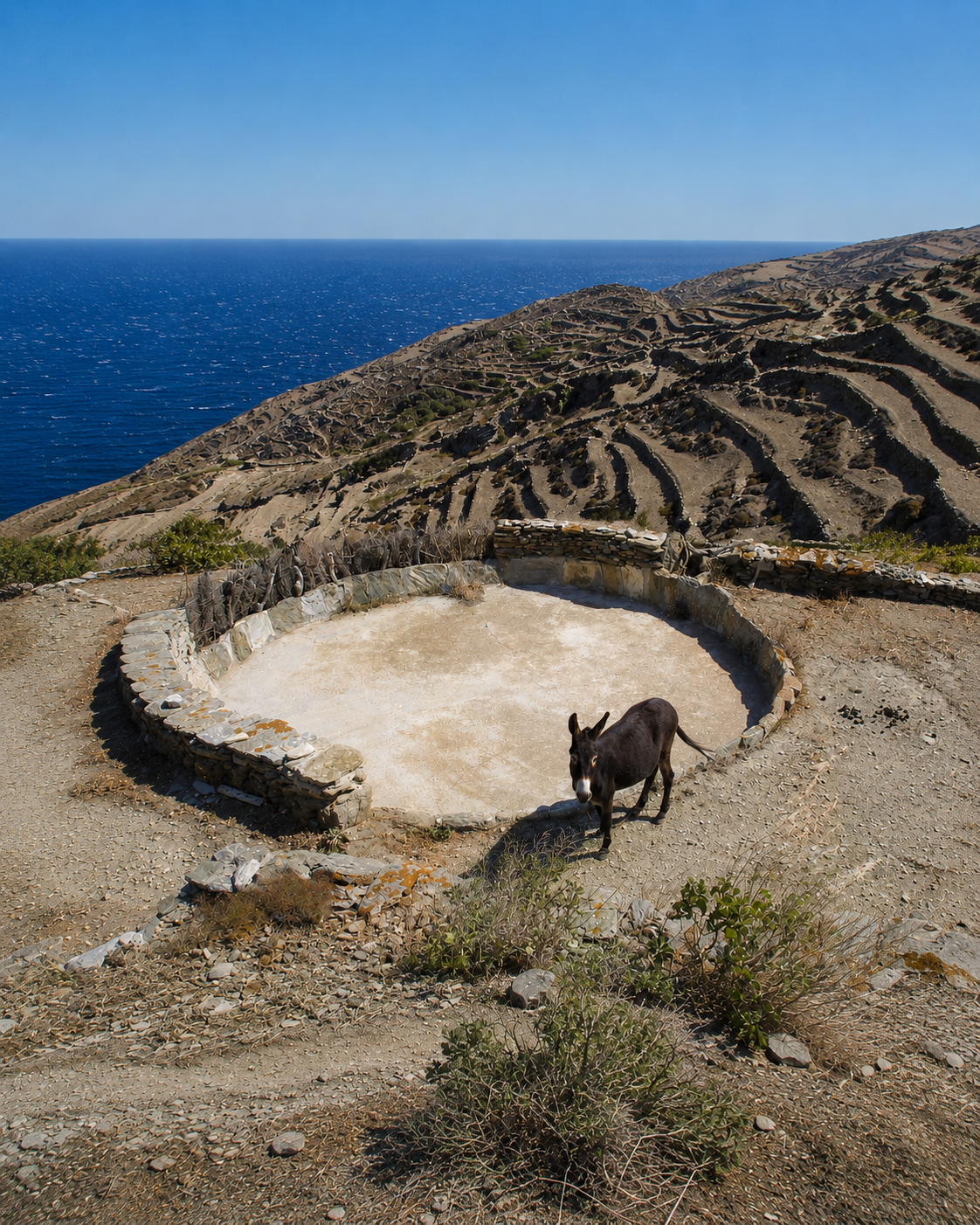
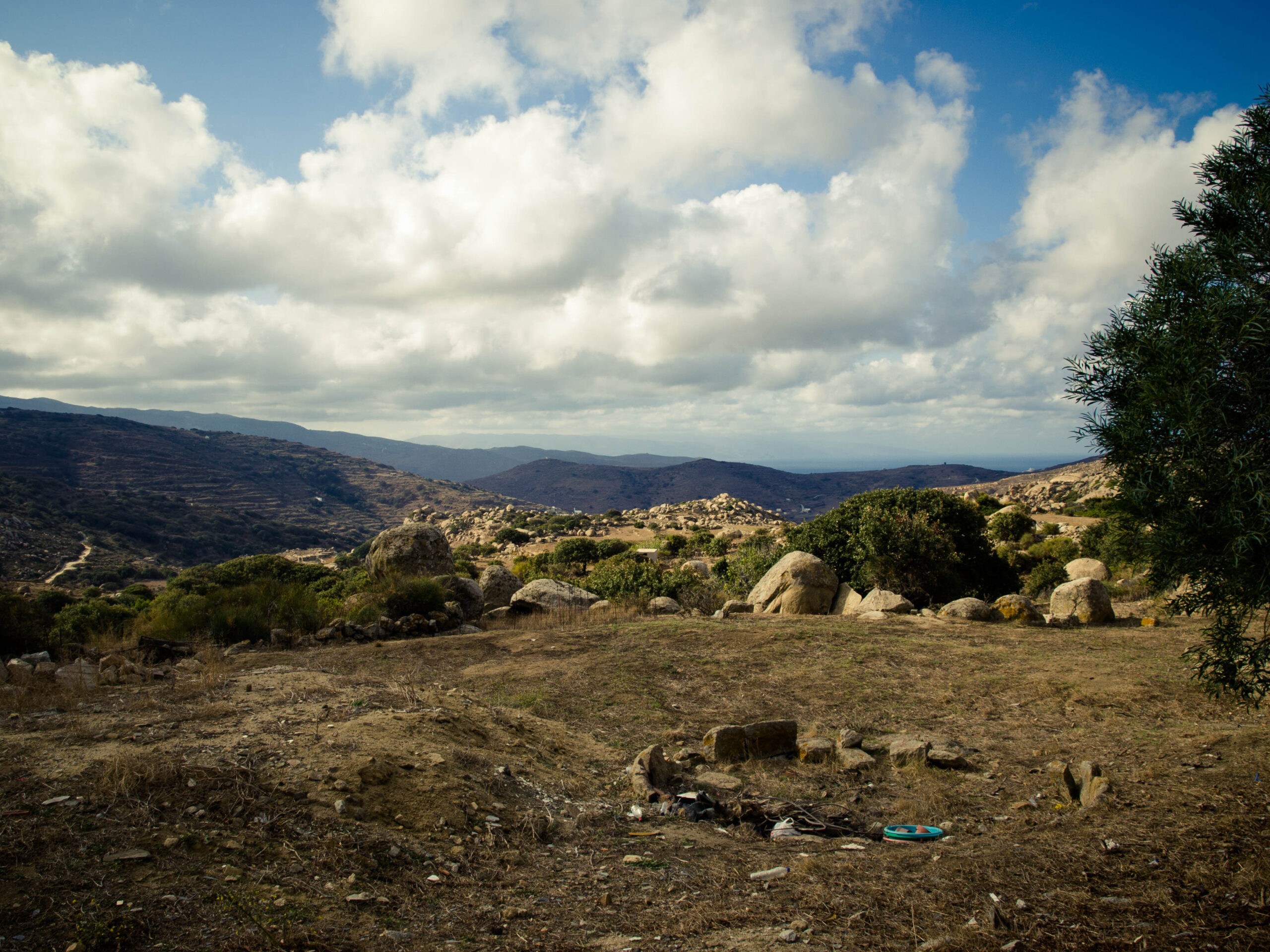
Until today, between fig and olive trees punctuating a dispersed constellation of terraces and dry-stone walls, remnants of kathikies (rural dwellings), circular alonia (threshing floors), stone-built kelia (agricultural cells), windmills, wine presses and highly crafted dovecotes form a productive territory in which vernacular architecture, habitation and agriculture were inseparable, shaping the Tinian landscape as a cultural artefact. The terraces remake the mountain; the dry-stone walls organise soil and water; paths connect settlements; dovecotes become sculptural constructions; marble transforms everyday thresholds, fountains and lintels.
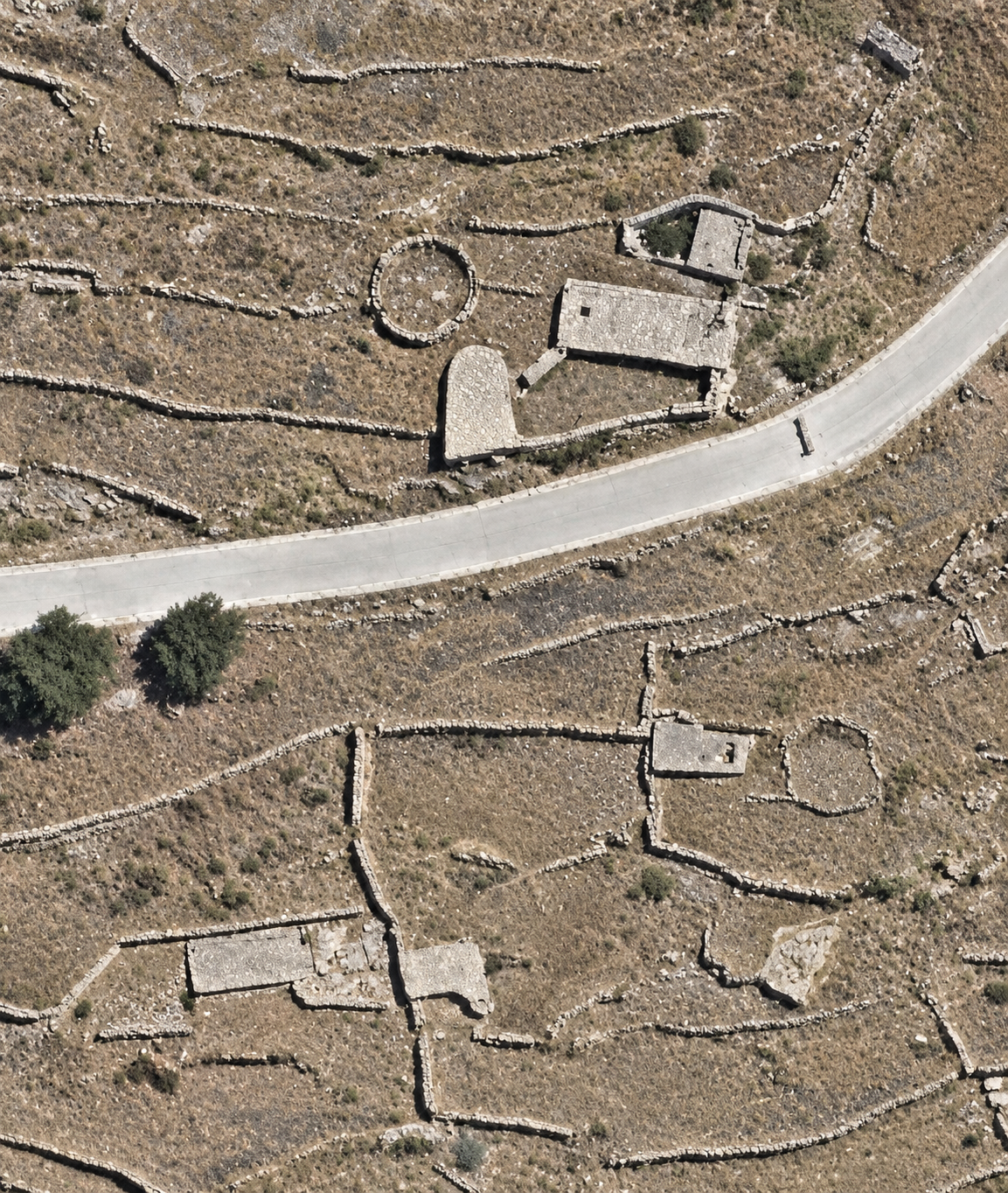
As architect Maria Vidali (2007) observes, the Tinian landscape occupies a liminal territory between the natural and the inhabited, the private and the communal, the mundane and the divine. More recently, architect Marilena Mela (2025) describes the same cycladic terrain as the outcome of an enduring negotiation between labour, land, water, wind and stone, in which agricultural estates, terraces, threshing floors, presses and other rural structures formed an interconnected system of inhabitation and production.
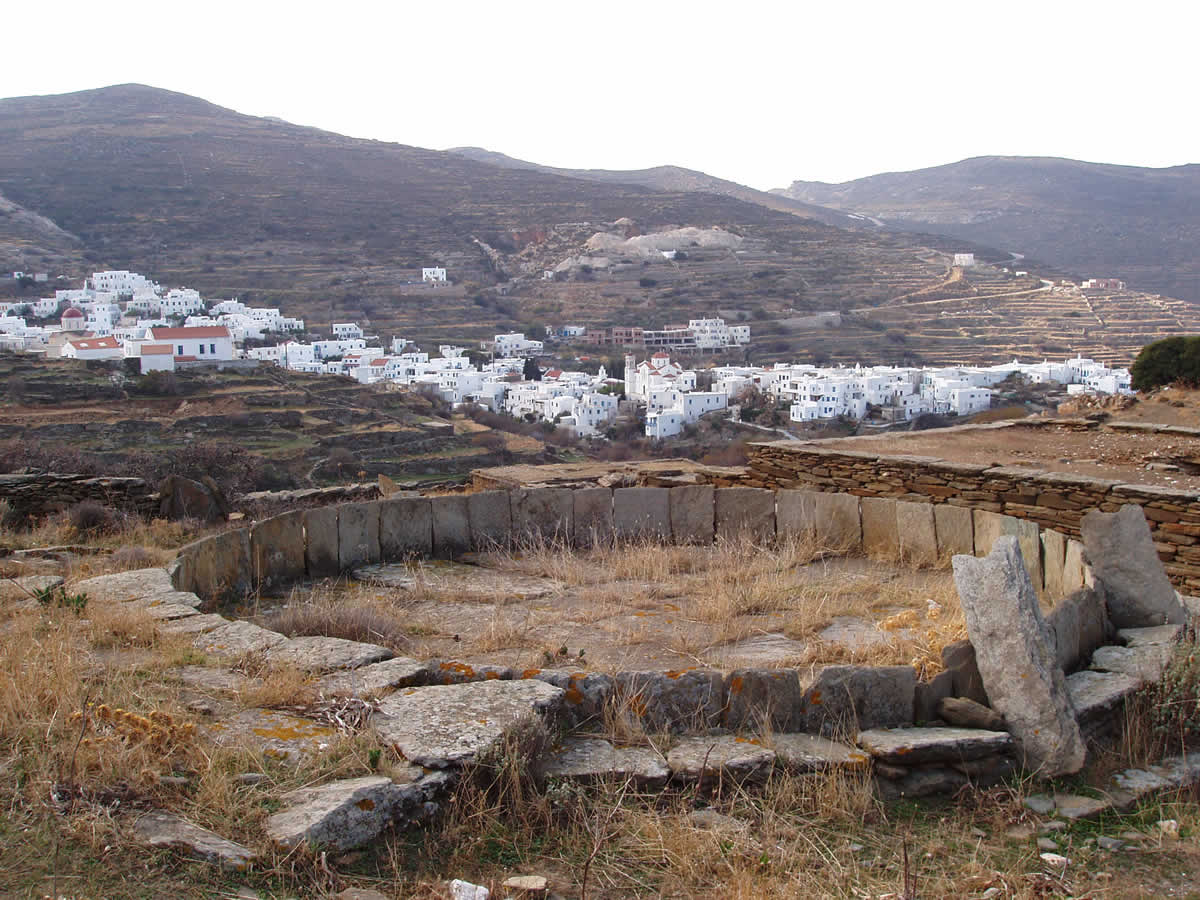
Within this dispersed rural infrastructure, in contrast with the ornate dovecote, which operates vertically, the aloni is perceived as architecture reduced almost to its ground condition.
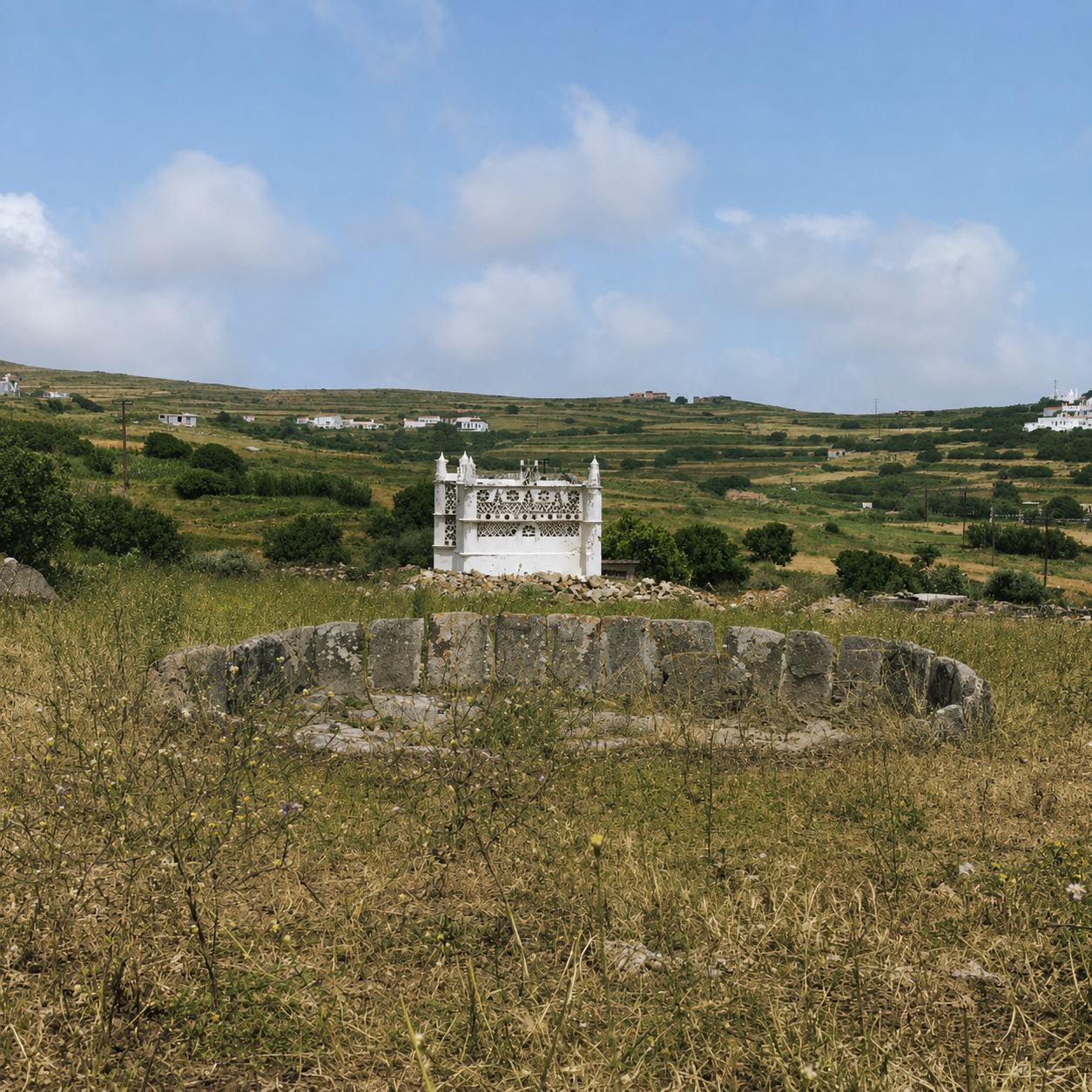
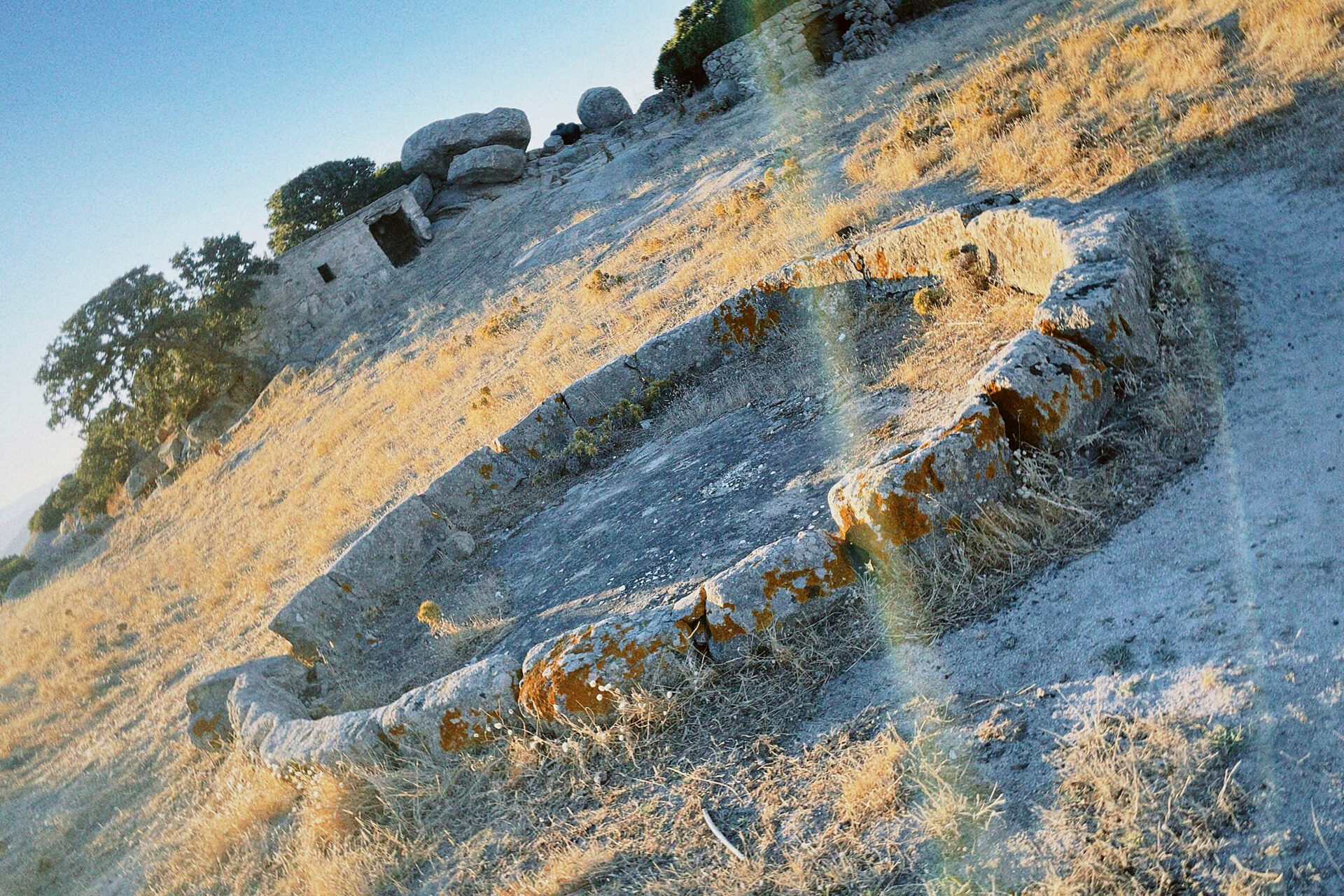
Typically circular stone platforms, approximately 4–5 metres in diameter, the threshing floors were enclosed by a low parapet of upright stones, marking their existence from a distance.
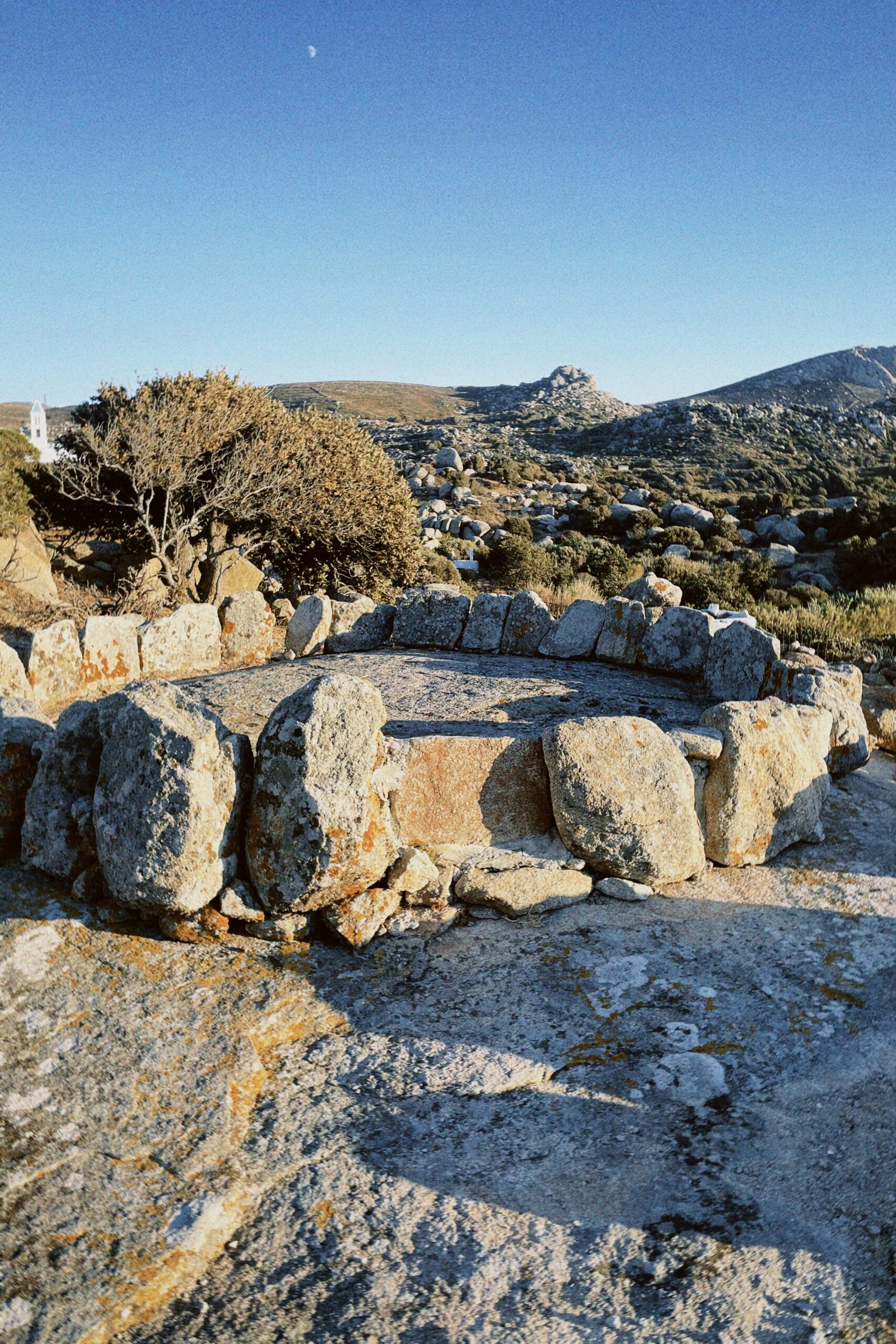
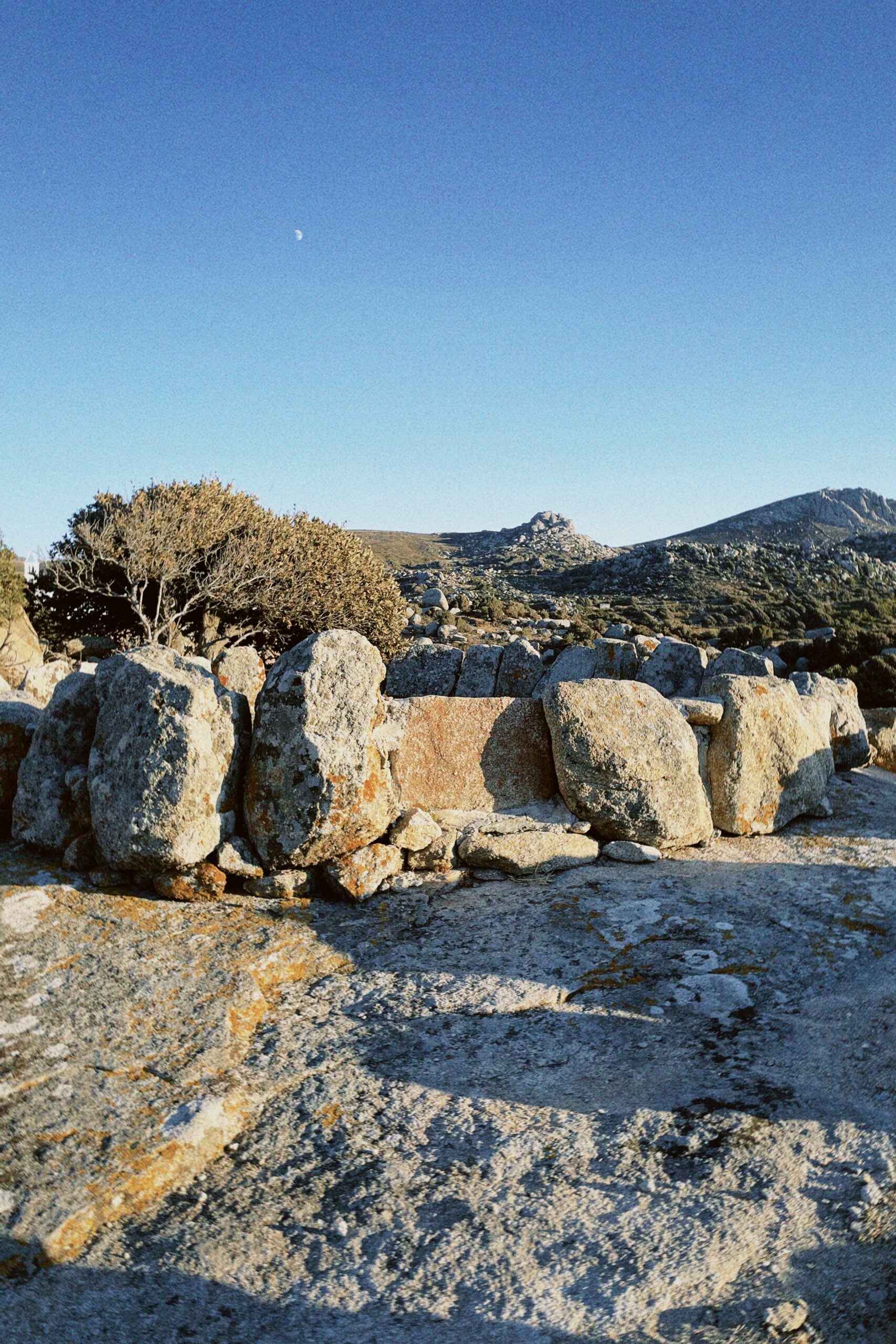
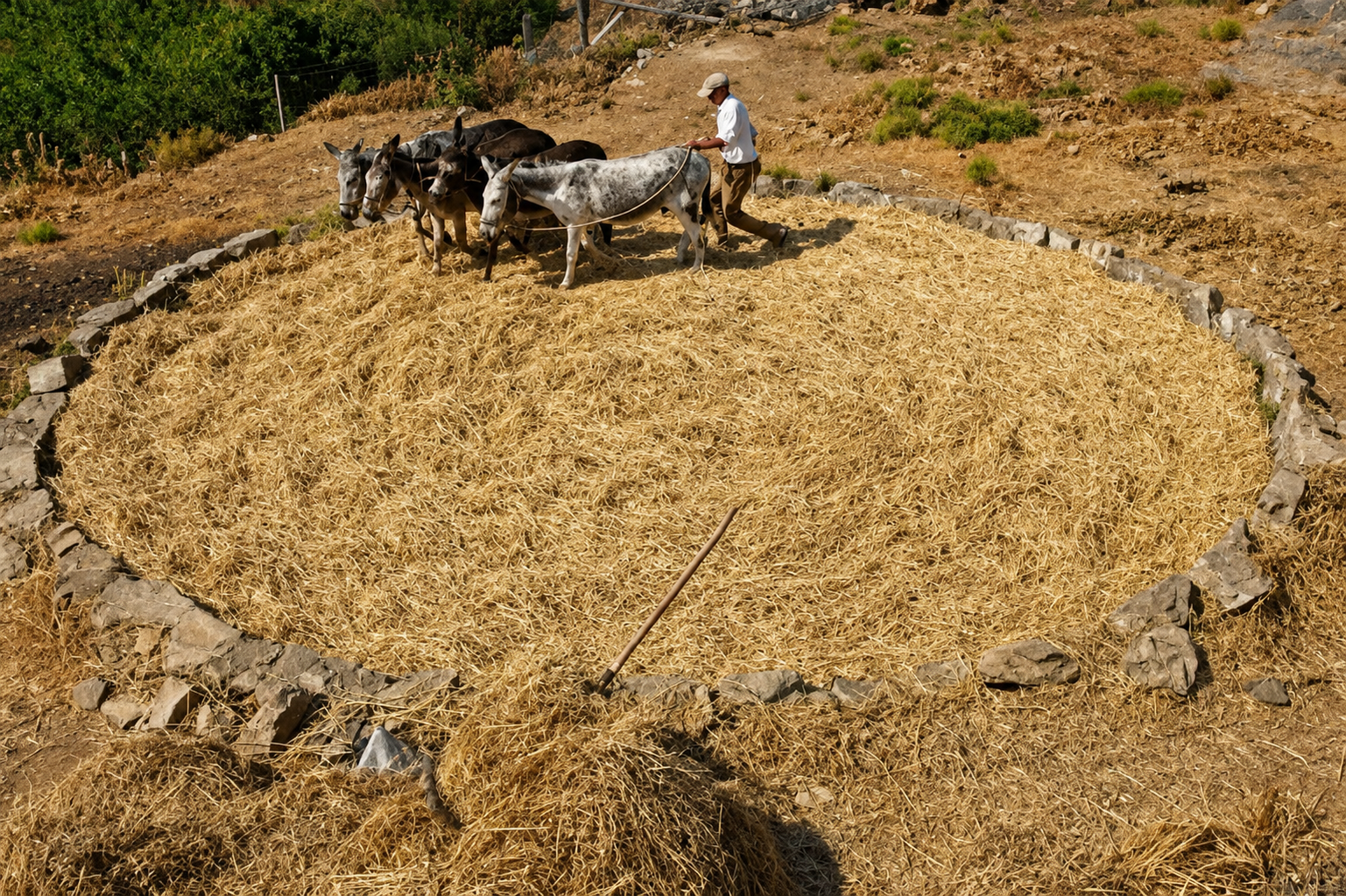
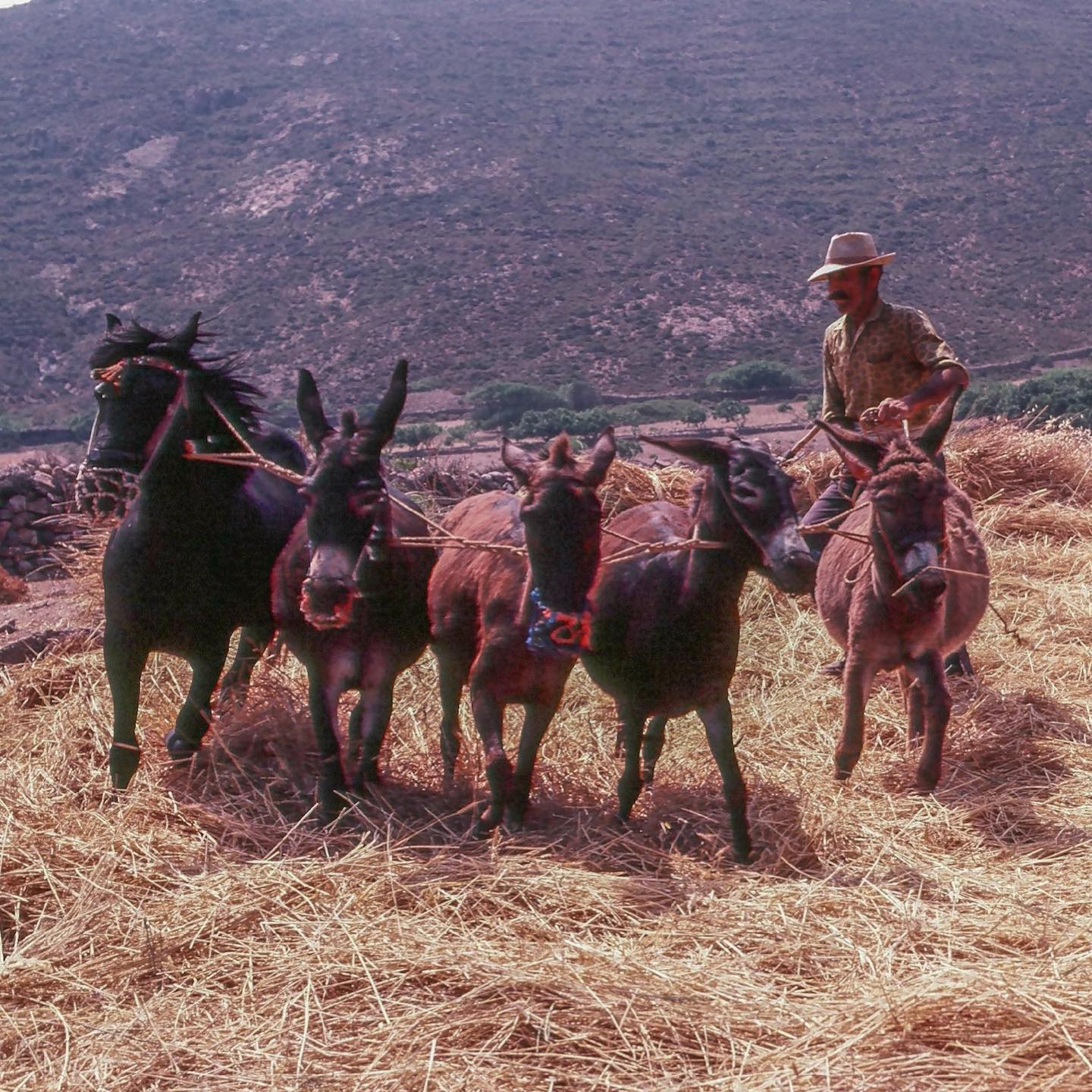
During the harvest, which traditionally began around July, bundles of wheat or barley were spread across their surface. Animals—usually cattle, but also mules or donkeys—were made to circle the floor, trampling the sheaves and separating the grain from the straw. The grain was subsequently winnowed, using the wind to separate the heavier kernels from the lighter chaff.
Today, many of these structures survive as fragments. Their agricultural function has largely disappeared with the retreat of traditional cultivation, leaving behind a landscape in which these agricultural infrastructures increasingly appear as ruins or traces of a former productive order. Mela describes these remains not simply as isolated monuments, but as evidence of a once highly integrated rural system whose abandonment has itself become part of the contemporary landscape.
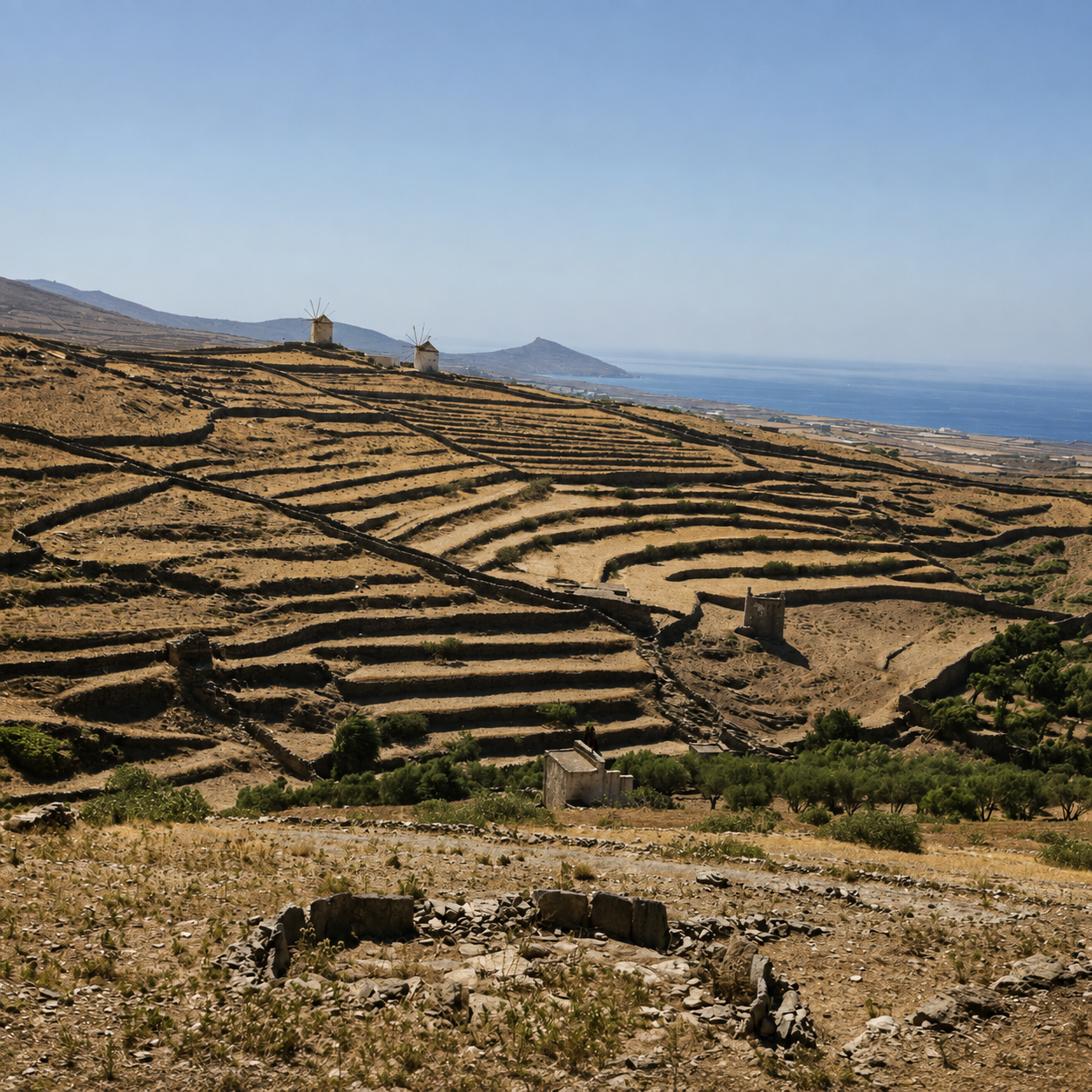
Yet, beyond their original function, what kinds of relationships between humans, animals, landscape, heritage and environment do these inherited structures embody and carry into the present?
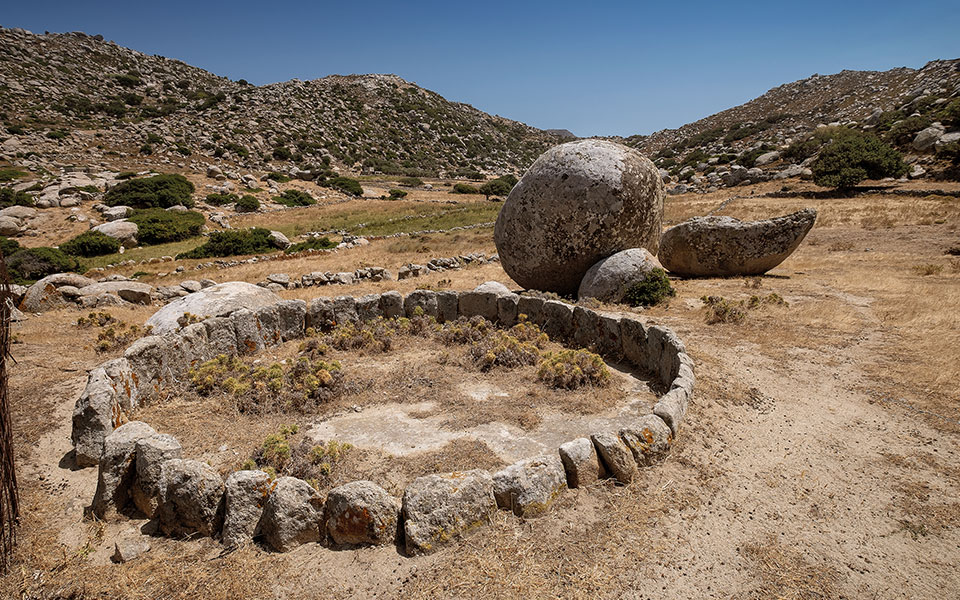
As far as the threshing floor is concerned, its geometry is not merely practical. The circle establishes a field of rotation, repetition and return. Animals move around a centre; labour gathers around a common surface; grain is separated through circular movement.
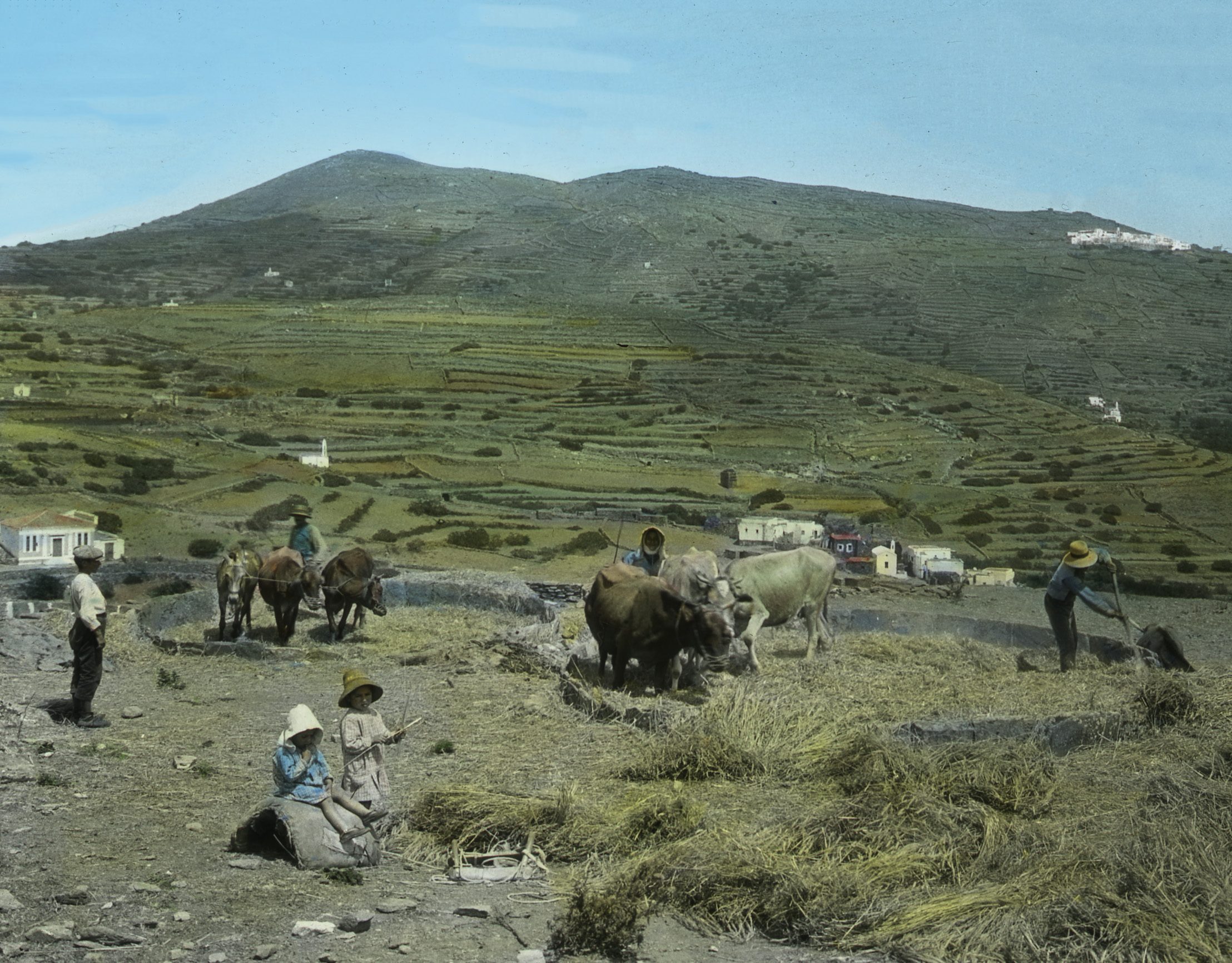
The agricultural operation becomes choreography, and choreography becomes spatial order.
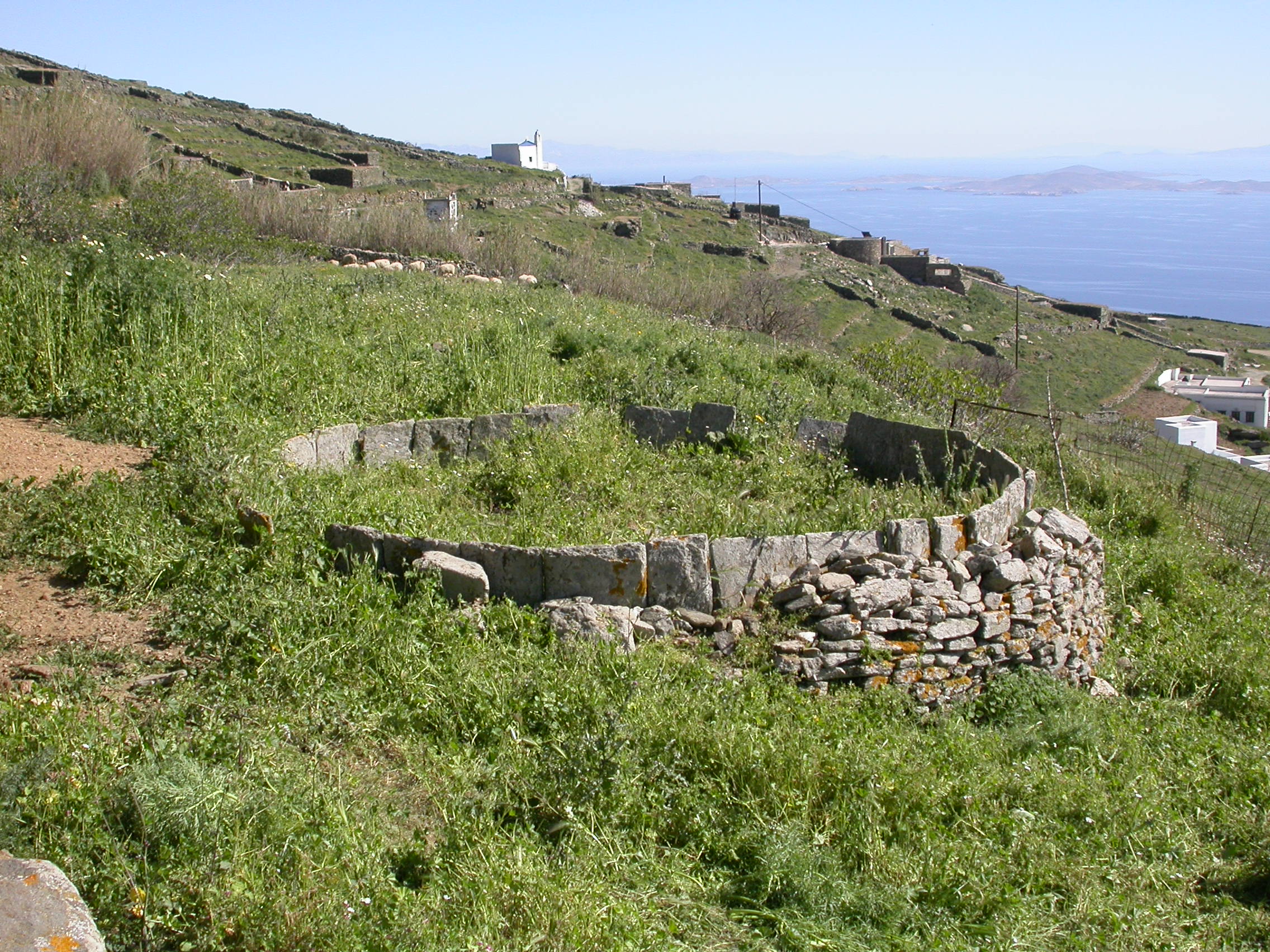
The magnetic power of the engraved circle on the ground functions as a cosmic circle of togetherness, bridging agricultural infrastructure, landscape design, human and animal labour, while producing social space, common rituals and memory.
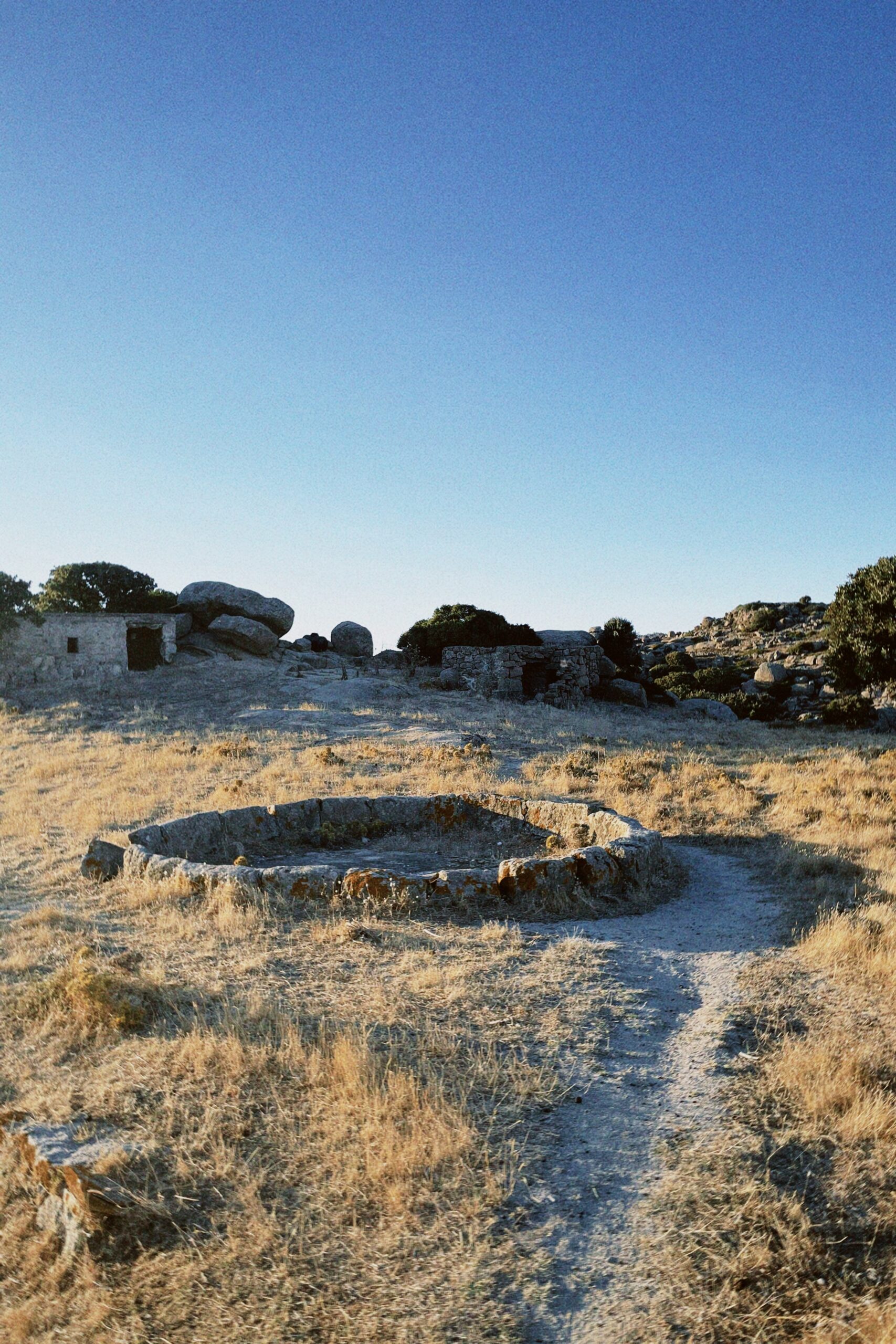
It is perhaps this capacity of the aloni to exceed its function that explains its persistence in the Greek poetic imagination.
In Nikos Karouzos’s “Μες στον ουράνιο Δεκέμβρη”, from Τα Ποιήματα, Vol. I, the threshing floor is lifted from the terrestrial landscape and translated into a cosmic image. Looking at the moon, the poet sees an aloni around it—“an inexplicable flower”—a sequence of circles expanding through colour, atmosphere and distance. The agricultural circle becomes celestial geometry; the humble instrument of rural labour becomes a planetary figure.
Μες στον ουράνιο Δεκέμβρη

Νίκος Καρούζος, Τα Ποιήματα, Vol. I

«Βγαίνω περ’ απ’ τα μεσάνυχτα κοιτάζω τη σελήνη

με τ’ αλώνι γύρω της άνθος ανεξήγητο

ένας κύκλος

ο γαλάζιος και πράσινος τα μεγάλα πέταλα του άνθους

ύστερα ο μικρότερος κύκλος κοκκινωπός ομιχλώδες

άσπρο λερωμένο ταξιδεύει μέσα στο φεγγάρι

σαν έμβρυο στα υγρά των αγγέλων.

Είναι τραγούδι ο στεναγμός που φτερουγά στο στήθος μου

και

μαραίνει την πρασινάδα.»
The same circle assumes a radically different charge in Giorgos Seferis’s poetry. In “Η Μορφή της Μοίρας”, from Ημερολόγιο Καταστρώματος Β΄, written in 1941, one year after the outbreak of the war in Greece, the threshing floor becomes an arena of death and violence, with its circular movement suggesting the tragic, fatal repetition of history.
Η Μορφή της Μοίρας

Γιώργος Σεφέρης, Ημερολόγιο Καταστρώματος Β΄

Ιστορισμένα
παραμύθια στην καρδιά μας
σαν ασημένια σκούνα μπρος στο τέμπλο
μιας άδειας εκκλησιάς, Ιούλιο στο νησί.

Γ. Σ.

Η μορφή της μοίρας πάνω απ’ τη γέννηση ενός παιδιού,
γύροι των άστρων κι ο άνεμος μια σκοτεινή βραδιά του Φλεβάρη, γερόντισσες με
γιατροσόφια ανεβαίνοντας τις σκάλες που τρίζουν και τα ξερά κλωνάρια της
κληματαριάς ολόγυμνα στην αυλή.

Η μορφή πάνω απ’ την κούνια ενός παιδιού μιας μοίρας
μαυρομαντιλούσας χαμόγελο ανεξήγητο και βλέφαρα χαμηλωμένα και στήθος άσπρο
σαν το γάλα κι η πόρτα που άνοιξε κι ο καραβοκύρης θαλασσοδαρμένος πετώντας
σε μια μαύρη κασέλα το βρεμένο σκουφί του.

Αυτά τα πρόσωπα κι αυτά τα περιστατικά σ’
ακολουθούσαν καθώς ξετύλιγες το νήμα στην
ακρογιαλιά για τα δίχτυα κι όταν ακόμη αρμενίζοντας δευτερόπριμα κοίταζες το
λάκκο των κυμάτων· σ’ όλες τις θάλασσες, σ’ όλους τους κόρφους ήταν μαζί σου,
κι ήταν η δύσκολη ζωή κι ήταν η χαρά.

Τώρα δεν ξέρω να διαβάσω παρακάτω, γιατί σε δέσαν με
τις αλυσίδες, γιατί σε τρύπησαν με τη λόγχη, γιατί σε χώρισαν μια νύχτα μέσα
στο δάσος από τη γυναίκα που κοίταζε στυλώνοντας τα μάτια και δεν ήξερε
καθόλου να μιλήσει, γιατί σου στέρησαν το φως το πέλαγο το ψωμί.

Πώς πέσαμε, σύντροφε, μέσα στο λαγούμι του φόβου; Δεν
ήταν της δικής σου μοίρας, μήτε της δικής μου τα γραμμένα, ποτές μας δεν
πουλήσαμε μήτε αγοράσαμε τέτοια πραμάτεια· ποιός είναι εκείνος που προστάζει
και σκοτώνει πίσω από μας;

Άφησε μη ρωτάς· τρία κόκκινα άλογα στ’ αλώνι γυρίζουν
πάνω σ’ ανθρώπινα κόκαλα κι έχουν τα μάτια δεμένα, άφησε μη ρωτάς, περίμενε·
το αίμα, το αίμα ένα πρωί θα σηκωθεί σαν τον αϊ-Γιώργη τον καβαλάρη
για να καρφώσει με το κοντάρι πάνω στο χώμα το δράκοντα.

1η Οκτώβρη 1941
In Odysseas Elytis’s “Δώρο Ασημένιο Ποίημα”, from Το φωτόδεντρο και η δέκατη τέταρτη ομορφιά, the threshing floor acquires a political dimension. Written in 1969–1970 during the poet’s self-exile in Paris under the Greek dictatorship, the poem articulates a longing for freedom and the restoration of democracy. The aloni, traditionally a communal space of labour, becomes a metaphorical ground for collective life and a lost Greek condition. Through this image, Elytis evokes a return to what he perceived as the country’s authentic nature, beyond the authoritarian structures and foreign political influences that had distorted it. The threshing floor thus becomes a space of freedom and collective renewal.
Δώρο Ασημένιο Ποίημα

Οδυσσέας Ελύτης, Το φωτόδεντρο και η δέκατη τέταρτη ομορφιά, Ίκαρος, 1971

Ξέρω πως είναι τίποτε όλ’ αυτά και πως η γλώσσα που μιλώ δεν έχει αλφάβητο

Αφού και ο ήλιος και τα κύματα είναι μια γραφή συλλαβική που την αποκρυπτογραφείς μονάχα στους καιρούς της λύπης και της εξορίας

Κι η πατρίδα μια τοιχογραφία μ’ επιστρώσεις διαδοχικές φράγκικες ή σλαβικές που αν τύχει και βαλθείς για να την αποκαταστήσεις πας αμέσως φυλακή και δίνεις λόγο

Σ’ ένα πλήθος Εξουσίες ξένες μέσω της δικής σου πάντοτε

Όπως γίνεται για τις συμφορές

Όμως ας φανταστούμε σ’ ένα παλαιών καιρών αλώνι

που μπορεί να ‘ναι και σε πολυκατοικία ότι παίζουνε

παιδιά και ότι αυτός που χάνει

Πρέπει σύμφωνα με τους κανονισμούς να πει στους

άλλους και να δώσει μιαν αλήθεια

Οπόταν βρίσκονται στο τέλος όλοι να κρατούν στο χέρι

τους ένα μικρό

Δώρο ασημένιο ποίημα.
Between Karouzos, Seferis, and Elytis, the aloni oscillates between cosmos, catastrophe and renewal, with its architectural essence remaining remarkably constant: a bounded plane, a centre, a circular movement, an exposed horizon.
This is precisely what makes the Tinian threshing floor more than an agricultural relic.
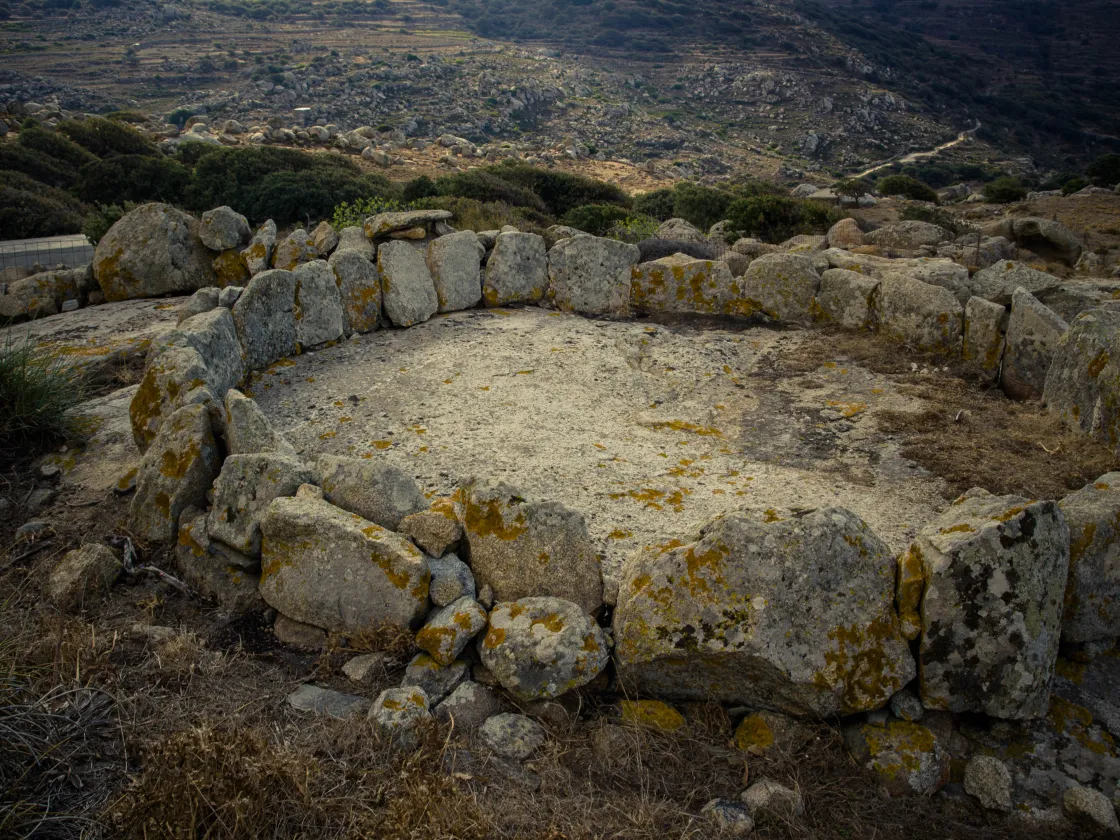
Its significance lies in its capacity to gather together what modern architectural categories tend to separate: infrastructure and landscape, labour and ritual, human and animal bodies, production and sociality.
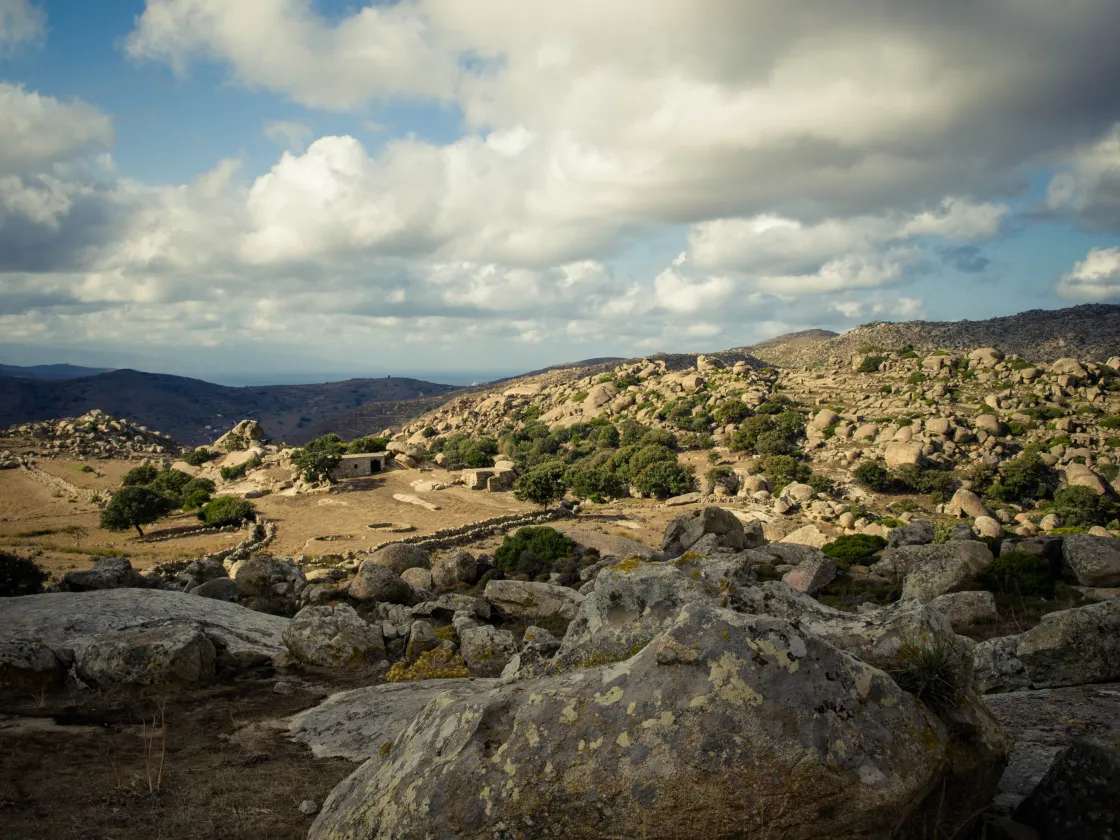
It is a piece of agricultural technology, but also a communal stage; a constructed surface, but also a natural plateau; an instrument of production, but also a carrier of collective memory.
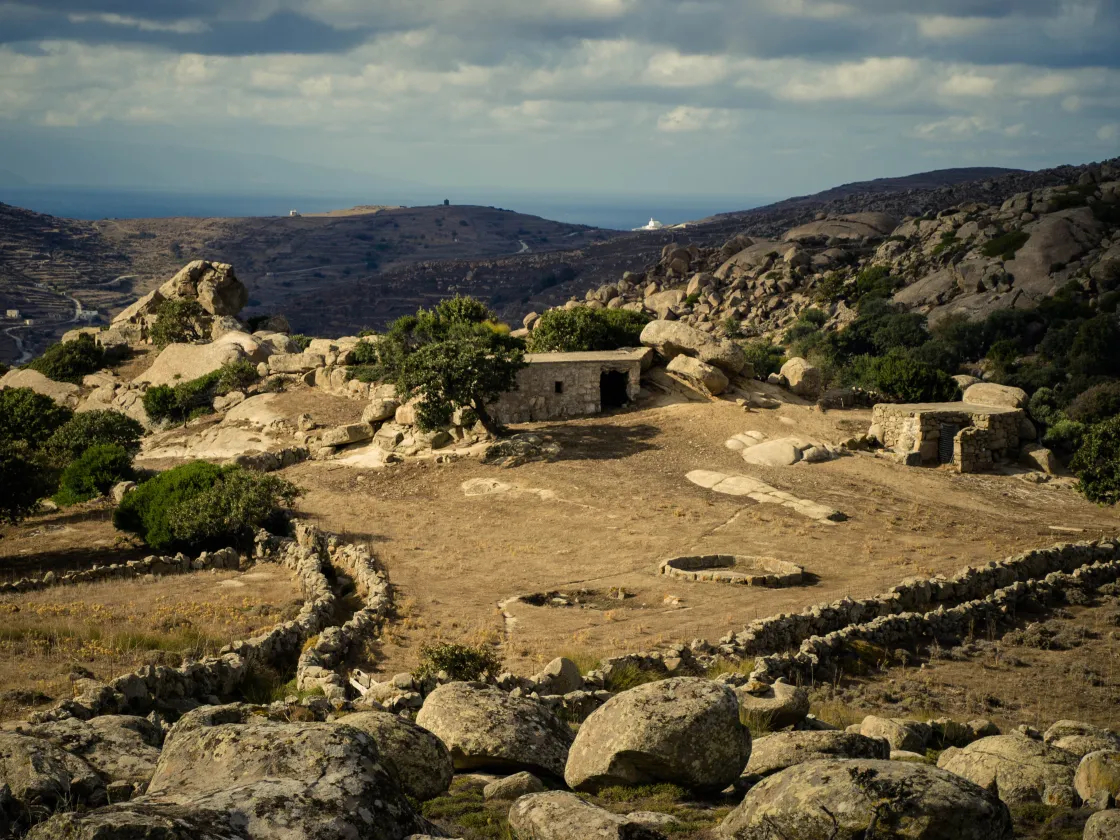
The circle, in this sense, is unmistakably centripetal. The aloni gathers.
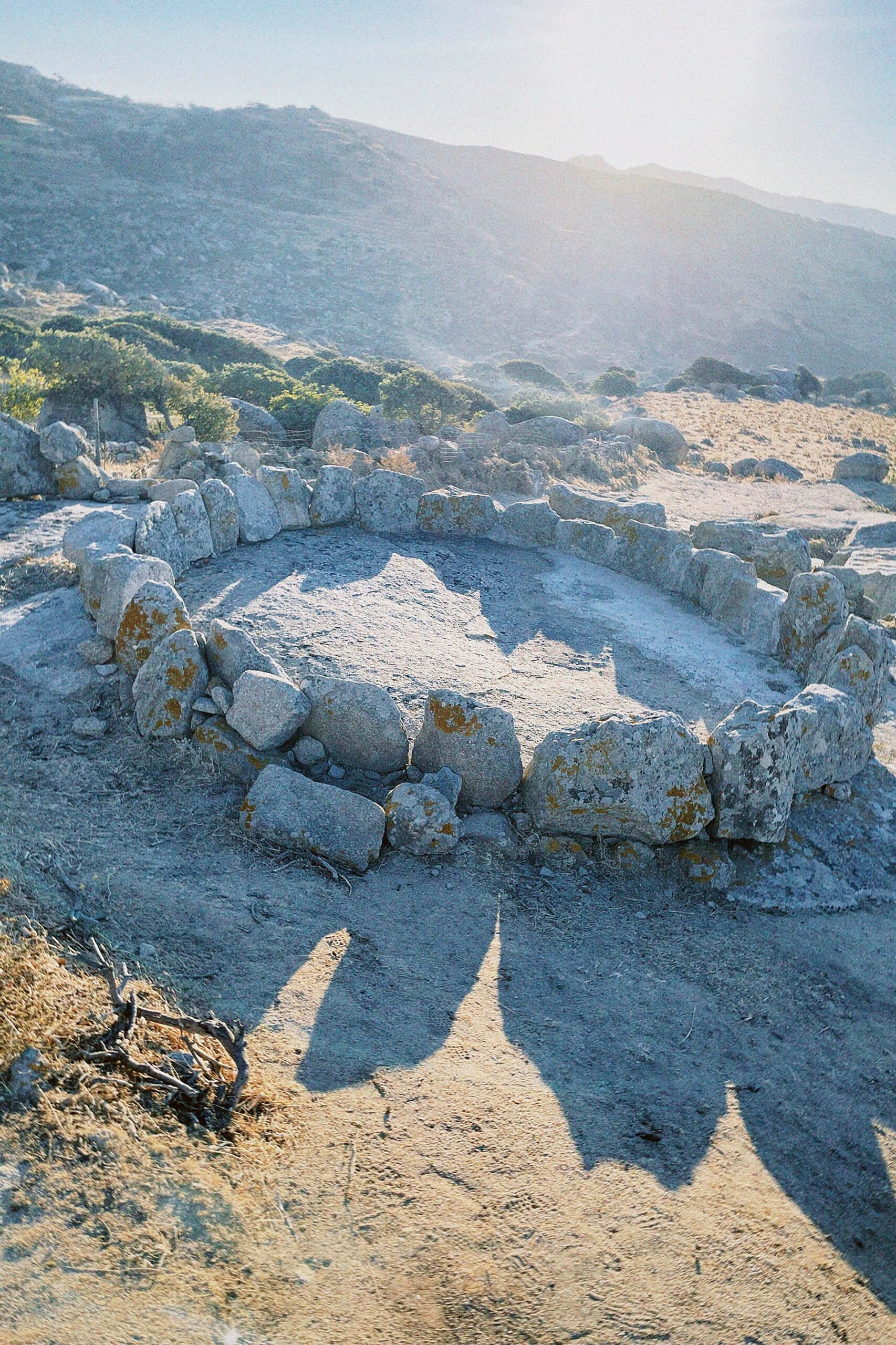
Around it, agricultural labour once became collective action. Grain, animals, bodies and wind entered into a temporary choreography whose duration was dictated by the seasons.
The aloni was therefore not merely a place where something happened; its spatial form organised how something happened—and with whom.
This recalls a broader characteristic of Tinian rural architecture: its elements rarely existed as autonomous objects. Terraces supported cultivation; walls retained soil; paths connected fields and settlements; cells and farmhouses accommodated seasonal habitation; presses processed the harvest; dovecotes supported agricultural production. As both Vidali and Mela confirmed, the landscape operated as an interdependent spatial system, rather than a collection of picturesque artefacts.
From a place of labour to a remnant, from infrastructure to memory, the Tinian threshing floor has undergone a gradual transformation of meaning and use, but its spatial figure remains legible. Today, an abandoned aloni can appear almost theatrical: a flat, circular stage suspended between cultivated terraces and open sky, where the absent choreography of bodies and animals is still somehow imaginable.
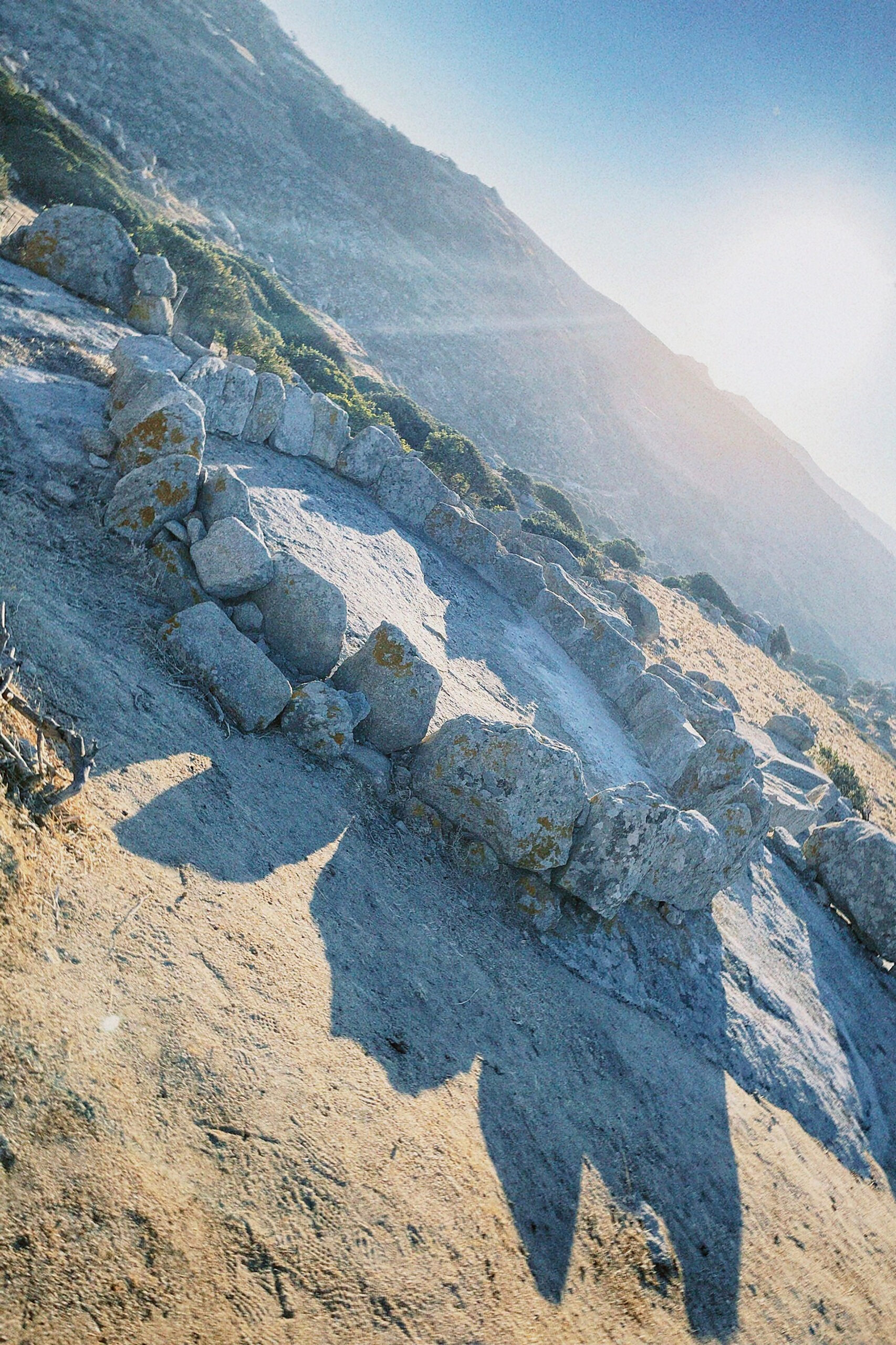
Perhaps this is the enduring power of the Tinian aloni; it is a microcosm without walls. Its architecture does not enclose life but frames it; does not dominate the landscape but makes a clearing within it.
Once a place for transforming grain, it now becomes a place through which to read the transformation of the landscape itself—from productive territory to cultural memory.
In this symbolically charged route, the Tinian aloni remains a small architecture of the collective, where life is rightfully reflected and celebrated.
Bibliography
Karouzos, N. (1993) Τα Ποιήματα, Vol. I. Athens: Ikaros.
Mela, M. (2025) Assembling the Archipelago: Heritage in Energy Transitions and Climate Action. London: Routledge.
Seferis, G. (1944) Ημερολόγιο Καταστρώματος Β΄. Athens: Ikaros.
Solomos, D. (1998) Ελεύθεροι Πολιορκημένοι. Athens: Ikaros.
Vidali, M. (2007) ‘The Island of Tinos: Man’s Relationship with its Community, the Landscape and the Divine’, Humane Habitat Conference Proceedings.